Key Takeaways
Option A
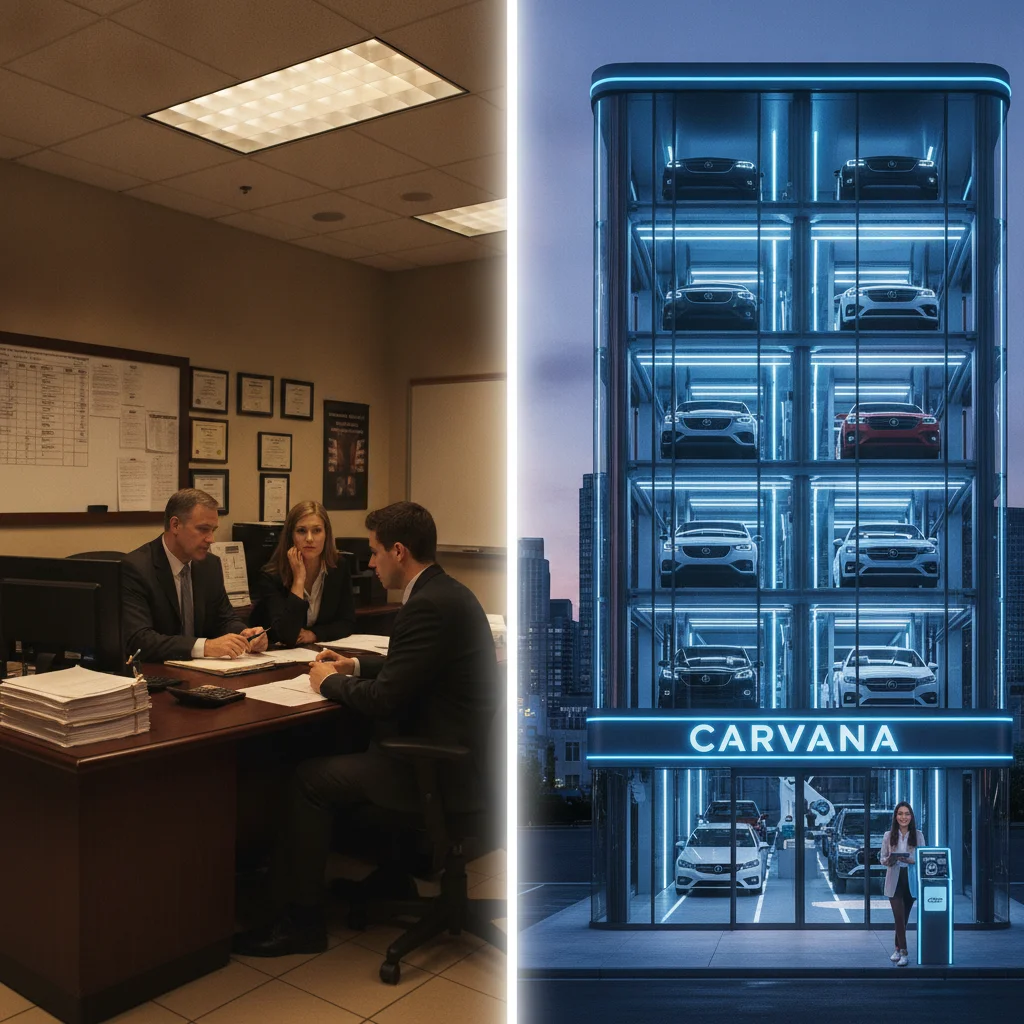
Instant Cash Offers (CarMax, Carvana, Vroom)
The transparent, no-haggle alternative to the dealership lot.
Best for: Sellers who want a firm, no-pressure quote they can use immediately or leverage at a dealership.
Option B
Dealer Trade-In Appraisals
The bundled, negotiable path that can hide real money in the deal structure.
Best for: Buyers trading in while purchasing a new vehicle who can negotiate trade and purchase price separately.
If you want maximum convenience and a clean transaction with no purchase tied to it
Instant Cash Offers (CarMax, Carvana, Vroom)
These services give you a firm number, no negotiation required, and you can walk away with a check — no strings attached.
If you're buying a new or certified pre-owned car at a dealership
Dealer Trade-In Appraisals
When negotiated correctly — separating trade value from purchase price — a dealer trade-in can match or beat an instant offer while eliminating a separate sales transaction.
If you want to protect yourself from a lowball dealer appraisal
Instant Cash Offers (CarMax, Carvana, Vroom)
Walking in with a CarMax or Carvana offer in hand forces the dealer to beat or match it — or lose the trade. It's the single most effective negotiating tool available.
If your vehicle is in below-average condition or has high mileage
Dealer Trade-In Appraisals
Instant offer platforms apply aggressive condition deductions through their algorithms. Some franchise dealers — especially if they specialize in your make — may offer more for a rough vehicle.
If you're selling only and not buying another vehicle
Instant Cash Offers (CarMax, Carvana, Vroom)
Dealer trade-in appraisals are designed for bundled deals. Without a purchase on the table, most dealers have little incentive to compete aggressively for your car.
How Each Approach Actually Works
Before you can choose between them, you need to understand exactly what you're dealing with — because these two processes are structured very differently.
Instant Cash Offers: Online Quote, Firm Number
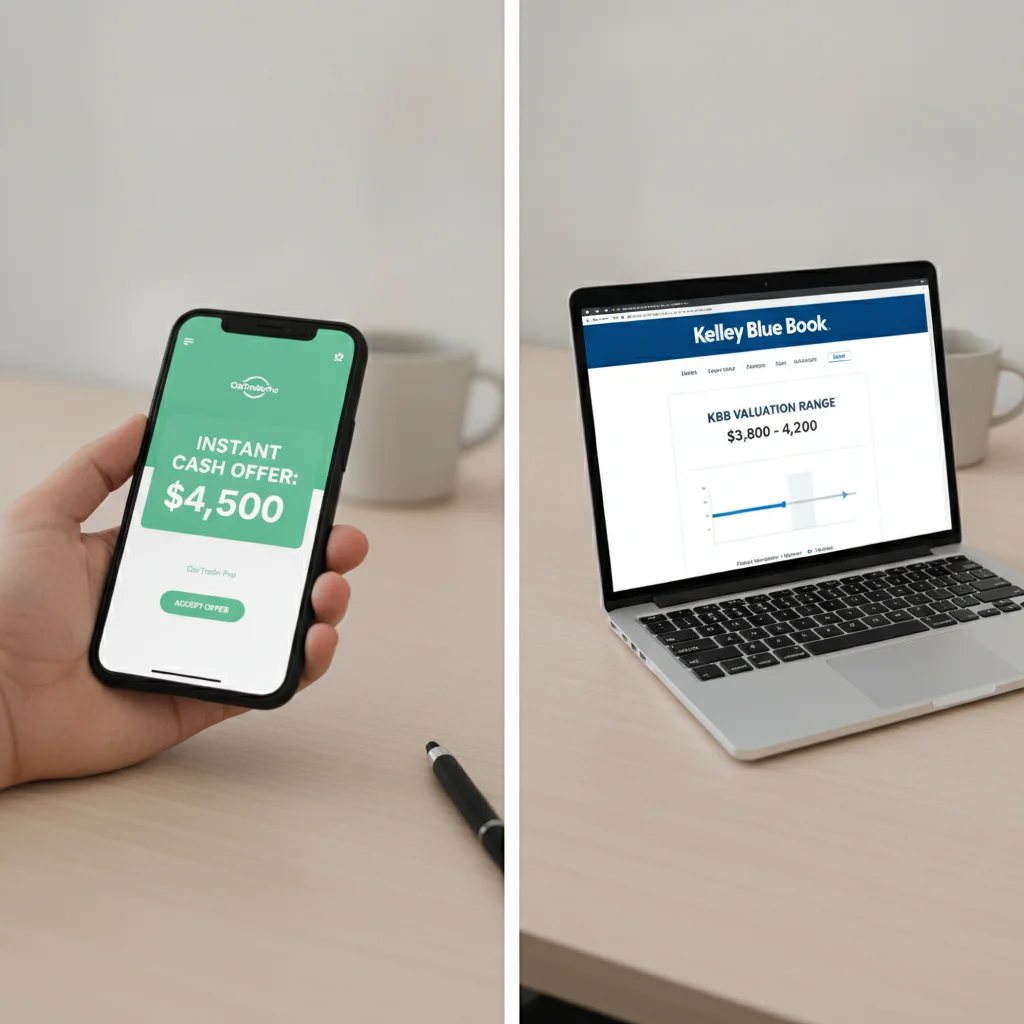
Services like CarMax, Carvana, and Vroom let you enter your VIN, mileage, condition details, and a few photos online. Within minutes — sometimes seconds — you get a guaranteed offer. That number is typically firm for seven calendar days, after which it may be re-evaluated. You're not obligated to buy anything. You can accept the offer and walk away with a check or direct deposit.
The catch: the offer assumes your disclosed condition is accurate. When you bring the car in for physical inspection, the platform reserves the right to adjust the offer if they find undisclosed damage, mechanical issues, or a mismatched condition grade. In practice, minor discrepancies are often ignored, but significant problems — an accident not on the Carfax, worn brakes, a cracked windshield — will trigger a deduction or a rescinded offer.
For a deeper look at how these numbers compare to market valuation tools, see how instant cash offer tools compare to KBB and Edmunds estimates.
Dealer Trade-In Appraisals: In-Person, Negotiable, Bundled
Dealer appraisals happen on the lot, usually while you're already shopping for a new vehicle. A used car manager or appraiser inspects your car — physically, not via algorithm — and comes back with a number scribbled on a form. That number is their opening position, not their final one.
The structural problem: dealers often present the trade-in value and the purchase price as a single monthly payment, making it nearly impossible to know if you're getting a good trade value, a good purchase price, or neither. This bundling is the primary way sellers get shortchanged without realizing it.

One more key difference: a dealer appraisal is only valid in the context of a deal at that dealership. Walk across the street and that number evaporates. Instant cash offers travel with you.
The Numbers: What's the Real Payout Gap?
The most common question is simple: which one pays more? The honest answer is: it depends on the vehicle, the market, and how well you negotiate. But here's a realistic framework.
| Criterion | Instant Cash Offers | Dealer Trade-In Appraisals |
|---|---|---|
| Offer validity | Typically 7 days, firm | Valid only at that dealership, during that visit |
| Purchase requirement | None — standalone transaction | Best value tied to buying from that dealer |
| Negotiability | Non-negotiable, algorithm-driven | Negotiable — first offer is rarely final |
| Condition assessment | Online self-report, verified at drop-off | In-person physical inspection on the spot |
| Typical payout vs. wholesale | Wholesale to slightly above wholesale | At or below wholesale without negotiation |
| Tax savings on new purchase | None — separate transaction | Yes, in most states — taxes on net price only |
| Speed to cash | 1–3 business days after drop-off | Same-day credit toward purchase |
| Portability as leverage | Yes — bring it to any dealer | No — offer is dealership-specific |
On high-demand vehicles — late-model trucks, popular SUVs, low-mileage certified candidates — the gap between an instant offer and a strong dealer appraisal can be narrow, sometimes under $500. Dealers actively need these units on their lots and will pay accordingly.
On slow-moving inventory — older sedans, non-popular colors, vehicles with higher mileage — instant offer platforms often outperform dealers. The reason: CarMax and Carvana have nationwide retail channels and can move cars across regions. Your local dealer doesn't have that flexibility.
$1,000–$3,000
Typical gap: instant offer vs. dealer first appraisal
Industry data from iSeeCars and automotive transaction analysts consistently shows dealers' initial trade-in offers running $1,000–$3,000 below what sellers can obtain through competing channels.
7 days
Standard instant offer validity window
CarMax, Carvana, and Vroom all offer a 7-day guarantee on their quoted price, giving sellers time to shop competing offers without pressure.
56%
Sellers who accept the first dealer trade-in offer
According to a 2023 Cox Automotive consumer survey, more than half of trade-in sellers accept the first appraisal number without attempting to negotiate or get a competing quote.
$1,050+
Average trade-in tax savings (7% state, $15k trade)
In states that apply sales tax only to the net purchase price after trade-in, a $15,000 trade on a $35,000 vehicle saves over $1,000 in taxes compared to selling separately.
The most important number to understand is your vehicle's wholesale auction value. This is what dealers will pay at auction as a floor, and it's what informs both dealer appraisals and instant offer algorithms. Tools like Manheim Market Report and NADA dealer guides publish auction benchmarks. Your instant cash offer will typically land somewhere between wholesale and retail. Your dealer trade-in appraisal, if you don't negotiate, often lands at or below wholesale.
For a detailed breakdown of real transaction numbers, see the numbers behind dealer trade-ins vs. instant offer platforms.
Using an Instant Cash Offer as a Negotiating Weapon
This is the single most effective tactic available to a trade-in seller, and most buyers don't use it. Here's the play, step by step:
- Get quotes from at least two instant offer platforms before visiting any dealership. CarMax, Carvana, and Vroom take about 10–15 minutes each. Get all three if your time allows. The highest number is your floor.
- Print or screenshot the offers. Having a physical number — with an expiration date — signals to the dealer that you've done your homework and can walk out and sell the car today.
- Separate the conversations at the dealership. Negotiate your trade-in value first, before discussing the purchase price of the new vehicle. Say explicitly: "I want to agree on my trade value before we talk about what I'm buying." Dealers will resist this — push through it.
- Present the competing offer directly. Tell the used car manager: "I have a CarMax offer for $X, valid through . I'd prefer to do this as one transaction here, but you need to beat or match it for that to make sense."
- Give them a number to beat, not a range. Don't say "I was hoping for around $18,000." Say "My CarMax offer is $17,800. I need $18,200 to make it worth trading in here rather than selling outright."
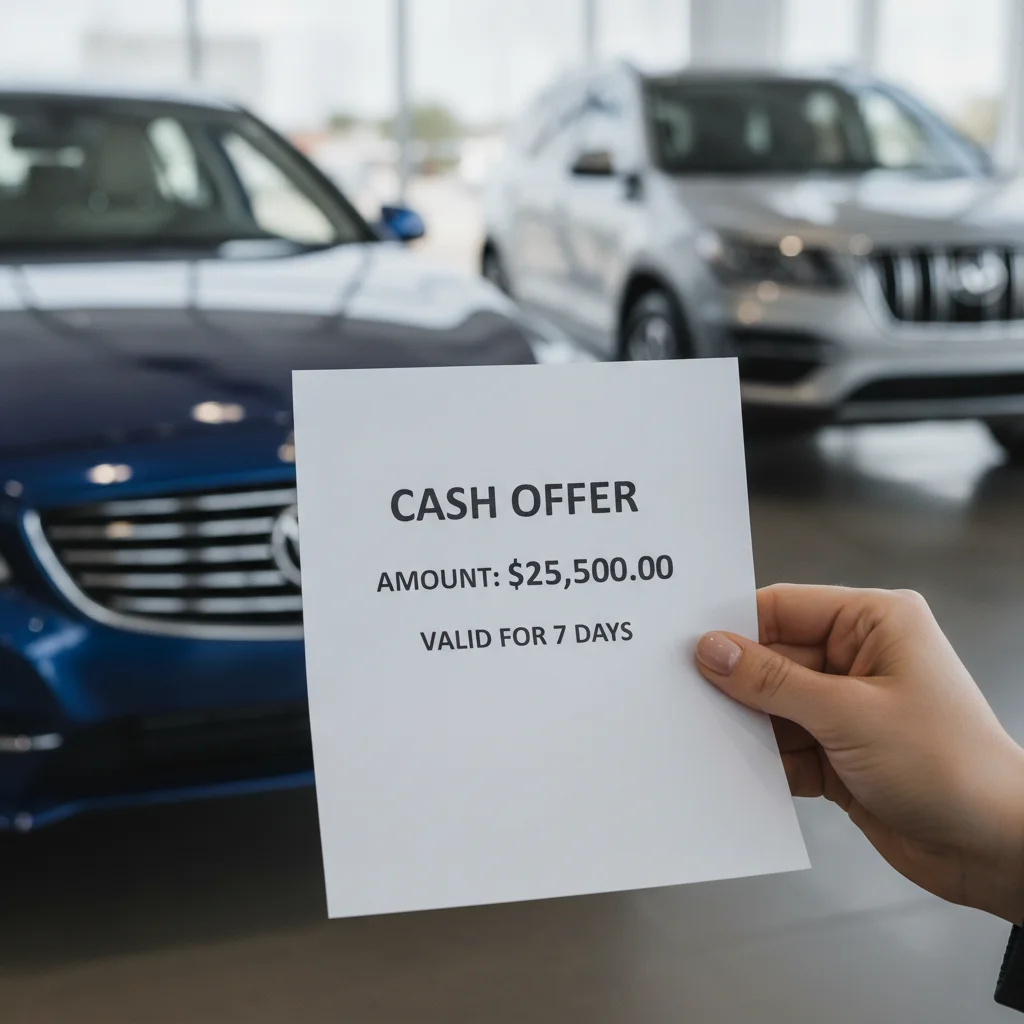
Dealers often have $500–$1,500 of flexibility above their first appraisal, particularly on vehicles they can retail directly. A documented competing offer is the fastest way to surface that flexibility.
Instant Offers Can Change at Inspection
The quote you receive online is conditional on the condition you disclose. When you bring the car in, the platform's inspector may identify undisclosed damage, mechanical issues, or Carfax discrepancies. Minor items are often waived, but significant problems — especially accident history not in your disclosure — can result in deductions of several hundred dollars or a rescinded offer entirely. Be thorough and honest in your online condition disclosure to minimize surprises.
Always Separate Trade and Purchase Negotiations
This is the number one rule of dealer trade-ins. Dealers prefer to negotiate everything together because it obscures where the money is moving. Insist on agreeing to a written trade-in value before any discussion of the vehicle you're purchasing. If the salesperson resists, say: 'I need to understand my trade value independently — I have other options for selling it and want to make sure this works.' That framing almost always unlocks a separate conversation.
For a full side-by-side comparison of how this plays out in practice, see dealer trade-in vs. Carvana real numbers.
When Dealer Trade-Ins Actually Win
Instant cash offers aren't always the better deal. There are specific scenarios where a dealer appraisal — properly negotiated — produces a better net outcome.
Tax Advantages on Trade-Ins
In most U.S. states, when you trade in a vehicle, you only pay sales tax on the difference between the new vehicle's price and your trade-in value. This is a real dollar advantage that instant cash offers don't provide.
Example: You're buying a $35,000 vehicle. You have a trade worth $15,000. In a state with 7% sales tax, you pay tax on $20,000 ($1,400) rather than $35,000 ($2,450). That's a $1,050 tax savings — enough to close the gap between many dealer appraisals and instant offers.
If your state applies this offset (most do — check your specific state's rules), factor it into your math before concluding an instant cash offer wins outright.
Specialty Dealers Who Actually Want Your Car
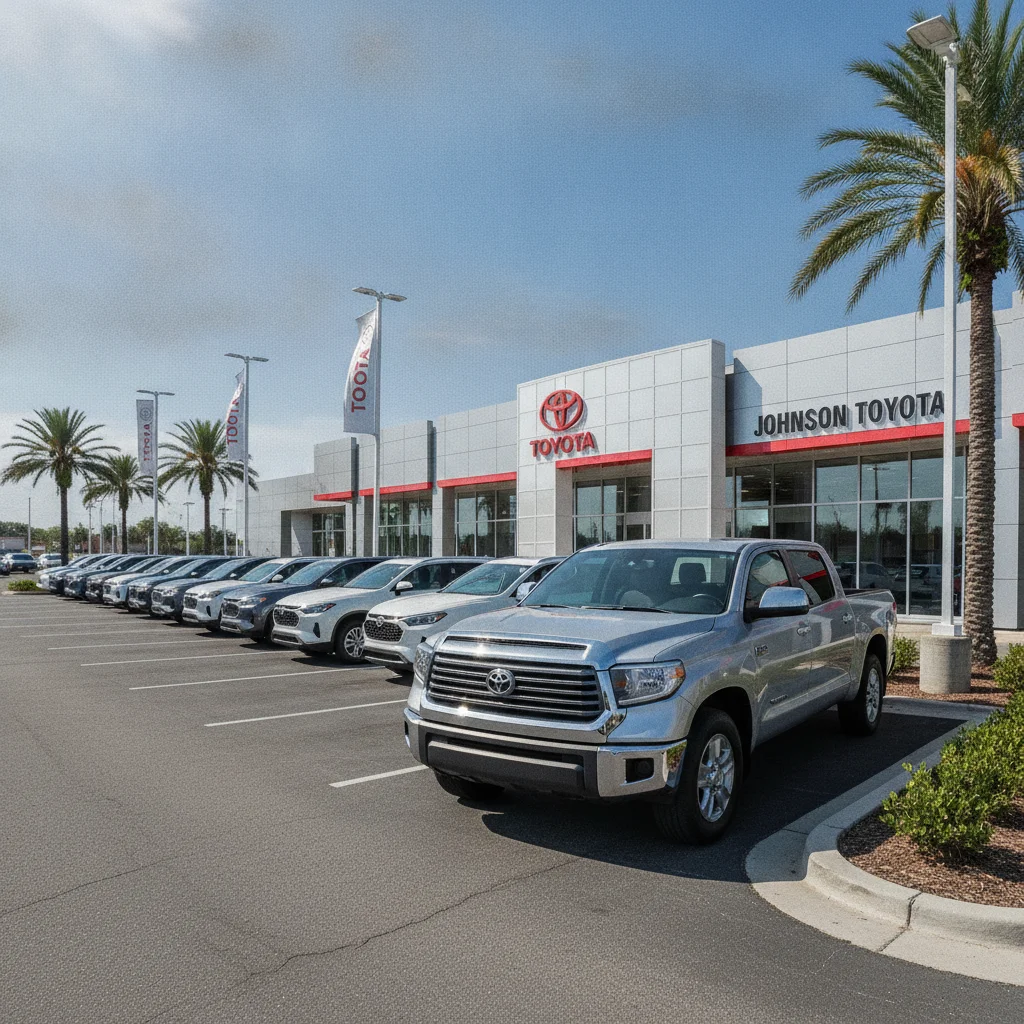
A Toyota dealer appraising your Tacoma has a strong incentive to pay competitively — they can certify it and retail it on their own lot at a high margin. The same vehicle appraised at a non-Toyota store gets wholesaled. If you're trading in at a same-brand franchise, push harder on the appraisal. You have more leverage than you think.
See more tactics for maximizing this leverage in trade-in strategies that maximize your value.
When Your Vehicle Has Issues Instant Offer Platforms Will Penalize Hard
Online platforms grade condition algorithmically and conservatively. If your car has a rebuilt title, significant prior damage on Carfax, or known mechanical issues, an in-person appraiser at a dealer may be more forgiving — especially if they know they can fix it internally at lower cost than a platform would estimate.
What to Watch Out For With Each Option
Neither option is without traps. Here's where sellers get burned.
Instant Offer Platform Pitfalls
- Condition adjustments at drop-off: Your online quote assumes your disclosed condition. Anything the inspector flags — a ding you forgot to mention, worn tires, a check engine light — becomes a deduction. The final number can be several hundred dollars lower than the quoted amount.
- Offer expiration: Most offers are valid for 7 days. If the market shifts — or if you're slow to book an appointment — you may be requoting at a lower number, especially in a softening market.
- Convenience doesn't mean maximum dollar: Instant offers are priced to be profitable for the platform. They're buying at a margin. You're not getting retail — you're getting a fair but not maximum number. For the ceiling, private sale still wins.
For a direct comparison between instant offer platforms and private sales, see selling privately vs. using an online car-buying service.
Dealer Trade-In Pitfalls
- The four-square worksheet: This classic dealership tactic bundles trade-in value, purchase price, down payment, and monthly payment into one confusing box. It obscures the trade value. Refuse to engage with it until trade value is agreed upon separately.
- "We'll give you more than CarMax" — then they don't: Some dealers will verbally promise to beat your offer but fold it into a worse deal elsewhere. Always confirm trade value in writing before discussing the purchase.
- First appraisal anchoring: The first number they hand you is designed to anchor your expectations low. Don't accept it, don't counter weakly. Present your competing offer and let the silence work for you.
Instant Offers Can Change at Inspection
The quote you receive online is conditional on the condition you disclose. When you bring the car in, the platform's inspector may identify undisclosed damage, mechanical issues, or Carfax discrepancies. Minor items are often waived, but significant problems — especially accident history not in your disclosure — can result in deductions of several hundred dollars or a rescinded offer entirely. Be thorough and honest in your online condition disclosure to minimize surprises.
Always Separate Trade and Purchase Negotiations
This is the number one rule of dealer trade-ins. Dealers prefer to negotiate everything together because it obscures where the money is moving. Insist on agreeing to a written trade-in value before any discussion of the vehicle you're purchasing. If the salesperson resists, say: 'I need to understand my trade value independently — I have other options for selling it and want to make sure this works.' That framing almost always unlocks a separate conversation.
If you want to understand what instant offer platforms are really optimizing for — and their structural limitations — see what instant cash offer services are really offering you.
Building Your Selling Strategy
The smartest sellers don't choose one path exclusively — they use instant cash offers to inform and pressure-test every other channel.
Here's a practical framework depending on your situation:
- Selling only, not buying:
- Get three instant offers (CarMax, Carvana, Vroom). Take the highest. Compare against a private sale estimate from KBB Instant Cash Offer or Facebook Marketplace comps. If the gap to private is under $1,000 and you don't want the hassle, take the instant offer. If it's $2,000+, private sale is worth the extra effort.
- Trading in while buying at a dealership:
- Get instant offers first. Walk in with the highest one printed. Negotiate trade value to at least match it before discussing the new vehicle. Factor in your state's trade-in tax credit. If the dealer won't match or beat the instant offer after tax savings are factored in, sell the car separately and buy at the dealership as a clean cash/finance deal.
- Trading in at a same-brand franchise:
- These dealers have the highest incentive to pay well. Get instant offers as your floor, but push harder here than at a non-brand dealer. You have genuine leverage because they can retail your car directly.

Whatever path you choose, the core principle stays the same: never walk into a dealer appraisal without a documented competing offer in your hand. That single step transforms you from a seller at their mercy into a seller with options — and that's where fair deals come from.
For a comprehensive look at how online trade-in quotes compare to in-person appraisals across different scenarios, see online trade-in offers vs. in-person dealer appraisals. And if you're exploring all the channels available to sell your car, the instant offer platforms hub covers how each service compares on speed, convenience, and payout.

All claims are backed by peer-reviewed research. Sources on request.