Key Takeaways
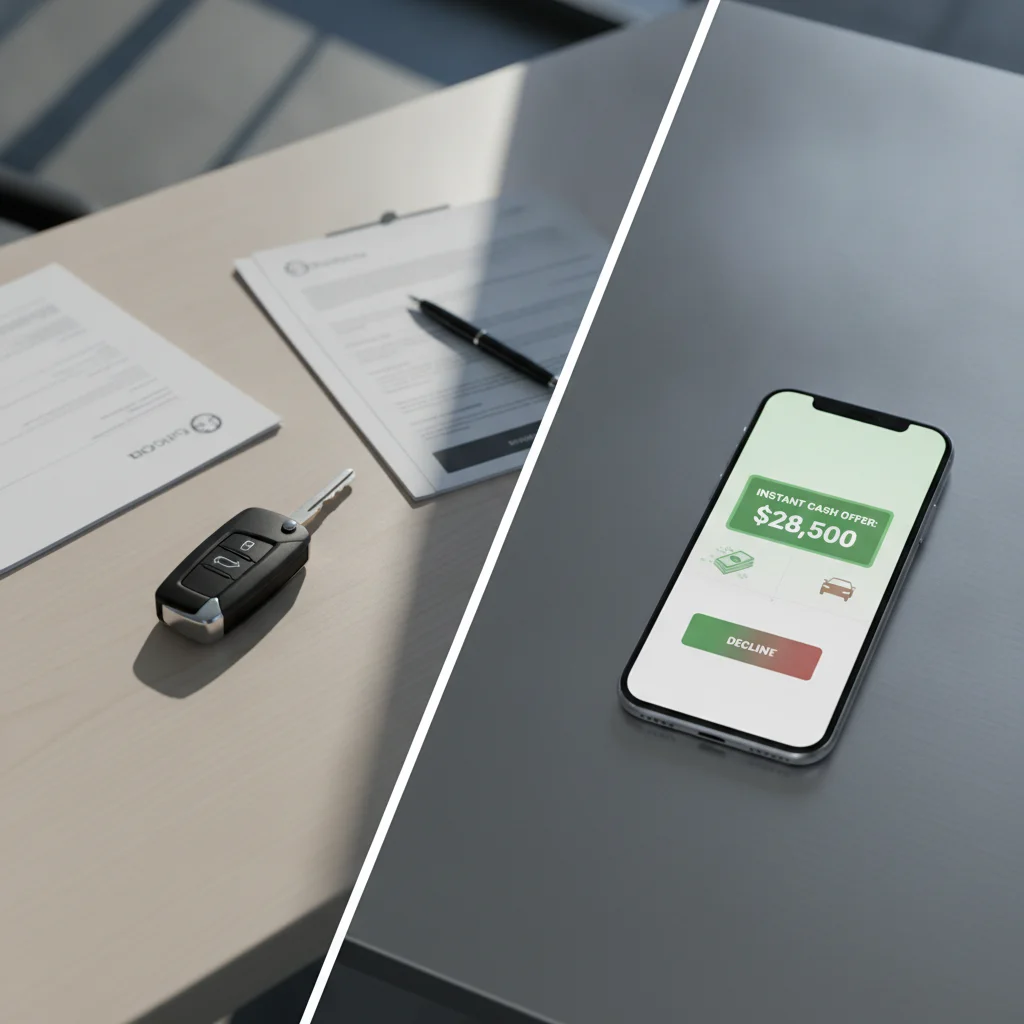
Option A
Dealership Trade-In
The bundled, negotiable option with hidden leverage.
Best for: Buyers who are purchasing another vehicle and want to use trade-in value to offset sales tax or reduce out-of-pocket costs.
Option B
Instant Offer Platform
The fast, transparent exit with a known convenience cost.
Best for: Sellers who want a clean, low-friction transaction and aren't buying another car simultaneously.
If you're buying another car at the same dealership
Dealership Trade-In
The tax offset on your new purchase can recover $500–$1,500 of any gap between the dealer offer and an instant platform quote, making the bundled deal financially smarter.
If you're selling only and not purchasing a replacement vehicle
Instant Offer Platform
Without a tax offset to leverage, the clean process and competitive algorithms of platforms like CarMax or Carvana will typically net you more than a standalone dealer trade-in appraisal.
If your vehicle is in above-average condition with a desirable trim
Instant Offer Platform
Algorithm-driven platforms in active inventory-acquisition mode often price sought-after vehicles aggressively — sometimes exceeding what a dealer will put in writing.
If your car has high mileage, cosmetic damage, or a complex history
Dealership Trade-In
Instant offer algorithms penalize condition flags heavily and automatically. A skilled dealer appraiser may look past cosmetics if they need your vehicle type for their lot.
If you want to negotiate and have time to shop multiple buyers
Dealership Trade-In
Dealer appraisals are starting points, not final numbers. Armed with instant offer quotes as leverage, a motivated negotiator can often push the dealer past the platform price.
Why the Comparison Matters More Than You Think
Most sellers frame this as a convenience question: do you want the ease of an instant offer, or are you willing to sit across from a finance manager? That framing misses the real issue. The gap between what a dealership will pay for your trade and what an instant offer platform will pay isn't fixed — it varies by vehicle, market, timing, and whether you're simultaneously buying another car. Getting the math wrong can cost you anywhere from a few hundred to several thousand dollars.
I spent years on the dealer side of this equation, watching how appraisal numbers were set and how trade-in value was used as a negotiation lever against buyers. The cleaner truth is that neither channel is categorically better — both have structural incentives that work against the seller in specific situations. Understanding those incentives is how you protect your money.
For a foundational look at how the algorithm side of this works, see our explainer on how instant offer platforms actually work before diving into the numbers below.
How Dealers Arrive at Their Trade-In Number
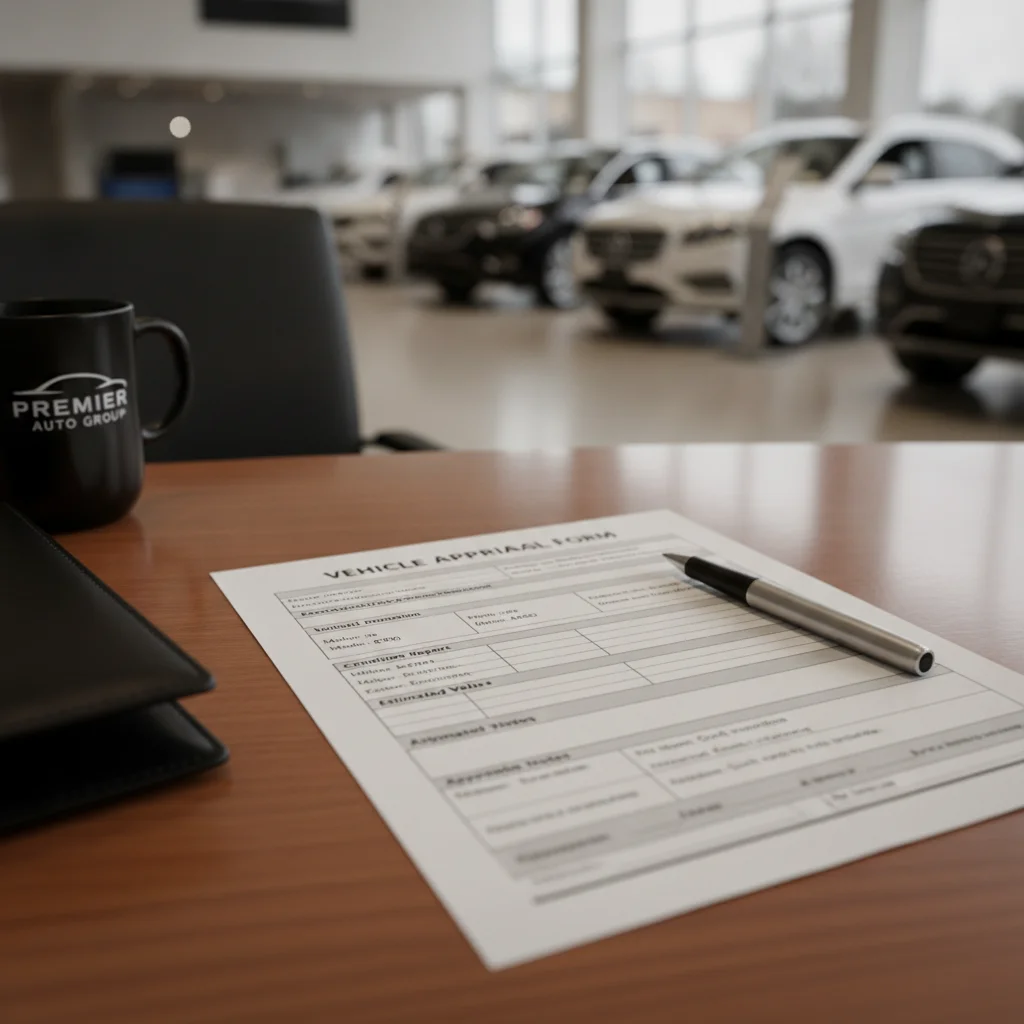
When a dealer appraises your vehicle, they're doing three things at once: estimating what they can sell it for at retail, subtracting reconditioning costs, and building in a profit margin. The number they hand you is what's left over after those deductions. That process is inherently opaque — you rarely see the reconditioning estimate or the projected retail value they're working from.
What you also don't see is the role of lot inventory. A dealer short on late-model SUVs will appraise your 2021 Honda CR-V more generously than one who already has eight of them. This is why the same car can get wildly different trade-in offers at different dealers — inventory pressure is one of the biggest factors, and it has nothing to do with your car's condition.
The second dynamic is the bundled deal. When you're trading in while buying, dealers have more room to maneuver across the entire transaction. They may tighten margin on your new car purchase and loosen it on your trade-in, or vice versa. That flexibility is both an opportunity and a trap: a dealer can appear to give you a great trade-in number while quietly recovering it elsewhere in the deal. Always evaluate the complete transaction — trade price, purchase price, financing rate, and fees — as a single number.
| Criterion | Dealership Trade-In | Instant Offer Platform |
|---|---|---|
| Typical payout relative to market | 60–80% of retail value | 70–85% of retail value |
| Sales tax offset (when buying simultaneously) | Yes — significant in most states | No — taxed on full purchase price |
| Negotiability | High — offer is a starting point | Low — algorithmically set, limited flex |
| Offer consistency | Varies by dealer, day, and inventory | Consistent algorithm, but varies by platform |
| Offer validity period | Informal — may shift at any time | Typically 7 days, binding if car matches |
| Condition impact | Appraiser-assessed, some flexibility | Algorithm-penalized, systematically deducted |
| Time to receive funds | Same day if bundled with purchase | 1–3 business days after inspection |
| Transparency of pricing logic | Opaque — no breakdown provided | Partially transparent — online quote visible |
| Logistics required | Single dealership visit | Drop-off or pickup scheduling required |
| Leverage potential | High — competing offers shift numbers | Moderate — some discretion, mostly fixed |
How Instant Offer Platforms Price Your Car
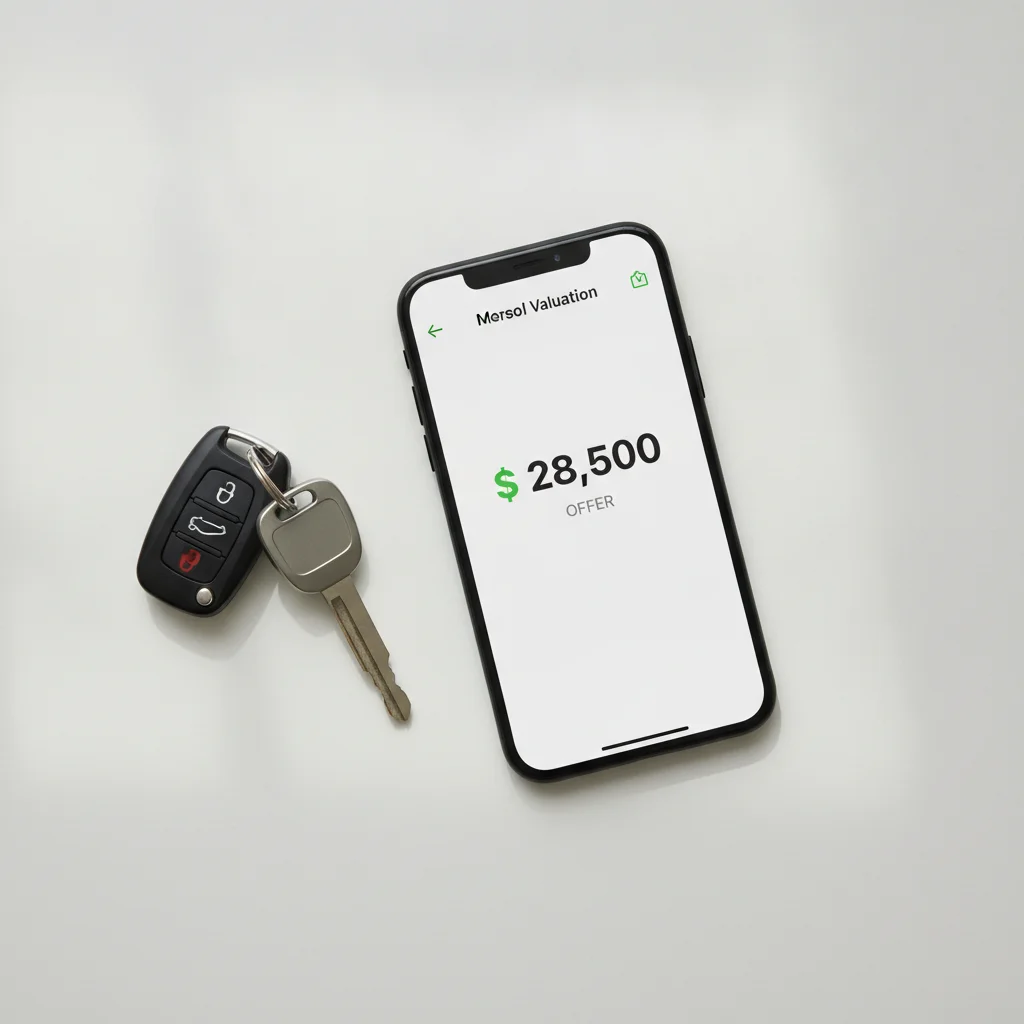
Instant offer services — CarMax, Carvana, Vroom, KBB Instant Cash Offer, and others — use proprietary algorithms that pull from real-time auction data, regional market demand, and their own retail inventory needs. The offer you see online is generated in seconds and typically reflects what the platform believes it can resell your vehicle for, minus a required margin to cover transport, reconditioning, and profit.
That margin is the cost of the convenience. Platforms typically build in a buffer of $1,000–$3,000 below what they believe the car will retail for. They're also pricing defensively because they haven't physically inspected the vehicle yet. The quote you receive assumes the car matches your description — if the in-person inspection reveals undisclosed damage, high brake wear, or a prior accident that wasn't on the Carfax, the offer will be revised downward.
Understanding how mileage, condition, and trim level affect instant offer payouts matters here because algorithms weight these inputs precisely and consistently. A dealer might overlook minor paint scratches because they need your model; an algorithm subtracts them systematically. That's a real difference in how your vehicle's imperfections translate to dollars.
$1,000–$3,000
Typical platform margin buffer below retail
Industry analysis suggests instant offer platforms consistently price vehicles $1,000–$3,000 below projected retail to cover reconditioning, transport, and profit requirements.
7 days
Standard instant offer validity window
Most major instant offer platforms including CarMax and Carvana honor their quotes for seven days, contingent on vehicle condition matching the seller's description at handoff.
$1,050+
Potential sales tax savings on trade-in offset
On a $40,000 purchase with a $15,000 trade at 7% state tax, bundling the trade-in at a dealership can reduce taxable purchase amount — saving over $1,000 versus a separate private or platform sale.
3–5
Recommended number of competing quotes
Sellers who gather quotes from multiple channels — including at least two instant offer platforms and one dealer — consistently achieve better final sale outcomes than those who use a single source.
One critical behavior sellers often miss: platforms don't all price the same car identically. Regional inventory needs, platform-specific retail channels, and algorithmic differences mean the same vehicle might get significantly different quotes from CarMax versus Carvana versus a dealer's online tool. Our breakdown of why two platforms can offer wildly different prices for the same car explains the mechanics behind those gaps — and how to use them to your advantage.

The Tax Offset: The Number Most Sellers Forget
Here's the factor that tilts the comparison most often in the dealer's favor: sales tax savings on your new vehicle purchase. In most U.S. states, when you trade in a vehicle at a dealership where you're also buying, you only pay sales tax on the difference between the new car's price and your trade-in value. That tax savings can be substantial.
On a $40,000 vehicle purchase with a $15,000 trade-in allowance, in a state with 7% sales tax, you'd pay tax on $25,000 instead of $40,000 — a savings of $1,050. If an instant offer platform offers you $16,500 for that same car — $1,500 more than the dealer — but you lose the $1,050 tax benefit, the platform's advantage shrinks to $450. Factor in the time and logistics of selling separately, and the math tilts toward keeping it bundled.
Check Your State's Trade-In Tax Laws First
Sales tax treatment of vehicle trade-ins varies significantly by state. Most states allow you to pay tax only on the net price after trade-in credit, but California, Hawaii, Michigan, Montana, and a few others do not offer this exemption. Before using the tax offset as part of your decision math, verify your state's current rules — they can and do change with legislative sessions.
Platform Quotes Are Conditional, Not Guaranteed
Every instant offer includes language that makes the payout contingent on the vehicle matching the condition disclosed during the online quote. Undisclosed accidents, unreported mechanical issues, frame damage, or significant wear beyond normal will trigger a revised — typically lower — offer at the point of physical inspection. Read the condition disclosure terms carefully before committing to a platform appointment.
Instant Offers Can Anchor Dealer Negotiations
Dealers are aware that instant offer platforms exist and that many sellers arrive with competing quotes. Most dealer appraisers factor this in. If you present a documented platform offer, a dealer who wants to close a new-car sale has a clear incentive to beat or match that number rather than lose the entire transaction. Use the quote as a floor, not a ceiling.
That said, not every state offers this trade-in tax exemption — California, Hawaii, Michigan, Montana, and a handful of others don't provide it. And the math only applies when you're actually buying another vehicle simultaneously. If you're selling to downsize or move to a single-car household, the tax offset is irrelevant, and the instant offer platform's higher gross number stands on its own merits.
For a full breakdown of how this comparison plays out in a real deal structure, see our side-by-side analysis of dealer trade-in vs. Carvana with real numbers — it works through the complete transaction math so you can model your own scenario.
Using One to Leverage the Other
The most overlooked tactic in this entire comparison is using instant offer quotes as a floor in dealer negotiations. Most sellers don't do this — they either go straight to the dealer or straight to a platform, rarely both. That's a mistake.
Before any trade-in conversation with a dealership, get written quotes from at least two instant offer platforms. These offers have expiration dates — typically seven days — so time them close to your intended sale. Bring those quotes into the dealer conversation. Most dealers won't match an instant offer directly, but many will move meaningfully closer when they see you have a real, executable alternative in hand. The dealer who's motivated to close a car sale will find room they didn't have five minutes earlier.
The trade-in strategies hub covers negotiation mechanics in detail, but the principle is simple: never let a dealer appraise your car in isolation. The moment they know you have a competing offer, the conversation changes.
Similarly, if you're seriously considering the platform route, know that instant offers are less rigid than they appear. Our guide on negotiating with an instant offer platform explains where real leverage exists — particularly when a vehicle is in high demand or when you hold competing quotes. The platforms have more discretion than their interfaces suggest.
Making the Final Call: A Framework That Works
Before you decide which channel to use, run this quick mental checklist:
- Am I buying another vehicle simultaneously? If yes, calculate the tax offset for your state and model it into the comparison. A dealer's lower offer may actually net you more.
- What's my car's condition honestly? If it has undisclosed issues, high mileage relative to its age, or cosmetic damage, an instant offer algorithm will price that in more harshly than a motivated dealer appraiser might.
- Have I gotten quotes from at least two platforms? If not, you don't have real market data yet. The spread between platform quotes on the same car is often significant.
- Do I have time to negotiate? Instant offers are efficient precisely because they're non-negotiable in structure. If you're not in a hurry and willing to engage, the dealer route — with platform quotes in hand — typically produces a better total outcome.
The dealer trade-in channel overview and our ranked review of instant offer platforms by payout and seller experience are both worth reviewing once you've identified which path fits your situation. The numbers behind each channel are knowable — the work is in looking them up before you sign anything.
Also worth reading before you go in-person anywhere: the comparison of online trade-in offers vs. in-person dealer appraisals, which explains exactly why the number you get online often changes the moment a human looks at your car.


All claims are backed by peer-reviewed research. Sources on request.