Key Takeaways
Option A
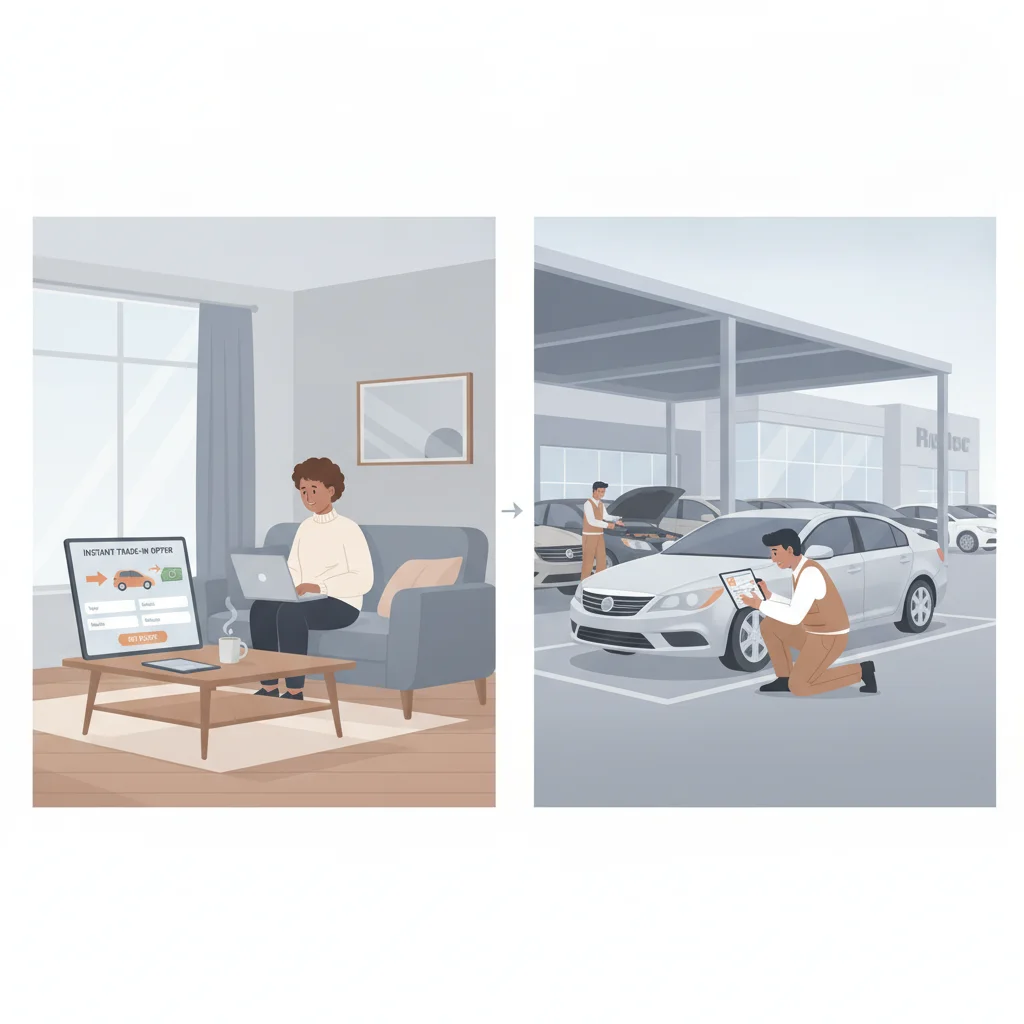
Online Trade-In Offers
The fast, friction-free starting point.
Best for: Sellers who want a quick baseline valuation before stepping foot on a dealership lot.
Option B
In-Person Dealer Appraisals
The hands-on, negotiable final word.
Best for: Buyers already shopping for their next vehicle who want to bundle the trade-in into one transaction.
If you want a quick, no-pressure baseline before visiting any dealership
Online Trade-In Offers
Online tools give you a documented number in minutes with zero commitment — critical for knowing whether a dealer's offer is fair.
If you're already buying a new car at a dealership
In-Person Dealer Appraisals
Bundling your trade-in with a purchase opens more negotiating room — dealers can flex on trade value to close the sale, especially at month end.
If your vehicle has condition issues, high mileage, or modifications
In-Person Dealer Appraisals
Online tools can't account for unusual factors accurately; a physical appraisal at least gives you a real number specific to your car's actual state.
If you want to negotiate from a position of strength
Online Trade-In Offers
Walking in with a printed or digital offer from CarMax, Carvana, or KBB Instant Cash Offer forces the dealer to match or beat a real competing number.
If maximum payout is your only goal and you're willing to sell outright
Online Trade-In Offers
Platforms like Carvana and CarMax often outpay dealer trade-in offers because they operate independent retail channels and don't need to discount for resale margin.
Why the Number on Your Screen Rarely Matches the Check You'll Get
Every online trade-in tool — whether it's KBB, Edmunds, CarMax, or Carvana — starts with the same foundation: the data you type in. Year, make, model, trim, mileage, and a self-assessed condition rating. The algorithm prices your car against recent auction data and retail comps. It's fast. It's clean. And it's a conditional estimate, almost always subject to physical verification.
This is what dealers call the inspection gap — the difference between what the algorithm showed you and what an appraiser offers after seeing the actual car. The inspection gap can swing significantly depending on undisclosed damage, worn tires, brake condition, service history gaps, and even the smell of the interior. In my time in dealership F&I, I watched offers drop $500 to $2,500 between the online quote and the in-store appraisal — and almost no buyers pushed back because they didn't understand why.
In-person appraisals don't have that gap problem — the number you get reflects what the appraiser actually sees. But it introduces a different problem: you're now on the dealer's turf, under time pressure, with no external reference point unless you came prepared.
The core issue isn't which method is more accurate in isolation. It's knowing how each one is designed to work — and using that knowledge to your advantage.
How Each Method Actually Works
Online Trade-In Offers
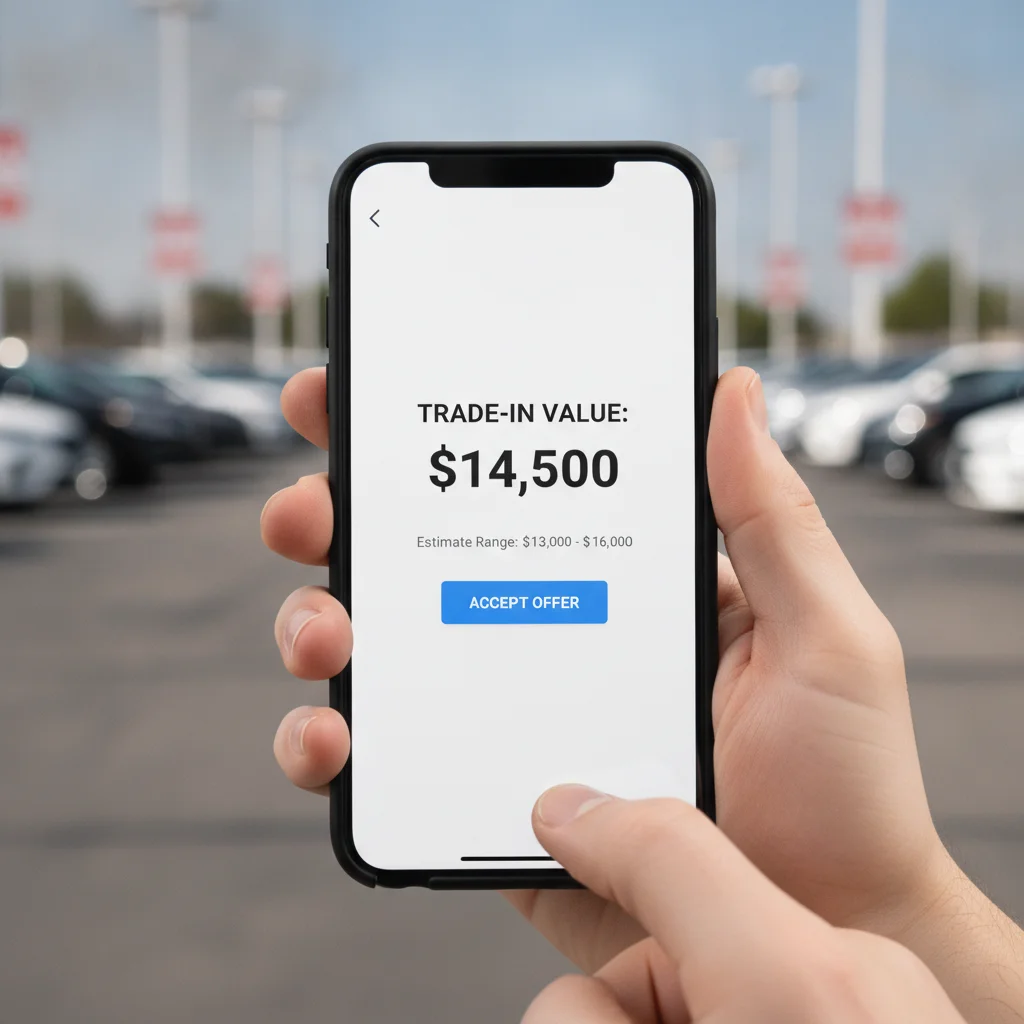
Online offers come in two main flavors. The first is a soft estimate — tools like KBB's trade-in range or Edmunds' appraisal tool give you a market value window based on your inputs, but don't bind any buyer to that number. The second is a conditional firm offer — platforms like CarMax's online quote, Carvana, or KBB's Instant Cash Offer generate a specific dollar amount that's redeemable for a set period (typically 7 days), but the offer is still subject to in-person inspection.
What determines the online number? Primarily three things: regional market demand for your specific car, recent wholesale auction prices for comparable vehicles, and the condition rating you self-select. That last variable is where most sellers cost themselves money — people consistently rate their own cars one condition tier too high. "Good" to most owners is "Fair" on a dealer's checklist.
Instant offer platforms have gotten more aggressive about narrowing the inspection gap by asking for photos and VIN-based history pulls upfront. But they still can't see the rust on your subframe or the paint fade on your hood.
In-Person Dealer Appraisals
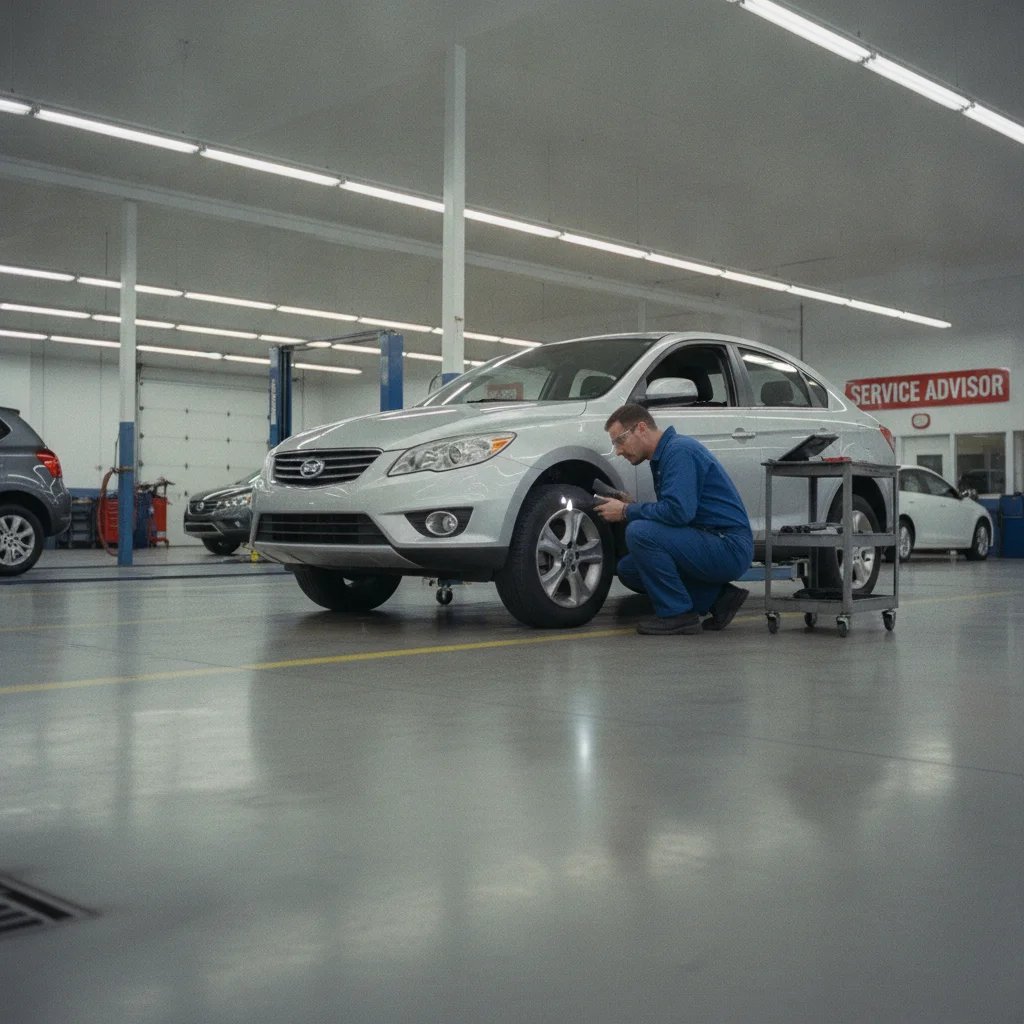
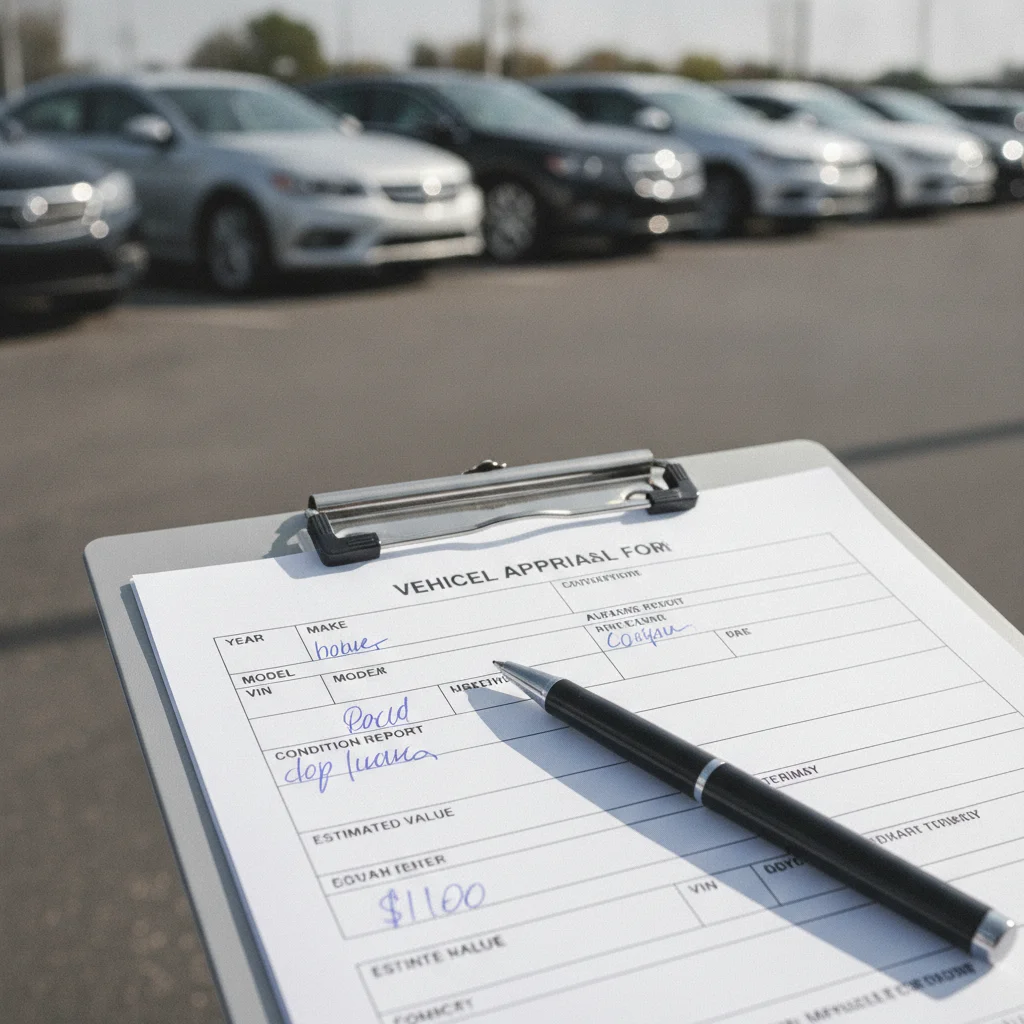
When you hand your keys to a dealership, a used car manager — not a salesperson — is the one running the actual appraisal. Dealers follow a systematic process: they run the VIN through Carfax or AutoCheck, check current auction comps via tools like vAuto or Black Book, assess the physical condition of the car, and estimate reconditioning costs. That recon estimate is subtracted directly from what they'll offer you.
The number comes back fast — often within 15 to 20 minutes — because speed is a dealership tactic. The faster you get a number, the less time you have to think, compare, or leave. And critically, the offer is almost always presented verbally or on a single sheet you rarely get to keep.
| Criterion | Online Trade-In Offers | In-Person Dealer Appraisals |
|---|---|---|
| Speed | Instant (2–5 minutes) | 15–30 minutes on-site |
| Accuracy | Conditional estimate; may drop post-inspection | Reflects actual vehicle condition |
| Negotiability | Limited; algorithmic, take-it-or-leave-it | Higher; human-driven, room to push back |
| Pressure environment | Zero pressure; done from home | High pressure; dealer controls pacing |
| Transparency | Clear breakdown of factors used | Appraisal sheet often withheld |
| Best for unusual vehicles | Poor; algorithms struggle with edge cases | Better; human judgment applied |
| Leverage value | High; creates a competing offer baseline | Low as standalone; stronger with competing offers |
| Offer validity | Typically 7 days; subject to inspection | Valid same-day only; may expire if you leave |
Knowing how to read an appraisal sheet changes the power dynamic entirely — it shows you exactly where the dealer built in margin and what line items are negotiable.
The Recon Estimate Is Negotiable
Dealers build reconditioning cost estimates into their trade-in offers — and those estimates are almost always padded. A dealer might quote $800 in recon for minor paint touch-ups that a body shop would charge $250 for. If you have a recent independent inspection report or service records showing recently completed work, challenge the recon line item directly. It's one of the most effective ways to recover value in an in-person appraisal.
Separate the Trade-In from the New Car Deal
Dealers are trained to blend trade-in value, purchase price, and monthly payment into a single conversation because it obscures where money is moving. Always negotiate your trade-in value as a completely separate transaction before discussing what you're paying for the new vehicle. Get the trade-in number confirmed in writing first — then open the purchase price discussion.
The Inspection Gap: Where Offers Fall Apart
The inspection gap is the single biggest source of frustration for car sellers who start online. You get $18,500 on Carvana's website, drive to the drop-off location, and leave with $16,800 after they flag paint overspray, a cracked CV boot, and tires below the required tread depth. That's $1,700 in adjustments — each one technically justified under the terms you accepted when you submitted the quote.
$1,500
Average inspection gap on online trade-in offers
Industry data from iSeeCars and dealer F&I professionals suggests online-to-in-person offer adjustments average $500–$2,500 depending on vehicle condition disclosure accuracy.
7 days
Typical validity window for online trade-in quotes
Most major platforms including CarMax and Carvana guarantee their online quotes for seven days, subject to physical inspection confirmation.
64%
Sellers who rate their car's condition too high
According to automotive market research, the majority of private sellers self-assess their vehicle's condition at least one tier above what dealers rate it during appraisal.
3+
Competing quotes needed for real leverage
Automotive finance experts consistently recommend obtaining at least three independent trade-in quotes before entering dealer negotiations to establish a defensible market floor.
Dealer appraisals don't have this gap in the same way — what they offer after seeing the car is what they mean. But the starting point is lower to begin with, because the dealer's goal is to buy your car at wholesale and retail it for a profit. The online platform's goal is similar, but they're operating under more consumer scrutiny and competitive pressure.
To minimize the inspection gap when using online tools, be ruthlessly honest in your condition self-assessment. If there's a dent, note it. If the front tires are at 4/32nds of tread, flag it. The platform will find it anyway — and when they do, the adjustment feels like a penalty. When you disclose it upfront, the quote is already calibrated, and there's less room for a dramatic drop.
For dealer appraisals, the equivalent strategy is arriving with documentation: service records, a recent third-party inspection report, and your own Carfax pull. When a dealer knows you've done your homework, they're less likely to pad the recon estimate.
Using Both Methods to Build Real Leverage
The smartest move isn't choosing one method over the other — it's running both in sequence. Start with two or three online quotes before you set foot in a dealership. Get numbers from CarMax, Carvana, and KBB Instant Cash Offer if your car qualifies. These quotes are your floor. No dealer should go below them without a very specific reason tied to your car's actual condition.
When you bring those offers to a dealership, you've fundamentally changed the negotiation. You're no longer asking the dealer what your car is worth — you're telling them what the market has already confirmed. Competing offers give you documented leverage that most dealers will either match or come close to, especially if they want to move a unit that week.
Dealers also have incentives you can exploit. At the end of a month, a quarter, or a model year, used car managers are under more pressure to hit acquisition targets. Your trade-in is inventory they need. That's leverage — but only if you know your car's actual value walking in.

One tactic I used to see dealers deploy against uninformed sellers: present a trade-in offer that looks high, then quietly roll it into a higher purchase price or a lower discount on the new vehicle. The trade-in value and the purchase price are two separate negotiations — always. Separate them explicitly. Agree on the trade-in number before you discuss what you're paying for the new car, and don't let the salesperson blend the two into a monthly payment conversation.
For a deeper look at how the digital and in-person buying experiences compare overall, see how online dealerships compare to traditional ones — the same dynamics that affect the buying side also shape how trade-ins are handled.
When One Method Clearly Wins
There are scenarios where one approach outperforms the other decisively, and it's worth being direct about which is which.
Go online first if:
- Your car is a high-demand model (trucks, SUVs, late-model vehicles under 60,000 miles) — online platforms compete aggressively for desirable inventory and often overpay relative to dealers.
- You're not buying from a dealer — if you're buying privately or already own your next car, a dealer trade-in adds no value since you're paying the dealership's margin for the convenience of a one-stop transaction.
- You want a paper trail — email confirmations of online offers are enforceable in a way that a verbal dealer offer is not.
Go in-person if:
- Your car has significant mechanical or cosmetic issues — online tools will hammer you on condition adjustments after the fact; at a dealer, a skilled used car manager may see value in a car that needs work if it fits their lot inventory needs.
- You're buying simultaneously — the combined transaction gives you more room to negotiate because the dealer is making money on the new car sale as well. They can afford to be more generous on trade value to close the deal.
- Your car is unusual — high-mileage exotics, classic vehicles, commercial vehicles, or modified cars don't price well on algorithms. A human appraiser with the right market knowledge will give you a fairer number.
Platforms that buy sight-unseen versus those requiring inspection represent different risk profiles for sellers — sight-unseen offers carry more post-inspection adjustment risk, while inspection-required platforms front-load the accuracy.
If you want a side-by-side breakdown of what the payout dynamics actually look like in dollar terms, the numbers behind dealer trade-ins vs. instant offer platforms is required reading before you commit to either channel. And if you're comparing the overall instant cash offer experience to a traditional dealer approach, instant cash offers vs. dealer trade-in appraisals lays out exactly where each one wins.
Bottom Line: Information Is Your Trade-In Multiplier
Trade-in appraisals — online or in-person — are pricing negotiations disguised as objective assessments. The dealer or platform that appraises your car has one goal: buy it as cheaply as the market allows. Your goal is the opposite. The gap between those two positions is filled by information, and that's entirely within your control.
Run the online quotes. Get at least two or three from competing platforms. Bring those numbers to the dealership in writing. Separate the trade-in negotiation from the purchase price negotiation. And know that every line item on an appraisal sheet — recon cost, market adjustment, mileage deduction — is an opening position, not a final verdict.
The sellers who get the best trade-in values aren't the ones who got lucky with a high online quote or found a generous appraiser. They're the ones who walked in knowing what their car was worth, with evidence to back it up, and weren't afraid to walk out if the number didn't hold up.
Understanding how dealer trade-in appraisals work is the foundation. But applying that knowledge under the pressure of an actual dealership negotiation is what separates good outcomes from great ones.

All claims are backed by peer-reviewed research. Sources on request.