Key Takeaways
Instant Cash Offer
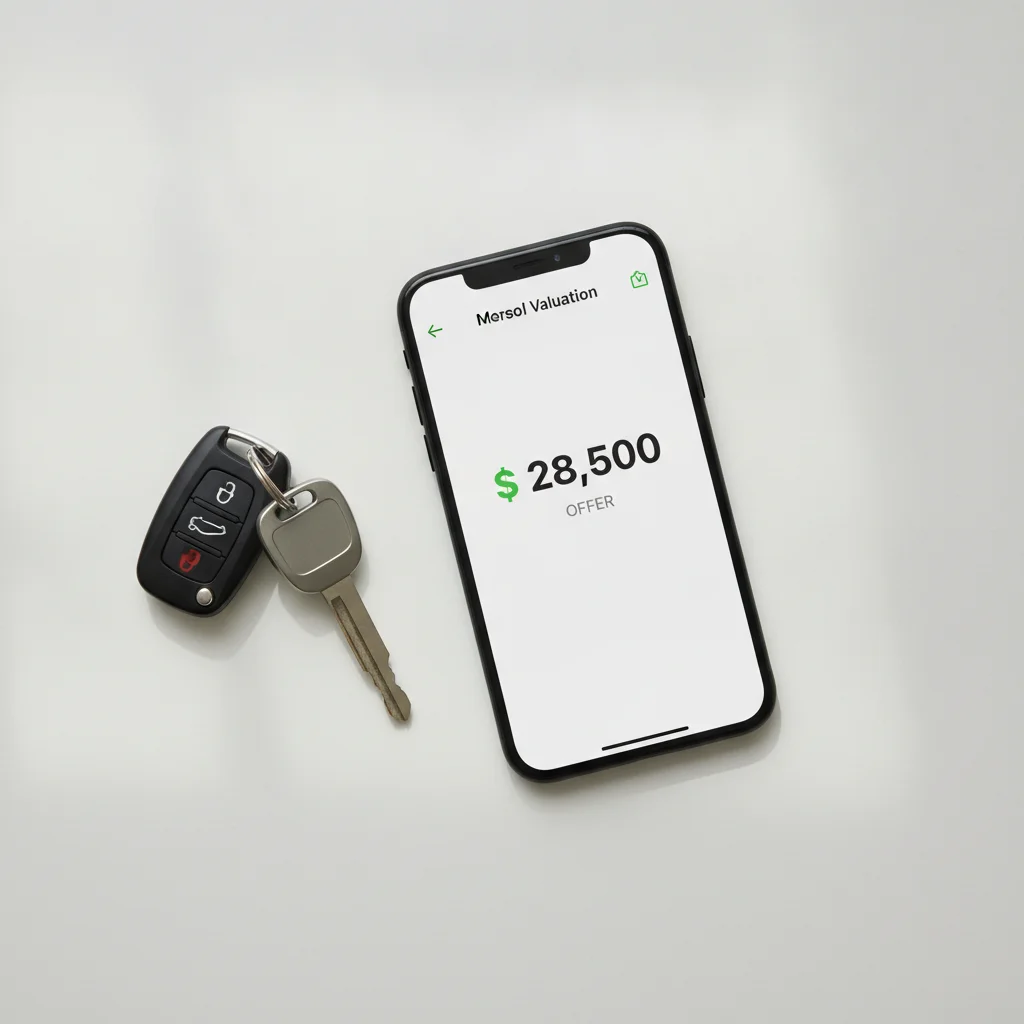
An instant cash offer is a binding or near-binding price quote from a car-buying service — such as CarMax, Carvana, or a dealer using a third-party tool — that promises to purchase your vehicle at a stated dollar amount, usually within 24 to 72 hours. You submit your vehicle's details online, receive an offer algorithmically, and can choose to accept or walk away. No haggling is implied, but conditions apply.
Most offers are conditional until the vehicle undergoes an in-person inspection. Discrepancies between your self-reported condition and the inspector's findings can trigger a revised — often lower — offer at the point of sale.
The Promise vs. the Reality
The pitch is elegant: enter your license plate, answer a few questions about your car's condition, and within minutes you have a cash offer that's good for a week. No negotiating, no strangers from Craigslist, no dealer games. For millions of sellers, that simplicity is genuinely valuable. But the offer you see on screen and the check you walk away with are not always the same number — and understanding the gap between them is where smart sellers make money.
Instant cash offer services — primarily CarMax, Carvana, Vroom, and dealer groups using tools like Kelley Blue Book Instant Cash Offer or TrueCar — are legitimate businesses. They're not scams. But they're also not charities. Every offer is calculated to leave room for the platform to recondition your vehicle, market it, carry it on a lot or digital inventory, and sell it at a profit. That spread is baked into your offer before you ever hit "submit."
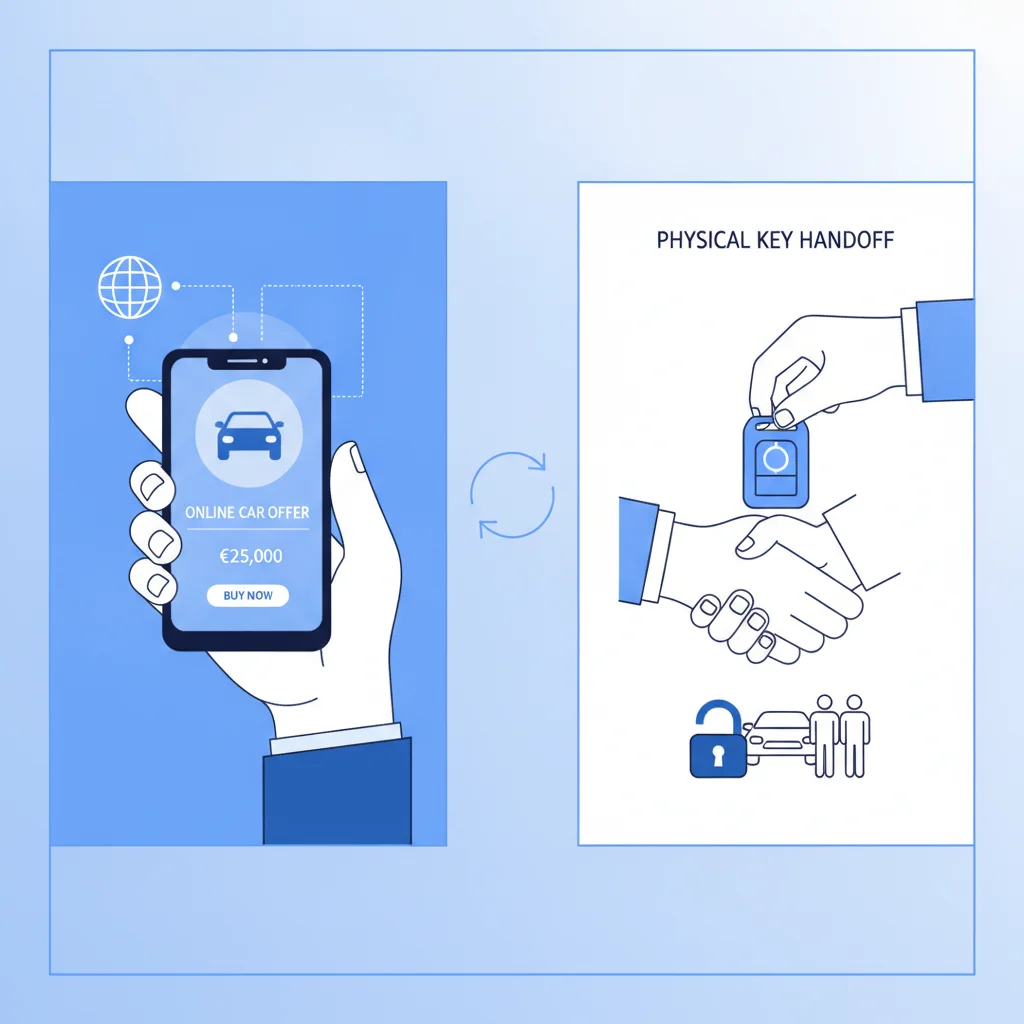
The question you need to answer isn't "is this offer fair?" — it's "fair compared to what?" A CarMax quote might be $2,000 below a private-party sale estimate but $800 above what the dealer down the street would put in writing. Context is everything. To understand the full landscape, see how online car-buying services compare on speed, convenience, and payout.
How the Number Is Generated
There is no appraiser looking at your car when you submit an online form. The offer is produced by a pricing algorithm that pulls from several data inputs simultaneously: your vehicle's year, make, model, trim, mileage, reported condition, regional supply and demand data, recent auction results, and the platform's current inventory needs. In markets where a particular model is selling fast, the algorithm may price more aggressively. Where inventory is sitting, expect a lower floor.
This is important to internalize: the algorithm is optimizing for the platform's profitability, not for your maximum return. It assumes some percentage of sellers will accept the first number they see without checking alternatives. The platforms count on that behavioral pattern. If you're reading this article, you're already ahead of that curve.
5–15%
Typical discount vs. private-party value
Industry data consistently shows instant offer platforms price acquisitions 5–15% below comparable private-party listings, reflecting reconditioning and margin requirements.
7 days
Standard instant offer validity window
CarMax, Carvana, and most major platforms guarantee their quoted price for approximately 7 days before requiring a fresh market-based re-quote.
$500–$1,500
Average reconditioning cost per acquired vehicle
Reconditioning expenses — detailing, mechanical repairs, safety checks — represent a key cost that platforms offset through their acquisition price, per industry estimates.
3x
Offers compared by strategic sellers
Financial advisors and auto experts consistently recommend collecting at least three competing offers before accepting any single instant cash offer to establish a true market floor.
$1,200+
Average lift from using offer as trade-in leverage
Sellers who present a documented instant offer during dealer trade-in negotiations have reported average improvements of over $1,000 versus dealers' opening appraisals, based on buyer forum analyses.
Condition is the biggest wildcard. The online form asks you to self-report whether your car is in "excellent," "good," "fair," or "poor" condition. Most sellers choose "good" when a professional might grade it "fair." That discrepancy doesn't get resolved until inspection — which is why the number that actually gets cut as a check can differ from the screen quote. Understanding the mechanics behind these platforms — from algorithmic pricing to how offers are funded — explains exactly why condition reporting matters so much.
Regional Market Conditions Affect Every Quote
Instant offer algorithms are highly sensitive to regional supply and demand. The same 2021 Toyota Tacoma might receive a meaningfully different quote in Phoenix versus Pittsburgh based on local inventory levels and buyer demand. If you're near a market border, it can be worth checking offers from platforms operating in adjacent regions. Some sellers have found $500–$1,000 differences simply by entering a nearby ZIP code.
Outstanding Loan Balances Are Handled Directly
If you still owe money on your vehicle, the platform will request your lender's payoff quote and handle the transaction directly. This is one area where instant offer platforms genuinely simplify the process compared to private-party sales, where coordinating a loan payoff with a stranger can be legally and logistically complicated. Just confirm your payoff amount with your lender before accepting any offer so you know your actual net proceeds.
What Happens at Inspection
This is the step most sellers underestimate. When you arrive at a CarMax location or schedule a Carvana pickup, a trained inspector goes over your vehicle with a level of scrutiny you probably didn't apply when filling out the online form. They're looking for frame damage, paint overspray indicating prior body work, tire wear, mechanical sounds, interior staining, and anything else that contradicts a "good condition" self-assessment.
If discrepancies exist, you'll be presented with a revised offer — lower than what you were quoted online. At that point, you can accept the revised number, decline it, or (if you drove your car to a physical location) drive away. You're never obligated to sell. But if you've already mentally spent that original number, a last-minute reduction stings. Avoid that scenario by being brutally honest in your initial condition assessment.

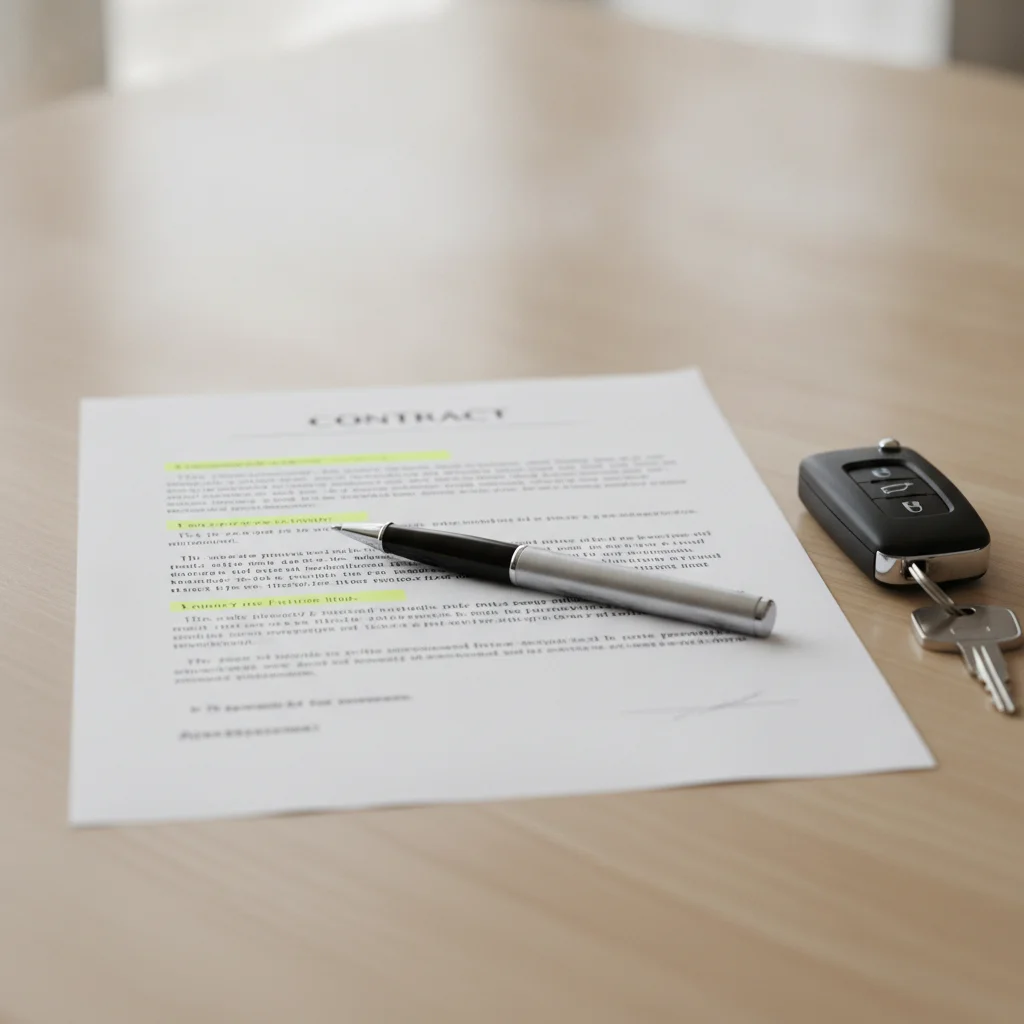
Platforms vary in how transparent they are about adjustment reasons. CarMax will typically walk you through the line-item deductions. Carvana's remote pickup process is sometimes less transparent — the driver hands you paperwork with a revised number, and there's limited room for real-time discussion. Knowing the contract language before you sign protects you from surprises at this stage.
Grade Your Car's Condition Honestly
Before submitting to any platform, walk around your vehicle the way a professional inspector would. Note every scratch deeper than a fingernail, any warning lights, interior stains, and tire tread depth. Selecting one condition grade lower than your optimistic instinct will produce a quote closer to what you'll actually receive — and spare you the frustration of a last-minute revision at pickup.
Print or Screenshot Every Offer You Receive
Competing written offers are your most powerful tool in any trade-in negotiation. A screenshot with a timestamp and dollar amount from CarMax or Carvana is harder for a dealer to dismiss than a verbal claim. Store them somewhere accessible on your phone so you can pull them up at the finance desk without scrambling.
The Business Model Behind the Offer
Instant offer platforms are, fundamentally, used car retailers with an efficient acquisition model. Instead of buying inventory at dealer auctions, they buy it from private sellers — people like you — at wholesale-adjacent prices while preserving the appearance of a consumer-friendly transaction. That's a smart business model. It's also why your offer is structured the way it is.
CarMax, for example, aims to recondition and resell most vehicles it acquires at retail. Vehicles that don't meet their retail standards get wholesaled to dealers at auction. Either way, they need enough margin in the acquisition price to cover reconditioning costs (averaging $500–$1,500 per vehicle industry-wide), holding costs, marketing, and sales overhead. That margin comes directly out of what they offer you.
“These platforms aren't doing you a favor — they're running a business. The offer is designed to be attractive enough that you don't shop it around, but low enough that they make money on the back end. Treat it as an opening benchmark, not a final answer.”
— Desmond Kimathi, Former dealership finance manager and auto financing analyst
Carvana's model adds complexity: the company securitizes the loans it originates on retail sales, meaning its revenue streams go beyond simple buy-sell margin. That doesn't necessarily benefit you as a seller, but it does explain why Carvana can sometimes afford to price acquisitions more aggressively than competitors in markets where they're scaling. For a full picture of how these companies profit, read how instant offer platforms make money on your car.
How to Use These Offers Strategically
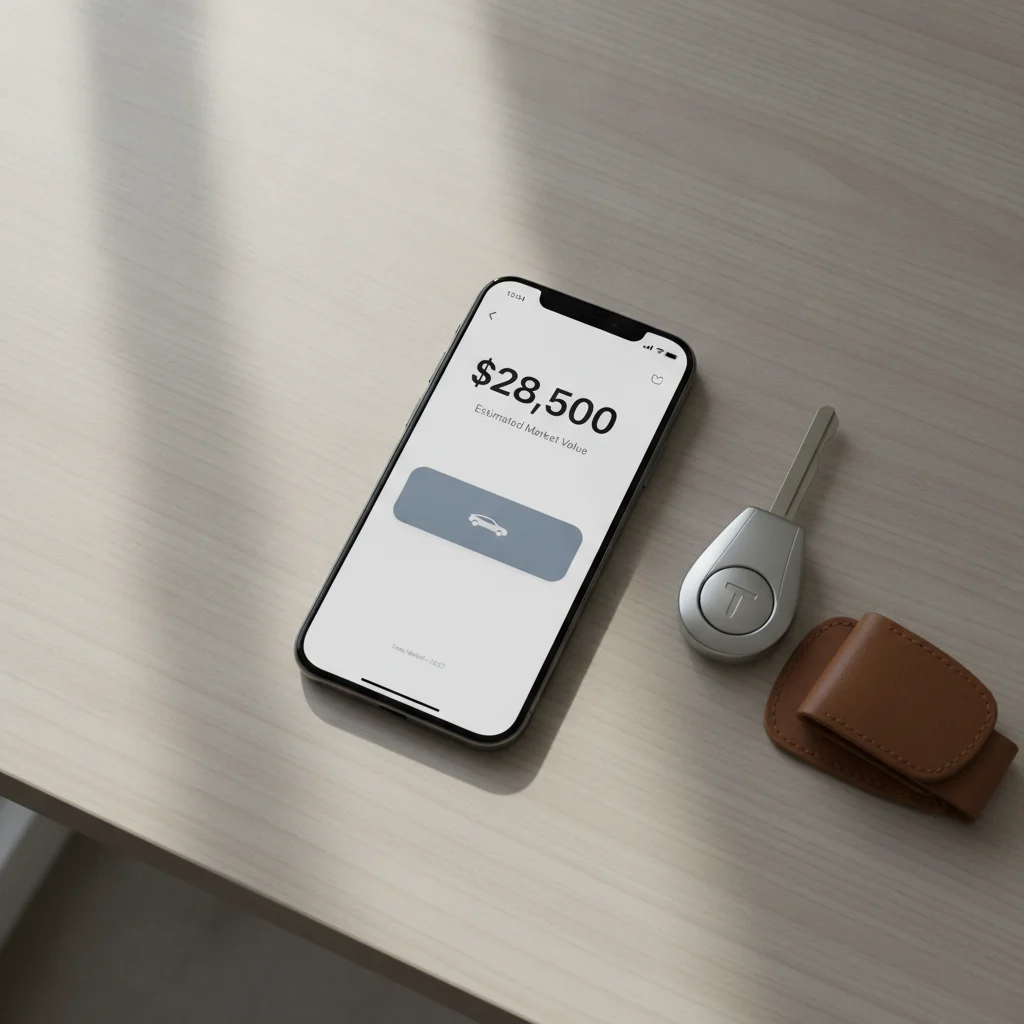
Here's where sellers leave money on the table: they treat an instant cash offer as the destination instead of the starting point. A written offer from CarMax or Carvana is one of the most powerful tools you can bring into a dealer trade-in negotiation — because it's a documented, no-obligation floor price. Any dealer who won't beat it is telling you something important about their trade-in valuation.
- Get offers from at least three platforms before you do anything. CarMax, Carvana, and one local dealer using an instant offer tool. The spread between them reveals how much variability exists in your specific vehicle's market value.
- Get offers before you start shopping for your next car. Once you're emotionally committed to a specific new vehicle at a specific dealership, your leverage shrinks. Know your car's floor value first.
- Use the highest offer as your trade-in baseline. Walk into the dealership with a printed or screenshot confirmation of the best offer you received. Tell them you'll apply the trade-in to this deal only if they can beat it — otherwise you'll sell the car separately.
- Watch the expiration clock. Most offers are valid for 7 days. If you're timing a new car purchase, coordinate your timeline so the offer doesn't lapse mid-negotiation. How expiration policies work across platforms is worth reviewing before you start the clock.
For sellers who simply want speed and certainty — and are willing to accept a below-market price to get it — these services deliver real value. A quick, clean transaction with no private-party risk, no DMV paperwork headaches, and same-day or next-day payment is worth something. Just know what you're trading for that convenience. A ranked breakdown of leading platforms by payout, speed, and seller experience can help you choose the right one for your situation.
Instant Offers vs. Your Other Options
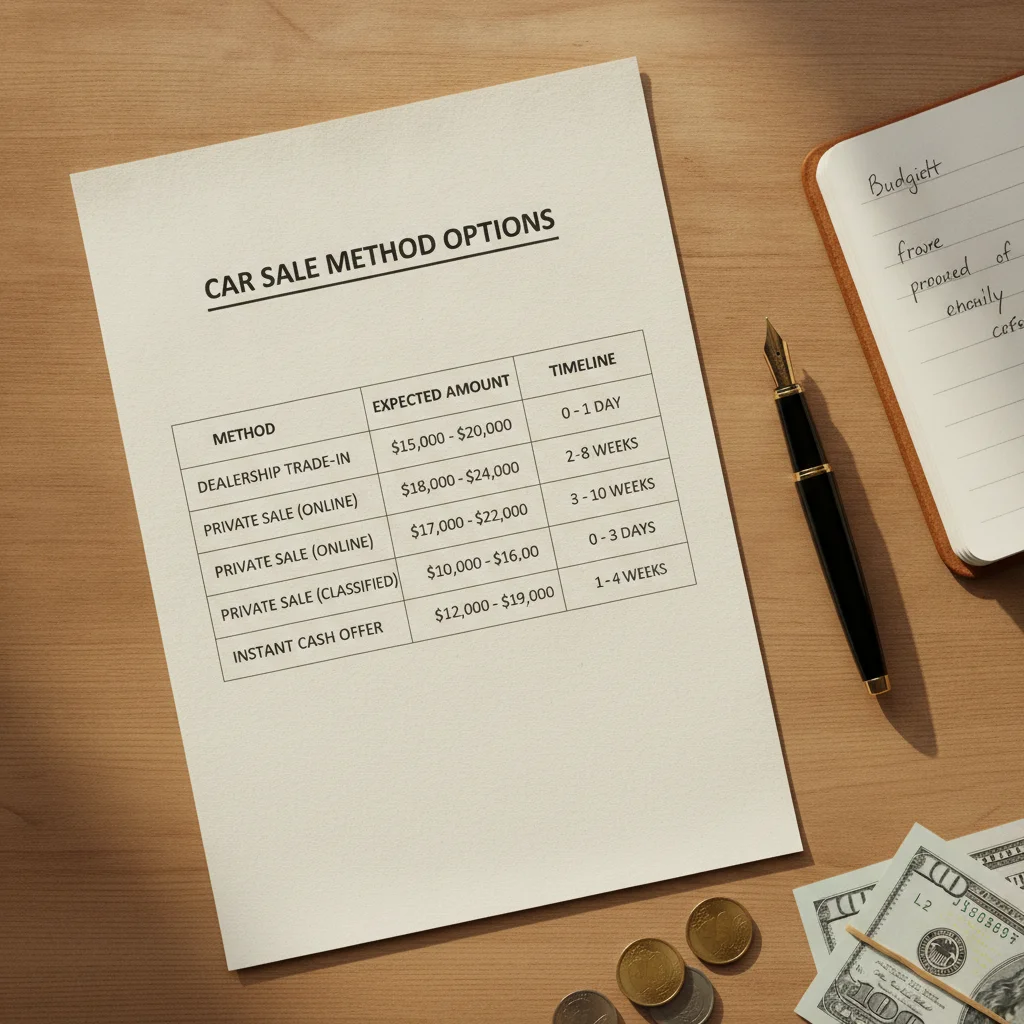
Before accepting any offer, it's worth mapping where it sits relative to your full range of exit options. The spectrum, roughly from lowest to highest typical payout, looks like this:
| Sale Method | Typical Payout vs. Market | Time to Close | Complexity |
|---|---|---|---|
| Dealer trade-in (bundled) | Lowest — often 10–20% below market | Same day | Low, but opaque |
| Instant offer platform | Low-to-mid — typically 5–15% below private party | 1–7 days | Low and transparent |
| Dealer trade-in (standalone) | Variable — can approach instant offer levels | Same day | Medium |
| Private party sale | Highest — closest to retail | Days to weeks | High |
The dealer trade-in bundled into a new car purchase is historically the worst-value option because the numbers get blurred together. A dealer can give you an inflated trade-in value while quietly adjusting the purchase price of the new vehicle to compensate — and most buyers never notice. Having an instant offer in hand neutralizes that tactic completely.
For a direct comparison between these two channels, see how instant cash offers stack up against dealer trade-in appraisals. And if you want to pressure-test whether the platform's number is reasonable, compare it against KBB and Edmunds estimates — the gap will tell you how much convenience is costing you.
Finally, if you've collected competing offers and want to push back on the platform's number, it's not always as locked-in as it appears. Where leverage exists in instant offer negotiations walks through exactly what's on the table and what isn't.

All claims are backed by peer-reviewed research. Sources on request.