Key Takeaways
Always run a VIN-based lookup rather than manually entering year/make/model/trim — manual selection lets you accidentally mismatch your actual factory configuration, inflating or deflating your estimate by hundreds of dollars.
VIN decode pulls exact factory-installed options from manufacturer databases, while manual entry depends on you selecting the right trim and packages — a step many sellers get wrong, especially on vehicles with mid-cycle refreshes or regional option variations.
Pull your Carfax or AutoCheck report before you run any valuation — know your history flags before the tool does, so you can price with eyes open instead of being surprised by a buyer who found the accident record first.
Sellers who discover history issues during negotiation lose leverage entirely. Knowing your own car's history lets you either address the issue (repair, disclose proactively) or pre-price the discount into your ask.
Use CarGurus IMV as a real-time sanity check on local competition — filter to your ZIP code and mileage range to see exactly what you're actually competing against, not just a theoretical average.
CarGurus weights active listings by days on market, giving you a live picture of what buyers in your specific area are seeing and comparing your listing to. This is more actionable than a national average estimate.
If you have documented service records, photograph them and reference them explicitly in your listing — on vehicles over 80,000 miles, this single factor can justify $500–$1,500 above comparable listings without documented history.
Service documentation reduces buyer uncertainty about future maintenance costs, a major anxiety on high-mileage vehicles. Buyers will pay a modest premium to eliminate that risk.
Rate your car's condition honestly using KBB's written definitions — not your emotional assessment. Sellers who rate their car as Excellent and price accordingly face the longest time on market because real buyers downgrade condition after seeing the car in person.
KBB's Excellent condition applies to the top 5% of comparable vehicles. Most private-party cars legitimately qualify as Good or Very Good. Overpricing based on condition misrating is the leading cause of stale private party listings.
Why No Two Valuations Are the Same Number
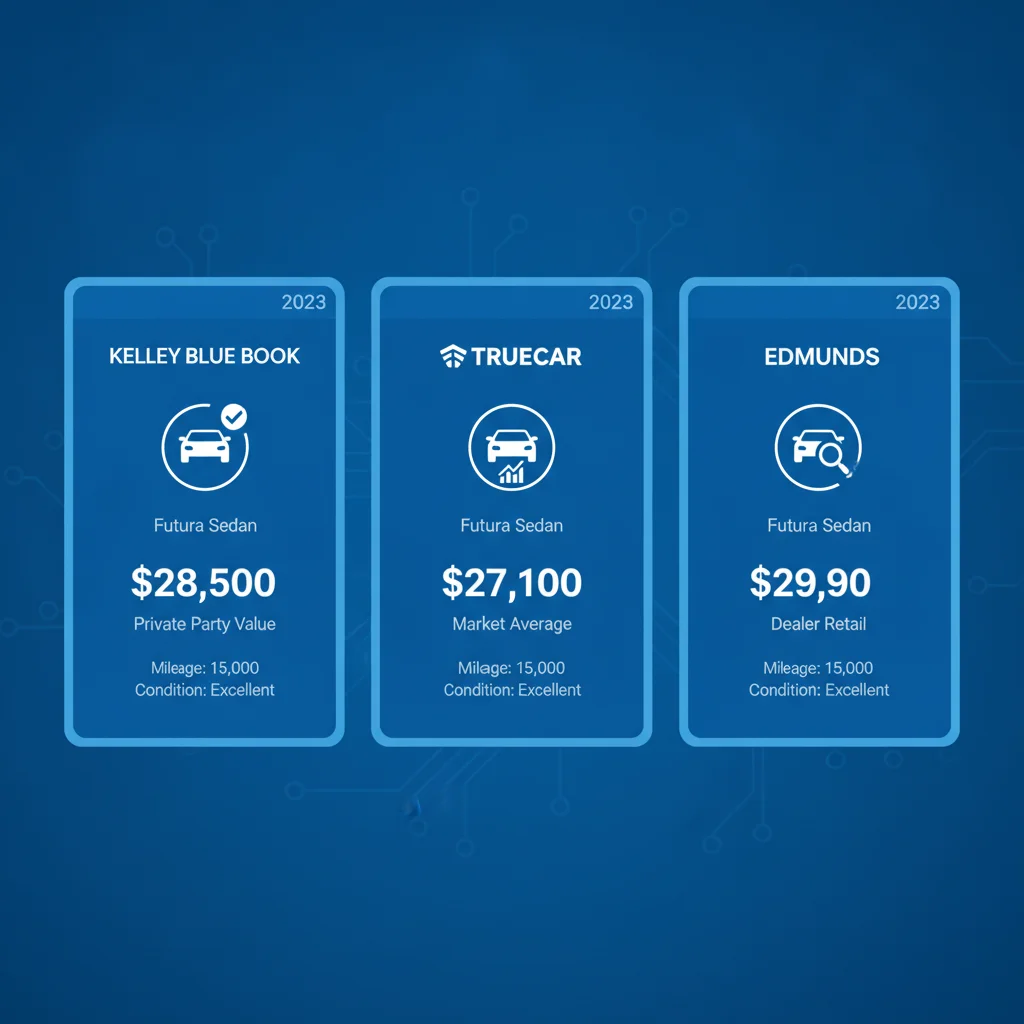
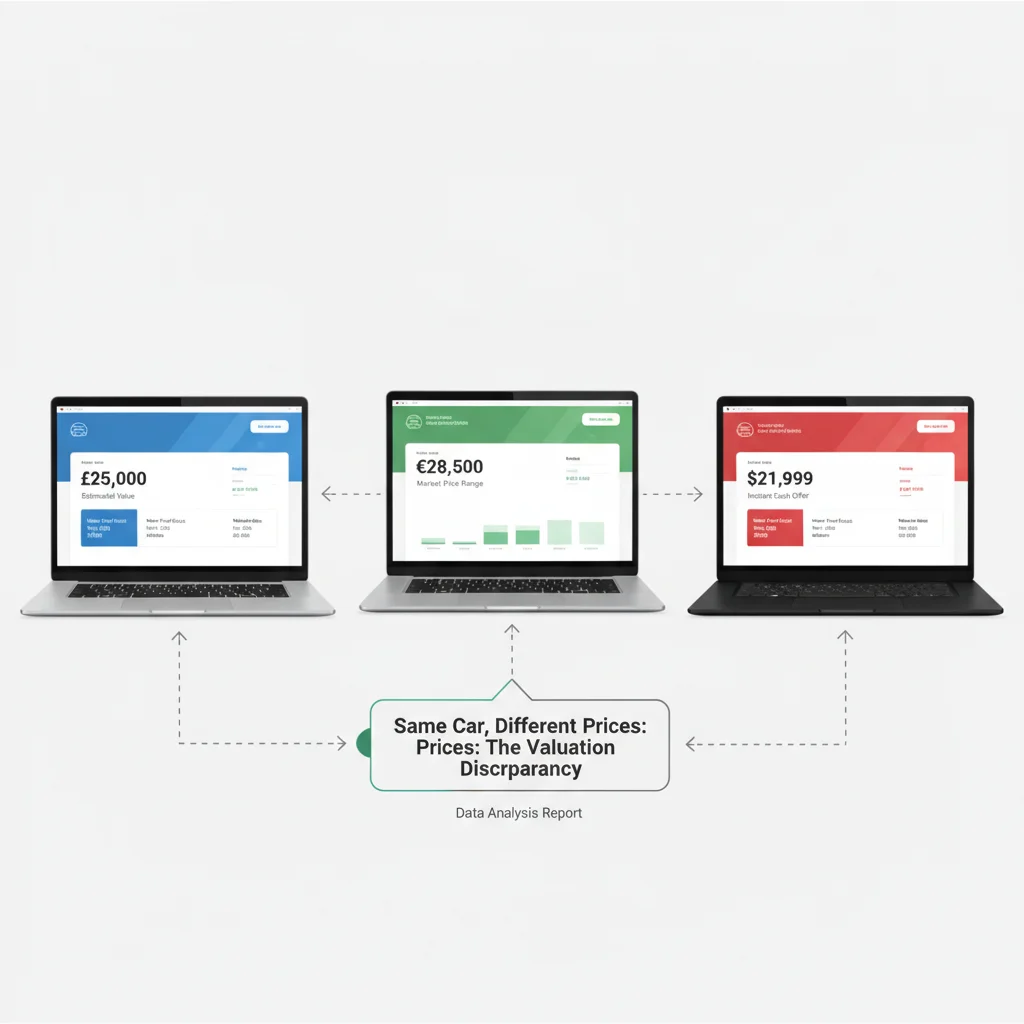
Plug your car into Kelley Blue Book, then Edmunds, then NADA, and you'll rarely get the same number twice. That's not a bug — it's a direct result of each tool using different data pipelines, different weighting models, and different definitions of what "value" even means.
KBB leans on consumer transaction data and dealer auction results. Edmunds prioritizes actual sale prices from dealer inventory. NADA is built primarily for lenders and dealers, calibrated against wholesale auction prices. The result: three legitimately different answers to the same question.
Understanding why that gap exists is the most useful thing you can do before pricing your car, negotiating a trade-in, or deciding whether a used car asking price is fair. This guide walks through every input — from the 17-character VIN to your five-digit ZIP code — that flows into a valuation estimate and explains how much weight each one actually carries.
For a direct methodology comparison, see what KBB, Edmunds, and NADA are actually measuring. And if you want to understand why the numbers diverge so dramatically, here's the methodology behind those gaps.
What Your VIN Reveals to Valuation Tools
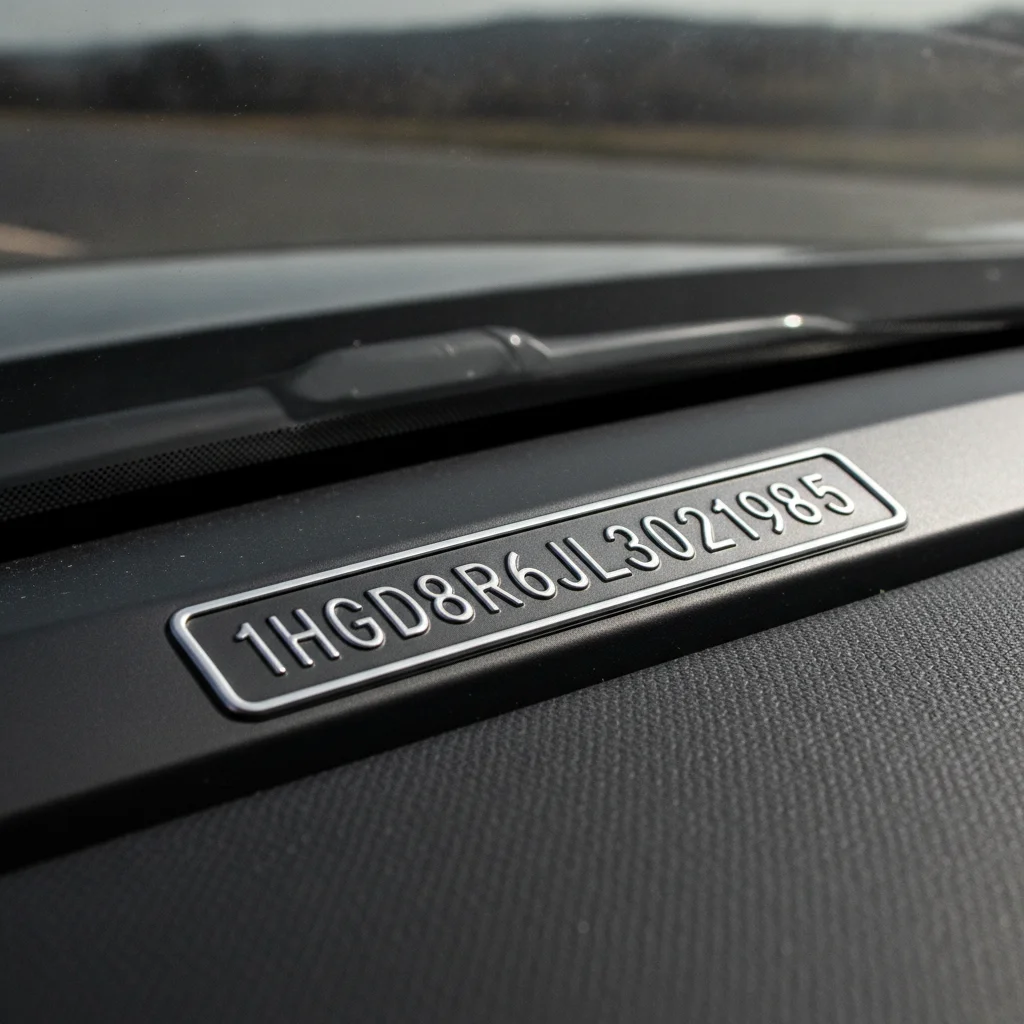
The Vehicle Identification Number is the first lookup key every valuation tool uses. It's not just a serial number — it's a structured 17-character code that encodes the car's entire factory identity.
What each segment tells the tool
- Characters 1–3 (World Manufacturer Identifier): Country of assembly and the manufacturer. A VIN starting with 1, 4, or 5 indicates U.S. assembly; J indicates Japan; W indicates Germany. This matters because import models often have different regional supply dynamics.
- Characters 4–8 (Vehicle Descriptor Section): Body style, engine type, and model series. This is where trim-level logic is encoded. A base 2.5L four-cylinder Camry and a 3.5L V6 XSE Camry will register as entirely different vehicles in the valuation model.
- Character 9 (Check Digit): A mathematical verification digit — tools use this to validate the VIN before proceeding.
- Character 10 (Model Year): Encodes the model year, which directly controls depreciation curves applied to the estimate.
- Character 11 (Plant Code): Assembly plant, which can flag certain production runs with known quality or recall patterns.
- Characters 12–17 (Sequential Production Number): Unique vehicle identifier that allows history services (Carfax, AutoCheck) to attach records to this specific unit.
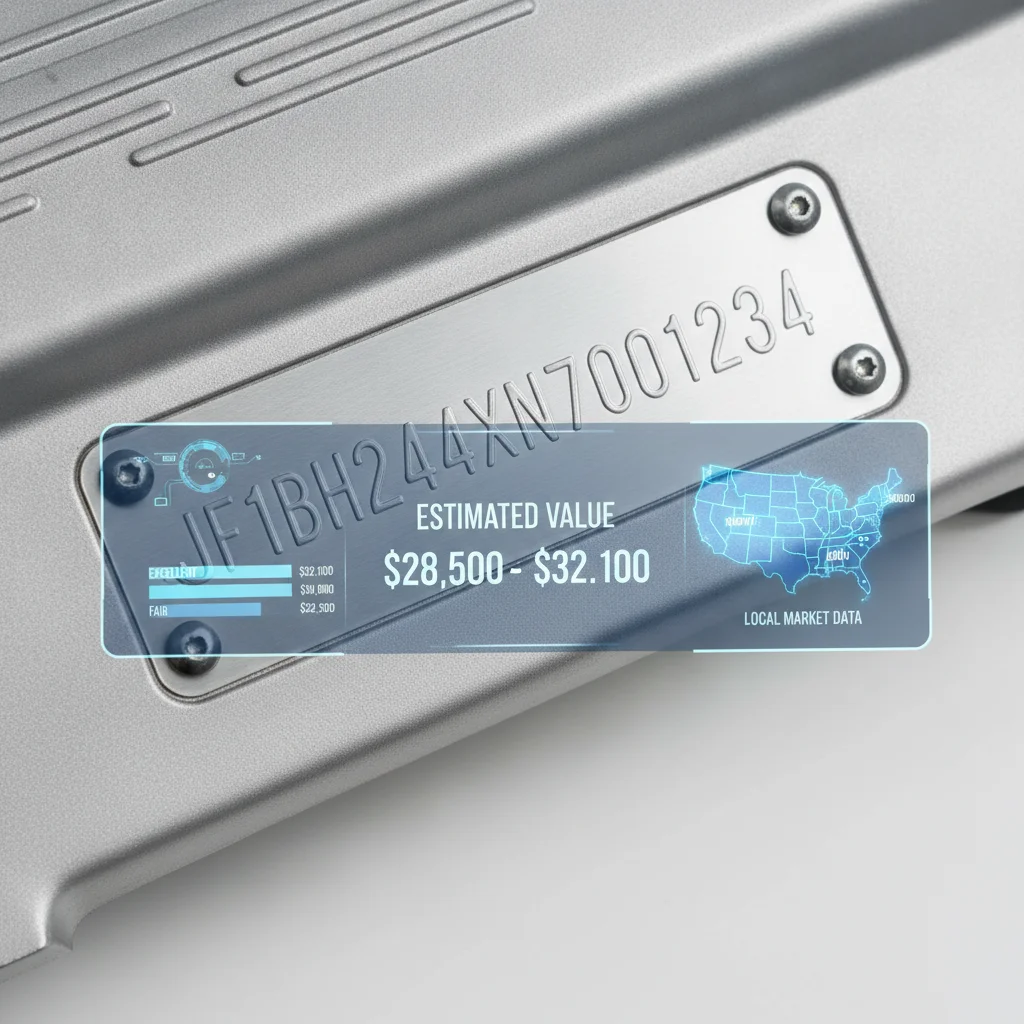
When you enter a VIN rather than just selecting year/make/model/trim manually, the tool retrieves factory-installed options, production constraints, and any relevant recall history attached to that specific vehicle. That's why VIN-based lookups consistently return tighter, more accurate estimates than manual entry. A full VIN decode surfaces even more detail worth knowing before any transaction.
Always run a VIN-based lookup rather than manually entering year/make/model/trim — manual selection lets you accidentally mismatch your actual factory configuration, inflating or deflating your estimate by hundreds of dollars.
VIN decode pulls exact factory-installed options from manufacturer databases, while manual entry depends on you selecting the right trim and packages — a step many sellers get wrong, especially on vehicles with mid-cycle refreshes or regional option variations.
Pull your Carfax or AutoCheck report before you run any valuation — know your history flags before the tool does, so you can price with eyes open instead of being surprised by a buyer who found the accident record first.
Sellers who discover history issues during negotiation lose leverage entirely. Knowing your own car's history lets you either address the issue (repair, disclose proactively) or pre-price the discount into your ask.
Use CarGurus IMV as a real-time sanity check on local competition — filter to your ZIP code and mileage range to see exactly what you're actually competing against, not just a theoretical average.
CarGurus weights active listings by days on market, giving you a live picture of what buyers in your specific area are seeing and comparing your listing to. This is more actionable than a national average estimate.
If you have documented service records, photograph them and reference them explicitly in your listing — on vehicles over 80,000 miles, this single factor can justify $500–$1,500 above comparable listings without documented history.
Service documentation reduces buyer uncertainty about future maintenance costs, a major anxiety on high-mileage vehicles. Buyers will pay a modest premium to eliminate that risk.
Rate your car's condition honestly using KBB's written definitions — not your emotional assessment. Sellers who rate their car as Excellent and price accordingly face the longest time on market because real buyers downgrade condition after seeing the car in person.
KBB's Excellent condition applies to the top 5% of comparable vehicles. Most private-party cars legitimately qualify as Good or Very Good. Overpricing based on condition misrating is the leading cause of stale private party listings.
Vehicle History: The Data Points That Hurt (or Help) Your Number
After decoding the VIN, valuation platforms pull history data — either from integrated Carfax or AutoCheck feeds, or by referencing aggregated incident databases. Here's what that history lookup actually checks and how each event is penalized.

Accident and damage records
A reported accident doesn't produce a flat penalty. Valuation models distinguish between minor cosmetic incidents and structural damage. A single low-speed fender bender with airbags intact typically reduces estimated value by 10–15%. Front-end structural damage or deployed airbags can push that penalty to 20–25% or more on mid-range vehicles.
Unreported accidents don't appear in the valuation model — but they do get flagged during a pre-purchase inspection, which is why sellers who fix undisclosed damage before listing tend to recover more of the repair cost than those who just drop the price.
Title brands
Title brands are the most severe valuation penalties. Expect these approximate reductions from clean-title comparable value:
| Title Brand | Typical Value Reduction |
|---|---|
| Salvage | 40–60% |
| Rebuilt/Reconstructed | 20–40% |
| Flood | 50–75% |
| Lemon Law Buyback | 15–30% |
| Odometer Rollback | May render unsaleable privately |
These penalties exist across all major tools, though the exact multipliers differ. NADA tends to be slightly more conservative with salvage/rebuilt penalties because its primary audience is lenders who won't finance those titles at all.
Number of previous owners
Tools treat owner count as a proxy for use intensity. One-owner vehicles typically command a $300–$800 premium over equivalent two-owner cars. Three or more owners on a vehicle under 80,000 miles triggers additional skepticism in buyer-facing tools like KBB's consumer estimates.
Service and maintenance records
Documented service history — oil changes, timing belt replacements, transmission services — is a positive signal most tools acknowledge but don't always quantify precisely. On luxury vehicles, documented dealer service history can add $500–$1,500 in private-party estimates. On high-mileage economy cars, it matters less.
Unreported Accidents Still Show Up at Inspection
A collision that wasn't reported to insurance and doesn't appear in Carfax will not trigger a penalty in a valuation tool — but it will be discovered by a competent pre-purchase inspector via paint meter readings, panel gap checks, and frame inspection. Buyers who discover undisclosed damage after agreeing to a price will demand steep discounts or walk entirely. Disclose what you know.
Aftermarket Mods Rarely Add Valuation Value
Non-factory modifications — lift kits, aftermarket audio, custom wheels — are not captured by valuation models and often reduce buyer pool size. Don't price a premium for aftermarket additions unless you're specifically targeting enthusiast buyers who value that modification. A mainstream buyer sees aftermarket changes as unknowns, not upgrades.
See how age, mileage, and condition drive depreciation for the broader context on how these history flags compound over time.
How Trim Level, Options, and Color Move the Estimate
Trim level is one of the highest-leverage variables in any valuation model — often more impactful than condition adjustments, especially on newer vehicles. Here's how the major inputs work.
Trim level
The gap between base and top trim on the same model can be $4,000–$12,000 at initial transaction, and that spread compresses but doesn't disappear over time. A three-year-old base Honda CR-V and a three-year-old Touring CR-V may look identical at a glance but carry meaningfully different valuations. Valuation tools identify trim via VIN decode or manual selection — manual entry creates risk of mis-selection that leads to inflated or deflated estimates.
Factory-installed options and packages
Factory packages (sunroof, tow package, premium audio, AWD vs. FWD) are encoded in the VIN descriptor section and therefore captured automatically during VIN lookup. Aftermarket additions — a third-party stereo, added roof rack, or non-factory lift kit — are generally excluded from valuation models entirely. In many cases, aftermarket modifications reduce value compared to stock configurations because they signal modified vehicle history and limit the buyer pool.
Color
Color has a real but modest effect. Black, white, silver, and gray — the neutrals — sell faster and hold value slightly better because they appeal to the widest buyer pool. Unusual colors (bright yellow, two-tone custom, bright orange on a non-sports model) can reduce resale value by $500–$1,500 on mainstream vehicles. Performance cars are a notable exception — certain colors (Porsche Guards Red, Ford Mustang Grabber Blue) can carry a premium with enthusiast buyers.
For a deeper look at exactly how these attribute adjustments flow through valuation formulas, see how mileage, trim level, and color move your valuation number.
$4,000–$12,000
Value gap between base and top trim, same model
Factory trim differences compress over time but remain significant even on 5–7 year old vehicles across most mainstream models.
3–7%
Typical asking vs. transaction price spread on used cars
Industry transaction data shows that listed prices on used vehicles consistently run above final cleared sale prices, with negotiation accounting for most of the gap.
$1,000–$3,000
Regional ZIP code effect on estimated vehicle value
The same vehicle can legitimately carry a multi-thousand dollar value difference between rural and urban markets based on local supply and buyer competition.
40–60%
Value reduction for salvage title vehicles
Lender-calibrated tools like NADA and consumer tools like KBB both apply substantial salvage title penalties, as most lenders will not finance these vehicles.
$800–$1,500
Value difference per condition grade step
On a $20,000 vehicle, moving from Fair to Good or Good to Very Good condition typically shifts estimated value by $800–$1,500 per grade across major platforms.
Mileage and Condition: The Two Variables You Can Control
Of all the inputs, mileage and condition are the two sellers most directly influence — either through how they've maintained the car or through targeted prep before listing.
Mileage
Valuation models use average annual mileage benchmarks — typically 12,000–15,000 miles per year — as the baseline. The penalty curves are not linear. Here's roughly how mileage deviation affects value on a typical five-year-old mid-size sedan worth $18,000 at average miles:
- 10,000 miles below average: +$700 to +$1,200 premium
- 10,000 miles above average: -$600 to -$1,000 penalty
- 30,000+ miles above average: -$2,500 to -$4,000 penalty (disproportionately steep)
High mileage also interacts with age. A 2-year-old car with 60,000 miles raises red flags that a 7-year-old car with 60,000 miles doesn't — because the per-year rate signals hard use rather than simple age-driven accumulation.
Condition ratings
Every major valuation tool uses a condition scale, but they don't define the grades identically. KBB's five-tier system (Poor, Fair, Good, Very Good, Excellent) and Edmunds' four-tier system (Outstanding, Clean, Average, Rough) describe overlapping but not identical standards. The dollar difference between adjacent condition grades on a $20,000 vehicle typically runs $800–$1,500 per step. Moving a car from Fair to Good condition through detailing and minor repairs can return $1,200–$2,000 in estimated value on a $15,000 vehicle — often exceeding the cost of that prep work.
Prep Your Car Before Running Valuations
Run a thorough detail and address obvious cosmetic flaws before entering your condition rating in any tool. The difference between a Fair and Good condition rating is often $1,000–$1,500 in estimated value — and a professional detail plus minor paint correction typically costs $150–$400. That's a strong return on investment before you've even listed.
Cross-Reference at Least Three Tools
Never rely on a single valuation tool when pricing to sell. Pull KBB private party, Edmunds TMV, and CarGurus IMV for your ZIP code. If all three cluster within $500 of each other, you have a solid consensus range. If they diverge by more than $1,500, dig into which data source each is using — the gap usually traces back to asking price vs. transaction data differences.
List Just Below the CarGurus 'Good Deal' Threshold
CarGurus labels listings as 'Great Deal,' 'Good Deal,' 'Fair Deal,' 'High Price,' or 'Overpriced' based on its IMV. Listings labeled 'Good Deal' or better receive significantly more buyer inquiries. Price your car just below the IMV — even by $200–$300 — to capture that label and front-page visibility on CarGurus search results.
The Detailing & Repairs hub covers exactly which cleaning and fix-up steps deliver the best ROI before a sale.
Honestly rating your own condition
This is where sellers consistently over-estimate. "Excellent" in KBB's definition means the car looks new, has no mechanical issues, and is in the top 5% of comparable vehicles — not "it looks good to me." Most privately owned used cars rate Good or Very Good, not Excellent. Overrating condition inflates your expectations and leads to stale listings when the market doesn't confirm your self-assessment.
Don't Conflate Dealer Retail With Private Party Value
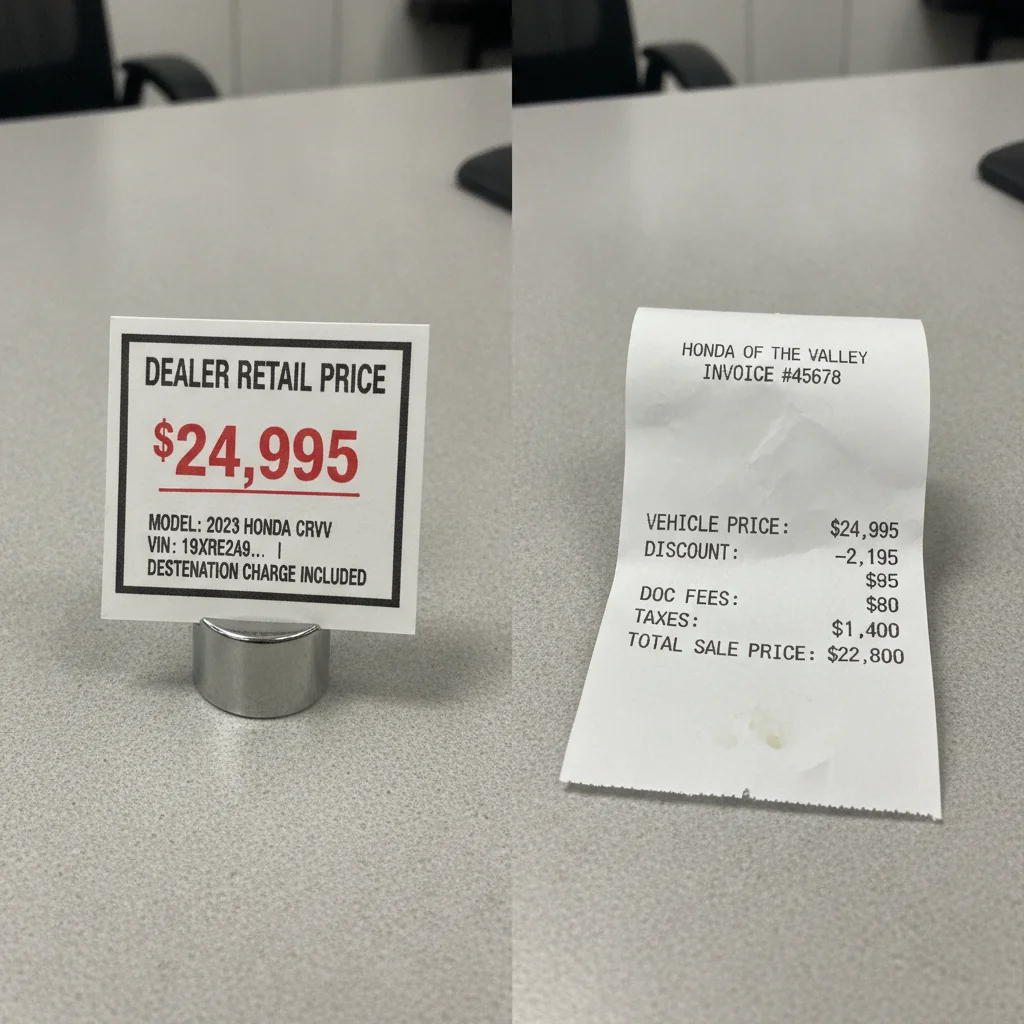
Dealer retail value includes the dealer's reconditioning cost, overhead, and profit margin — it is not a ceiling for what you should ask as a private seller. Pricing your private listing at or near dealer retail is the single fastest way to ensure your car sits unsold. Private party value is the correct benchmark for seller-to-buyer transactions, and it typically runs $1,500–$3,500 below dealer retail on mainstream vehicles.
Condition Overrating Will Stall Your Sale
Entering a condition rating higher than your car actually deserves doesn't just give you an inflated estimate — it sets buyer expectations your car cannot meet in person. A buyer who feels deceived by the gap between your stated condition and the vehicle's actual state will either walk or hammer your price down further than they would have if you'd priced accurately from the start. Be honest in your condition rating.
How Your ZIP Code Shapes the Final Number
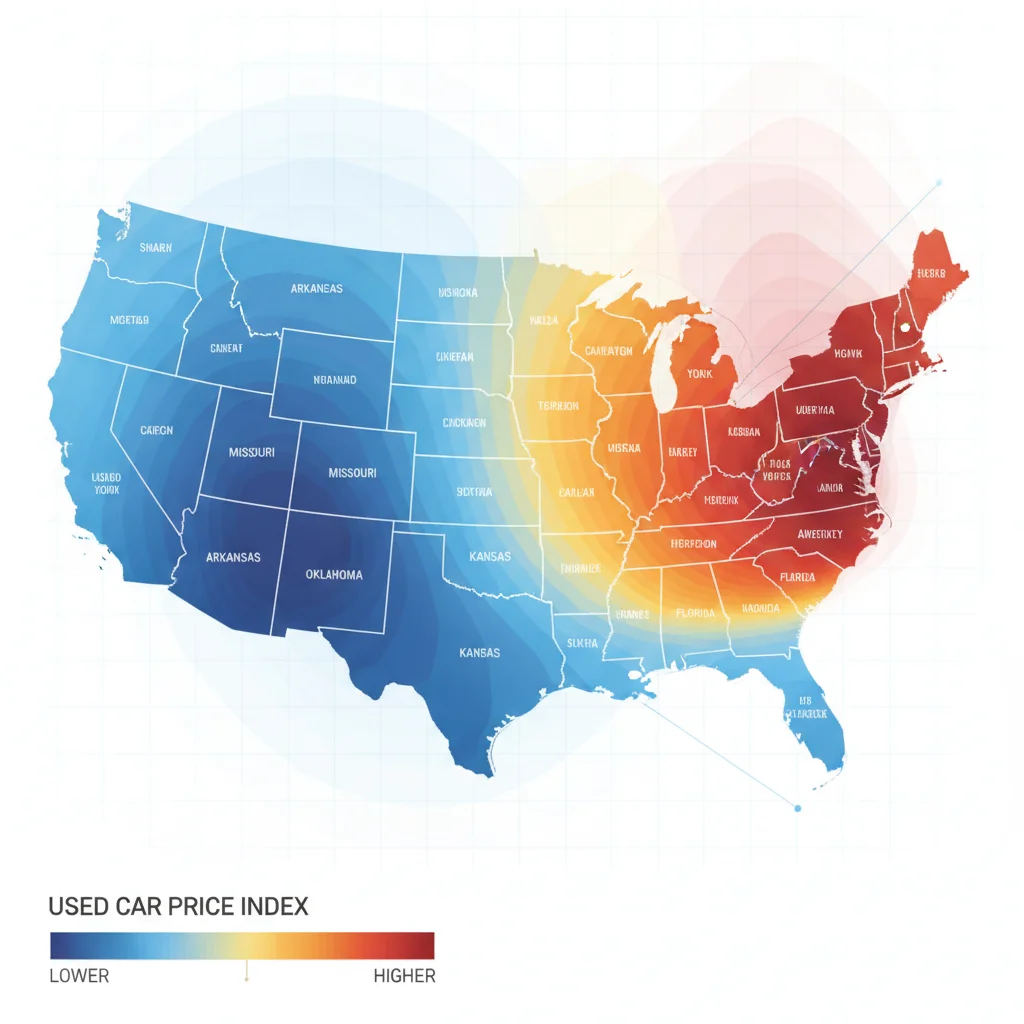
Regional supply and demand is one of the most underappreciated levers in vehicle valuation. The same 2020 Toyota Tacoma TRD Off-Road can carry a legitimate $2,500–$4,000 difference in market value between a rural mountain-state market and a dense coastal metro — not because the trucks are different, but because local buyer competition and inventory levels diverge sharply.
What ZIP-based adjustments actually measure
- Local inventory levels: If there are 45 comparable trucks within 50 miles of a ZIP, prices are softer. If there are 8, sellers have leverage.
- Regional demand patterns: Pickup trucks command premiums in rural and suburban markets. Small hatchbacks and EVs command premiums in dense urban markets with parking constraints and HOV lane access.
- Seasonal demand cycles: Convertibles spike in spring; AWD SUVs spike in October–November in snow-belt markets. ZIP-code data lets tools apply seasonal curves specific to your region rather than national averages.
- Income and credit environment: Lender-centric tools like NADA factor in regional loan availability, which influences how much buyers can actually transact at in a given area.
Entering an accurate ZIP code is not optional if you want a defensible estimate. Using a nearby metro's ZIP when you're actually in a rural area — or vice versa — can shift your estimate by $1,000–$3,000 in the wrong direction.
Valuation Tools Don't Predict Future Depreciation
Valuation estimates reflect current market conditions — they are not forward-looking. A model that's currently holding value well due to supply constraints (post-pandemic inventory shortages being the clearest example) can depreciate sharply once supply normalizes. Use current estimates for current decisions, not as projections of what the car will be worth in 12 months.
NADA Is the Lender's Reference, Not the Seller's
NADA guides are calibrated for the wholesale and lending market. Lenders use NADA (or licensed J.D. Power data derived from NADA methodology) to determine how much they'll finance against a vehicle. If you're a private seller, NADA's retail values are useful for understanding your floor, but Edmunds and KBB private party values are more relevant for setting your asking price.
Seasonal Market Timing Affects All Valuations
Valuation tools do incorporate seasonal adjustment, but they lag real-time market conditions. A convertible valued in October will appear lower than its true spring market value; AWD SUVs valued in June may appear lower than their fall value. If you're near a seasonal peak for your vehicle type, check active listings to confirm whether the market is actually running ahead of the tool's estimate.
This geographic sensitivity parallels how insurers use your address to price risk — here's what your ZIP code tells your insurer and why it moves premiums substantially too.
Real Transaction Comps vs. Asking Price Data
This is one of the most important distinctions in vehicle valuation — and most sellers don't know to ask which one a tool is using.
Asking price data
Tools that aggregate active listings (Cars.com listing data, dealer inventory feeds) are telling you what sellers are asking, not what buyers are paying. Asking prices run systematically higher than transaction prices for a simple reason: listings include room for negotiation. The spread between asking price and final transaction price on used cars typically runs 3–7% depending on market conditions and vehicle type.
Transaction/sale data
Edmunds' True Market Value and dealer auction data feeds represent actual cleared transactions — what someone actually paid at a dealer or what a wholesale buyer paid at auction. These are tighter anchors for realistic pricing.
Private party vs. dealer retail vs. trade-in
Every major tool distinguishes three separate value channels. Understanding which channel applies to your situation is critical:
- Private Party Value
- What you'd realistically receive selling directly to another individual. Typically $1,000–$3,000 above trade-in on most vehicles. This is the number private sellers should anchor to when pricing a listing.
- Dealer Retail Value
- What a dealer would list and sell the car for after reconditioning. Includes dealer profit margin and refurbishment costs. Not a useful number for private party sellers.
- Trade-in Value
- What a dealer would offer you in a trade. This is the wholesale floor — typically the lowest of the three. It factors in the dealer's reconditioning cost, auction fees, and profit margin.
“The biggest mistake sellers make is treating a valuation estimate as a price guarantee rather than a market signal. These tools are telling you what comparable cars are trading for — not what your specific car is guaranteed to sell for on the day you list it.”
— Ivan Drury, Director of Insights, Edmunds
For a full head-to-head comparison of how each tool handles these distinctions, see the major car valuation tools compared side by side.
How Each Major Tool Weights These Variables
The variables are largely the same across tools. The differences lie in how each tool weights them and what data sources feed the underlying model.
Kelley Blue Book (KBB)
KBB's consumer-facing estimates weight local market data heavily — it adjusts estimates based on ZIP code and incorporates actual dealer transaction data from its Cox Automotive network. It tends to publish slightly higher private party values than Edmunds, which has led to a perception that KBB "runs high." That's not inaccurate for seller-side use, but it can create unrealistic expectations if buyers are using it too.
Edmunds True Market Value (TMV)
Edmunds emphasizes actual transaction prices at the dealer level. Its TMV methodology is explicitly designed to reflect what people are paying, not what they're asking. This makes Edmunds the more conservative — and arguably more accurate — estimate for sellers who want to price competitively and move the car in a reasonable timeframe.
NADA Guides
NADA is calibrated for lenders and dealers. Its values reflect what a dealer would reasonably expect to transact at in the current wholesale and retail environment. NADA runs especially useful for understanding lender collateral values — the number that determines how much a bank will finance against a given vehicle. NADA's clean retail values often come in lower than KBB's private party estimates by $300–$1,200 on mainstream vehicles.
CarGurus Instant Market Value (IMV)
CarGurus derives its IMV from active listing data weighted by days on market — essentially a demand-adjusted asking price. Vehicles priced above IMV get flagged as "overpriced" in the CarGurus interface, which directly affects buyer perception. Its strength is real-time supply/demand sensitivity; its weakness is that it reflects asking prices rather than actual transaction prices.
Which Number to Use — and When
Here's the practical answer most guides avoid giving: no single tool is universally correct. The right tool depends on what you're trying to accomplish.
Pricing a private party listing
Start with Edmunds TMV (private party) as your floor and KBB private party as your ceiling. Price in that range — closer to the Edmunds number if you need to sell in under three weeks, closer to KBB if you're willing to wait 4–6 weeks for the right buyer. Pull CarGurus IMV to see what the active market looks like in your ZIP code specifically — if there are 20 nearly identical vehicles listed below your asking price, that context matters more than any tool's estimate.
Evaluating a dealer trade-in offer
Use NADA trade-in value as your baseline. If a dealer offers you 10–15% below NADA clean trade-in, that's within the normal range given their reconditioning costs. More than 20% below NADA is a lowball — walk away or use it as negotiating leverage.
Buying from a private seller
Use Edmunds TMV (private party) as your reference. If the listing price exceeds Edmunds TMV by more than 10% with no extraordinary justification (ultra-low miles, full service records, rare options), you have room to negotiate — or a reason to move on.
Financing or insuring
Lenders use NADA or their own internal systems (often licensed from J.D. Power). Insurers use their own replacement cost databases — valuation tools you check as a consumer don't directly match what an insurer will pay on a total loss claim. The variables insurers feed into your auto insurance quote explains the separate data model insurers use when pricing your policy.
Prep Your Car Before Running Valuations
Run a thorough detail and address obvious cosmetic flaws before entering your condition rating in any tool. The difference between a Fair and Good condition rating is often $1,000–$1,500 in estimated value — and a professional detail plus minor paint correction typically costs $150–$400. That's a strong return on investment before you've even listed.
Cross-Reference at Least Three Tools
Never rely on a single valuation tool when pricing to sell. Pull KBB private party, Edmunds TMV, and CarGurus IMV for your ZIP code. If all three cluster within $500 of each other, you have a solid consensus range. If they diverge by more than $1,500, dig into which data source each is using — the gap usually traces back to asking price vs. transaction data differences.
List Just Below the CarGurus 'Good Deal' Threshold
CarGurus labels listings as 'Great Deal,' 'Good Deal,' 'Fair Deal,' 'High Price,' or 'Overpriced' based on its IMV. Listings labeled 'Good Deal' or better receive significantly more buyer inquiries. Price your car just below the IMV — even by $200–$300 — to capture that label and front-page visibility on CarGurus search results.
Kelley Blue Book (KBB)
KBB's private party and trade-in estimator uses Cox Automotive's transaction network and ZIP code data. Best for establishing the upper range of private party pricing expectations.
Edmunds True Market Value (TMV)
Edmunds TMV reflects actual dealer transaction prices, making it the most grounded estimate for sellers who want to price to move. Also includes private party and trade-in breakdowns.
CarGurus Instant Market Value
CarGurus IMV is derived from active listing data weighted by days on market, giving real-time local supply and demand context. Essential for understanding your direct competition before listing.
Carfax Vehicle History Report
Pulls accident records, title history, service records, and owner count attached to a specific VIN. Run this before any valuation exercise so you know your own history flags.
NADA Guides
NADA values are calibrated for lenders and dealers. Use NADA trade-in value as your floor when evaluating dealer trade-in offers and as a reference when understanding lender collateral values.
Major Car Valuation Tools Compared Side by Side
A detailed comparison of KBB, Edmunds, NADA, CarGurus, and other tools — methodology, data sources, and use cases laid out in one reference. Useful before committing to any single tool's number.
The bottom line: use multiple tools, understand what each one is measuring, and weight your decision toward actual transaction data rather than asking prices. The seller who understands their car's inputs — trim, history, mileage, condition, local supply — will always be better positioned than the one who just accepts the first number a single tool outputs.

All claims are backed by peer-reviewed research. Sources on request.