Key Takeaways
Our Verdict
For private sellers, Edmunds and CarGurus together give the most accurate, transaction-grounded picture of what your car is worth today. KBB remains the most trusted brand name and useful for buyer negotiations, while NADA is best understood as a lender's tool. No tool alone tells the whole story — the smart move is to triangulate at least two before committing to a price.
| Best for | Recommended |
|---|---|
| Private sellers setting a listing price | Edmunds + CarGurus |
| Negotiating a dealer trade-in | KBB Instant Cash Offer |
| Lenders and financing decisions | NADA Guides |
| Checking real-time local market demand | CarGurus |
Why Valuation Tools Produce Different Numbers
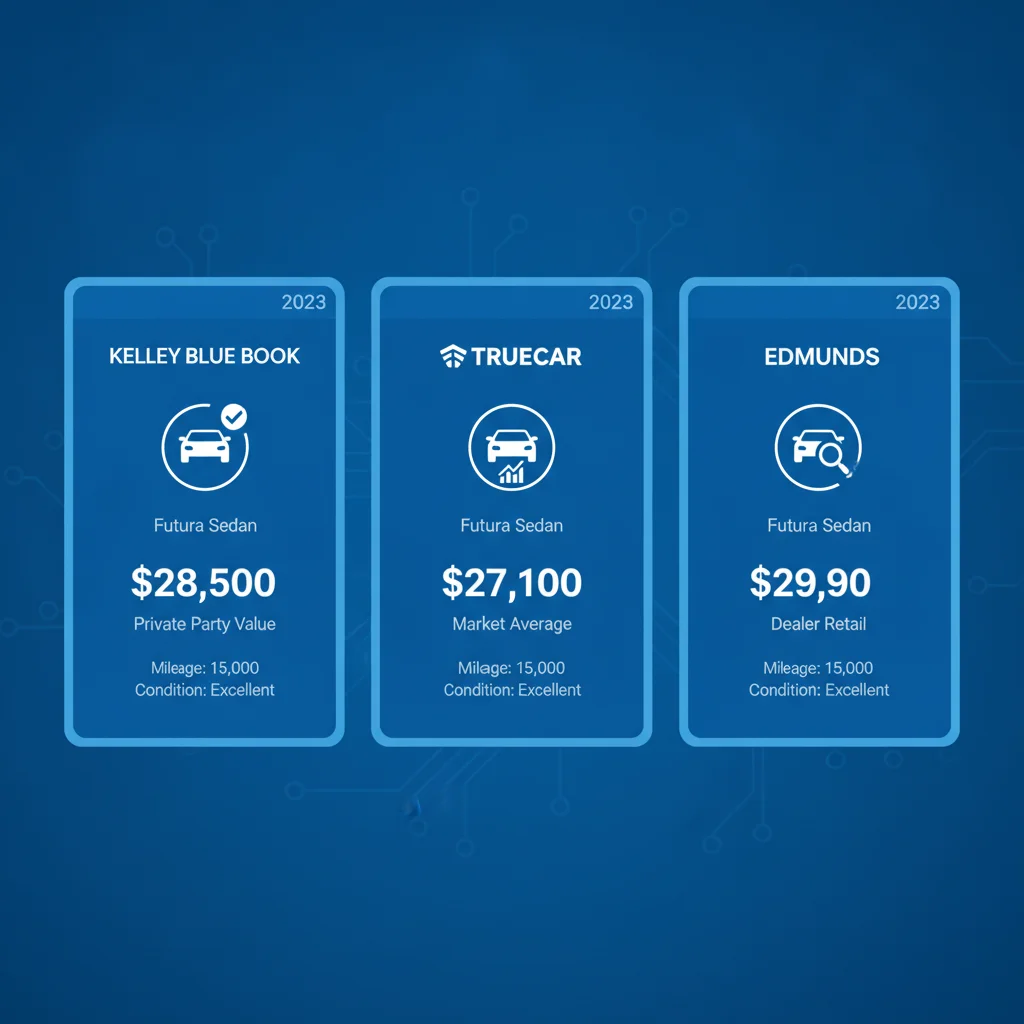
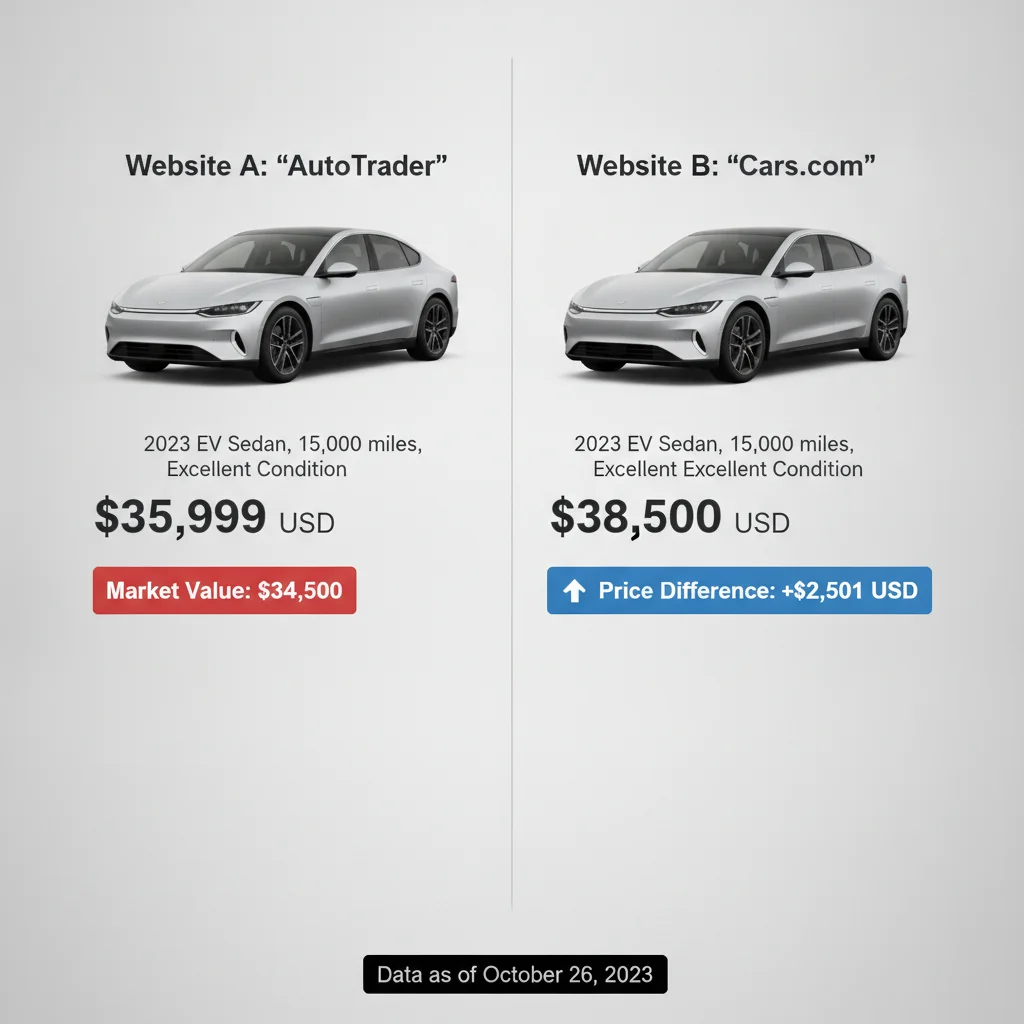
Pull up KBB, Edmunds, and NADA on the same car and you might see a $3,000 spread. That's not a glitch — it's a direct result of each platform using different data sources, different weighting formulas, and different definitions of what a car is "worth." Worth to whom? A lender? A dealer? A private buyer? Each tool has a primary audience, and that shapes everything downstream.
Before comparing the tools side by side, it helps to understand the two broad categories of valuation data:
- Guide-based values — Published benchmarks derived from historical auction data, dealer transaction reports, and statistical modeling. KBB and NADA operate primarily this way.
- Market-based values — Aggregated from actual live listings and recent sales on classified platforms. CarGurus and Edmunds lean more heavily into this approach.
Neither approach is wrong, but they answer slightly different questions. Guide-based values ask, "What has this type of car been worth historically?" Market-based values ask, "What are buyers paying for this car right now?" In a stable market, those answers converge. In volatile markets — like the post-pandemic used car surge — they can diverge significantly.
Understanding why your car's valuation differs across every tool is the first step toward using these resources intelligently rather than picking whichever number you like best.
Kelley Blue Book (KBB): The Brand Everyone Recognizes
KBB is the most widely recognized valuation brand in the U.S. — so much so that "Blue Book value" has become a generic term. Owned by Cox Automotive since 2010, KBB publishes values across four transaction types: private party, trade-in (range), dealer retail, and Certified Pre-Owned. It also offers an Instant Cash Offer program where participating dealers will honor a guaranteed purchase price.
Data Sources and Methodology
KBB draws from a mix of wholesale auction data, dealer transaction records, and its own market analysis team. Values are updated weekly but reflect a national average, which means your actual local market can differ — sometimes substantially. A 2018 Honda Accord in Phoenix might fetch $1,500 more than the same car in rural Ohio simply due to demand density.
Where KBB Is Most Useful
- Buyer negotiations: Because buyers trust KBB by name, citing it in a listing or negotiation carries weight.
- Trade-in baseline: The KBB trade-in range gives you a defensible floor when walking into a dealership.
- Instant Cash Offer: If you want a guaranteed offer without haggling, KBB's dealer network can execute quickly.
KBB's Known Limitations
KBB's private party values have historically run slightly optimistic — meaning the number they publish is often above what the market will actually pay. This makes it appealing to sellers emotionally but can set unrealistic expectations. Their condition definitions (Excellent, Good, Fair, Poor) are also self-reported, which introduces bias. Most sellers rate their car "Good" or "Excellent" when the market sees it as "Fair."
Always Check the Condition Definitions
Every tool uses condition grades — Excellent, Good, Fair, Poor — but their definitions differ. Before accepting any number, read the tool's condition criteria carefully. KBB's 'Good' condition assumes no mechanical issues, minor exterior wear, and a clean interior. If your car has a cracked bumper or torn seat, you're likely in 'Fair' territory, which can drop the value by $800–$2,000 on a typical used car.
Use Your Instant Offer as a Walk-Away Floor
Before listing your car privately, get a CarMax or Carvana quote. This gives you a real, no-hassle number you can fall back on if the private sale drags. If a buyer lowballs you below your instant offer price, you have a concrete alternative — and that's powerful negotiating leverage. Never walk into a private sale without knowing your floor.
If you're comparing KBB to a dealer's offer, always use the KBB Trade-In Value (not Private Party) as your benchmark — those are two different markets with different buyers.
Edmunds True Market Value (TMV): The Analyst's Tool
Edmunds True Market Value — or TMV — is arguably the most rigorous of the mainstream valuation tools. Unlike KBB's guide-based approach, Edmunds bases TMV on actual transaction prices from dealers and private sales in your specific geographic region. That distinction matters enormously.
How TMV Works
Edmunds collects anonymized transaction data from dealerships and uses that to model what a car is selling for right now, not what it sold for three months ago. The result is a number that tracks market reality more tightly than historically anchored guide values. Edmunds also breaks out pricing by ZIP code region, which narrows the gap between national average and local reality.
Where Edmunds Shines
- Setting a realistic asking price: TMV private party values tend to be more grounded than KBB equivalents, particularly on common makes and models with strong transaction volume.
- New car negotiations: Edmunds is widely regarded as the best tool for new car pricing — their dealer invoice data and market pricing intel are detailed and frequently updated.
- Used car research: Edmunds pairs TMV with expert reviews, reliability ratings, and ownership cost data that no other valuation tool matches.
Where Edmunds Falls Short
TMV accuracy drops on low-volume vehicles — rare trims, older classics, and niche models don't generate enough transaction data for reliable modeling. If you're selling a 2009 Saab 9-5 or a high-trim diesel pickup, TMV may be working with thin data. Also, Edmunds does not offer a built-in instant cash offer or dealer network integration in the same way KBB does.
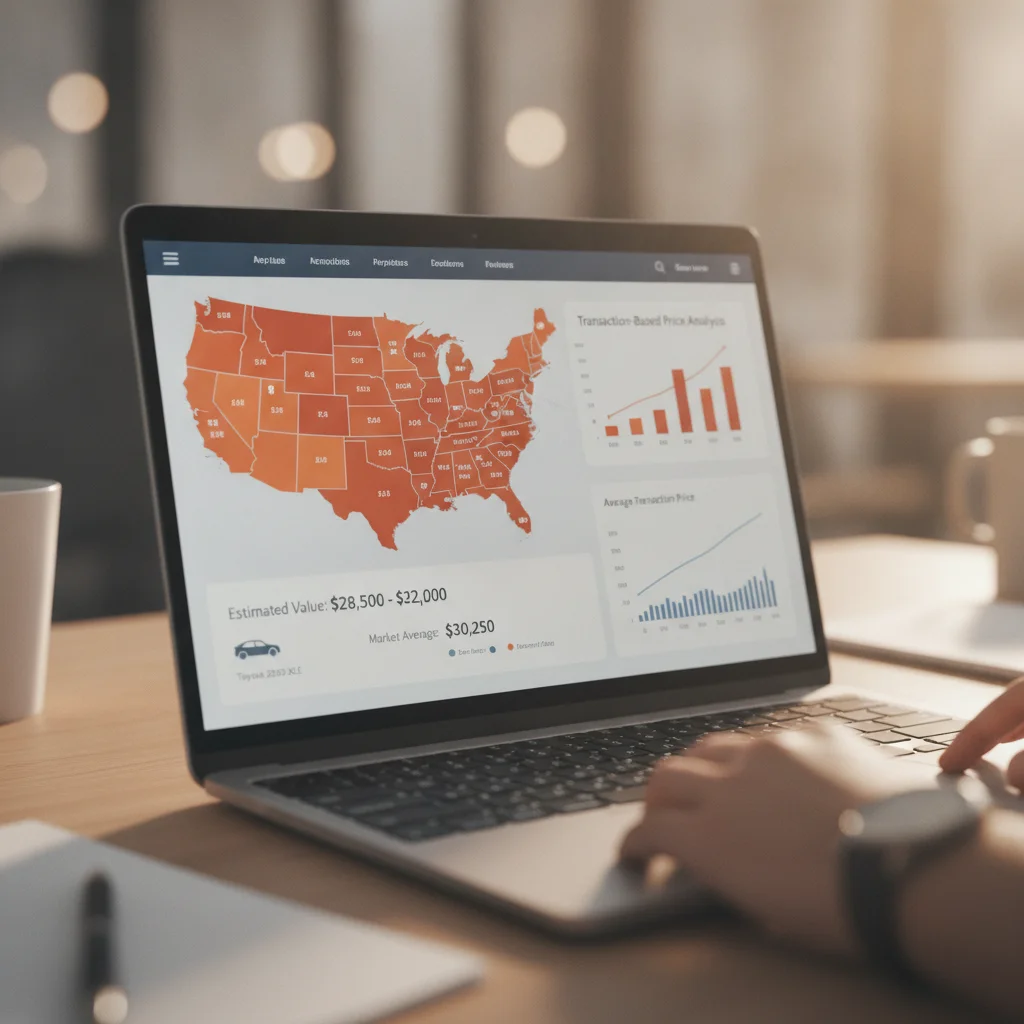
For most mainstream used vehicles, Edmunds TMV is the single most reliable published estimate. Combined with CarGurus market listings, it gives you a strong anchor. See how using multiple valuation tools together can sharpen your asking price further.
NADA Guides: Built for Lenders, Not Sellers
NADA Guides — now officially part of J.D. Power — publishes valuations primarily used by banks, credit unions, and dealers to determine how much to lend against a vehicle. If you've ever financed a car and heard the phrase "book value," there's a good chance the lender was using NADA.
NADA's Core Methodology
NADA relies heavily on wholesale auction data — the prices dealers pay when buying cars at auction — and then builds retail and trade-in values from there. This makes NADA values particularly conservative on the retail side in soft markets but often higher than other tools on certain truck and SUV segments where auction demand is strong.
When NADA Numbers Matter to You
- Financing a purchase: Your lender will likely cap the loan at NADA clean loan value. If a seller is asking above NADA, you may need to cover the gap in cash.
- Negotiating with dealers: Dealers use NADA internally. Knowing their reference point is leverage.
- Insuring a vehicle: Some insurers use NADA values for agreed-value or stated-value policies on older vehicles.
Don't Use NADA Retail as Your Asking Price
NADA Guides retail values are calibrated for dealer-to-consumer transactions and lender collateral assessment — not private party sales. Using NADA retail as a private party asking price will almost always leave you overpriced. Buyers shopping privately expect to pay less than dealer retail; that discount is baked into market expectations.
Instant Offers Expire Fast
CarMax, Carvana, and KBB Instant Cash Offers are typically valid for only 7 days. Market conditions can shift enough in that window to change what a platform will offer. If you plan to use an instant offer as a negotiating tool or fallback, get the quote close to when you actually intend to use it — not weeks in advance.
NADA is not the right tool for setting a private party sale price. Its values are calibrated for dealer and lender contexts, and using NADA retail as your asking price will often leave you overpriced relative to actual buyer expectations.
Think of NADA as the tool that defines the financial infrastructure of car transactions, not the tool that reflects what buyers and sellers actually agree to in the driveway. That distinction is especially important when you're navigating dealer trade-in appraisals — the dealer's NADA knowledge is an advantage you can neutralize by doing your homework.
CarGurus: Real-Time Market Intelligence
CarGurus operates differently from the three legacy tools above. Rather than publishing its own guide values, CarGurus aggregates active listings from across the country and uses its Instant Market Value (IMV) algorithm to determine whether a specific listing is priced fairly, below market, or overpriced. It's less a valuation tool and more a real-time market scanner.
How CarGurus IMV Works
CarGurus pulls millions of live listings and applies machine learning to control for mileage, condition indicators, geography, trim level, and days on market. The result is a deal rating (Great Deal, Good Deal, Fair Price, High Price, Overpriced) that updates as market conditions shift. Importantly, CarGurus reflects what sellers are currently asking — not necessarily what transactions are closing at, which is an important caveat.
CarGurus' Real Strengths
- Local market reality check: Because it aggregates actual listings, CarGurus shows you what competing sellers near you are asking — the most direct competitive pricing intelligence available.
- Volatility responsiveness: In fast-moving markets, CarGurus adjusts faster than weekly-updated guide tools. During used car shortages, this gap was sometimes thousands of dollars.
- Private seller pricing: Listing your car within CarGurus' "Good Deal" or "Great Deal" range dramatically improves inquiry volume and time-to-sale.
CarGurus' Limitations
CarGurus reflects asking prices, not sale prices. In a buyer's market, cars routinely sell below asking, so the IMV can overstate actual transaction value. Also, CarGurus' data thins out on unusual vehicles, older models, and low-production trims — the same weakness as Edmunds TMV, but for different reasons.
For a deeper look at how CarGurus compares to KBB and Edmunds specifically in trade-in contexts, see KBB, Edmunds, and CarGurus: which trade-in tool actually gives you the best estimate.
$2,000–$5,000
Typical spread between KBB and Edmunds on same vehicle
Industry analysis of identical vehicle entries across major valuation platforms shows consistent divergence in volatile used car markets.
10–20%
Discount from private party value on instant cash offers
Carvana, CarMax, and similar platforms typically offer 10–20% below a competitive private party price to account for reconditioning and margin.
6–8 weeks
Lag time for guide tools to reflect market shifts
During the 2021–2022 used car shortage, KBB and NADA values lagged actual transaction prices by 6–8 weeks due to data collection and modeling cycles.
73%
Car buyers who consult KBB during purchase process
A Cox Automotive consumer research study found KBB remains the most consulted third-party resource among car buyers researching vehicle value.
Head-to-Head: How the Tools Compare Across Key Criteria
Here's how the four major tools stack up across the criteria that matter most to sellers and buyers making real decisions:
| KBB | Edmunds TMV | NADA Guides | CarGurus IMV | |
|---|---|---|---|---|
| Primary data source | Auction + dealer transactions | Dealer transaction records | Wholesale auction data | Live listing aggregation |
| Update frequency | Weekly | Weekly (regional) | Monthly | Near real-time |
| Best use case | Buyer negotiation, trade-in floor | Setting private party price | Lender/financing reference | Competitive market pricing |
| Reflects local market | National average | Regional ZIP code | National average | Hyperlocal listings |
| Private party accuracy | Slightly optimistic | Most accurate for mainstream | Not designed for this | Reflects asking prices |
| Trade-in utility | High — Instant Cash Offer available | Moderate | High for dealer context | Moderate |
| Reliability on rare/niche vehicles | Moderate | Low (thin data) | Moderate | Low (thin listings) |
| Free to use | Yes | Yes | Yes (basic) | Yes |
A few things jump out from this comparison. First, no single tool wins across every category. Second, NADA's utility is narrowly focused — it's an essential tool in the right context but a misleading one in the wrong context. Third, CarGurus' responsiveness to market shifts makes it uniquely valuable in volatile conditions, even if its data reflects asking prices rather than closed transactions.
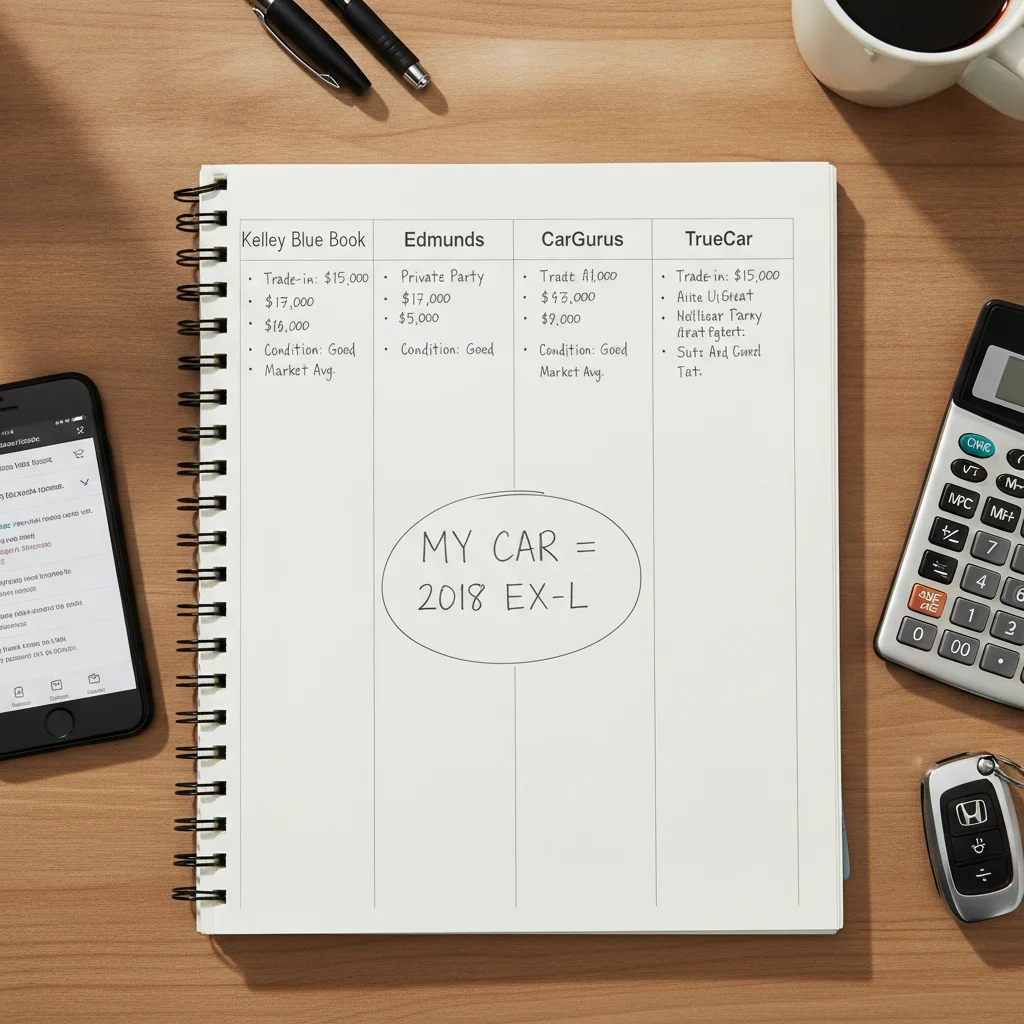
The tools also diverge on how they handle condition. KBB and NADA use defined condition grades (Excellent, Good, Fair, Poor) that require self-assessment. Edmunds TMV adjusts for condition with similar categories. CarGurus largely sidesteps condition grading by aggregating listings that already reflect seller-stated condition in their pricing. None of these methods is perfect — when valuation tools disagree by a lot, condition interpretation is often the primary culprit.
Instant Cash Offer Tools: A Different Animal
Outside the four primary valuation tools, a parallel category has emerged: instant cash offer platforms. Carvana, CarMax, Vroom, and KBB's own Instant Cash Offer program will quote you a real, binding purchase price within minutes. These are not valuations — they are actual offers you can accept or decline.
How Instant Offers Relate to Guide Values
Instant offers almost always come in below guide values and market listings. The gap exists for a straightforward business reason: these platforms are buying wholesale and reselling retail, and they need margin to cover reconditioning, transport, storage, and profit. Expect a CarMax or Carvana offer to land 10–20% below a strong private party price in most conditions.
That said, instant offers have real value in three scenarios:
- You need to sell fast and can't wait 30–60 days for the right private buyer.
- Your car has mechanical issues or cosmetic damage that would hurt private party appeal.
- You want to avoid the friction of test drives, title transfer, and payment logistics.
The trade-off is real money. On a $25,000 car, a 15% discount versus a strong private sale means $3,750 left on the table. Whether that's worth it depends on your timeline and risk tolerance. For a full breakdown of how these offers compare to traditional valuations, see instant cash offer tools vs. market valuation estimates.
Don't Use NADA Retail as Your Asking Price
NADA Guides retail values are calibrated for dealer-to-consumer transactions and lender collateral assessment — not private party sales. Using NADA retail as a private party asking price will almost always leave you overpriced. Buyers shopping privately expect to pay less than dealer retail; that discount is baked into market expectations.
Instant Offers Expire Fast
CarMax, Carvana, and KBB Instant Cash Offers are typically valid for only 7 days. Market conditions can shift enough in that window to change what a platform will offer. If you plan to use an instant offer as a negotiating tool or fallback, get the quote close to when you actually intend to use it — not weeks in advance.
How to Use These Tools Together: A Practical Framework
Here's the workflow I recommend for any seller trying to set a defensible asking price:
- Start with Edmunds TMV (Private Party). This is your baseline — the most transaction-grounded published estimate for most mainstream vehicles. Note the range, not just the midpoint.
- Cross-check with CarGurus. Search for your year/make/model/trim within 100 miles. Look at what competing listings are priced at and how CarGurus rates them. If most are rated "Fair" or "High," you know the market is pricing below guide values.
- Pull KBB Private Party. If it's significantly above Edmunds, treat that as the ceiling of optimism — a number buyers may cite in negotiations, so you need to know it.
- Get one instant offer. A CarMax or Carvana quote takes 10 minutes and gives you a concrete floor — the worst-case outcome if the private sale falls through.
- Adjust for your local market. Use the ZIP code function on Edmunds and CarGurus. A truck in Texas prices differently than the same truck in Connecticut.
This framework takes about 45 minutes and gives you an honest range — not a single aspirational number — to work from. Your asking price should sit near the top of that range if the car is genuinely in excellent condition, and in the middle if it has average wear.
Always Check the Condition Definitions
Every tool uses condition grades — Excellent, Good, Fair, Poor — but their definitions differ. Before accepting any number, read the tool's condition criteria carefully. KBB's 'Good' condition assumes no mechanical issues, minor exterior wear, and a clean interior. If your car has a cracked bumper or torn seat, you're likely in 'Fair' territory, which can drop the value by $800–$2,000 on a typical used car.
Use Your Instant Offer as a Walk-Away Floor
Before listing your car privately, get a CarMax or Carvana quote. This gives you a real, no-hassle number you can fall back on if the private sale drags. If a buyer lowballs you below your instant offer price, you have a concrete alternative — and that's powerful negotiating leverage. Never walk into a private sale without knowing your floor.
If you're selling a less common vehicle — a vintage diesel, a high-trim work truck, a niche European model — also check recent completed eBay Motors listings and Bring a Trailer (for collector vehicles). These give you actual transaction data that the guide tools may not have modeled accurately.
The research you do here is also directly applicable when buying — understanding how to research and compare cars online puts the same intelligence to work from the buyer's side of the table.


All claims are backed by peer-reviewed research. Sources on request.