Key Takeaways
Vehicle Identification Number (VIN)
A VIN is a unique 17-character code assigned to every motor vehicle at the point of manufacture. Each character or group of characters encodes specific information — including the country where the car was built, the manufacturer, the vehicle type, the model year, and the factory of assembly. No two vehicles in operation share the same VIN, making it the definitive identifier for any car, truck, or SUV.
Standardized under ISO 3779 and mandated in the U.S. by NHTSA since 1981, the modern 17-character VIN replaced earlier manufacturer-specific formats that were shorter and less consistent.
The 17 Characters and What Each One Does
A VIN isn't random — it's a structured code where every position has a defined job. Think of it as three distinct sections packed into one string of characters.
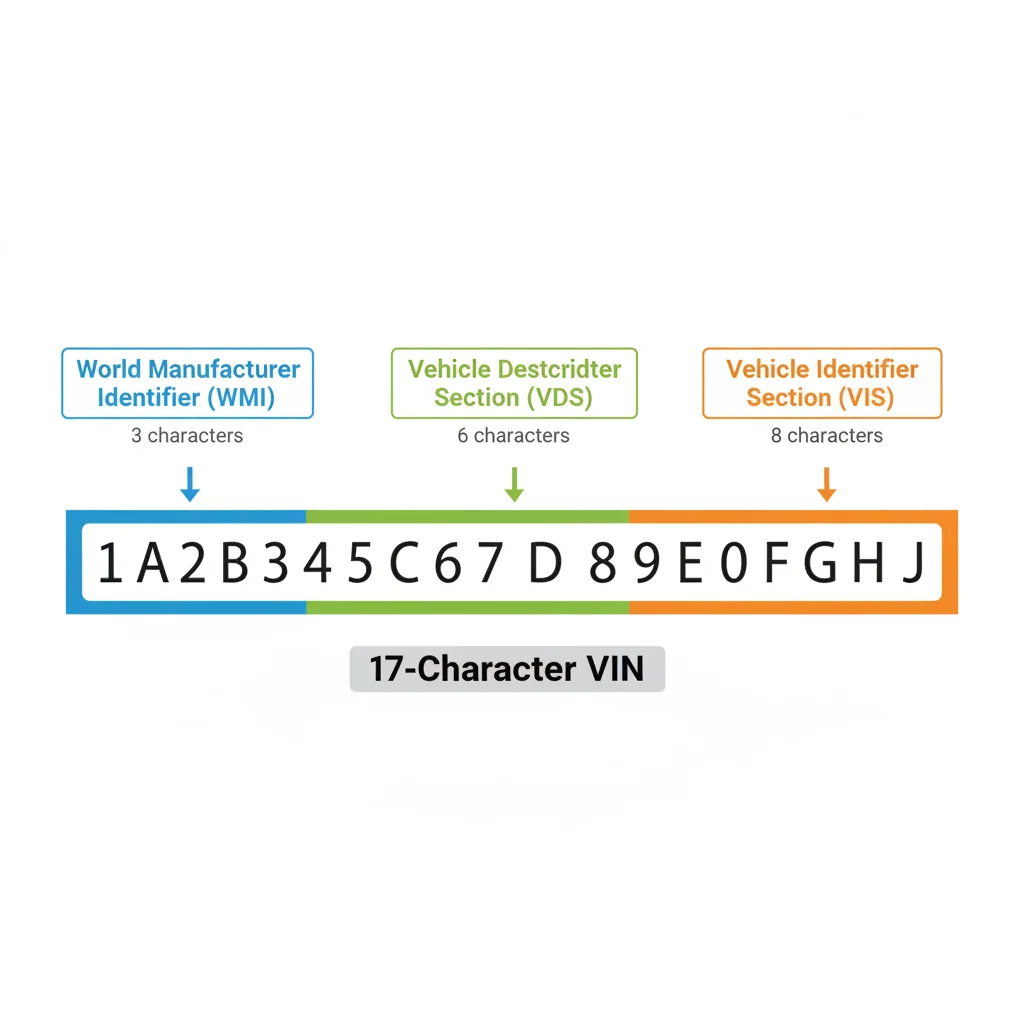
Section 1: World Manufacturer Identifier (Positions 1–3)
The first three characters identify who built the car and where. Position 1 is the country of origin. Common values include:
- 1, 4, 5 — United States
- 2 — Canada
- 3 — Mexico
- J — Japan
- K — South Korea
- W — Germany
- S — United Kingdom
- L — China
Positions 2 and 3 narrow it down to the specific manufacturer. Together, characters 1–3 form the WMI, which is assigned by the Society of Automotive Engineers (SAE). So if you see a VIN starting with 1HG, you're looking at a Honda manufactured in the United States. WBA means BMW, Germany.
Manufacturers with Small-Volume VINs
Manufacturers producing fewer than 500 vehicles per year use a '9' in position 3 of the WMI, and the 12th, 13th, and 14th characters are used to further identify the manufacturer. This affects some low-volume specialty and imported brands. For most mainstream vehicles, this distinction doesn't come up.
VIN Formats Outside the U.S.
The 17-character ISO 3779 standard is also used in Canada, the European Union, and many other markets. However, some older vehicles — particularly pre-1981 American cars and certain imported classics — may have shorter or differently structured manufacturer codes. If you're shopping for a vintage vehicle, don't expect the standard 17-character structure.
Section 2: Vehicle Descriptor Section (Positions 4–9)
Positions 4 through 8 are manufacturer-defined and encode vehicle attributes — things like body style, engine type, restraint systems, and model line. The exact meaning of each character varies by manufacturer, which is why a VIN decoder that knows each brand's schema is more useful than trying to read this section manually.
Position 9 is the check digit. It's a mathematically derived value calculated from all other characters in the VIN using a weighted formula set by NHTSA. If the math doesn't work out to the right check digit, the VIN is either transcribed incorrectly or fabricated. This is one of the fastest ways to spot a fraudulent VIN before you do anything else.
Section 3: Vehicle Identifier Section (Positions 10–17)
This is where the car's individual identity lives.
- Position 10 — Model year (see the FAQ for the full letter/number key)
- Position 11 — Assembly plant
- Positions 12–17 — Sequential production number (the serial number of this specific vehicle off the line)
The production sequence number matters more than most buyers realize. It can help you determine whether a vehicle was an early build or a late build for that model year — and early builds sometimes have first-run production issues that later builds had corrected.
What You Can Confirm Instantly from the VIN Alone
Before spending a Saturday driving across town to look at a car, here's what you can lock down from the VIN in about ten minutes:
17
Characters in every standardized VIN
The 17-character format has been mandatory for all vehicles sold in the U.S. since 1981, per NHTSA regulations.
3
Distinct sections within a VIN
The WMI (positions 1–3), Vehicle Descriptor Section (4–9), and Vehicle Identifier Section (10–17) each serve a separate informational purpose.
$20–$45
Typical cost of a single vehicle history report
Carfax and AutoCheck are the primary U.S. providers; multi-report bundles reduce the per-report cost significantly.
392M+
Vehicles covered in NHTSA's VIN database
NHTSA's Vehicle Product Information Catalog (vPIC) covers hundreds of millions of vehicles for recall and specification lookups.
~30%
Used cars with undisclosed damage history
Carfax research has estimated that roughly 1 in 3 used vehicles has damage not disclosed by the seller at the point of sale.
Manufacturer and Country of Assembly
This matters for buyers who care about domestic content, parts availability, or resale patterns in their region. It also matters when a seller is misrepresenting where a car was built — a not-uncommon tactic with some luxury badge vehicles assembled in unexpected locations.
Exact Model Year
Sellers frequently list a car by the year they purchased it, not the model year encoded in the VIN. A car sold new in January 2022 could easily be a 2021 model year. That distinction affects depreciation curves, insurance rates, and warranty coverage periods. Don't take the listing year at face value.
Engine and Trim Confirmation
Cross-reference the decoded VIN against what the seller advertises. If someone lists a vehicle as a V8 but the VIN decodes to a V6, you've caught either an honest mistake or deliberate misrepresentation before wasting any time. Several free tools — including NHTSA's decoder — will surface this data directly.
Recall Status
NHTSA's database ties recall records to VINs, not just model years. A recall may apply to only certain build ranges within a model year. Checking the VIN tells you definitively whether this specific car has an open safety recall — and whether it's been remedied at a dealership.
Factory-Installed Options
Many manufacturers — Ford, GM, Honda, and others — maintain online window sticker lookup tools that use the VIN to pull the original Monroney sticker data. This shows exactly what features were installed at the factory, what the original MSRP was, and what packages were included. Sellers sometimes claim options the car doesn't have; this check eliminates the ambiguity.
Decode the VIN Before You Book the Test Drive
NHTSA's free VIN decoder at vpic.nhtsa.dot.gov takes about two minutes to use. Confirm the make, model, engine, and year match the listing before you commit any time to visiting the car. If the free decode reveals a mismatch, you've saved yourself a wasted trip — and potentially a bad deal.
Photograph All Physical VIN Locations
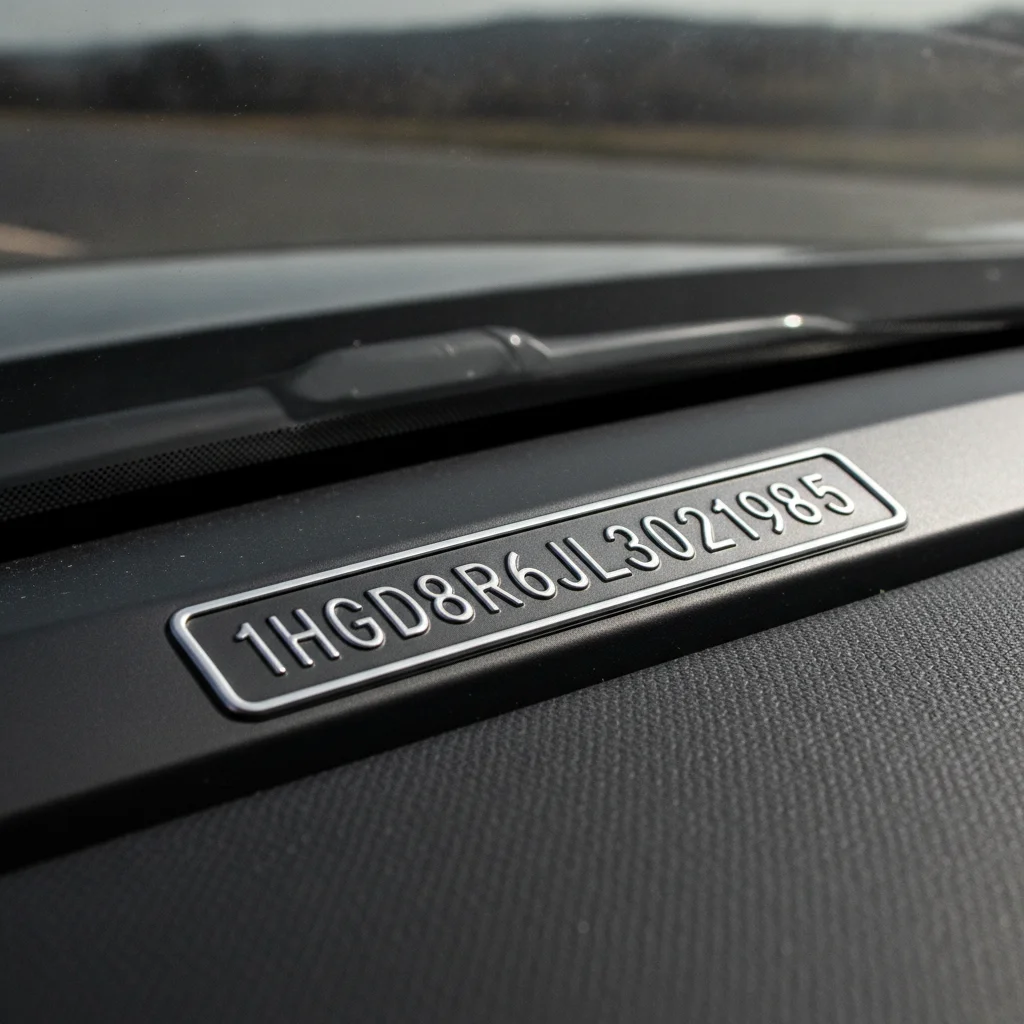
When you do inspect the car in person, photograph the dashboard VIN plate, the door jamb sticker, and any stamped VINs you can find under the hood or on the firewall. Keep these images with your purchase records. If a title dispute arises later, having documented photo evidence of matching VINs on the day of purchase protects you.
All of this is available before you commit a single mile of driving or a single dollar of your time to evaluate the car in person. Use it.
How to Validate a VIN Before You Trust It
A VIN on a listing can be fabricated, copied from a different vehicle, or mistyped. Here's a quick validation protocol before you put any weight on the number:
- Count the characters. A valid VIN is exactly 17 characters. Anything shorter or longer is wrong.
- Check for illegal characters. The letters I, O, and Q are never used in any position of a valid VIN. If you see them, the VIN is invalid.
- Run the check digit. Use any free online VIN validator that performs the NHTSA check-digit calculation. A failed check digit means the VIN as written doesn't compute — it's either a transcription error or fraud.
- Decode it through NHTSA. Visit vpic.nhtsa.dot.gov and enter the VIN. If the returned data matches what the seller claims — make, model, engine, year — you're starting from a verified baseline.
- Match physical VINs on the vehicle. When you do view the car, check the dashboard plate, driver door jamb sticker, and if possible, the engine compartment or firewall stamp. All should match exactly.
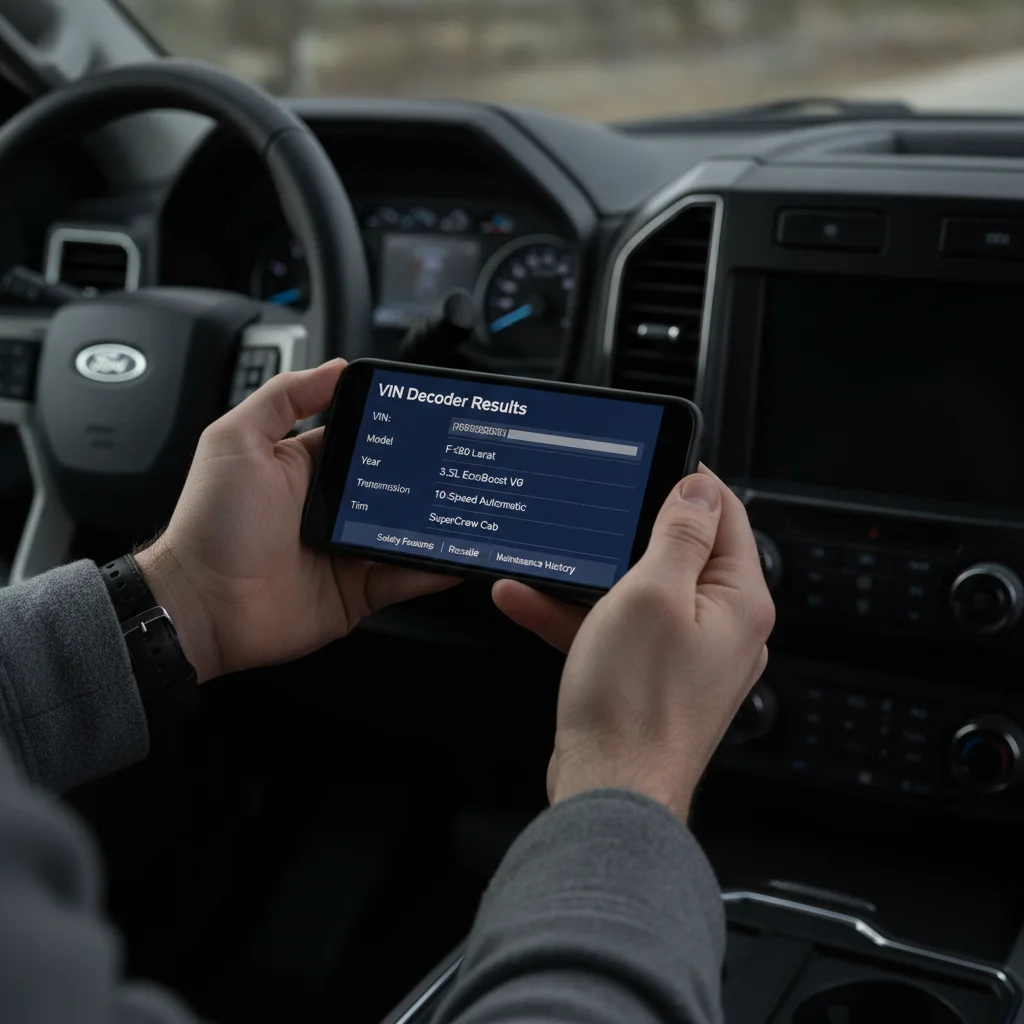
If any of these steps produces a mismatch, treat it as a serious issue until the seller can explain it convincingly with documentation. Most legitimate sellers won't have a problem with this level of scrutiny — and sellers who push back hard on basic VIN verification deserve extra skepticism.
“The VIN is the one thing about a used car that can't be easily changed without leaving evidence. Start every used-car evaluation there, and you'll filter out a lot of problems before they cost you money.”
— Dean Merritt, Used car buying and vehicle valuation specialist
VIN as the Gateway to Deeper Research
The VIN itself is free information — but it's the key that unlocks paid data layers worth far more than the cost of access.
Vehicle History Reports
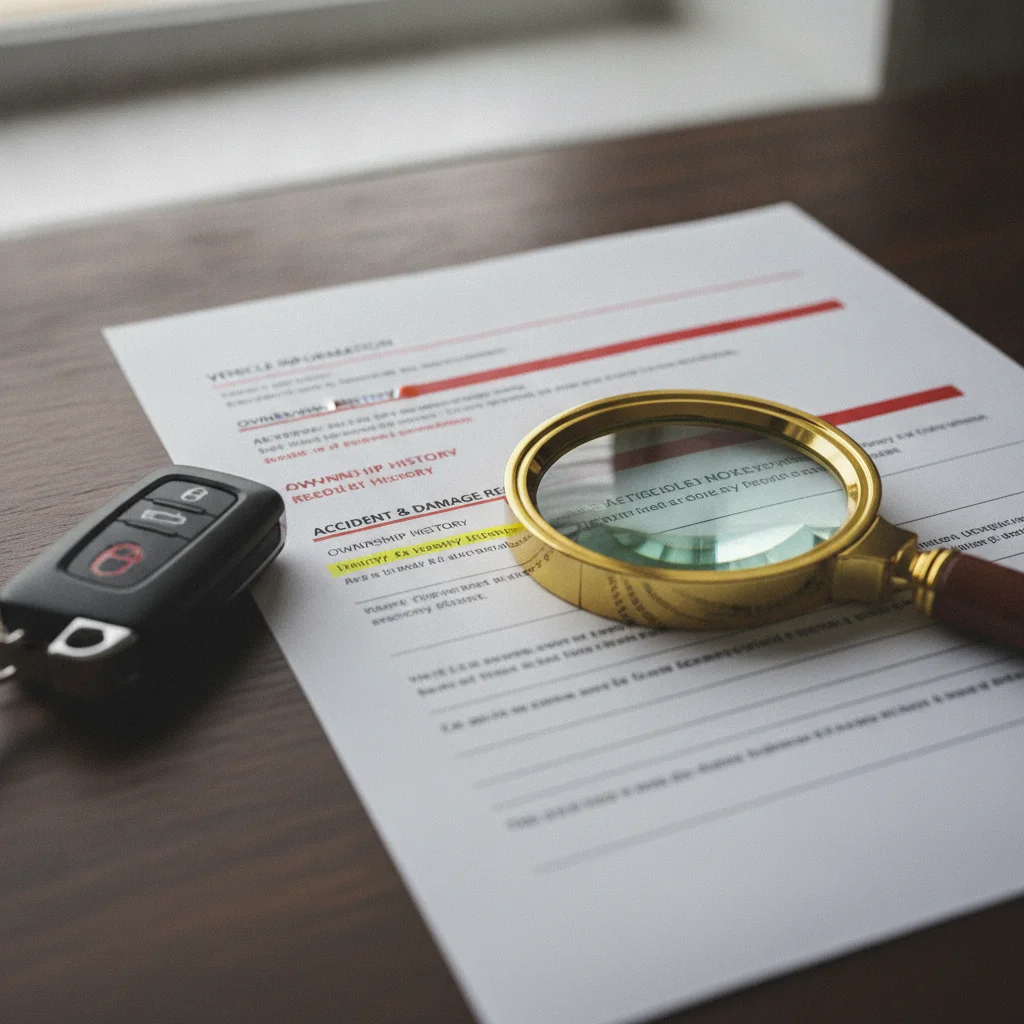
Once you've confirmed the VIN is valid, run it through a history report service. Carfax and AutoCheck are the two dominant providers in the U.S. A single report costs $20–$45 and surfaces accident history, title problems (salvage, rebuilt, flood, lemon law buyback), odometer rollback flags, number of previous owners, and service records reported to the system. See how to read a vehicle history report without getting misled for a breakdown of what each section actually means and where the blind spots are.
It's worth noting upfront what history reports can't tell you: unreported accidents, private-party maintenance, and damage repaired without an insurance claim won't show up. For a deeper look at those limitations, what a vehicle history report actually tells you and what it misses is a useful companion read.
Valuation Tools
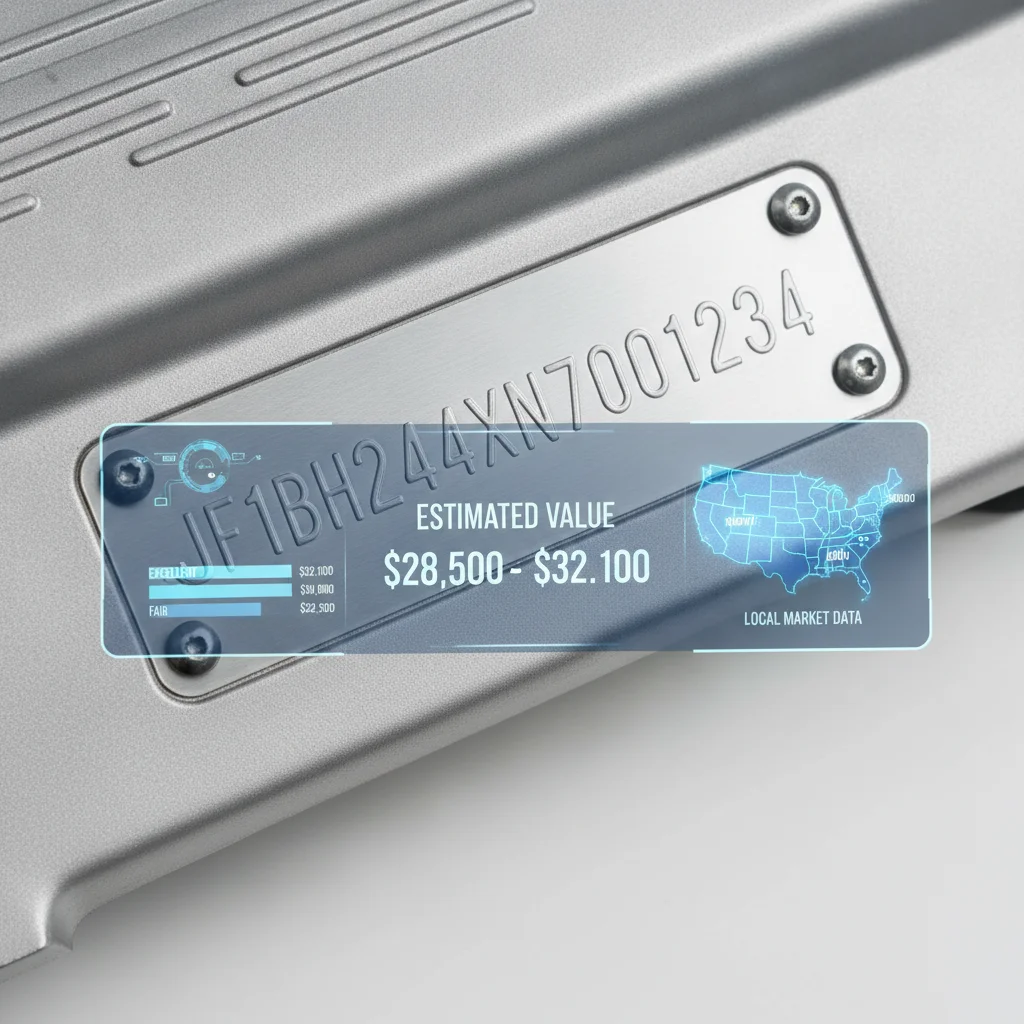
Services like Kelley Blue Book, Edmunds, and CarGurus use the VIN — or at minimum, VIN-derived data — to generate more precise valuations than a simple year/make/model lookup. Trim level, engine, transmission, and factory packages all shift a car's market value, sometimes by several thousand dollars. Everything that goes into a car's estimated value explains exactly which data points these tools weigh — and why two identical-looking cars can have meaningfully different values.
Recall and TSB Lookup
Beyond NHTSA's recall database, some third-party services aggregate Technical Service Bulletins (TSBs) — manufacturer-issued repair guidance for known issues that don't rise to the level of a formal recall. Knowing whether a model has a documented TSB for a common failure point is valuable context before you negotiate price or plan your maintenance budget.
If you're buying new and want to understand how all of this applies at the dealership level, the new car buying guide walks through the process from lot to signing.
Common Misconceptions About VINs
A few things buyers regularly get wrong that cost them time or money:
"The VIN on the listing is enough."
No — a VIN on a listing hasn't been physically verified. It could belong to a completely different car. Always confirm the VIN in person matches what appeared in the listing before paying for any report or proceeding with a purchase.
"A clean VIN means a clean car."
A clean history report means no reported incidents on record. Unreported accidents, private repairs, and flood damage that was dried out and hidden before inspection will not appear on any VIN-based report. The VIN is your starting point for research, not a guarantee of condition.
"The model year in the VIN matches the calendar year it was sold."
Manufacturers typically begin selling the next model year in the fall of the prior calendar year. A 2024 model year vehicle may have been manufactured and retailed in late 2023. Position 10 of the VIN is the definitive source — not the listing year, not the registration year, and not what the seller tells you.
"All VIN decoders give the same result."
Free decoders vary in the depth of data they return, especially for positions 4–8 (the manufacturer-defined section). NHTSA's tool is the most authoritative for safety and recall data. Manufacturer-specific decoders or window sticker lookups are often better for option and trim confirmation. Use both.
Decode the VIN Before You Book the Test Drive
NHTSA's free VIN decoder at vpic.nhtsa.dot.gov takes about two minutes to use. Confirm the make, model, engine, and year match the listing before you commit any time to visiting the car. If the free decode reveals a mismatch, you've saved yourself a wasted trip — and potentially a bad deal.
Photograph All Physical VIN Locations
When you do inspect the car in person, photograph the dashboard VIN plate, the door jamb sticker, and any stamped VINs you can find under the hood or on the firewall. Keep these images with your purchase records. If a title dispute arises later, having documented photo evidence of matching VINs on the day of purchase protects you.
Developing the habit of VIN verification before you engage with any seller — private party or dealer — is one of the fastest ways to filter out problematic listings and focus your energy on cars worth pursuing. It takes ten minutes and can save you from a transaction that unravels weeks or months later.

All claims are backed by peer-reviewed research. Sources on request.