Key Takeaways
Option A
Dealer Trade-In
The fast, friction-free exit from your current vehicle.
Best for: Sellers who prioritize speed and simplicity over maximizing sale price, especially when buying a replacement vehicle from the same dealer.
Option B
Private Party Sale
The higher-payout path that demands more effort.
Best for: Sellers willing to invest time in listing, vetting buyers, and handling paperwork in exchange for significantly more cash in hand.
If you're buying a replacement car from a dealer and live in a high sales-tax state
Dealer Trade-In
The tax savings on the new purchase can close or even eliminate the price gap with a private sale, making the trade-in the smarter financial move once all costs are totaled.
If your car is in excellent condition, well-maintained, and under 80,000 miles
Private Party Sale
High-demand, clean vehicles attract motivated private buyers who will pay closer to retail. The premium over a trade-in offer is typically at its widest for these cars.
If you need the money quickly or don't have time to manage buyer inquiries
Dealer Trade-In
A dealer appraisal and paperwork can be completed the same day, making it the only realistic option for sellers on a tight timeline.
If your car has no loan and is a commonly searched make and model
Private Party Sale
No payoff complexity and strong organic demand on listing platforms mean faster turnaround and better pricing with little downside risk.
If your vehicle has high mileage, mechanical issues, or significant cosmetic damage
Dealer Trade-In
Private buyers scrutinize condition heavily and may walk away or demand steep discounts. Dealers factor reconditioning costs in but still provide a guaranteed offer without negotiation theatrics.
The Price Gap: What the Numbers Actually Look Like
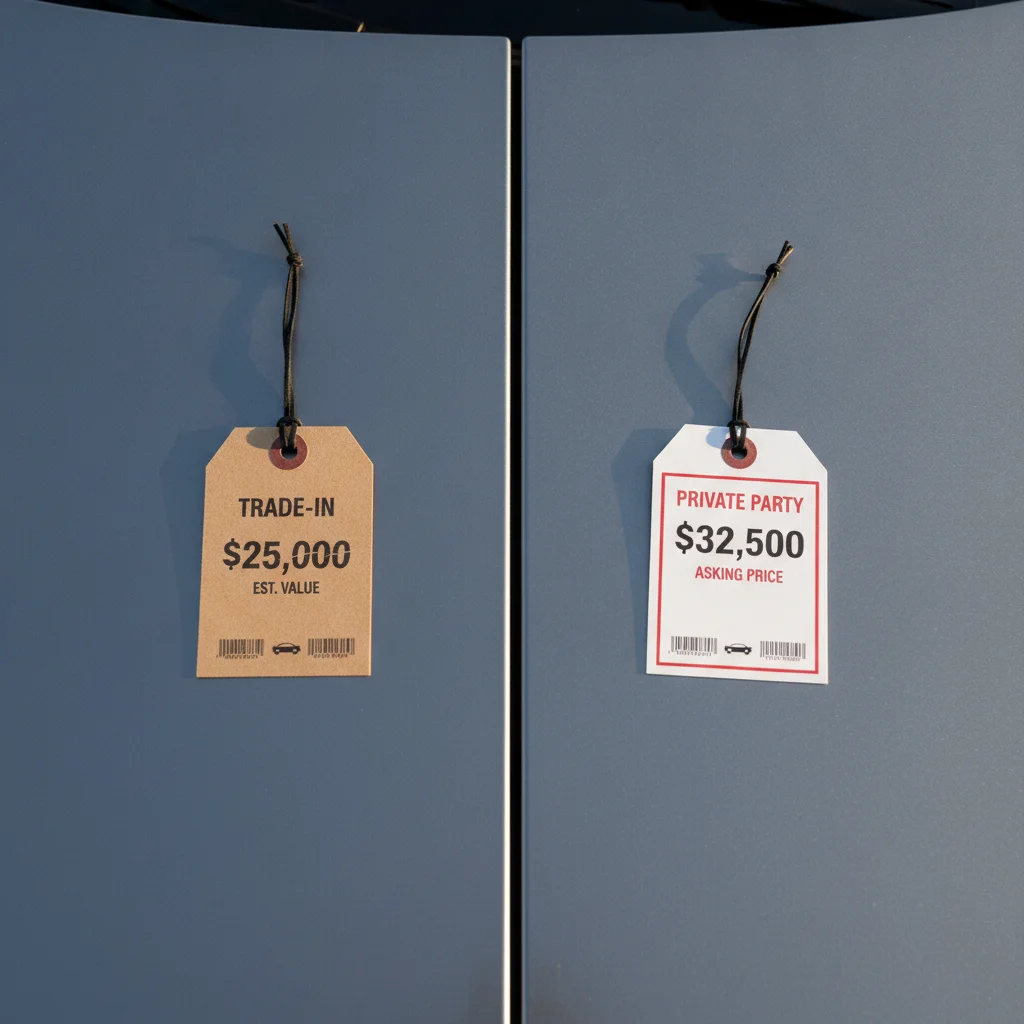
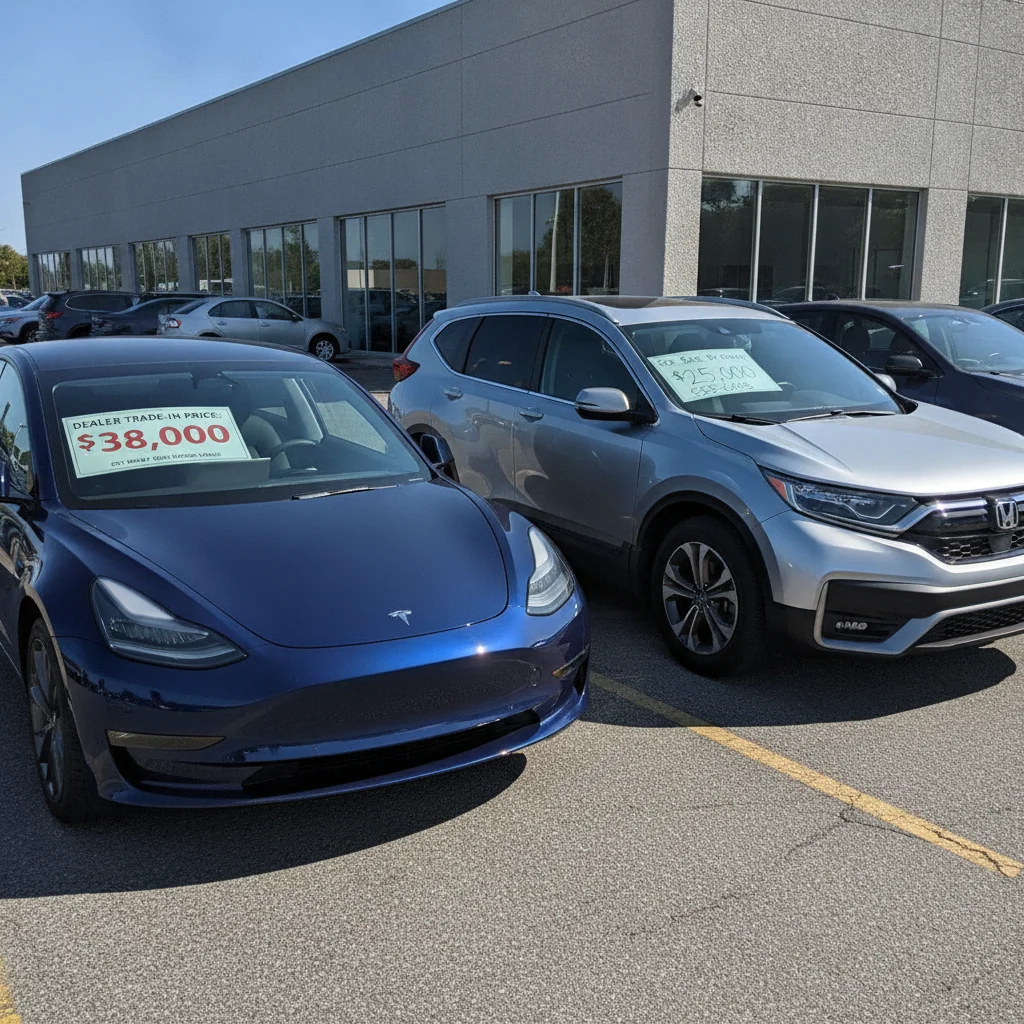
Let's start with the number that matters most: how much more does a private sale actually put in your pocket? On a typical used vehicle, the spread between a dealer trade-in offer and what a private buyer will pay runs $1,000 to $3,000. On higher-value vehicles — trucks, SUVs, luxury sedans — that gap can stretch to $4,000 or more.
This isn't a coincidence. Dealers buy your car at a price that allows them to recondition it, carry it on the lot, pay their sales team, and still turn a profit when they resell it. That margin comes directly out of your check. A private buyer has no such overhead — they're paying because they want to drive the car, not flip it.
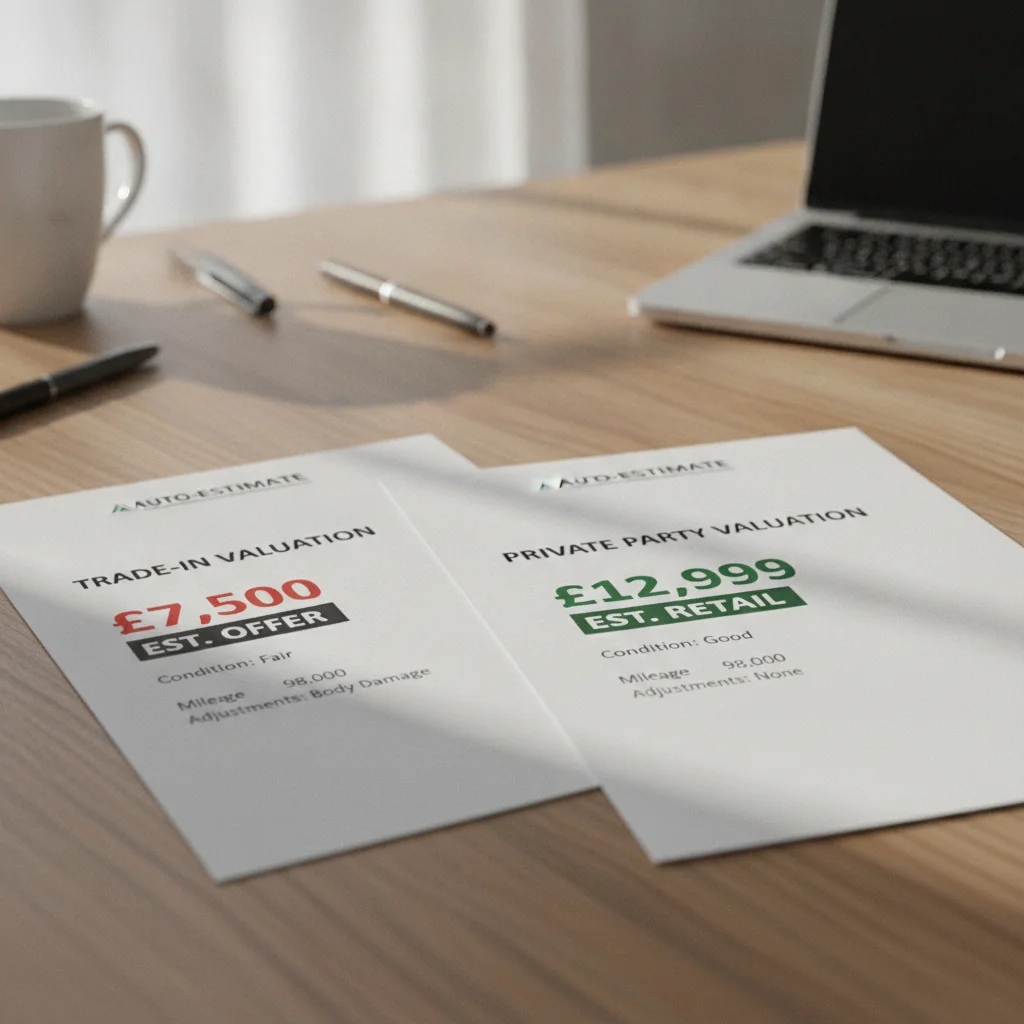
To understand exactly why the numbers diverge, see Private Party Value vs. Trade-In Value: The Difference That Costs Sellers Thousands. The short version: private party value and trade-in value are separate data points, and confusing them is one of the most expensive mistakes sellers make.
Before you accept any dealer appraisal or set a private listing price, check both numbers on Kelley Blue Book and Edmunds. The gap between those two figures is your maximum upside from going private — minus the time and effort it takes to get there.
$1,000–$3,000
Typical private sale premium over trade-in
Kelley Blue Book and Edmunds consistently show this spread between private party and trade-in values for the same vehicle in average condition.
~8%
Average U.S. combined sales tax rate
The National Conference of State Legislatures reports combined state and local rates averaging near 8%, directly affecting how much a trade-in tax credit saves you.
2–6 weeks
Typical private sale timeline
Data from automotive listing platforms indicates most private party sales in normal market conditions close within two to six weeks of first listing.
$800–$1,350
Potential tax savings from trade-in credit
On a $10,000–$15,000 trade-in in a state with a 8–9% sales tax rate, the tax credit alone can significantly narrow the gap between trade-in and private sale proceeds.
The Tax Angle Dealers Don't Always Volunteer
Here's where the trade-in math gets genuinely interesting — and where many sellers leave money on the table by only looking at the offer price.
In most U.S. states, when you trade in a vehicle and buy another from the same dealer, you only pay sales tax on the difference between the new car price and your trade-in value. If your state charges 8% sales tax and you're buying a $35,000 vehicle, a $10,000 trade-in saves you $800 in tax — right off the top, no negotiation required.
Run those numbers on a $15,000 trade-in at 9% state tax, and you're looking at $1,350 in tax savings. That narrows the private-sale advantage considerably. California, Illinois, and Texas all have tax credit policies for trade-ins; a handful of states do not — check your state's DMV or revenue agency website before you decide.
States Without a Trade-In Tax Credit
California, Hawaii, Michigan, Montana, Oregon, and Virginia are among the states that do not offer a sales tax credit for trade-in vehicles. If you live in one of these states, that calculus disappears entirely — which makes the private party premium even harder to justify forgoing. Always verify current rules with your state's DMV or department of revenue, as legislation on this changes periodically.
The tax benefit only applies when you're buying a replacement vehicle from the same dealer. If you're selling your car outright and not immediately buying from a dealer, this factor disappears entirely from the equation.
For a full breakdown of how trade-in credits interact with your next purchase, Trade-In Value vs. Private Sale Price: Where the Money Really Goes walks through the real deal economics step by step.
Head-to-Head: How the Two Paths Compare
Here's a direct comparison across the dimensions that matter most to sellers. No column is universally better — your situation determines which trade-offs you can live with.
| Criterion | Dealer Trade-In | Private Party Sale |
|---|---|---|
| Typical net proceeds | $1,000–$3,000 less than private | Highest realizable price |
| Time to complete | Same day (1–3 hours) | 2–6 weeks average |
| Sales tax benefit | Yes, on replacement purchase | No tax offset |
| Title & paperwork | Dealer handles it | Seller responsible |
| Loan payoff complexity | Dealer manages payoff | Buyer & bank coordination required |
| Negotiation required | Minimal (one counter-offer) | Yes, with each buyer |
| Safety concerns | None | Stranger test drives, meetups |
| Best vehicle type | High-mileage, damaged, niche | Clean, popular, under 80k miles |
| Guarantee of sale | Yes, offer in hand | No guarantee; buyer can walk |
| Flexibility to shop around | Yes, get multiple dealer quotes | Yes, but relists can stigmatize |
A few notes on the table: "Time to complete" assumes a cooperative private buyer. In slow markets or for less desirable vehicles, four to eight weeks is more realistic for a private sale. The loan payoff complexity row deserves extra attention — if you have a loan balance, a private buyer will need the bank to release the title before or at closing, which adds coordination steps that many buyers are unfamiliar with. Dealers handle this mechanically every day.
For a deeper look at how documentation requirements diverge between the two channels, Preparing Paperwork for a Dealer Trade-In vs. a Private Party Sale lays out exactly what you'll need to gather — and what the dealer does for you that you'll have to do yourself in a private transaction.
Time, Safety, and the Hidden Costs of Going Private
The private sale premium is real, but it's not free money. Here's what you're actually spending to earn it:
- Listing time: Writing an accurate, compelling description, photographing the car well, and posting to multiple platforms (Craigslist, Facebook Marketplace, AutoTrader, Cars.com) takes two to four hours upfront.
- Buyer vetting: Expect lowballers, no-shows, and time-wasters. On an average listing, you'll field five to fifteen inquiries before finding a serious buyer.
- Test drives: You'll need to meet strangers — at your home or elsewhere — and let them drive your car. Always verify a valid driver's license beforehand and ride along.
- Negotiation: Private buyers negotiate. Come in priced $300–$500 above your floor to give yourself room to move without losing the sale.
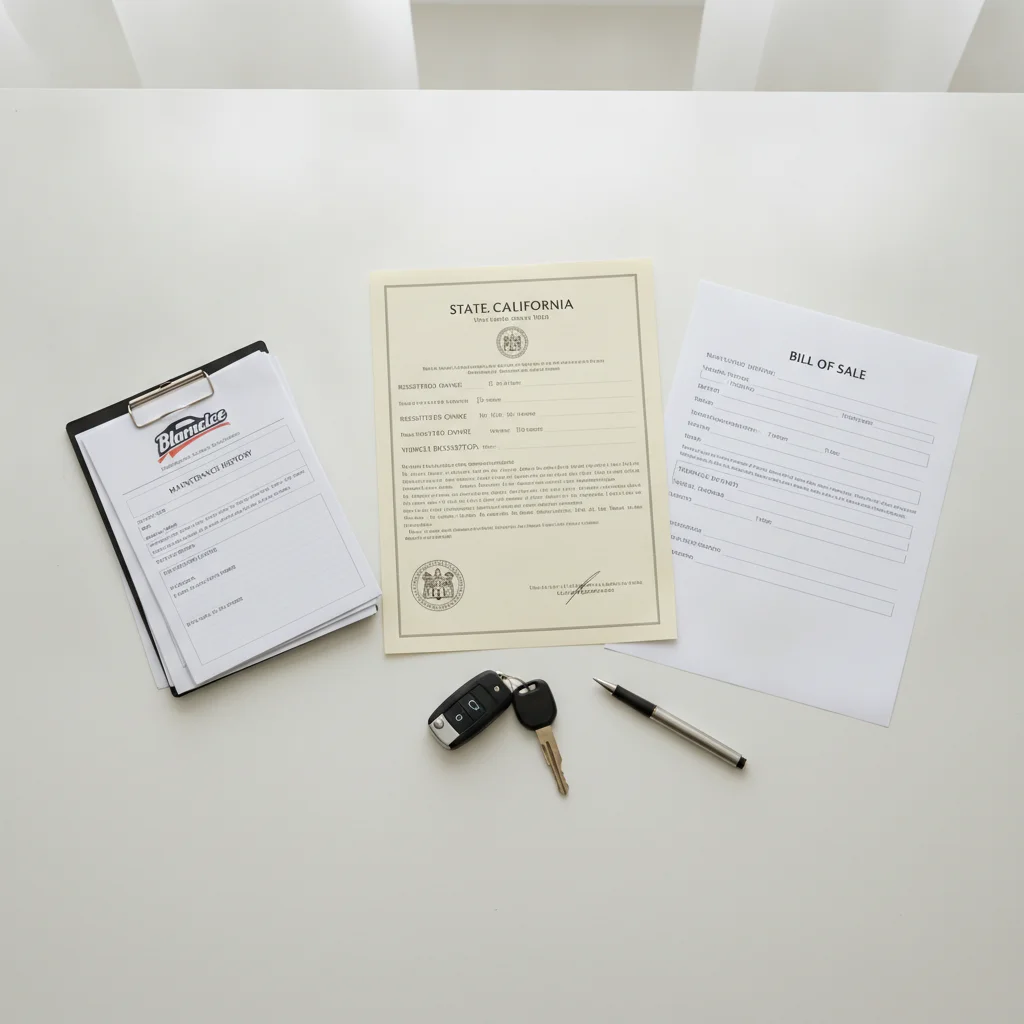
- Paperwork: You're responsible for a valid title, a bill of sale, odometer disclosure, and in some states a smog or safety inspection certificate.
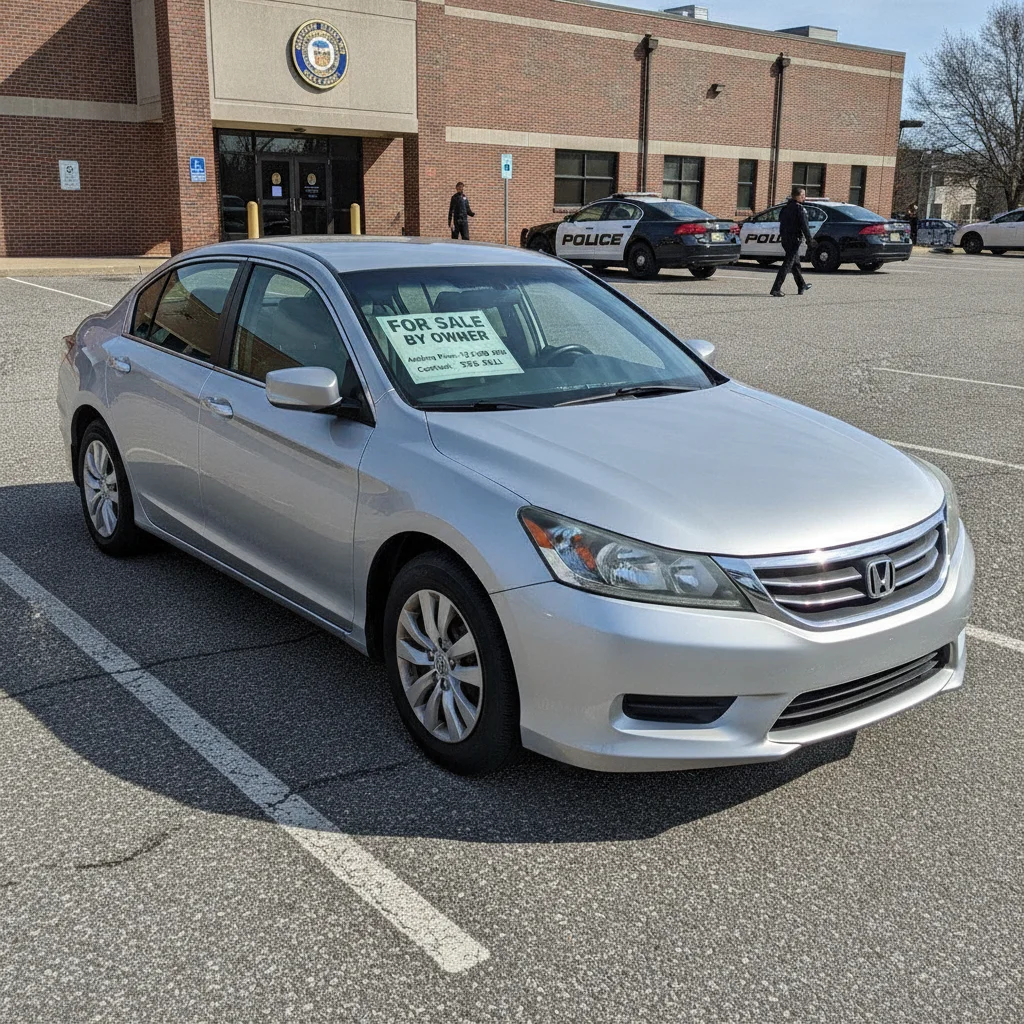
Safety is a real concern that deserves direct acknowledgment. Meet buyers in public, well-lit locations during daylight hours. Many police departments now designate their parking lots as official safe exchange zones. Never hand over the keys for a solo test drive — ride along, period.
For sellers concerned about market timing — particularly if you're considering holding off until the private market picks up — Timing Your Sale Around a Trade-In vs. Private Listing Decision covers how seasonal demand and dealer incentive cycles affect both channels differently.
When to Trade In, When to Go Private: The Decision Framework
Stop second-guessing and run through this logic:
- Calculate your tax savings. If you're buying from a dealer in a state with a trade-in tax credit, multiply the trade-in value by your state tax rate. Write that number down — it reduces the private sale's net advantage.
- Check the actual price gap. Look up both private party and trade-in values for your specific car on KBB or Edmunds. If the spread after tax savings is under $500, the trade-in is probably the smarter play for most people.
- Assess your car's private market appeal. Clean title, under 80k miles, popular make and model, recent service records? You're likely to sell in two to three weeks at close to asking. Salvage title, high mileage, or niche vehicle? Private buyers will lowball or ghost you.
- Look at your loan situation. No loan makes private sales straightforward. A loan adds coordination complexity that can frustrate buyers and kill deals.
- Be honest about your time. If you genuinely can't spend two to six weeks managing a listing, or if the money difference doesn't justify your hourly rate, trade it in without guilt.
If you're weighing a third option — selling to a direct-buy service like Carvana or CarMax rather than a private buyer or traditional dealer — Dealer Trade-In vs. Carvana: A Side-by-Side Look at the Real Numbers gives you a realistic payout comparison with no fluff. And if you're actively negotiating a trade-in as part of a new car purchase, Trade-In Strategies shows you how to structure that conversation to avoid leaving money on the table.
The bottom line: most sellers with desirable, clean vehicles leave real money behind by defaulting to the trade-in. But the trade-in is a legitimate, sometimes optimal choice — particularly when you factor in taxes, loan complexity, or a car that's unlikely to excite private buyers. Know your numbers before you walk into either conversation.

All claims are backed by peer-reviewed research. Sources on request.