Key Takeaways
Trade-In Timing
Trade-in timing refers to the strategic choice of when — relative to the model year calendar, season, and market conditions — to bring your vehicle to a dealership for trade-in credit toward a new purchase. Because dealer demand for used inventory and wholesale values fluctuate throughout the year, the same vehicle can fetch meaningfully different offers depending on when you show up. Getting the timing right protects your equity and reduces how much you need to finance on your next car.
Trade-in values are partially benchmarked to wholesale auction prices, which are themselves driven by regional supply, seasonal retail demand, and manufacturer incentive programs that affect new-car sales velocity.
Why Model Year Timing Is the Single Biggest Lever
Most people think about trade-in timing in terms of seasons — spring is good, winter is bad. That's partly true, but the model year calendar is a more powerful force. Miss it, and you hand the dealer a built-in discount that has nothing to do with the condition of your car.
Here's the mechanics: automakers begin releasing next-model-year vehicles as early as July or August. Once a 2026 model lands on the lot, your 2025 — which may have been assembled only months earlier — is now technically two model years old in the eyes of valuation guides like Kelley Blue Book and Black Book. That shift can shave $500 to $2,000 off your offer depending on the segment, with luxury and performance vehicles absorbing the steepest cuts.
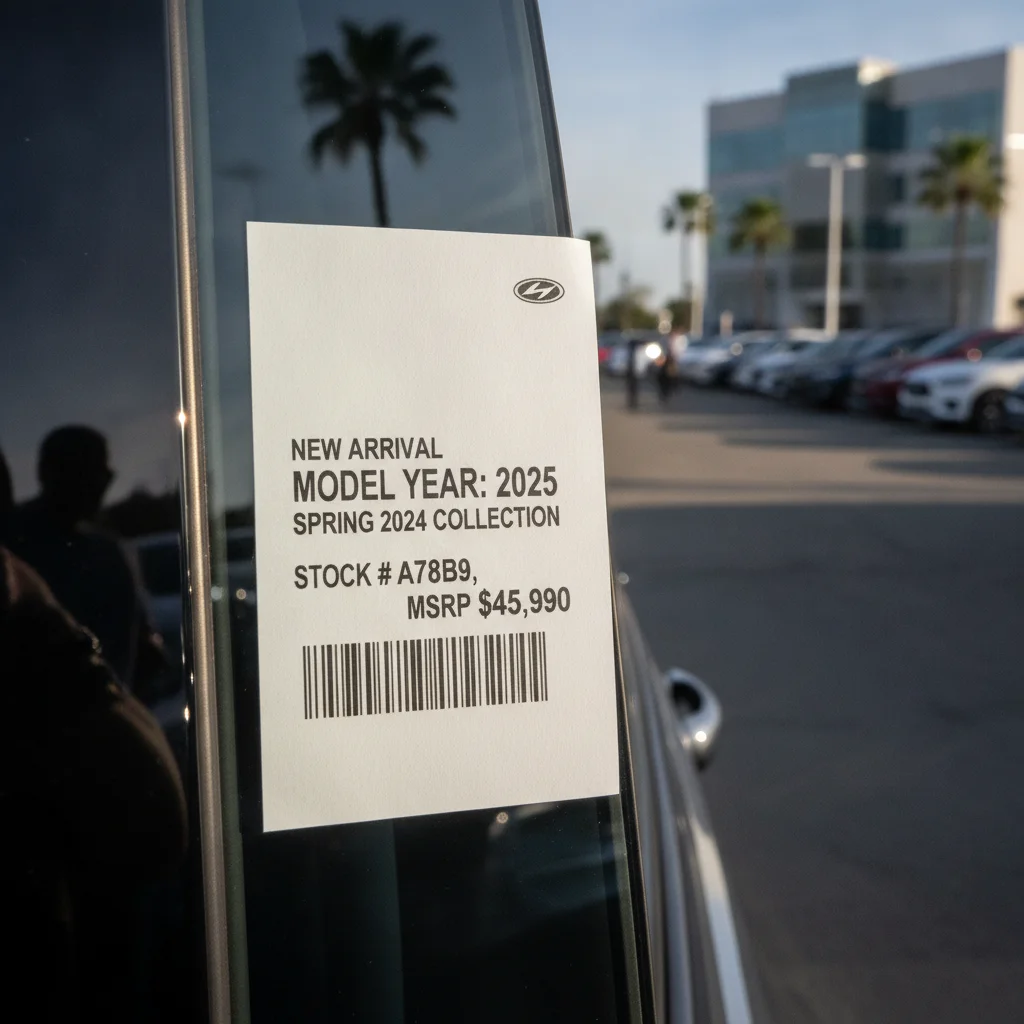
The practical window to avoid this cliff: trade in between April and July of the current model year. You get the benefit of spring retail demand (more on that below) while your vehicle still holds its current-year status. If you're past July and the new model is already arriving, you may be better off waiting until the following spring to recoup some value through seasonal demand — unless holding costs make that impractical.
Mid-Cycle Refreshes Can Accelerate Depreciation
When a manufacturer releases a significant mid-cycle refresh (new front fascia, updated infotainment, revised powertrain options), prior-generation vehicles can drop in value faster than the normal model-year cycle predicts. Check automotive news sites for any upcoming refreshes on your specific vehicle before committing to a timing window. A refresh announced six months out is a reason to trade sooner.
EV Values Are More Policy-Sensitive Than Seasonal
Electric vehicle trade-in values don't follow the same seasonal patterns as gas-powered vehicles. They're more heavily influenced by federal and state incentive changes, manufacturer price cuts on new models, and battery technology advancement. If you're trading an EV, monitor policy news and manufacturer pricing decisions as closely as you'd watch the seasonal calendar.
Negative Equity Changes the Calculus Entirely
If you owe more on your current vehicle than it's worth, no amount of timing optimization eliminates the deficit — it gets rolled into your new loan. In that situation, the priority is minimizing total negative equity, not maximizing trade-in timing. Consider paying down the loan to at or near equity before trading, or evaluate whether keeping the vehicle longer to build equity is the more cost-effective path.
One more model-year nuance: some manufacturers introduce mid-cycle refreshes or new trims that make the prior year less desirable almost immediately. Check the manufacturer's product roadmap before you commit to a timing window. A quick search of automotive news sites will tell you if a redesign is imminent.
Seasonal Demand: Where the Real Money Is by Vehicle Type
Seasonality matters because dealers are running a retail business. If your vehicle is in demand at the moment you trade it in, the dealer can move it off the used lot quickly — and they'll pay more to acquire it. If it's a slow-moving segment for that time of year, expect a conservative offer regardless of condition.
March
Peak month for used vehicle wholesale prices
Black Book's historical wholesale auction data consistently shows March as the strongest month for used vehicle values across most segments.
$1,500–$3,000
Typical private sale premium over dealer trade-in
Edmunds analysis of transaction data shows private sellers routinely net $1,500–$3,000 more than dealer trade-in offers for the same vehicle in similar condition.
4–8%
Seasonal value swing for trucks (winter low to spring peak)
NADA historical pricing data shows pickup trucks typically see a 4–8% value increase from their January trough to their spring peak.
60–90 days
Lag time for rate changes to reach trade-in offers
Industry analysts estimate it takes 60–90 days for Federal Reserve rate changes to fully filter through to used-car wholesale auction prices and dealer trade-in offers.
$500–$2,000
Value lost to model-year rollover (varies by segment)
Kelley Blue Book valuation models show that vehicles drop $500–$2,000 in trade-in value when the next model year is released, depending on segment and popularity.
Here's how demand patterns break down by segment:
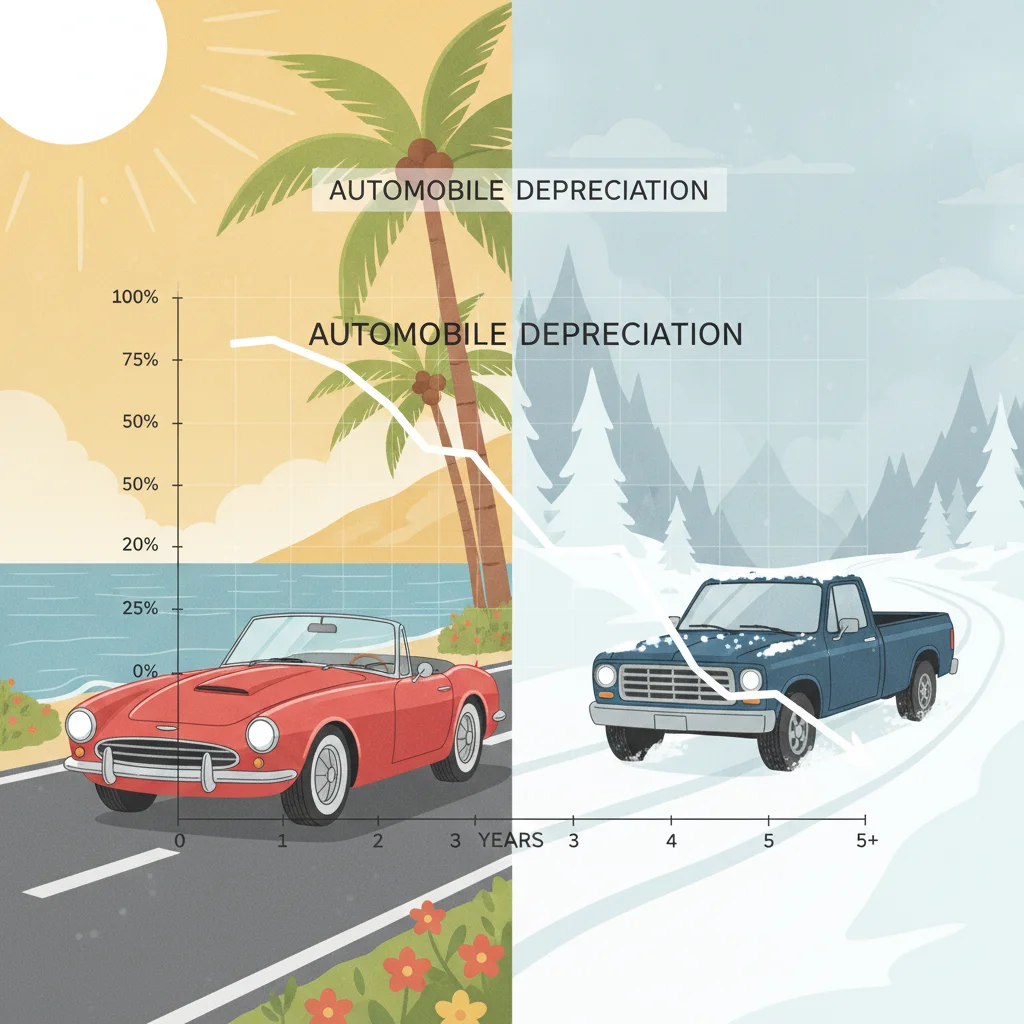
- Trucks and work vehicles: Strongest in late March through May (landscaping and construction ramp-up) and again in September through October. These vehicles carry the most consistent year-round demand of any segment, so the seasonal premium is meaningful but not dramatic — roughly 4–8% above winter lows.
- Convertibles and sports cars: Trade these in March through early May, before summer. Dealers want them on the lot while buyers are feeling the warm weather. Trading a convertible in November is leaving money on the table — dealers know it'll sit.
- SUVs and crossovers: Year-round demand is solid, but there's a soft spot in January and February when buyers are focused on winter practicality they already own. March through June is the sweet spot.
- Sedans: Generally weakest in overall demand right now due to long-term market trends, but they still follow the spring retail bump. First-time buyers and commuters drive sedan sales, and tax refund season activates that segment more than any other timing factor.
- EVs and hybrids: Demand is less seasonal and more policy-driven. Federal and state incentive changes can move EV values more than the calendar. Watch legislative news closely if you're trading an EV.
For a deeper look at how depreciation rates shift by season, see our guide on seasonal depreciation patterns.
Check Your Vehicle's Model Year Rollover Date
Automakers don't all release new model years at the same time. Some brands (like Honda and Toyota) often release next-year models as early as July; others wait until October. Search '[your vehicle] 2026 release date' or check Edmunds' new car release calendar six months before you plan to trade. Setting a hard deadline of two weeks before the new model arrives on your local lot can prevent an avoidable value drop.
Renew Your Outside Quotes Right Before You Trade
Carmax and Carvana quotes expire in 7 days, and used-car values can shift meaningfully in a short window. Get your outside quotes, then schedule your dealer visits within that same 7-day period to ensure you're negotiating against current market offers — not week-old numbers.
Document Your Maintenance History
A folder of dated service receipts — oil changes, tire rotations, brake jobs — can add $200–$500 to a dealer's trade-in offer, particularly on vehicles with more than 60,000 miles. It shifts the conversation from condition speculation to verifiable fact, and gives the dealer confidence they can retail your car faster.
How Dealer Inventory Levels Affect Your Offer
This is an underappreciated lever. A dealer with a thin used-car lot is a motivated buyer — they need your vehicle to have something to sell. A dealer with 90 used vehicles sitting on the lot will lowball you because they can afford to.
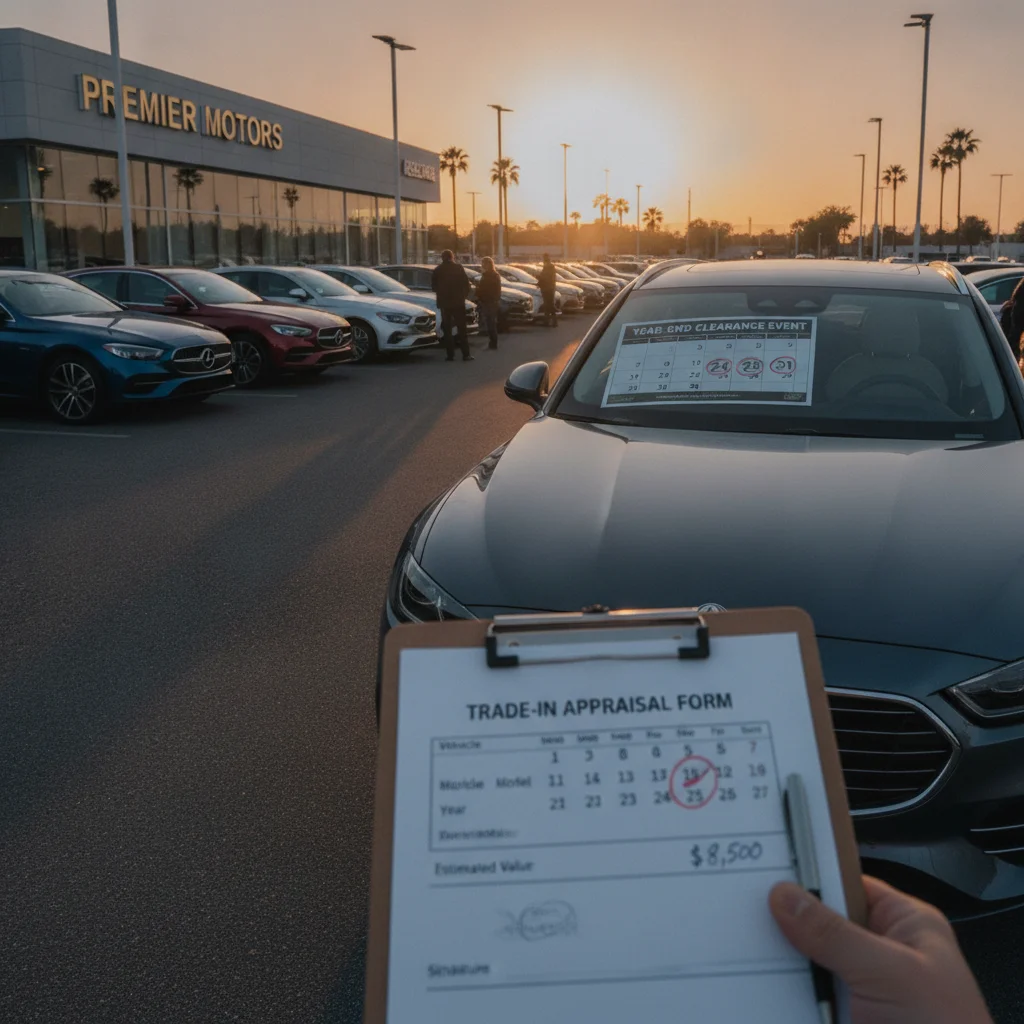
Used inventory levels at dealerships typically run lowest in late winter (January–February) after end-of-year sales events have cleared stock, and they rebuild through spring. That late-winter window can work in your favor on the trade-in side even if it's not peak retail season, because dealers are actively replenishing. The strongest combined scenario — high demand and lean dealer inventory — is typically March, which is why that month consistently produces the best trade-in outcomes.

You can get a rough read on local inventory before you walk in. Spend five minutes on the dealer's website and count their used listings. Cross-reference that count against their typical lot size (visible on Google Maps satellite view). If they're running light, you have leverage. If they're stacked, consider your timing.
National used-car supply data is also published monthly by the National Automobile Dealers Association (NADA). When total used supply is below 40 days' worth of sales — what the industry calls "days of supply" — values firm up broadly. Above 60 days, expect conservative offers across the board.
“The used-car market is essentially two markets stacked on top of each other: the wholesale auction market that sets dealer cost, and the retail market that sets what buyers pay. Your trade-in offer lives in the first market, not the second. Understanding that gap is the key to knowing when you're getting a fair offer.”
— Jonathan Smoke, Chief Economist, Cox Automotive
Interest Rates, Macro Conditions, and Their Downstream Effect
Your trade-in offer is indirectly set by what dealers believe they can recover when they resell your vehicle. That recovery price depends on what retail buyers will pay — and retail buyers are sensitive to financing costs. When interest rates rise sharply, monthly payments on used vehicles increase, buyers stretch or drop out of the market, retail prices soften, and dealers respond by paying less for inventory.
We saw this play out clearly in 2022–2023. As the Federal Reserve raised rates aggressively, used-car wholesale prices — which had spiked during the inventory shortage — began a sustained correction. Dealers who had been paying above-book for trades started pulling back. Owners who had been sitting on inflated equity saw it erode quarter by quarter.
The practical takeaway: if rates are rising and you're on the fence about timing, lean toward trading sooner. If rates are falling or stable, you have more flexibility. Check the current federal funds rate trend as part of your timing research — it takes about 60–90 days for rate changes to fully work through to dealer auction prices and retail demand.
For a comprehensive view of all the market timing factors that affect sellers, our overview on market timing for car sellers covers the full picture.
Mid-Cycle Refreshes Can Accelerate Depreciation
When a manufacturer releases a significant mid-cycle refresh (new front fascia, updated infotainment, revised powertrain options), prior-generation vehicles can drop in value faster than the normal model-year cycle predicts. Check automotive news sites for any upcoming refreshes on your specific vehicle before committing to a timing window. A refresh announced six months out is a reason to trade sooner.
EV Values Are More Policy-Sensitive Than Seasonal
Electric vehicle trade-in values don't follow the same seasonal patterns as gas-powered vehicles. They're more heavily influenced by federal and state incentive changes, manufacturer price cuts on new models, and battery technology advancement. If you're trading an EV, monitor policy news and manufacturer pricing decisions as closely as you'd watch the seasonal calendar.
Negative Equity Changes the Calculus Entirely
If you owe more on your current vehicle than it's worth, no amount of timing optimization eliminates the deficit — it gets rolled into your new loan. In that situation, the priority is minimizing total negative equity, not maximizing trade-in timing. Consider paying down the loan to at or near equity before trading, or evaluate whether keeping the vehicle longer to build equity is the more cost-effective path.
The Negotiation Structure That Protects Your Trade-In Value
Even perfect timing won't help you if you walk into the negotiation wrong. The single most damaging mistake trade-in sellers make is allowing the dealer to combine the trade-in discussion with the new-car price negotiation into one blended number. When it's all bundled together, the dealer can give with one hand and take with the other — artificially inflating your trade-in allowance while padding the new-car price, or vice versa.
Here's the structure that keeps you in control:
- Get outside quotes first. Before you visit a single dealership, obtain written offers from Carmax, Carvana, and at least one other instant-offer platform. These quotes are usually good for 7 days and establish a floor. No dealer should go below what a competitor will pay you in cash.
- Negotiate the new car price first. Get the dealer to commit to an out-the-door price on the new vehicle before your trade-in enters the conversation. You can say: "Let's agree on the new car first, then we'll talk about the trade."
- Present your outside offers. Once they've quoted your trade-in, show them your competing offers. Dealers will often match or beat a Carmax offer to keep the deal in-house — especially if they want your new-car business.
- Know your payoff amount. If you have a loan, call your lender for a 10-day payoff quote before you go. Dealers sometimes quote payoff figures that are slightly inflated. Know the exact number.
This approach works regardless of timing, but it works best when you've already put yourself in a strong position by trading in at the right point in the model year and season. See our hub on trade-in strategies for additional negotiation frameworks.
Aligning Your Trade-In Timing With Your New Car Purchase
One of the trickier trade-offs: the best time to trade in your current vehicle may not be the best time to buy your next one. You need to think about both sides of the transaction simultaneously.
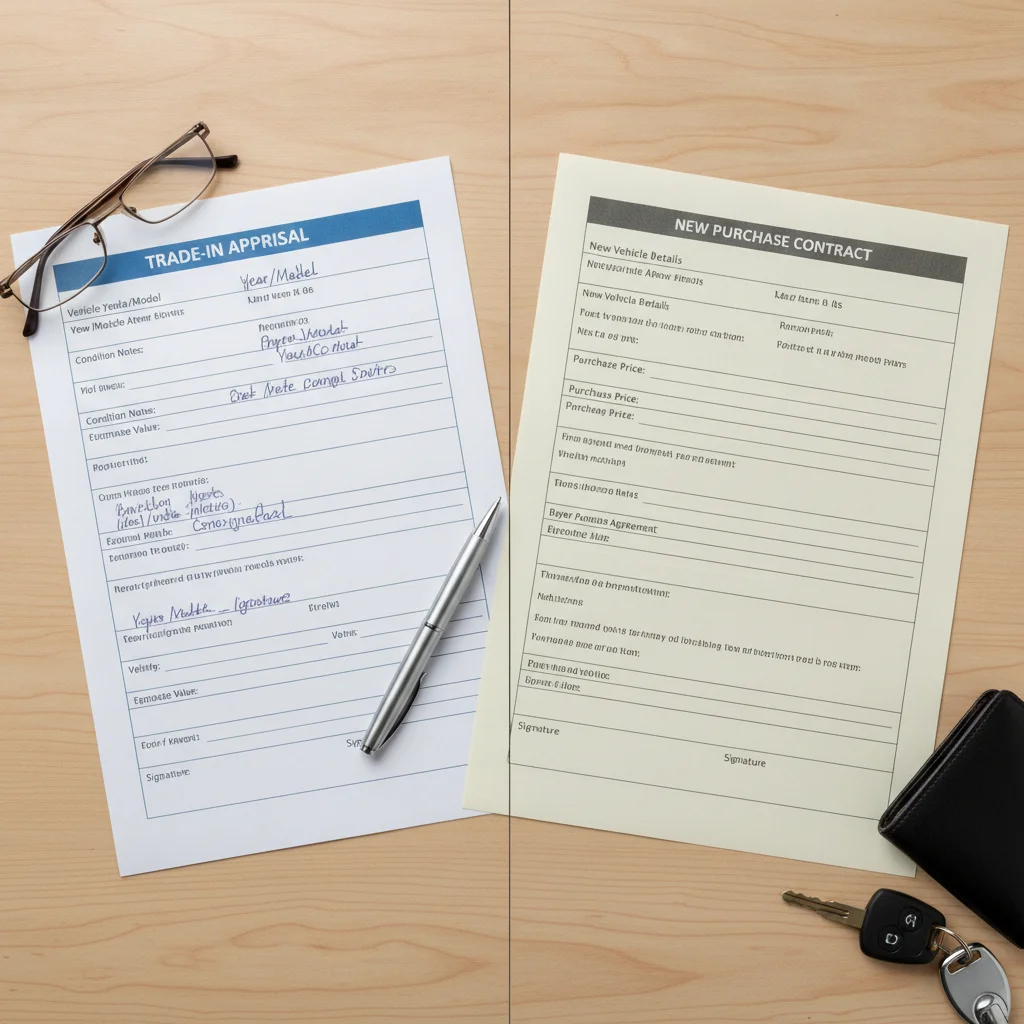
The good news is that the timing windows often overlap usefully. End of the model year (August–October) is when dealers are most motivated to clear current-year new inventory, offering factory incentives and dealer discounts on outgoing models. That's also when your current vehicle has the most current-year value — right before it rolls over to the next model year. Trading in during August or September captures motivated dealer discounting on new vehicles while your trade is still technically current-year.
Spring (March–May) is stronger for your trade but weaker for new-car deals — dealers aren't as desperate to move inventory when retail traffic is already strong. That said, if you're flexible on trim level or color, you can often find individual units that have been sitting and negotiate a reasonable price even in spring.
End of month and end of quarter are also worth layering in. Dealers hitting sales targets are more flexible across all line items — new price, trade-in allowance, and financing terms. Our guide on timing your purchase walks through how to stack these windows for maximum effect on the buy side.
If you're specifically trying to coordinate a new car deal with your trade-in timing, timing your new car purchase covers the dealer-side incentive calendar in detail.
Check Your Vehicle's Model Year Rollover Date
Automakers don't all release new model years at the same time. Some brands (like Honda and Toyota) often release next-year models as early as July; others wait until October. Search '[your vehicle] 2026 release date' or check Edmunds' new car release calendar six months before you plan to trade. Setting a hard deadline of two weeks before the new model arrives on your local lot can prevent an avoidable value drop.
Renew Your Outside Quotes Right Before You Trade
Carmax and Carvana quotes expire in 7 days, and used-car values can shift meaningfully in a short window. Get your outside quotes, then schedule your dealer visits within that same 7-day period to ensure you're negotiating against current market offers — not week-old numbers.
Document Your Maintenance History
A folder of dated service receipts — oil changes, tire rotations, brake jobs — can add $200–$500 to a dealer's trade-in offer, particularly on vehicles with more than 60,000 miles. It shifts the conversation from condition speculation to verifiable fact, and gives the dealer confidence they can retail your car faster.
A Practical Timeline: When to Start, When to Act
Here's a concrete action sequence you can follow regardless of which timing window you're targeting:
- 8–10 weeks before your target trade date
- Pull your vehicle's value on KBB, Edmunds, and NADA Guides. Check the current wholesale auction trend via Black Book's published data or any dealer-facing publication. Identify whether a new model year or refresh is coming for your vehicle.
- 4–6 weeks out
- Get your instant offers from Carmax, Carvana, and similar platforms. This locks in your floor number. Note the expiration dates — most are 7 days. You'll renew them closer to your actual trade date.
- 2 weeks out
- Call your lender for an official 10-day payoff quote. Gather your title (or know where it is). Compile maintenance records — documented service history can add $200–$500 to an offer on higher-mileage vehicles.
- Trade week
- Refresh your outside quotes. Time your dealer visit mid-week (Tuesday–Thursday) when the service desk is less slammed and the sales manager has bandwidth to negotiate. Aim for late in the month if you're not sacrificing spring timing to do it.
Also consider whether a private sale is worth the extra effort for your situation. Our analysis of timing your trade-in to the season breaks down how seasonal factors specifically affect what dealers will offer versus what private buyers will pay.
Mid-Cycle Refreshes Can Accelerate Depreciation
When a manufacturer releases a significant mid-cycle refresh (new front fascia, updated infotainment, revised powertrain options), prior-generation vehicles can drop in value faster than the normal model-year cycle predicts. Check automotive news sites for any upcoming refreshes on your specific vehicle before committing to a timing window. A refresh announced six months out is a reason to trade sooner.
EV Values Are More Policy-Sensitive Than Seasonal
Electric vehicle trade-in values don't follow the same seasonal patterns as gas-powered vehicles. They're more heavily influenced by federal and state incentive changes, manufacturer price cuts on new models, and battery technology advancement. If you're trading an EV, monitor policy news and manufacturer pricing decisions as closely as you'd watch the seasonal calendar.
Negative Equity Changes the Calculus Entirely
If you owe more on your current vehicle than it's worth, no amount of timing optimization eliminates the deficit — it gets rolled into your new loan. In that situation, the priority is minimizing total negative equity, not maximizing trade-in timing. Consider paying down the loan to at or near equity before trading, or evaluate whether keeping the vehicle longer to build equity is the more cost-effective path.

All claims are backed by peer-reviewed research. Sources on request.