Key Takeaways
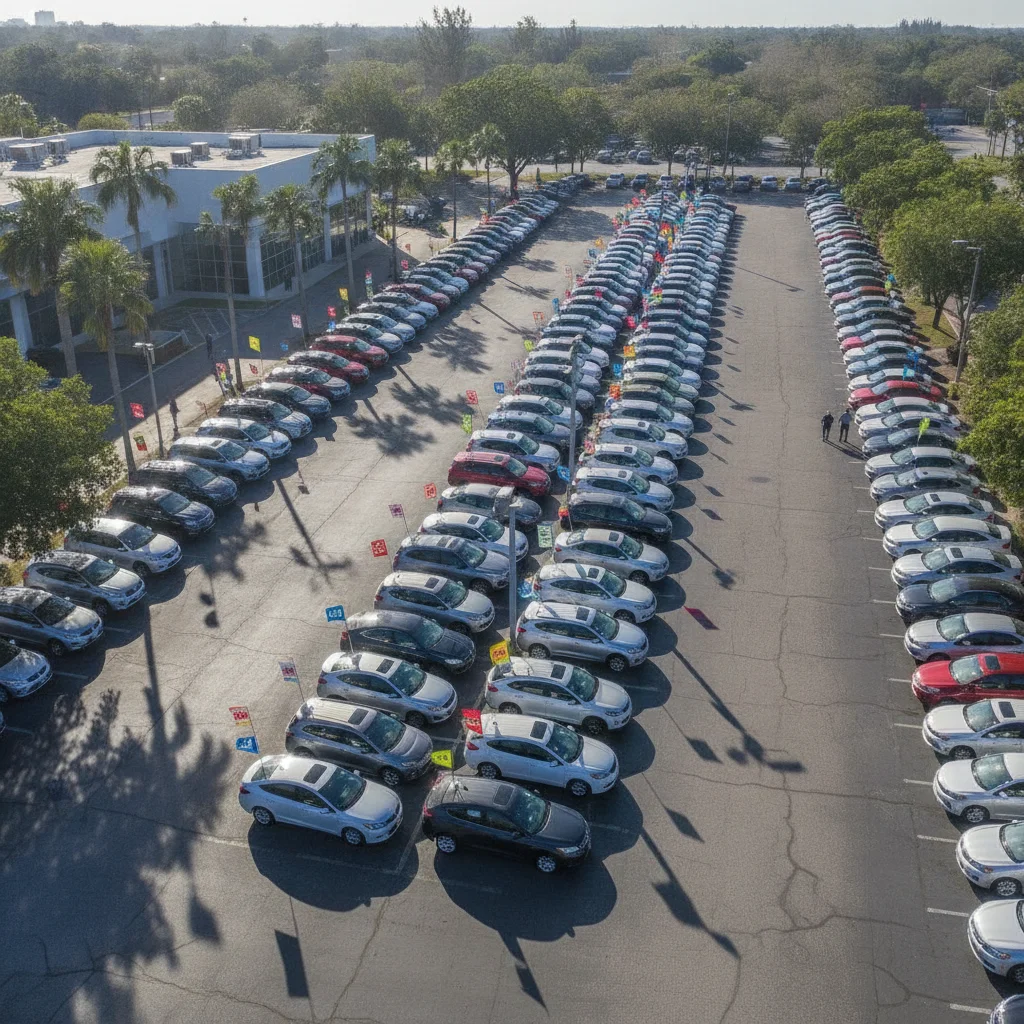
Pull your car's active competition on CarGurus the week before you plan to list. If five nearly identical vehicles are sitting with 30+ days on market, wait or price more aggressively — you're walking into a stale supply pocket.
Listing into oversupplied inventory forces you to compete on price alone, and buyers who've seen the same car for a month know they have leverage.
Schedule your listing to go live Thursday evening so it's near the top of search results Friday morning when weekend shoppers start browsing.
Platform algorithms on Facebook Marketplace and CarGurus surface newer listings, and weekend shopper volume is 40–60% higher than weekday volume on most used car platforms.
If you're approaching 100,000 miles, list before you cross that threshold — even if it's two weeks earlier than your ideal seasonal window. That mileage marker costs you more in perceived value than most sellers expect.
Buyer psychology treats round-number mileage milestones as hard thresholds. Data from multiple valuation platforms shows a meaningful price discontinuity at 100K miles regardless of actual mechanical condition.
Why Timing Actually Moves the Needle on Sale Price
Most sellers spend their energy on detailing the car, writing the listing, and figuring out whether to go private party or dealer. That's all worthwhile — but the one lever that gets the least attention is when to sell. And it turns out that lever does a lot of heavy lifting.
Used car prices aren't fixed. They shift with buyer demand, inventory levels, fuel prices, interest rates, and even the time of year. A car worth $18,500 in March might fetch $16,800 in December — same car, same mileage, same condition, different market. That's not a small gap. That's a car payment for eight months.

The good news is that used car demand follows predictable patterns. Seasonality is real. Economic signals are readable. Vehicle-type demand peaks are well-documented. None of this requires a finance degree — it requires knowing what to watch for and acting on it deliberately instead of whenever it happens to be convenient.
If you're selling for the first time and want a plain-language foundation, this primer for first-time car sellers is a solid place to start before going deeper here. For everyone else, let's get into the mechanics of market timing.
~$1,700
Average price premium in spring vs. winter
iSeeCars analysis of used car transaction data found vehicles sold in spring command an average premium of roughly $1,700 over comparable winter-season sales.
42%
Of used car shoppers active on weekends
CarGurus platform data consistently shows that weekend days account for the majority of buyer search activity and contact inquiries on private listings.
3–4 weeks
Lag time for gas prices to shift demand
Historical demand data shows fuel-efficient segment search traffic noticeably increases within 3–4 weeks of a sustained $0.40+ per gallon fuel price rise.
$2,800
Average federal tax refund (2024)
IRS data for the 2024 filing season showed an average refund of approximately $2,800, directly fueling the spring used car buying surge.
15–19%
First-year depreciation for most vehicles
Edmunds depreciation research consistently shows most mainstream vehicles lose 15–19% of their value in the first twelve months of ownership.
The Seasonal Cycle Every Car Seller Should Know
The used car market runs on a fairly consistent annual rhythm. Once you see the pattern, it becomes a useful planning tool rather than background noise.
Spring (March–May): Peak Selling Season
This is the window most sellers want to hit. Tax refunds start landing in March, and buyers who've been putting off a purchase all winter start showing up in force. Families want a new vehicle before summer road trips. Recent graduates need transportation. Demand outpaces inventory, which means buyers have less room to negotiate and sellers can hold closer to asking price.
A month-by-month breakdown of used car demand shows that March and April typically see the highest buyer activity of any two-month stretch in the year. If your car is ready to list, these are the weeks to push.
Pull your car's active competition on CarGurus the week before you plan to list. If five nearly identical vehicles are sitting with 30+ days on market, wait or price more aggressively — you're walking into a stale supply pocket.
Listing into oversupplied inventory forces you to compete on price alone, and buyers who've seen the same car for a month know they have leverage.
Schedule your listing to go live Thursday evening so it's near the top of search results Friday morning when weekend shoppers start browsing.
Platform algorithms on Facebook Marketplace and CarGurus surface newer listings, and weekend shopper volume is 40–60% higher than weekday volume on most used car platforms.
If you're approaching 100,000 miles, list before you cross that threshold — even if it's two weeks earlier than your ideal seasonal window. That mileage marker costs you more in perceived value than most sellers expect.
Buyer psychology treats round-number mileage milestones as hard thresholds. Data from multiple valuation platforms shows a meaningful price discontinuity at 100K miles regardless of actual mechanical condition.
Summer (June–August): Solid but Softening
Demand stays healthy through early summer but starts softening by July and August. Families are traveling, not shopping. College students have already made their purchases. You can still get good prices, especially for trucks and SUVs used for summer recreation — but the urgency in the buyer pool is down a notch from spring.
Fall (September–November): A Second Wind for the Right Cars
Fall brings a secondary bump — smaller than spring, but real. Back-to-school creates demand for practical sedans and commuter vehicles. Dealers start clearing out model-year inventory, which can push private-party sellers out of the spotlight slightly. That said, trucks, 4WD vehicles, and AWD SUVs see strong demand as buyers prep for winter. If you're selling one of those, fall can match or beat spring.
Winter (December–February): The Slow Season
This is the window sellers generally want to avoid. Holiday spending tightens budgets. Cold weather depresses foot traffic on private listings. Dealer lots are slow, which means trade-in offers compress. If you absolutely must sell in winter, January can pick up slightly as new-year budgets reset — but February tends to be the softest month of the year for used car demand.
Don't List in December Without a Reason
December is the single worst month for private-party used car sales for most vehicle types. Buyer budgets are committed to holidays, dealer incentives pull attention toward new cars, and cold weather suppresses showings. Unless you have a compelling financial reason to sell immediately, January or waiting until spring will almost always produce a better result.
Beware the Inventory Flood After Supply Chain Stabilization
When new car supply normalizes after a disruption period, used car values can drop faster than most sellers anticipate. If you're in a market recovery period and new car inventory is visibly improving at local dealerships, don't wait — the used premium earned during scarcity evaporates within one to two model quarters.
Vehicle Type Changes Everything
The seasonal calendar above is a starting point, but it applies differently depending on what you're selling. A convertible and a 4WD pickup truck don't share the same peak. Selling either one at the wrong time of year is leaving real money on the table.
Convertibles and Sports Cars
Peak demand: March through May. Buyers want these in spring so they can actually use them. Listing a convertible in October means competing with buyers who are rationally thinking about storage costs, not drop-top drives. If you own a convertible, spring listing is almost non-negotiable for maximum value.
4WD and AWD Trucks and SUVs
Peak demand: September through November in most markets. Buyers in snow-prone regions want these locked in before the first storm. Snowbird states and warm-weather markets are a partial exception — more on that in the regional section below.
Fuel-Efficient Sedans and Hybrids
These track gas prices more than calendar seasons. When fuel climbs toward $4.00/gallon nationally, demand for efficient vehicles spikes within weeks. Keep an eye on pump prices — a sustained rise of $0.40–$0.60/gallon over 3–4 weeks is a meaningful trigger. List before the mainstream seller population catches on and floods the market with competing inventory.
Minivans and Family Haulers
Peak demand aligns with spring, but also shows a secondary bump in July and August as families realizing they need more capacity before school starts make rushed decisions. Late summer can be surprisingly good for minivans.
Pickup Trucks (Work Use)
Contractor and trade-use trucks stay in demand nearly year-round in most markets, but see spikes in early spring when construction and landscaping businesses ramp up hiring and fleet needs. If your truck is more work-spec than weekend-rec, February through April is worth targeting.
For a more detailed breakdown by vehicle category, this guide to timing your sale by vehicle type covers the nuances in depth.

“Sellers consistently underestimate how much timing contributes to final transaction price. The car itself is only part of the equation — the market the car lands in matters just as much.”
— Ivan Drury, Director of Insights, Edmunds
Economic Signals That Affect What Buyers Will Pay
Seasonality is predictable. Economic conditions are less so — but they're not random either, and they can dramatically shift what a buyer is willing to pay or whether they're shopping at all.
Interest Rates
This one matters more than most sellers realize. When auto loan rates rise, buyers' monthly payments on a financed vehicle go up, which compresses the price they're willing to pay for the car itself. A buyer who could afford a $22,000 vehicle at 5% may only stretch to $19,500 at 8%. That difference comes partly out of your asking price.
Sellers in a rising-rate environment need to recognize they're competing not just against other used cars, but against buyers who are re-evaluating whether to buy at all. Pricing tightly and moving quickly beats waiting for rates to improve — you don't control that lever.
Gas Prices
Covered briefly above, but worth reinforcing: fuel prices are one of the fastest-moving demand signals in the used car market. A sustained run-up creates buyer urgency in the fuel-efficient segment while suppressing interest in large V8 trucks and SUVs. If you're selling a hybrid, a diesel, or a small-displacement car, watch the pump — a price spike is your market window.
Inventory Levels
When new car inventory is tight (as it was during the 2021–2023 supply chain disruptions), used car demand surges because buyers can't find new cars. When new car supply normalizes, used car prices soften as alternatives appear. Understanding how supply chain disruptions shift the used market helps you contextualize any period of unusual pricing.
Tax Refund Season
February through April, a meaningful portion of the buyer pool has cash in hand from tax refunds. Average federal refund amounts run $2,500–$3,200 — enough for a solid down payment or, for lower-priced vehicles, a cash purchase. This is a real demand driver for sub-$15,000 vehicles specifically, and it contributes significantly to the spring surge.
Don't Confuse Asking Price With Sale Price
Valuation tools show what sellers are listing at, not what cars are actually selling for. On private sales, expect 5–10% negotiation off asking price in a normal market. In a hot spring market with multiple interested buyers, you may hold closer to asking. In a slow winter market, buyers may push for 12–15% off. Price with realistic net proceeds in mind, not just what you want to see on the listing.
Mileage Thresholds Can Override Timing Advantages
If your vehicle is within 2,000–3,000 miles of a major mileage milestone — 75,000, 100,000, or 150,000 miles — the timing of crossing that threshold can outweigh seasonal advantages. Sell before you cross it, even if that means listing slightly outside your ideal seasonal window. The perceived value drop at these milestones is disproportionate to actual mechanical significance.
Rising Rates Hurt Used Car Values Indirectly
When the Fed raises benchmark rates, auto loan rates follow within a few weeks. This doesn't reduce buyer interest directly, but it reduces how much car a buyer can afford at a given monthly payment — effectively compressing what they'll offer for your vehicle. Watch rate announcements if you're in a flexible timing window; selling before a rate hike materializes in loan products is a meaningful advantage.
Trade-In Timing Differs From Private Sale Timing
The seasonal patterns discussed in this guide apply primarily to private-party sales. Dealer trade-in offers are also influenced by what the dealer currently needs on their lot, their reconditioning capacity, and upcoming auction cycles. A truck that commands top dollar from a private buyer in October may receive a conservative trade-in offer from a dealer who already has six similar trucks in inventory.
Regional Demand: Your Local Market Matters More Than You Think
National timing guidance is a useful framework, but local market conditions can shift your optimal window by a month or more in either direction.
Climate Drives Utility Vehicle Timing
In the Upper Midwest and Mountain West, AWD and 4WD demand spikes earlier — buyers in Minnesota or Colorado are thinking about snow before it arrives, which means September and October are stronger selling windows than they'd be in the Sun Belt. In contrast, Florida, Arizona, and Southern California buyers care less about winter traction, so AWD/4WD demand stays relatively flat year-round rather than surging in fall.
Convertibles follow the inverse pattern. In warmer markets, spring isn't as decisive a trigger — buyers in San Diego or Miami may shop year-round. In the Northeast or Midwest, the spring urgency is acute.
Local Economy and Employment
A plant closure, a major employer moving out, or a tech sector hiring freeze in your metro area can soften local used car demand regardless of what national trends suggest. Conversely, an economic boom — a large employer expanding, a construction surge — can push buyer activity above national norms. Check local headlines before you list, not just national market reports.
Snowbird and Migration Patterns
In markets that see significant seasonal population shifts — Phoenix, Fort Myers, Tucson — vehicle supply and demand swing with the human tide. Winter months bring an influx of northern-based retirees who may be in the market for a second vehicle. Summer brings thinned local population. These patterns are often the inverse of what you'd expect from national seasonality data.
Regional market timing differences are well worth understanding if you're in one of these markets before you set your listing date.

How to Check Your Local Market
- Run a search on your car's make, model, trim, and mileage range on Facebook Marketplace and CarGurus for your zip code. Count competing listings and watch how long they sit.
- Check how long listings at your price point have been active. Cars sitting 45+ days signal a soft market or an overpriced segment.
- Watch dealer lot activity locally. If dealers in your area are running big clearance events, they're trying to move metal — which means the used buyer is already a bit distracted by new car deals.
Short-Term Windows vs. Long-Term Positioning
There are two fundamentally different ways to think about timing as a seller: opportunistic (act on a favorable window that's open right now) or strategic (hold and position for a better window months away).
When to Act Now
Selling quickly makes sense when: gas prices have just spiked and you own an efficient vehicle; a local or regional economic event has temporarily boosted demand; your car is approaching a high-mileage threshold (like 100,000 miles) that will meaningfully drop its value; or repair costs are climbing and any further delay eats into your net proceeds. Depreciation doesn't pause while you wait for a better month. If your car is losing $200–$300/month in value and the next seasonal peak is five months away, the math on waiting may not work out in your favor.
When Waiting Is Worth It
Holding makes sense when: you're two months from spring and currently in winter; your vehicle type has a clear peak season that's approaching; you'd be selling into a flooded market (lots of similar vehicles listed) that's expected to thin out. A convertible owner sitting in January with a clean car in good condition is almost always better off waiting until March than listing in the depth of winter.
For a structured way to think through this tradeoff, short-term vs. long-term timing strategies walks through exactly how to weigh the competing factors.
Calculate Your Break-Even Hold Date
Before deciding to hold your car for a better season, add up your monthly carrying costs: insurance, registration prorated monthly, and an estimated $150–$300/month in straight-line depreciation for a typical used vehicle. Divide the expected price premium from better timing by that monthly cost to find how many months of holding actually makes financial sense. If the math doesn't pencil out past two months, sell now.
Use Valuation Tools Weekly During Peak Season
During the spring peak, used car prices can drift $200–$500 in either direction within a single month as inventory and demand shift. Check Kelley Blue Book and CarGurus pricing on your specific vehicle weekly during March and April so you know whether to hold asking price or adjust. Don't set a price once and walk away from the data.
The Hidden Cost of Waiting
Every month you hold a vehicle carries costs: insurance, registration, potential repairs, and straight-line depreciation. Before deciding to hold, calculate your monthly carrying cost and compare it to the realistic price premium you'd gain from better timing. If the math says you'll net $400 more by waiting three months but carrying costs run $250/month, your real gain is only $650 — and that's before accounting for the uncertainty of whether the better window actually materializes.
How to Price and List Once You've Found Your Window
You've identified your window. Now execution matters. The best timing in the world won't help if you price wrong or list on a dead day of the week.
Start With Real Data, Not Hope
Pull values from multiple tools — Kelley Blue Book, Edmunds, CarGurus — and average them. Don't cherry-pick the highest estimate. These tools are imperfect, but they tell you what comparable vehicles in your region are actually selling for, not just what sellers are asking. Understanding how valuation tools estimate your car's worth is worth reviewing before you set your price.
Price to the Market, Not to Your Payoff
What you owe on the car is irrelevant to what a buyer will pay. Set price based on market data. If you're underwater on the loan, that's a financing problem to solve separately — don't try to bake it into your asking price. Buyers don't care about your payoff number.
Day of the Week Matters
Listing on Thursday or Friday gives your ad maximum exposure over the weekend, which is when the majority of private-party car shoppers are active. A listing that goes live Monday morning may have staled before weekend browsers arrive. This is a small detail that's easy to execute correctly.
Pull your car's active competition on CarGurus the week before you plan to list. If five nearly identical vehicles are sitting with 30+ days on market, wait or price more aggressively — you're walking into a stale supply pocket.
Listing into oversupplied inventory forces you to compete on price alone, and buyers who've seen the same car for a month know they have leverage.
Schedule your listing to go live Thursday evening so it's near the top of search results Friday morning when weekend shoppers start browsing.
Platform algorithms on Facebook Marketplace and CarGurus surface newer listings, and weekend shopper volume is 40–60% higher than weekday volume on most used car platforms.
If you're approaching 100,000 miles, list before you cross that threshold — even if it's two weeks earlier than your ideal seasonal window. That mileage marker costs you more in perceived value than most sellers expect.
Buyer psychology treats round-number mileage milestones as hard thresholds. Data from multiple valuation platforms shows a meaningful price discontinuity at 100K miles regardless of actual mechanical condition.
Photos and Condition Are Still Your Job
Good market timing gets buyers to your listing. Bad photos and a mediocre description send them elsewhere. Shoot in daylight, clean the car first, and get shots from every angle including engine bay and under the vehicle if it's clean. Write an honest description that leads with the strongest features. Buyers who feel misled by a listing become the worst kind of negotiators.
Where to List
- Facebook Marketplace: High traffic, free, tends toward cash buyers in the sub-$20,000 range.
- CarGurus / Cars.com: Reaches buyers who are further along in the research process and often more serious.
- Craigslist: Still relevant in many markets for quick local transactions, but scam risk is higher — cash only, meet in safe public locations.
- Autotrader: Stronger for higher-value or specialty vehicles where buyers are doing more research.
Common Timing Mistakes Sellers Make
Even sellers who know timing matters make predictable errors. Here are the ones worth avoiding deliberately.
Listing During Competitive Flooding
When dealers run year-end clearance events or aggressive incentive campaigns on new cars, private sellers get lost in the noise. Buyers who might have considered your used car are now distracted by 0% financing offers on new vehicles. Year-end car buying dynamics show just how aggressive dealer incentives get in November and December — that environment is rough for private sellers of comparable vehicles.
Ignoring the Spring Surge on the Buyer Side
Spring demand is good for sellers — but it's worth knowing that it also creates urgency among buyers, which means they may move quickly but also feel slightly pressured. Understanding the spring surge from the buyer's perspective helps you understand who you're negotiating with and what's driving their behavior.
Waiting Too Long Past Peak
Sellers who list in late May thinking spring demand runs indefinitely often find themselves in a softening market by June. Spring peaks in April, not June. Set your target window and execute in it — don't drift.
Overweighting National Data for a Regional Vehicle
A 4WD truck with a snowplow mount is a hyper-local product. National timing data is almost irrelevant — what matters is when your local buyers are thinking about winter prep. Always sanity-check national timing guidance against your specific market.
Don't Confuse Asking Price With Sale Price
Valuation tools show what sellers are listing at, not what cars are actually selling for. On private sales, expect 5–10% negotiation off asking price in a normal market. In a hot spring market with multiple interested buyers, you may hold closer to asking. In a slow winter market, buyers may push for 12–15% off. Price with realistic net proceeds in mind, not just what you want to see on the listing.
Mileage Thresholds Can Override Timing Advantages
If your vehicle is within 2,000–3,000 miles of a major mileage milestone — 75,000, 100,000, or 150,000 miles — the timing of crossing that threshold can outweigh seasonal advantages. Sell before you cross it, even if that means listing slightly outside your ideal seasonal window. The perceived value drop at these milestones is disproportionate to actual mechanical significance.
Treating Trade-In and Private Sale the Same Way
If you're trading in at a dealer rather than selling privately, timing dynamics work slightly differently. Dealers adjust trade-in offers based on their own lot composition and what they can quickly resell. Timing your trade-in to the season covers how to approach trade-in timing specifically, since it's a distinct negotiation from private-party selling.

Not Running the Carrying Cost Math
The most common mistake: a seller decides to wait for a better window without ever calculating what holding the car costs per month. Run the numbers. Multiply monthly insurance by the wait period, add any upcoming registration or maintenance costs, and estimate monthly depreciation. Compare that to the realistic price premium from better timing. If the gap is small, the emotional satisfaction of selling at peak may not be worth the financial case for waiting.
Market timing is a real advantage — but it's a tool, not magic. Use it deliberately, execute cleanly, and don't let the pursuit of the perfect moment become an excuse to avoid making the decision.

All claims are backed by peer-reviewed research. Sources on request.