
Key Takeaways
Spring Car Shopping Surge
The spring car shopping surge is the predictable spike in new and used vehicle demand that occurs every year between roughly February and May. During this window, more buyers enter the market simultaneously, which gives dealers and private sellers more leverage to hold firm on price — or push it higher. Understanding this seasonal pattern is the first step toward deciding whether to shop early, wait it out, or use it to your advantage.
Economists refer to this as seasonal demand elasticity: as buyer volume increases, price sensitivity decreases, allowing sellers to extract a higher transaction price without losing the sale.
Why Spring Triggers a Buying Frenzy Every Year
The spring car shopping surge isn't a marketing invention — it's a genuine, data-backed pattern that repeats itself in virtually every major U.S. auto market, year after year. Several independent forces all peak at roughly the same time, and when they collide, the result is a concentrated burst of buyer activity that pushes transaction prices measurably higher.
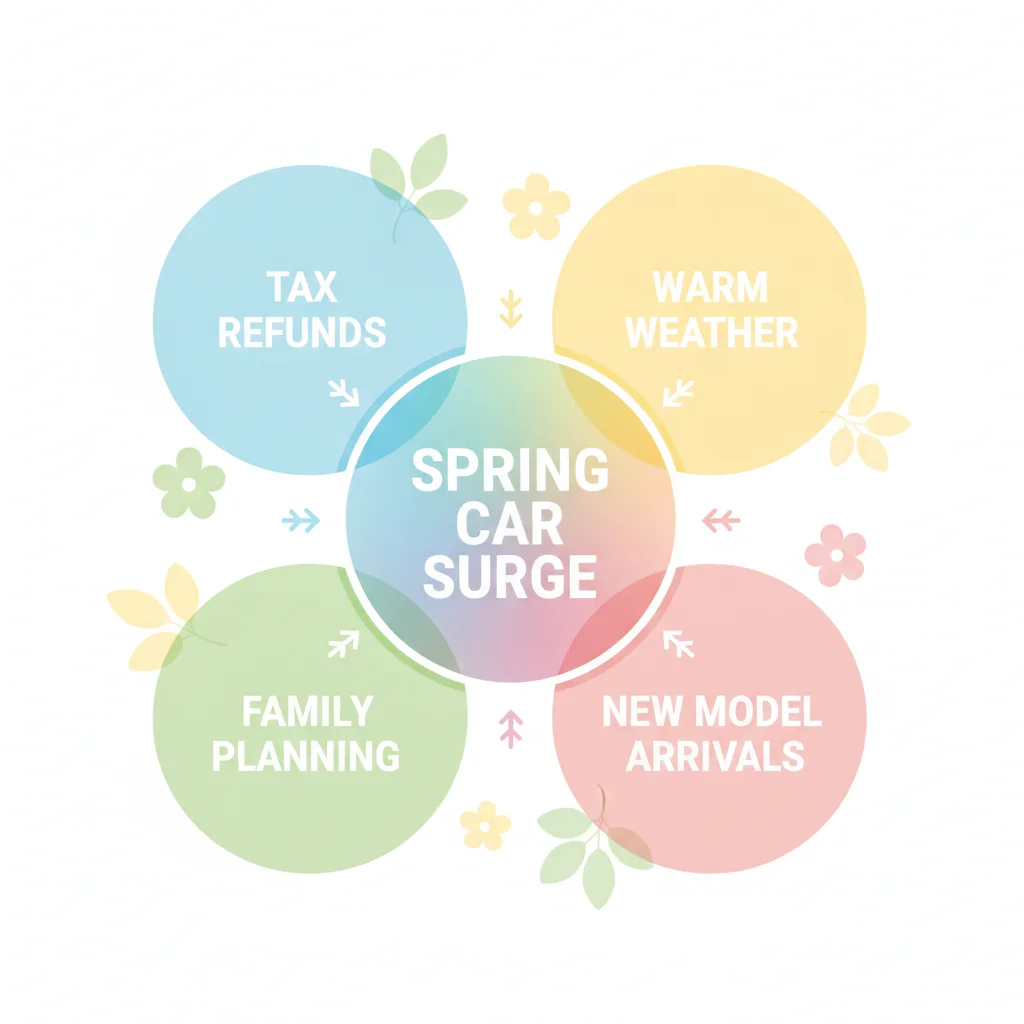
Here are the four primary drivers behind the surge:
- Tax refund season. The IRS typically begins issuing refunds in early February, with the bulk arriving through March and April. The average federal refund hovers around $3,000 — enough for a solid down payment on most vehicles. That cash-in-hand effect turns window shoppers into buyers almost overnight.
- Seasonal psychology. Warmer weather triggers purchasing behavior across most consumer categories. People feel more optimistic, get out of the house, and visit dealerships they've been mentally planning to visit since December. This is measurable: foot traffic to dealerships rises sharply as temperatures climb above 50°F in most regions.
- End of school year and family planning. Families who know they'll need a reliable larger vehicle for summer road trips or a college-bound student's first car begin their shopping in March and April to complete the purchase before the schedule tightens up.
- New model-year arrivals. Most manufacturers begin delivering the next model year's vehicles in late summer, but spring is when dealers actively market the current year's freshest trim levels and feature packages. This creates a sense of urgency — buy now while the newest version is available before the 2026s arrive.
These forces don't just add together — they amplify each other. The result is a seller's market that typically runs from late February through May, and understanding it is the foundation of a smarter buying strategy.
The Real Price Impact: What the Numbers Show
Abstract concepts about "seasonal demand" only matter if they translate into real dollars on your purchase. And they do — significantly.
3–7%
Average used car price premium in spring vs. January
Based on wholesale auction data and retail transaction analysis tracking seasonal price movement across major U.S. markets.
$3,011
Average federal tax refund (2024)
According to IRS filing season statistics, the average refund issued in 2024 was approximately $3,011 — enough to cover a meaningful down payment on most vehicles.
~20%
Increase in dealership foot traffic, March vs. January
Automotive retail data consistently shows a roughly 20% jump in showroom visits between January and the March–April peak of the spring surge.
$1,960
Extra cost on a $28,000 used vehicle at 7% spring premium
A direct calculation showing how the upper end of the seasonal price range translates into real dollars for a mid-market used vehicle purchase.
Feb–May
Core spring surge window for U.S. auto demand
Industry analysts consistently identify late February through May as the peak demand period, with March and April representing the highest transaction volume months of the year.
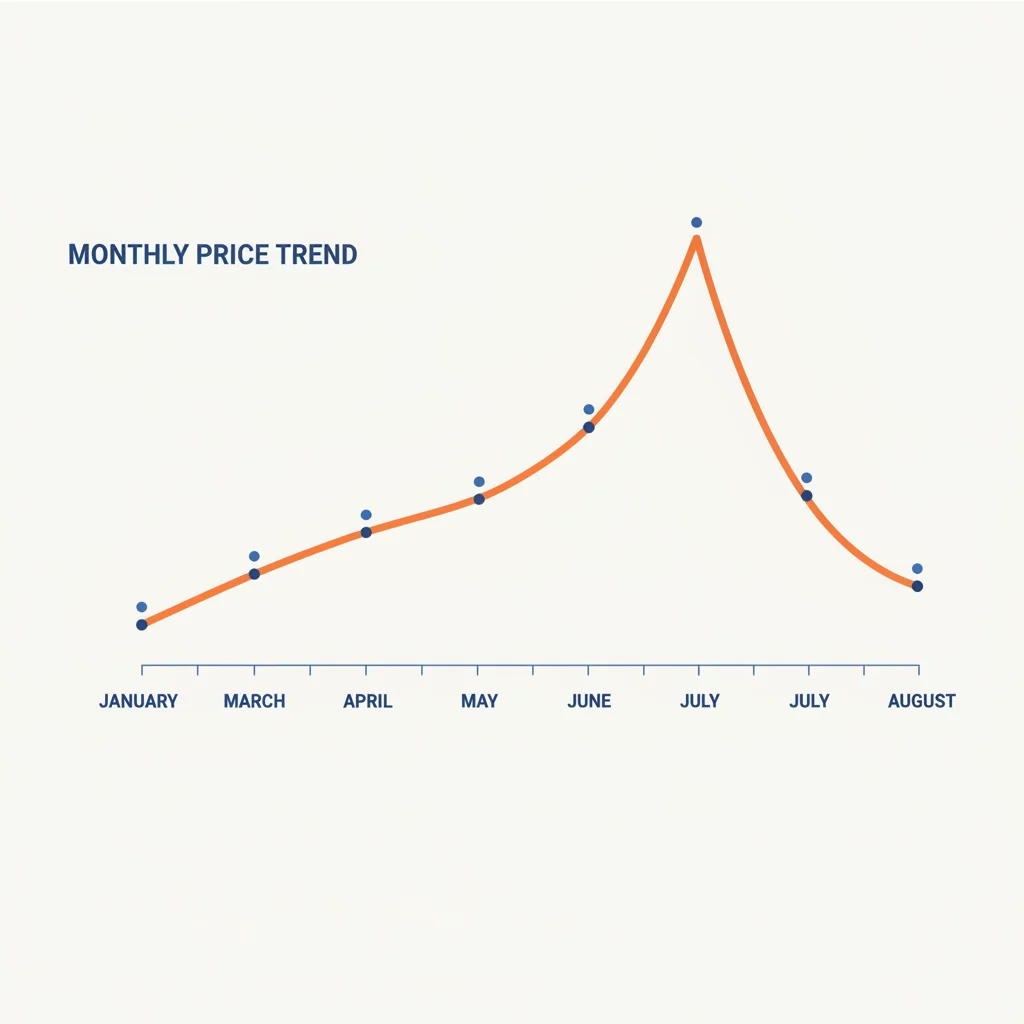
Used vehicle prices show the clearest spring premium. Wholesale auction data consistently shows that average used vehicle transaction prices rise 3–7% between their January trough and their March–April peak. On a $28,000 purchase, that's an $840–$1,960 swing. For a $40,000 pickup truck or SUV, the premium can exceed $2,500.
New vehicle prices are more nuanced. Manufacturers don't change MSRP with the seasons, but dealer willingness to negotiate does. In January and early February — slow months — dealers are more likely to accept offers below invoice, offer unadvertised incentives, or throw in accessories. In March and April, that flexibility evaporates on fast-moving models. You'll still find the same sticker price, but the effective discount shrinks.
“The spring car market is essentially a perfect storm for sellers. You have motivated buyers with cash in hand, families with a deadline, and favorable weather all showing up at the same time. Dealers don't need to negotiate — the next buyer is already walking through the door.”
— Ivan Drury, Director of Insights, Edmunds
The vehicle types most sensitive to spring pricing include:
- Convertibles and sports cars — demand surges as warm weather arrives, often pushing prices 5–10% above their winter lows.
- SUVs and crossovers — year-round popular vehicles that see the biggest volume spike in spring, which still compresses negotiating room even without dramatic price hikes.
- Minivans and three-row SUVs — family vehicles spike as parents finalize plans for summer.
- Economy sedans and compact cars — less dramatic seasonal swings, but still affected by the general increase in buyer competition.
To put this in practical terms: if you're eyeing a used Honda CR-V or Toyota RAV4, the same unit that sat on a dealer lot in January at $26,500 may realistically be listed — and sold — at $27,800 by March, simply because there are more competing buyers and fewer reasons for the seller to discount.
For a deeper look at how the calendar shapes valuation tool outputs and what real buyers will pay at different times of year, see how seasonal demand inflates and deflates car values.
How the Surge Affects Trade-In Leverage
The spring surge doesn't only affect what you pay for your next vehicle — it also shapes what you receive for the one you're handing over. These two numbers are directly connected, and understanding both sides of the equation can significantly change your total cost of transaction.

Dealers need a steady supply of used inventory to meet spring retail demand. Unlike new cars, which they can order from the manufacturer, used vehicles depend on trade-ins, auctions, and off-lease returns. When retail demand is high, dealers are more motivated to acquire trade-ins — which means spring is often a favorable time to trade in an SUV, crossover, or sedan.
Trade In an SUV in Spring, Not a Truck
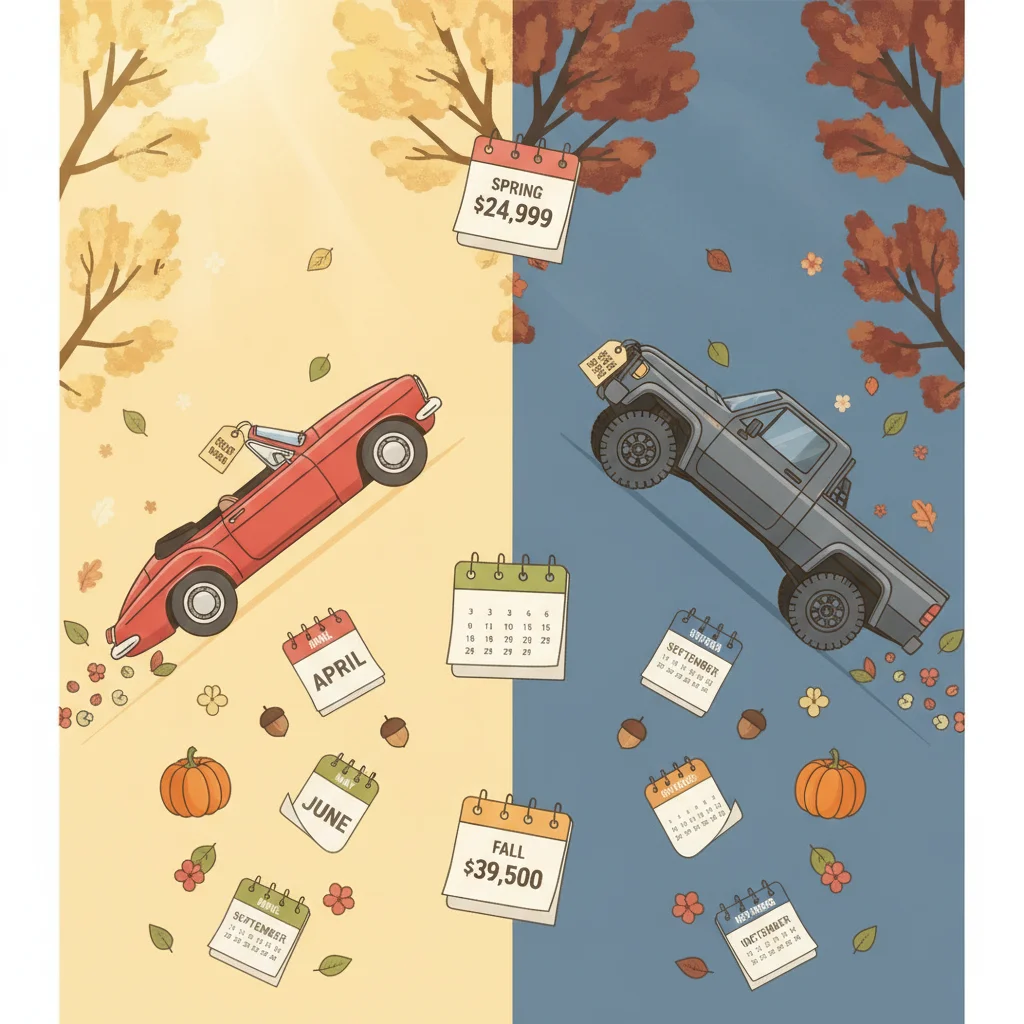
If you're trading in an SUV or crossover, spring is one of your strongest leverage windows because dealers need that inventory to meet retail demand. But if you drive a pickup truck or 4WD vehicle, hold off — those vehicle types see their trade-in value peak in fall, not spring. Timing your trade-in to match seasonal demand for your specific vehicle type can add hundreds or even thousands of dollars to your appraisal.
Shop Mid-Week for More Negotiating Attention
Saturday is the busiest day at most dealerships — salespeople are stretched thin and have little incentive to work hard on any single deal. Visit on Tuesday, Wednesday, or Thursday and you'll find a salesperson with more time, a sales manager more focused on your deal, and a lot less competitive pressure. Mid-week visits consistently produce better outcomes for buyers willing to plan around their schedule.
Lock In Financing Before You Walk In
Getting pre-approved from your bank or credit union before visiting the dealer accomplishes two things: it shows you're a serious buyer, and it removes the dealer's ability to negotiate on monthly payment terms instead of the actual vehicle price. Dealers earn income on financing deals — pre-approval gives you a benchmark to compare their offer against and the ability to walk away if their rate isn't competitive.
The calculus is different for trucks and four-wheel-drive vehicles. Those tend to spike in fall, not spring, as buyers prepare for winter conditions. If you're trading in a full-size pickup or a lifted 4x4, you may actually get a better trade-in offer in October than in April. Timing your trade-in to vehicle type is just as important as timing it to the season.
For a detailed breakdown of how different vehicle categories perform as trade-ins across the calendar year, see timing your trade-in to the season.
One tactical note: even if your trade-in value rises in spring, that gain can be partially or fully offset by paying a spring premium on your next vehicle. Run both numbers — what you're getting for your trade and what you're paying for the replacement — before concluding that spring is the right moment to transact.
Spotting the Inventory Opportunities Hidden Inside the Surge
Spring is a seller's market in aggregate, but that doesn't mean every vehicle on every lot carries an inflated price. Savvy buyers know where to look for the exceptions — and they exist on nearly every dealership's inventory list.
Spring Surge Affects Online Listings Too
The spring pricing premium isn't limited to dealer lots. Private-party listings on platforms like Facebook Marketplace, CarGurus, and AutoTrader also reflect seasonal demand — sellers price higher when they know more buyers are actively searching. If you're shopping for a used vehicle from a private seller in March or April, apply the same January baseline research you'd use at a dealership. The seasonal dynamic is identical; the negotiating environment is just less structured.
New vs. Used: Different Spring Dynamics
The spring surge hits the used car market harder than the new car market in terms of price movement, because used vehicle supply is constrained — there's no factory to order more from. New vehicles maintain manufacturer MSRP year-round, but negotiating room and dealer incentives compress significantly during the spring. For new cars, it's less about the sticker price going up and more about your ability to get below it going down.
Regional Timing Differences Matter
The spring surge arrives earlier in warmer-weather states like Florida, Texas, and California — sometimes as early as late January — and later in northern states where winter driving conditions persist into March. If you're in a northern market, you may have a slightly longer pre-surge buying window. Check your local market's listing volume trends on sites like CarGurus, which shows days-on-market data by ZIP code.
Where to Find Spring Deals
The most reliable spring deal is on leftover winter inventory: vehicles that sat unsold through December, January, and February. Dealers pay a carrying cost — called floor plan financing — on every vehicle that sits on the lot. By March and April, a car that's been sitting since November has accrued three to four months of interest charges. Dealers are often quietly motivated to move that unit even at a thin margin, just to stop the bleeding.
How do you identify aged inventory? Ask the salesperson directly: "How long has this unit been on the lot?" Or look at the window sticker date and compare it to today. A unit that arrived in October is a better negotiating candidate than one that arrived last week.
Other spring opportunities:
- Outgoing model years that still haven't sold. If the 2025 model year of a vehicle has been on the lot since fall, the dealer is now carrying it into spring competing against the newest arrivals. Dealers will often negotiate more aggressively on these units.
- Vehicles at the edges of popular categories. Everyone wants a mid-size SUV. Far fewer people are shopping for a compact sedan or a minivan. Less competition means more negotiating room, even during the spring surge.
- CPO vehicles priced near the top of their range. Certified pre-owned units are often priced at a premium that dealers hold firm on during peak demand — but units that have been in CPO inventory since winter may have already seen a quiet price reduction.
The broader principle: spring rewards preparation. Buyers who research pricing data before walking onto the lot — using tools like Kelley Blue Book and Edmunds to understand what the same unit sold for in January — are far better positioned to spot which units are fairly priced and which are riding the seasonal wave.
Timing Strategies: Before, During, and After the Surge
The best strategy depends on your personal flexibility. Here's how to think about each timing window:
Buy Before the Surge (January–mid February)
This is the most consistently under-used buying window. Inventory is deep because new model-year vehicles have just arrived. Dealer floor plan costs are high on aging units. Holiday promotions have ended and sales quotas reset, making salespeople eager to close deals. If you can handle cold weather test drives and don't need your vehicle immediately, this window typically offers the lowest transaction prices of the year.
The trade-off: you may have less color and trim selection on the most popular models if those sold out in November and December. And your trade-in value may be lower for certain vehicle types in winter.
Navigate the Surge (March–May)
If you need to buy during the surge — because life doesn't always accommodate ideal timing — apply these principles:
- Focus negotiation on aged inventory (90+ days on lot), not fresh arrivals.
- Get pre-approved for financing before you visit the dealership so you can move quickly when you find the right unit at a fair price, without feeling pressured to accept dealer financing at unfavorable terms.
- Shop mid-week. Dealerships are busiest on Saturday; a Tuesday or Wednesday visit means the salesperson has more time and less active competition for your attention.
- Use price history from valuation tools to anchor your offer to what the vehicle was worth two months ago, not what the dealer is asking today.
Wait for Post-Surge (June–August)
By June, the tax refund wave has been spent, school-year urgency has passed, and many buyers who surged in spring are now locked into their purchases. Dealer lots begin filling with new model year arrivals, and the current-year vehicles that didn't sell in spring start getting quieter price reductions. This is a strong window for buyers who are patient and flexible on the model year.
Trade In an SUV in Spring, Not a Truck
If you're trading in an SUV or crossover, spring is one of your strongest leverage windows because dealers need that inventory to meet retail demand. But if you drive a pickup truck or 4WD vehicle, hold off — those vehicle types see their trade-in value peak in fall, not spring. Timing your trade-in to match seasonal demand for your specific vehicle type can add hundreds or even thousands of dollars to your appraisal.
Shop Mid-Week for More Negotiating Attention
Saturday is the busiest day at most dealerships — salespeople are stretched thin and have little incentive to work hard on any single deal. Visit on Tuesday, Wednesday, or Thursday and you'll find a salesperson with more time, a sales manager more focused on your deal, and a lot less competitive pressure. Mid-week visits consistently produce better outcomes for buyers willing to plan around their schedule.
Lock In Financing Before You Walk In
Getting pre-approved from your bank or credit union before visiting the dealer accomplishes two things: it shows you're a serious buyer, and it removes the dealer's ability to negotiate on monthly payment terms instead of the actual vehicle price. Dealers earn income on financing deals — pre-approval gives you a benchmark to compare their offer against and the ability to walk away if their rate isn't competitive.
For comparison of how the spring and winter windows stack up from both a buyer and seller perspective, see spring vs. winter selling comparison.
Making the Surge Work for You: A Practical Checklist
Whether you're buying in the surge or strategically around it, preparation separates buyers who pay full spring premium from those who don't. Use this checklist before you walk onto a lot or submit an online offer:
Spring Surge Affects Online Listings Too
The spring pricing premium isn't limited to dealer lots. Private-party listings on platforms like Facebook Marketplace, CarGurus, and AutoTrader also reflect seasonal demand — sellers price higher when they know more buyers are actively searching. If you're shopping for a used vehicle from a private seller in March or April, apply the same January baseline research you'd use at a dealership. The seasonal dynamic is identical; the negotiating environment is just less structured.
New vs. Used: Different Spring Dynamics
The spring surge hits the used car market harder than the new car market in terms of price movement, because used vehicle supply is constrained — there's no factory to order more from. New vehicles maintain manufacturer MSRP year-round, but negotiating room and dealer incentives compress significantly during the spring. For new cars, it's less about the sticker price going up and more about your ability to get below it going down.
Regional Timing Differences Matter
The spring surge arrives earlier in warmer-weather states like Florida, Texas, and California — sometimes as early as late January — and later in northern states where winter driving conditions persist into March. If you're in a northern market, you may have a slightly longer pre-surge buying window. Check your local market's listing volume trends on sites like CarGurus, which shows days-on-market data by ZIP code.
- Pull your credit report and know your score. A strong credit score unlocks better financing rates, which can matter far more than a $500 price negotiation. Buyers with 720+ scores typically access rates 2–3 percentage points lower than buyers in the low-600s — on a $30,000 loan, that's thousands of dollars over the life of the loan.
- Get pre-approved from a bank or credit union before visiting the dealer. This gives you a concrete financing benchmark and removes the dealer's ability to negotiate the monthly payment instead of the actual price.
- Research your target vehicle's price history. Use KBB, Edmunds, and CarGurus to see what the same model, year, and trim sold for in January. That number is your baseline offer during spring.
- Get a written trade-in appraisal from at least three sources (dealer, CarMax, and an online tool like Carvana or KBB Instant Cash Offer) before accepting a trade value. Competition between buyers gives you a real floor.
- Identify your backup options. Knowing two or three acceptable vehicles instead of fixating on one gives you the power to walk away — the single most important negotiating tool in any market.
The spring surge is a real market force, but it rewards informed buyers as much as it penalizes unprepared ones. Understanding market timing fundamentals gives you the framework to make a confident decision regardless of when life requires you to buy.


All claims are backed by peer-reviewed research. Sources on request.