
Key Takeaways
Supply Chain Disruption (Auto Market)
A supply chain disruption in the auto market occurs when the flow of parts, materials, or finished vehicles is interrupted — causing dealers to receive far fewer cars than normal. When inventory shrinks, the usual negotiating leverage shifts from buyers to sellers. Prices rise, incentives disappear, and classic timing tactics like buying at end-of-month or during model changeovers lose much of their power.
Disruptions can originate from semiconductor shortages, port backlogs, raw-material scarcity (e.g., lithium, palladium), or geopolitical shocks — each creating different lag times between the disruption event and retail-lot impact.
Why Traditional Timing Wisdom Was Built for a Different Market
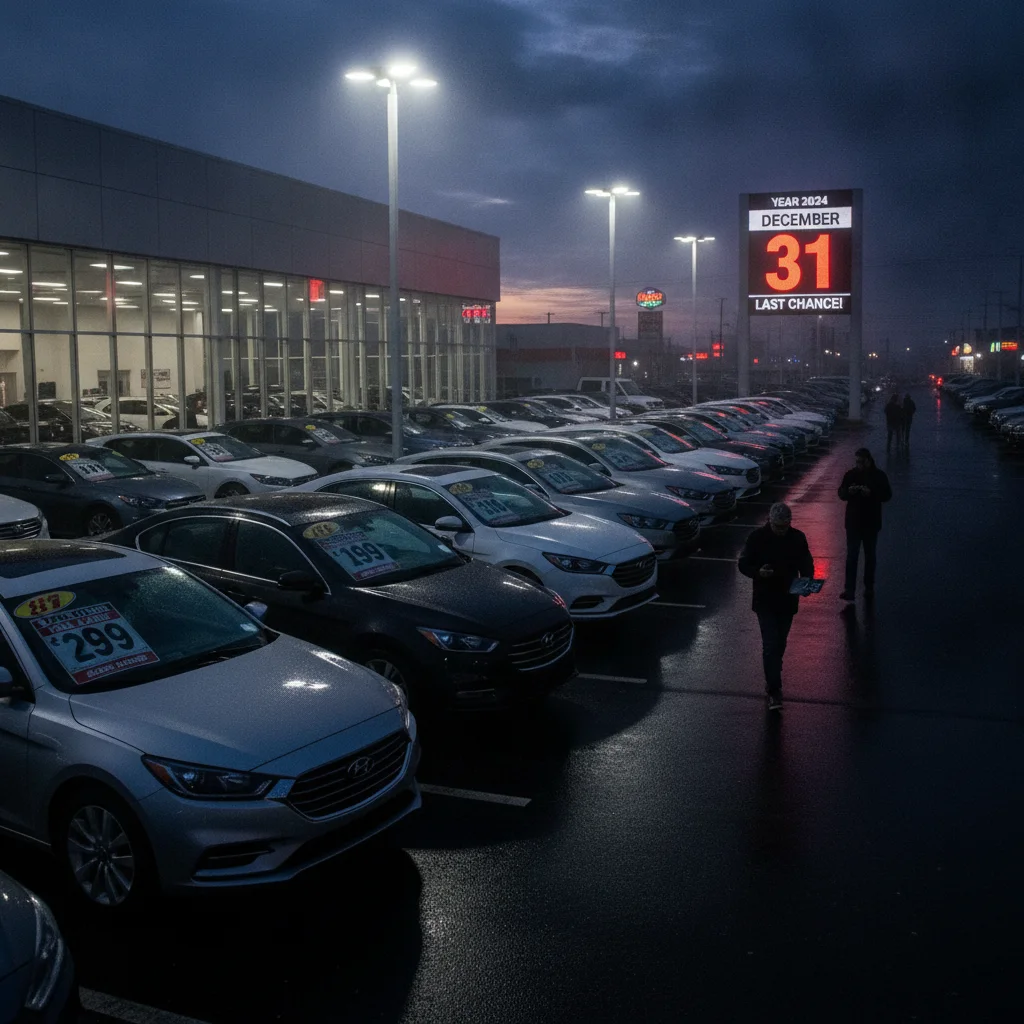
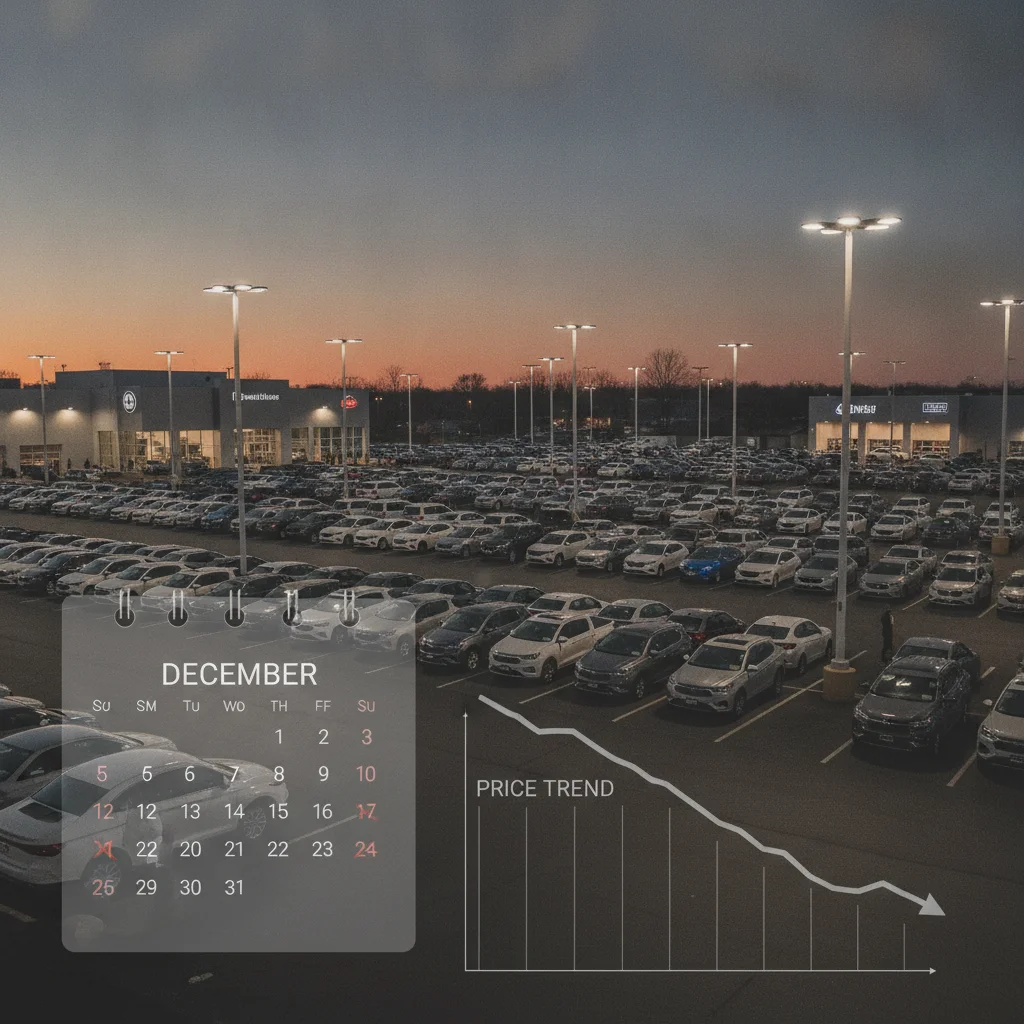
For decades, car buyers operated on a set of reasonably reliable timing rules: shop at the end of the month when salespeople need to hit quotas, buy in late fall when model-year changeovers create clearance pressure, and watch for holiday weekend sales events. These strategies worked because they assumed one fundamental condition — dealers had more cars than they could easily sell.
That condition broke down dramatically starting in 2021. A global semiconductor shortage cascaded through automotive supply chains, cutting new vehicle production by an estimated 7.7 million units in 2021 alone. Dealer lots that once held 60 to 90 days of inventory shrank to single-digit supplies on popular models. Suddenly, the old playbook didn't just underperform — in many cases, it actively misled buyers into expecting leverage they no longer had.
Understanding why timing strategies exist in the first place is the first step to knowing when they still apply and when to set them aside. The tactics aren't wrong — they're just contingent on market conditions that supply disruptions can flip overnight.
If you're comparing your current situation to conventional wisdom, see how traditional new car timing strategies are supposed to work in a normal, balanced market. That baseline makes the disruption-era differences much easier to spot.
How Supply Shocks Flip the Negotiating Dynamic
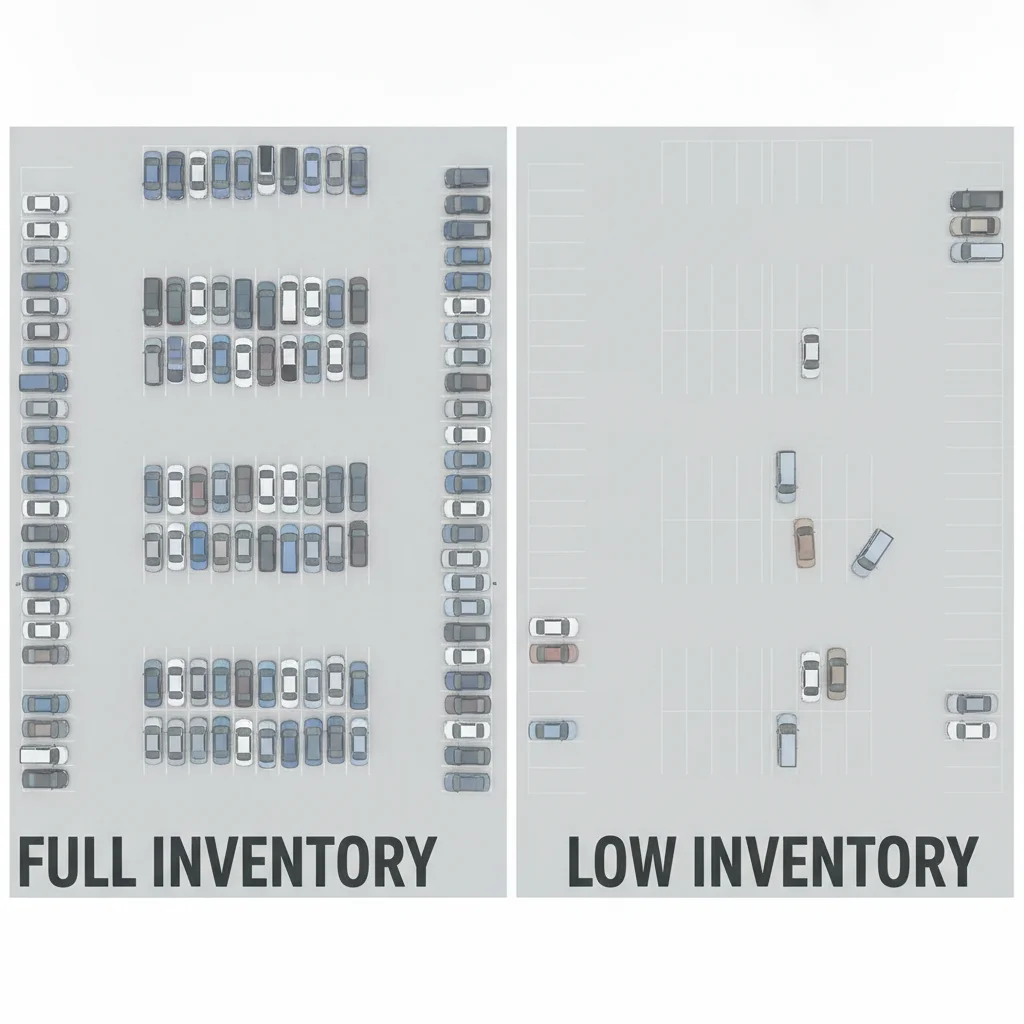
In a healthy auto market, dealers carry roughly 60 days of supply — enough inventory that they're balancing carrying costs (interest on floor-plan financing) against the need to move vehicles. That tension benefits buyers. When days of supply stretches toward 90 or beyond, dealers feel real financial pressure: every unsold car on the lot costs them money daily. Incentives appear, prices soften, and salespeople become eager to deal.
Supply chain disruptions collapse this dynamic entirely. When a factory shuts down or a parts shortage limits production, dealers receive a fraction of their normal allocation. Days of supply can plunge below 20 for affected models — sometimes into single digits. At that level:
- Floor-plan pressure disappears. With almost no inventory financed on the lot, dealers feel no urgency to sell quickly.
- Manufacturer incentives vanish. Automakers don't need to sweeten deals when demand outpaces supply.
- Markups above MSRP become common. Some dealers openly charge $5,000 to $15,000 above sticker price on high-demand models.
- Waitlists replace negotiation. On the most constrained vehicles, buyers simply put their name on a list and accept whatever price is offered months later.
7.7M
New vehicles lost to chip shortage in 2021
According to AutoForecast Solutions, the global semiconductor shortage caused automakers to cut approximately 7.7 million vehicle units from 2021 production schedules.
42%
Used car price increase year-over-year (2021–2022)
Manheim Used Vehicle Value Index data showed average wholesale used car prices rising more than 42% year-over-year at the height of the new-car supply shortage.
<20 days
Days of supply at shortage peak
Cox Automotive reported that some high-demand segments — including trucks and SUVs — fell below 20 days of supply in mid-2021, compared to the historical norm of 60–70 days.
$728
Average markup above MSRP (Spring 2022)
Edmunds data from April 2022 showed buyers were paying an average of $728 above MSRP on new vehicle transactions, with popular models commanding multiples of that figure.
60–75 days
Days of supply where buyer leverage returns
Industry analysts at Cox Automotive and J.D. Power consistently identify the 60–75 day supply threshold as the point where dealers begin offering meaningful incentives and accepting below-MSRP offers.
The result is a market where the conventional advice to "always negotiate below MSRP" becomes largely aspirational rather than practical. Buyers who walk into a showroom expecting the usual leverage are often disappointed — not because they negotiated poorly, but because the structural conditions that enable negotiation are temporarily absent.
Disruptions Affect Segments Differently
Not all vehicles are equally exposed to supply chain shocks. Highly complex vehicles with large numbers of semiconductor-dependent systems — such as full-size trucks, luxury EVs, and high-tech SUVs — tend to be hit harder and recover more slowly than simpler economy models. If your target segment is particularly chip-intensive, expect the supply recovery to lag industry-wide averages.
Regional Markets Can Diverge Significantly
National days-of-supply averages mask wide regional variation. A model that's severely constrained in the Pacific Northwest may be relatively plentiful in the Midwest due to different dealer allocation formulas and regional demand patterns. Always check inventory counts at dealers in multiple markets within a reasonable driving radius before concluding that no negotiating room exists.
Factory Orders: A Viable Option in Constrained Markets
During shortages, some manufacturers still accept factory (custom) orders that let you specify exactly the vehicle you want and receive it at MSRP without a dealer markup — bypassing the lot-level price inflation. Lead times can range from 6 to 16 weeks depending on the manufacturer and model. Ask the dealer's fleet or sales manager specifically whether factory orders are available for your target vehicle.
Which Classic Timing Tactics Break Down — and Which Survive
Not every timing strategy collapses equally during a supply crunch. Some are completely neutralized; others simply require recalibration. Here's a category-by-category breakdown:
End-of-Month Pressure — Severely Weakened
This tactic works when salespeople need units to hit monthly quotas. During a shortage, dealers sell through allocations with minimal effort. Volume targets are often met days before month-end simply because demand exceeds supply. Waiting until the 30th hoping for a desperate deal rarely produces results in a constrained market.
Model-Year Changeover Discounts — Partially Intact
Dealers do still want to clear outgoing model-year inventory, even in tight markets. However, the discount depth is far smaller. Where a 2024 model might have fetched $3,000 to $5,000 in clearance discounts in a normal year, the same scenario during a shortage might yield only $500 to $1,500 — if anything. The tactic survives in diluted form.
Holiday Weekend Sales Events — Mostly Theater
Presidents' Day, Memorial Day, and Labor Day sales events are driven by manufacturer incentives and advertising spend. When manufacturers aren't offering incentives, the "event" is more marketing than substance. During peak disruption, these weekends produced minimal additional savings for buyers.
Shopping at Low-Traffic Dealerships — Still Useful
Rural or less-trafficked dealers sometimes receive the same regional allocations as high-volume urban stores but have fewer walk-in customers competing for units. This geographic arbitrage still produces results even when systemwide inventory is tight.
Flexible on Trim and Color — More Valuable Than Ever
During disruptions, the single most powerful buyer tool is willingness to accept what's available rather than ordering exactly what's wanted. A buyer who will take a mid-trim in silver when they wanted a top-trim in blue has far more options and can often avoid markup entirely by purchasing something already on a lot that's proven harder to move.
“The chip shortage didn't just create a product shortage — it created a mindset shift at dealerships. Stores got used to margin they'd never seen before, and buyers got used to paying it. The reset back to normal negotiating expectations takes longer than the physical inventory recovery.”
— Ivan Drury, Director of Insights, Edmunds
For a complete accounting of how these timing errors compound over the life of a purchase, timing mistakes that quietly cost buyers thousands walks through the real dollar impact step by step.
Reading the Data Signals That Actually Matter Now
Since traditional calendar-based timing signals are unreliable in volatile markets, buyers need to shift toward inventory-level data as their primary guide. Several indicators are publicly accessible and updated regularly:
Days of Supply by Segment
Cox Automotive, J.D. Power, and Edmunds publish monthly days-of-supply figures by vehicle segment. A reading below 30 days is a dealer's market; 45–60 days is balanced; above 60–75 days, buyers gain leverage. Check these numbers for your specific target segment — truck supply and sedan supply can diverge dramatically even in the same disruption event.
Manufacturer Incentive Activity
Visit manufacturer websites and aggregators like Edmunds or TrueCar in the first week of each month, when automakers post their current incentive schedules. The presence of cash-back offers, subsidized financing (e.g., 0% APR), or lease support signals that the manufacturer is trying to stimulate demand — a strong indicator that supply has normalized enough to tip toward buyers.
Transaction Price Relative to MSRP
Edmunds' True Market Value (TMV) data shows the average transaction price buyers are actually paying versus the sticker price. When that figure sits above MSRP, the market is seller-dominated. When it dips below — even marginally — buyer leverage has returned.

Inventory Age on the Lot
When browsing dealer inventory online, note how long specific vehicles have been listed. A car sitting for 45+ days represents carrying cost for the dealer and is always a better negotiating target than one that arrived last week. Most third-party sites display the original listing date.
Before committing to a purchase date, run through the pre-purchase timing checklist to verify that your specific market and target model actually favor buying now rather than waiting.
Set Up Monthly Inventory Alerts
Most car-shopping sites like Edmunds, Cars.com, and CarGurus allow you to save searches and receive email alerts when new inventory matching your criteria is listed. Set alerts for your target model across a 150–200 mile radius. When you start seeing multiple new listings appear in the same week, it's a reliable signal that regional supply is replenishing.
Pre-Approval Protects You in Any Market
Getting pre-approved through your bank or credit union before visiting dealers is valuable in any market — but it's especially critical during disruptions when dealers may try to recoup margin lost on the vehicle price through financing markups. Walk in with your own rate in hand, and you remove one of the most profitable levers the F&I office has to work with.
Use Competitor Inventory as a Bargaining Tool
Even if a dealer claims there's "no room to negotiate," showing them a matching or comparable unit at a competing dealer — with a printed or screenshotted listing — reframes the conversation. It signals you're informed, you have an alternative, and you're willing to drive for a better deal. This tactic works even during moderate supply constraints.
The Used Car Market: A Disruption Casualty Buyers Often Overlook
A common assumption during new-car shortages is that the used market offers a safe haven from inflated prices. In reality, the opposite tends to happen. When new vehicles become scarce or prohibitively expensive, buyers who can't find or afford them redirect into used inventory — flooding a market that was not sized to absorb the demand surge.
During the 2021–2022 chip shortage, average used vehicle prices rose more than 40% year-over-year, with some models actually appreciating in value rather than depreciating — an almost unprecedented reversal of the normal ownership economics. A three-year-old pickup truck that should have lost 30–40% of its original value instead gained 15–20%.
This matters for timing in two ways:
- If you're buying used: Purchasing a used vehicle during peak new-car disruption almost always means overpaying. The premium over fair value may be comparable to just paying MSRP (or even a small markup) on a new vehicle. Run the numbers both ways before assuming used is the budget option.
- If you're selling or trading in: Disruption-era used car prices are a windfall for sellers. Your trade-in value at a dealer — or your private-sale asking price — is likely higher than at any other point in recent memory. The trade-in strategies hub covers how to capture maximum value, especially in these conditions.
The used and new car markets aren't separate ecosystems — they're directly connected. Any disruption that constrains new supply creates a demand overflow into used inventory, and timing a purchase without accounting for both sides of that equation leads to costly surprises.
How to Build a Disruption-Resilient Buying Strategy
The goal isn't to wait indefinitely for a perfect market — it's to make an informed decision given current conditions and a realistic sense of where the market is headed. Here's a practical framework:
Step 1: Assess Your Urgency Honestly
If your current vehicle is reliable and your need isn't immediate, waiting for supply recovery is almost always the right financial move. If your car is in its final miles or you've already committed to a purchase, you need a strategy for the current environment, not the ideal one.
Step 2: Benchmark Inventory in Your Zip Code
Search your target model across all dealers within a 150-mile radius. Count available units and note how long they've been listed. If you find more than a dozen examples with at least some aging 30+ days, negotiating room likely exists. Under five units regionally with fast turnover? The market still favors the dealer.
Step 3: Set a Price Ceiling Based on True Market Value
Pull current transaction data from Edmunds or TrueCar. Decide the maximum you'll pay as a percentage of MSRP — say, MSRP flat or 2% over — and commit to walking away if dealers won't meet it. In a disrupted market, this ceiling protects you from emotional overpaying; when the market recovers, it gives you a clear signal that conditions have improved enough to act.
Step 4: Widen Your Acceptable Options
The narrower your required specification — exact model, trim, color, option package — the fewer units you can shop against each other, which collapses your negotiating leverage. Expand your acceptable range to two or three models, multiple trim levels, and any color. Every additional acceptable unit you identify is another data point that keeps dealers competing for your business.
Step 5: Get Pre-Approved Financing Before You Shop
Even when vehicle pricing is inflated, you can control the financing terms. Get pre-approved through your bank or credit union before visiting dealers. This insulates you from dealer financing markup (F&I profit), gives you a credible exit if terms aren't competitive, and speeds the transaction once you find the right vehicle.
Set Up Monthly Inventory Alerts
Most car-shopping sites like Edmunds, Cars.com, and CarGurus allow you to save searches and receive email alerts when new inventory matching your criteria is listed. Set alerts for your target model across a 150–200 mile radius. When you start seeing multiple new listings appear in the same week, it's a reliable signal that regional supply is replenishing.
Pre-Approval Protects You in Any Market
Getting pre-approved through your bank or credit union before visiting dealers is valuable in any market — but it's especially critical during disruptions when dealers may try to recoup margin lost on the vehicle price through financing markups. Walk in with your own rate in hand, and you remove one of the most profitable levers the F&I office has to work with.
Use Competitor Inventory as a Bargaining Tool
Even if a dealer claims there's "no room to negotiate," showing them a matching or comparable unit at a competing dealer — with a printed or screenshotted listing — reframes the conversation. It signals you're informed, you have an alternative, and you're willing to drive for a better deal. This tactic works even during moderate supply constraints.
If you're approaching the fourth quarter and the market has begun to normalize, the year-end car buying playbook lays out the specific November and December sequence that historically produces the deepest discounts once inventory has recovered.
Recognizing the Recovery Window: When Old Rules Snap Back
Supply chain disruptions don't end all at once — they unwind in segments, model by model and region by region. Some buyers make the mistake of assuming the old rules never came back. In fact, when supply does normalize, the pricing pendulum can swing sharply and quickly. Dealers who spent 18 months selling at or above MSRP are suddenly eager to prove their competitiveness again, and manufacturer incentives return aggressively to restimulate volume.
The signals that a recovery window has opened include:
- Days of supply for your target segment crossing above 50 and trending higher month-over-month
- Manufacturer incentive pages showing cash-back offers, subsidized financing, or conquest bonuses
- Transaction price data from Edmunds or TrueCar showing average deals below MSRP on your target model
- Dealers proactively advertising discounts or price-match guarantees — behaviors absent during the shortage
When multiple signals align, buyers who have been patient can often capitalize on pent-up goodwill in the market: dealers desperate to restore volume, manufacturers with full production pipelines, and a used market that has softened as the new-car alternative became accessible again.
Sellers face the mirror-image timing challenge — the same recovery that benefits buyers compresses trade-in and private-sale values. The market timing guide for car sellers maps out when those used-car values peak and when they start their retreat, which is equally important information for anyone planning a sale or trade alongside a new purchase.

The bottom line: supply chain disruptions didn't eliminate the value of timing — they raised the bar for what it takes to read the market accurately. Buyers who learn to track inventory data and incentive cycles rather than relying on the calendar alone will consistently make better-timed decisions, regardless of what the next disruption looks like.

All claims are backed by peer-reviewed research. Sources on request.