Key Takeaways
Start here
Why Timing Actually Matters When You Sell
Build your vocabulary
Key Concepts You Need to Know First
Learn the calendar
The Best Seasons and Months to List Your Car
Match your vehicle
How Your Car Type Affects Timing Strategy
Do your homework
Reading the Market Before You List
Take action
Practical Steps to Time Your Listing
Why Timing Actually Matters When You Sell
Most first-time sellers focus on two things: what their car is worth and how to avoid getting lowballed. Those are legitimate concerns. But there's a third lever that's just as powerful and far less talked about — when you put the car on the market. Time it right and you can collect offers at the top of what buyers are willing to pay. Time it wrong and you're competing against a flood of similar inventory while demand has gone soft.
Here's the real-world version of this: a friend of mine held onto his F-150 through December and January trying to squeeze out a little more value. He finally listed it in February. Sat for three weeks, dropped his price twice, and sold for $1,400 less than his opening ask. Another guy in the same neighborhood with a nearly identical truck listed in mid-March. Sold in five days, above asking. The trucks weren't that different. The timing was.
Market timing doesn't require you to predict the future or obsess over economic data. It just requires knowing a few reliable patterns and using them to your advantage. That's exactly what this guide covers.
If you're weighing whether to go the private-party route or trade in at a dealer, timing plays into both channels — though differently. Check out our guide on dealer trade-ins for first-time sellers if you haven't decided which path makes sense for you yet.
Key Concepts You Need to Know First
Before we get into specific months and strategies, let's make sure the terminology isn't getting in the way. These are the terms you'll run into repeatedly when researching how to time a car sale.
Market timing
Choosing when to list your car based on buyer demand, seasonal trends, and inventory levels — with the goal of getting the highest possible price.
Depreciation
The ongoing drop in your car's dollar value over time. Even a car sitting in your driveway loses value every month, regardless of whether you drive it.
Private-party sale
Selling your car directly to another individual rather than to a dealership. This typically yields a higher sale price but requires more effort on your part.
Days on market
How long a vehicle listing has been active before it sells. Short days-on-market means strong demand; long days-on-market suggests the price or timing is off.
Inventory levels
The total number of similar vehicles available for sale in your local market at any given time. High inventory means more competition for sellers; low inventory gives you pricing power.
Comparable listings
Other vehicles for sale that are similar to yours in year, make, model, trim, mileage, and condition. Studying these helps you set a competitive asking price.
Trade-in value
The amount a dealership offers to credit you for your current vehicle when you purchase another. It's almost always lower than what you'd get selling privately.
Peak demand window
The time of year when buyer interest for a specific type of vehicle is highest, making it easier to sell quickly and at a stronger price.
One thing worth flagging right away: depreciation doesn't wait for you. Every month your car sits in the driveway, it loses a small percentage of its value. That means the question isn't just "when is the best time to sell?" — it's also "how much am I losing by holding on?" We'll come back to that in the practical steps section.
The Best Seasons and Months to List Your Car
Used car demand follows a pretty consistent annual rhythm. It's not perfectly predictable every year — economic disruptions can scramble the calendar — but the general pattern holds up across most markets and most vehicle types.
Spring (March–May): The Peak Window
This is the strongest selling season for most used cars. A few things converge at once: tax refund checks hit bank accounts in February and March, giving buyers a ready down payment. The weather improves, which motivates people to get out and shop. And families start planning summer road trips and school-year logistics, which drives demand for practical vehicles like minivans, crossovers, and family SUVs.
If you can be flexible at all with your sale timeline, getting your car listed by late March gives you access to the largest pool of motivated buyers of the entire year.
Early Summer (June–July): Still Strong, Starting to Soften
Demand stays solid through June but begins tapering by mid-July as people shift spending toward vacations. Convertibles and sports cars actually peak in this window — more on that below. If you missed the March–May sweet spot, early June is still a respectable time to list most vehicles.
Fall (September–October): A Secondary Bump
Back-to-school and new model year arrivals create a secondary bump in used car activity. New car buyers trade in their old vehicles, putting more options on the lot — but that also means more private sellers competing with you. The fall window is usable, just understand you're in a more crowded market.
Winter (November–February): The Slowest Period
December and January are the weakest months to sell most used vehicles. Buyers are distracted by holidays, cash is tight post-holiday, and cold weather keeps casual shoppers indoors. Unless your vehicle is uniquely suited to winter driving (more on that shortly), avoid listing here if you can help it.
How Your Car Type Affects Timing Strategy
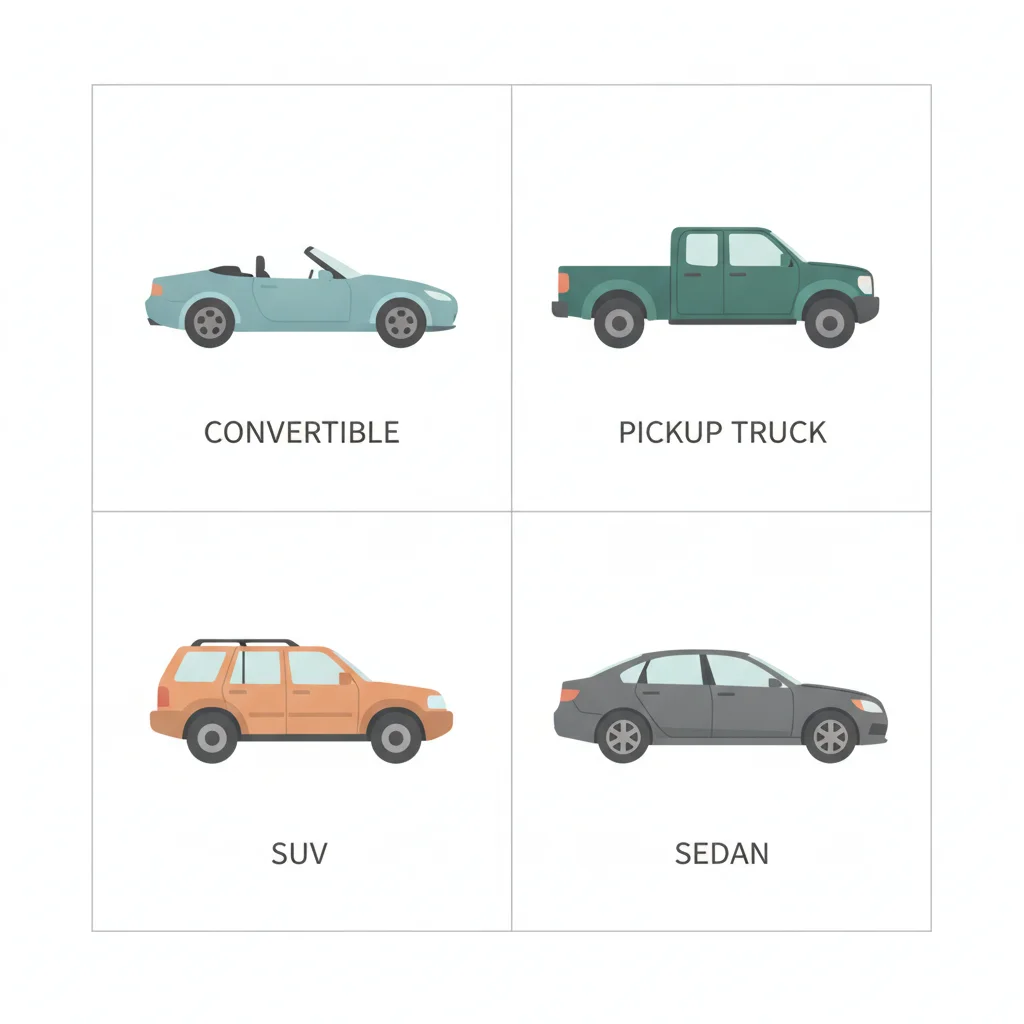
The seasonal calendar above is a useful baseline, but it gets refined significantly by what you're actually selling. Buyers for a convertible and buyers for a 4WD pickup truck are operating on very different motivations — and those motivations peak at different times.
Convertibles and Sports Cars
These sell best in late spring and early summer, when buyers are in a warm-weather mindset. Listing a convertible in November is a real uphill battle — you'll attract low offers from opportunistic buyers who know you're stuck. List between April and June for best results.
Trucks and Work Vehicles
Full-size pickups and work trucks have strong year-round demand, but they spike in spring when construction season kicks off and people are thinking about hauling, towing, and projects. They also sell well heading into fall. Watch fuel prices — when gas climbs sharply, demand for V8 trucks softens noticeably.
SUVs and Crossovers
These are among the most consistently in-demand vehicles, so timing is less critical — but spring and early fall still outperform winter. AWD and 4WD SUVs can see a modest uptick heading into late October in snowbelt states as buyers prep for winter.
Sedans and Commuter Cars
Practical, fuel-efficient sedans and hatchbacks actually benefit when gas prices spike, since buyers shift away from trucks and large SUVs. Otherwise, spring remains the strongest window. These vehicles are also the most price-sensitive to inventory levels — if dealers are running specials on new entry-level sedans, your used one will face downward pressure.
If you're also thinking about what to buy next after the sale, understanding the buying cycle is just as important. Our guide on the new car buying cycle for first-timers is worth a read before you finalize your plan.
Reading the Market Before You List
Seasonal patterns are a starting point, not a guarantee. The real skill is learning to read your local market in the weeks before you plan to list. Here's how to do it without needing any special tools or expertise.
Check Comparable Listings
Search your vehicle — same year, make, model, trim, and similar mileage — on Craigslist, Facebook Marketplace, and at least one aggregator like CarGurus or AutoTrader. How many are listed in your metro area? If you see 20 nearly identical vehicles available, you're in a crowded market and may need to either price aggressively or wait for inventory to thin. If you see two or three, you have pricing power.
Watch How Long Listings Sit
Days-on-market is one of the most honest indicators of demand. On CarGurus, listings often show how long a car has been posted. If similar vehicles are moving in under a week, demand is hot. If they're sitting for 30+ days with price drops, the market is soft. Check back over a two-week window before making your decision.
Monitor Fuel Prices
This mainly matters for trucks, large SUVs, and performance cars with poor fuel economy. A gas price spike doesn't wreck your sale, but it does compress what buyers will pay for fuel-hungry vehicles. A spike that's been sustained for more than four to six weeks starts to show up in offers.
Factor In New Car Incentives
When manufacturers are running heavy discounts or 0% financing deals on new vehicles, it pulls some buyers out of the used market — especially buyers who were on the fence. Awareness of this doesn't mean you should panic, but if you see major incentive pushes on new vehicles similar to yours, moving your listing sooner rather than later makes sense.
Kelley Blue Book (KBB)
The most widely recognized used-car valuation tool in the U.S. Use it to benchmark your asking price before listing and to understand what dealers are likely to offer at trade-in.
CarGurus Market Analysis
CarGurus rates listings as Great, Good, Fair, or High value based on comparable inventory. It also shows days-on-market for similar listings — invaluable for reading local demand before you list.
Facebook Marketplace
One of the highest-traffic platforms for private car sales. Search your vehicle type here to gauge real-time local competition and get a feel for what buyers in your area are actually paying.
AutoTrader Price Advisor
AutoTrader's pricing tool cross-references your vehicle details against recent actual sales — not just asking prices — giving you a more grounded view of achievable sale prices in your market.
Practical Steps to Time Your Listing
Here's how to put everything above into a simple action plan, even if you're starting from scratch today.
- Identify your vehicle's peak demand window using the vehicle-type breakdown above. Write down your target listing months.
- Calculate your current market value using at least two sources — Kelley Blue Book and a real-world marketplace like CarGurus. These will sometimes differ by $500–$1,500, and that spread tells you something about demand in your specific market.
- Run a local inventory check now and again two weeks before your target listing date. If inventory spikes unexpectedly, consider moving your date up.
- Prep the car before the window opens, not during it. Detailing, minor repairs, and gathering paperwork should be done in advance so you're ready to go live on day one of peak demand. Our guide on pre-sale car prep for first-timers walks through every step.
- Post on a Thursday or Friday to capture weekend browsers. Include clear photos taken in natural daylight — this matters more than most sellers expect.
- Set a walk-away price before you list. Decide in advance the lowest number you'll accept. This keeps emotion out of negotiation and helps you recognize a fair offer quickly.
If you're planning to go the private-party route, take time to read through our full walkthrough: what to expect from a private car sale start to finish. And if you're leaning toward a dealer trade-in instead, the dealer trade-ins hub breaks down how appraisals work and how to negotiate a stronger offer.
Market timing won't rescue a car with serious mechanical issues or an unrealistic asking price. But when those fundamentals are solid, timing is the multiplier. A little patience and a little planning can genuinely be worth hundreds of dollars — and for a first-time seller, that's a win that costs you nothing but a few extra weeks.

All claims are backed by peer-reviewed research. Sources on request.