Key Takeaways
The Gap Between What You Think and What Buyers Will Pay
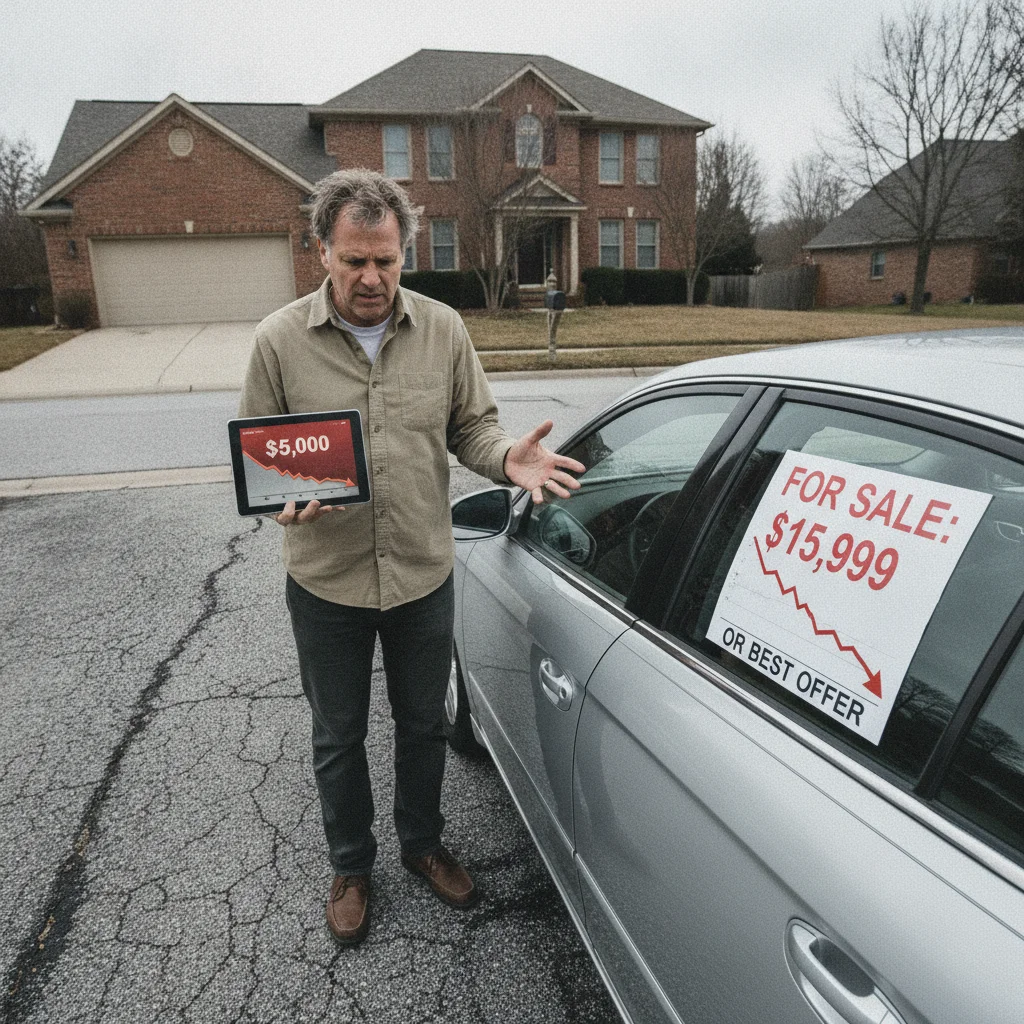
Most sellers don't set out to overprice their car. They run a quick search, check a valuation tool, and land on a number that feels right. The problem is that "feels right" is doing a lot of heavy lifting — and it's usually doing it in the seller's favor.
Research consistently shows that private sellers list cars above what comparable units actually sell for. This isn't a character flaw; it's a predictable outcome of how human beings assess things they own. The technical term is the endowment effect: we place higher value on things simply because we possess them. For cars, this effect gets amplified by years of payments, maintenance costs, and genuine emotional attachment.
The result is a listing price that buyers immediately recognize as inflated — even if the seller cannot see it at all. Understanding why this happens is the first step toward pricing with data instead of feeling.
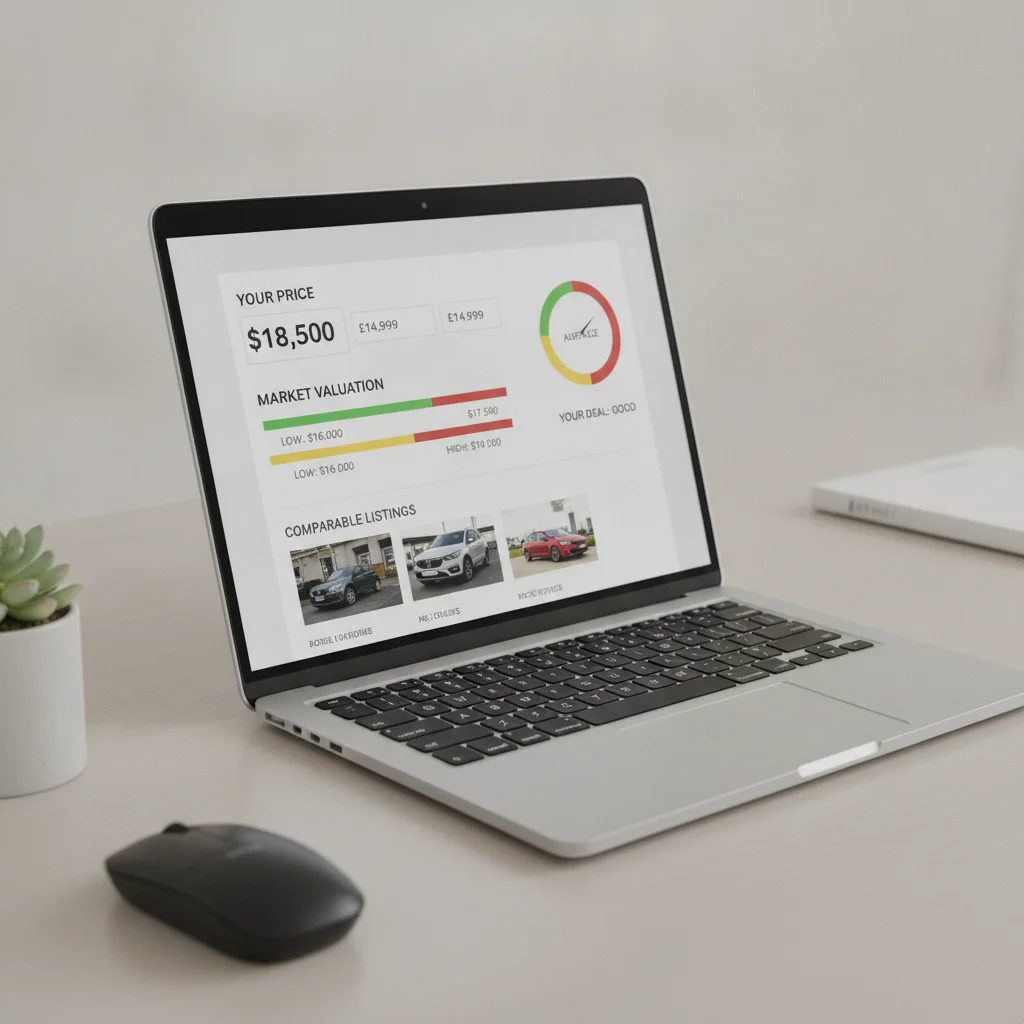
The mistakes below are the most common reasons sellers end up overpriced. Each one has a straightforward fix, but the fix only works if you're willing to let the market — not your memory — set the number.
The Most Costly Pricing Mistakes Sellers Make
These aren't edge-case errors made by inexperienced sellers. They're patterns that repeat across every price point and vehicle type. If you've owned your car for more than two years, there's a good chance at least two of these apply to you right now.
Using the purchase price as the mental anchor for current value.
Why it happens: Sellers remember exactly what they paid — and that number feels like the floor below which selling feels like a loss. This anchoring bias ignores the reality that a car's market value begins declining the moment it's purchased.
Pricing in the full cost of upgrades and aftermarket modifications.
Why it happens: It feels logical: you spent $1,800 on new wheels, so the car should be worth $1,800 more. But buyers have different preferences, and many upgrades actually narrow your buyer pool rather than expanding it.
Selecting the highest valuation tool estimate and listing at or above it.
Why it happens: When sellers check multiple tools and see a range — say, $13,200 to $15,800 — it's human nature to gravitate toward the higher figure. That number feels more validating and seems to leave room to negotiate.
Overvaluing maintenance records and documented service history.
Why it happens: Sellers who've kept meticulous service records feel — reasonably — that a well-maintained car is worth more. And it is, marginally. But most buyers discount this benefit far more than sellers expect.
Ignoring local market conditions in favor of national averages.
Why it happens: Valuation tools typically return national or regional averages. A seller in a region with high demand for trucks, for example, might actually underprice — but a seller in a saturated urban market with the same tool output might massively overprice.
Assuming a fresh detail, new tires, or recent repairs adds equivalent dollar value.
Why it happens: Spending $600 on a full detail and $1,200 on tires right before listing feels like an investment that should be recouped. In reality, buyers expect a car to be clean and mechanically sound — these are table stakes, not premium features.
Notice that most of these mistakes share a common thread: the seller is anchoring to a past version of their car's value rather than its present-market reality. The fix in each case is the same — replace memory and intuition with current, comparable data.
Don't Price to 'Leave Room to Negotiate'
Padding your ask by 15–20% to create negotiating room is a strategy that backfires more often than it succeeds. Most buyers on private-sale platforms simply filter you out — they never reach out to negotiate at all. A realistic price that attracts multiple serious inquiries gives you far more actual leverage than an inflated ask with no traffic.
Beware the Hot Market Overhang
If you bought or last checked your car's value during the 2021–2022 used-car surge, those numbers are not relevant today. Used-car values have normalized significantly since that period. Using peak-market estimates to price in a normalized market is one of the fastest ways to end up with a listing that stalls completely.
How Depreciation Actually Works — and Why the Curve Surprises Everyone
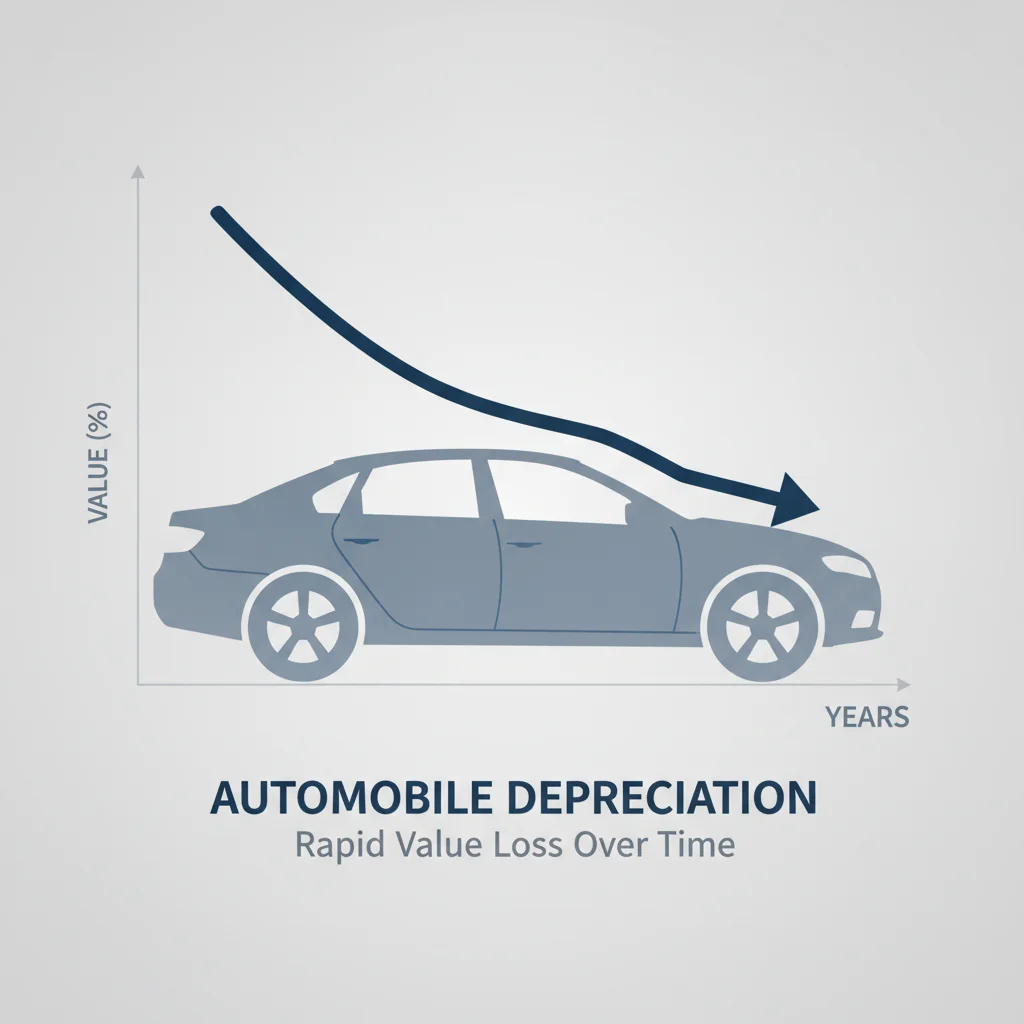
Depreciation isn't a straight line. It's a steep curve that flattens over time, and most of the damage happens before you even consider selling.
Here's a concrete example. A new vehicle priced at $35,000 typically loses roughly:
- 15–20% in the first year (approximately $5,250–$7,000)
- An additional 10–15% per year through years two and three
- Slower, flatter losses of roughly 5–8% annually from years four through six
By the time a car is three years old, it may have lost 40–50% of its original sticker price — even with moderate mileage and clean condition. Most sellers experience this loss but don't fully internalize it because they weren't watching the value drop in real time.
49%
Average value lost in first three years
According to iSeeCars analysis of millions of vehicle transactions, the average new car loses approximately 49% of its value within three years of purchase.
20%
Typical first-year depreciation
Edmunds data indicates the average new vehicle loses roughly 20% of its value within the first 12 months, the steepest single-year drop in a vehicle's lifecycle.
37 days
Average time overpriced cars sit on market
CarGurus marketplace data shows that listings priced more than 10% above comparable vehicles in their area take significantly longer to sell than accurately priced units.
What makes this worse is that sellers often remember the price they paid, not the price they should expect. If you bought for $35,000 and put $2,000 into tires and brakes, your mental anchor is $37,000 — but the market doesn't care about your sunk costs. It cares about what a comparable car sold for last week.
This is also why timing matters. If your car sits in the sweet spot of the depreciation curve — typically years four through six — you may actually be in better shape than you think, because the steepest losses are behind you. The market timing hub has useful guidance on when seasonal and economic factors align to push used-car prices higher, which can meaningfully affect your realistic ceiling.
For a deeper look at how depreciation myths specifically distort seller pricing, see myths about car depreciation that lead sellers to misprice their vehicles.
Sunk Costs Don't Transfer to Buyers
Every dollar you've spent on your car — purchase price, repairs, upgrades, insurance, registration — is money already spent. Buyers don't share your cost history; they only compare your car against competing options available to them right now. Pricing based on what you've put in, rather than what comparable cars are selling for, is the single most reliable path to an overpriced, unsold listing.
How to Build a Data-Backed Asking Price
Valuation tools like KBB and Edmunds are useful starting points, but treating their output as the final word is a mistake — and a surprisingly common one. These tools use historical transaction data with geographic and condition adjustments, but they can lag the live market by weeks or even months, particularly when inventory shifts quickly.
A more reliable approach uses three data layers together:
- Valuation tool estimates: Pull the private-party sale value (not the trade-in value) from at least two tools. Note the range, not just the midpoint.
- Active comparable listings: Search your local market on platforms like CarGurus, Autotrader, and Facebook Marketplace for the same year, make, model, trim, and approximate mileage. What are asking prices? What condition are those cars in compared to yours?
- Completed sale data: CarGurus and similar platforms show how long listings sit and whether prices were reduced. A car that's been listed 45 days with two price drops tells you the market rejected that opening number.
Once you have those three layers, set your asking price at the lower end of the active comparable range, not the top. Buyers shop comparatively, and the lowest-priced comparable in your area sets the floor they mentally benchmark against. If you're 10–15% higher than the next similar listing, most buyers will simply move on.
If the numbers you're seeing feel disappointingly low, what to do when the valuation is lower than you expected walks through how to investigate the estimate and price competitively even from that position.
Also be cautious about over-relying on a single valuation source. The valuation tools hub explains how KBB, Edmunds, and other tools each calculate value differently — which is exactly why a single estimate can mislead you. And if you want specifics on how sellers misread these tools, myths about car valuation tools that sellers keep believing is worth reading before you set your price.
One final note: don't forget that your price needs to leave room for negotiation. Most buyers expect to negotiate 3–7% off the listed price. If your target is $14,000, list at $14,500 — not $16,000. Aggressive padding signals desperation or ignorance to experienced buyers, and both slow your sale considerably.
What Overpricing Actually Costs You
The intuitive logic of overpricing is: I'll ask high, someone will negotiate me down, and I'll still get what I want. In practice, this strategy almost never works — and it costs sellers in ways they don't anticipate.
First, overpriced listings simply don't get inquiries. On most platforms, buyers filter by price range and sort by value. If you're 15% over comparable listings, you may not even appear in the same consideration set.
Second, time on market is itself a signal. A car that's been listed for 60 days with no sale raises an immediate question in every buyer's mind: what's wrong with it? Even if nothing is wrong, perceived stagnation gives buyers leverage to lowball aggressively — often below what you would have gotten by pricing correctly from day one.
Third, the market moves while you wait. Used-car values are not static. If you're holding out for a price the market won't support, that market may soften further while you wait. Why sellers overestimate how long a hot market will last explains in detail why timing windows close faster than most sellers expect.

The sellers who come out ahead aren't the ones who held firm the longest — they're the ones who priced accurately, attracted serious buyers quickly, and closed without the price reductions and carrying costs that come from extended time on market.
If you're selling through a dealer rather than privately, note that trade-in value myths that cost car sellers real money covers a parallel set of misconceptions that cost sellers equally in the trade-in lane. And why sellers overprice their cars and what valuation tools have to do with it digs into how cherry-picking the highest estimate you can find — rather than triangulating across sources — feeds directly into the overpricing pattern.
Pricing a car accurately requires overriding some genuinely strong instincts. But the data is unambiguous: realistic pricing sells faster, at a higher net number, with far less frustration on both sides of the transaction.

All claims are backed by peer-reviewed research. Sources on request.