Key Takeaways
Why Sellers Keep Getting Burned by Valuation Myths
Every week, sellers list cars at prices that make buyers scroll past without a second thought. Most of the time, the root cause isn't greed — it's a sincere but misplaced confidence in how valuation tools work. A seller types their car's details into Kelley Blue Book, gets a number, and treats it like an appraisal from a licensed professional. That's not what it is.
Valuation tools are statistical models built on aggregated transaction and listing data. They're useful baselines, but they come with significant blind spots and built-in assumptions that don't match every car or every market. Believing the myths below costs sellers time, money, and real negotiating leverage.
The goal here isn't to dismiss valuation tools — they're genuinely helpful when used correctly. The goal is to show you exactly where the mythology breaks down so you can price with accuracy instead of false confidence.
For a deeper look at what each major tool is actually measuring, see our breakdown of KBB, Edmunds, and NADA.
The Myths — and What's Actually True
These are the misconceptions I run into most often when sellers come to me confused about why their car isn't moving or why a dealer's offer is $3,000 below their KBB printout.
Myth
KBB is the most accurate valuation — if it says my car is worth $22,000, that's what it's worth.
Fact
KBB is a widely recognized estimate, not an appraisal. It's one data point built on aggregated listing and transaction data that may not reflect your specific market or vehicle condition.
Kelley Blue Book is the most recognized name in car valuation precisely because it's been around since 1926 and has done an excellent job of marketing that brand trust. But recognition isn't the same as accuracy. KBB generates its values by analyzing a mix of dealer transaction data, auction results, and listed prices — and then applies a statistical model that produces a range, not a precise appraisal.
That model doesn't know that your local market has three identical cars already listed, or that your region has softer demand for SUVs this quarter, or that your car has a documented service record that would make a cautious buyer pay more. KBB also has a known tendency to skew slightly optimistic on private-party values, because optimistic numbers make sellers feel good — and sellers are a key part of their traffic and revenue model.
Use KBB as one input among several, not as the authoritative verdict. Our honest assessment of the pros and cons of relying on KBB goes deeper on where it earns that trust and where it doesn't.
Myth
All valuation tools use the same data, so I should get basically the same number from each one.
Fact
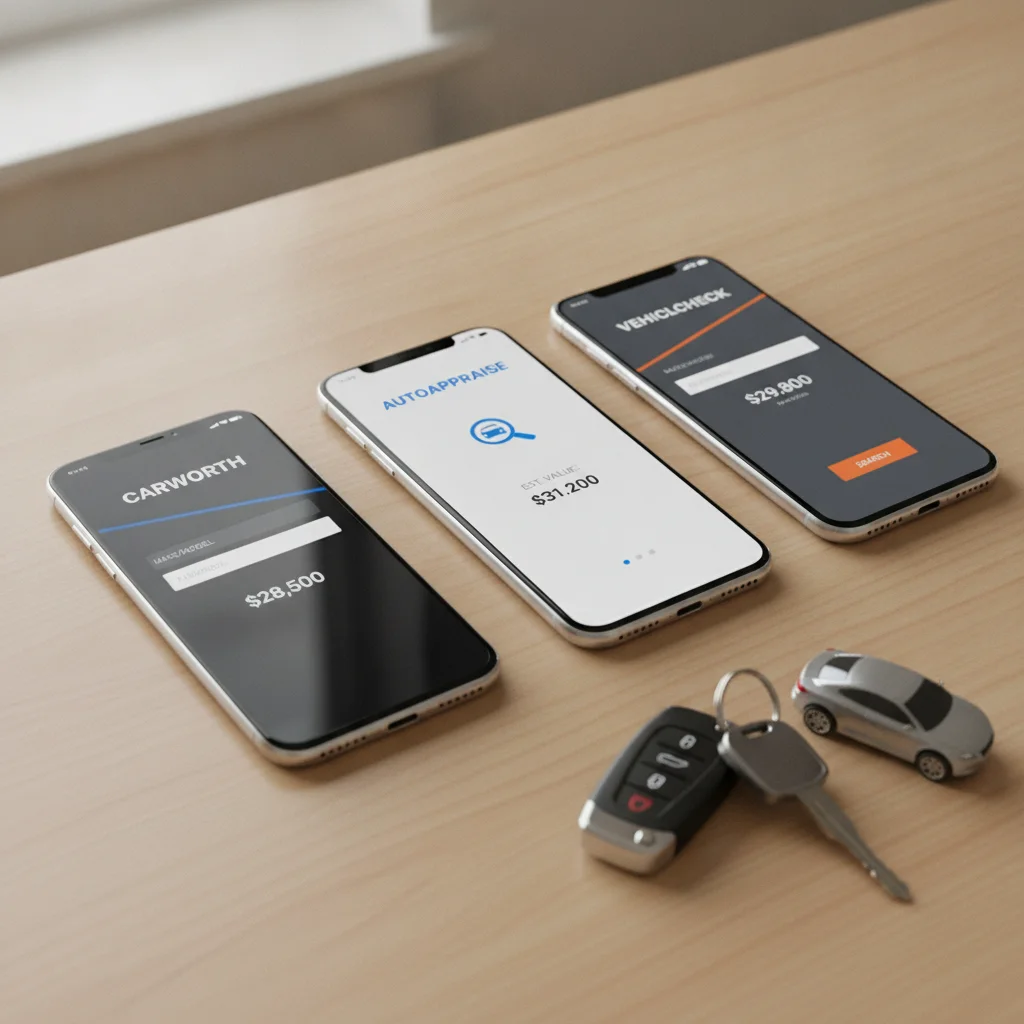
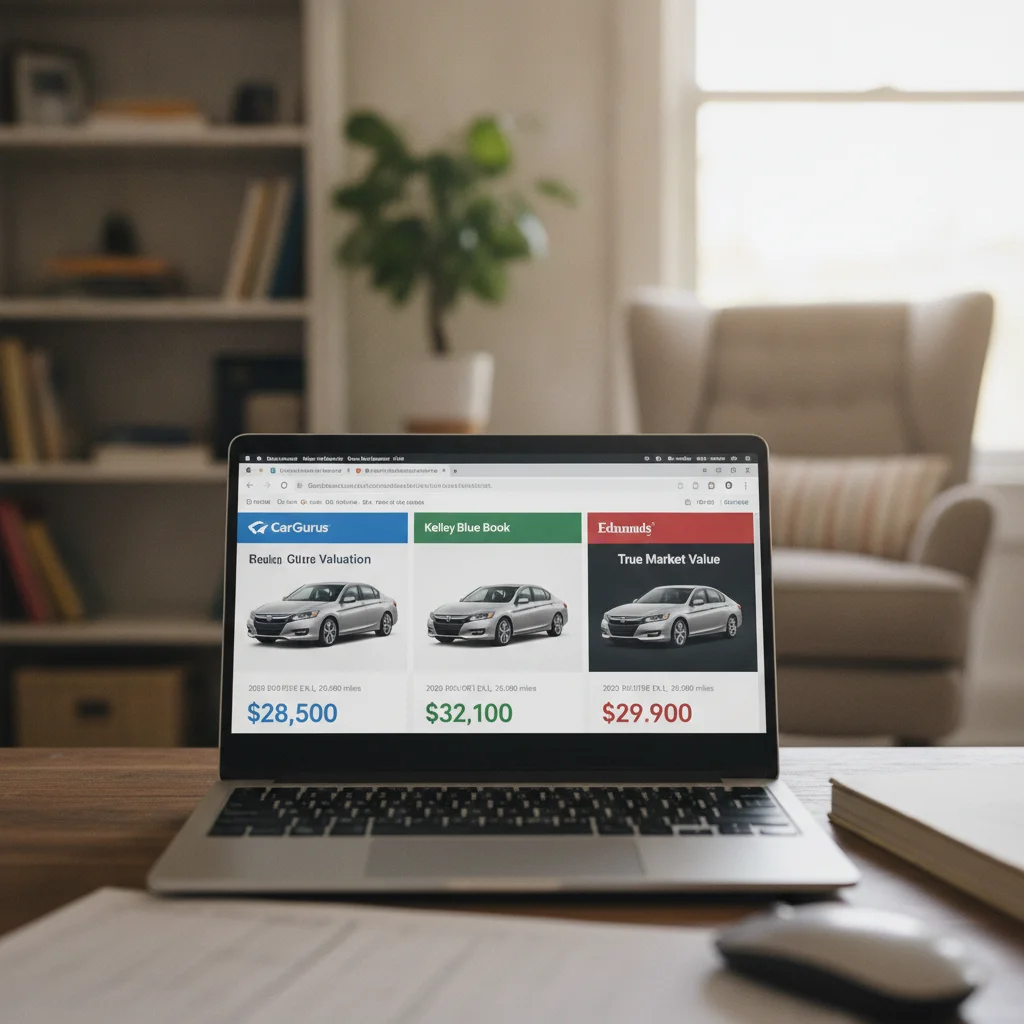
KBB, Edmunds, and NADA use meaningfully different data sources and methodologies, which is why they routinely produce estimates that diverge by hundreds or even thousands of dollars.
This myth leads sellers to pick whichever tool produces the highest number and declare it correct. In reality, the disagreement between tools is intentional — they're measuring different things.
- KBB leans on a combination of auction data, dealer transactions, and listed private-party prices. Its "private party value" reflects what sellers have listed and what dealers have transacted, blended together.
- Edmunds True Market Value (TMV) focuses more heavily on what buyers actually paid in completed transactions, making it generally more conservative and arguably more realistic.
- NADA Guides were built for the dealer and lending industry, so they weight wholesale and auction prices heavily. Their retail estimates can lag real-market timing.
A $2,000 spread between tools isn't a glitch — it reflects genuine differences in what each model prioritizes. Treat the cluster of estimates as your range, not any single figure as the truth.
Myth
High mileage tanks my car's value — there's no point even listing it near book price.
Fact
Mileage matters, but it's one variable in a multi-factor model. A high-mileage car with strong service records, clean condition, and a reliable reputation can outperform a low-mileage car with deferred maintenance or accident history.
Mileage is one of the most overweighted factors in a seller's own mental model of their car's value. Yes, valuation tools apply a per-mile adjustment — typically in the range of $0.05 to $0.10 per mile above the average baseline for a car's age. But that adjustment is a blunt instrument.
What actually concerns buyers about high mileage is the question behind it: what has that mileage done to the car? A 120,000-mile Toyota Camry with full dealership service records and no accidents is a dramatically different proposition than a 90,000-mile version with a spotty history and worn interior. Buyers know this.
If you have a high-mileage car with solid documentation and good condition, price it at the high end of what the mileage adjustment suggests and lead with the evidence. A service binder and a clean Carfax do more for your price than any tool estimate. For more on how mileage and age interact with value, see the Depreciation Basics hub.
Myth
The online instant cash offer from Carvana or CarMax is basically what my car is worth on the open market.
Fact
Instant cash offers from Carvana, CarMax, and similar buyers represent a wholesale-to-retail spread that leaves room for their reconditioning costs and profit margin — typically 15–25% below what you'd net from a private sale.
Instant offers exist to solve a specific problem: the seller needs to convert their car to cash quickly without the hassle of showing it, negotiating, and waiting for a buyer. That convenience has a cost, and that cost is real.
When Carvana gives you $16,000 for a car, they're factoring in their reconditioning budget, their transport costs, their carrying costs while the car sits on their virtual lot, and their profit margin when they sell it for $19,500. They're not doing you a favor — they're making a business offer. It might be a reasonable offer if speed and convenience matter to you. But it is not a reflection of your car's private-party market value.
[important_callout]The mistake sellers make is using the instant offer as their ceiling instead of their floor. If Carvana offers $16,000, that's an excellent signal that you should be able to net $18,000–$19,000 in a private sale with moderate effort. Use it as the baseline for comparison, not as validation that you can't do better.
Myth
Valuation tools account for everything about my specific car — I just need to enter the basics.
Fact
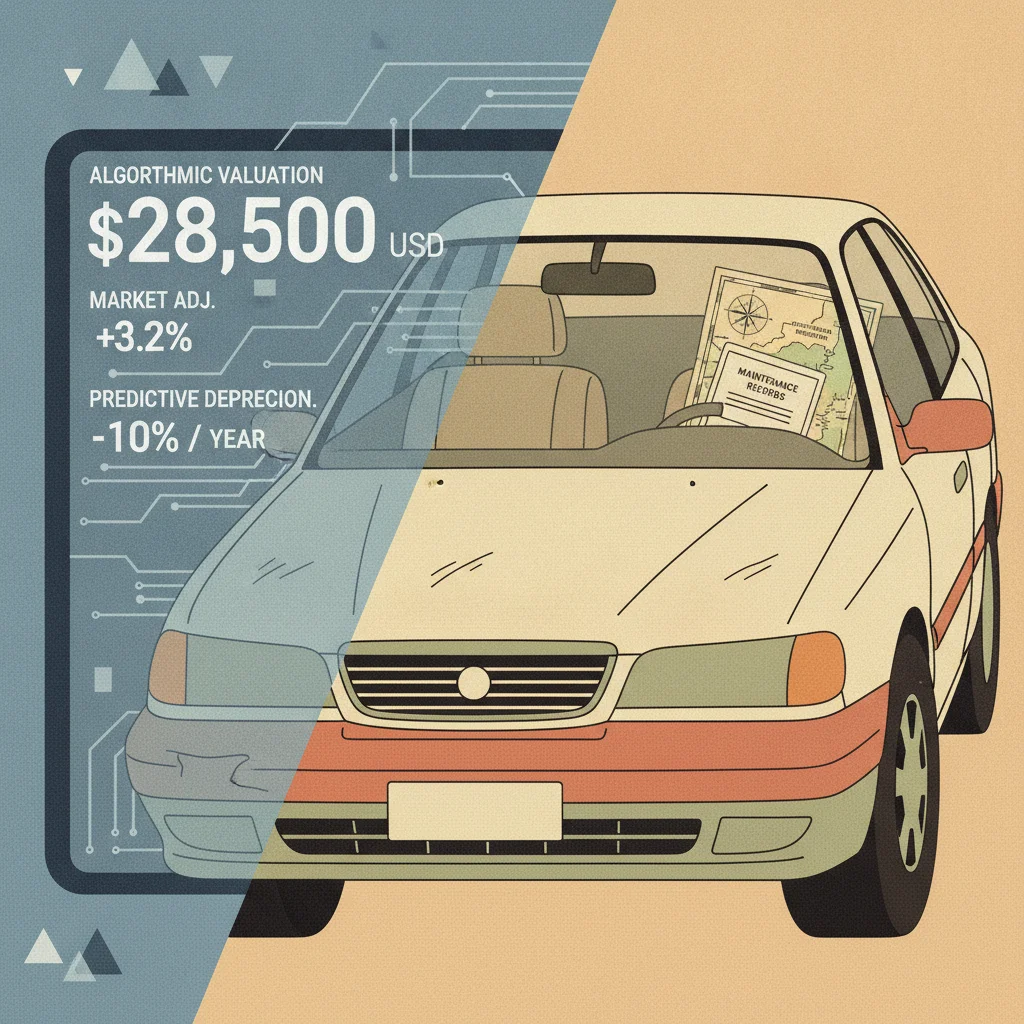
Valuation algorithms can't see your service history, cosmetic details below their condition categories, regional demand shifts, or recent aftermarket work. Those factors have to be priced in manually.
When you enter your car's details into KBB or Edmunds, you're selecting from a limited set of condition categories — Excellent, Very Good, Good, Fair — that collapse a huge range of real-world variation into a single bucket. Two cars that both get checked as "Good" condition can differ by $2,000 in actual buyer willingness-to-pay based on specifics the tool never sees.
What tools can't account for:
- A complete, documented service history versus an unknown one
- Recently replaced major components (tires, brakes, battery, timing belt)
- Subtle cosmetic issues below the threshold of a condition category — a scuffed bumper, a worn driver's seat bolster
- Regional demand spikes or drops driven by local conditions or seasonal patterns
- Whether your specific color and trim combination is desirable in your market
These are the factors that determine whether you sell at the midpoint of your tool's range or at the top of it. Our article on factors that valuation algorithms can't see covers this in specific, actionable detail.
Myth
If I enter my information carefully into KBB, the result will be accurate for my exact car.
Fact
Accuracy in your inputs helps, but the model itself has inherent limitations that accurate inputs don't fix — including national data that may not reflect local pricing.
This myth is seductive because it puts the seller in control. Enter everything correctly and you'll get the right answer. Unfortunately, even perfect inputs feed into a model with built-in constraints.
KBB's geographic adjustments are regional at best — they're not hyper-local. A car in a rural market with limited comparable inventory behaves differently than the same car in a dense metro area with ten competitors listed within 20 miles. The algorithm doesn't fully capture that. Similarly, KBB's data lags the real market by weeks to months — in a fast-moving market (like the used car surge of 2021–2022, or the corrections since), that lag creates meaningful inaccuracy.
Careful inputs are still worth doing — they reduce one source of error. But they don't resolve the model's structural limitations. Our guide on getting the most accurate estimate from KBB explains which inputs actually move the needle and which ones matter less than sellers assume.
Myth
The 'private party' value from a valuation tool is what I should list my car for.
Fact
Private party value is a midpoint estimate of completed transactions, not a recommended asking price. Listing at the midpoint leaves no room to negotiate and may actually be below what your specific car can command.
There's a meaningful difference between what cars sold for (transaction price) and what you should ask for (listing price). Valuation tools primarily estimate the former. As a seller, you need to account for negotiation room — most buyers expect to negotiate at least a little, and pricing at your absolute floor means any negotiation puts you underwater.
A practical rule: list at 5–10% above the midpoint of your private party value range, then be prepared to settle somewhere in the middle. If your KBB private party range is $16,000–$18,000, list at $18,500–$19,000 and let buyers negotiate you to $17,500. You've left room, you've captured upside if a buyer doesn't push back hard, and you haven't priced so high that serious buyers tune out.
The exception is a seller's market — when comparable inventory is scarce, you can tighten that negotiation buffer because buyers have fewer alternatives. Check your active local competition before you decide how much cushion to build in.
$1,500–$3,000
Typical spread between valuation tools for the same car
Industry analysis of KBB, Edmunds, and NADA estimates for identical vehicles consistently shows divergence in this range depending on age, segment, and market conditions.
15–25%
Discount below private-party value in instant cash offers
Dealer-backed instant offer platforms (Carvana, CarMax, dealers) build in reconditioning and margin buffers that typically land 15–25% below what a private sale would yield.
30+ days
Average age of data underlying some tool valuations
Valuation models aggregate transaction and listing data on rolling windows — in fast-moving markets, this lag means tool estimates can trail real prices by a month or more.
~$0.08/mile
Approximate per-mile value adjustment in most models
Most valuation tools apply a per-mile adjustment for above-average mileage in the range of $0.05–$0.10 per mile, though the exact figure varies by model year, segment, and condition tier.
Using Multiple Tools the Right Way
The smart approach isn't to pick one tool and trust it blindly — it's to triangulate. Run your car through KBB, Edmunds, and NADA, and look at where those numbers cluster. If all three land within $500 of each other, you've got a reliable range. If one is significantly higher or lower, that outlier is telling you something about how that tool weights different variables.
Don't List Before Checking Local Comparables
Valuation tools don't know how many identical cars are already listed in your zip code. Before you finalize your asking price, spend 20 minutes searching Facebook Marketplace, Craigslist, and AutoTrader for cars with the same year, make, model, trim, and mileage range within 50 miles. If there are six competitors already listed below your planned price, you need to know that before buyers tell you with silence.
Condition Self-Assessment Is a Common Bias Trap
Most sellers rate their car one condition tier higher than a buyer or inspector would. 'Excellent' to a seller who's driven it for six years is often 'Good' to a buyer seeing it fresh. If you select 'Excellent' in KBB and your car has any chips, wear, or mechanical history, you're starting from an inflated number. When in doubt, grade one tier lower and adjust your listing price up with specific justification rather than assuming the algorithm will do it for you.
Stale Listings Create Perception Problems
A car that sits on the market for 45+ days starts to look like there's something wrong with it, even if the only problem was overpricing. Buyers routinely filter by 'recently listed' or mentally discount cars that have been sitting. Price accurately from the start — a slightly lower price that moves in two weeks is almost always better than a higher price that lingers for two months and still sells for less after a price cut.
After you have that range, adjust manually for factors the algorithms can't see: a documented full-service history, recent tires or brakes, a clean title with one previous owner, or strong regional demand for your specific trim. Conversely, subtract honestly for high miles relative to age, any paint issues, a rough interior, or a market that's cooling on your model.
The result of that exercise is a defensible asking price — one you can back up with data if a buyer pushes back, and one that actually attracts serious buyers rather than filtering them all out.

Understand what valuation algorithms genuinely can't see — and what that means for your real-world price — in our companion piece on factors that fall outside algorithmic models.
The Cherry-Picking Problem
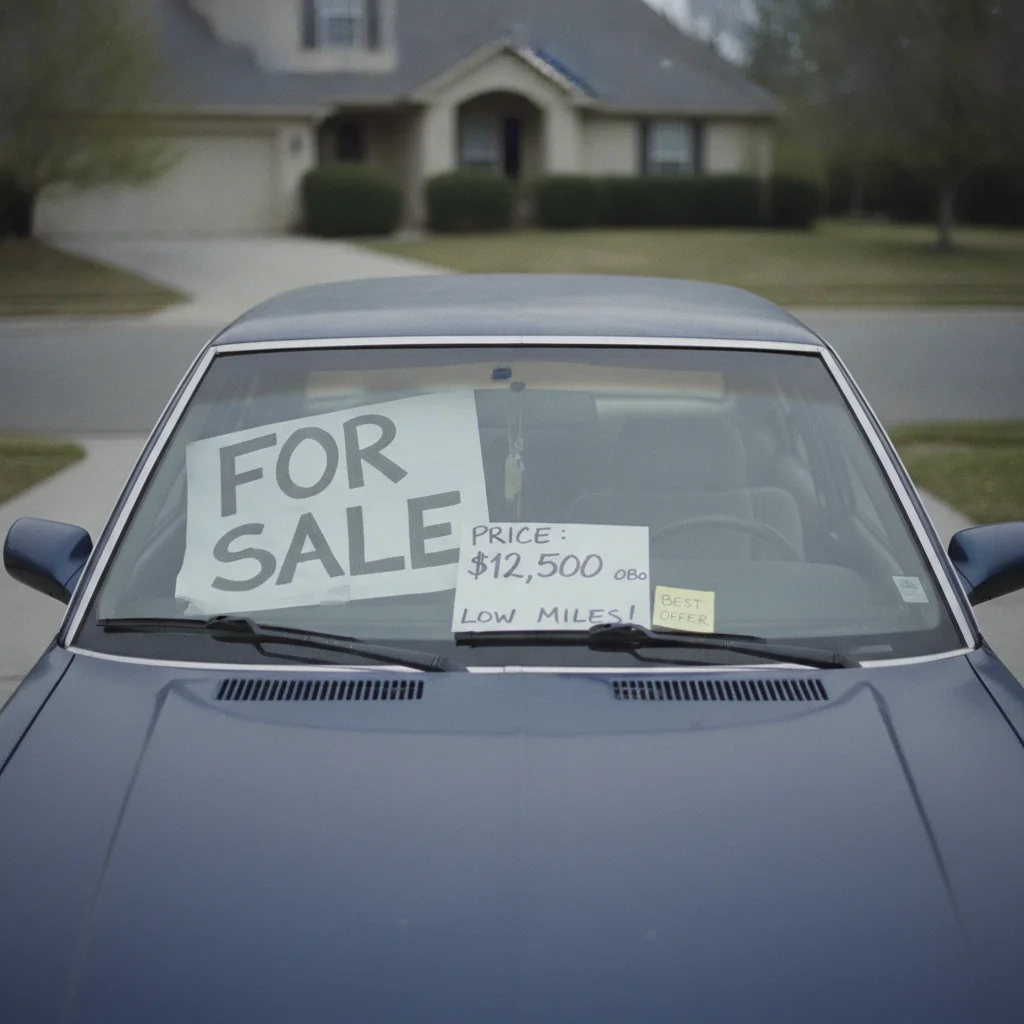
The single most common pricing mistake I see isn't misunderstanding one tool — it's deliberately choosing the highest number from whichever tool produces it. A seller runs three valuations, gets $18,400, $19,100, and $21,500, and lists the car at $21,500 because that's the one they want to be true.
Instant Offers Are a Floor, Not a Ceiling
When Carvana, CarMax, or a dealer gives you an instant cash offer, that number reflects their cost model — not your car's private-party market value. It includes their reconditioning budget, carrying costs, and profit margin. Use it as the minimum acceptable number you'd take for total convenience, then list privately at 15–20% above that figure and see what the market actually offers you.
Buyers in 2024 are sophisticated. They're running the same tools you are before they even contact you. When your asking price is $2,000 above every estimate a buyer can replicate in 90 seconds on their phone, you don't get lowball offers — you get silence. The listing goes stale, and a stale listing creates its own perception problem.
For a clear-eyed look at how this pattern plays out and what a more grounded pricing approach looks like, our article on why sellers overprice their cars walks through the psychology and the fix.
Quick Reference: What Each Major Tool Is Measuring
| Tool | Primary Data Source | Best Used For | Limitation |
|---|---|---|---|
| Kelley Blue Book | Dealer transactions + listings | Private-party asking price range | Skews toward optimistic retail; not always local |
| Edmunds | Real transaction prices (True Market Value) | Understanding what buyers actually paid | Less brand recognition with private buyers |
| NADA Guides | Wholesale and dealer auction data | Trade-in benchmarking | Retail estimates can lag real-market timing |
| Carmax / Carvana Offers | Proprietary inventory needs | Floor price (instant liquidity) | Not a reflection of private-party market value |
None of these tools answers the question "what will a private buyer pay me today in my zip code?" with complete accuracy. They answer adjacent questions, and understanding the distinction is what separates sellers who price well from those who don't.
If you want to understand why the same car produces different numbers across tools, our piece on why valuations differ across every tool you check explains the methodology gaps in detail.
Bottom Line: Tools Are a Starting Point, Not a Final Answer
Valuation tools are like weather forecasts — statistically grounded, directionally useful, and wrong often enough that you should never cancel your umbrella based on them alone. They give you a defensible starting range. The actual price your car commands depends on factors no algorithm fully captures: how quickly you need to sell, how well you present the vehicle, whether you have documentation that instills buyer confidence, and how your specific market is behaving this month.
The sellers who get closest to top dollar are the ones who use the tools as a floor and a ceiling, then do the manual research — checking active listings for comparable cars on Craigslist, Facebook Marketplace, and AutoTrader — to see where real buyers and sellers are actually meeting in their area.
If you're planning to trade in rather than sell privately, the mythology around trade-in valuation is its own separate minefield. Our article on trade-in value myths that cost sellers real money covers those pitfalls directly. And if depreciation math is part of your pricing confusion, the Depreciation Basics hub is a solid place to reset your understanding of how age and miles interact.
Price from evidence. Adjust for reality. And resist the temptation to trust any single number more than the market itself will let you.

All claims are backed by peer-reviewed research. Sources on request.