Key Takeaways
Why a Low Valuation Feels Wrong — and When It Actually Is
You've owned the car for four years. You've kept up the maintenance, you know its history, and you've watched similar vehicles sell for more in your neighborhood. Then you plug your VIN into a valuation tool and the estimate comes back lower than you expected — sometimes thousands of dollars lower. That gap between expectation and output triggers one of two responses: sellers either dismiss the tool as broken, or they accept the number and undercharge for their car.
Neither reaction is correct. A low valuation estimate can mean one of three things: the tool is working with inaccurate inputs (trim, mileage, condition), the tool's methodology doesn't capture your car's specific situation, or — and this is the honest possibility — your car's market value genuinely is lower than you assumed. The only way to tell which scenario you're in is to methodically test the estimate against multiple data sources.
Sellers consistently overestimate what their cars are worth, and the gap between perception and reality tends to widen the longer someone has owned a vehicle. Emotional attachment, selective memory of what was spent on maintenance, and anchoring to purchase price all push sellers' mental valuations above what the market will bear. So the first discipline when facing a low estimate is to hold both possibilities open: the tool might be wrong, and you might be wrong.
What follows is a systematic process for figuring out which it is — and what to do either way.
Kelley Blue Book (KBB.com)
Provides private-party, dealer trade-in, and instant cash offer valuations segmented by condition and location.
Edmunds True Market Value (TMV)
Delivers transaction-based pricing data reflecting what buyers are actually paying in your local market.
NADA Guides
Industry-standard reference used heavily by lenders and dealers; strong for trucks, RVs, and classic vehicles.
CarGurus Market Analysis
Aggregates active listings and flags whether a specific price is 'Good,' 'Fair,' or 'Overpriced' relative to comparable inventory.
AutoTrader / Cars.com Search
Lets you search comparable active listings in your ZIP code to see what similar cars are actually listed for.
Vehicle History Report (Carfax or AutoCheck)
Confirms your car's clean title, accident history, and service record — documentation that supports a higher asking price.
What to Do Step by Step
Work through these steps in order. Each one either confirms the low estimate is accurate or surfaces a specific, correctable reason it's off. Don't skip to the end — the process of verification is where the negotiating ammunition lives.
What you will need
Pull valuations from at least three independent sources
One low number isn't a verdict — it's a data point. Before you accept any estimate, run your VIN through KBB, Edmunds, NADA, and CarGurus. Each tool uses a different methodology: KBB weights consumer transaction data and dealer inventory, Edmunds emphasizes actual sale prices, and NADA skews toward dealer book values that lenders rely on. You will almost certainly get three different numbers, and that spread is informative.
For most common vehicles, the difference between the lowest and highest estimate will be $500–$2,000. If your gap is larger than that, it signals something worth investigating — a mismatch in trim level, condition rating, or regional market data. See why valuation tools produce different numbers for a breakdown of the methodologies behind those gaps.
Verify your trim level and installed options are entered correctly
The single most common reason a valuation comes back low is a trim level error. If you entered 'base' when your car is actually an 'EX-L' or 'Sport' or 'Limited,' the tool may be undervaluing it by $1,500–$4,000 or more. Pull up your window sticker (or look up your VIN on the manufacturer's build-and-price archive) and confirm exactly which trim your car is.
Installed packages matter too. Navigation, sunroof, leather seats, trailer tow package, advanced safety suites — these are addable options on most tools and each one pushes the estimate higher. Go line by line through the options list and make sure nothing is missing before you trust the output.
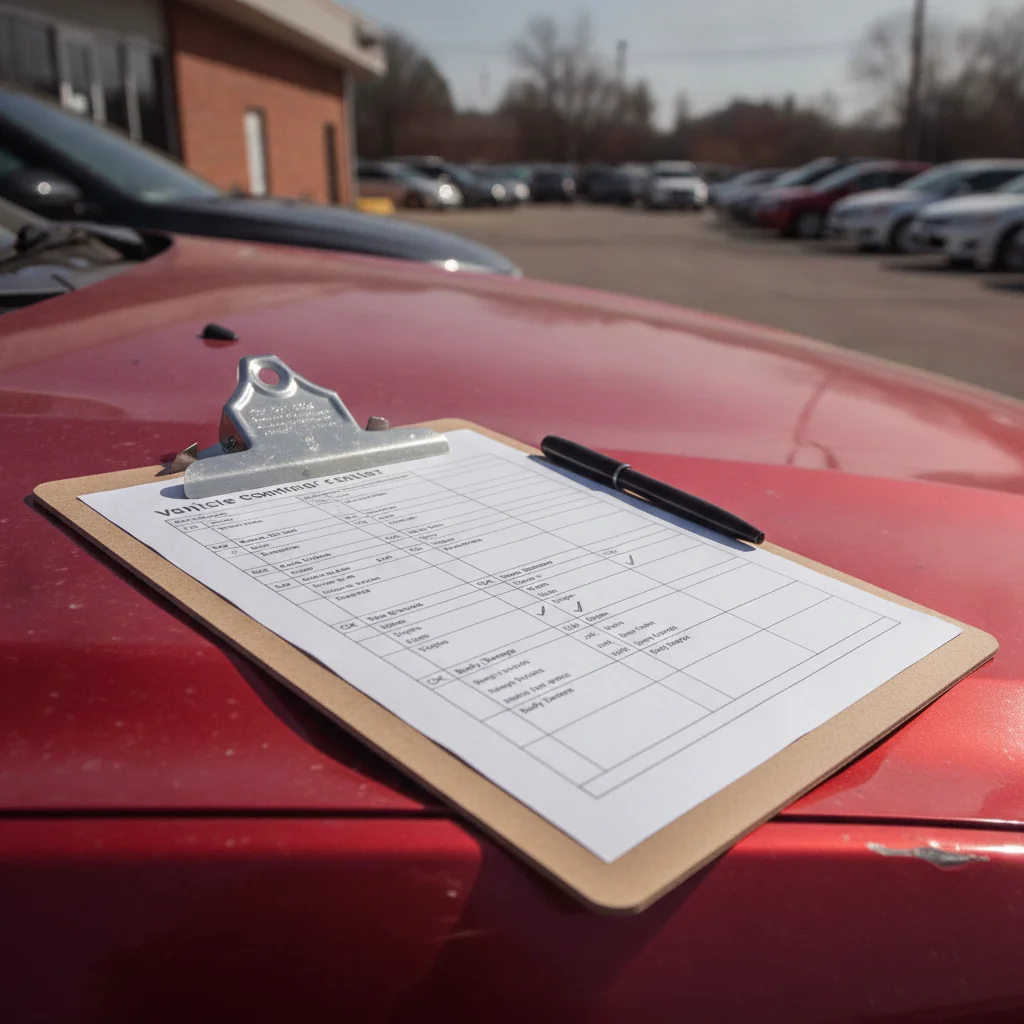
[in_content_images:0]Calibrate your condition rating honestly — then test one grade higher
Valuation tools give sellers four or five condition buckets — Excellent, Very Good, Good, Fair, Poor — and most people rate their car one grade too high. 'Excellent' on KBB, for example, is reserved for vehicles in near-showroom condition: no visible wear, no scratches, no mechanical issues. Fewer than 5% of used cars qualify.
If you rated your car 'Excellent' or 'Very Good' reflexively, re-read the tool's condition definitions carefully. Drop it one level and see what happens to the estimate. That number is likely closer to what buyers will offer. Then, separately, run it at 'Excellent' to see the ceiling — that's the most you can realistically argue for if you can document the car's condition thoroughly. See how to calibrate condition ratings accurately for a detailed walkthrough of each grade's criteria.
Check local market comparables — not just national averages
All the major tools let you enter your ZIP code, but they still blend national and regional data in ways that can work against you. Do your own comparable search: go to CarGurus, AutoTrader, or Cars.com and search for your exact make, model, trim, year, and a similar mileage range within 100–150 miles of your location.
Look at the lowest 10–15 active listings and note two things: the asking prices and how long those cars have been listed. A car sitting for 60+ days at a certain price is evidence that the price is too high for your market. A cluster of cars sold or delisted within a week at a certain price range tells you where real demand lives. That range — not the valuation tool's national median — should anchor your listing price.
[in_content_images:1]Identify and document value-adding factors the tools don't capture
Automated valuation tools are good at adjusting for trim, mileage, and condition — but they're blind to specifics that real buyers care about. New tires, a recent timing belt or chain replacement, a new battery, fresh brakes, a clean Carfax, or a full dealer service history are all value signals that a motivated buyer will pay a premium for.
Make a list of everything you've done to the car in the last 24 months, with receipts if you have them. Quantify it roughly: four new tires at $800, brake job at $400, timing belt at $600. That's $1,800 in recent maintenance that a buyer won't have to worry about. You can't add this directly to the valuation tool's output, but you can justify pricing $500–$1,000 above the tool's estimate in your listing — as long as you explain why with documentation.
Separate trade-in value from private-party value — they are not the same number
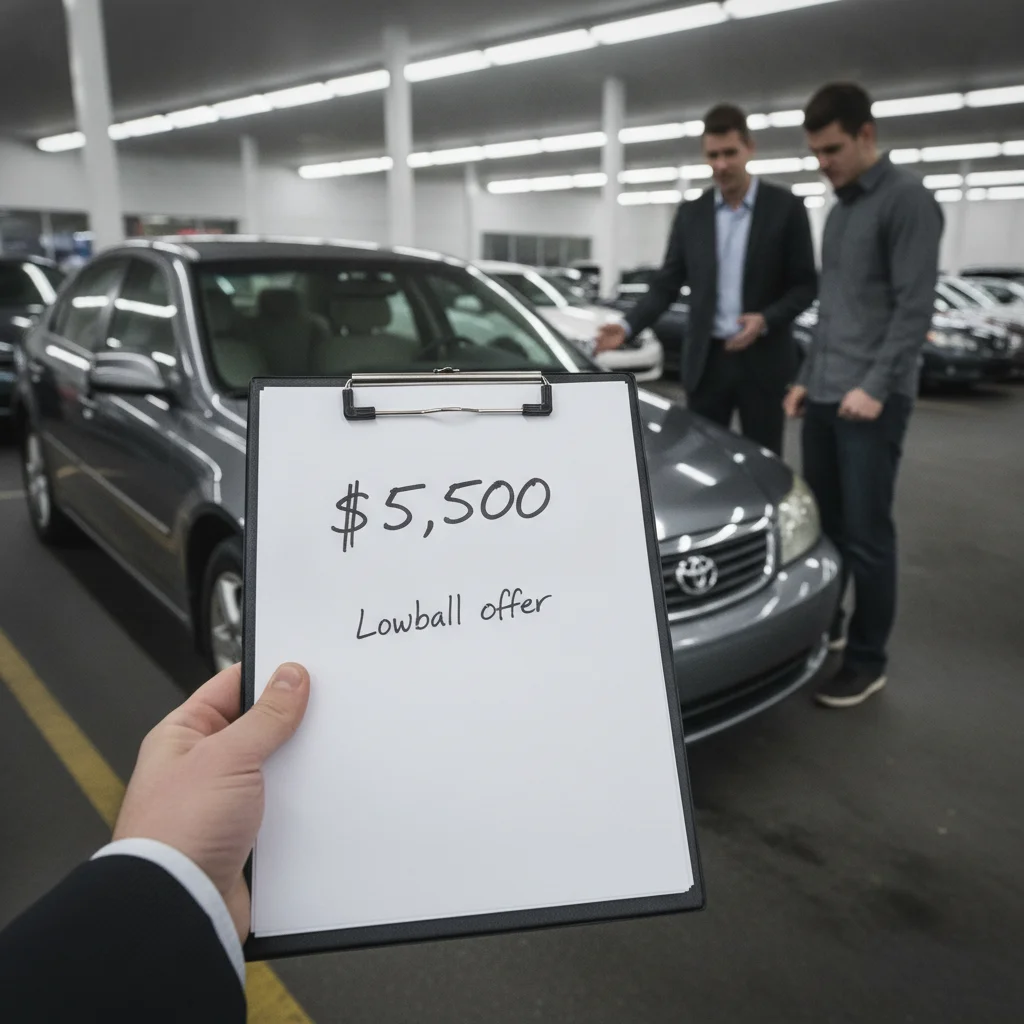
If the low valuation came from a dealer trade-in appraisal or an instant cash offer tool, you are looking at the wrong number for private-party selling. Trade-in valuations are typically 15–25% below private-party retail because the dealer needs to recondition the vehicle, carry it in inventory, and make a profit on the resale. That's not a rip-off — it's the cost of the convenience of selling instantly without doing any of the work yourself.
Run your car through KBB's private-party value calculator and Edmunds' private-party estimate separately from any trade-in tools. Those two numbers are what you should anchor your listing to if you're selling to a private buyer. Why dealers lowball trade-ins breaks down the mechanics behind the gap and how to push back if you do go the dealer route.
[in_content_images:2]Set a data-backed asking price with a realistic negotiation buffer
Once you've cross-referenced the tools, verified your trim and options, calibrated your condition rating, and checked local comparables, you have enough information to set a defensible asking price. The formula is straightforward:
- Take the midpoint of your private-party valuation range (across KBB and Edmunds).
- Add any documented value-adding maintenance — no more than 50% of your actual cost, because buyers discount this.
- Check that the result is within the range of similar active local listings.
- Add a 5–8% negotiation buffer above your target net price. Most private buyers expect to negotiate, and building in room keeps you from feeling pressured to accept the first offer.
If your final number lands above the top of the local listing range, reconsider. Overpriced listings sit unsold for weeks, generate low-quality leads, and eventually sell for less than a realistically priced listing would have in week one. See why overpricing backfires for sellers for a detailed look at how that plays out.
When the Low Valuation Is Accurate: Pricing Competitively Without Giving the Car Away
Sometimes you do everything right — correct trim, honest condition, fresh local comparables — and the estimate still comes back lower than you'd like. That's the market telling you something real. Fighting it by overpricing your listing is one of the most expensive mistakes a private seller can make.
Overpricing Doesn't Buy You Negotiating Room — It Costs You Buyers
Most car search platforms show buyers results sorted by price. An overpriced listing doesn't just negotiate at a lower price — it often never gets seen at all. Buyers set maximum price filters, and your listing sits outside their search entirely. Price based on data, not on what you wish the market would pay.
Don't Mistake Listing Price for Sale Price
Active listings on CarGurus and AutoTrader show asking prices, not what cars actually sold for. Sellers frequently anchor to the highest-priced comparable listing without realizing that car has been sitting unsold for 75 days. Focus on turnover signals — how long cars are sitting — not just the headline numbers.
Here's what competitive pricing actually looks like in practice: if local comparables for your car range from $14,500 to $16,200, and your car is in the middle of the condition spectrum, list at $15,400–$15,700 with your documented maintenance front and center. That positions you above the lowest-priced cars (which are usually hiding problems) while leaving room to negotiate to a fair close.
What you want to avoid is listing at $17,500 because that's what you 'need' to get. Buyers searching in the $14,000–$16,000 range will never see your listing. The buyers who do see it will immediately dismiss it as overpriced. After three weeks of silence, you'll drop the price — but by then your listing has aged, reducing its visibility in search results. You'll likely end up selling for less than if you'd priced it correctly from day one.
Price Fresh, Price Right
Listings that are priced competitively from day one sell faster and typically net more than listings that start high and chase the market down through repeated reductions. A fresh listing with a realistic price generates multiple inquiries in the first 48–72 hours — creating the buyer competition that supports your asking price.
Use Multiple Valuation Tools Together
No single tool is authoritative. The most reliable approach is to average KBB private-party and Edmunds private-party estimates, then sanity-check that average against active local listings. If those three data points cluster within $500–$800 of each other, you have high confidence in the number.
Document Everything Before You List
Assemble service records, receipts for recent work, the vehicle history report, and your window sticker or trim documentation before you write your listing. Sellers who can answer every buyer question instantly with documentation close deals faster and at higher prices than sellers who have to track down paperwork mid-negotiation.
If the accurate market value genuinely doesn't meet your financial needs — for example, you're underwater on a loan — that's a separate problem to solve. Pricing above market value won't fix negative equity; it just extends the timeline while the car continues to depreciate. Consider whether a dealer trade-in (even at a lower number) makes more sense than a prolonged private sale. The trade-in strategies hub covers how to evaluate that tradeoff honestly.
Challenging a Dealer's Valuation: How to Use This Data at the Negotiating Table
If the low estimate you're fighting isn't from an online tool but from a dealer's trade-in appraisal, the approach is different. Dealers have more flexibility in their appraisals than they typically reveal, and coming in with documented data changes the dynamic. The dealer negotiation hub has broader context on how to approach these conversations effectively.
Specifically, bring the following to the conversation:
- Printed KBB and Edmunds private-party estimates for your exact trim and condition — not trade-in estimates, private-party. Show the dealer where their offer falls relative to what you could get elsewhere.
- Your local comparable search results from CarGurus or AutoTrader showing similar cars listed at higher prices in the area. Dealers stock locally — they know the regional market.
- Service records and receipts for recent work. A timing belt replacement at 95,000 miles or four new tires last month reduces the reconditioning cost the dealer would otherwise factor into their offer.
- A competing instant cash offer from a service like Carvana, CarMax, or Vroom. These offers are valid for seven days and are non-negotiable by nature — which makes them powerful anchors. If Carvana offered $14,200 and the dealer is at $13,100, the dealer knows you have a walkable alternative.
You won't always close the full gap, but a well-documented counteroffer regularly moves a dealer's appraisal up by $500–$1,500. On a $15,000 car, that's not trivial.
Get Any Dealer Offer in Writing Before Negotiating
Verbal appraisals from dealers can change the moment you start negotiating on a new purchase. Always ask for the trade-in offer in writing, separate from any discussion of the car you're buying. Dealers are legally allowed to adjust a trade-in offer if the deal structure changes — getting it documented early limits that exposure.

All claims are backed by peer-reviewed research. Sources on request.