Key Takeaways
Why Trade-In Myths Are Expensive
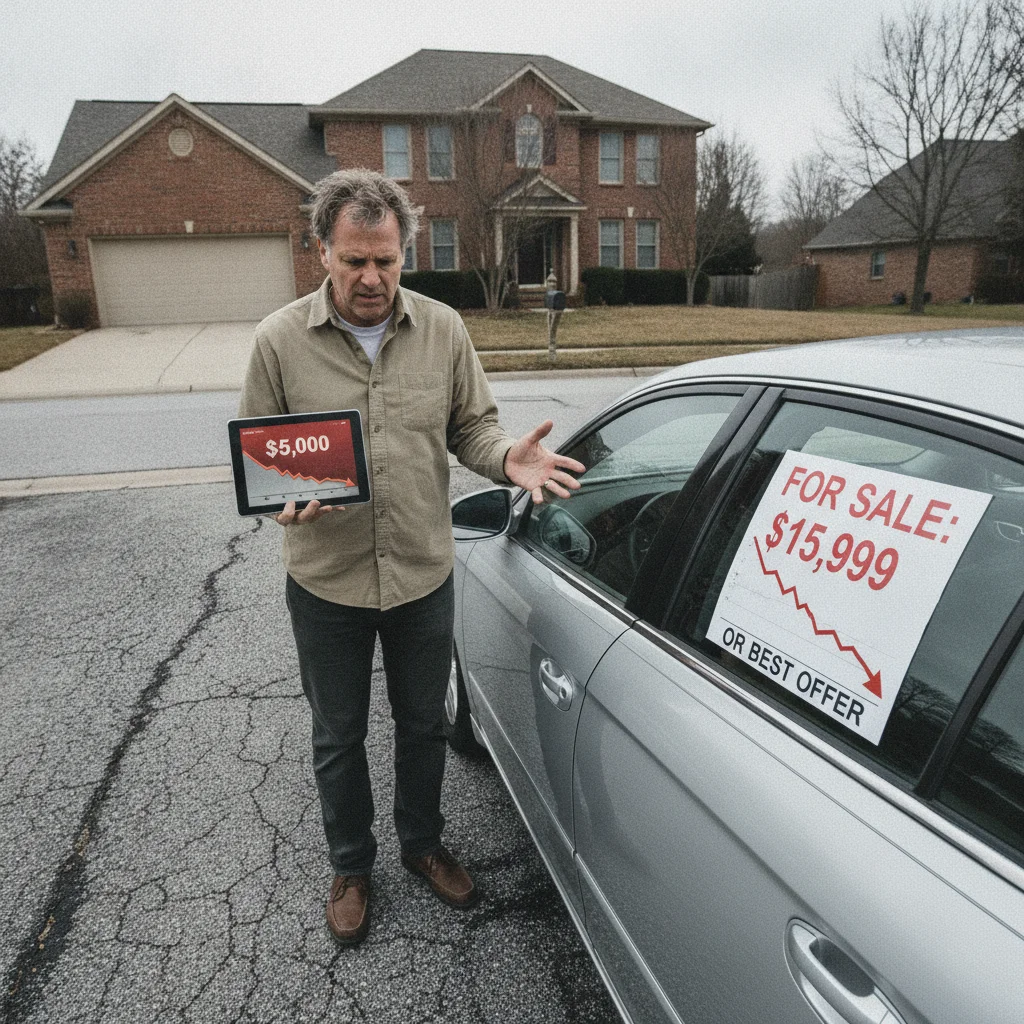
Most car sellers walk into a dealership believing a handful of things about their trade-in that simply aren't true. Those beliefs feel reasonable — they're repeated confidently on forums, shared by friends, and sometimes even encouraged by dealers who benefit from the confusion. The result is predictable: sellers leave hundreds or thousands of dollars on the table while convinced they got a fair deal.
Trade-in transactions are not complex, but they are deliberately layered. Dealers separate the appraisal process from the new-car negotiation for a reason — it makes the total deal harder to analyze and easier to manipulate. Understanding exactly where the myths live, and what the reality looks like, is the most practical defense a seller has.
This article goes through the most costly misconceptions one by one. Each one is correctable. None requires special knowledge — just accurate information applied before you hand over your keys.

For a broader look at how valuation tools work and where they fall short, the Valuation Tools hub is a useful starting point before you read any appraisal quote.
The Core Myths, Corrected
The following myth-and-fact pairs cover the misconceptions that show up most consistently in real trade-in transactions. Some are about process, some about pricing mechanics, and a few about the dealer's incentive structure. All of them cost sellers money when believed uncritically.
Myth
My online trade-in quote from KBB or Edmunds is what the dealer will offer me.
Fact
Online quotes are data-driven estimates, not binding offers. The actual appraisal depends on local market demand, the dealer's current inventory, and a physical inspection your screen can't replicate.
Tools like Kelley Blue Book's Instant Cash Offer and Edmunds' appraisal tool are genuinely useful starting points, but they are generating estimates based on regional data and self-reported condition — not a professional inspection of your actual vehicle. When an appraiser puts eyes on your car, they're looking at things an algorithm can't see: worn CV boots, a slight shimmy at 65 mph, door seals that don't sit flush, or the faint smell of a past interior leak.
The other issue is inventory. A dealer who already has eight similar vehicles on their lot has no incentive to offer you full book value for a ninth. A dealer across town who is short on that segment might beat the online estimate by $500. This is why getting multiple physical appraisals matters, not just one digital quote.
Treat online quotes as your floor — a baseline to defend against, not a price to expect. For a detailed breakdown of where these tools get the math right and wrong, see myths about car valuation tools that sellers keep believing.
Myth
A freshly detailed, clean car will get a noticeably higher trade-in appraisal.
Fact
Dealers appraise at wholesale value, and wholesale buyers care about mechanical condition and market demand — not whether your dashboard is dust-free.
This myth persists because it feels logical: cleaner car, higher offer. In reality, professional appraisers see dozens of cars per week. A clean interior registers as "acceptable," not "premium." They are mentally deducting for the reconditioning they'll need to do regardless — a detail job, any minor paint correction, and certification prep if it's going on a CPO lot.
What does move the needle? Mechanical soundness. A car with fresh tires and brakes, a clean Carfax, and a full service history will appraise meaningfully better than a spotless-looking car with 15,000 miles overdue for an oil change and a vague warning light. The appraiser is thinking about what the reconditioning costs will be before they can retail it.
Basic presentation still matters for private sales, where the buyer is an emotional participant. At wholesale-adjacent trade-in appraisals, the math is less forgiving. Don't spend $300 on a professional detail expecting to recover $600 in trade-in value — the evidence doesn't support it. Detailing myths that cost sellers time and money breaks this down with more precision.
Myth
Dealers won't negotiate the trade-in value — it's a fixed number from their system.
Fact
Trade-in value is negotiable, and dealers have flexibility — especially if you arrive with a competing written offer.
The "system says this is what it's worth" framing is a negotiating tactic, not a policy. Every franchised dealer has a range within which their appraiser can move, and a competing offer from CarMax, Carvana, or another dealer creates real pressure to revise. In practice, arriving with a CarMax offer that's $800 higher than the first trade-in quote frequently results in a matched or near-matched offer — because losing the deal entirely costs the dealer the front-end gross on the new car sale.
The key is to have that competing offer in writing before you sit down. A number you mention verbally is easy to dismiss. A printed offer with an expiration date is harder to ignore.
[in_content_images:3]Also understand that the appraiser and the sales manager are often different people with different motivations. The appraiser lowballs to protect the dealer's reconditioning margin. The sales manager wants to close the deal. Sometimes the trade value gets "found" when the deal is otherwise about to fall apart. Push at that stage — it's often when movement happens.
Myth
I should negotiate my trade-in and new car price at the same time to get the best overall deal.
Fact
Combining the two negotiations makes it easier for dealers to manipulate the total numbers. Separating them forces transparency on each transaction.
This is the most structurally important myth on this list. When you negotiate both simultaneously, the dealer has four levers: new car price, trade-in value, financing rate, and monthly payment. Moving any one lever up or down can mask movement on another. A common tactic is to "find" $500 more on your trade while quietly adding $500 to the new car price — the monthly payment looks the same, but you haven't gained anything.
The fix is sequential negotiation. First, agree on the out-the-door price of the new vehicle as if you were paying cash or arranging your own financing. Get that number in writing. Then introduce the trade-in. Then discuss financing. This eliminates most of the four-dimensional shell game the bundled approach enables.
Dealers will push back on this — it slows them down and reduces their flexibility. Hold the line. A dealer who refuses to quote you a firm purchase price before discussing your trade is one you should probably walk away from.
Myth
My car's special features and upgrades will significantly boost my trade-in value.
Fact
Most factory options and aftermarket upgrades return only a fraction of their original cost in trade-in value — if they return anything at all.
Premium audio packages, panoramic sunroofs, heated rear seats — these features matter to retail buyers, but their impact at the wholesale level is highly diluted. An appraiser might add $200–$400 for a factory navigation system that cost $1,800 when new. Aftermarket upgrades — custom wheels, a lift kit, tinted windows — often return zero or are actually deducted if they narrow the pool of likely buyers.
The clearest example is lift kits on trucks. A $3,000 aftermarket lift might appeal to 20% of buyers in your market and actively deter the other 80%. Dealers know this. They appraise for the broadest resale audience, not the enthusiast subset who would pay a premium.
Factory packages from popular brands — think a Sport package on a mainstream SUV or a towing package on a truck — do retain slightly better. But the math still doesn't work out in the seller's favor. Budget your upgrade spending accordingly, and don't count on recovery at trade-in time. See myths about car depreciation that lead sellers to misprice their vehicles for the broader depreciation picture.
Myth
If I owe more than the car is worth, the dealer will just absorb the difference.
Fact
Negative equity never disappears — it gets rolled into your next loan, increasing what you owe and your monthly payment.
This one is genuinely dangerous because dealers often present it as painless. "We'll pay off your loan" sounds like relief. What it means is: the amount you owe above your car's value gets added to the principal on your next vehicle loan, and you immediately start underwater on the new vehicle.
On a $30,000 new car with $4,000 of rolled-in negative equity, you're financing $34,000. At current rates, that's an additional $70–$90 per month over a 60-month term, plus you're paying interest on debt that was already sunk. If you trade that car in two years later, you'll likely be underwater again.
The only clean solution to negative equity is to pay it down before trading, or wait until the loan balance falls below market value. If neither is feasible, at minimum understand the exact dollar amount being rolled in and factor it into whether the trade makes financial sense at all.
Myth
Online car-buying services like Carvana or CarMax always pay more than dealers.
Fact
Instant-offer platforms are competitive but not universally higher — and on some vehicles, a local dealer will beat them by a meaningful margin.
Carvana, CarMax, and similar services have disrupted the trade-in market meaningfully, and they should be part of every seller's comparison process. But the idea that they always pay more is false. Their pricing algorithms work on volume and efficiency — they bid competitively on vehicles that are easy to resell nationally. For mainstream vehicles with broad demand, they often do beat dealer appraisals. For regional favorites, unusual configurations, or vehicles with mileage or condition quirks, they may undervalue or decline entirely.
Pickup trucks in the South, diesel vehicles, and certain domestic luxury models sometimes appraise higher at local dealers who understand the regional demand. The only way to know is to collect all three numbers: a dealer appraisal, a CarMax offer, and a Carvana/Vroom quote. The 20 minutes this takes is the highest-value use of time in the entire trade-in process.
For a thorough breakdown of where instant-offer platforms succeed and fall short, myths about instant car-buying services that cost sellers money covers the specifics.
Myth
The best time to trade in is when you're ready to buy — timing doesn't really affect value.
Fact
Wholesale market prices fluctuate seasonally and with broader economic shifts, and timing your trade-in can be worth $500–$2,000 on the right vehicle.
Wholesale auction prices — which anchor dealer appraisals — are tracked by the Manheim Used Vehicle Value Index and move in response to inventory levels, fuel prices, consumer demand, and macroeconomic conditions. During the 2021–2022 supply crunch, wholesale prices for many segments rose 25–40% above historical norms. Sellers who transacted in that window received dramatically higher appraisals than they would have 18 months earlier or later.
Seasonal patterns are more predictable. Convertibles and sports cars hit their seasonal peak in February through April. Trucks and four-wheel-drive SUVs are strongest in September through November. Hybrids and fuel-efficient vehicles spike when gas prices rise. None of this guarantees a specific outcome, but if you have a 60-day window of flexibility, checking current market conditions before you commit to a trade date is worth the effort.
Simply searching your vehicle's year, make, and model on CarGurus or AutoTrader and filtering by dealer listings in your region gives you a rough read on retail supply — which inversely correlates with wholesale demand. More retail supply in your segment means dealers are less hungry for your specific vehicle.
$1,000–$3,000
Typical private sale premium over trade-in
Industry data consistently shows sellers leaving this much on the table by trading in rather than selling privately on mid-range used vehicles.
3
Competing offers recommended before trading in
Automotive consumer advocates recommend getting appraisals from at least three sources — including one instant-offer platform — to establish a defensible floor.
30–40%
Wholesale price spike during 2021–2022 shortage
The Manheim Used Vehicle Value Index recorded historically unprecedented gains during the pandemic-era inventory crunch, significantly boosting trade-in appraisals.
$500–$1,500
Potential tax credit on trade-in in select states
States including Texas, Ohio, and Michigan allow buyers to pay sales tax only on the net price after trade-in allowance, which can significantly narrow the gap with private sale proceeds.
7 days
CarMax written offer validity window
CarMax's written purchase offers are typically valid for seven days, giving sellers a usable floor price when negotiating with franchised dealers.
How to Negotiate Without Getting Burned
Knowing the myths is step one. Step two is showing up with a process that removes as much ambiguity as possible from the table.
Get at least three competing offers before you walk in
CarMax, Carvana, and your local dealer group all want your car — in different ways and at different price points. A written offer from CarMax is valid for seven days and functions as a floor. If a dealer can't beat it, sell to CarMax. This single step eliminates more lowball outcomes than any other tactic.
Don't Accept the First Appraisal as Final
Dealers present their first trade-in offer as a firm number derived from objective data. It rarely is. The initial appraisal is a negotiating position, not a concluded valuation. Without a competing offer in hand, you have no leverage to test whether the number can move. Get competing offers before you walk in — not after you've already started the paperwork.
Bundling Trade-In and Purchase Price Is a Trap
Negotiating your trade-in value and new car purchase price at the same time gives dealers four financial levers to manipulate simultaneously. A gain on one number can be quietly offset by a loss on another, leaving your monthly payment unchanged while the dealer improves their margin. Always negotiate the purchase price to a firm out-the-door number first, then introduce your trade.
Online Quotes Expire and Are Not Guaranteed
Instant cash offers from online platforms have expiration windows — typically 7 days — and are conditional on the vehicle matching the condition you reported. If the physical inspection at pickup reveals undisclosed damage, prior accidents, or mechanical issues, the offer will be revised downward. Be accurate in your self-reported condition to avoid a last-minute surprise adjustment.
Separate the trade-in from the new car deal
Tell the finance manager you want to negotiate the purchase price of the new vehicle first, then discuss the trade. This forces the dealer to show their hand on each transaction independently. Once you have an agreed purchase price in writing, introduce the trade. Any dealer who refuses this approach — who insists on doing everything together — is telling you something important about how they plan to make money on the deal.
Know your payoff figure before you arrive
Call your lender the week before and get the exact 10-day payoff amount. This is the number the dealer will use, not your estimated balance. If payoff exceeds your appraisal value, you have negative equity — and you need to decide in advance how you'll handle it, not in the moment at the finance desk.
Negative Equity Rolls Forward — Always
If your payoff balance exceeds your trade-in appraisal, that gap doesn't vanish — it gets added to your new car loan. A $4,000 negative equity position rolled into a 60-month loan at current rates costs you roughly $70–$90 more per month and leaves you immediately underwater on the new vehicle. Know your exact payoff figure and your appraisal value before you sit down at the finance desk.
Bring documentation for condition and service history
Dealers can't ignore a clean Carfax and a stack of service records. It doesn't guarantee a higher offer, but it removes ammunition for lowball justifications. If they try to dock you for unknown service history and you have the receipts, use them.
For a deeper look at how even repeat sellers make avoidable mistakes, see trade-in pitfalls that experienced sellers still fall into.
When a Trade-In Actually Makes Sense
Private sale almost always yields more money — but not always by enough to justify the effort, liability, and time. The spread between trade-in value and private party value is typically $1,000–$3,000 on a $15,000 vehicle. On a $7,000 beater, that gap might be $500 and not worth a month of test drives, strangers at your home, and title paperwork.
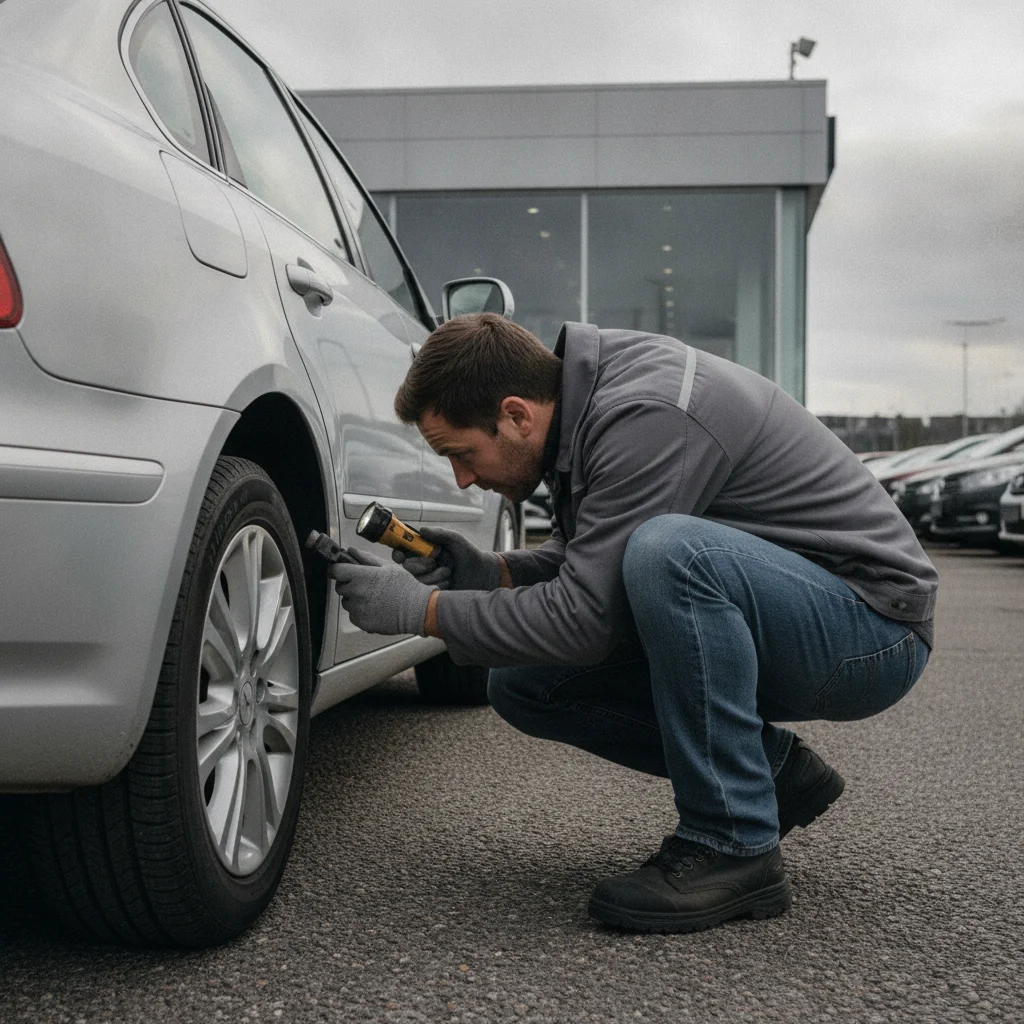
Trade-ins make the most practical sense when: your car has significant mechanical issues a private buyer would walk away from; you're in a time crunch; you live in a state where the trade-in tax credit is large (some states allow you to pay sales tax only on the difference between the trade value and new car price); or the private sale spread on your specific vehicle is small.
Check your state's tax credit before deciding. In states like Texas, Ohio, and Michigan, that credit can run $500–$1,500 on a mid-range vehicle — which meaningfully closes the gap with private sale proceeds.
If you're weighing the private sale route, private sale myths that cost sellers time and money will give you an honest picture of what that channel actually involves.
Timing and Market Conditions Matter More Than Condition
Wholesale auction markets — which set the floor for dealer appraisals — move fast. During the 2021–2022 inventory shortage, used car wholesale prices spiked 30–40%. Sellers who traded in during that window received appraisals that would have seemed impossible 18 months earlier. By late 2023, prices had corrected significantly.
Seasonal patterns also matter. Trucks and SUVs appraise better in fall and winter. Convertibles and sports cars hold stronger values in spring. Fuel-efficient compacts spike when gas prices rise. None of this is guaranteed, but if you have flexibility on timing, a two-month difference can be worth $500–$1,500 on the right vehicle.

For context on how depreciation interacts with these market cycles, myths about car depreciation that lead sellers to misprice their vehicles covers the mechanics clearly.
The takeaway: monitor Manheim Index trends or simply check what similar vehicles are actually selling for on dealer lots in your area. If dealer retail prices are elevated, wholesale appraisals tend to follow — with a lag of a few weeks.
The Bottom Line
Trade-in value isn't a mystery, and dealers aren't supernatural negotiators. They have a process, and you can have one too. The sellers who do best are the ones who arrive having already done the math — who know their payoff balance, have a competing written offer in hand, and understand that the trade negotiation and the purchase negotiation are two separate conversations.
Dispelling these myths won't guarantee you the maximum possible number. Market conditions, your vehicle's actual condition, and local demand all play roles you can't fully control. But belief in myths you can control — and the cost of those beliefs is real, measurable, and avoidable.
Start with accurate pricing expectations. See why sellers consistently overestimate what their car is worth if you want to understand why the number in your head is almost certainly higher than what the market will pay — and how to recalibrate before the negotiation starts.

All claims are backed by peer-reviewed research. Sources on request.