Key Takeaways
Our Verdict
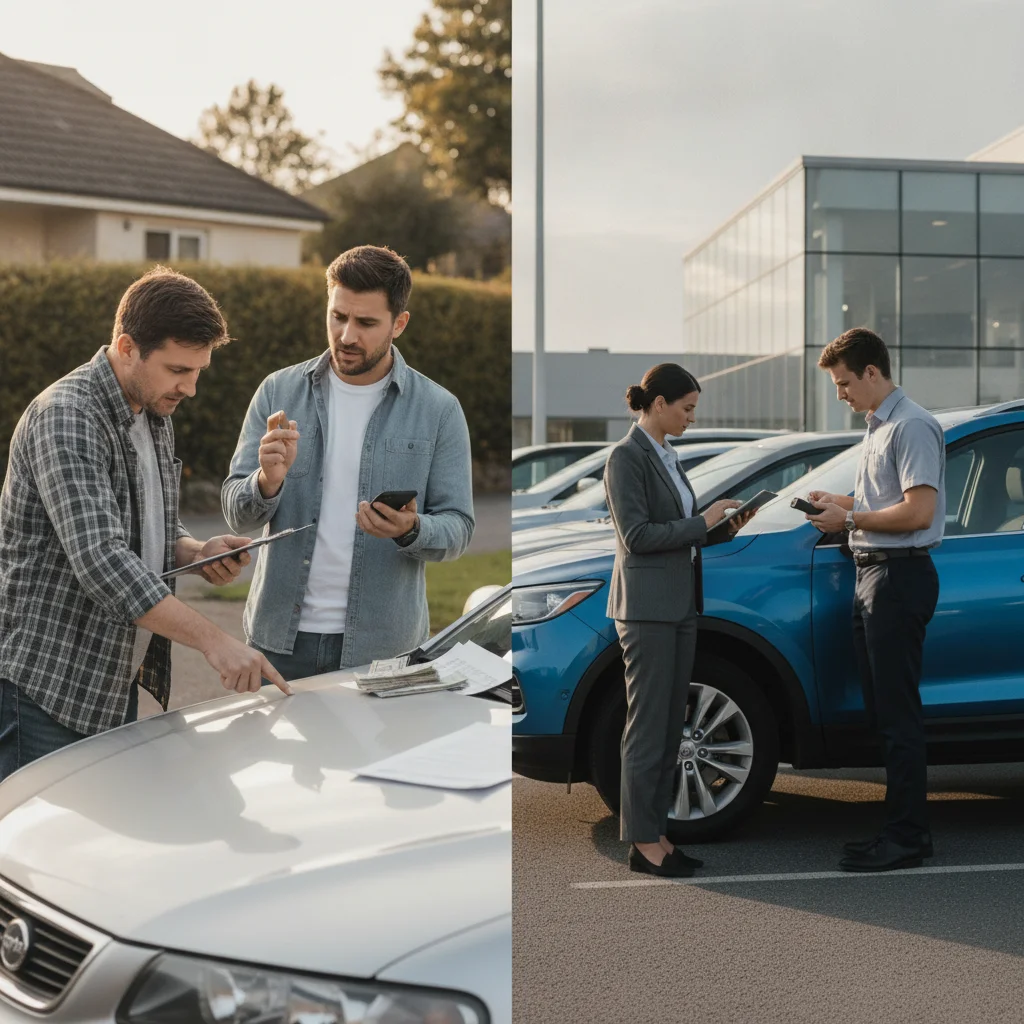
Private sales expose you to more process complexity but let you capture value that would otherwise go to the dealer's margin. Dealer sales absorb that margin as a fee for convenience, and they price in depreciation risk that you'd otherwise carry yourself. Neither channel eliminates depreciation — they just distribute it differently between you and the next party in the chain.
| Best for | Recommended |
|---|---|
| Sellers who want maximum cash recovery and can invest 2–4 weeks of effort | Private Sale |
| Sellers who need to close quickly or are buying a new car simultaneously | Dealer Sale (Trade-In) |
| Sellers with vehicles in the steep early-depreciation window (0–3 years) | Private Sale |
| Sellers with high-mileage or mechanically imperfect vehicles that are hard to price privately | Dealer Sale (Trade-In) |
Why Depreciation Is the Real Variable — Not Just the Sale Price
Most sellers fixate on the number at the top of the offer — the trade-in quote or the private listing price. But that number is a downstream result of something more fundamental: how much value your vehicle has already lost and how much it will lose between now and when the next owner eventually sells it too.
Depreciation isn't a single event. It's a curve. A new vehicle loses roughly 15–25% of its value in its first year, another 10–15% in year two, and continues at a decelerating pace through years five and beyond. By year five, most vehicles have shed 40–60% of their original sticker price, depending on make, model, and market conditions.
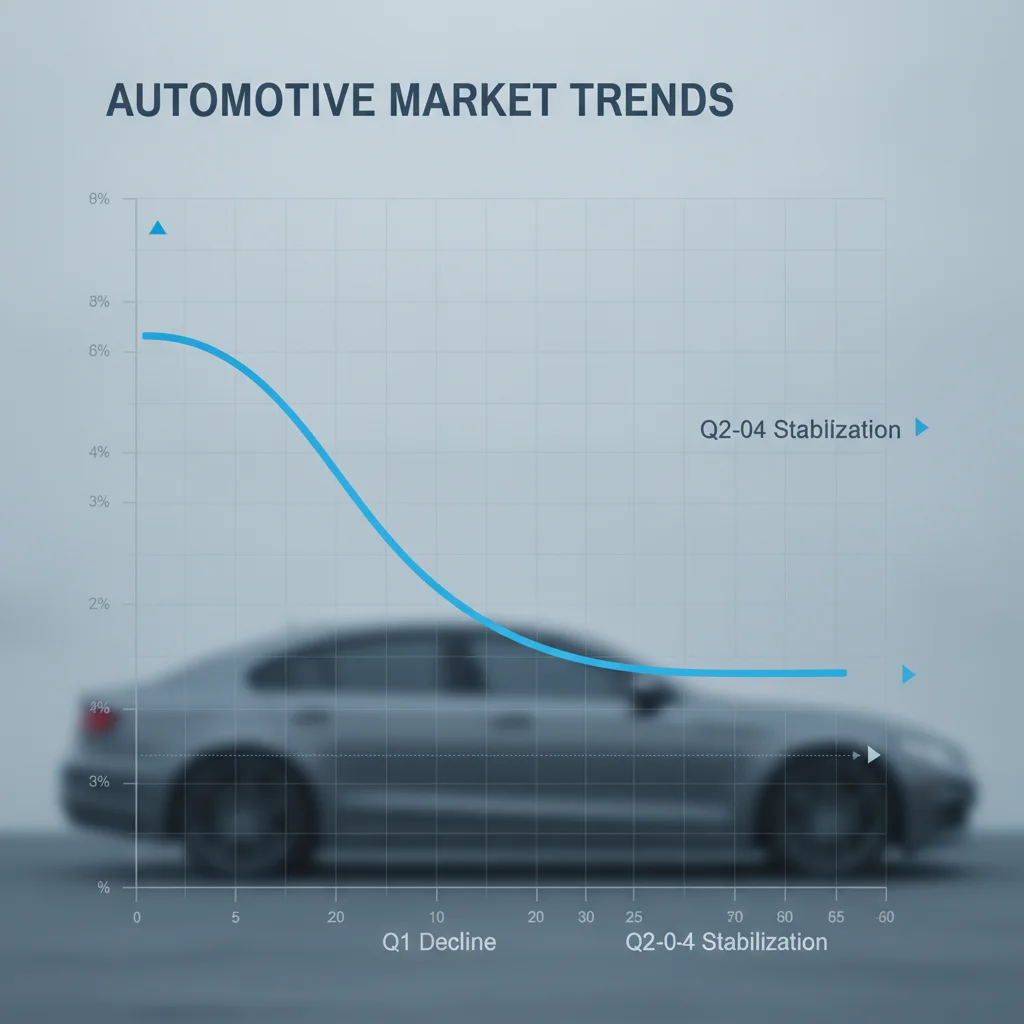
Here's why that curve matters for sellers: every entity in the transaction — you, a private buyer, or a dealership — is implicitly pricing in a share of that remaining depreciation. The question isn't whether depreciation will affect your sale price. It's who absorbs how much of it and through what mechanism.
When you sell privately, you negotiate directly with someone who will drive the car and eventually resell it. When you sell to a dealer, you're selling to an intermediary who plans to turn the car around for profit — and that plan requires them to build in a cushion against further value loss before they can move the vehicle.
Understanding this dynamic is what lets you set realistic expectations and choose the channel that serves your situation best. For a broader look at the financial tradeoff between these two routes, see our detailed breakdown of trade-in vs. private party sale outcomes.
How the Dealer Channel Prices Depreciation Into Your Offer
When a dealer appraises your car, their goal isn't to determine what it's worth to you or even what it's worth on the market today. Their goal is to determine what they can confidently sell it for — minus their reconditioning costs, carrying costs, and profit margin — and then back-calculate the most they can pay you while still hitting their numbers.
The Dealer's Four-Layer Margin Stack
- Market retail value: What they believe they can list the car for, usually pulled from auction data and comparable local listings.
- Reconditioning reserve: An estimate for detailing, mechanical work, and any cosmetic fixes needed to bring the car to lot-ready condition. This often runs $500–$2,500 depending on condition.
- Carrying cost buffer: Dealers don't sell cars instantly. A car sitting on the lot for 30–60 days represents flooring interest, insurance, and opportunity cost — often another $200–$600.
- Depreciation risk premium: This is the one most sellers overlook. The dealer is betting your car will hold its value long enough for them to sell it. If the market softens, if a competitive new model launches, or if the car sits longer than expected, they absorb that loss. So they build in a buffer — typically 5–10% of the car's value — to hedge that risk.
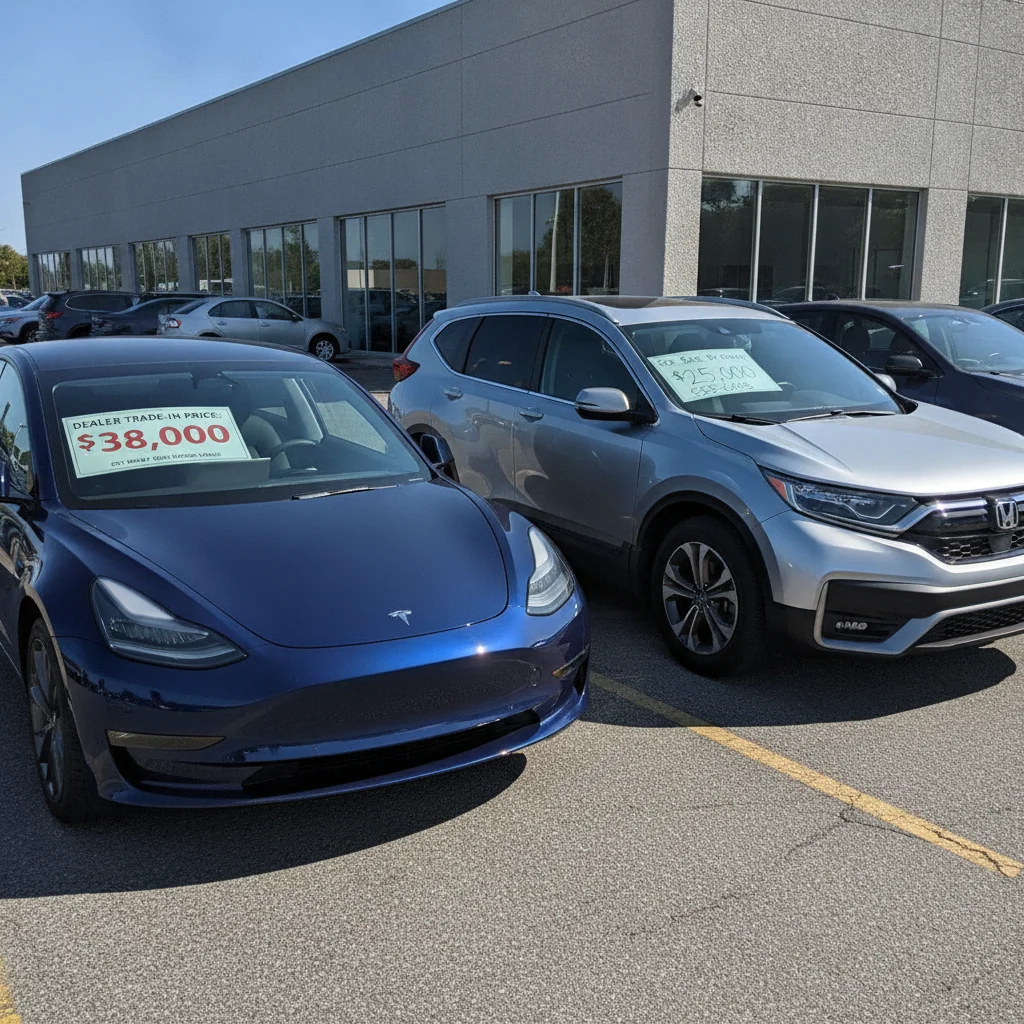
Add those layers together and you can see why dealer trade-in offers routinely come in $1,500 to $4,000 below private party values on a typical $15,000–$25,000 used vehicle. They're not simply being greedy; they're pricing in uncertainty you're no longer willing to carry.
High-Demand Vehicles Close the Gap
If your vehicle is a consistently popular model — think Toyota Tacoma, Honda CR-V, or Ford F-150 in a popular trim — dealer trade-in offers will often be more competitive because the dealer's resale risk is lower and turnover is faster. In these cases, the convenience of a dealer sale may be worth accepting a slightly reduced offer, especially if you're also negotiating a strong price on a new purchase.
Gather Service Records Before You List
A complete service folder — oil changes, tire rotations, any major repairs — signals to private buyers that the vehicle was maintained, reducing their fear of hidden problems. This documentation consistently supports asking prices $300–$800 above otherwise identical listings without records. Digital records from dealership service departments are easy to request and carry strong credibility.
Get Instant Cash Offers First — Always
Before you commit to either channel, spend 30 minutes getting quotes from CarMax, Carvana, and Vroom. These no-obligation instant offers establish your true dealer-channel floor. If a dealer's trade-in offer falls below these figures, you have concrete leverage to push back. If a private buyer's final offer doesn't beat your best instant quote by at least $1,000–$1,500, the private sale effort may not be worth it.
One practical implication: if your vehicle is highly liquid — a popular trim, low mileage, clean Carfax — dealers have less uncertainty to price in, and their offers get closer to private party value. Exotic configurations, high mileage, or branded titles widen the gap because the dealer's risk is genuinely higher.
To understand more about how trade-in appraisals work and how to push back on lowball estimates, the dealer trade-ins hub walks through the appraisal process step by step.
How the Private Sale Channel Exposes You to Depreciation Differently
Selling privately doesn't eliminate depreciation risk — it redistributes it. Instead of the dealer absorbing the risk in exchange for a lower offer to you, you carry that risk yourself during the listing and negotiation period. In return, you keep the margin that would have gone to the dealer.
The Timeline Risk
The average private car sale takes 2–6 weeks from first listing to signed title. During that window, your vehicle continues to depreciate — not dramatically on a day-to-day basis, but meaningfully if you're in a period of rapid market change. In a cooling used car market, a 30-day listing period could shave another 1–2% off your realistic selling price as comparable listings pile up and buyers gain leverage.
This is especially acute for late-model vehicles (1–3 years old) that are still in the steep part of the depreciation curve. Every month you hold the car while trying to find the right buyer is a month of accelerated value loss.

The Pricing Knowledge Gap
Dealers have access to real-time wholesale auction data that tells them exactly what a specific vehicle sold for last week at auction. Private sellers typically rely on Kelley Blue Book, Edmunds private party estimates, and local listing comps — all of which can lag actual market conditions by weeks. If you're pricing from stale data, you may be either leaving money on the table or pricing yourself out of inquiries entirely.
The Negotiation Exposure
Sophisticated private buyers know how to use depreciation arguments to negotiate. They'll cite specific comparable listings, mention the car's upcoming service mileage, or point to a newer model year hitting the market. As the seller, you need to be ready to defend your price with current data, or you'll cede negotiating position. The private party sales hub covers how to list, price, and close with confidence.
Depreciation Curves by Vehicle Age: Where Each Channel Performs Best
Not all vehicles are at the same point on the depreciation curve when they're sold, and that position dramatically affects which channel serves you better.
| Criterion | Private Sale | Dealer Trade-In | |
|---|---|---|---|
| Typical net proceeds | Higher — captures dealer margin | Lower — dealer margin subtracted | |
| Time to close | 2–6 weeks on average | Same day to 48 hours | |
| Depreciation risk during sale period | Seller bears it | Dealer absorbs it (priced into offer) | |
| Best vehicle age | Years 1–5 (steep curve recovers more) | Years 5+ or high-mileage (risk narrows gap) | |
| Effort required | High — listing, screening, test drives | Low — single appraisal appointment | |
| Negotiating complexity | Moderate — direct buyer negotiation | High — bundled with new car deal | |
| Market timing leverage | Full — seller controls listing timing | Limited — dealer sets offer regardless | |
| Documentation burden | Seller handles title transfer, bill of sale | Dealer handles all paperwork |
Years 0–2: The Steepest Drop
A vehicle sold in its first two years is still in free fall from a depreciation standpoint. A dealer will price their offer knowing the car will lose another 10–15% of value per year during this period. A private buyer, especially one who is savvy, will also factor this in — but they're buying to drive, not to resell immediately, so they may be willing to pay closer to retail used values if the car is pristine and low-mileage.
Private sale advantage: High, provided you can find a buyer quickly and price aggressively.
Years 3–5: The Stabilizing Phase
Depreciation starts to decelerate. The car has absorbed most of its initial hit. Dealer offers begin to close in on private values because their risk of further rapid decline shrinks. This is actually the sweet spot for dealer trade-ins — especially if you're trading into a new car purchase and can negotiate favorable terms on both sides of the deal. See how that full equation works in our article on trading in vs. selling privately when buying a new car.
Private sale advantage: Moderate — the gap between dealer and private values narrows, but private still typically wins on raw dollars.
Years 6–10: The Long Tail
Older vehicles depreciate slowly in percentage terms but are harder to sell privately because buyers are more risk-averse about mechanical reliability. Dealers are often reluctant to take these in as trade-ins or offer very low wholesale values. Private buyers willing to buy a 2012 model year car are typically price-sensitive and expect a significant discount for age and unknown history.
Private sale advantage: Variable — depends heavily on make, model, and condition. High-reliability brands (Toyota, Honda) retain private market appeal longer. Less reliable brands see the dealer and private gap collapse as both channels discount aggressively.
20%
Average first-year depreciation rate
According to Edmunds data, new vehicles lose approximately 20% of their value within the first 12 months of ownership on average.
$2,000–$4,000
Typical private-vs-dealer value gap
On a vehicle priced between $15,000 and $25,000, private party sales commonly net $2,000 to $4,000 more than dealer trade-in offers.
2–6 weeks
Average private sale timeline
Industry listing data from platforms like AutoTrader and Facebook Marketplace shows most private vehicle sales close within two to six weeks of listing.
40–60%
Value lost by year five
Most mainstream vehicles retain only 40–60% of their original MSRP after five years, per long-term depreciation analyses by iSeeCars and CarEdge.
Side-by-Side: Real Numbers on a Typical $22,000 Car
Let's make this concrete. Assume you own a 3-year-old mid-size sedan with 38,000 miles, clean title, and average condition. Current private party value per Edmunds: $22,000.
Dealer Trade-In Path
- Dealer's estimated retail value: $22,000
- Minus reconditioning estimate: −$1,200
- Minus carrying cost buffer (45 days): −$400
- Minus depreciation risk premium (7%): −$1,540
- Minus dealer retail margin: −$2,000
- Offer to you: approximately $16,860
That offer might feel low, but it reflects real costs the dealer is absorbing. If you're also buying a new car, the dealer may also be motivated to nudge the trade figure up slightly to close the overall deal — a negotiating lever worth using.
Private Sale Path
- Listed price: $23,500 (slightly above private value to allow negotiation room)
- Accepted offer after negotiation: $21,200
- Minus listing costs (photos, ads, detailing): −$300
- Minus time cost (3 weeks of messaging, test drives): subjective
- Net to you: approximately $20,900
The difference: roughly $4,000 — which is meaningful but not free. You've earned it through time, effort, and assumption of risk during the listing period.
Don't Accept the First Trade-In Offer
Initial dealer trade-in offers are rarely final. Dealers expect negotiation and often have 5–10% flexibility in their appraisal figures, especially on desirable vehicles. Coming in with a competing written offer from CarMax or Carvana is the single most effective tool for moving a low-ball trade-in figure upward. Never accept verbally — always ask for the offer in writing before moving on to discussing the new car price.
Beware of Tax Advantage Overestimation
In many states, trading in a vehicle reduces your taxable purchase price on the new car — which appears to add value to the trade-in transaction. This benefit is real, but it's often overstated in dealer conversations. Calculate the actual tax saving in dollars (your state tax rate multiplied by the trade-in value) before assuming the trade-in is financially equivalent to a private sale. In many cases, the private sale premium still exceeds the tax benefit.
These numbers compress or expand based on vehicle type. Trucks and SUVs tend to have stronger private market demand, so the gap between dealer and private values can be even larger — sometimes $5,000–$7,000 on a popular pickup. Sedans in saturated markets see the gap narrow because private buyers have more options and more negotiating leverage.
For a deeper look at how these calculations play out across different vehicle types, our article on dealer trade-in vs. private party sale financials walks through the math in detail.
Timing: When to Sell — and How Channel Choice Interacts With Market Cycles
Depreciation isn't only about vehicle age. It's also shaped by market supply, fuel prices, interest rates, and seasonal demand — and each of these forces affects the private and dealer channels differently.
Seasonal Patterns
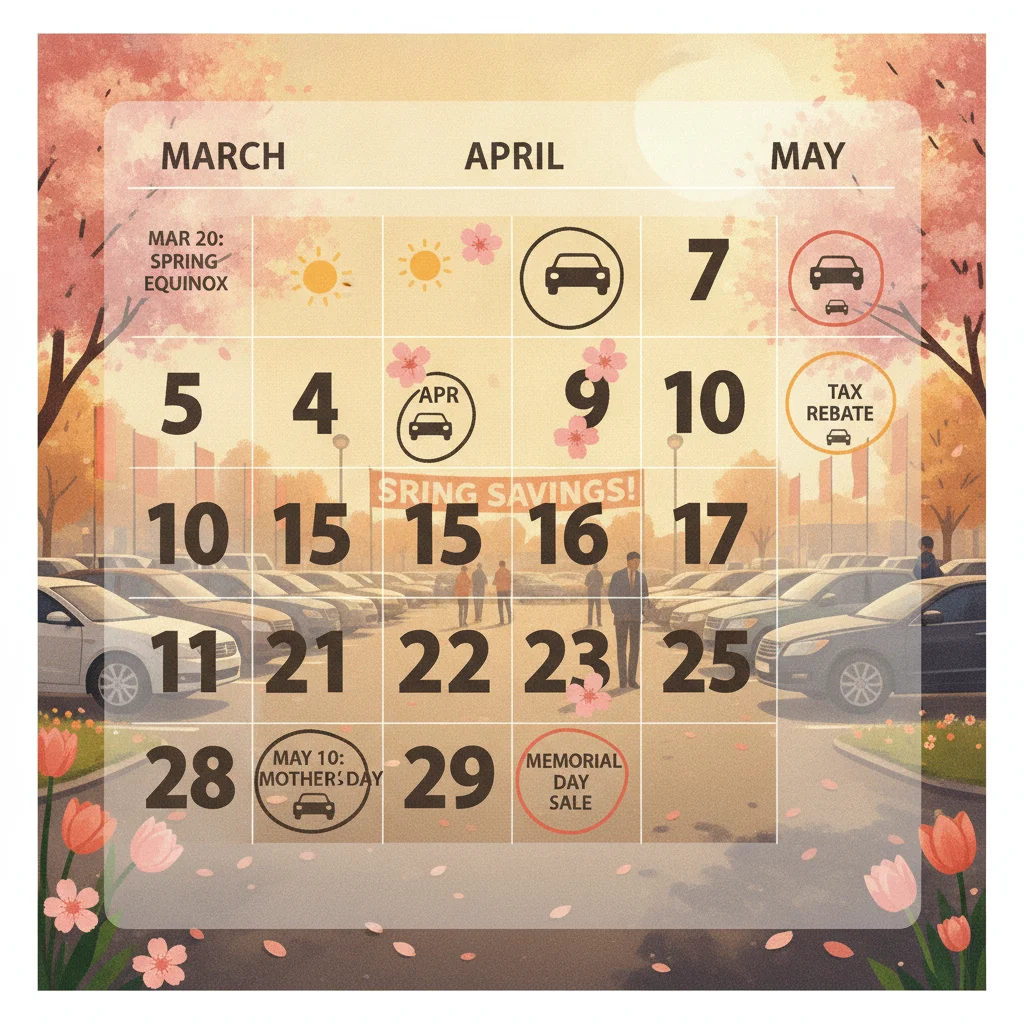
Used car prices typically peak in late winter and early spring (February–April), when tax refunds fuel buyer demand and before the summer inventory wave hits. If you're selling privately, listing in March often means less competition and more motivated buyers. Dealers experience the same seasonal demand, so their trade-in offers also tend to be slightly more generous in strong retail months — but they don't share that upside with you as transparently as the private market does.
Interest Rate Environment
When interest rates rise sharply — as they did in 2022–2023 — monthly payments on used car loans increase, and buyers become more price-sensitive. Private buyers push harder on price. Dealers, who face the same rate environment on their flooring lines, tighten their margin assumptions and cut trade-in offers. Both channels get worse for sellers in a high-rate environment, but the private channel still typically preserves more of your value because you can wait for the right buyer rather than taking whatever the dealer offers that day.
New Model Releases
When a manufacturer releases a significantly updated model or an entirely new generation, the previous-generation vehicles depreciate faster. If you're holding a 2023 model and the 2024 brings a major redesign, getting to market before that announcement — or immediately after dealers have ordered the new stock — gives you a timing edge. Private buyers may not be tracking this as closely as dealers, giving you a window where private market values haven't fully adjusted yet.
For buyers considering the private channel from the other side of the transaction, our comparison of private seller vs. dealership for used car buyers explains how these same forces play out when you're the one writing the check.
Practical Steps to Minimize Depreciation Exposure in Either Channel
Regardless of which channel you choose, several actions consistently reduce the amount of depreciation you absorb as the seller.
1. Know Your Actual Market Value — Not Book Value
Book values (KBB, Edmunds) are averages. Your car's real market value is set by active comparable listings in your ZIP code in the past 30 days. Search your make, model, year, trim, and mileage on CarGurus, AutoTrader, and Facebook Marketplace. Adjust for condition. That range is your real price ceiling — not the KBB private party estimate.
2. Fix What's Cheap, Skip What's Expensive
A $150 detail job and $40 in touch-up paint can meaningfully improve first impressions and justify a higher asking price. A $2,000 transmission repair will rarely return dollar-for-dollar in a private sale. Spend on presentation; don't try to capitalize repairs into your sale price.
3. Gather Documentation That Builds Buyer Confidence
A clean Carfax report, a folder of service records, and a recent pre-sale inspection from a neutral shop all reduce a buyer's risk perception — which means less negotiating pressure on price. These documents cost $100–$200 total and routinely protect $500–$1,500 in sale price.
High-Demand Vehicles Close the Gap
If your vehicle is a consistently popular model — think Toyota Tacoma, Honda CR-V, or Ford F-150 in a popular trim — dealer trade-in offers will often be more competitive because the dealer's resale risk is lower and turnover is faster. In these cases, the convenience of a dealer sale may be worth accepting a slightly reduced offer, especially if you're also negotiating a strong price on a new purchase.
Gather Service Records Before You List
A complete service folder — oil changes, tire rotations, any major repairs — signals to private buyers that the vehicle was maintained, reducing their fear of hidden problems. This documentation consistently supports asking prices $300–$800 above otherwise identical listings without records. Digital records from dealership service departments are easy to request and carry strong credibility.
Get Instant Cash Offers First — Always
Before you commit to either channel, spend 30 minutes getting quotes from CarMax, Carvana, and Vroom. These no-obligation instant offers establish your true dealer-channel floor. If a dealer's trade-in offer falls below these figures, you have concrete leverage to push back. If a private buyer's final offer doesn't beat your best instant quote by at least $1,000–$1,500, the private sale effort may not be worth it.
4. If Trading In, Always Negotiate the Trade Separately
Dealers prefer to bundle the trade-in and new car purchase into a single monthly payment negotiation because it obscures how much you're actually getting for your trade. Get the trade-in offer in writing before you discuss the new car price. Otherwise the dealer has levers to appear generous on one side while quietly tightening on the other.
5. Use Competing Offers as Leverage
Get quotes from multiple dealers — including direct-buy services like CarMax, Carvana, and Vroom — before accepting any single offer. These instant cash offers establish a floor. Even if you ultimately sell privately, knowing your dealer floor helps you recognize when a private buyer's low-ball offer isn't worth accepting.
For sellers weighing an online dealership against private options, our article on private seller vs. online dealership provides a useful framework for thinking through digital channels as well.
High-Demand Vehicles Close the Gap
If your vehicle is a consistently popular model — think Toyota Tacoma, Honda CR-V, or Ford F-150 in a popular trim — dealer trade-in offers will often be more competitive because the dealer's resale risk is lower and turnover is faster. In these cases, the convenience of a dealer sale may be worth accepting a slightly reduced offer, especially if you're also negotiating a strong price on a new purchase.
Gather Service Records Before You List
A complete service folder — oil changes, tire rotations, any major repairs — signals to private buyers that the vehicle was maintained, reducing their fear of hidden problems. This documentation consistently supports asking prices $300–$800 above otherwise identical listings without records. Digital records from dealership service departments are easy to request and carry strong credibility.
Get Instant Cash Offers First — Always
Before you commit to either channel, spend 30 minutes getting quotes from CarMax, Carvana, and Vroom. These no-obligation instant offers establish your true dealer-channel floor. If a dealer's trade-in offer falls below these figures, you have concrete leverage to push back. If a private buyer's final offer doesn't beat your best instant quote by at least $1,000–$1,500, the private sale effort may not be worth it.
Making the Final Call: Which Channel Fits Your Situation?
The right channel is rarely a universal answer — it's a function of your vehicle's depreciation position, your timeline, and your willingness to absorb process complexity in exchange for higher net proceeds.
Ask yourself these three questions:
- How much time do I have? If you need to close within two weeks, private sale is risky. A dealer or instant-cash-offer service is the pragmatic call.
- Where is my vehicle on the depreciation curve? Early-curve vehicles (years 1–3) leave the most money on the table through a dealer. Late-curve vehicles (years 6+) may find the gap between channels narrow enough that the dealer's convenience wins on a risk-adjusted basis.
- How strong is private market demand for my specific vehicle? A 4-year-old Toyota Tacoma in good condition will sell privately in days with minimal price negotiation. A 4-year-old 3-row luxury SUV with a history of reliability complaints will sit for weeks and invite aggressive lowball offers.
Once you've answered those questions honestly, the math usually points clearly in one direction. The goal isn't to squeeze every last dollar from your vehicle — it's to make an informed decision about who bears the depreciation risk and whether the premium you're receiving (or paying, in effort and time) is worth it.
For sellers who are simultaneously buying a new vehicle, the trade-in decision becomes even more interconnected. Our guide on trading in vs. selling privately when buying a new car walks through how to handle both transactions without leaving money on either side of the deal.

All claims are backed by peer-reviewed research. Sources on request.