Key Takeaways
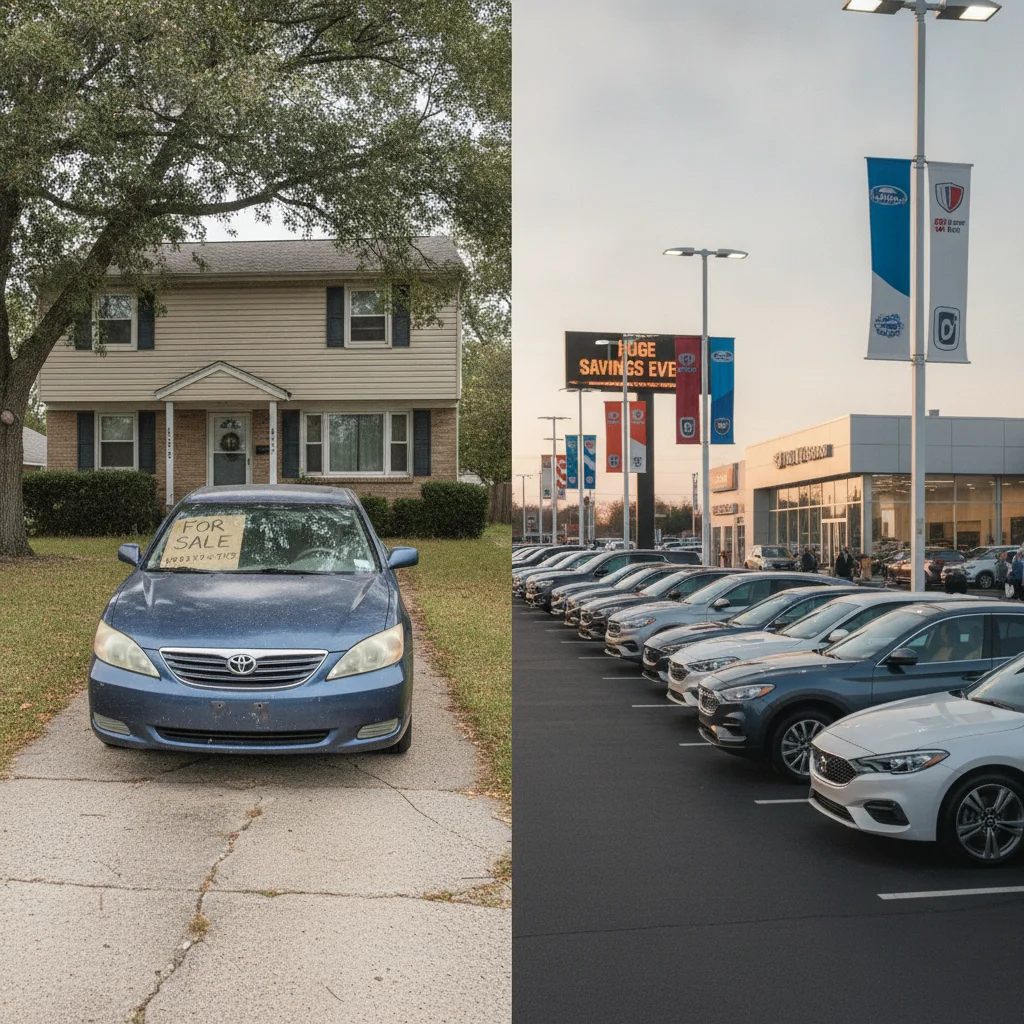
Option A
Private Seller
The lower-price, higher-risk channel.
Best for: Budget-conscious buyers who are comfortable doing their own due diligence and can handle paperwork independently.
Option B
Dealership
The structured, protected buying experience.
Best for: Buyers who want financing options, warranties, and a formalized process with legal recourse if something goes wrong.
If you want the lowest possible purchase price
Private Seller
Private sellers don't have overhead costs to cover, so they typically price vehicles 10–15% below what a dealer would charge for the same car. Skilled negotiators can push even further.
If you need financing and have average credit
Dealership
Dealers have relationships with multiple lenders and can often secure financing for buyers who'd struggle to get a personal auto loan for a private sale through a bank or credit union.
If you want warranty coverage and peace of mind
Dealership
Certified Pre-Owned programs and dealer warranties provide a safety net private sellers simply can't offer. For buyers who can't absorb an unexpected $2,000–$5,000 repair, that coverage is worth paying for.
If you're buying a well-documented, single-owner vehicle
Private Seller
A private seller with clean maintenance records, a clear title, and a verifiable history can offer real value. Pair it with a $100–$150 pre-purchase inspection and you've reduced the risk substantially.
If you're new to car buying or unfamiliar with the process
Dealership
The dealership structure handles title transfer, registration, and financing paperwork for you. The added cost buys real convenience and reduces the chance of a costly procedural mistake.
The Real Price Difference Between Private Sellers and Dealers
The most visible difference between buying from a private seller versus a dealership is price — and it's real. On a $20,000 vehicle, a private seller typically lists 10–15% below dealer retail, which translates to $2,000–$3,000 in direct savings. That gap exists because dealers have overhead: staff, lot costs, reconditioning, and profit margin built into every transaction.
But the sticker gap isn't the whole story. What you're actually comparing is the total cost of ownership after accounting for what each channel includes — or doesn't.

A dealership's price often includes at least a basic safety inspection, emissions compliance, a clean title guarantee, and sometimes a 30-day limited warranty. A private seller's price includes none of that. Factor in a $150 independent inspection, a $25–$50 vehicle history report, and potential reconditioning after purchase, and the private seller advantage shrinks — though it rarely disappears entirely.
One more pricing dynamic to understand: dealers are motivated to move inventory and will negotiate on used vehicles, but they're working from a cost basis that includes reconditioning and auction fees. Private sellers have a softer floor — they paid what they paid, and anything above zero is profit. That asymmetry means private seller negotiations often go further, especially if the car has been listed for more than two weeks.
~$2,500
Average private vs. dealer price gap
On a $20,000 vehicle, private sellers typically price 10–15% below dealer retail, reflecting the absence of reconditioning and overhead costs.
450,000
Vehicles sold with rolled-back odometers annually
According to NHTSA estimates, odometer fraud disproportionately affects private party transactions where documentation is easier to manipulate.
$150
Average pre-purchase inspection cost
An independent mechanic inspection typically costs $100–$175 and can reveal mechanical issues worth thousands of dollars in repairs.
80%
Max LTV on private party auto loans
Most lenders cap private party auto loans at 80–100% of book value, which can leave a financing gap if the seller is priced above that threshold.
Risk Profile: What Can Go Wrong With Each Channel
Risk is where these two channels diverge most sharply, and buyers underestimate private party risk at their own expense.
Private Seller Risks
- Title problems: Salvage titles, liens that haven't been released, and rebuilt designations can all surface after purchase. A private seller who genuinely doesn't know their car's title status isn't trying to defraud you — but the damage is the same. Always run a vehicle history report and verify the title is clean and free of liens before handing over any money.
- Odometer fraud: The NHTSA estimates roughly 450,000 vehicles with rolled-back odometers are sold each year. Private transactions are a primary channel for this. Cross-reference the odometer reading against service records and the history report.
- No disclosure obligations: Private sellers in most states operate under caveat emptor — buyer beware. They're generally not required to disclose known defects unless your state has specific private party disclosure laws. Ask direct questions in writing.
- Payment fraud: Cashier's checks can be counterfeited. Wire transfers can be misdirected. Never release the title before payment clears through your bank, and consider meeting at a bank branch to verify funds.
Dealership Risks
- Spot delivery / yo-yo financing: A dealer lets you drive home before financing is finalized, then calls back days later saying the deal fell through at worse terms. Get full financing approval in writing before taking delivery.
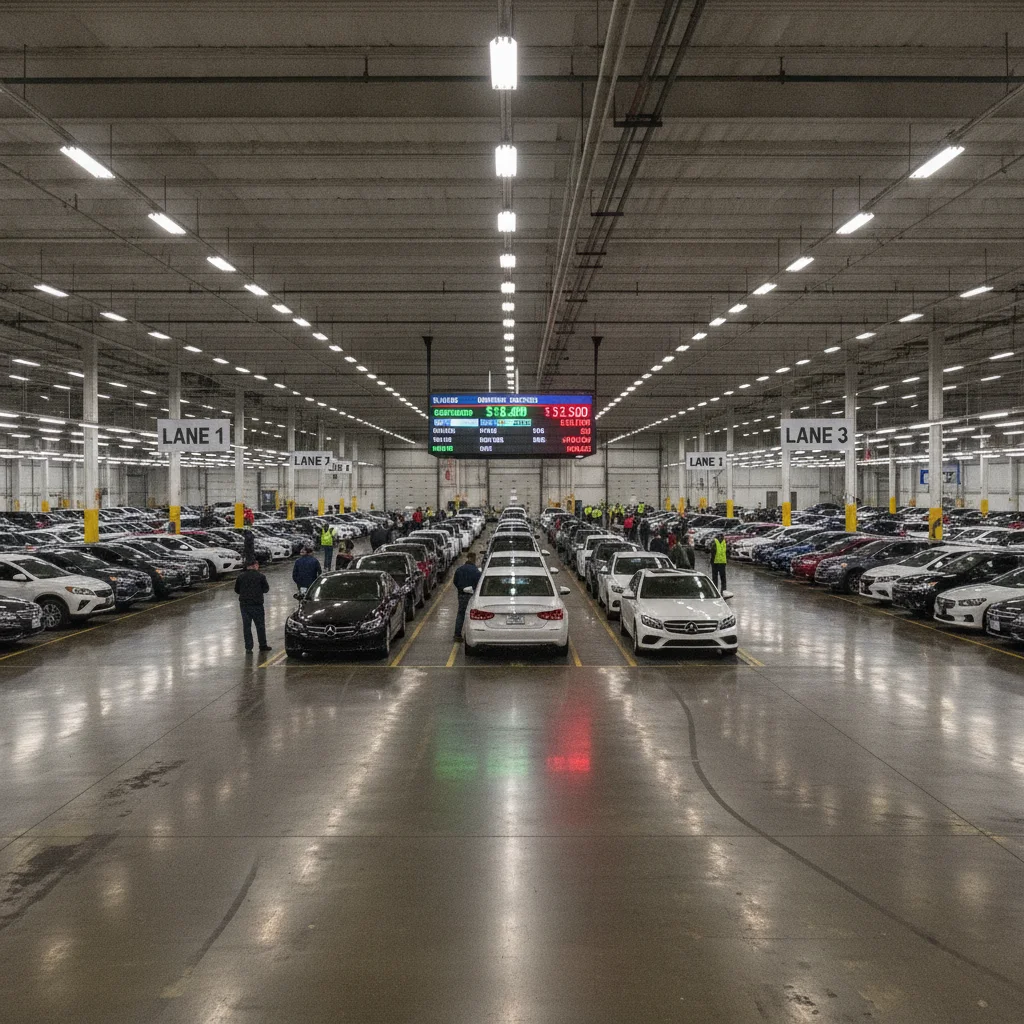
- Auction-sourced vehicles with hidden histories: Many used vehicles on dealer lots came through wholesale auctions. Understanding that pipeline — and what dealers may not know about a car's prior life — matters. See what dealers know about auction cars for a deeper look.
- Add-on products: Paint protection, gap insurance, and extended warranties sold in the finance office are often marked up significantly. Price these separately before accepting any package.
| Criterion | Private Seller | Dealership |
|---|---|---|
| Typical price vs. market | 10–15% below retail | At or near retail |
| Warranty | None (as-is) | Limited or CPO available |
| Financing options | Private party loan only | Multiple lenders, in-house |
| Title transfer handled | Buyer and seller responsible | Dealer handles it |
| Legal disclosure requirements | Minimal (caveat emptor) | FTC Buyer's Guide required |
| Negotiation flexibility | High — no cost basis floor | Moderate — overhead limits floor |
| Fraud/title risk | Higher | Lower |
| Add-on product pressure | None | Common in finance office |
| Vehicle selection | Large pool, inconsistent quality | Reconditioned, filtered inventory |
| Transaction complexity | High — buyer manages all steps | Low — dealer manages most steps |
Financing: Where Dealers Have a Structural Advantage
If you need a loan to buy a used car, the dealership channel is significantly more accessible. Dealers work with a network of lenders — banks, credit unions, and captive finance arms — and can shop your application to multiple institutions simultaneously. That competition can produce a better rate than walking into your own bank, especially if your credit is above 700.
Private party auto loans exist, but they come with real friction. Most banks and credit unions cap private party loan amounts at a percentage of the vehicle's book value — typically 80–100% of NADA or KBB clean retail. If the private seller is asking above that threshold, you may not be able to finance the full amount. Loan terms on private party purchases are also often shorter, and some lenders simply won't touch vehicles over 10 years old or with more than 100,000 miles.
Private Party Auto Loans: What Lenders Won't Tell You
Not all banks offer private party auto loans, and those that do often impose vehicle age and mileage restrictions — commonly refusing loans on cars older than 10 years or with more than 100,000–125,000 miles. Credit unions are generally more flexible than national banks for private party transactions. Get pre-approved before you start shopping, not after you've found a car you want.
As-Is Doesn't Mean You Have No Recourse
Both private sellers and some dealers sell vehicles 'as-is,' meaning they won't cover repairs after the sale. However, 'as-is' doesn't protect a seller who actively concealed a known defect or misrepresented the vehicle's condition. If a seller tells you in writing that the transmission was just rebuilt and it fails the next day, that's potential fraud — not an as-is situation. Document all verbal claims in writing before completing the transaction.
The financing advantage also has an indirect effect: dealers can blur the actual vehicle cost by focusing the conversation on monthly payment rather than total price. A buyer who says "I can afford $400 a month" hands the dealer enormous flexibility to extend loan terms and inflate the total cost. Always negotiate the out-the-door price first, then discuss financing separately.
For buyers who have a pre-approved loan from their own bank or credit union before stepping onto a dealer lot, much of the financing leverage disappears. That pre-approval is the single most effective negotiating tool available in a dealership purchase.
Paperwork, Title Transfer, and Legal Protections
Dealerships handle title transfer, registration, and any applicable sales tax collection as part of the transaction. You walk in, sign documents, and drive out with temporary tags. The dealer submits paperwork to the DMV on your behalf. For most buyers, this is worth something — errors in title transfer are expensive and time-consuming to fix.
In a private party transaction, both buyer and seller are responsible for getting the paperwork right. The specific requirements vary by state, but at minimum you'll need a signed title, a bill of sale, an odometer disclosure statement (required by federal law on vehicles under 10 years old), and in many states, a release of liability filed by the seller. After the purchase, you typically have 10–30 days to register the vehicle in your name — missing that window can mean fines and complications.

Legal protections also differ sharply. Dealers in every state are regulated under consumer protection laws, the FTC Used Car Rule (which requires a Buyer's Guide on every vehicle), and often state-specific lemon law provisions for used cars. Private sellers have almost no equivalent obligations in most jurisdictions. If you buy a private party vehicle and discover the engine needs replacement three days later, your recourse is limited to a fraud claim — which requires proving the seller knew about the defect and concealed it intentionally. That's a high bar.
The inspection process itself changes depending on who's selling. What to inspect and how to approach it differs enough between channels that it warrants its own research before you walk into either transaction.
Inventory and Selection: Finding the Right Car in Each Market
Dealerships — particularly franchise dealers — carry a broader swath of recently off-lease and trade-in vehicles that have been reconditioned to a marketable standard. If you're looking for a specific make, model, year, and trim combination, dealer inventory aggregators like CarGurus, AutoTrader, and the manufacturers' own CPO search tools let you filter with precision across hundreds of lots.
Private sellers, accessed through Craigslist, Facebook Marketplace, and OfferUp, offer a much larger raw pool of vehicles — but sorting through it is labor-intensive. You'll encounter misrepresented vehicles, sellers who don't respond, and listings without enough detail to evaluate. The upside: you occasionally find motivated sellers who've priced below market, or single-owner vehicles with meticulous maintenance records that would be impossible to find on a dealer lot.
If you're considering the franchise dealership versus independent lot question, those also carry meaningful differences in inventory sourcing and warranty coverage. The breakdown in franchise dealer vs. independent lot is worth reviewing before you decide which type of dealership to target.
One practical reality: for vehicles under $8,000, the private seller market dominates. Dealers rarely retail cars below that threshold because the reconditioning cost and liability exposure don't pencil out. If your budget is tight, private party may be your primary option by default — which makes careful vetting even more critical.
How to Protect Yourself in Either Transaction
Regardless of which channel you choose, several steps are non-negotiable.
For Both Channels
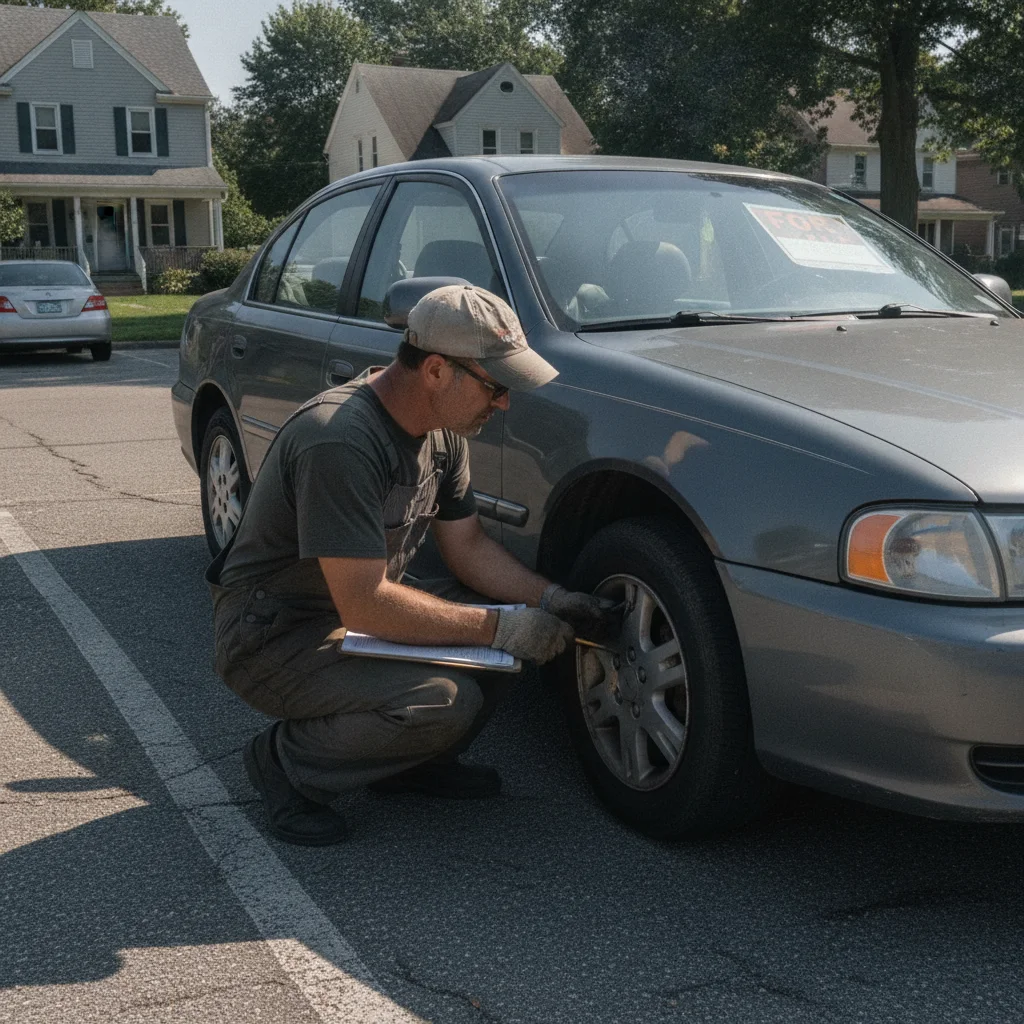
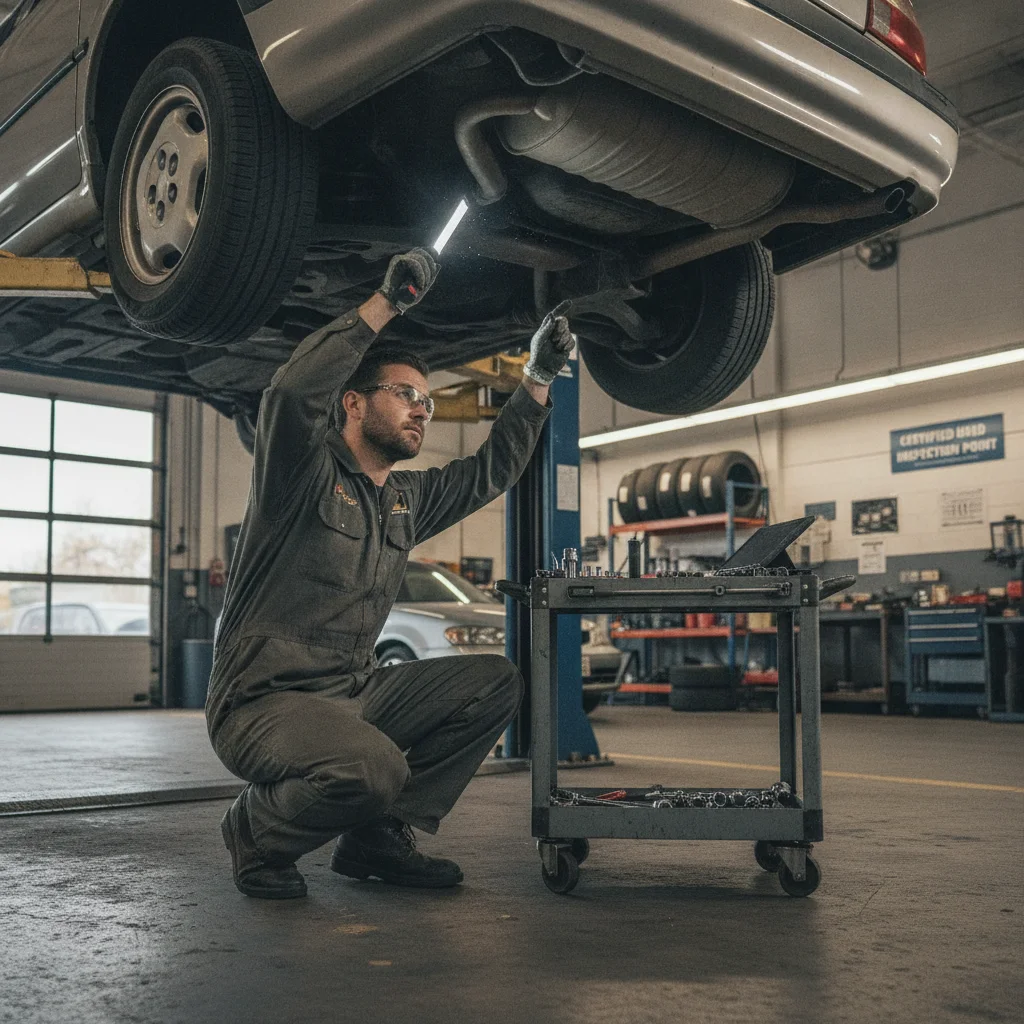
- Get a pre-purchase inspection. An independent mechanic inspection costs $100–$175 and is the single best money you'll spend in a used car transaction. Dealers sometimes push back on off-site inspections — if a dealer refuses to allow a third-party inspection, walk away. A private seller who refuses is an equally clear red flag.
- Run a vehicle history report. CARFAX and AutoCheck both cost $40–$50 for a single report. Look specifically for salvage or rebuilt title designations, odometer rollbacks, flood damage, and gaps in ownership history.
- Verify the VIN. Confirm the VIN on the dashboard, door jamb, and title all match. Mismatches are a serious warning sign.
Private Party Specific
- Meet at a neutral, public location — ideally your bank branch so you can verify funds and complete the transaction with a witness.
- Check for liens by running the title through your state DMV or a third-party lien search service before paying anything.
- Get everything in writing. Document any representations the seller makes about the vehicle's condition in text or email before you meet — those written statements matter if you later need to pursue a fraud claim.
Dealership Specific
- Read the Buyer's Guide. The FTC requires it to be posted on every used vehicle. It tells you whether the car is sold as-is or with a warranty, and what percentage of repairs the dealer covers.
- Negotiate the out-the-door price first. Get that number in writing before discussing trade-ins, financing, or add-on products.
- Understand what CPO actually covers. Certified Pre-Owned programs vary by manufacturer. Some are bumper-to-bumper; others are powertrain only. Read the contract, not the brochure.
If you're on the other side of the equation and thinking about how to sell your current vehicle before buying, the comparison between trading in versus selling privately covers the financial and logistical trade-offs in detail.
Private Party Auto Loans: What Lenders Won't Tell You
Not all banks offer private party auto loans, and those that do often impose vehicle age and mileage restrictions — commonly refusing loans on cars older than 10 years or with more than 100,000–125,000 miles. Credit unions are generally more flexible than national banks for private party transactions. Get pre-approved before you start shopping, not after you've found a car you want.
As-Is Doesn't Mean You Have No Recourse
Both private sellers and some dealers sell vehicles 'as-is,' meaning they won't cover repairs after the sale. However, 'as-is' doesn't protect a seller who actively concealed a known defect or misrepresented the vehicle's condition. If a seller tells you in writing that the transmission was just rebuilt and it fails the next day, that's potential fraud — not an as-is situation. Document all verbal claims in writing before completing the transaction.

All claims are backed by peer-reviewed research. Sources on request.