| Average brake job cost (pads + rotors, per axle) | $250–$500 (RepairPal national average, 2024) |
| Wheel bearing replacement cost | $150–$400 per wheel (RepairPal national average, 2024) |
| Serpentine belt replacement cost | $75–$200 (RepairPal national average, 2024) |
| CV axle shaft replacement cost | $200–$400 per side (RepairPal national average, 2024) |
| Strut/shock replacement cost | $300–$700 per pair (RepairPal national average, 2024) |
| Engine knock repair (rod bearings) | $1,500–$4,000+ (Industry estimate; varies by engine type) |
| Heat shield rattle repair cost | $50–$150 (Typically a low-cost repair if addressed promptly) |
| Recommended brake pad replacement interval | Every 30,000–70,000 miles (Varies significantly by pad type and driving style) |
How to Use This Guide
Your car communicates constantly. The problem is that most drivers don't have a translation key. A noise that seems minor — a faint squeal, a soft knock — often represents a specific, diagnosable mechanical event. Catching it early is almost always cheaper and safer than waiting until the sound gets louder or disappears entirely (which usually means the part failed, not fixed itself).
This guide is organized by sound type. Find the noise that matches what you're hearing, read the likely causes, and use the urgency rating to decide how quickly you need to act. For context that goes beyond sound — smells, handling changes, dashboard signals — see Reading Your Car Before It Breaks Down.
| Average brake job cost (pads + rotors, per axle) | $250–$500 (RepairPal national average, 2024) |
| Wheel bearing replacement cost | $150–$400 per wheel (RepairPal national average, 2024) |
| Serpentine belt replacement cost | $75–$200 (RepairPal national average, 2024) |
| CV axle shaft replacement cost | $200–$400 per side (RepairPal national average, 2024) |
| Strut/shock replacement cost | $300–$700 per pair (RepairPal national average, 2024) |
| Engine knock repair (rod bearings) | $1,500–$4,000+ (Industry estimate; varies by engine type) |
| Heat shield rattle repair cost | $50–$150 (Typically a low-cost repair if addressed promptly) |
| Recommended brake pad replacement interval | Every 30,000–70,000 miles (Varies significantly by pad type and driving style) |
One caveat worth stating upfront: noise diagnosis is probabilistic. A squeal from the front left could be a worn brake pad, a glazed rotor, or a loose dust shield. This guide gives you the most likely causes and the stakes involved — but a hands-on inspection by a qualified technician is always the final word.
When to Pull Over Immediately
Not every noise demands a same-day shop visit, but some do. If you hear a sudden metallic grinding from the brakes, a loud knocking from the engine, or a sharp hissing from under the hood while driving, pull over safely and stop the engine. Continuing to drive through these sounds can turn a $400 repair into a $4,000 one — or worse, leave you stranded or unsafe.
Context Matters as Much as the Sound Itself
A noise that happens only at startup and disappears is different from one that worsens under load. A rattle only over bumps is a different diagnosis than a rattle at highway speed. Note when the sound happens — during acceleration, braking, turning, or only at certain speeds — and tell your technician. That context cuts diagnostic time significantly.
Used Car Shoppers: Listen Just as Carefully
The noises covered in this guide are equally important if you're evaluating a used vehicle. A cold start is especially revealing — listen before the seller warms the car up. See our <a href="/buying-a-car/car-buying-process/test-drives-and-inspections/the-sounds-a-car-makes-and-which-ones-should-stop-you-from-buying">guide to car sounds during a test drive</a> for what to listen for before you buy.
Squealing and Squeaking
High-pitched squealing is one of the most common — and most informative — categories of car noise. Where it comes from and when it happens narrows the diagnosis considerably.
Squealing from the brakes
Most brake pads include a small metal tab called a wear indicator. When pad material wears down to a critical point, this tab contacts the rotor and produces a high-pitched squeal. That's your designed-in warning. At this stage, you need new pads — but the rotors are often still salvageable. Ignore the squeal and the pad wears completely through: now you're grinding metal on metal, which damages the rotor and can compromise the caliper. What was a $250 brake job becomes a $600–$900 job.
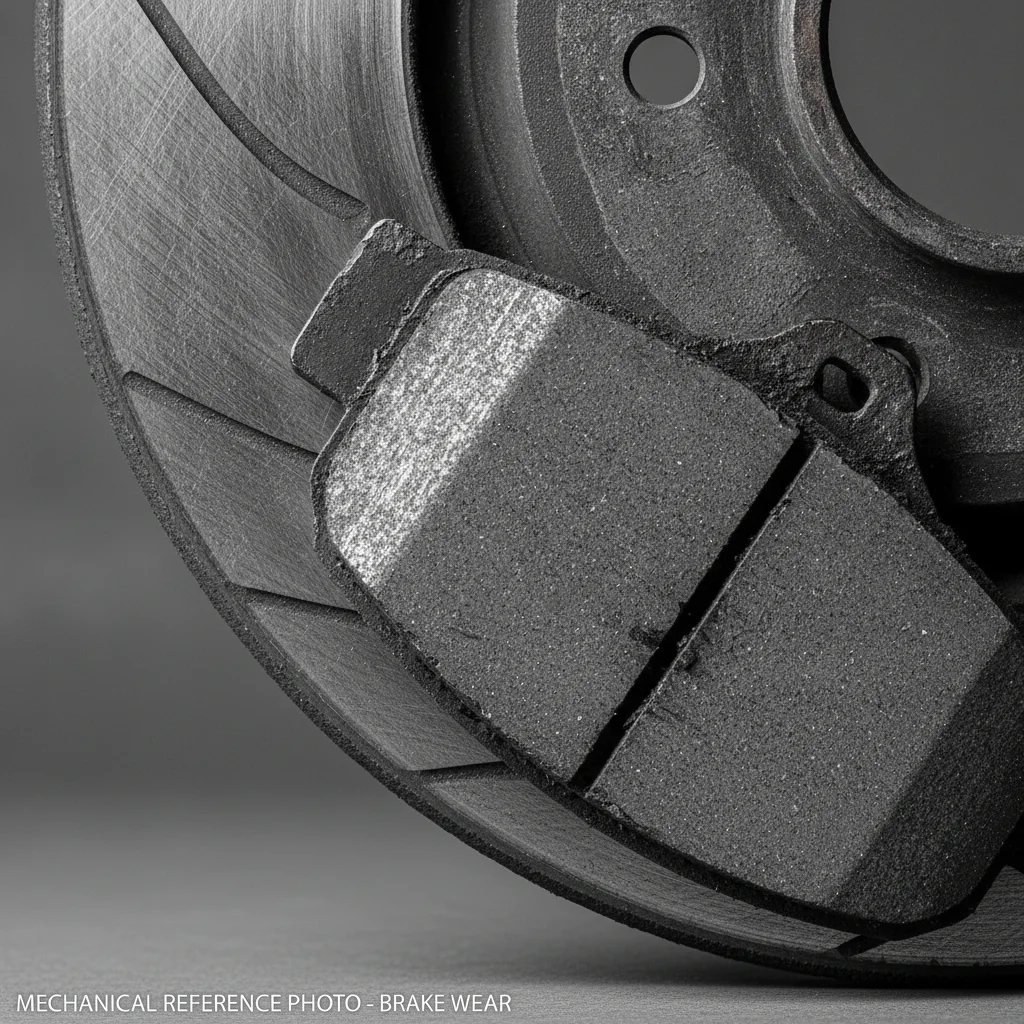
Urgency: High. Schedule a brake inspection within a few days. Don't wait until the squeal turns to grinding.
Squealing from under the hood
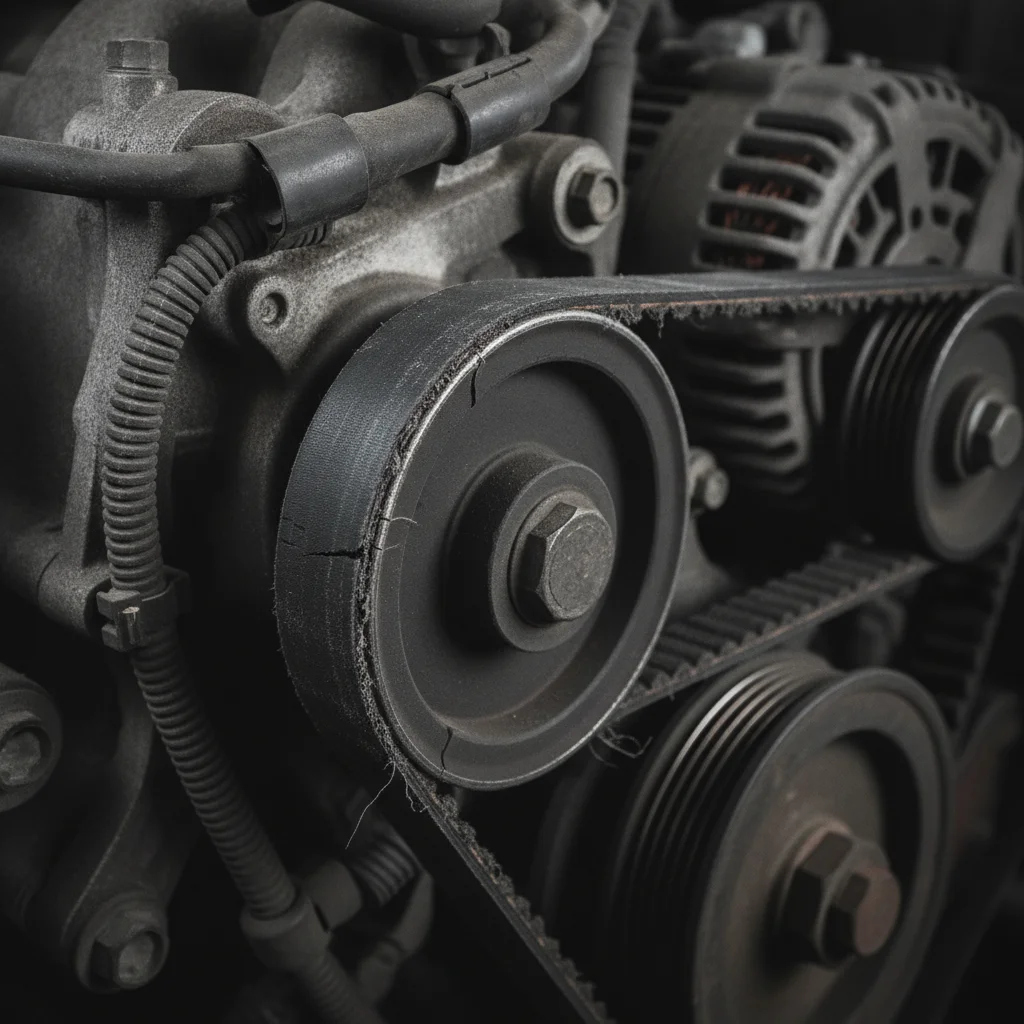
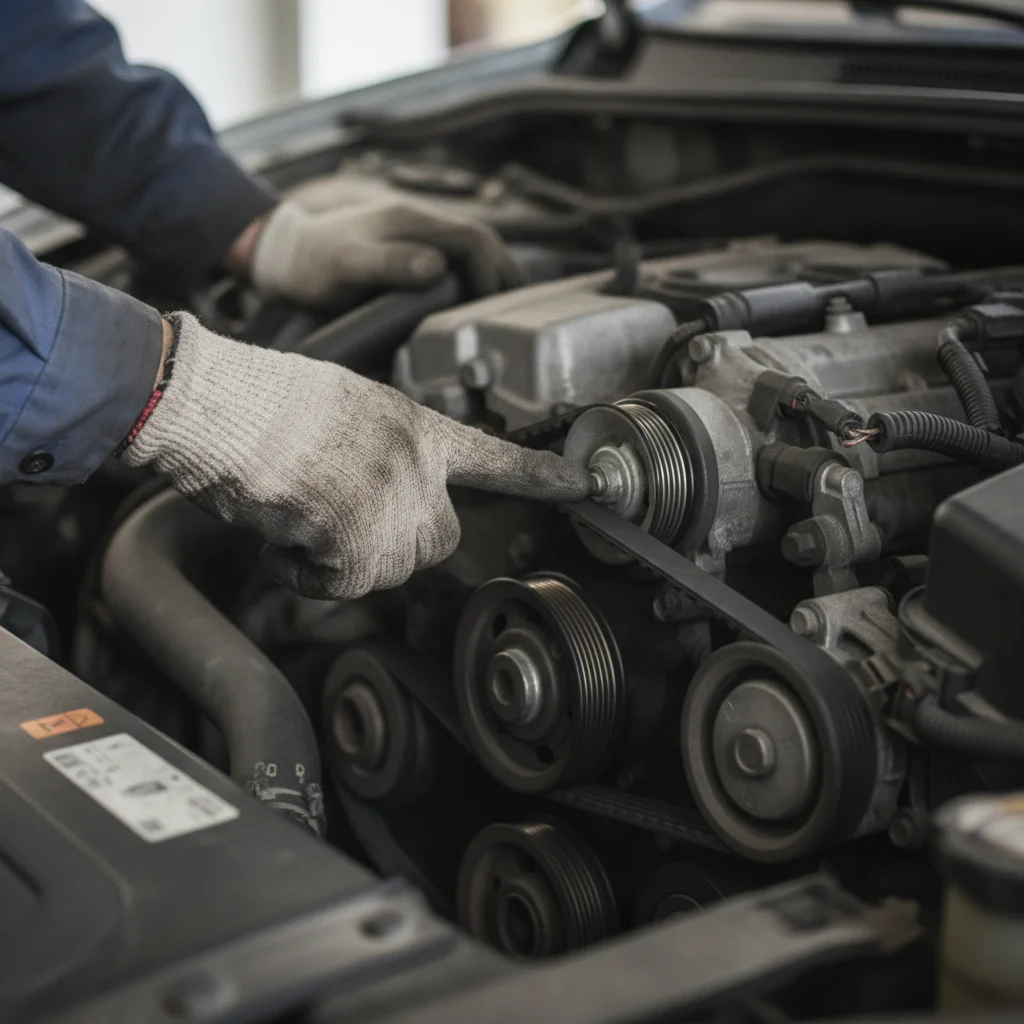
A belt-driven squeal — especially at cold startup or when you turn on the air conditioning — typically points to the serpentine belt or one of the pulleys it rides on. The belt may be glazed, cracked, or misaligned. A loose or worn tensioner can also cause intermittent squealing as belt tension fluctuates. Belt noise is easy to dismiss, but a belt failure disables your alternator, power steering, and cooling fan simultaneously.
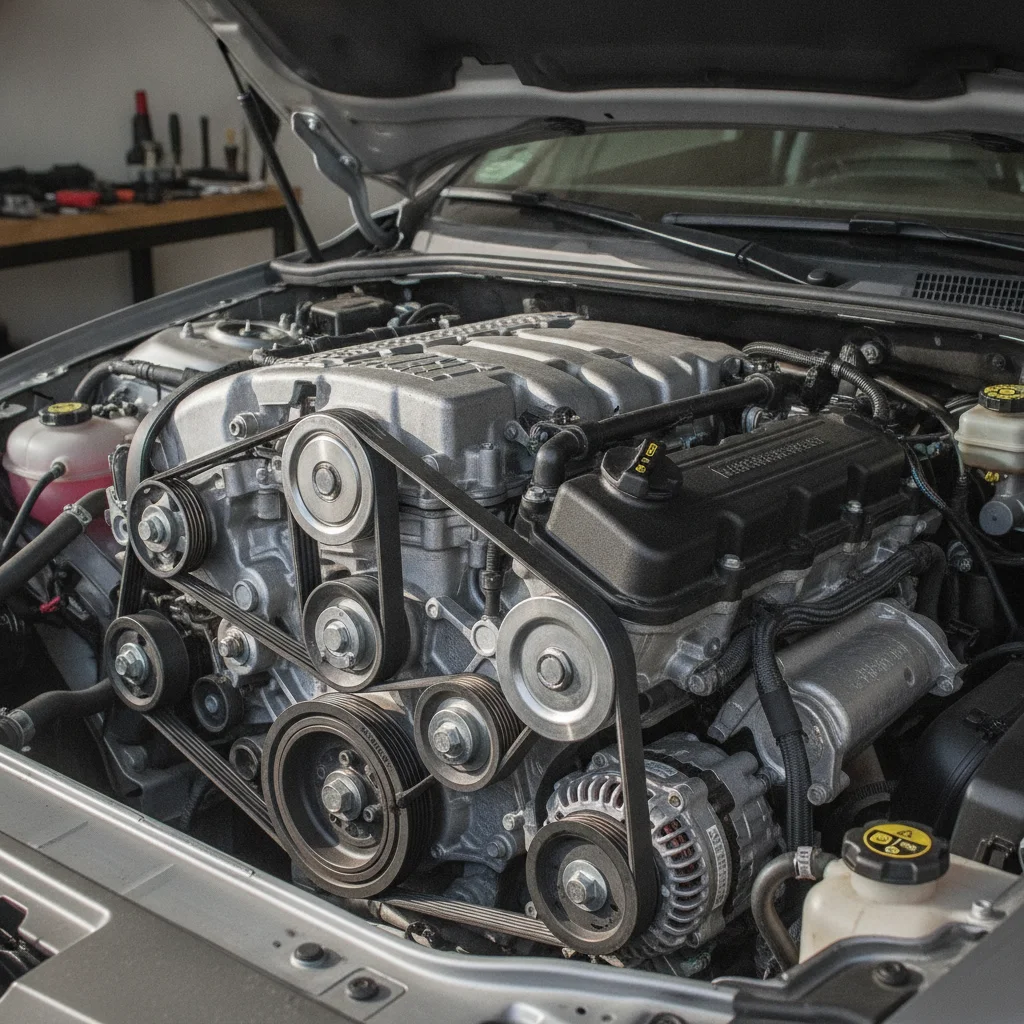
Urgency: Moderate to High. Belt replacement is inexpensive. Belt failure is not. Get it looked at within a week.
Harmonic balancer
A rubber-dampened pulley mounted at the front of the crankshaft that reduces vibration from the engine. When it fails, it can cause knocking or rattling and can destroy the front engine seal.
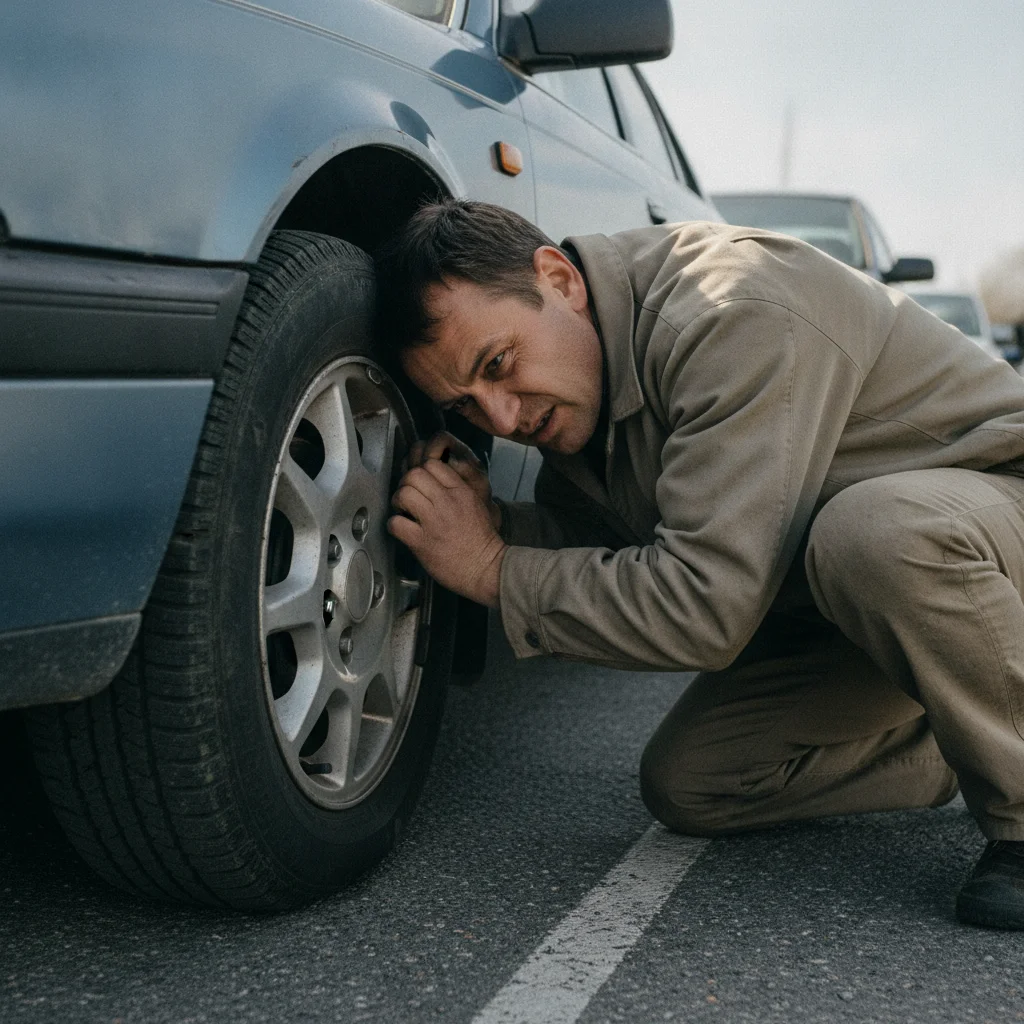
Wheel bearing
A sealed set of steel balls that allows a wheel hub to spin freely with minimal friction. A worn wheel bearing typically produces a humming or growling noise that changes pitch with vehicle speed.
CV joint
Constant-velocity joint — a flexible coupling in the drivetrain that allows power to be transmitted through varying angles of suspension travel. A worn CV joint clicks loudly when turning.
Heat shield
A thin metal panel installed near exhaust pipes, catalytic converters, and other hot components to protect nearby parts and the vehicle floor. Heat shields rattle when they corrode or loosen.
Caliper
The hydraulic clamp that squeezes brake pads against the rotor to slow the wheel. A seized caliper creates constant braking pressure, which causes a grinding or pulling sensation.
Serpentine belt
A single continuous belt that drives multiple engine accessories including the alternator, power steering pump, and air conditioning compressor. Wear or misalignment causes it to squeal.
Strut
A structural suspension component that combines a shock absorber with a mounting point for the coil spring. Worn struts produce clunking over bumps and reduce vehicle stability.
Catalytic converter
An emissions control device in the exhaust system that converts harmful gases into less toxic compounds. A failing converter can rattle internally when its ceramic core breaks apart.
Squeaking from the suspension
A rhythmic squeak over bumps, especially in older vehicles, often traces to worn rubber bushings in the suspension or steering linkage. The rubber dries out, loses its elasticity, and allows metal-to-metal contact. In wet weather, the squeak may temporarily disappear — the moisture acts like a brief lubricant — only to return when dry. See steering problems that signal something serious if the squeak is accompanied by any play or pulling.
Urgency: Low to Moderate. Annoying but rarely dangerous in the short term. Have it inspected at your next oil change.
Grinding and Growling
Grinding is a more serious category than squealing. Where squealing is often a warning, grinding usually means the damage is already happening.
Grinding when braking
This is brake pads completely worn through. The metal backing plate is now contacting the rotor directly. The rotor surface is being machined with every stop. Depending on how long this has gone on, the rotor may be too thin to turn (resurface), meaning you'll need full replacement. Worse, a severely worn pad can crack and cause brake failure. This is a pull-over-and-call situation if the grinding is loud and consistent.
Urgency: Immediate. Do not continue driving until inspected.
Growling at specific speeds
A low-pitched growl or rumble that increases with vehicle speed — and sometimes shifts in pitch when you change lanes — is the classic signature of a failing wheel bearing. Think of it like a grinding coffee mill that gets louder the faster you spin it. Wheel bearing failure is gradual, but a bearing that's far enough gone can seize, locking a wheel entirely. Vibrations often accompany bearing failure as the bearing deteriorates further.
Urgency: High. A failed wheel bearing can cause loss of vehicle control. Don't delay beyond a few days once the growl is consistent.
Grinding or growling from the transmission
A grinding noise during gear changes — especially if it's accompanied by hesitation or slipping — often points to transmission trouble. Manual transmissions grind when synchros wear out. Automatics that produce whining or grinding under load often have low fluid or internal wear. Transmission warning signs are worth understanding in detail given the cost of a full rebuild.
Urgency: High. Transmission repairs multiply fast. Have it evaluated promptly.
1 in 3
Drivers ignore a car noise for over a week
According to a 2023 AAA survey, approximately one-third of drivers delay investigating a new car sound by at least a week, often allowing minor issues to escalate.
$1,200
Average unexpected repair bill that could have been prevented
CarMD's annual Vehicle Health Index found that deferred maintenance and ignored warning signs are the leading cause of four-figure repair bills.
35%
Of vehicles on US roads have maintenance overdue
AAA estimates that over a third of vehicles on the road at any given time have at least one maintenance item past its recommended service interval.
7x
Costlier: fixing a seized caliper vs. replacing brake pads on time
Industry repair data shows that a brake job ignored past the wear indicator squeal stage can multiply repair costs by a factor of five to seven once rotor and caliper damage sets in.
Clunking and Knocking
Clunks and knocks divide cleanly into two zones: underneath the car (suspension and drivetrain) and inside the engine. The financial stakes are very different depending on which zone you're dealing with.
Clunking over bumps
A clunk when you hit a pothole or speed bump — especially from a specific corner of the car — almost always lives in the suspension. The most common culprits are worn struts or shocks (the clunk happens when internal components bottom out), loose sway bar end links (they rattle and clunk over irregular surfaces), and worn ball joints (which produce a more metallic knock). A clunk when braking often points to a loose brake caliper mount.
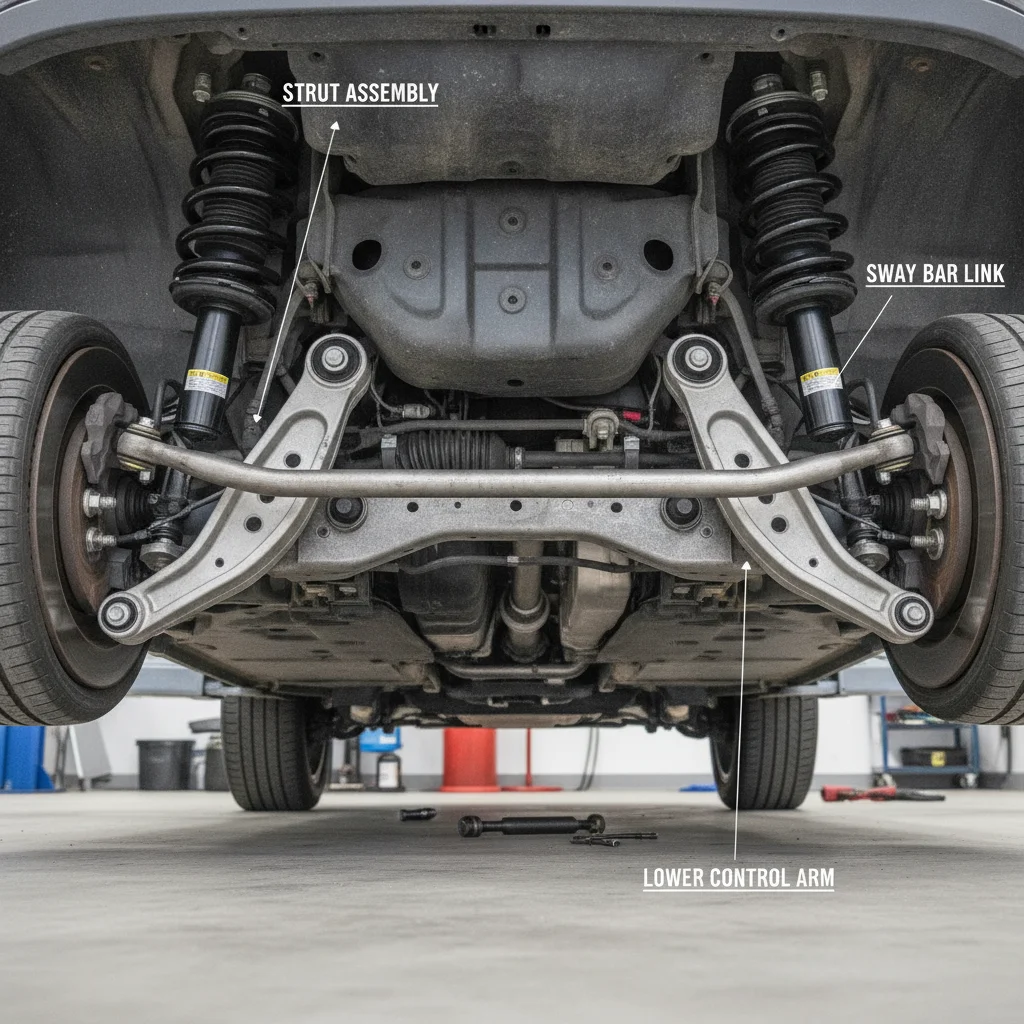
Urgency: Moderate to High. A failed ball joint or completely blown strut can cause handling instability. Get it diagnosed within 1–2 weeks.
Clicking when turning
A clicking or popping sound that only occurs when turning — especially at low speeds with the wheel at or near full lock — is nearly always a worn CV joint. The outer CV joint on front-wheel-drive and all-wheel-drive vehicles is under the most stress during sharp turns. When the protective boot tears, grease escapes and the joint dries out. Caught early (torn boot, joint still functional), a boot replacement costs around $100–$150. Waited too long and the joint itself is worn? That's a full CV axle replacement at $200–$400 per side.
Urgency: Moderate. The joint won't fail suddenly in most cases, but it will get worse. Address within 2–4 weeks.
Engine knocking
This is the most serious noise on this list. A repetitive knock or thump from inside the engine — often described as a rod knock — means internal bearing surfaces are making contact they shouldn't. Engine oil is the film that keeps rotating parts from touching. When oil is low, contaminated, or the wrong viscosity, bearings fail. The result is a metallic knock that gets louder under load and worsens rapidly. Left unaddressed, it ends in a destroyed engine.
A lighter, faster ticking (versus a heavier knock) can indicate low oil pressure or valve train issues — still serious but not always immediately catastrophic. Engine performance symptoms often accompany severe knocking as power delivery becomes uneven.
Urgency: Immediate for a true rod knock. If you hear this, check oil level first. If oil is full and the knock is present, do not drive the car to the shop — have it towed.
Hissing, Rattling, and Other Sounds
Hissing
A hissing sound from under the hood — particularly after you shut the engine off — is usually a vacuum leak or a coolant leak contacting a hot surface. Vacuum leaks cause the engine to run rough and can trigger a check engine light alongside the hiss. A coolant leak hitting exhaust components smells sweet and creates steam. Either way, hissing is not a noise to dismiss. Burning or sweet smells often accompany this type of hiss and help narrow the diagnosis.
Urgency: Moderate to High. A coolant leak that goes unchecked will cause overheating. A vacuum leak degrades fuel economy and emissions. Inspect within a week.
Rattling from underneath
A rattle from the underside of the car — especially prominent at lower RPMs or during cold starts — is frequently a heat shield. These thin metal panels vibrate when their mounting screws corrode away. It's a minor annoyance and a cheap fix. However, a rattle at startup that disappears after a few seconds can also be low oil pressure — the engine clatters until oil circulates. Know the difference: an oil pressure rattle will usually trigger the oil light and happens more in cold weather with a low or dirty oil level.
A rattle from deeper in the exhaust, particularly a hollow shaking sound, can be a failing catalytic converter with broken internal substrate. Mileage-worn converters rattle when the ceramic honeycomb fractures internally.
Urgency: Low for heat shield, Moderate to High for catalytic converter or oil-pressure rattle.
Thumping or flapping
A rhythmic thump that changes frequency with road speed usually points to a tire — either a flat developing, a belt separation inside the tire, or an object lodged in the tread. Pull over safely and inspect. A flapping sound at highway speed can be a piece of loose trim or an undercarriage panel. Neither is a mechanical failure in the traditional sense, but a belt-separated tire at speed is dangerous. Tire-related vibration and noise often go together.
Urgency: Immediate for suspected tire issues at highway speed.
For anyone evaluating a used vehicle on a test drive, many of these same noises should prompt serious concern about deferred maintenance or hidden damage. The test drive and inspection process is your best opportunity to surface these issues before money changes hands. See also why warning signs go beyond the check engine light for a broader picture of what your car's systems are trying to communicate.
RepairPal Cost Estimator
Enter your vehicle make, model, year, and ZIP code to get a fair-price range for any repair — useful for verifying a shop estimate after diagnosing a noise.
NHTSA Complaints Database
Search your vehicle's year, make, and model to see whether other owners have reported the same noise or mechanical issue — useful context before a shop visit.
Reading Your Car Before It Breaks Down
A companion article covering smells, handling changes, and other subtle signals alongside sounds — gives you the full picture of early-warning signs.
Transmission Warning Signs Every Driver Should Recognize
Specific coverage of whining, clunking, and slipping symptoms tied to the transmission — one of the most expensive systems to repair if ignored.
Quick-Reference: Match the Noise to the Repair
Use this summary table to quickly match a sound to its likely cause, affected system, and typical repair cost range.
| Sound | When It Happens | Likely Cause | Urgency | Typical Cost |
|---|---|---|---|---|
| High-pitched squeal | When braking | Worn brake pads (wear indicator) | High | $250–$500/axle |
| Grinding | When braking | Pads fully worn, metal-on-metal | Immediate | $500–$900+/axle |
| Squeal/chirp | At startup or under AC load | Serpentine belt wear or slipping | Moderate–High | $75–$200 |
| Low growl/rumble | Increases with speed, shifts in turns | Wheel bearing failure | High | $150–$400/wheel |
| Click/pop | Only when turning | Worn CV joint | Moderate | $200–$400/side |
| Clunk | Over bumps or during braking | Worn struts, ball joints, sway bar links | Moderate–High | $150–$700 depending on part |
| Deep knock | Under engine load, worsens over time | Rod bearing failure (low oil) | Immediate | $1,500–$4,000+ |
| Hiss | After shutdown or at idle | Coolant or vacuum leak | Moderate–High | $100–$800 depending on source |
| Rattle (underside) | Low RPM or cold start | Loose heat shield or low oil pressure | Low–High (varies) | $50–$300 |
| Thump (rhythmic) | Speed-dependent | Tire belt separation or flat developing | Immediate | $100–$200/tire |
| Grinding (gear change) | Shifting gears | Worn synchros (manual) or low trans fluid | High | $500–$3,000+ |
Remember: a single noise can have multiple possible causes. The table above lists the most likely explanation for each sound, but diagnosis depends on when and where the noise occurs, how it's changed over time, and what a technician finds on inspection. Acting early — when a squeal is still a squeal and not yet a grind — almost always keeps costs in the lower range.
If you're shopping for a used car and want to apply these same diagnostic instincts before signing anything, learn which sounds should stop you from buying outlines exactly what to listen for during a pre-purchase inspection.

All claims are backed by peer-reviewed research. Sources on request.