Key Takeaways
Engine Hesitation & Stuttering
Engine hesitation is a momentary loss of power or stumble that occurs when you press the accelerator, hold a steady speed, or idle at a stoplight. Stuttering refers to a rhythmic, repeating misfire or interruption in combustion. Both symptoms indicate that the engine is not receiving, igniting, or expelling fuel and air efficiently. Left unaddressed, these issues typically worsen and can lead to catalytic converter damage, failed emissions tests, or complete engine breakdown.
In OBD-II-equipped vehicles (1996 and newer), hesitation and misfires commonly trigger P0300–P0308 diagnostic trouble codes, which identify random or cylinder-specific misfires detectable by a code reader.
The Engine's Complaint: What Hesitation and Stuttering Actually Mean
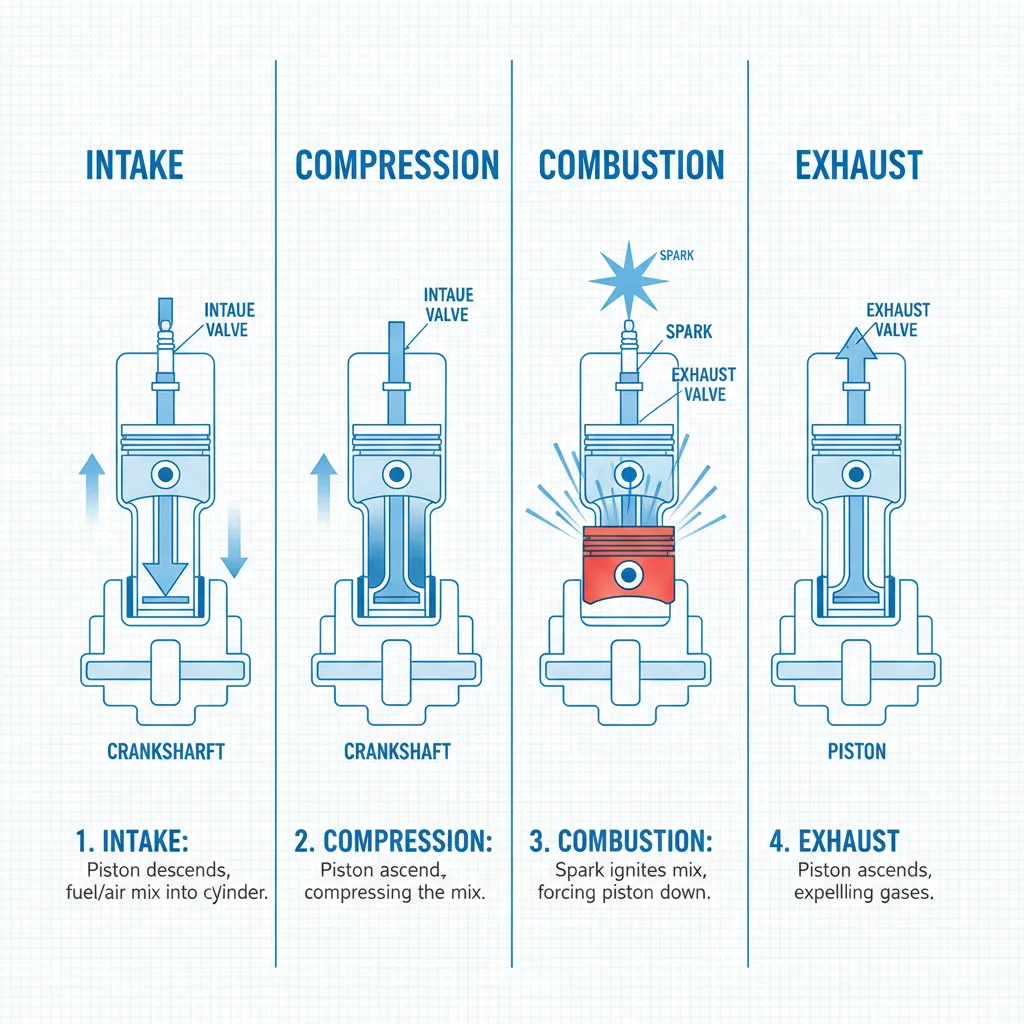
Think of your engine as a carefully choreographed four-part sequence: intake, compression, combustion, exhaust — repeated thousands of times per minute. When any one of those steps is disrupted, the engine doesn't just silently compensate. It tells you. That stumble when you press the gas pedal, that rhythmic shudder at a red light, that flat spot during highway merging — those are the engine's way of flagging a disruption in the cycle.
Hesitation is the catch-all term for any moment when the engine fails to respond proportionally to driver input. Stuttering and misfires are more specific: they happen when combustion fails to occur properly in one or more cylinders. Both are serious, but they have very different root causes — and knowing which pattern you're experiencing points you directly toward the likely culprit.
The good news is that most early-stage hesitation and stuttering comes from maintenance items that are genuinely inexpensive to address. The bad news is that every mile driven on a misfiring engine pushes unburned fuel into the exhaust, and that fuel is expensive to your catalytic converter's health. Speed and diagnosis are the two variables you control.
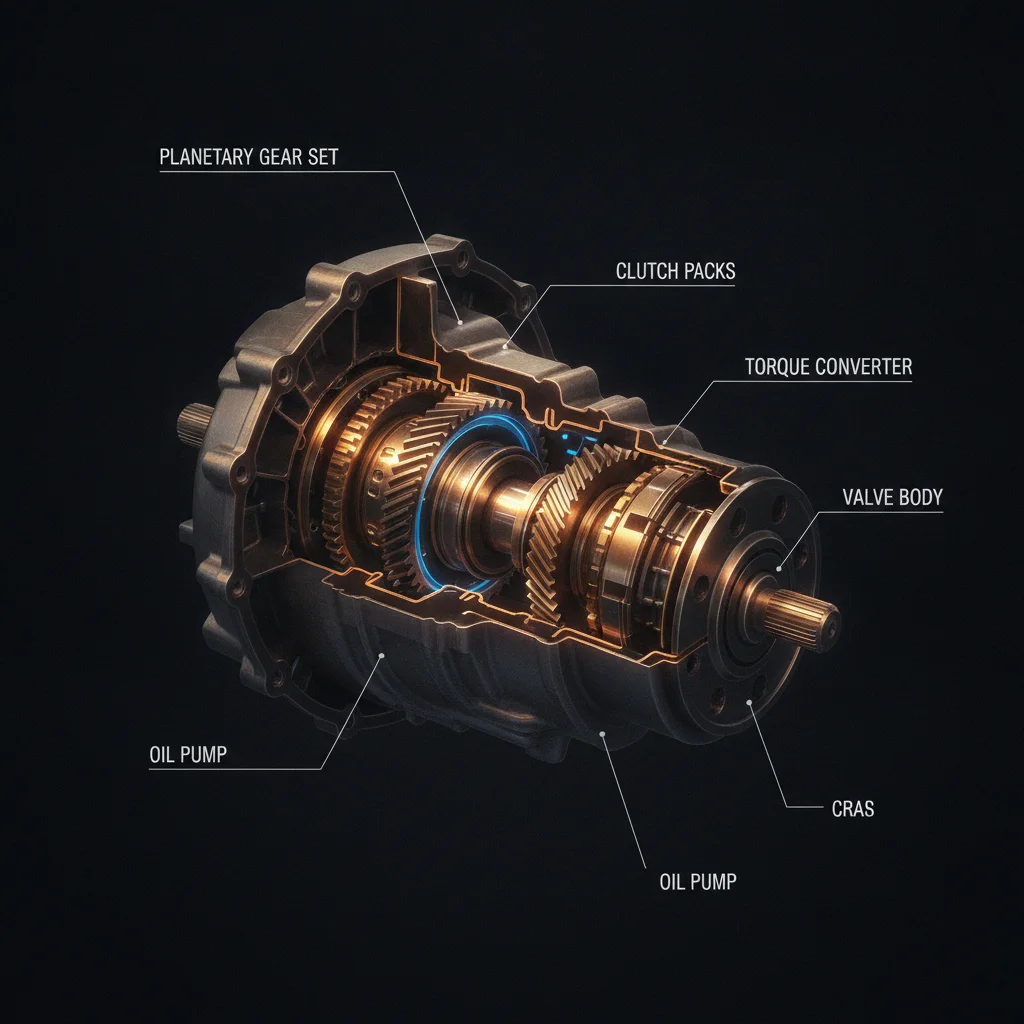
It's also worth noting that not all hesitation originates in the engine. Transmission slipping, delayed engagement, and torque converter shudder can produce a sensation very similar to engine stumbling. If your hesitation occurs specifically during gear changes or after the engine is warm and under load, see our comparison of transmission warning signs to separate the two systems before spending on the wrong diagnosis.
The Five Most Common Causes of Engine Hesitation
Every hesitation symptom has a mechanical origin. Below are the five most frequent culprits, ordered from least to most expensive to repair — which also, conveniently, represents the smartest diagnostic order to follow.
$1,500+
Average catalytic converter replacement cost
According to RepairPal data, a catalytic converter replacement on a mid-size sedan typically runs $1,200–$2,500, often traceable to ignored misfires.
P0300
Most common OBD-II misfire code
Random misfire codes (P0300) and cylinder-specific variants consistently rank among the top five OBD-II codes logged by diagnostic professionals across the U.S.
30,000–100,000 mi
Spark plug replacement interval range
The wide range reflects the difference between standard copper plugs (30,000 miles) and long-life iridium or platinum plugs (up to 100,000 miles), per most OEM maintenance schedules.
$20–$40
Cost of a basic OBD-II Bluetooth scanner
Entry-level OBD-II adapters available at major auto parts retailers can read and clear diagnostic trouble codes for a fraction of a shop's diagnostic fee.
60%
Engine hesitation cases linked to ignition or fuel
Independent repair shop surveys consistently find that the majority of hesitation complaints trace back to spark plugs, ignition coils, fuel injectors, or the fuel pump.
1. Worn or Fouled Spark Plugs
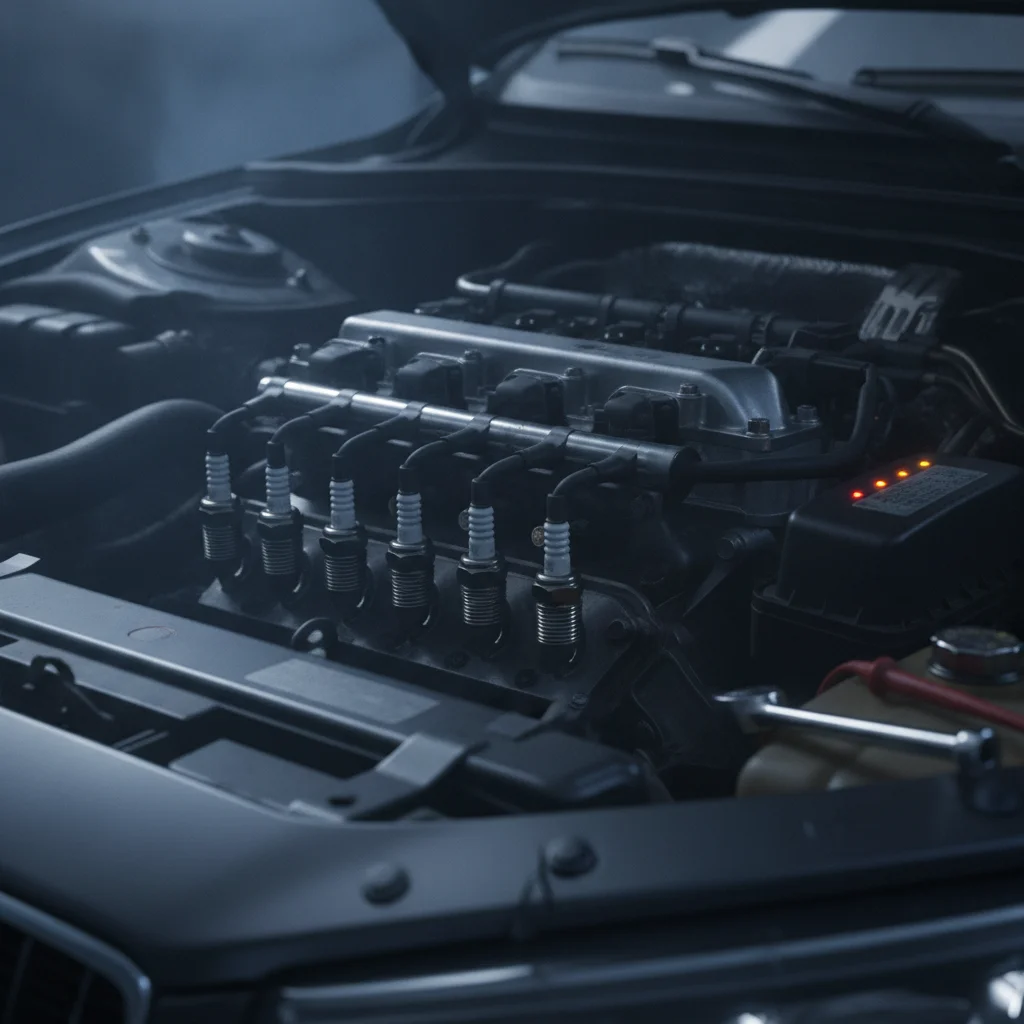
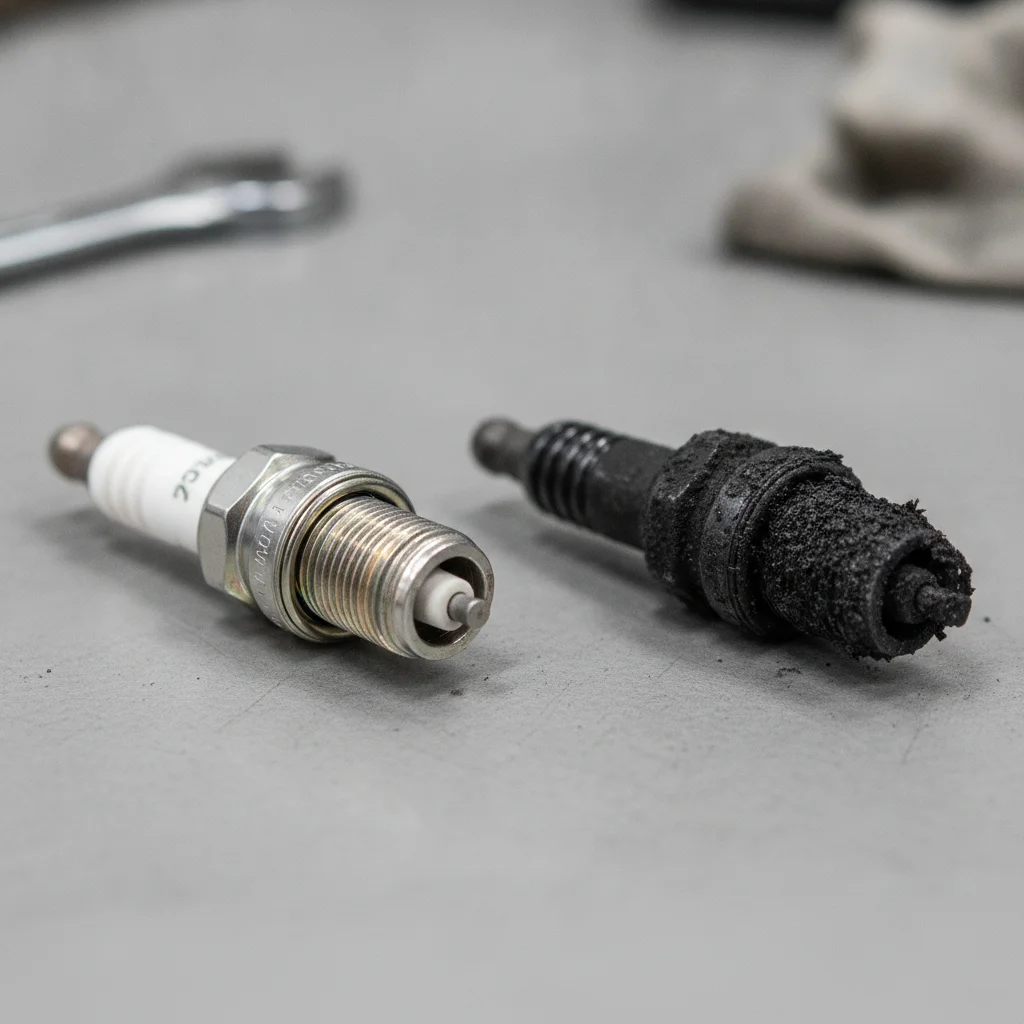
Spark plugs are the ignition system's front line. They fire under enormous pressure to ignite the compressed air-fuel mixture in each cylinder. When they wear down, develop carbon deposits, or fail entirely, ignition becomes inconsistent — producing the classic misfire and stutter. Most modern vehicles need plugs replaced every 30,000–100,000 miles depending on plug type (copper vs. iridium), but vehicles burning oil or running rich can foul plugs much sooner.
Pattern to watch for: Stuttering that is worse when the engine is cold and improves as it warms up. The Check Engine light is often on, with P030X codes stored.
2. Clogged or Failing Fuel Injectors
Fuel injectors atomize fuel into a fine mist and spray it into the intake port or directly into the cylinder. When they clog with varnish deposits — common in high-mileage vehicles or cars that sit for extended periods — the fuel spray pattern becomes irregular, causing lean misfires and hesitation under load.
Pattern to watch for: Hesitation specifically under hard acceleration or at highway speeds. Idle may be smooth, but the problem worsens as demand increases.
3. Mass Airflow (MAF) Sensor Contamination
The MAF sensor measures the volume and temperature of air entering the engine, and the engine control unit uses that data to calculate the correct fuel injection amount. A dirty or failing MAF sends inaccurate readings, causing the engine to run either too rich or too lean. The result is rough idling, hesitation, and sometimes a surge-and-stumble pattern.
Pattern to watch for: Rough idle that improves briefly after revving. Hesitation that appears suddenly after an air filter replacement (the filter installation disturbed sensor deposits).
Clean Your MAF Sensor Before Replacing It
Mass airflow sensors are frequently replaced unnecessarily. Before buying a new one ($80–$300), try cleaning the sensor's platinum or hot-wire element with dedicated MAF cleaner spray — available at any auto parts store for about $10. Allow it to dry completely before reinstalling. This resolves the issue in many cases and takes less than 15 minutes.
Use a Code Reader Before Any Shop Visit
Reading your own OBD-II codes before visiting a mechanic gives you negotiating information and helps you verify the diagnosis you're given. Many auto parts chains (AutoZone, O'Reilly, Advance) will read codes for free in the parking lot. Write down the exact codes — not just the generic description — before authorizing any diagnostic work.
4. Vacuum Leaks
Every engine uses a network of vacuum hoses to operate the braking booster, emission controls, and intake system. A cracked or disconnected hose introduces unmetered air into the intake — air the MAF sensor never measured. The engine control unit compensates poorly, producing lean stumbles, rough idle, and hesitation. Vacuum leaks are notorious for being hard to find visually but easy to detect with a can of carburetor cleaner and careful spraying around hose connections while the engine runs.
Pattern to watch for: Rough idle that is often worse at low RPM. Hesitation when transitioning from idle to acceleration. A hissing sound from the engine bay under the hood.
5. Weak Fuel Pump or Clogged Fuel Filter
The fuel pump maintains constant fuel pressure throughout the system. When it weakens with age or the fuel filter becomes restricted, fuel pressure drops below what the injectors need — especially under high demand. This produces a characteristic hesitation under hard acceleration that may resolve once you back off the throttle, only to return when you push again.
Pattern to watch for: Hesitation that is worst under hard acceleration or climbing hills. Surging at highway speeds. Engine that starts fine when cold but stumbles after it's been running. High-mileage vehicles are particularly prone to fuel pump fatigue.
Fuel Injector Cleaner Additives: Realistic Expectations
Fuel injector cleaner additives poured into your tank can help prevent varnish buildup with regular use, but they rarely resolve an already-clogged injector producing active hesitation. They're most useful as maintenance tools on healthy engines. If hesitation has already appeared, professional ultrasonic injector cleaning or replacement is the more reliable fix.
Don't Confuse a Warm-Up Stumble with a Fault
Modern engines are designed to run richer during cold starts and may exhibit slightly rough behavior for 30–60 seconds on a very cold morning — this is normal fuel enrichment, not a defect. A genuine cold-start misfire, however, persists beyond the warm-up period or triggers the Check Engine light. If the stumble clears completely within a minute, monitor it before assuming a repair is needed.
Check Engine Light Flashing vs. Steady
A steady Check Engine light means a fault has been detected and stored — important but not immediately urgent. A flashing Check Engine light means an active misfire is occurring right now, severe enough to damage the catalytic converter. A flashing light warrants stopping safely and avoiding further driving until the vehicle is diagnosed. Do not ignore a flashing Check Engine light.
Decoding Your Specific Hesitation Pattern
The when and how of your hesitation narrows the diagnosis significantly. Here's how to read the pattern your car is showing you.

Hesitation at Idle (Rough or Uneven Idle)
If the problem is most noticeable at a stoplight — the engine shakes, the tach needle bounces, or you feel a vibration through the seat — the issue is likely occurring at the lowest engine load state. Common causes: vacuum leak, dirty throttle body, failing idle air control (IAC) valve, or a single-cylinder misfire. These are generally lower-cost repairs.
Hesitation During Cold Start
An engine that stumbles for the first minute or two but smooths out as it warms up is often dealing with a temperature sensor issue (coolant temp sensor or intake air temp sensor), a failing cold-start enrichment system, or — in older vehicles — a choke mechanism that isn't releasing properly. Modern fuel-injected engines are programmed to run richer until they reach operating temperature; a faulty temperature input disrupts that calibration.
Hesitation Under Load (Acceleration)
This is the most commonly reported complaint and points most directly to fuel delivery or ignition failure under demand. If the engine delivers power adequately at light throttle but stumbles when you push down harder, the system is marginal — adequate at low demand, insufficient at high demand. Suspect fuel pressure, ignition coil weakness, or injector fouling.
Intermittent Hesitation with No Pattern
Random hesitation that comes and goes without a clear trigger is often the signature of a failing crankshaft position sensor (CKP) or camshaft position sensor (CMP). These sensors tell the engine control unit where the pistons are in their cycle, allowing precise ignition and fuel delivery timing. When they begin to fail, they produce intermittent signal dropouts — and the engine stumbles or even briefly stalls, then recovers. These sensors are moderately priced parts ($30–$120) but can cause significant anxiety because the failure pattern is so unpredictable.
“The engine is trying to tell you something every time it stumbles. Most drivers wait for the car to stop running before they listen. By then, a fifty-dollar fix has become a thousand-dollar repair.”
— Mike Donahue, ASE Master Certified Technician with over 25 years of dealership and independent shop experience
The Diagnostic Step You Can Do Yourself
Before paying a shop's diagnostic fee, there's one tool that earns its cost back the first time you use it: an OBD-II scanner. Any vehicle built after 1996 has a standardized diagnostic port — typically located under the dashboard on the driver's side — that stores trouble codes whenever the engine control unit detects a problem.
A basic Bluetooth OBD-II adapter costs $20–$40 and pairs with a free smartphone app. More capable handheld scanners with live data streams run $80–$200. Either will read stored and pending codes that correspond to misfires, sensor failures, and fuel system faults.
The most important codes to understand for hesitation and misfires:
- P0300 — Random/multiple cylinder misfire detected
- P0301–P0308 — Misfire in cylinders 1 through 8 (cylinder-specific)
- P0171 / P0174 — System running lean (Bank 1 / Bank 2) — often vacuum leaks or MAF issues
- P0172 / P0175 — System running rich — often injector or fuel pressure issues
- P0335 — Crankshaft position sensor circuit malfunction
When multiple misfire codes appear alongside a lean code (P0171), a vacuum leak or MAF sensor is the most likely culprit. When cylinder-specific misfires appear (P0302, for example), start with the spark plug and ignition coil on that specific cylinder before assuming fuel delivery. This targeted approach saves significant diagnostic time and money.
Also take a moment to listen carefully to the engine. Hesitation often travels with other symptoms — vibrations, unusual sounds, or unfamiliar smells. Our companion guide on strange car noises and their causes can help you build a fuller picture of what's happening before you ever plug in a scanner.
Clean Your MAF Sensor Before Replacing It
Mass airflow sensors are frequently replaced unnecessarily. Before buying a new one ($80–$300), try cleaning the sensor's platinum or hot-wire element with dedicated MAF cleaner spray — available at any auto parts store for about $10. Allow it to dry completely before reinstalling. This resolves the issue in many cases and takes less than 15 minutes.
Use a Code Reader Before Any Shop Visit
Reading your own OBD-II codes before visiting a mechanic gives you negotiating information and helps you verify the diagnosis you're given. Many auto parts chains (AutoZone, O'Reilly, Advance) will read codes for free in the parking lot. Write down the exact codes — not just the generic description — before authorizing any diagnostic work.
The Cost of Waiting: Why Early Action Matters
Here's the financial reality that every driver needs to understand: most of the root causes of engine hesitation are inexpensive parts that are expensive to procrastinate on.
Spark plugs that are misfiring on a set of four cylinders do two things simultaneously. First, they send raw, unburned fuel into the exhaust stream. Second, that fuel ignites inside the catalytic converter — a component that uses precious metals to oxidize exhaust gases — destroying its substrate. A catalytic converter replacement runs $500–$2,500 depending on the vehicle. The plugs that caused it cost $40–$150.
Similarly, a failing fuel pump that causes intermittent hesitation can be replaced for $400–$900 as a planned repair. If the pump fails completely on the highway, you're adding a tow bill, a possible rental car, and potentially diagnosing secondary damage from running the engine lean during the weeks of declining pressure. The math on early action is rarely close.
There's also the question of catalytic converter theft — a legitimate concern in many urban areas — making a functioning, intact catalytic converter even more valuable to protect. Running a misfiring engine is, in a very real sense, burning through your own property.
If you drive a higher-mileage vehicle, the stakes are compounded. The failure patterns that emerge above 100,000 miles are often interconnected — a vacuum hose fails, the engine runs lean, the oxygen sensor wears faster, the fuel trims drift — and addressing one symptom early can prevent a cascade. Our guide to high-mileage warning signs is worth bookmarking if your odometer is climbing.
If the hesitation is accompanied by vibration in the steering wheel or through the floorboard, don't overlook the possibility of tire or drivetrain involvement. Our article on why your car is shaking helps you identify whether the shake is engine-sourced or coming from elsewhere in the drivetrain — a critical distinction before authorizing repairs.
For a broader framework of reading early warning signals across all vehicle systems, the guide on reading your car before it breaks down puts engine hesitation in context alongside smells, handling changes, and other pre-failure signals that experienced drivers learn to recognize.
Fuel Injector Cleaner Additives: Realistic Expectations
Fuel injector cleaner additives poured into your tank can help prevent varnish buildup with regular use, but they rarely resolve an already-clogged injector producing active hesitation. They're most useful as maintenance tools on healthy engines. If hesitation has already appeared, professional ultrasonic injector cleaning or replacement is the more reliable fix.
Don't Confuse a Warm-Up Stumble with a Fault
Modern engines are designed to run richer during cold starts and may exhibit slightly rough behavior for 30–60 seconds on a very cold morning — this is normal fuel enrichment, not a defect. A genuine cold-start misfire, however, persists beyond the warm-up period or triggers the Check Engine light. If the stumble clears completely within a minute, monitor it before assuming a repair is needed.
Check Engine Light Flashing vs. Steady
A steady Check Engine light means a fault has been detected and stored — important but not immediately urgent. A flashing Check Engine light means an active misfire is occurring right now, severe enough to damage the catalytic converter. A flashing light warrants stopping safely and avoiding further driving until the vehicle is diagnosed. Do not ignore a flashing Check Engine light.

All claims are backed by peer-reviewed research. Sources on request.