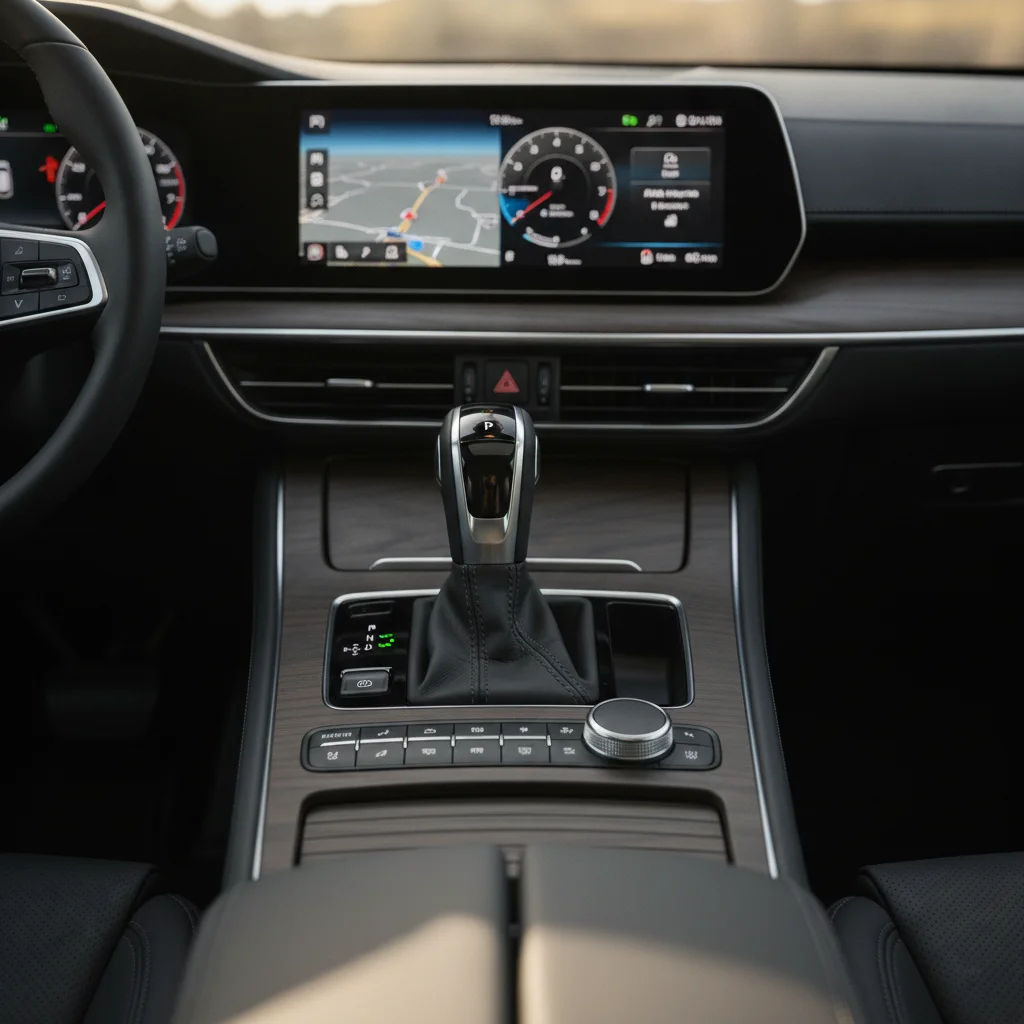
Key Takeaways
Why Transmission Symptoms Demand Immediate Attention
The transmission is one of the most mechanically complex — and expensive — systems in any vehicle. Whether you're driving an automatic, a dual-clutch, or a traditional manual, it's doing a precise job thousands of times every trip: transferring engine power to the wheels at exactly the right ratio for your speed and load. When something goes wrong inside that system, the consequences compound quickly.
I've seen countless transmissions come through the shop that could have been saved for a few hundred dollars if the owner had acted on early warning signs. Instead, they waited until the car wouldn't move, and by then the damage had spread from one worn clutch pack to a full internal failure requiring a $3,500–$5,000 rebuild or replacement.
The encouraging news is that transmissions rarely fail without warning. They give you signals — some subtle, some unmistakable — and if you know what to look and listen for, you can intervene while repair costs are still manageable. This guide covers the most important warning signs every driver should recognize, along with what each one typically means and how urgently you should act.
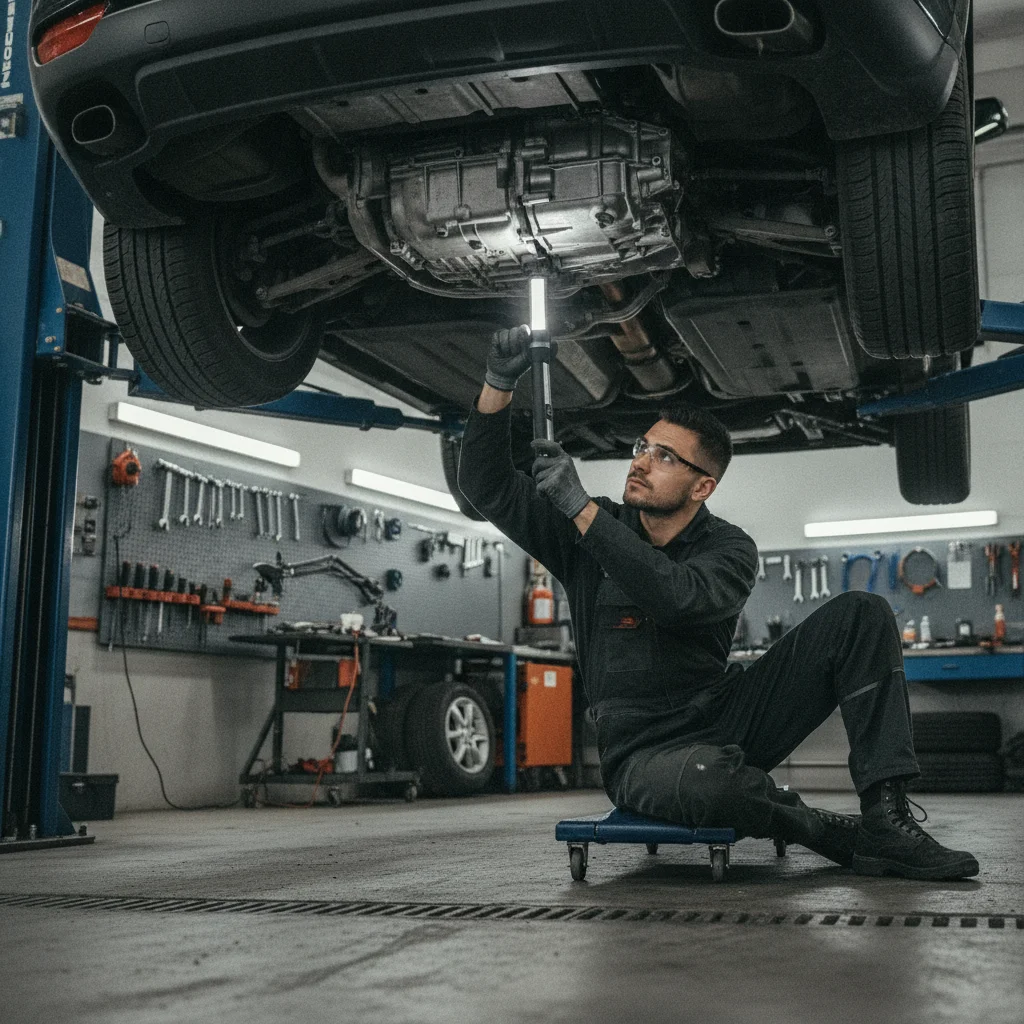
For a broader look at how your car communicates trouble before a breakdown occurs, see Reading Your Car Before It Breaks Down. But when it comes to the transmission specifically, the warning signs below are the ones you cannot afford to miss.
Gear Slipping Between Shifts
Gear slipping is one of the most alarming sensations a driver can experience and also one of the clearest indicators of internal transmission trouble. It happens when the transmission unexpectedly pops out of the selected gear while you're driving — the engine revs rise suddenly, the car feels like it's lost traction, and then it clunks back into gear. In an automatic, it may feel as though the car briefly downshifted without cause.
In most cases, slipping in an automatic transmission points to worn or burnt clutch packs, low fluid pressure, or a failing solenoid that isn't holding the gear command correctly. In a manual, it typically means worn synchros or a stretched shift linkage that's lost its precision.
Financial reality: A slipping solenoid replacement might run $150–$400. Continuing to drive on slipping clutch packs turns a moderate repair into a full rebuild costing $2,000–$5,000.
If the slipping happens consistently — especially under load, like accelerating onto a highway — treat it as urgent. Don't mistake it for a quirky behavior your car has always had. Slipping means something isn't holding, and what isn't holding is wearing down with every mile.
Slipping gears under acceleration signal internal wear that compounds rapidly with continued driving.
Delayed or Refused Engagement When Shifting Into Drive or Reverse
You shift from Park into Drive, and nothing happens for a second or two. Then the car lurches forward. Or you put it in Reverse and have to wait before it backs up. This delayed engagement — also called "lazy engagement" — is a red flag that deserves same-week attention.
Normal transmissions engage almost instantly when you move the selector. A noticeable pause means the hydraulic pressure needed to lock a clutch pack isn't building fast enough, or the fluid has degraded to the point where it's not transmitting force effectively. Low fluid level, a worn pump, or contaminated fluid are the most common culprits.
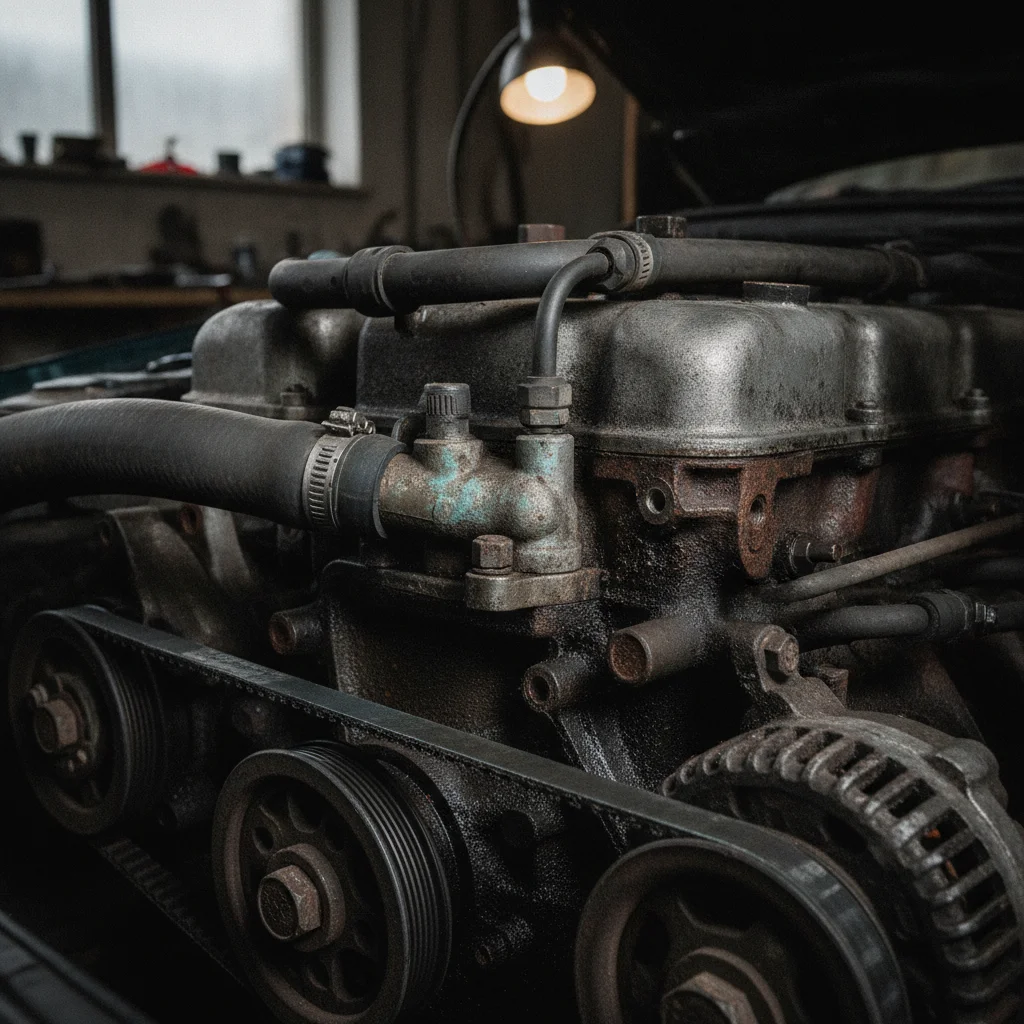
[in_content_images:1]Cold weather can temporarily slow engagement because thicker fluid moves more slowly through narrow passages. But if the delay persists after the car warms up, or if it happens regardless of temperature, the problem is mechanical rather than environmental.
This symptom is also worth watching carefully if you're buying a used car. During a test drive, every shift into Drive and Reverse should feel immediate and controlled. Test Drives & Inspections has guidance on what to evaluate before you commit to a purchase.
A pause when shifting into Drive or Reverse signals pressure problems that will worsen without intervention.
Rough, Harsh, or Unpredictable Shifts
Smooth shifting is the baseline. Every upshift and downshift in a properly functioning automatic transmission should be almost imperceptible at moderate speeds. When shifts become jarring, produce a clunk, or happen at the wrong time — either too early, too late, or not at all — something in the control system has broken down.
Harsh shifting often indicates a problem with the transmission's adaptive control system, a faulty shift solenoid, or internal hydraulic issues. In electronically controlled transmissions — which is essentially every modern vehicle — the TCM continuously adjusts shift timing and pressure based on throttle position, load, and speed. When a solenoid or sensor gives it bad data, shifts go erratic.
It's also worth noting that engine performance problems can mimic transmission symptoms. A misfiring cylinder or failing throttle position sensor can cause hesitation or jerky behavior that feels transmission-related. See When Your Car Hesitates or Stutters: Engine Performance Symptoms Decoded to help distinguish between the two systems before authorizing repairs.
A diagnostic scan is the fastest way to separate a transmission fault from an engine management issue — most shops can do this for $75–$150 and will apply the fee toward any resulting repair.
Jarring or mistimed shifts often indicate solenoid or sensor faults that a diagnostic scan can pinpoint affordably.
Whining, Humming, or Buzzing Noises That Change With Speed
Transmission noise is frequently misidentified because it can be easy to confuse with wheel bearing noise, power steering hum, or even tire drone. The distinguishing characteristic of transmission noise is that it tends to shift in pitch or intensity as vehicle speed changes — particularly during acceleration or deceleration — but remains constant regardless of steering input.
A high-pitched whine that increases with vehicle speed often points to a failing torque converter or a worn front pump inside the transmission. A low buzzing or grinding sound during specific gear ranges can indicate damaged planetary gears or worn clutch components. A clunking sound at the moment of engagement — distinct from the rough shifting described above — may point to worn mounts or damaged driveshaft u-joints, which are adjacent issues worth ruling out.
For a thorough breakdown of how to distinguish transmission noise from other drivetrain sounds, Strange Car Noises and the Problems They're Telling You About provides a noise-by-noise guide. It's a useful companion read when you're trying to determine urgency before booking an appointment.
If you can reproduce a transmission noise consistently — at a specific speed or under a specific load — demonstrate it for your technician during check-in. A reproducible symptom is much easier to diagnose accurately than one that only appears occasionally.
Transmission noise that changes with speed, not steering, is the key diagnostic clue separating it from wheel bearings.
Dark, Burnt-Smelling, or Low Transmission Fluid
Healthy automatic transmission fluid — ATF — is typically a translucent red or pink color with a slightly sweet odor. If you pull the dipstick and find dark brown, nearly black fluid with a burnt smell, the fluid has broken down thermally and is no longer protecting the internal components effectively. This is often the cause rather than just a symptom: deteriorated fluid accelerates internal wear dramatically.
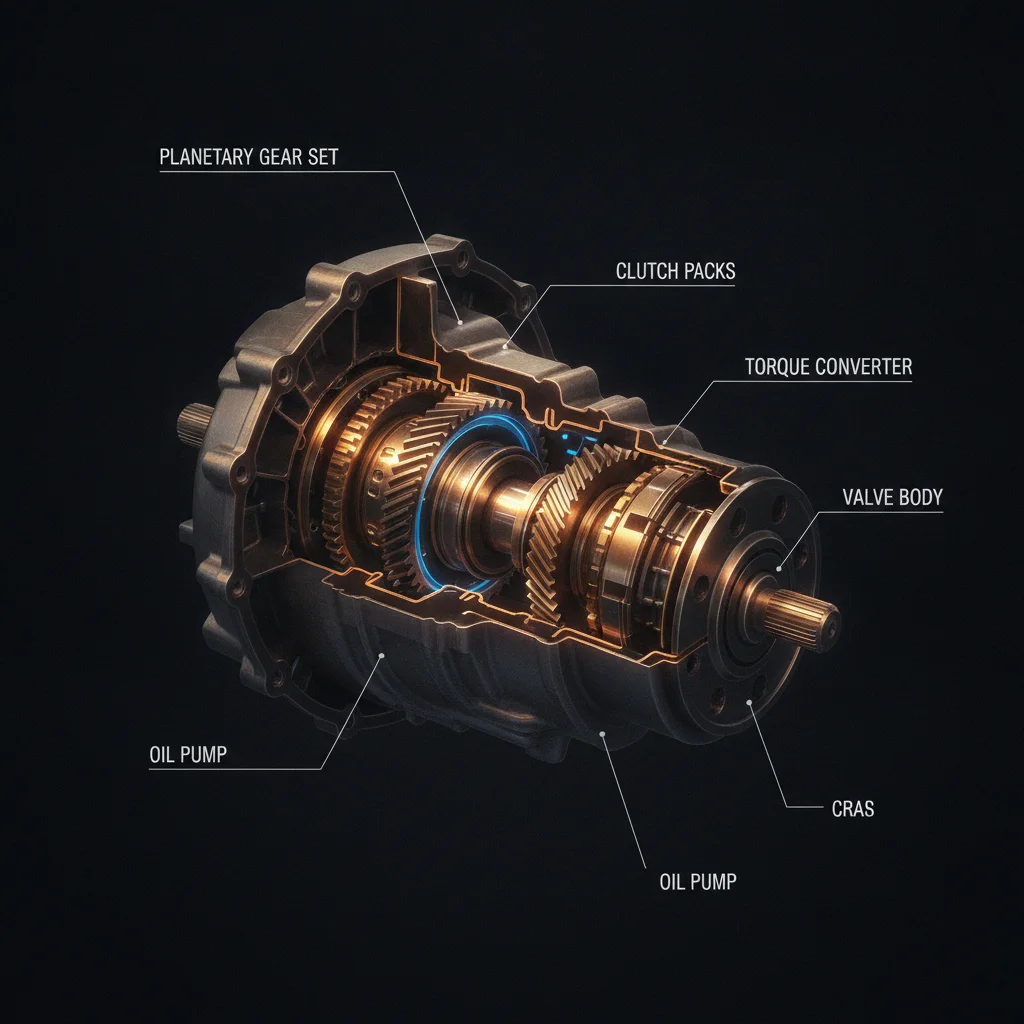
[in_content_images:2]Low fluid level is equally serious. Unlike engine oil, transmission fluid doesn't burn off under normal conditions — so if the level is low, there's a leak somewhere. Common leak points include the pan gasket, the cooler lines, the front pump seal, and the rear output shaft seal. Some leaks are slow enough that you won't see puddles under your car, but the cumulative effect of operating a transmission low on fluid is severe.
Check your owner's manual for the correct fluid specification and service interval for your transmission. Many modern transmissions are factory-filled with a specific synthetic fluid that must not be substituted with a universal ATF. Using the wrong fluid can cause shift quality issues and accelerated wear even when the fluid appears clean.
A transmission fluid service — drain, filter replacement, and refill with correct fluid — typically costs $100–$200 and is one of the highest-value preventive maintenance items available for vehicles over 60,000 miles.
Dark, burnt ATF is both a symptom and an accelerant — degraded fluid destroys clutch packs faster than almost anything else.
The Transmission Warning Light or Check Engine Light With a Transmission Code
Many modern vehicles have a dedicated transmission warning light — often shaped like a gear with an exclamation point — that illuminates when the TCM detects an out-of-range condition. Even if your car doesn't have a dedicated light, a Check Engine light paired with a stored transmission fault code (any code in the P07xx or P08xx range) means the same thing: the electronic management system has detected a problem it cannot self-correct.
A common mistake is to dismiss these warnings if the car still drives normally. The TCM stores codes for conditions that may not yet produce noticeable symptoms — an early-stage solenoid circuit fault, a fluid temperature exceedance, or a slip event that happened once but hasn't repeated yet. These are precisely the moments where early diagnosis is cheapest.
Don't confuse a transmission code with a routine emissions code — they require different responses. Have the code read and documented by a shop that can cross-reference it with any technical service bulletins for your specific make and model. Sometimes a software update to the TCM resolves the issue without any mechanical work at all.
A transmission fault code stored before symptoms appear is the ideal intervention moment — act on it, don't wait.
Shuddering or Vibration During Acceleration
A shudder or vibration felt through the vehicle during light acceleration — particularly in the 35–50 mph range — is a well-known symptom in many automatic and CVT transmissions. In automatics, it often points to a failing torque converter clutch that's locking and unlocking erratically instead of engaging smoothly. In CVTs, shuddering is frequently caused by belt or pulley wear or fluid that has lost its friction modifier properties.
The tricky part is that drivetrain shudder can also originate from worn engine mounts, driveshaft imbalance, or even a spark plug misfiring — all of which produce similar sensations. Suspension Warning Signs Most Drivers Mistake for Normal Wear covers how to distinguish chassis-related vibration from drivetrain issues, which is a useful first step before assuming the worst.
For torque converter shudder specifically, a fluid change using a high-quality ATF with the correct friction modifier specification sometimes resolves the problem entirely — particularly if caught early. This is a $150–$200 fix that, if ignored, leads to torque converter replacement at $600–$1,200 or more.
Torque converter shudder at highway speeds often resolves completely with a timely, correct-specification fluid change.
Leaking Fluid Under the Vehicle
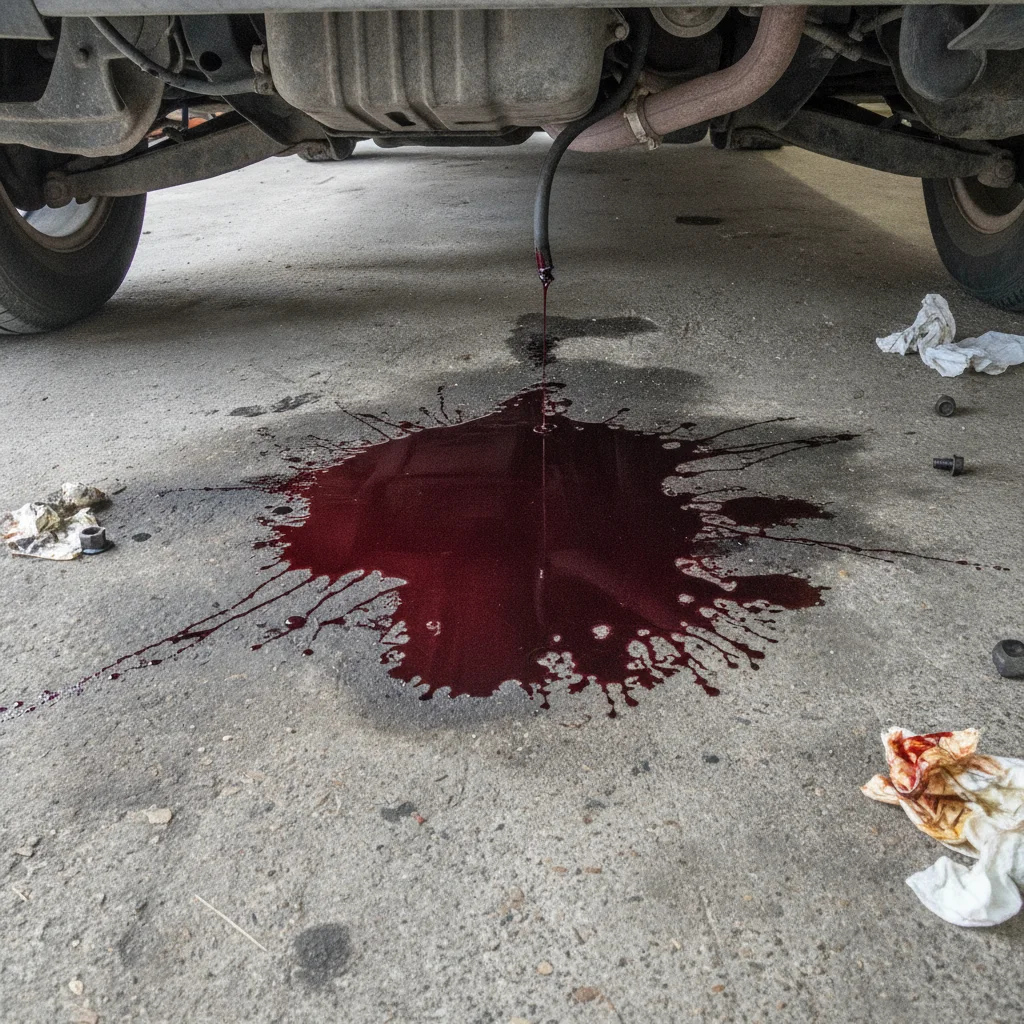
Any red or reddish-brown fluid found beneath your vehicle — particularly under the center or front of the car — should be identified as transmission fluid until proven otherwise. Engine oil is typically dark brown or black and tends to appear under the front-center of the engine bay. Power steering fluid can also be reddish but usually drips near the front wheels. Transmission fluid most often pools beneath the transmission pan, which sits toward the rear center of the engine compartment.
The volume of a leak doesn't always reflect its urgency. A small, steady drip from a pan gasket can reduce fluid to a dangerous level over a few weeks without producing a visible puddle in your driveway. Periodic checks of your transmission dipstick — monthly if your vehicle is older or higher mileage — catch slow leaks before they become critical.
If you notice a leak and the car still seems to drive normally, resist the temptation to delay. Seal repairs are typically $150–$400. Running a transmission on critically low fluid can cause complete failure in minutes of highway driving. Warning Signs You Should Never Ignore While Driving covers the situations where pulling over immediately is the right call — a sudden, large transmission fluid loss is one of them.
A small red puddle under your car is a $200 seal repair waiting to become a $4,000 transmission replacement.
Inability to Shift Into Certain Gears or Erratic Gear Selection
When a transmission refuses to shift into a specific gear — or shifts into the wrong gear unexpectedly — the problem is almost always either hydraulic or electronic. In hydraulics, a stuck or failed shift solenoid prevents the correct clutch pack from engaging. In electronic systems, a faulty speed sensor or throttle position sensor can give the TCM incorrect data, causing it to select inappropriate ratios.
Manual transmission drivers experience this differently: difficulty getting the shifter into a specific gear, grinding when attempting to engage a gear, or a gear that pops out under load. These symptoms point to worn synchronizers, damaged shift forks, or in some cases simply a stretched or misadjusted shift cable.
One important caveat: before assuming the worst, verify that the shift linkage itself is intact. A bent, disconnected, or stretched cable can produce symptoms that look identical to an internal transmission problem but cost a fraction as much to fix. A good technician will check linkage adjustment before opening the transmission.
Inability to select a specific gear may be a $100 linkage adjustment rather than an internal failure — diagnose before assuming.
Overheating — Dashboard Temperature Warning or Smell of Burning
Transmissions generate significant heat under normal operation, and they rely on a fluid cooler (usually integrated with the radiator or as a standalone cooler) to manage that heat. When the cooling system fails — due to a blocked cooler, a collapsed cooler line, or a malfunctioning radiator — transmission fluid temperature rises beyond its design limits and begins to break down chemically.
Signs of overheating include a burning smell from under the hood (distinct from the hot engine smell most drivers know), a dedicated transmission temperature warning light on newer vehicles, or in extreme cases, the transmission entering a "limp mode" that restricts it to a single gear to prevent further damage.
Towing beyond your vehicle's rated capacity, extended stop-and-go driving on hot days, or mountain driving with a heavy load are common triggers. If your vehicle is used for towing, a transmission temperature gauge and an auxiliary cooler are inexpensive additions that can dramatically extend transmission life. Many shops can install an aftermarket cooler for $200–$400, which is a fraction of what overheating damage costs to repair.
Transmission overheating during towing or mountain driving can be prevented with a $300 auxiliary cooler installation.
Acting on What You've Noticed
Transmission problems share something in common with leaks in a roof: they never get smaller on their own. A minor seal leak becomes a fluid-starved clutch pack. An occasional hesitation becomes a complete failure to engage. The sooner you get a confirmed diagnosis, the more options you have — and the lower the bill.
If you're evaluating a used vehicle and want to know how to spot these symptoms before you buy, Transmission Behavior During a Test Drive: What's Normal, What Isn't walks through exactly what to feel for during a test drive. And if your vehicle has crossed the 100,000-mile mark, High-Mileage Car Warning Signs That Deserve Extra Attention covers the additional failure patterns that appear as vehicles age.
Limp Mode: What It Means
Modern transmissions can enter a self-protective state called "limp mode" or "fail-safe mode" when the TCM detects a serious fault. In limp mode, the transmission locks into a single gear — usually second or third — to allow you to drive to a service facility without causing further damage. If your car suddenly feels underpowered, won't shift above a certain gear, and a warning light is on, limp mode is likely active. Drive calmly to the nearest shop; do not try to clear codes and reset without diagnosing the underlying cause.
Transmission Issues in High-Mileage Vehicles
Vehicles over 100,000 miles face a specific dilemma: a transmission fluid change, while beneficial, can occasionally disturb varnish deposits that were sealing a worn seal or gasket. This doesn't mean you should skip service — neglect is always worse — but it does mean high-mileage transmissions benefit from a more gradual maintenance approach. A qualified technician can assess whether a full flush or a simple drain-and-fill is more appropriate for your vehicle's condition and history.
When you bring your car in for a transmission complaint, ask for a full fluid inspection, a scan for stored transmission fault codes, and — if warranted — a stall test or line pressure test. These diagnostics together paint a clear picture without requiring the transmission to be opened. In many cases, a fluid change with the correct fluid specification is enough to resolve early-stage symptoms. Push for that assessment before anyone quotes you a rebuild.
Keep a Simple Shifting Baseline
When you first get a vehicle — new or used — pay close attention to how it shifts over the first few hundred miles. Note the RPM at which it upshifts during normal acceleration, how smoothly it downshifts when you lift off the throttle, and how quickly it engages from a cold start. This personal baseline is your best diagnostic tool. Any deviation from it is worth investigating, even before formal symptoms appear.
Ask for the Right Fluid Specification
When getting a transmission service, always ask your shop to verify the exact fluid specification required by your manufacturer — not just "compatible" fluid. Many transmission problems attributed to wear are actually caused by incorrect fluid friction properties. Using a manufacturer-specified fluid, even if it costs more, is the single best preventive step you can take at a service appointment.
The transmission is a complex system, but it speaks clearly if you're listening. Pay attention to how your car shifts from the moment you buy it. Any deviation from that baseline is worth investigating. Early action is almost always cheaper, faster, and less stressful than waiting for a full failure on the highway.

All claims are backed by peer-reviewed research. Sources on request.