
Key Takeaways
Car Shaking / Vibration
Car shaking refers to any unusual vibration, shimmy, or trembling felt through the steering wheel, seat, floorboard, or pedals while driving or idling. It's your car's way of flagging a mechanical imbalance or failure somewhere in its systems. The shaking itself isn't a diagnosis — it's a symptom. Where you feel it, when it happens, and how it changes with speed or braking all point to different root causes.
Vibration frequency and amplitude can help technicians isolate the source: low-frequency vibrations (typically under 15 Hz) often originate from wheels and tires, while higher-frequency shaking points toward engine or drivetrain components.
Reading the Vibration: Your Diagnostic Starting Point
Think of your car's shaking like a patient describing pain to a doctor. The location, timing, and severity of the symptom tells a trained eye far more than the symptom alone. Before you pick up the phone to call a shop, spend five minutes gathering three pieces of information: when the shaking happens, where you feel it in the car, and how it changes with speed or driving conditions.
This three-part framework cuts through the noise — literally. A shimmy felt only in the steering wheel at 65 mph points squarely at your front tires or wheels. A full-body shudder at idle suggests an engine or mount problem. Vibration exclusively during braking is almost always a brake system issue. These patterns aren't guesswork; they're the result of how mechanical forces travel through a car's structure.
Here's the basic diagnostic matrix to work from before talking to a mechanic:
| When It Happens | Where You Feel It | Likely Source |
|---|---|---|
| Cruising at highway speed | Steering wheel | Tire balance, wheel, or front-end component |
| Cruising at highway speed | Seat or floorboard | Rear tires, driveshaft, or rear suspension |
| At idle (stopped) | Whole car or seat | Engine misfire, dirty injectors, or broken mounts |
| During braking | Steering wheel or pedal | Warped rotors or brake system issue |
| Accelerating from a stop | Front of car | CV joint or axle |
| Turning at low speed | Front end | CV joint (inner or outer) |
This table won't replace a professional diagnosis, but it arms you with the vocabulary to describe the problem accurately — which saves time and money at the shop. For a broader look at how unusual sensations and sounds connect to mechanical problems, see our guide on strange car noises and what they signal.
Tire and Wheel Problems: The Most Common Culprits
Tires are responsible for a significant majority of shaking complaints that come into any repair shop. They're also among the easiest and least expensive problems to fix — which makes catching them early especially worthwhile.
Out-of-Balance Tires
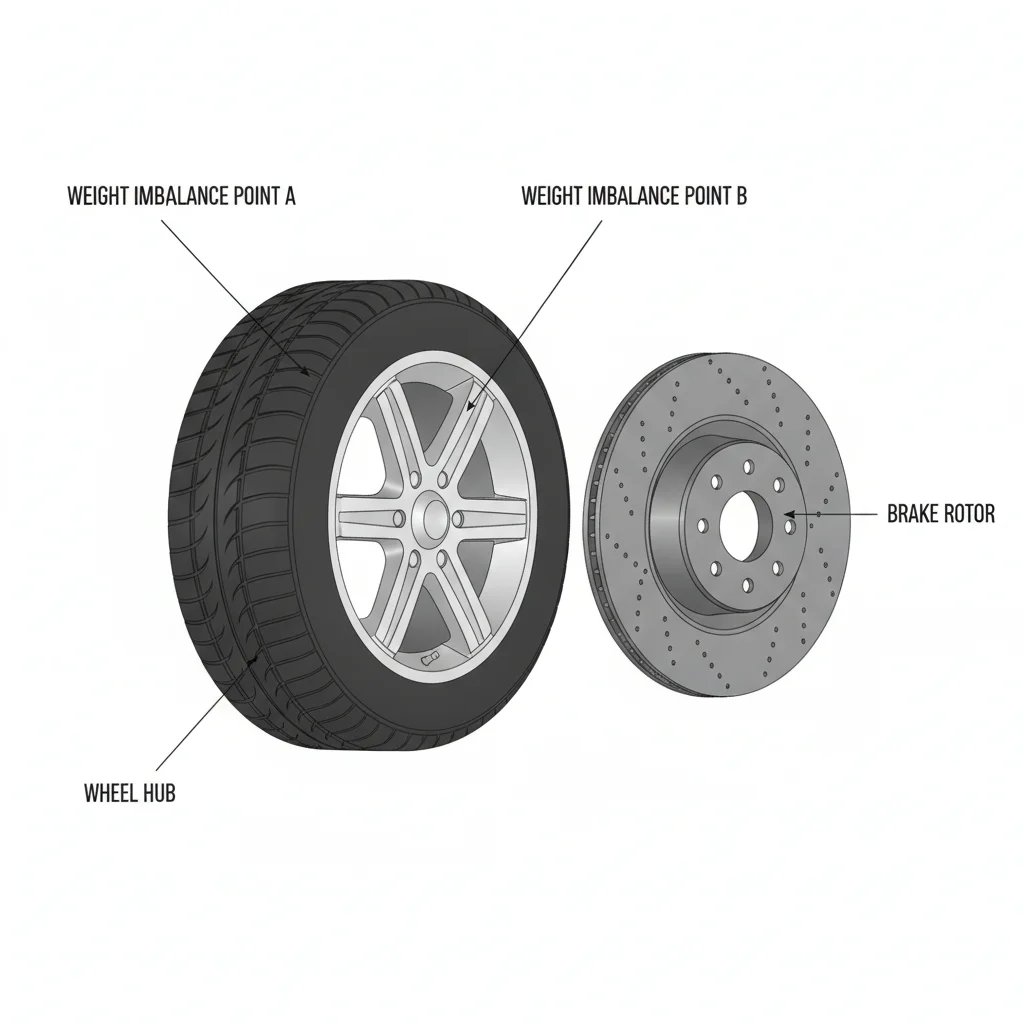
Every tire and wheel assembly has slight weight variations. When tires are mounted, technicians use a balancing machine to add small counterweights that make the rotation smooth. Over time — and especially after hitting a pothole or curb — those weights can shift or fall off. The result is an imbalance that creates a rhythmic vibration at specific speeds, typically between 55 and 70 mph.
The telltale sign: the shaking has a sweet spot. It begins around a certain speed, intensifies, then sometimes eases above that threshold. This speed-dependent behavior is the fingerprint of tire imbalance.
Not All Speed-Related Shaking Is Tires
While tire imbalance is the most common cause of highway-speed vibration, a worn driveshaft U-joint or out-of-balance driveshaft can produce similar symptoms on rear-wheel drive vehicles. If tire balancing and inspection don't resolve the shaking, ask your technician to inspect the driveshaft and U-joints before moving on to more expensive diagnostics.
Cold Weather Can Mimic Tire Problems
In cold climates, tires can develop flat spots overnight from sitting under the vehicle's weight at low temperatures. This creates a brief thumping or vibration during the first few minutes of driving that usually disappears as the tires warm up and return to their normal shape. This is most common with high-performance summer tires. If the vibration persists beyond the first few miles, the cause is something other than cold-weather flat-spotting.
Bent Rims and Tire Damage
A hard pothole hit can bend an aluminum wheel enough to cause persistent vibration that balancing won't fix. Inspect the inner edge of your wheels for visible deformation, and look at tire sidewalls for bubbles or bulges — both indicate structural damage that means replacement, not repair.
Uneven Tire Wear
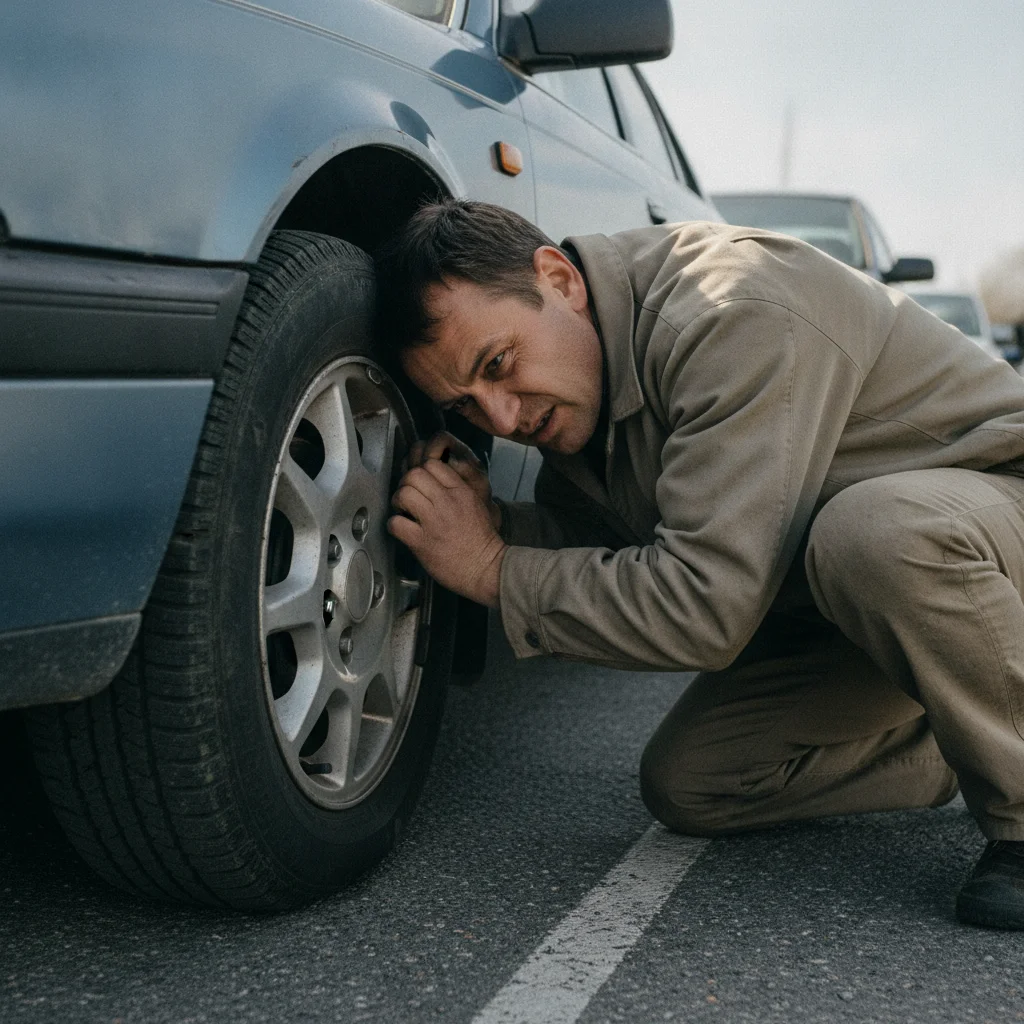
Tires worn unevenly across their width — from misalignment, improper inflation, or worn suspension components — develop irregular surfaces that create a characteristic thumping vibration. Run your hand across the tread surface. If it feels scalloped or choppy rather than smooth and even, uneven wear is likely your problem. Inspecting your tires yourself is a quick habit that can catch this before it costs you a full set of tires.
~$40–$80
Cost of a tire balance service
Tire balancing is one of the lowest-cost fixes for vibration and can prevent hundreds of dollars in premature tire wear.
2–3x
Acceleration in tire wear from imbalance
According to industry data from tire manufacturers, an unbalanced tire can wear two to three times faster on affected areas than a properly balanced tire.
$900–$2,000
Catalytic converter replacement cost
Prolonged engine misfires can saturate and destroy a catalytic converter, turning a minor tune-up into a major repair bill.
60,000 mi
Typical CV joint inspection interval
Most manufacturers recommend CV joint and boot inspection starting at 60,000 miles, particularly on front-wheel drive vehicles.
$200–$600
Engine mount replacement cost
Broken engine mounts cause cabin vibration and can strain transmission and drivetrain components, increasing total repair costs over time.
Lug Nut Issues
Improperly torqued lug nuts — either too loose or unevenly tightened — allow the wheel to wobble slightly on the hub. This is uncommon but can happen after a tire rotation or change. If shaking begins immediately after any wheel service, have the lug nuts checked with a torque wrench before assuming a bigger problem.
Brake System Vibrations: What Warped Rotors Feel Like
If your car only shakes when you press the brake pedal, your braking system is almost certainly the cause. This is good news in one sense — the diagnosis is usually straightforward. The bad news is that ignoring brake vibration accelerates wear on calipers, brake pads, and wheel bearings.
Warped or Grooved Rotors
Brake rotors are the large metal discs that your brake pads clamp against to slow the car. Repeated hard braking from high speeds creates heat. If the heat isn't evenly distributed — or if you stop suddenly and hold the brakes while the pads sit against a hot spot — the rotor surface develops thickness variation. When pads hit this uneven surface, it sends a pulsing vibration through the pedal and into the steering column.
You'll feel it as a rhythmic shudder that intensifies the harder you press the brake pedal. It's most pronounced when slowing from highway speeds. This is your front rotors if you feel it in the steering wheel; rear rotors if you feel it primarily in the seat or pedal with less steering wheel involvement.
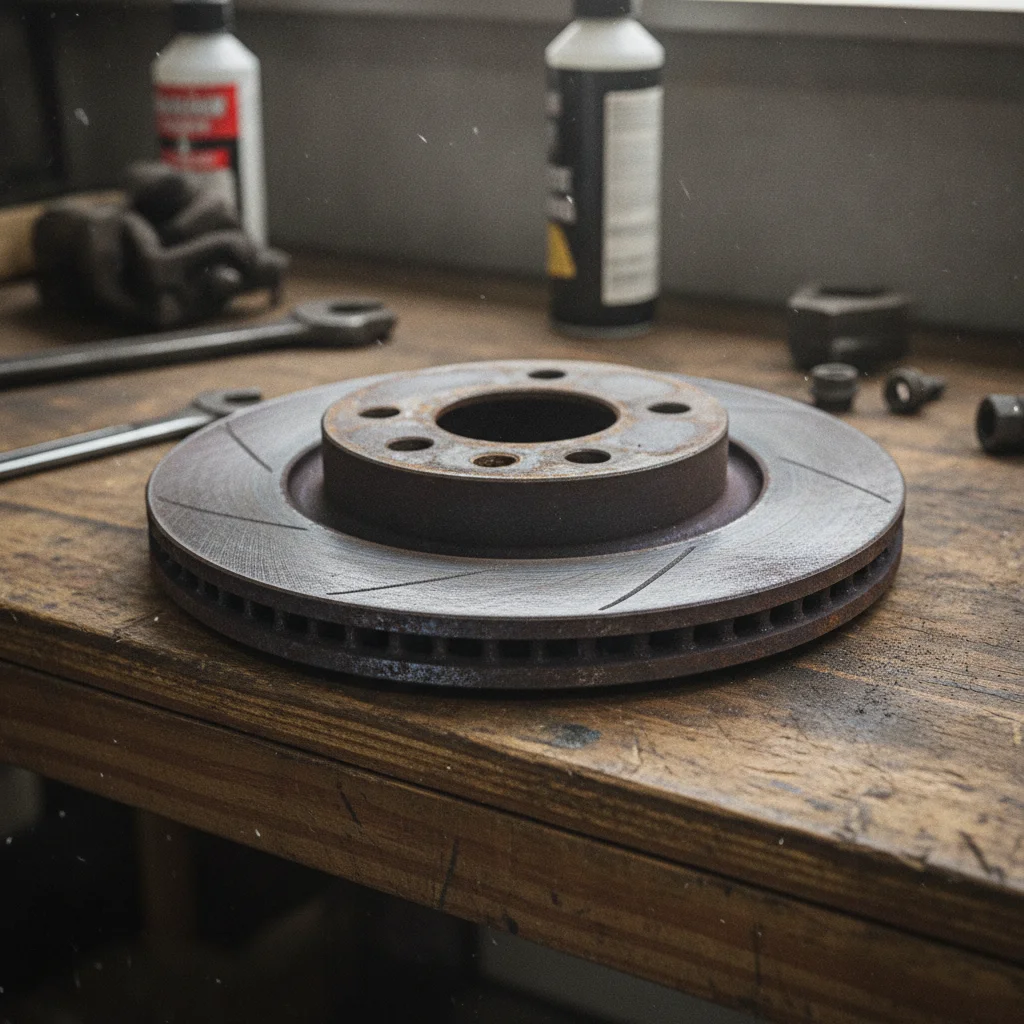
Modern rotors can sometimes be machined (resurfaced) if they have sufficient thickness remaining, but many modern vehicles use thin rotors from the factory that must be replaced outright. Rotor and pad replacement for both front wheels typically costs $200–$400 at an independent shop, less than the caliper or bearing damage that follows if you wait.
“The brake pedal shouldn't lie to you. If you feel a pulse every time you slow down, that's the rotor talking — and rotors don't get better on their own. Every mile you ignore it, the pads are scribing that variation deeper into the surface.”
— Derek Tolliver, Automotive technician and maintenance advisor
Brake Caliper Sticking
A caliper that doesn't fully release keeps the pad dragging on the rotor. The car may shake, pull to one side, and smell faintly of burning after driving. The affected wheel is noticeably hotter than the others. This is a safety issue — a sticking caliper can cause a brake fire in extreme cases and must be addressed promptly.
If you notice vibration during braking along with any unusual sounds, see our article on common car noises and their causes for additional context on what grinding or squealing during braking means.
Engine and Drivetrain Shaking: The Harder-to-Ignore Causes
Engine-related vibrations tend to be felt throughout the cabin rather than localized to the steering wheel or pedal. They're often present at idle, and they may come with other symptoms — rough running, a flashing check engine light, or reduced power. These are the vibrations that demand the most prompt attention.
Engine Misfires
Each cylinder in your engine fires in a precise sequence. When one misfires — fails to ignite properly — the engine's mechanical rhythm breaks down. The result is a rough, choppy vibration that's worst at idle but can persist through acceleration. A misfiring cylinder almost always triggers the check engine light with a code pointing to the specific cylinder involved.
Common misfire causes: worn spark plugs (often the first culprit), a failed ignition coil, a clogged fuel injector, or a vacuum leak. Spark plugs are a $100–$300 fix; an ignition coil runs $150–$300 per coil. Left unresolved, misfires dump raw fuel into the catalytic converter, potentially turning a $200 repair into a $1,200 one. See our deep dive on engine hesitation and misfire symptoms for the full picture.
Use Your First Stop to Check Wheel Heat
After driving 10–15 minutes and stopping, carefully hold your hand near (not touching) each wheel without making contact. A wheel that's significantly hotter than the others suggests a sticking brake caliper or a wheel bearing running dry. This quick check costs nothing and can catch a serious problem before it worsens.
Describe the Vibration Precisely Before Calling a Shop
Before you call for an appointment, drive the car deliberately and note: at what speed the shaking starts and stops, whether it's in the steering wheel, seat, or pedals, and whether it's present at idle, during acceleration, or only during braking. This information lets a technician prioritize the most likely causes before the car even arrives, saving diagnostic time and your money.
Broken or Worn Engine Mounts
Engine mounts are rubber-and-metal brackets that isolate the engine's natural vibration from the rest of the car. A healthy mount makes your engine invisible to the driver. A worn or broken mount lets the engine shift under acceleration or braking, causing a noticeable thud or lurch and transmitting vibration directly into the cabin. The shaking is typically most obvious during acceleration from a stop or when shifting between drive and reverse.
CV Joints and Driveshaft Problems
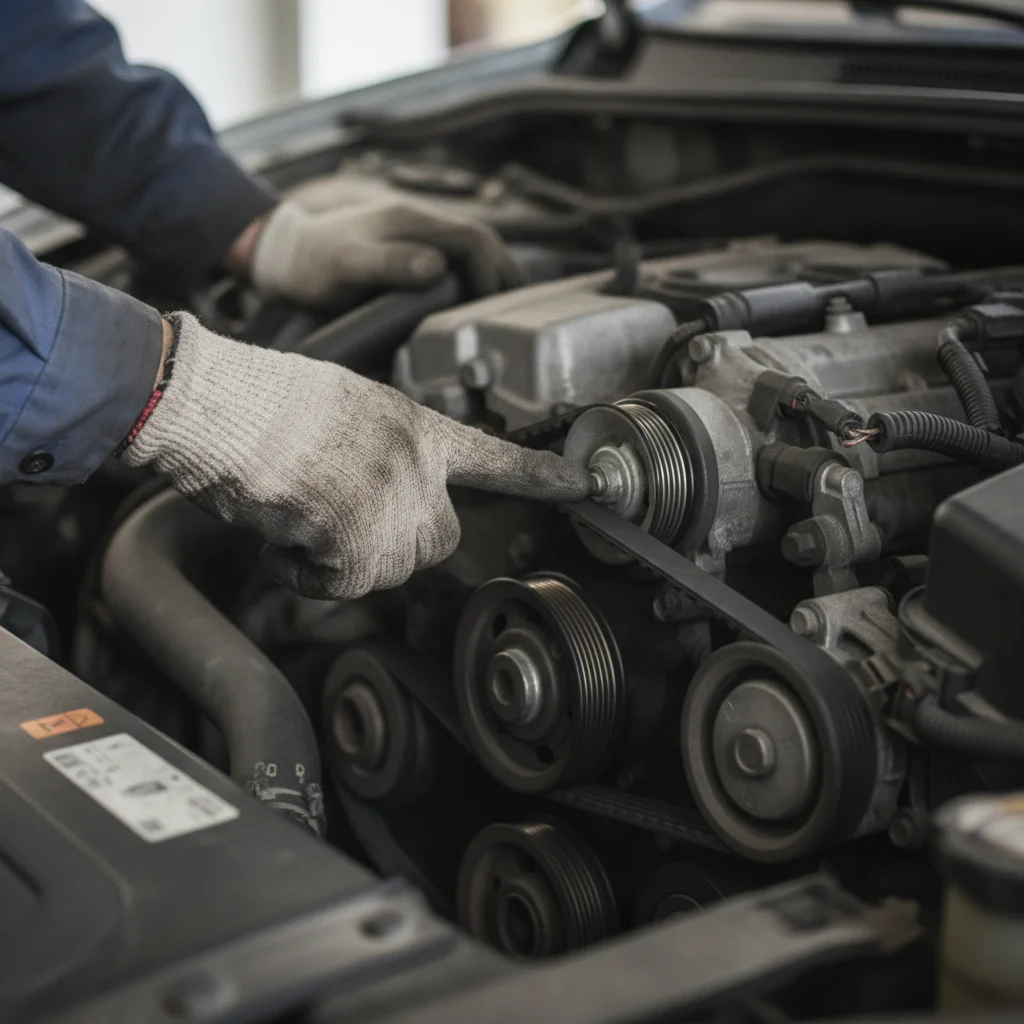
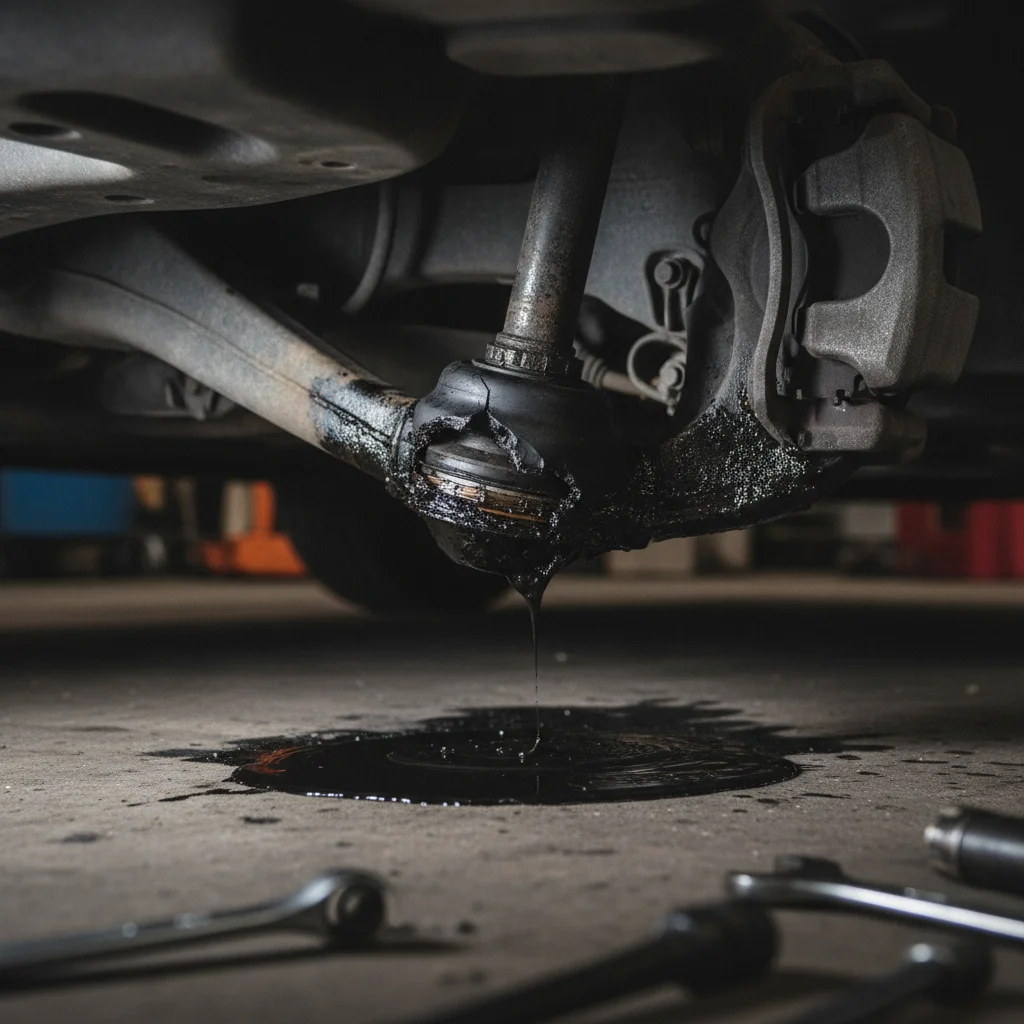
Front-wheel drive vehicles transfer power to the wheels through constant velocity (CV) joints covered in rubber boots. When the boot cracks, grease escapes, and the joint wears rapidly. The classic symptom is a clicking noise during turns — but as the joint deteriorates further, vibration during acceleration follows. A CV axle replacement typically costs $300–$700 depending on the vehicle and which axle is affected.
On rear-wheel drive or all-wheel drive vehicles, a worn or out-of-balance driveshaft creates a vibration felt through the floorboard that intensifies with speed. This is different from tire imbalance because it doesn't have a distinct speed sweet spot — it tends to worsen progressively as speed increases.
Transmission-related shuddering — particularly under light throttle at certain speeds — is worth checking separately. Our article on evaluating transmission behavior explains how to distinguish normal shifts from signs of trouble.
Steering and Suspension: When the Shaking Is in the Structure
Your car's suspension and steering system is designed to absorb road irregularities and maintain tire contact with the pavement. When its components wear out, vibrations that should be absorbed instead pass through to the driver. The suspension is often overlooked because its failure is gradual — it's hard to notice the degradation day by day.
Worn Tie Rod Ends and Ball Joints
Tie rods connect your steering rack to the wheels. Ball joints connect suspension control arms to the steering knuckle. Both are pivot points that wear over time, developing looseness that creates imprecise steering and — at highway speeds — a shimmying vibration through the steering wheel that can feel difficult to control.
A worn ball joint is one of the more serious suspension failures. In extreme cases, a failed ball joint can cause the wheel to collapse outward, resulting in sudden loss of control. Most will announce themselves with clunking over bumps or vague steering feel well before reaching that point. Have them inspected if your car has more than 60,000–80,000 miles and you've never replaced them.
Worn Shock Absorbers and Struts
Struts and shocks don't typically cause shaking on their own, but when they're worn, the tires bounce more freely over road imperfections instead of staying planted. This amplifies any existing imbalance or alignment issue. If your car bounces excessively after going over a speed bump, or the ride quality has gradually become harsher, worn struts may be compounding another vibration problem.
Wheel Bearing Failure
Wheel bearings allow the wheels to spin freely with minimal friction. A failing bearing usually announces itself with a growling or humming noise that changes pitch when you shift your weight by changing lanes. Vibration accompanies the noise in more advanced cases. Wheel bearing replacement costs $200–$500 per corner and is not optional — a failed bearing can cause the wheel to seize or detach.
The Financial Case for Acting Early
Every vibration has an origin point. At that origin point, one component is failing — and it's almost always cheaper to address than the collateral damage it causes if left alone. The math on deferred maintenance is consistently unfavorable for car owners.
Consider a simple tire imbalance: left unaddressed for 10,000 miles, it accelerates tire wear unevenly, potentially costing you a premature set of tires ($400–$800). A $40 balance job at the right time prevents the whole cascade. The same logic applies at every level of the drivetrain.
Use Your First Stop to Check Wheel Heat
After driving 10–15 minutes and stopping, carefully hold your hand near (not touching) each wheel without making contact. A wheel that's significantly hotter than the others suggests a sticking brake caliper or a wheel bearing running dry. This quick check costs nothing and can catch a serious problem before it worsens.
Describe the Vibration Precisely Before Calling a Shop
Before you call for an appointment, drive the car deliberately and note: at what speed the shaking starts and stops, whether it's in the steering wheel, seat, or pedals, and whether it's present at idle, during acceleration, or only during braking. This information lets a technician prioritize the most likely causes before the car even arrives, saving diagnostic time and your money.
Worn brake rotors that cause shaking are often still within service limits when the vibration starts. Have them resurfaced at $80–$120, or ignore the symptom until the rotors are too thin to resurface and you're paying $300–$400 for replacement. Meanwhile, the pads wear faster and the calipers work harder.
A misfiring cylinder that costs $150 to fix in spark plugs and ignition coils can, over several months, saturate your catalytic converter with unburned fuel — turning a minor tune-up into a $900–$2,000 emissions system repair. This is the compounding interest of deferred car maintenance.
The earlier you can accurately describe the symptom and get it to a shop, the more options you have. If the vibration is new and mild, you have time to get a quote from multiple shops and schedule at your convenience. If you've let it run for 15,000 miles, the decision may be made for you by the side of a highway.
When evaluating a used car purchase, apply the same diagnostic thinking to any vibrations you notice during the test drive. Our companion guide on sounds that should stop you from buying a car covers how vibrations and noises together paint a picture of a vehicle's mechanical health.

All claims are backed by peer-reviewed research. Sources on request.