
Key Takeaways
Start here
Why Early Detection Matters
Next
Reading Smells: What Your Nose Is Telling You
Then
Reading Sounds: Decoding What You Hear
Continue
Reading Feel: Vibrations, Pull, and Resistance
Almost there
Reading Sight: Fluids, Smoke, and Dashboard Clues
Finish
Building a Simple Weekly Habit
Why Early Detection Matters
Think of your car the way you'd think of your own health. A minor ache ignored for six months can become a surgery. A small coolant leak ignored for three months can become a warped cylinder head. The physics of mechanical failure follow a predictable pattern: components degrade gradually, give off signals, and then fail — often at the worst possible moment.
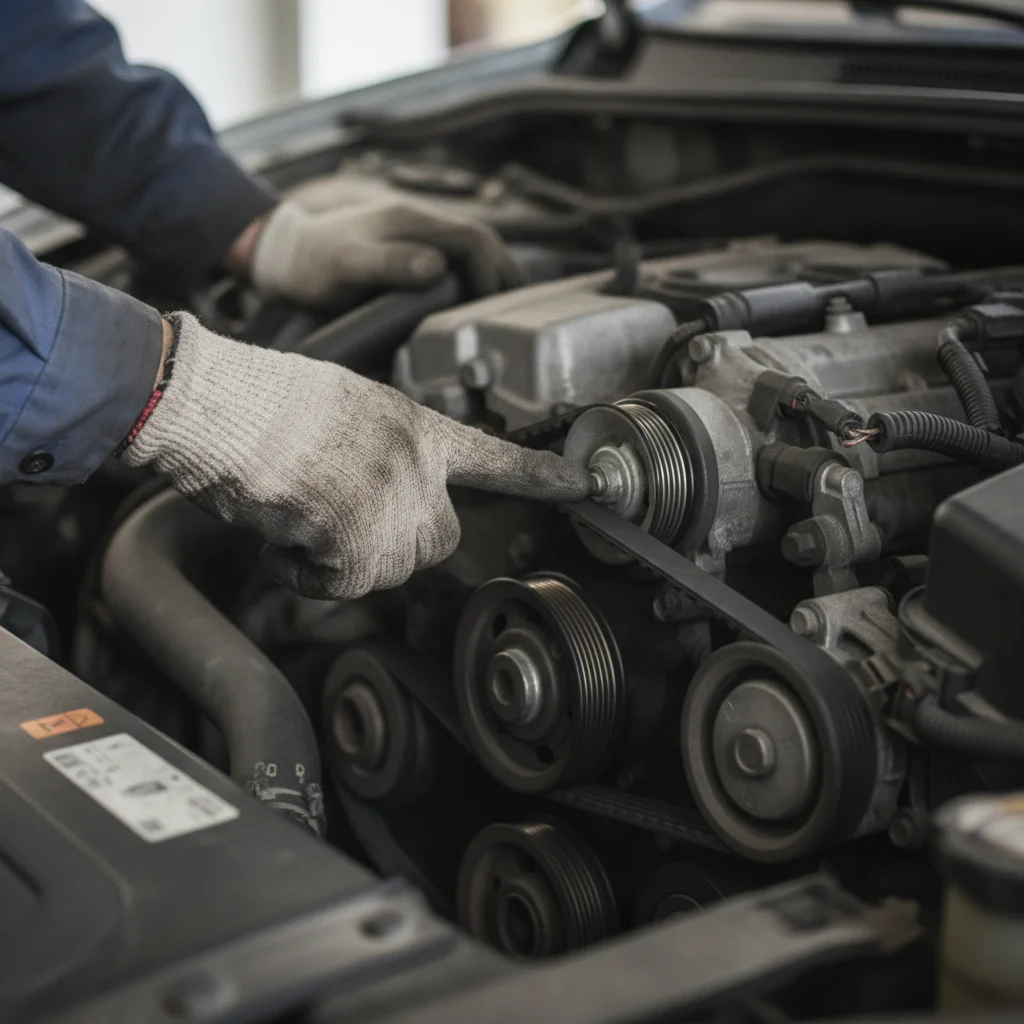
The cost difference between catching a problem early and catching it late is dramatic. A worn serpentine belt that costs $80 to replace preventively will strand you on the highway if it snaps — and if it snaps while driving, it can take out the power steering, alternator, and water pump simultaneously, turning an $80 job into a $600–$900 repair. That's not bad luck. That's a missed signal.
The good news is that you don't need to be a mechanic to read these signals. You just need to understand what normal feels like — and notice when something changes. Your senses are the first and most reliable diagnostic tools you have, and they work every single time you get behind the wheel. Most drivers simply haven't been taught what to listen, smell, feel, and look for.
This guide walks you through each sensory channel — smell, sound, feel, and sight — and explains exactly what deviations from normal are trying to tell you. For a more hands-on approach to self-inspection, our inspection walkthrough covers tires, fluids, belts, and brakes in step-by-step detail.

Reading Smells: What Your Nose Is Telling You
Your sense of smell is wired to detect danger — and inside a car, that instinct is genuinely useful. Different automotive systems produce chemically distinct odors when they fail, which means your nose can often pinpoint the failing system before any warning light activates.
Baseline
The normal sounds, smells, and feel your specific car produces when everything is working correctly. You build this reference point through regular, attentive driving.
Catalytic converter
A component in the exhaust system that converts harmful combustion byproducts into less toxic gases. When it fails, it often produces a strong sulfur or rotten-egg smell.
CV joint
A constant-velocity joint that transfers engine power to the wheels while accommodating steering movement. Worn CV joints typically produce a clicking sound when turning.
Wheel bearing
A ring of steel balls inside a housing that allows the wheel to spin smoothly. A failing wheel bearing usually produces a humming or droning noise that changes with vehicle speed.
Master cylinder
The hydraulic pump that pressurizes your brake fluid when you press the pedal. A failing master cylinder causes a spongy pedal or one that sinks to the floor.
Head gasket
A seal between the engine block and cylinder head that keeps combustion gases, oil, and coolant in their separate passages. A blown head gasket often causes thick white exhaust smoke and rapid coolant loss.
Detonation (engine knock)
An abnormal combustion event where fuel ignites prematurely or unevenly in the cylinder, causing a knocking or pinging sound. Sustained detonation causes severe engine damage.
The Six Smells That Deserve Immediate Attention
- Burning rubber
- Usually indicates a slipping drive belt, a hose touching the exhaust, or a tire rubbing on something it shouldn't. Check immediately — rubber components that overheat can fail catastrophically.
- Burning oil
- A sharp, acrid smell — often noticed outside the car after parking — suggests oil is dripping onto hot exhaust components. Check your oil level and look for puddles or residue under the engine.
- Sweet or syrupy smell
- This is almost always engine coolant. Coolant contains ethylene glycol, which has a distinctive sweet chemical scent. If you smell this after driving, check the coolant reservoir and inspect hoses. A coolant leak left unaddressed leads to overheating within days or weeks.
- Rotten eggs or sulfur
- A strong sulfur smell usually points to a failing catalytic converter or, in some cases, a battery that's overcharging and off-gassing hydrogen sulfide. Neither is something to defer.
- Burning carpet or hot plastic
- Often an electrical issue — a short circuit, an overloaded fuse, or a component running far hotter than it should. Electrical fires in vehicles escalate fast. If you smell this and can't immediately identify the source, pull over safely.
- Raw gasoline
- You should never smell unburned fuel inside or directly under a running car. This points to a fuel line leak, a failed injector seal, or a stuck fuel pressure regulator. Any fuel leak is a fire hazard.
One practical tip: pay attention to when the smell appears. A coolant smell only when the heater is running versus when the car is idling in a parking lot points to different problems. Timing and location give your mechanic — and you — important diagnostic context.
Write Down New Symptoms When They First Appear
When you notice a new smell, sound, or sensation, write it down in your phone immediately — note the conditions (speed, temperature, braking, turning) and how long it lasted. Mechanics can diagnose intermittent problems far faster when you can give them a precise description rather than 'it made a noise last week.' A specific complaint saves diagnostic time, which saves you money on labor.
Use Your First Commute as a Daily Diagnostic Check
The first few minutes of a cold start are when most developing problems are loudest and most obvious. Make a habit of turning off the radio for the first two minutes of your day. Listen to the engine settle, notice how the steering feels, and pay attention to brake pedal firmness. You'll build a strong baseline in just a few weeks of doing this.
For a comprehensive look at what fluid leaks smell like and what color they leave on your driveway, see the fluid color and smell reference guide.
Reading Sounds: Decoding What You Hear
Sound is your most information-rich diagnostic channel. A car in good mechanical health has a baseline audio signature you absorb unconsciously over weeks of ownership. When something changes in that signature — a new noise, a rhythm that wasn't there before — your brain flags it. Trust that flag.
The key to interpreting sounds is matching them to conditions: Does it happen only when turning? Only when cold? Only under braking? Only at highway speed? Each qualifier narrows the suspect list considerably.

Common Sounds and Their Likely Sources
| Sound | Condition | Likely Cause | Urgency |
|---|---|---|---|
| Squealing | During braking | Brake wear indicator, glazed rotors | High — inspect within a week |
| Grinding | During braking | Metal-on-metal brake contact, worn pads | Immediate — stop driving if severe |
| Clicking or ticking | During turns | Worn CV joint or axle | Medium-high — worsens under load |
| Knocking or pinging | Under acceleration | Engine knock (detonation), low oil pressure | High — engine damage risk |
| Humming or droning | At steady highway speed | Worn wheel bearing or tire cupping | Medium — bearing failure can be sudden |
| Clunking | Over bumps or potholes | Worn sway bar link, strut, or ball joint | High — suspension failure affects control |
| Hissing | After engine shut-off | Coolant or vacuum leak | Medium — check coolant level promptly |
| Rattling | Cold starts only | Loose heat shield, low oil on startup | Low to medium — diagnose but not urgent |
A rhythmic sound that speeds up as the car speeds up is almost always related to a rotating component — a tire, a wheel bearing, a driveshaft, or a brake rotor. A sound that stays constant regardless of speed usually points to something that isn't rotating: a loose trim piece, a stuck heat shield, or an HVAC issue.
Some Sounds Require Immediate Action
A grinding sound under braking means metal-on-metal contact — your brake pads are gone and the rotors are being scored. Continuing to drive risks complete brake failure. Similarly, a sudden loud knocking from the engine while driving is a potential rod knock — a sign of imminent catastrophic engine failure. Pull over safely and call for assistance rather than driving further.
Don't Delay on Brake Fluid or Temperature Warning Lights
Unlike an amber check-engine light that can sometimes wait a day or two for a shop appointment, a red oil pressure light or a temperature gauge in the red zone requires you to stop the car as soon as it is safe to do so — not at your destination. Driving even a short distance with no oil pressure or an overheating engine can destroy major engine components in minutes, turning a $200 repair into a $4,000 one.
For a deeper breakdown of specific noises and what systems they implicate, this guide to strange car noises matches each sound type to its likely cause and urgency level. If you're evaluating a used car, sounds that should stop you from buying is equally useful.
Reading Feel: Vibrations, Pull, and Resistance
Your hands, seat, and feet receive a constant stream of physical feedback from the car. The steering wheel, the brake pedal, and the way the car tracks down a straight road all communicate mechanical status through physical sensation. Drivers who tune into this feedback catch problems that produce no sound and no smell at all.
Steering Wheel Signals
A steering wheel that vibrates at highway speed but not at lower speeds almost always points to wheel imbalance or a tire with uneven wear. If the vibration appears at a specific speed and then fades — say, between 60 and 70 mph — that's a classic balance symptom. If it's present at all speeds, suspect a bent rim, a severely worn tire, or a worn steering component.
A steering wheel that pulls consistently to one side on a flat road is telling you about alignment, tire pressure, or brake drag. If the pull appears only under braking, a stuck caliper or uneven pad wear is the more likely culprit. Either way, pulling under braking is a safety concern that shouldn't wait.
Brake Pedal Signals
Normal brake pedal feel is firm and progressive. Here's what deviations mean:
- Spongy or soft pedal: Air in the brake lines or a failing master cylinder. Braking performance is compromised — this is urgent.
- Pedal that pulses or vibrates under moderate braking: Warped rotors. The pulsation is caused by uneven rotor thickness contacting the pads. Annoying and progressive — rotors will need resurfacing or replacement.
- Pedal that sinks slowly to the floor at a stop: Classic sign of a master cylinder leak. Do not drive the car until repaired.
- Increased pedal travel before engagement: Brake pads wearing thin, or a developing hydraulic issue.
Seat and Body Vibrations
Vibrations felt through the seat rather than the steering wheel tend to originate from the rear of the car — rear wheels, rear wheel bearings, or the rear suspension. A vibration felt through the floor during acceleration can point to a worn driveshaft or U-joint. These components transmit engine power to the wheels, and when they wear, the vibration is unmistakable.
Dashboard Lights Are a Late Warning System
Many drivers wait for a warning light before investigating a symptom. In reality, most warning lights are calibrated to trigger only after a problem is already developed — your oil pressure light, for example, doesn't turn on until pressure has dropped dangerously low. Treat the absence of warning lights as an absence of confirmation, not an absence of problems. Your senses will catch things the sensors miss.
If your car is over 100,000 miles, these physical signals deserve extra scrutiny. High-mileage warning signs covers the specific failure patterns that develop as vehicles age.
Reading Sight: Fluids, Smoke, and Dashboard Clues
Visual inspection is the most systematic of the four channels — it's something you can do deliberately and methodically, rather than waiting for a symptom to announce itself. A quick scan of three things covers most developing problems: what's under your car after parking, what's coming from the exhaust pipe, and what's happening on the dashboard.
What's Under Your Car
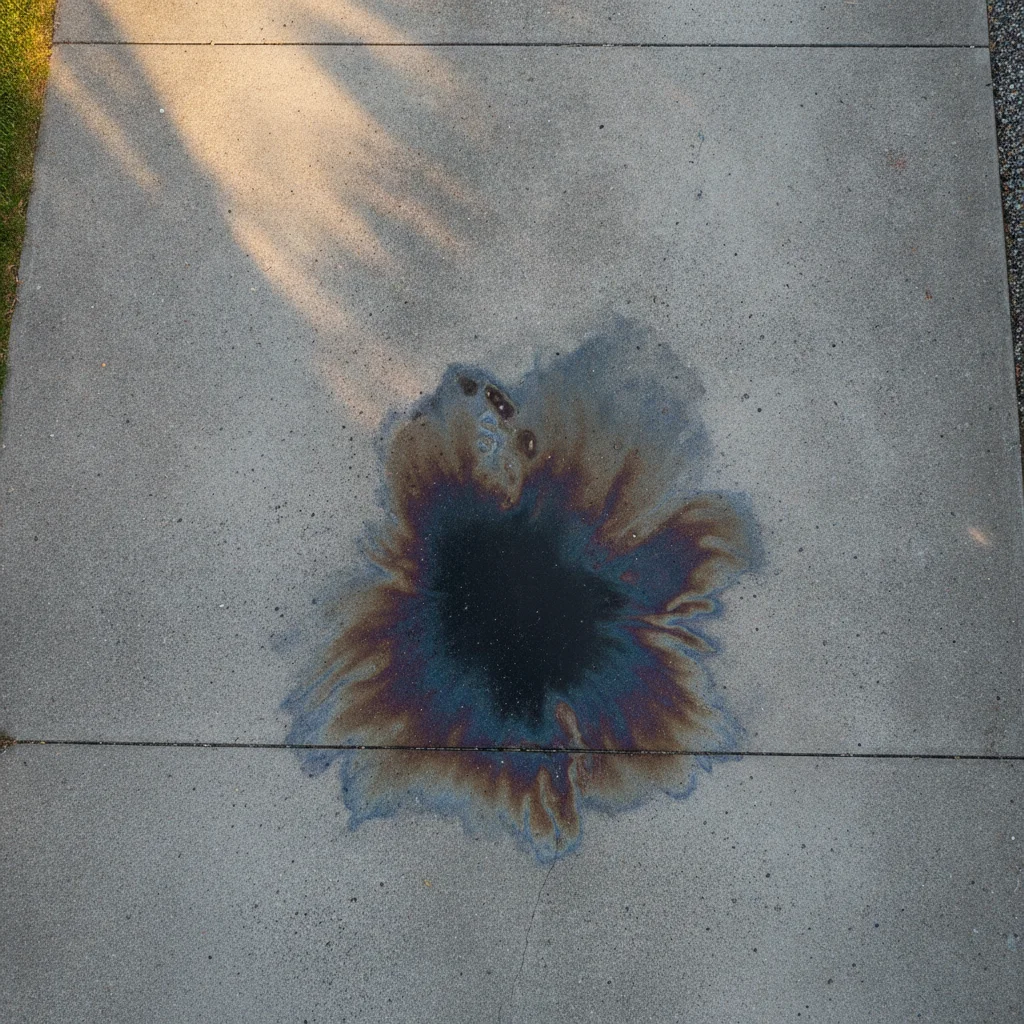
Park on a clean, dry surface and check after the car has sat for 15 minutes. A small drip of clear water directly under the air conditioning unit on the passenger side is normal condensation. Everything else is worth identifying.
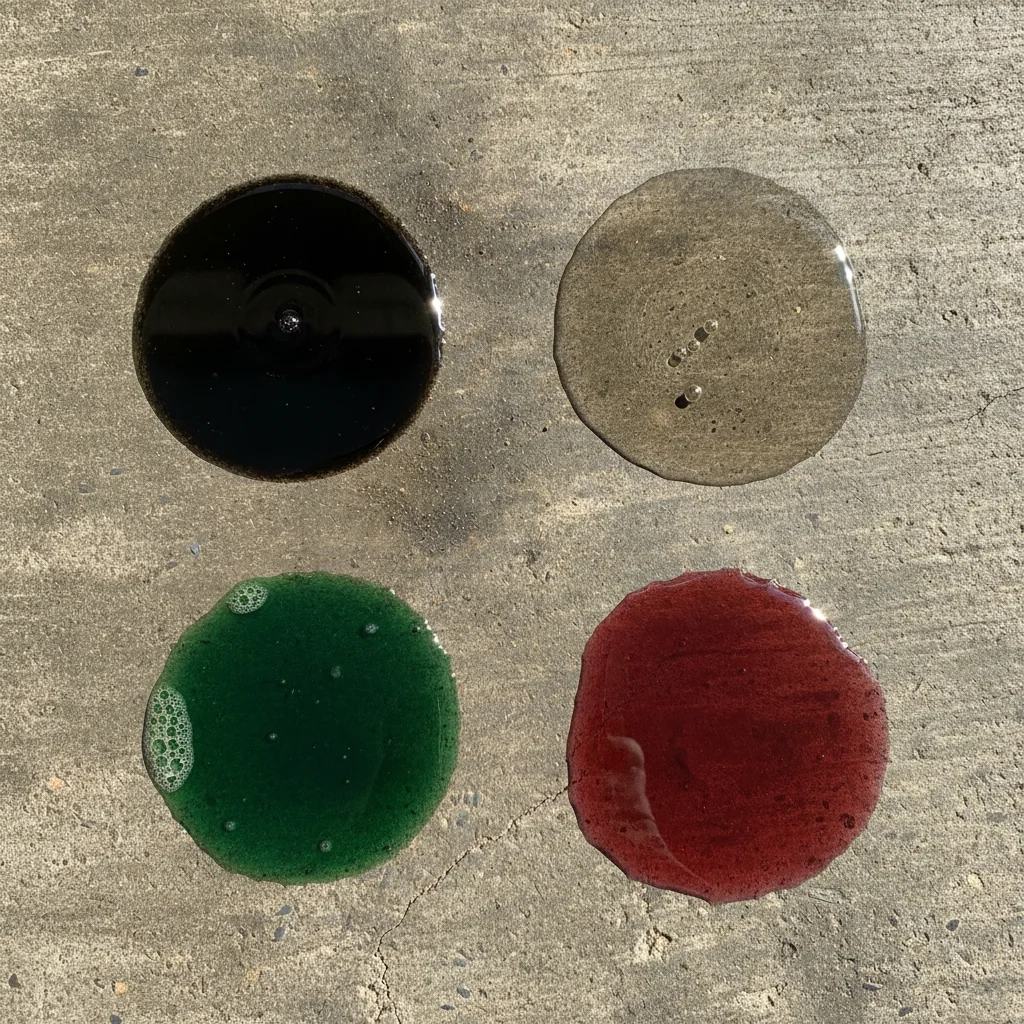
- Dark brown or black puddle: Engine oil. Small and isolated usually means a gasket weeping. Large and spreading means an active leak that will drop oil level dangerously if ignored.
- Bright green, orange, or pink puddle: Coolant. Even a slow coolant leak will eventually leave you stranded with an overheated engine.
- Light brown or reddish fluid near the center of the car: Transmission fluid or power steering fluid. Power steering fluid leaks often show up on the front subframe; transmission fluid is further back.
- Clear or light yellow near the wheels: Brake fluid. Any brake fluid leak is an emergency — brake pressure depends on a sealed system.
For a full color-coded reference, the fluid identification guide is the quickest way to confirm what you're looking at.
What's Coming from the Exhaust
A small puff of white vapor on a cold morning is water vapor condensing — completely normal. What isn't normal:
- Thick white smoke, especially when warm: Coolant burning in the combustion chamber. This often means a blown head gasket — a serious and expensive repair.
- Blue or blue-gray smoke: Oil burning in the combustion chamber. Worn piston rings or valve seals are the usual causes. Expect high oil consumption alongside this symptom.
- Black smoke: Running rich — too much fuel. Possible causes include a stuck injector, a failed O2 sensor, or a bad mass airflow sensor.
Dashboard Warning Lights
Warning lights are not where problems begin — they're where many drivers first notice them. By the time most lights illuminate, the problem is already developed. That said, some lights demand immediate action:
- Oil pressure light (red): Pull over immediately. Running an engine with low oil pressure for even a few minutes can cause irreversible damage.
- Temperature gauge in the red: Pull over immediately. Overheating destroys cylinder heads and can warp engine blocks.
- Brake warning light: Check your parking brake first; if it's off and the light remains, check brake fluid level — a low level means a leak or dangerously worn pads.
Why the check engine light isn't the only signal worth watching explains the full landscape of dashboard indicators and the many symptoms that precede them. For a complete under-hood visual checklist, what to look for under the hood walks you through it without requiring mechanical experience.
Some Sounds Require Immediate Action
A grinding sound under braking means metal-on-metal contact — your brake pads are gone and the rotors are being scored. Continuing to drive risks complete brake failure. Similarly, a sudden loud knocking from the engine while driving is a potential rod knock — a sign of imminent catastrophic engine failure. Pull over safely and call for assistance rather than driving further.
Don't Delay on Brake Fluid or Temperature Warning Lights
Unlike an amber check-engine light that can sometimes wait a day or two for a shop appointment, a red oil pressure light or a temperature gauge in the red zone requires you to stop the car as soon as it is safe to do so — not at your destination. Driving even a short distance with no oil pressure or an overheating engine can destroy major engine components in minutes, turning a $200 repair into a $4,000 one.
Building a Simple Weekly Habit
Knowing the signals is only useful if you're actually paying attention. The most reliable way to catch problems early isn't a lengthy inspection routine — it's a short, consistent one that happens automatically as part of your normal driving life.
The Two-Minute Walk-Around
Once a week, before you get in the car, walk around it deliberately. You're looking for:
- Any new fluid spots on the pavement where the car was parked
- Tire condition — look for any that appear lower than the others, or have visible sidewall damage
- Anything visually out of the ordinary — a cracked light lens, a loose trim piece, a new scrape
This takes ninety seconds and costs nothing. It catches slow leaks and tire pressure loss before they become emergencies.
The Attentive Commute
Your daily drive is a free diagnostic session if you use it that way. For the first two minutes of a cold start, your senses should be active: any new smells? Any new sounds that weren't there yesterday? How does the brake pedal feel compared to normal? These baselines reset every day — anomalies stand out sharply when you're in the habit of noticing normal.
Write Down New Symptoms When They First Appear
When you notice a new smell, sound, or sensation, write it down in your phone immediately — note the conditions (speed, temperature, braking, turning) and how long it lasted. Mechanics can diagnose intermittent problems far faster when you can give them a precise description rather than 'it made a noise last week.' A specific complaint saves diagnostic time, which saves you money on labor.
Use Your First Commute as a Daily Diagnostic Check
The first few minutes of a cold start are when most developing problems are loudest and most obvious. Make a habit of turning off the radio for the first two minutes of your day. Listen to the engine settle, notice how the steering feels, and pay attention to brake pedal firmness. You'll build a strong baseline in just a few weeks of doing this.
Monthly Under-Hood Check
Once a month, open the hood and check these five things in under five minutes:
- Engine oil: Pull the dipstick, wipe it, reinsert, and read. Look at both level and color. Fresh oil is amber; dark brown-black oil that feels gritty is overdue for a change.
- Coolant reservoir: It should be between the MIN and MAX lines when cold. If it's low, check for leaks before topping off.
- Brake fluid reservoir: Should be near the full mark. A gradual drop over months as pads wear is normal; a sudden drop means a leak.
- Power steering fluid (if applicable): Many modern cars have electric power steering with no fluid to check — consult your manual.
- Visual scan: Look for any new wetness around hoses, the battery terminals, or the base of the radiator.
For a more structured self-inspection that covers tires, belts, and brakes in addition to fluids, the full car inspection walkthrough is the logical next step. When something you find needs a fix, the DIY repairs hub covers simple at-home repairs that don't require a lift or professional tools.
There are also situations where no amount of early detection is a substitute for pulling over immediately. Warning signs you should never ignore while driving covers the specific symptoms that require you to stop the car safely, not drive to a shop.
Dashboard Lights Are a Late Warning System
Many drivers wait for a warning light before investigating a symptom. In reality, most warning lights are calibrated to trigger only after a problem is already developed — your oil pressure light, for example, doesn't turn on until pressure has dropped dangerously low. Treat the absence of warning lights as an absence of confirmation, not an absence of problems. Your senses will catch things the sensors miss.
Car Fluid Color & Smell Reference Guide
A quick-reference guide to identifying any fluid leak under your car by color and smell, with clear explanations of what each leak means for your vehicle's health.
Strange Car Noises Breakdown
A comprehensive guide to common car sounds — squealing, grinding, clunking, hissing — matched to their likely mechanical causes and how urgently each needs attention.
DIY Repairs Hub
Simple at-home repairs and maintenance tasks that save money without requiring professional tools or a lift — a natural next step after identifying a problem.
High-Mileage Warning Signs Guide
Vehicles over 100,000 miles develop distinct failure patterns. This guide covers which symptoms to prioritize as your car ages to avoid sudden, expensive breakdowns.

All claims are backed by peer-reviewed research. Sources on request.