
Key Takeaways
The $7,500 Credit Is Real — But So Are the Landmines
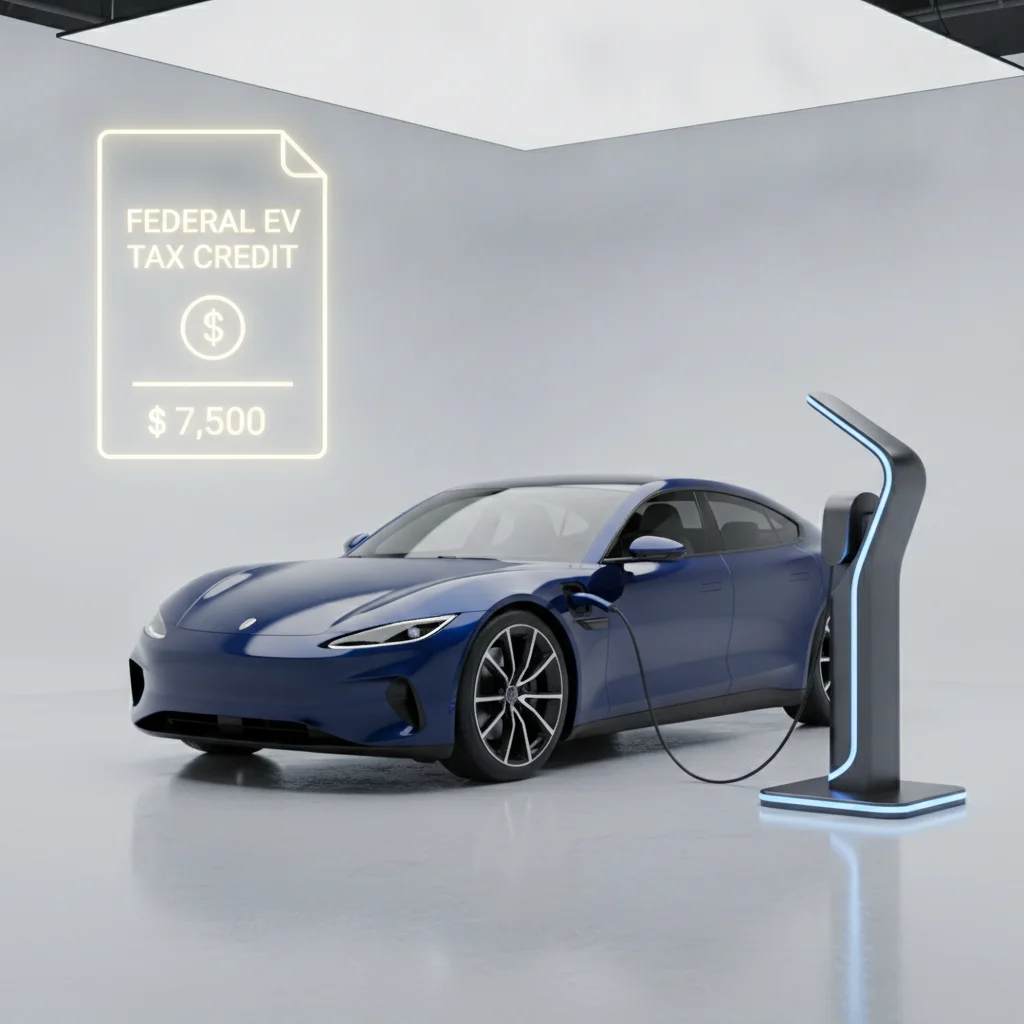
The federal clean vehicle tax credit sounds straightforward: buy a qualifying EV, save up to $7,500 on your federal taxes. But between the Inflation Reduction Act's 2023 overhaul and subsequent IRS guidance, the rules have become genuinely complex. Assembly location, battery mineral sourcing, component manufacturing, vehicle price caps, your income, your tax liability, and even how you finance the car can all affect whether you see a dime of that credit.
The result: a surprising number of buyers who expect the $7,500 wind up with a fraction of it — or nothing at all. This article walks through the most common mistakes people make when pursuing the EV tax credit, why those mistakes happen, and exactly how to avoid them.
Before diving in, keep this reference handy: our regularly updated list of qualifying EVs is the fastest way to confirm whether your target model is currently eligible. Eligibility changes — sometimes quarterly — so rechecking close to purchase day matters.

Common Mistakes That Cost Buyers the Full Credit
The mistakes below aren't obscure edge cases. They're the scenarios that catch ordinary buyers off guard every year. Understanding them before you visit a dealership is the single most effective step you can take.
Assuming any EV automatically qualifies for the credit without checking the IRS's current vehicle list.
Why it happens: The credit has been widely publicized as a blanket EV benefit, and dealers don't always volunteer information about disqualified models — especially if they're trying to move inventory.
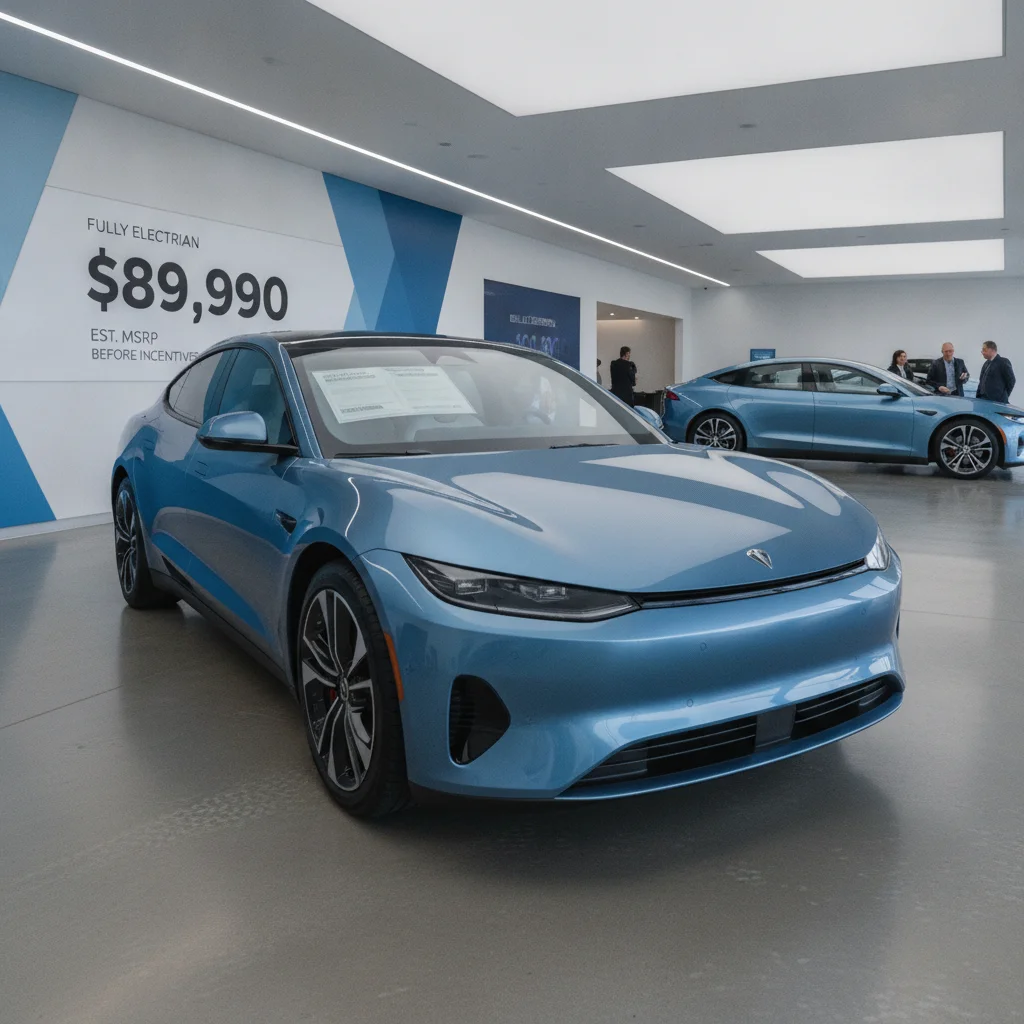
Not accounting for the vehicle's MSRP cap — especially for models that cross the $55,000 sedan threshold.
Why it happens: Buyers focus on the transaction price they negotiate rather than the MSRP, and many don't know that some vehicles marketed as SUVs are classified as sedans under IRS rules.
Counting on the full $7,500 when the vehicle only qualifies for the $3,750 battery component or mineral credit — not both.
Why it happens: News coverage often refers to the credit as simply '$7,500,' without explaining that it's split into two $3,750 halves that each have separate qualification criteria, and that many vehicles only meet one set of requirements.
Failing to check income eligibility based on the year of delivery, not the year the vehicle was ordered.
Why it happens: Many buyers reserve or order an EV months in advance and check their income at that time, not realizing the IRS evaluates MAGI at the point of delivery — or the prior tax year, whichever is lower.
Expecting a full $7,500 refund when the buyer's actual federal tax liability is less than that amount.
Why it happens: Many consumers confuse tax credits with tax refunds. The clean vehicle credit is nonrefundable — it offsets tax liability only, with no carryover and no cash back for the unused portion.
Using the point-of-sale credit transfer without verifying the dealer is registered with the IRS — or without understanding the clawback risk.
Why it happens: The point-of-sale transfer option is new as of 2024, and both dealers and buyers are still learning the mechanics. Some buyers assume all dealers can offer it; some dealers offer it without being properly registered.
Assuming a leased EV passes the $7,500 credit directly to the lessee.
Why it happens: Buyers know leased EVs can qualify for the credit and assume they benefit automatically. In reality, the credit belongs to the leasing company, which may or may not reduce the lease cost accordingly.
~50%
Of U.S. EV models failing North America assembly test
As of early 2024, roughly half of EV models sold in the U.S. did not meet the North American final assembly requirement, according to the IRS qualifying vehicle list.
$7,500
Maximum federal clean vehicle tax credit
The Inflation Reduction Act established the current credit structure in 2022, with the full amount split into two $3,750 halves tied to separate battery sourcing requirements.
$150,000
MAGI cap for single filers
Single filers with modified adjusted gross income above $150,000 in both the purchase year and prior year are ineligible for the new clean vehicle credit under IRS rules.
2024
Year point-of-sale credit transfer became available
Starting January 1, 2024, buyers could transfer the credit to a registered dealer and receive it as an instant price reduction rather than waiting until tax filing.
$25,000
Maximum sale price for used EV credit eligibility
The used clean vehicle credit, worth up to $4,000, applies only to vehicles sold by a licensed dealer for no more than $25,000, per IRS guidance.
If you want a step-by-step verification process before you set foot in a showroom, our guide on how to check EV eligibility before visiting the lot walks you through the IRS and DOE tools in plain language.
Eligibility Can Change Between Order and Delivery
Manufacturers adjust battery supply chains throughout the model year, and IRS-certified eligibility status can change as a result. A vehicle that qualifies when you place your order may qualify for a lower amount — or not at all — by the time you take delivery. Always recheck the IRS qualifying vehicle list within one week of your scheduled delivery date and document the eligibility status at that time.
Dealer Markup Does Not Change the MSRP — But It Can Still Cost You
For vehicles in high demand, dealers may charge above MSRP. The MSRP for credit eligibility purposes is set by the manufacturer and is unaffected by a dealer's markup. However, paying above MSRP means your actual out-of-pocket cost rises even as the credit stays the same — effectively eroding the benefit. Avoid dealer markups on vehicles where the MSRP is already close to the eligibility cap.
State Credits Don't Always Stack the Way You Expect
Many states offer their own EV incentives — rebates, tax credits, or sales tax exemptions — on top of the federal credit. However, some state programs require the vehicle to also qualify for the federal credit, while others have their own independent criteria. Don't assume a vehicle that qualifies for one automatically qualifies for the other. Check your state's clean vehicle program separately before purchasing.
The Assembly and Battery Rules Are Stricter Than You Think
Two of the most disqualifying requirements under the current law have nothing to do with you personally — they're about where the car was built and where its battery materials came from.
Final Assembly Requirement
The vehicle must be assembled in North America (U.S., Canada, or Mexico). Many popular EVs sold in the U.S. are manufactured overseas, including several models from Hyundai, Kia, and Toyota. Regardless of brand reputation or price, if the final assembly happened outside North America, the vehicle is automatically ineligible. You can verify assembly location using the Vehicle Identification Number (VIN) on the NHTSA decoder or directly through the IRS's online eligibility tool.
Battery Critical Mineral and Component Requirements
This is where things get particularly complicated. The law splits the $7,500 into two $3,750 halves:
- $3,750 for meeting critical mineral sourcing thresholds (lithium, cobalt, nickel, etc. must come from the U.S. or a free-trade-agreement partner)
- $3,750 for meeting battery component manufacturing thresholds (a percentage of components must be made or assembled in North America)
These thresholds increase each year, so a vehicle that qualified for both halves in 2023 may only qualify for one half — or neither — in 2025 or 2026. Manufacturers routinely adjust their supply chains mid-year, which means the same trim level can gain or lose eligibility between your test drive and your delivery date.

The IRS publishes a list of qualifying vehicles at IRS.gov that specifies which credit amount each model qualifies for. Cross-referencing that list against your target vehicle is non-negotiable before signing anything.
For a deeper look at how vehicle price affects eligibility layered on top of these battery rules, see our breakdown of MSRP caps and the EV tax credit.
The Credit Is Nonrefundable — Know Your Tax Liability First
This is the most financially consequential rule many buyers overlook. The federal clean vehicle credit can only reduce your tax liability to zero — it does not generate a refund for any unused portion, and unused amounts do not carry over to future years. If you owe $3,000 in federal taxes and claim the $7,500 credit, you receive a $3,000 benefit, not $7,500. Calculate your projected federal tax liability before you finalize a purchase decision, and factor the realistic credit value — not the maximum — into your budget.
Verify the Specific VIN, Not Just the Model Name
EV tax credit eligibility is determined at the VIN level, not the model name. Two vehicles with identical badges can have different eligibility status if they were built in different factories or with different battery supply chains. The IRS and the Department of Energy provide VIN-level lookup tools — use them with the actual VIN of the vehicle you intend to purchase, not a generic model search. Confirm in writing with the dealer that the specific vehicle you are buying has been verified as eligible.
Income Limits, Tax Liability, and the Point-of-Sale Transfer Option
Even if the vehicle qualifies perfectly, your personal financial situation can still disqualify you — or reduce the credit's real value to zero.
Modified Adjusted Gross Income (MAGI) Caps
To claim the full credit, your MAGI must fall below these thresholds in either the year of purchase or the prior year (whichever is lower):
| Filing Status | MAGI Limit |
|---|---|
| Single / Married Filing Separately | $150,000 |
| Head of Household | $225,000 |
| Married Filing Jointly / Qualifying Surviving Spouse | $300,000 |
The IRS uses the lower of your current-year or prior-year MAGI, which actually benefits buyers whose income fluctuates. But many buyers don't realize the current-year income is evaluated at delivery, not at the time of reservation or order. If your income rises — due to a bonus, a home sale, or a Roth conversion — between ordering and taking delivery, you could be disqualified even if you were under the limit when you placed the order.
The Credit Is Nonrefundable
This is the rule that stings the most buyers who don't know about it. The clean vehicle credit is nonrefundable — it can only offset your federal income tax liability dollar-for-dollar. It cannot reduce your tax bill below zero and will not generate a refund. If your tax liability for the year is $4,000, you get a $4,000 credit — not $7,500. The remaining $3,500 is simply gone; it doesn't carry over to a future year.
Buyers who are retired, have significant pre-tax deductions, or earn modest incomes frequently discover this limitation only when they file their return.
The Point-of-Sale Transfer: A Workaround with Conditions
Starting in 2024, you can transfer the credit to a participating dealer at the point of sale, effectively receiving it as an instant discount off the purchase price rather than waiting until you file taxes. This solves the nonrefundability problem for many buyers — but only if:
- The dealer has registered with the IRS's Energy Credits Online portal
- You meet the income requirements at the time of sale
- You sign an attestation confirming eligibility
- You are not leasing (lease credits go to the financing company, not you)
If you use the point-of-sale transfer and it later turns out you didn't qualify — say, your income exceeded the limit — you will owe that amount back to the IRS when you file. The IRS has been explicit about this clawback provision.

Buyers whose income is near the cutoff or who have complex tax situations should run these numbers with a tax professional before committing. Our pre-purchase eligibility checklist covers exactly what to confirm before you sign.
MSRP Caps, Lease Structures, and Used EV Credits
Two more areas trip up buyers who have already done some research but missed a key detail.
Vehicle Price Limits by Category
The credit has hard MSRP caps that differ by vehicle type:
- Sedans, hatchbacks, wagons, and other passenger cars: $55,000 MSRP cap
- SUVs, trucks, and vans: $80,000 MSRP cap
What counts as an SUV versus a sedan for this purpose is determined by IRS fuel economy classification — not by how a manufacturer markets the vehicle. Several crossovers that manufacturers call SUVs have been classified as passenger cars by the IRS, subjecting them to the lower $55,000 cap. A vehicle priced at $57,000 that the manufacturer calls an SUV but the IRS classifies as a car is over the limit and ineligible. Check the full breakdown of MSRP caps for vehicle-specific details.
Also note: MSRP means the manufacturer's suggested retail price — not the transaction price. If a dealer is selling a vehicle above MSRP (which has become common for high-demand EVs), the sticker price is what counts, and dealer markups don't change the MSRP calculation.
Leasing: The Credit Goes to the Lessor
When you lease an EV, the leasing company (not you) technically owns the vehicle and claims the credit. The company may — or may not — pass those savings along to you through a lower monthly payment. There is no legal requirement for them to do so. Some lessors pass the full benefit through; others pocket it or share only part. If you're leasing specifically to access the credit, negotiate the lease terms with the credit factored in and ask the dealer to show you explicitly how the credit is reflected in the cap cost or money factor.
The Used EV Credit Is Separate and Has Its Own Rules
Used EVs can qualify for a credit of up to $4,000 (or 30% of the sale price, whichever is less) under a separate program — but the income caps are lower, the vehicle must be at least two years old, it must be purchased from a licensed dealer, and the sale price cannot exceed $25,000. If you're shopping used, don't assume the rules are the same. See our dedicated article on claiming the used EV credit for the full rundown. And if your income is below the thresholds for either credit, there may be additional programs worth exploring — our guide on EV incentives for lower-income buyers covers federal and state options that can go further than the standard $7,500.
The Credit Is Nonrefundable — Know Your Tax Liability First
This is the most financially consequential rule many buyers overlook. The federal clean vehicle credit can only reduce your tax liability to zero — it does not generate a refund for any unused portion, and unused amounts do not carry over to future years. If you owe $3,000 in federal taxes and claim the $7,500 credit, you receive a $3,000 benefit, not $7,500. Calculate your projected federal tax liability before you finalize a purchase decision, and factor the realistic credit value — not the maximum — into your budget.
Verify the Specific VIN, Not Just the Model Name
EV tax credit eligibility is determined at the VIN level, not the model name. Two vehicles with identical badges can have different eligibility status if they were built in different factories or with different battery supply chains. The IRS and the Department of Energy provide VIN-level lookup tools — use them with the actual VIN of the vehicle you intend to purchase, not a generic model search. Confirm in writing with the dealer that the specific vehicle you are buying has been verified as eligible.
Your Pre-Purchase Checklist: Confirm Before You Commit
The EV tax credit is real money — but only if you qualify, and only if the vehicle qualifies. Here's a compressed verification sequence to run through before signing any purchase agreement:
- Confirm the VIN-specific assembly location using the NHTSA decoder or the IRS's vehicle lookup tool. Don't rely on the model name alone — assembly location varies by production run.
- Check the current IRS qualifying vehicles list to confirm the specific model and trim qualifies and for how much ($3,750 or $7,500).
- Verify the MSRP is under the cap for the correct vehicle category (sedan cap vs. SUV/truck cap).
- Calculate your MAGI for the current tax year, including any anticipated income events before year-end (bonuses, investment gains, conversions).
- Estimate your federal tax liability for the year. If it's below $7,500, the full credit won't help you — unless you use the point-of-sale transfer and your liability is sufficient.
- Decide on point-of-sale transfer or tax-time credit based on your liability situation, and confirm the dealer is IRS-registered if you choose the transfer route.
- Get the credit acknowledgment in writing from the dealer as part of your purchase documentation.
Taking an hour to verify these items before you sign can protect you from losing thousands of dollars you were counting on. For a more detailed walkthrough of each step, our guide to checking EV eligibility before visiting the lot gives you the exact tools and links to use.
If you're evaluating the full cost picture beyond the credit — including insurance and charging costs — our EV insurance guide and charging costs and savings hub will help you build a complete ownership budget.
Eligibility Can Change Between Order and Delivery
Manufacturers adjust battery supply chains throughout the model year, and IRS-certified eligibility status can change as a result. A vehicle that qualifies when you place your order may qualify for a lower amount — or not at all — by the time you take delivery. Always recheck the IRS qualifying vehicle list within one week of your scheduled delivery date and document the eligibility status at that time.
Dealer Markup Does Not Change the MSRP — But It Can Still Cost You
For vehicles in high demand, dealers may charge above MSRP. The MSRP for credit eligibility purposes is set by the manufacturer and is unaffected by a dealer's markup. However, paying above MSRP means your actual out-of-pocket cost rises even as the credit stays the same — effectively eroding the benefit. Avoid dealer markups on vehicles where the MSRP is already close to the eligibility cap.
State Credits Don't Always Stack the Way You Expect
Many states offer their own EV incentives — rebates, tax credits, or sales tax exemptions — on top of the federal credit. However, some state programs require the vehicle to also qualify for the federal credit, while others have their own independent criteria. Don't assume a vehicle that qualifies for one automatically qualifies for the other. Check your state's clean vehicle program separately before purchasing.

All claims are backed by peer-reviewed research. Sources on request.