Key Takeaways
MSRP Cap (EV Tax Credit)
An MSRP cap is the maximum sticker price a vehicle can have and still qualify for the federal EV tax credit. Under the Inflation Reduction Act, different caps apply depending on whether the vehicle is classified as a sedan, SUV, pickup truck, or van. If the vehicle's MSRP exceeds its applicable cap, the buyer is disqualified from the credit — regardless of income or other eligibility factors.
The IRS uses the manufacturer's suggested retail price as defined under 26 U.S.C. § 30D, which includes options and accessories but excludes destination charges. Vehicle classification follows EPA fuel economy label categories, not how the manufacturer markets the model.
Why the Sticker Price Became a Gatekeeper
The federal EV tax credit has never been simple, but the Inflation Reduction Act of 2022 added a layer that catches a lot of buyers off guard: your vehicle's MSRP has to come in under a specific ceiling, or the credit vanishes entirely. This isn't a sliding scale — there's no partial credit if you're $500 over the limit. You either qualify or you don't.
The rationale behind the cap is straightforward. Congress wanted to target the credit at mainstream buyers rather than luxury EV purchasers. A $7,500 subsidy makes a meaningful difference on a $45,000 family crossover but functions more like a rounding error on a $90,000 performance sedan. The MSRP cap was designed to draw that line.
But here's where it gets complicated: the line isn't drawn in the same place for every vehicle type. And the way vehicles are classified may not match your intuition. That classification decision — sedan versus SUV — can determine whether you're working with a $55,000 ceiling or an $80,000 one. For some popular EV models, the difference is the entire credit.
For a deeper look at the full credit structure, see The Federal EV Tax Credit, Explained, which covers all the eligibility layers including assembly and battery sourcing requirements. This article focuses specifically on the price ceiling rules and how they work in practice.
The Two Caps: $55,000 and $80,000
Under current law, the MSRP caps break down as follows:
- Sedans, hatchbacks, and wagons: $55,000 maximum MSRP
- SUVs, pickup trucks, and vans: $80,000 maximum MSRP
The higher cap for trucks and SUVs reflects the reality that these vehicles — which dominate U.S. sales — tend to carry higher base prices. A $55,000 ceiling on a full-size electric pickup would eliminate almost every option on the market. The $80,000 figure gives those buyers access to the credit while still excluding the top end of the luxury segment.
$55,000
MSRP cap for sedans and wagons
Set by the Inflation Reduction Act of 2022, this ceiling applies to EVs classified by the EPA as passenger cars, including many crossovers.
$80,000
MSRP cap for SUVs, trucks, and vans
The higher threshold applies to vehicles EPA-classified as SUVs, pickup trucks, or vans under the clean vehicle credit rules.
$7,500
Maximum new EV federal tax credit
The full credit amount under 26 U.S.C. § 30D — lost entirely if the vehicle's MSRP exceeds the applicable cap.
2024
Year point-of-sale credit transfers began
Starting January 1, 2024, eligible buyers can transfer the EV credit to a dealer for an immediate price reduction rather than waiting for tax filing.
$25,000
Sale price cap for used EV credit
The used clean vehicle credit uses a sale price ceiling rather than an MSRP cap, and the rules differ significantly from the new vehicle credit.
The lower $55,000 cap for sedans is where most of the confusion lives. Many EVs that look and function like SUVs — tall ride height, hatchback body style, all-wheel drive optional — are actually classified as passenger cars for fuel economy and tax credit purposes. If the EPA labels your vehicle a car rather than an SUV, the $55,000 cap applies regardless of how the manufacturer advertises it.
MSRP vs. Transaction Price: Different Things
The MSRP cap is based on the manufacturer's suggested retail price, not what you actually negotiate to pay. If you negotiate $3,000 below sticker, that lower transaction price doesn't affect your credit eligibility — for better or worse. A vehicle with a $56,000 MSRP still doesn't qualify under the sedan cap even if you buy it for $52,000.
Point-of-Sale Transfers Require Upfront Accuracy
If you transfer the EV credit to a dealer at closing and the IRS later determines the vehicle didn't qualify, you may have to repay the credit amount on your tax return. Dealers are not liable for this error. Verify classification and MSRP yourself using official IRS and DOE sources before structuring a deal around a credit transfer.
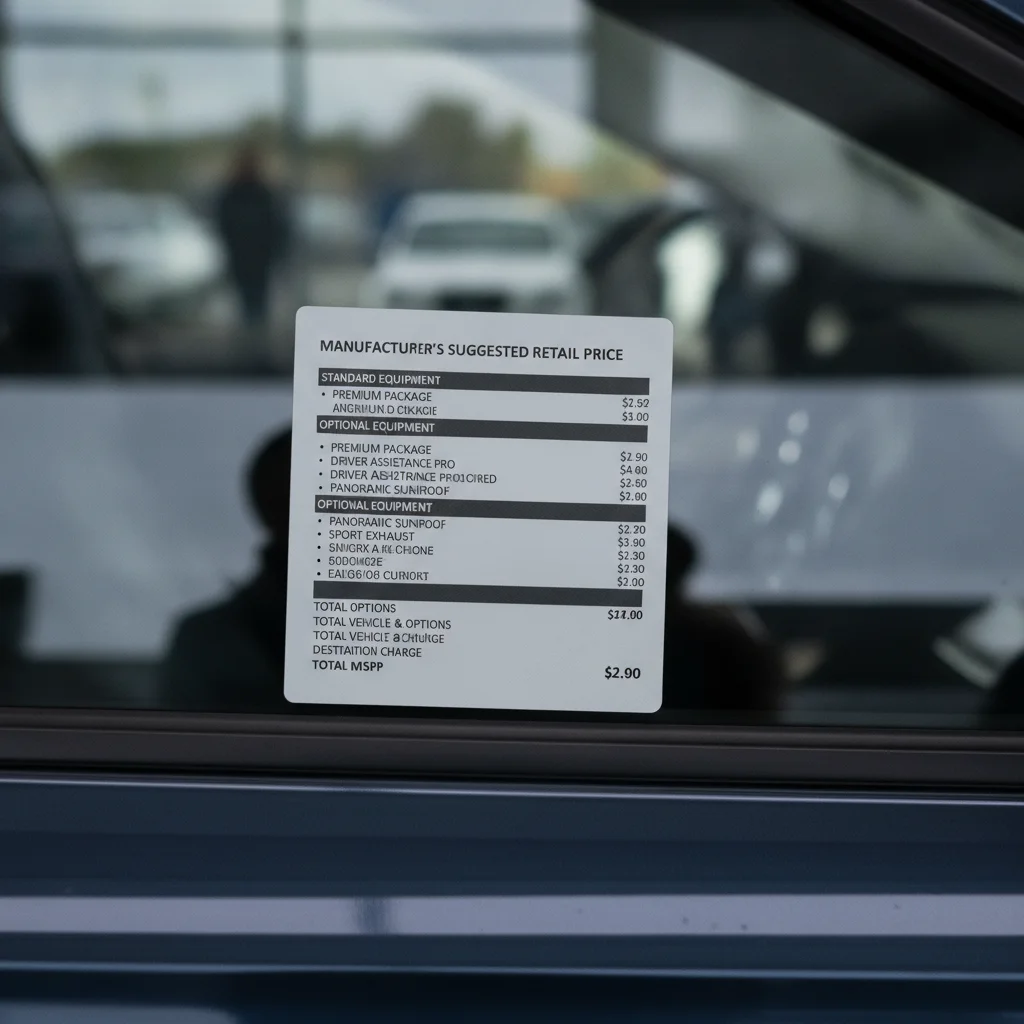
It's worth noting that the cap applies to the MSRP as a whole, including factory-installed options and packages. If you add a premium audio system or an advanced driver-assistance package at the factory, those costs are folded into the MSRP and count toward the ceiling. Dealer-installed accessories added after the vehicle leaves the factory are treated differently — but don't assume that distinction protects you without verifying with the dealer.
For a plain-language breakdown of the key terms you'll encounter, including how MSRP is formally defined under the tax code, see the EV Tax Credit Glossary.
Vehicle Classification: The Detail That Trips People Up
The IRS determines vehicle classification using EPA fuel economy label categories, not manufacturer marketing descriptions. This matters because the automotive industry and the federal government don't always see eye to eye on what constitutes an SUV.
The EPA uses a system based on interior volume and body style. A vehicle that seats five, has a sloping rear roofline, and measures below certain interior volume thresholds may be classified as a "small station wagon" or "large car" even if the automaker sells it as a crossover. That classification triggers the lower $55,000 MSRP cap.
This has created real-world consequences for shoppers. Some popular EV models that visually resemble compact SUVs are classified as sedans or wagons under EPA rules. A buyer who assumes the $80,000 cap applies — because the manufacturer markets the vehicle as an SUV — may be unpleasantly surprised when they check the IRS's published list of qualifying vehicles.
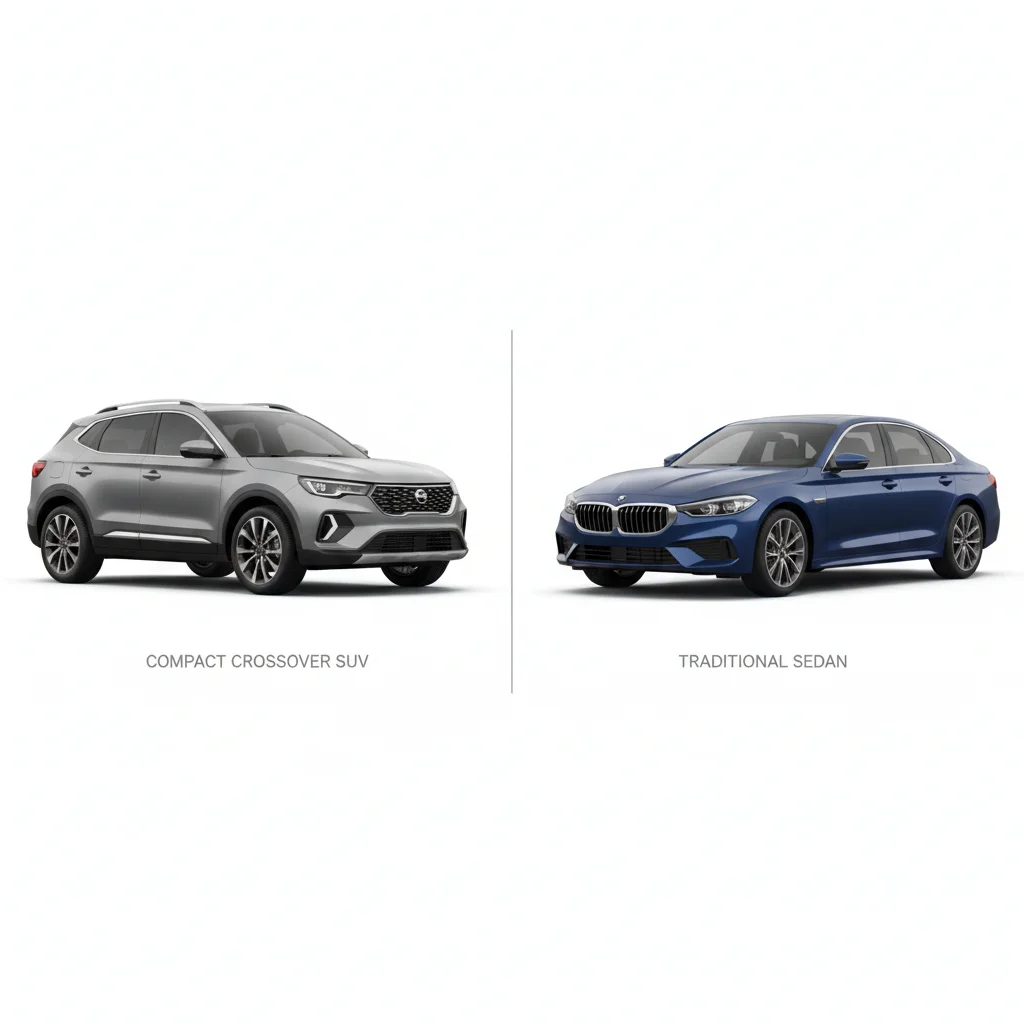
The practical lesson: before you get emotionally invested in a specific trim or option package, verify the vehicle's classification on the IRS's clean vehicle credit tool or the Department of Energy's fueleconomy.gov database. Both publish model-year-specific classification data. Don't rely on the salesperson's characterization — verify it yourself.
Understanding how MSRP works in the first place is also useful context here. See What MSRP Actually Means and Why It's Just a Starting Point for a grounding explanation of what the sticker price includes and excludes.
How Options and Trim Levels Affect Your Eligibility
A vehicle's base MSRP being under the cap doesn't automatically mean you're in the clear. The credit qualification is based on the MSRP of the specific vehicle you're purchasing — including every factory option on that unit.
Consider a hypothetical: an EV crossover with a $52,000 base price sounds comfortably under the $55,000 sedan cap. But add the $1,800 panoramic roof, $1,500 premium lighting package, and $500 color upgrade, and suddenly you're at $55,800 — over the limit by $800 and ineligible for the credit. You'd lose $7,500 over $800 in options.
Check the IRS List Before You Configure
The IRS publishes an updated list of qualifying clean vehicles at irs.gov, including each vehicle's applicable MSRP cap. Check this list before you spend time configuring a vehicle or negotiating a deal. Models can be added or removed mid-year as manufacturers certify compliance. Bookmark the page and check it on the day you're ready to buy.
Order Strategically to Stay Under the Cap
If you're factory-ordering an EV, you have more control over the final MSRP than with lot inventory. Build your configuration with the credit cap as a hard constraint, then add options within that budget. A well-planned factory order lets you get the features you want while keeping the MSRP at a qualifying level — and avoids paying for dealer-added options on a lot vehicle you didn't choose.
This dynamic puts real pressure on trim selection. Buyers who want to maximize their credit eligibility may need to choose a lower trim or forgo certain option packages. The math usually favors restraint: declining $3,000 in optional features to secure $7,500 in credit is a straightforward trade-off.
It also changes how you should think about vehicle inventory. If a dealer has a vehicle on the lot already loaded with options that push it over the cap, you can't simply ignore those options for tax credit purposes — you'd be paying for them and losing the credit. You may need to wait for or special-order a unit with a qualifying MSRP.
For more on what dealers add to vehicles and how those additions affect pricing, see What the Sticker Price Doesn't Tell You.
“The MSRP cap is one of the most mechanical disqualifiers in the tax credit rules — there's no gray area, no appeals process, no partial credit. You're either under the number or you're not.”
— Ingrid Malmqvist, Senior Policy Analyst, Center for Sustainable Energy
The MSRP Cap and the Point-of-Sale Credit
Starting in January 2024, eligible buyers can transfer their EV tax credit to the dealer at the point of sale, effectively receiving an immediate discount on the purchase price rather than waiting to claim the credit on their tax return. This change made the credit more valuable in practice — and made the MSRP cap more consequential to verify upfront.
Here's why: if you transfer the credit to the dealer, the dealer applies it to reduce your out-of-pocket cost at closing. If the IRS later determines the vehicle didn't qualify — because the MSRP exceeded the applicable cap — you may be required to repay the credit. The burden of verification falls on the buyer, not the dealer.
MSRP vs. Transaction Price: Different Things
The MSRP cap is based on the manufacturer's suggested retail price, not what you actually negotiate to pay. If you negotiate $3,000 below sticker, that lower transaction price doesn't affect your credit eligibility — for better or worse. A vehicle with a $56,000 MSRP still doesn't qualify under the sedan cap even if you buy it for $52,000.
Point-of-Sale Transfers Require Upfront Accuracy
If you transfer the EV credit to a dealer at closing and the IRS later determines the vehicle didn't qualify, you may have to repay the credit amount on your tax return. Dealers are not liable for this error. Verify classification and MSRP yourself using official IRS and DOE sources before structuring a deal around a credit transfer.
Before you structure a purchase around a point-of-sale credit transfer, confirm three things independently: the vehicle's classification (sedan or SUV), the MSRP of the exact unit you're purchasing, and whether that MSRP is under the applicable cap. Use the IRS's online clean vehicle credit tool and cross-reference with the manufacturer's official build-and-price configurator.
The MSRP cap is just one of several hurdles. Battery sourcing, final assembly location, and your own income can also disqualify you. See Why Your EV Might Not Actually Qualify for the $7,500 Credit for a full map of what trips buyers up.

Practical Steps to Stay Under the Cap
Navigating the MSRP cap doesn't require a tax attorney — it requires methodical preparation before you step into the dealership. Here's a practical approach:
- Identify your vehicle's EPA classification. Use fueleconomy.gov to look up the specific model year and trim. Note whether it's classified as a car, station wagon, SUV, or pickup truck — the exact label matters.
- Apply the correct cap. Cars and station wagons: $55,000. SUVs, pickups, and vans: $80,000.
- Build your configuration within the cap. Use the manufacturer's online configurator to price out your preferred options and confirm the total MSRP stays below the ceiling.
- Verify on the IRS's tool. The IRS publishes a regularly updated list of qualifying vehicles with their applicable caps. Check it before finalizing your choice — manufacturers sometimes make mid-year changes to vehicles that affect eligibility.
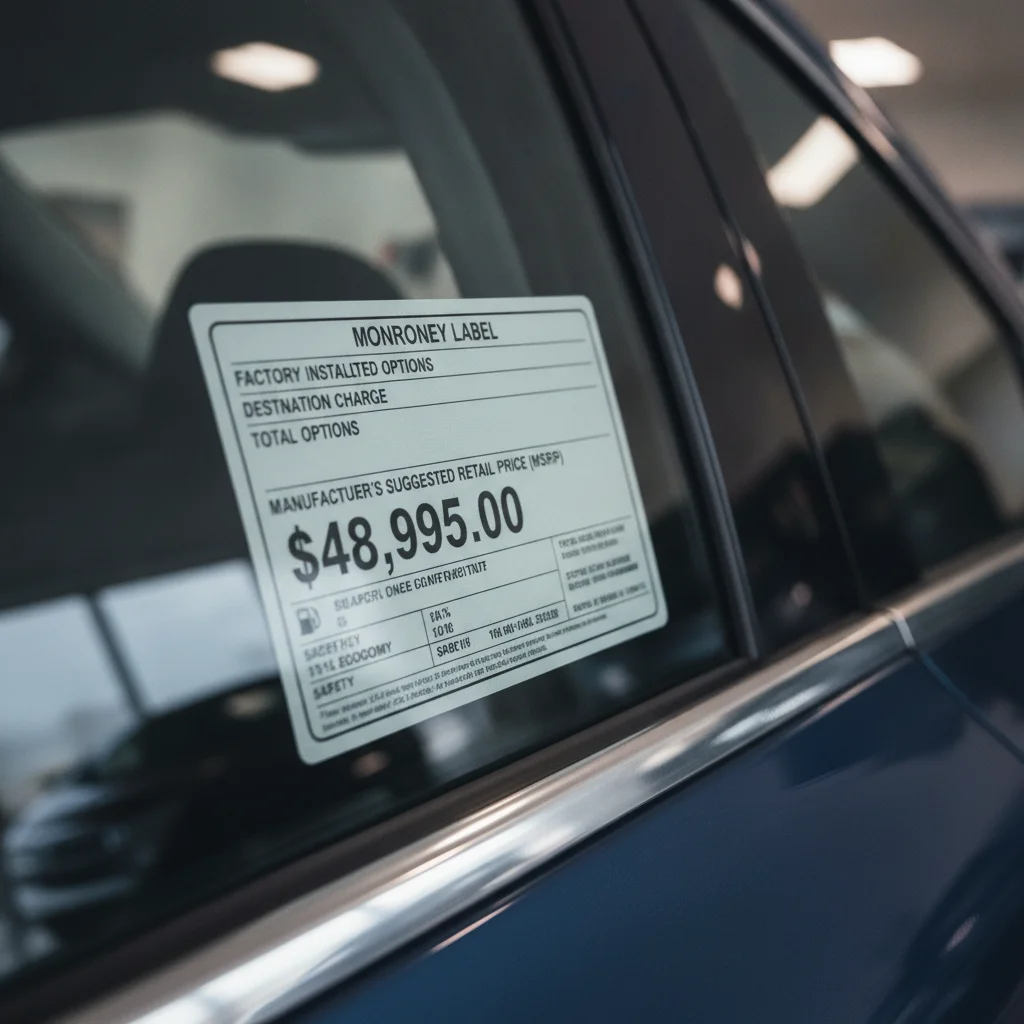
- Get the MSRP in writing. Before signing any paperwork, confirm the vehicle's MSRP is documented on the Monroney label and that it matches what you configured. If a dealer has added accessories that raise the MSRP, ask them to remove those additions or find a different unit.
Check the IRS List Before You Configure
The IRS publishes an updated list of qualifying clean vehicles at irs.gov, including each vehicle's applicable MSRP cap. Check this list before you spend time configuring a vehicle or negotiating a deal. Models can be added or removed mid-year as manufacturers certify compliance. Bookmark the page and check it on the day you're ready to buy.
Order Strategically to Stay Under the Cap
If you're factory-ordering an EV, you have more control over the final MSRP than with lot inventory. Build your configuration with the credit cap as a hard constraint, then add options within that budget. A well-planned factory order lets you get the features you want while keeping the MSRP at a qualifying level — and avoids paying for dealer-added options on a lot vehicle you didn't choose.
If you're also exploring the used EV credit, note that the rules are structured differently. The used credit uses a sale price cap of $25,000 rather than an MSRP cap, and it has its own income thresholds and vehicle age requirements. See New vs. Used EV Tax Credits: Which One Applies to You? for a side-by-side comparison.
What the Cap Means for Specific Market Segments
Different buyer profiles are affected by the MSRP caps in different ways. Here's how the ceilings play out across common EV categories:
Compact and Mid-Size Crossovers
This is where classification ambiguity hits hardest. Many popular crossovers in the $45,000–$60,000 range straddle the line between EPA sedan and SUV classifications. If your crossover lands in the sedan bucket, you're working with a $55,000 ceiling that some trims and option packages will exceed. Buyers in this segment need to verify classification before settling on a trim.
Full-Size Electric Trucks
The $80,000 cap is more forgiving here, but not unlimited. Several electric pickups have base prices in the $60,000–$70,000 range, and loaded configurations with premium packages can approach or exceed $80,000. Truck buyers may still need to be selective about which trim level they pursue to keep the credit accessible.
Luxury EVs
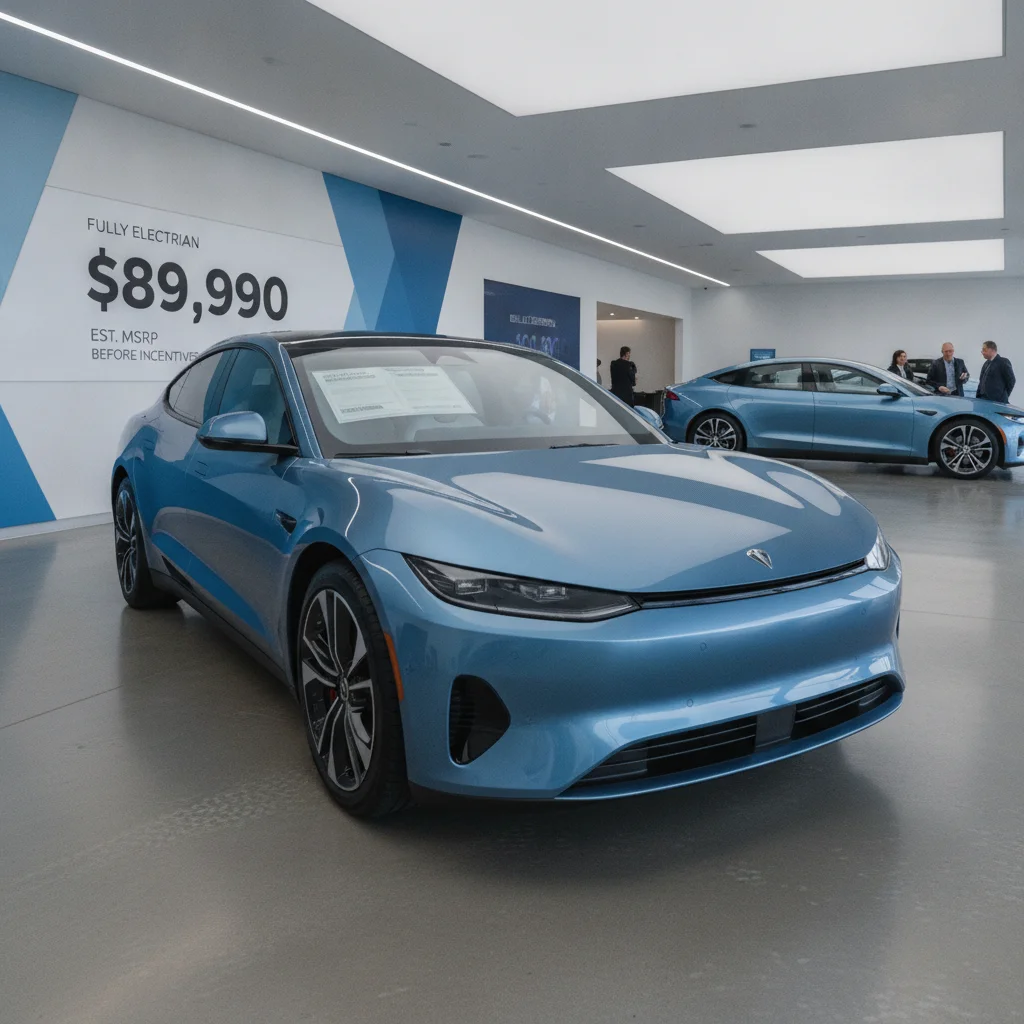
Many luxury EVs are priced well above both caps. For buyers in this segment, the credit simply isn't available — and that's intentional. If you're purchasing a $90,000 electric sedan, the policy objective is clear: this credit isn't designed for you. That doesn't mean ownership costs are unreasonable; EV fuel savings remain significant regardless of credit eligibility. See Charging Costs & Savings for context on long-term cost comparisons.
Sedans and Hatchbacks
Purpose-built electric sedans and hatchbacks often have base prices comfortably under $55,000, making credit eligibility more straightforward. The risk here is less about the cap and more about the battery sourcing and assembly rules that can disqualify specific models regardless of price.

All claims are backed by peer-reviewed research. Sources on request.