Key Takeaways
Why Pre-Visit Research on EV Credits Is Non-Negotiable
The federal EV tax credit sounds simple on paper: buy a qualifying electric vehicle, get up to $7,500 off your federal tax bill — or, since 2024, take it as an instant reduction at the point of sale. But the Inflation Reduction Act layered in a set of overlapping eligibility requirements that trip up buyers every week. The vehicle has to be assembled in North America. Its battery components have to meet sourcing thresholds. Your modified adjusted gross income can't exceed a cap. The vehicle's MSRP must fall below a ceiling. And the specific trim or configuration you're buying — not just the model name — has to appear on the IRS's active list.
Any one of those factors can disqualify you or the vehicle, and dealers don't always get it right. Some will confidently tell you a car qualifies when it doesn't. Others will fail to mention that the credit is available at the point of sale, leaving you waiting until tax season for money you could have had upfront. Battery sourcing rules, assembly requirements, and income caps are responsible for far more disqualifications than most buyers expect — and the only way to protect yourself is to do the verification yourself, before you negotiate.
The good news: the federal government provides the tools you need, and they're free. This guide walks you through the exact sequence to use them correctly.
What You Need Before You Start
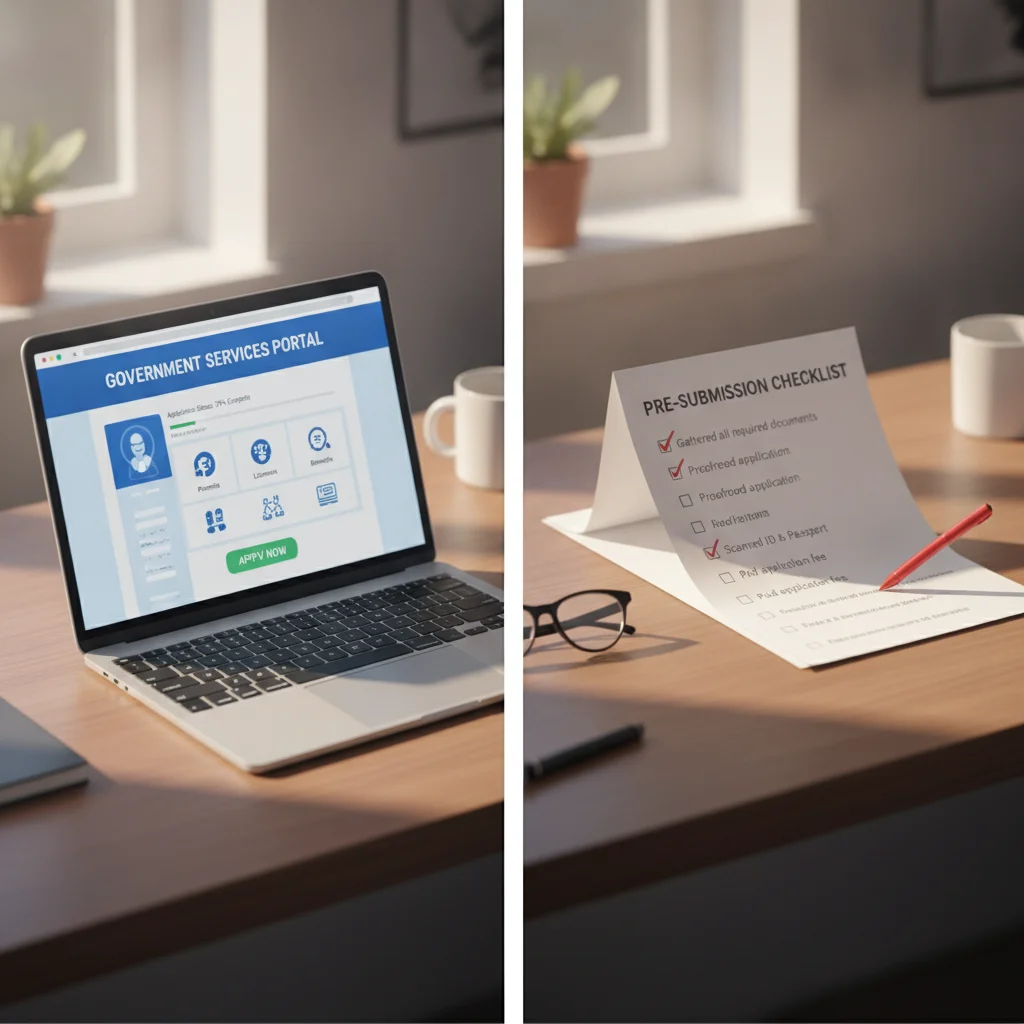
Before you open a browser, collect a few pieces of information. Having these ready makes the verification process faster and prevents you from drawing conclusions based on incomplete data.
What you will need
A note on the vehicle information: if you're still in the early browsing phase and haven't landed on a specific trim, that's fine — you can run searches across multiple configurations. But understand that trim matters. A base model of a given EV and its premium version can have different battery pack configurations, different MSRP values, and therefore different credit eligibility. Nail down the exact trim you intend to buy before you treat any research result as final.
IRS Energy Credits Online Portal (energycredits.irs.gov)
The authoritative IRS tool for verifying which vehicles qualify for the new clean vehicle credit and for confirming point-of-sale transfer eligibility by VIN.
DOE Alternative Fuels Data Center Vehicle Search (afdc.energy.gov)
A Department of Energy database that lets you filter EVs by credit eligibility, assembly location, and battery sourcing status — useful for side-by-side model comparisons.
IRS Form 8936 Instructions
The official IRS form used to claim the clean vehicle credit on your tax return — reviewing the instructions confirms income limits and credit calculation rules.
Your most recent federal tax return or pay stubs
Used to estimate your modified adjusted gross income so you can confirm you fall within the applicable income threshold for the credit.
Manufacturer's VIN decoder or window sticker (Monroney label)
Lets you confirm the vehicle's final assembly location and battery configuration, both of which affect credit eligibility at the trim level.
Step-by-Step: Verifying EV Credit Eligibility Before You Go to the Dealership
Follow these steps in order. Each one builds on the last, and skipping ahead can lead to false confidence. The entire process typically takes 15–30 minutes the first time; faster once you know what you're looking for.
Confirm the Vehicle's Assembly Location
The Inflation Reduction Act requires that a qualifying new clean vehicle undergo final assembly in North America. This is a hard requirement — no exceptions. The easiest way to check this before visiting any tool is to decode the Vehicle Identification Number (VIN) using the National Highway Traffic Safety Administration's VIN decoder at vpic.nhtsa.dot.gov/decoder. The first character of a VIN indicates the country of manufacture: a 1, 4, or 5 indicates U.S. assembly; 2 indicates Canada; 3 indicates Mexico. A VIN beginning with any other character generally means the vehicle was assembled outside North America and will not qualify.
If you don't have a specific VIN yet, check the manufacturer's website or the DOE AFDC tool in Step 2, which includes assembly location data for each model.
Search the DOE Alternative Fuels Data Center
Go to afdc.energy.gov/vehicles/search and use the federal tax credit filter to see which vehicles currently meet IRS requirements. You can filter by:
- Vehicle type (new or used)
- Credit amount (full $7,500, partial $3,750, or no credit)
- Make and model year
The results will show you whether each model meets the battery component requirement, the critical minerals requirement, and the MSRP cap. For each model listed, click through to the detail page to see trim-level breakdowns. This is where you may find that the trim you want has a different credit status than the base model — a common issue with vehicles that offer both standard-range and long-range battery configurations.
Note the credit amount shown for your specific trim and MSRP. If the model doesn't appear on the list at all, it's almost certainly ineligible under current rules — but confirm through the IRS portal in Step 3 before drawing a final conclusion.
Verify on the IRS Energy Credits Online Portal
Navigate to energycredits.irs.gov and use the qualified vehicle search tool. This is the IRS's own database — the most authoritative source for credit eligibility. Search by make, model, year, and trim. The results will confirm:
- Whether the vehicle currently qualifies for the new clean vehicle credit
- The credit amount ($7,500 or $3,750)
- Whether the dealer can offer a point-of-sale transfer of the credit
Screenshot or print this result with the date visible. This is your primary documentation if there's any dispute at the dealership. The IRS portal is also where you can confirm whether a specific dealer is registered to offer point-of-sale credit transfers — a registration that not every dealer has completed, even if they sell qualifying vehicles.
Check Your Income Against the Credit Thresholds
Even if the vehicle qualifies, you need to qualify too. The new clean vehicle credit phases out above these modified adjusted gross income (MAGI) thresholds:
| Filing Status | MAGI Limit (New EV) | MAGI Limit (Used EV) |
|---|---|---|
| Single / Married Filing Separately | $150,000 | $75,000 |
| Head of Household | $225,000 | $112,500 |
| Married Filing Jointly / Qualifying Surviving Spouse | $300,000 | $150,000 |
The IRS uses the lower of your MAGI from the current year or the prior year. If you're in a year of unusually high income — a bonus, a business sale, a Roth conversion — and you expect your income to be lower next year, you may still qualify based on the prior year's return. Calculate your MAGI carefully: it's your adjusted gross income plus certain deductions added back (foreign income exclusions, student loan interest, etc.). If you're close to a threshold, consult a tax professional before assuming you qualify.
Confirm Your Tax Liability Covers the Credit (If Not Using Point-of-Sale Transfer)
The new clean vehicle credit is nonrefundable. If you're claiming it on your tax return rather than as a point-of-sale discount, you can only receive up to the amount you owe in federal income taxes for that year. If your tax liability is $4,200, you'll receive a maximum of $4,200 — not $7,500. The unused portion does not carry forward.
Estimate your federal tax liability for the current year using last year's return as a baseline and adjusting for any major changes (new income, deductions lost, life events). If your liability is likely to be below $7,500, the point-of-sale transfer option is almost always the better choice — it gives you the full credit amount upfront regardless of your individual tax liability, because it's a direct payment from the IRS to the dealer who advances you the benefit.
To use the point-of-sale option, you must provide the dealer with your Social Security number (or ITIN) and consent to the dealer submitting a time-of-sale report to the IRS. You'll also certify that your income is within the threshold. If it later turns out your income exceeded the limit, you'll owe the credit back at tax time — so be honest in your estimate.
Document Your Findings and Prepare Your Dealership Questions
Before you leave the house, compile everything into a simple document or notes file:
- IRS portal screenshot confirming the specific trim qualifies and the credit amount
- DOE AFDC result confirming assembly location and battery sourcing status
- Your estimated MAGI and filing status, and confirmation you're under the threshold
- Your estimated federal tax liability (if claiming on return) or your preference for point-of-sale transfer
- Questions for the dealer (see the dealership section below)
Having this organized means you won't be scrambling on your phone in the finance office. You walk in knowing exactly what the vehicle is worth to you, what discount you're entitled to, and what paperwork should be generated before you sign.
Point-of-Sale Transfer Often Beats Waiting for a Tax Refund
Since January 2024, eligible buyers can transfer the credit to the dealer at point of sale, effectively lowering the vehicle's purchase price on the spot. This is almost always the better financial move: you get the value immediately, it can reduce your loan principal (lowering interest costs), and you don't have to wait until tax filing season. The only exception is if your income situation makes the transfer risky — for example, if there's meaningful uncertainty about whether you'll exceed the income cap.
Eligibility Lists Change — Verify Close to Your Purchase Date
Manufacturers submit battery sourcing documentation to the IRS on an ongoing basis, and the list of qualifying vehicles can change mid-model year. A vehicle that didn't qualify in January may qualify in April, or vice versa. Run your verification steps no more than a week before your planned purchase date — and re-run them if your visit gets delayed by a few weeks.
State Credits Stack — Research Your State's Incentives Too
Many states offer their own EV incentives — rebates, tax credits, reduced registration fees, HOV lane access — that are separate from the federal credit. California, Colorado, New York, and several other states have programs worth hundreds to thousands of dollars. Check your state's energy or DMV website in parallel with the federal verification steps.
Dealer Claims Are Not Authoritative
Salespeople and even finance managers sometimes get EV credit eligibility wrong — either because the rules change frequently or because they have an incentive to move a vehicle. Never rely solely on a dealer's verbal assurance that a vehicle qualifies. Always cross-reference the IRS portal directly, using the specific trim and configuration you're purchasing.
Adding Options Can Push You Over the MSRP Cap
The MSRP limits ($55,000 for cars, $80,000 for SUVs, vans, and trucks) apply to the as-configured sale price, not the base price. If you add packages or accessories at the dealership that push the sticker above the cap, the vehicle becomes ineligible for the credit — even if the base model was well under the limit. Configure your vehicle before you arrive and check the total against the applicable cap.
What to Do With the Information at the Dealership
Once you've completed the verification steps above, you're walking into the dealership with documentation that most buyers don't have. Use it deliberately.
Print or Screenshot the IRS and DOE Results
Having a timestamped printout from the IRS Energy Credits Online portal or the DOE's AFDC tool gives you an objective third-party reference. If a salesperson claims the vehicle qualifies (or doesn't) for a different reason, you can point directly to the source rather than getting into a back-and-forth based on memory.
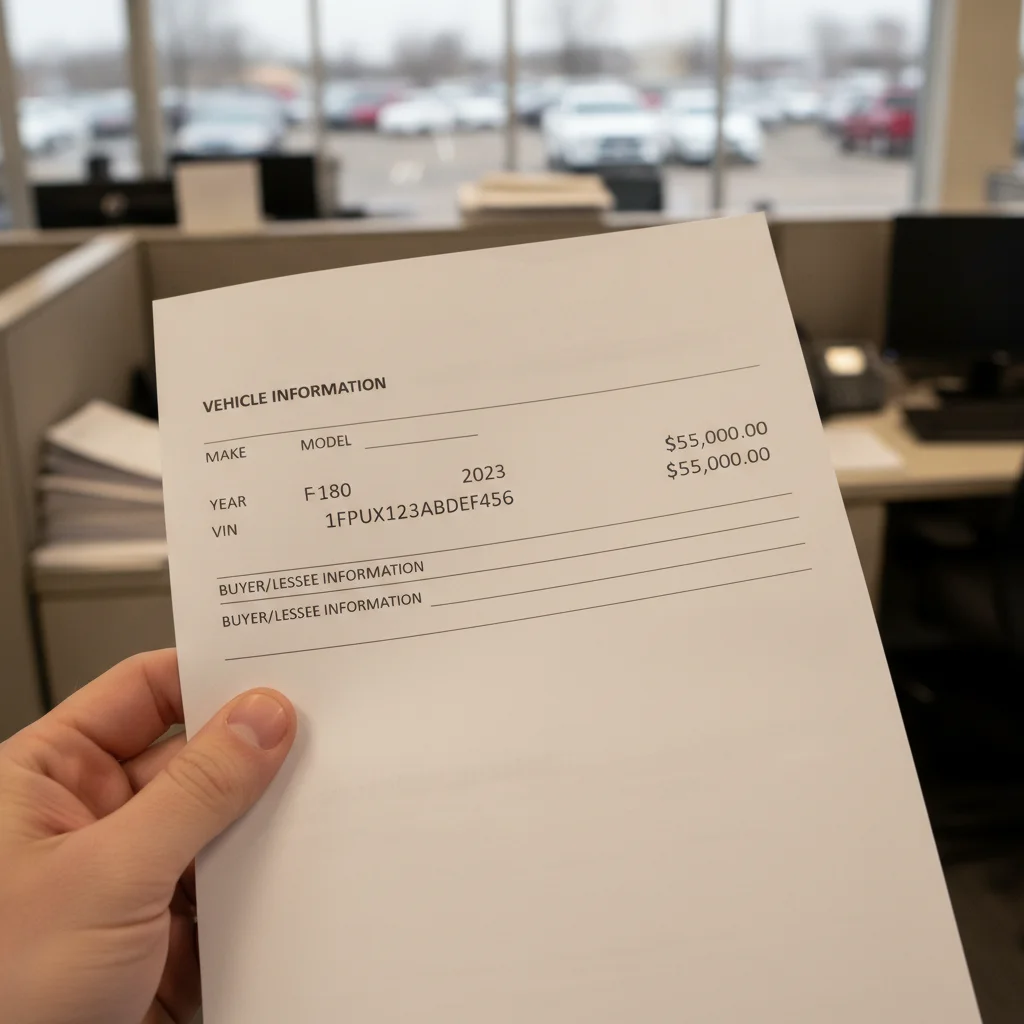
Ask the Dealer to Complete IRS Form 15400
For point-of-sale credit transfers, dealers are required to submit a time-of-sale report to the IRS via the Energy Credits Online portal and provide you with a copy of IRS Form 15400. This form is your proof that the transaction was reported correctly. If a dealer is reluctant to produce this form or seems unfamiliar with it, that's a red flag worth taking seriously before you sign anything.
Confirm the VIN-Level Check Has Been Run
The point-of-sale transfer system requires the dealer to run a VIN-level check through the IRS portal at the time of sale. Ask explicitly whether they've done this and request confirmation. A dealer who is operating the process correctly will have no problem showing you this step.
Understand What Happens If the Credit Is Applied Incorrectly
If a dealer incorrectly applies the credit at point of sale — for instance, if the vehicle actually doesn't qualify — the IRS can claw back that credit from the dealer, not from you, as long as you acted in good faith and the dealer made the error. That said, disputes and corrections can delay your purchase or cause financing complications. The cleanest outcome is getting the eligibility right before any documents are signed. A pre-purchase eligibility checklist can help you make sure all pieces are in place before you commit.
Income Misrepresentation Has Tax Consequences
When you accept the point-of-sale credit transfer, you certify to the IRS that your income is within the applicable limit. If your actual MAGI for the year exceeds the threshold, you will be required to repay the credit when you file your taxes — with no penalty waiver. This isn't a gray area: the IRS has stated it will enforce repayment for income-ineligible transfers. Be conservative in your income estimate, especially if you have variable or business income.
Used EVs: A Different Set of Rules
If you're shopping for a used electric vehicle rather than a new one, the credit landscape is different. The Used Clean Vehicle Credit offers up to $4,000 or 30% of the sale price (whichever is less) for qualifying pre-owned EVs. The eligibility rules differ from the new vehicle credit in several important ways:
- Vehicle age: The EV must be at least two model years old at the time of purchase.
- Sale price cap: The vehicle's sale price must be $25,000 or less.
- Income limits: Lower income thresholds apply — $75,000 for single filers, $112,500 for heads of household, and $150,000 for joint filers.
- First-time credit use: You cannot have claimed the used clean vehicle credit in the prior three years.
- Dealer requirement: The vehicle must be purchased from a licensed dealer, not a private seller.
The IRS and DOE tools cover used EV eligibility as well. When using the AFDC tool, select the used vehicle filter to see which models qualify. The same VIN-level verification process applies at point of sale.
If you're buying used, credit eligibility is only one piece of the due-diligence puzzle. A thorough pre-purchase EV inspection covering battery health, service history, and key wear items is equally important — don't skip it in the excitement of securing a good price.
After You Confirm Eligibility: Next Steps
Verifying that the EV you want qualifies is a critical step, but it's one part of a broader pre-purchase process. A few things worth doing in parallel:
Check the Current Qualifying Vehicle List
The IRS list of qualifying vehicles is updated regularly — sometimes mid-model year — as manufacturers submit required documentation and as battery sourcing thresholds shift. Which EVs qualify for the federal tax credit right now is a regularly updated reference that can help you stay current without having to parse IRS notices yourself.
Line Up Your Financing Before You Visit
If you're planning to finance the EV, getting pre-approved before you visit the dealer keeps the credit benefit separate from the financing negotiation. Dealers sometimes bundle the credit into a trade-allowance or payment structure that obscures the actual value you're receiving. Pre-approval from a bank, credit union, or online lender gives you a benchmark.
Review Your Insurance Options
EV insurance works differently from conventional auto coverage in ways that matter financially. Battery replacement costs, OEM part requirements, and charging equipment coverage are all variables worth discussing with an insurer before you buy. How EV insurance works and why premiums may differ is a useful starting point. When you're ready to talk to an agent, the right questions to ask can save you from surprises after the sale.
The EV tax credit can represent a substantial reduction in your effective purchase price — but only if the vehicle, the transaction, and your financial profile all meet the requirements simultaneously. The verification steps in this guide take less than half an hour and are the most reliable way to confirm you're in position to claim that benefit before you walk into any negotiation.

All claims are backed by peer-reviewed research. Sources on request.