Key Takeaways
MSRP (Sticker Price)
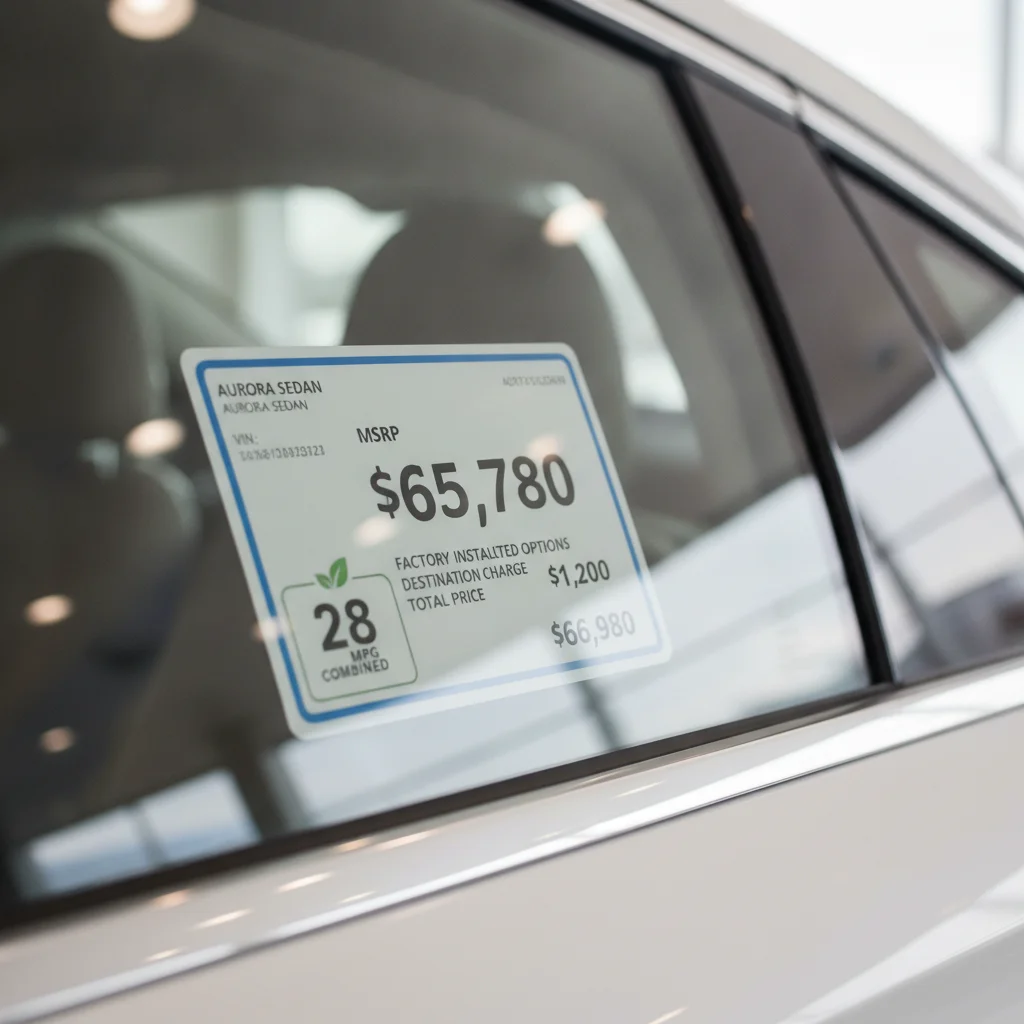
MSRP stands for Manufacturer's Suggested Retail Price. It's the price the automaker recommends dealers charge for a new vehicle, printed on the window sticker you see in the showroom. The keyword is 'suggested' — dealers are not required to sell at that number, and most transactions close above or below it depending on market conditions and negotiation.
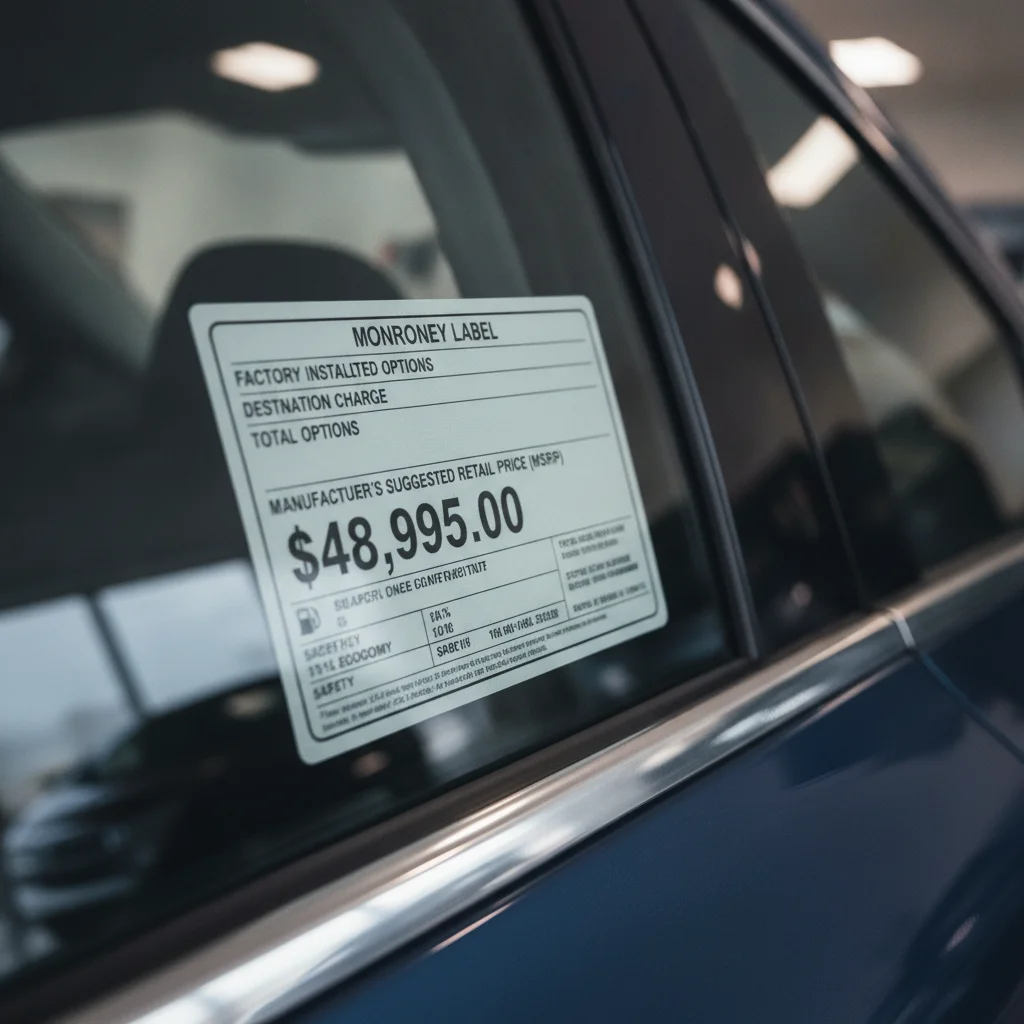
The window sticker displaying MSRP is legally required under the Automobile Information Disclosure Act of 1958, commonly called the Monroney Act. Removing it before sale is a federal violation.
What MSRP Is — and What It Isn't
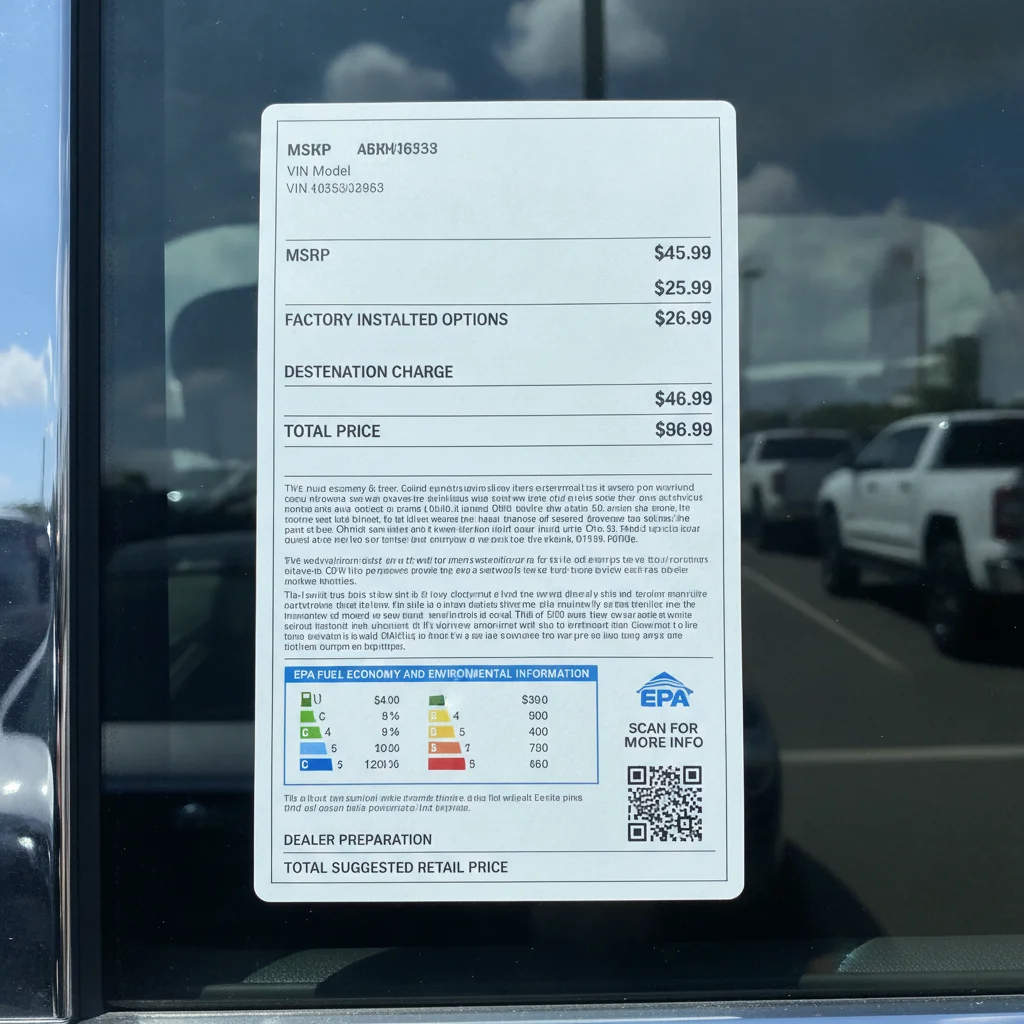
Walk onto any new car lot and the first number you'll see is the MSRP — printed in bold on the Monroney sticker affixed to every vehicle's window. That sticker has been required by federal law since 1958, and for good reason: before it existed, dealers could quote any price they wanted without a baseline reference point.
But here's what too many buyers miss: MSRP is the starting point for a negotiation, not the destination. The "S" in MSRP stands for Suggested. The manufacturer sets this number as a recommended retail price. Dealers are independent businesses, and they price accordingly — sometimes below that figure, sometimes well above it.
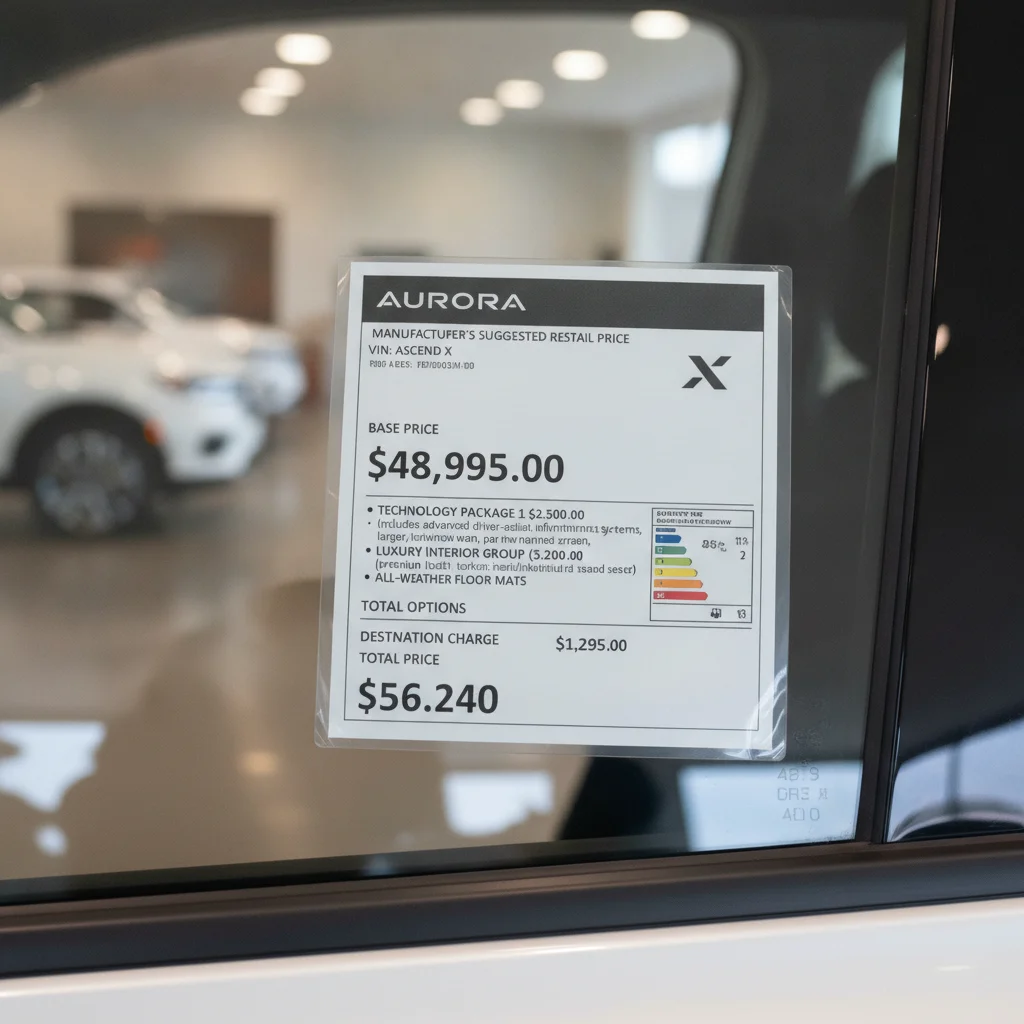
The Monroney sticker also includes a breakdown of what's contributing to that MSRP figure. You'll typically see:
- Base price — the vehicle with standard equipment
- Option packages — factory-installed upgrades like a sunroof, premium audio, or towing package
- Individual options — standalone add-ons chosen at the time of order
- Destination and delivery charge — a fixed freight fee from the factory to the dealership
Add all of those together and you get the total MSRP. What the sticker does not show is dealer-added accessories, documentation fees, or anything the dealer tacks on after the vehicle arrives. Those numbers live on a separate, often smaller sticker placed next to the Monroney — and they can add thousands to your cost.
Why Dealers Don't Always Sell at MSRP
A dealership's relationship with MSRP is fluid. Dealers buy vehicles from the manufacturer, then resell them to consumers. Their profit depends on how much margin they can capture between their actual cost and your purchase price. MSRP is simply the ceiling the manufacturer has publicly established — dealers price around it based on three main forces:
1. Market Demand
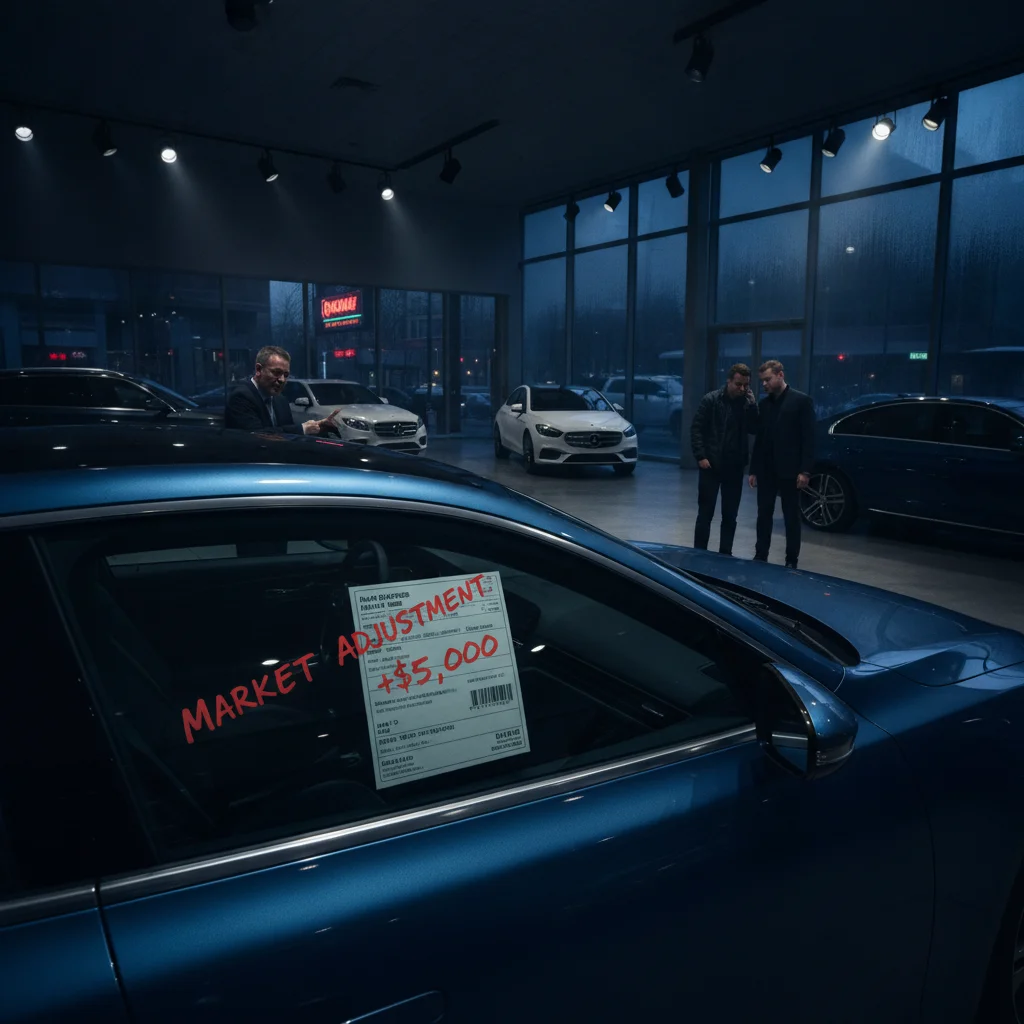
When a model is in high demand and inventory is tight, dealers charge above MSRP without hesitation. This practice, often called a market adjustment, is added as a dealer markup on top of the Monroney price. During the semiconductor shortage of 2021 and 2022, it was common to see $5,000 to $15,000 markups on full-size trucks, performance cars, and new-model-year launches. Understanding when to walk away from a market adjustment can save you a significant amount.
2. Slow-Moving Inventory
When a vehicle sits on the lot, it costs the dealer money in floor plan interest — essentially the loan they're paying to finance that unsold car. After 60 to 90 days, dealers get highly motivated to move the unit. That's when you'll see discounts below MSRP, sometimes below invoice, sometimes with manufacturer cash-back layered on top.
3. Manufacturer Incentives
Automakers periodically offer dealers cash bonuses for hitting sales targets. These backend incentives — called dealer cash or stair-step incentives — allow dealers to discount more aggressively without showing it as a price cut. The car might still be listed at MSRP while the dealer quietly pockets or passes along factory money.
~$1,000
Average new car discount below MSRP in normal markets
According to Edmunds transaction data, buyers on mainstream vehicles historically averaged roughly 1–3% below MSRP when market supply was balanced.
$6,000+
Median above-MSRP markup during 2022 chip shortage
Edmunds reported that in early 2022, the average new car sold for approximately $728 above MSRP, with popular trucks and SUVs regularly exceeding $5,000–$10,000 in markups.
1–3%
Typical holdback as a percentage of MSRP
Most major manufacturers pay dealers a holdback of 1–3% of MSRP on each unit sold, reducing the dealer's true cost below the invoice price.
$7,500
Federal EV tax credit lost if MSRP exceeds caps
Under the Inflation Reduction Act, exceeding the $55,000 sedan or $80,000 SUV/truck MSRP cap eliminates eligibility for the full federal clean vehicle credit.
3–8%
Typical gap between MSRP and invoice price
On most mainstream vehicles, the invoice price runs 3–8% below MSRP, providing the baseline margin the dealer works within during negotiations.
Understanding this dynamic means you should never treat MSRP as a fixed, fair price. It's a reference number — one of several you need to understand before you sit down at a finance desk.
The Numbers Behind the Sticker: MSRP vs. Invoice vs. Dealer Cost
MSRP doesn't exist in isolation. To use it effectively, you need to understand how it relates to the other key numbers in a new car transaction.

| Number | Who Sets It | What It Represents |
|---|---|---|
| MSRP | Manufacturer | Recommended retail price; your starting ceiling |
| Invoice Price | Manufacturer | What the dealer nominally pays; often 3–8% below MSRP |
| Dealer Cost | Manufacturer + dealer | True cost after holdback, incentives, and rebates |
| Transaction Price | You + dealer | What you actually agree to pay |
Holdback is worth knowing: manufacturers typically pay dealers back 1–3% of MSRP after each vehicle is sold. That money isn't visible on any sticker, but it means the dealer's real floor is lower than the invoice price suggests. Digging into invoice price, MSRP, and true dealer cost gives you leverage that most buyers never access.
Destination Charges Are Non-Negotiable
Unlike most other line items on the Monroney sticker, the destination and delivery charge is fixed by the manufacturer and identical for every buyer regardless of geography. Don't waste negotiating capital trying to remove it — it's not going anywhere. Focus your energy on the vehicle price and dealer add-ons instead.
MSRP Is Not the Same as Market Value
Market value is what buyers in your area are actually paying for a specific trim and configuration right now. On some models, market value is below MSRP. On others, demand has pushed it thousands above. Tools like Edmunds True Market Value and TrueCar show real transaction data — use them to calibrate your expectations before any negotiation.
For a deeper breakdown of how these numbers interact at the negotiating table, see how invoice price, MSRP, and market value differ.
“The sticker price is a marketing tool as much as a price tag. Manufacturers set MSRP to anchor buyer expectations — and most buyers never question whether that anchor is in the right place.”
— Ivan Drury, Director of Insights, Edmunds
What the Sticker Price Doesn't Show You
The Monroney sticker is honest about what the manufacturer put in the car. It's silent about everything the dealer adds after the car leaves the factory. That's where buyers get surprised.
Common dealer add-ons that inflate your actual cost:
- Dealer-installed accessories — paint protection film, window tinting, floor mats, pinstripes. These often carry extreme markups and may be presented as already installed and non-negotiable.
- Documentation (doc) fees — administrative charges that vary wildly by state and dealer, ranging from $100 to over $900.
- Nitrogen tire inflation — a classic upsell. Regular air is 78% nitrogen. Paying $200 for this service is almost never worthwhile.
- Dealer add-on packages — bundled protection products like fabric guard, VIN etching, and paint sealant, often priced at $500–$1,500 with minimal real-world value.
These items typically appear on a second sticker — often called the supplemental sticker or addendum — placed near the Monroney. Some dealers fold them into the price without ever highlighting them verbally.
Always Ask for the Out-the-Door Price in Writing
Before agreeing to anything, ask the dealer to put the complete out-the-door price on paper: vehicle price, all fees, taxes, and any add-ons itemized separately. This prevents numbers from shifting between the sales desk and the finance office, and gives you a clean basis for comparison shopping across multiple dealers.
Check EV Trim Configurations Before Ordering
If you're buying an EV and targeting the federal tax credit, configure the vehicle on the manufacturer's website before visiting the dealer and confirm that the total MSRP — including all selected options — stays below the applicable IRS cap. Get that confirmation in writing from the dealer at the time of sale.
The full picture of what's hiding in the sticker is worth knowing before you step foot in a showroom. What the sticker price doesn't tell you walks through dealer markups, pack fees, and holdback in detail.
MSRP and EV Tax Credits: When Sticker Price Has Legal Consequences
For buyers considering an electric vehicle, MSRP suddenly takes on a completely different dimension. Under the Inflation Reduction Act's clean vehicle credit rules, a vehicle must come in under specific MSRP thresholds to qualify for the federal $7,500 tax credit.
As of current rules, those caps are:
- $55,000 — sedans, hatchbacks, and wagons
- $80,000 — SUVs, trucks, and vans
If the MSRP of the vehicle — including factory-installed options — exceeds these caps, you lose the credit entirely. There's no partial credit; it's all or nothing. That means a $56,000 EV sedan costs you $7,500 more in effective price than a $54,999 version of the same car.
This creates a real trap: if a dealer adds a market adjustment or bundles accessories that push the final price over the threshold, some buyers have lost their credit eligibility without realizing it. The IRS uses the MSRP as the baseline measurement, not the negotiated transaction price. See how MSRP caps affect EV tax credit eligibility for a full breakdown by vehicle category.
Always Ask for the Out-the-Door Price in Writing
Before agreeing to anything, ask the dealer to put the complete out-the-door price on paper: vehicle price, all fees, taxes, and any add-ons itemized separately. This prevents numbers from shifting between the sales desk and the finance office, and gives you a clean basis for comparison shopping across multiple dealers.
Check EV Trim Configurations Before Ordering
If you're buying an EV and targeting the federal tax credit, configure the vehicle on the manufacturer's website before visiting the dealer and confirm that the total MSRP — including all selected options — stays below the applicable IRS cap. Get that confirmation in writing from the dealer at the time of sale.
How to Use MSRP as a Negotiating Tool
Most buyers walk in and negotiate down from MSRP. Experienced buyers negotiate up from invoice. That's a fundamentally different posture, and it produces better outcomes.
Here's a practical framework:
- Look up invoice price before you arrive. Sites like Edmunds and Consumer Reports publish invoice prices. Know this number cold.
- Research current incentives. Manufacturer cash-back offers and low-APR deals are publicly listed on automaker websites. Know what factory money is available on the model you want.
- Get competing quotes from multiple dealers. Email three or four dealers in your area asking for their best out-the-door price on the exact same vehicle. Let them compete on price rather than negotiating blind in one showroom.
- Negotiate out-the-door, not monthly payment. Monthly payment focus is how dealers obscure the true transaction price. Ask for a complete breakdown: vehicle price, fees, taxes, and trade-in value listed separately.
- Question every add-on. If a dealer says an accessory package is "already installed" and you must pay for it, that's leverage they're manufacturing. In most cases those items are negotiable or removable.
On a popular trim with low inventory, paying at or near MSRP may genuinely be the market price. On a slow-selling model at end of quarter, you should realistically target 3–7% below MSRP. Neither is a fixed rule — it depends on real inventory data in your local market.

The single most important mindset shift: MSRP is a ceiling, not a fair price. Your job is to find out where between dealer cost and MSRP the real market is trading — and negotiate from there.
All claims are backed by peer-reviewed research. Sources on request.