Key Takeaways
What Form 8936 Is — and What It Actually Does
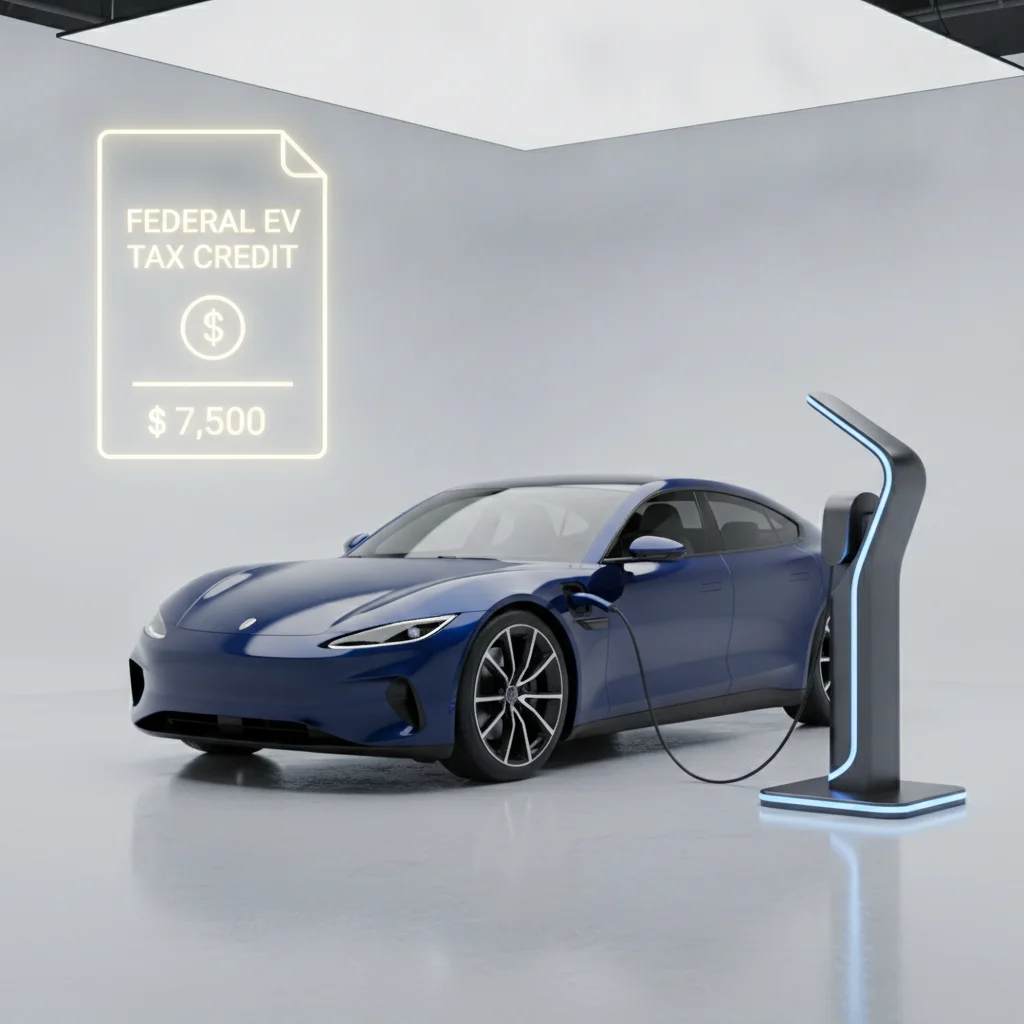
Form 8936, officially titled Clean Vehicle Credits, is the IRS document that translates your electric vehicle purchase into a dollar-for-dollar reduction of your federal income tax. It's not a rebate, not a deduction — it's a credit, which means it reduces the actual tax you owe rather than just reducing the income on which you're taxed.
The form covers two distinct credits under the Internal Revenue Code:
- Section 30D — New Clean Vehicle Credit: Up to $7,500 for qualifying new battery electric, plug-in hybrid, or fuel cell vehicles.
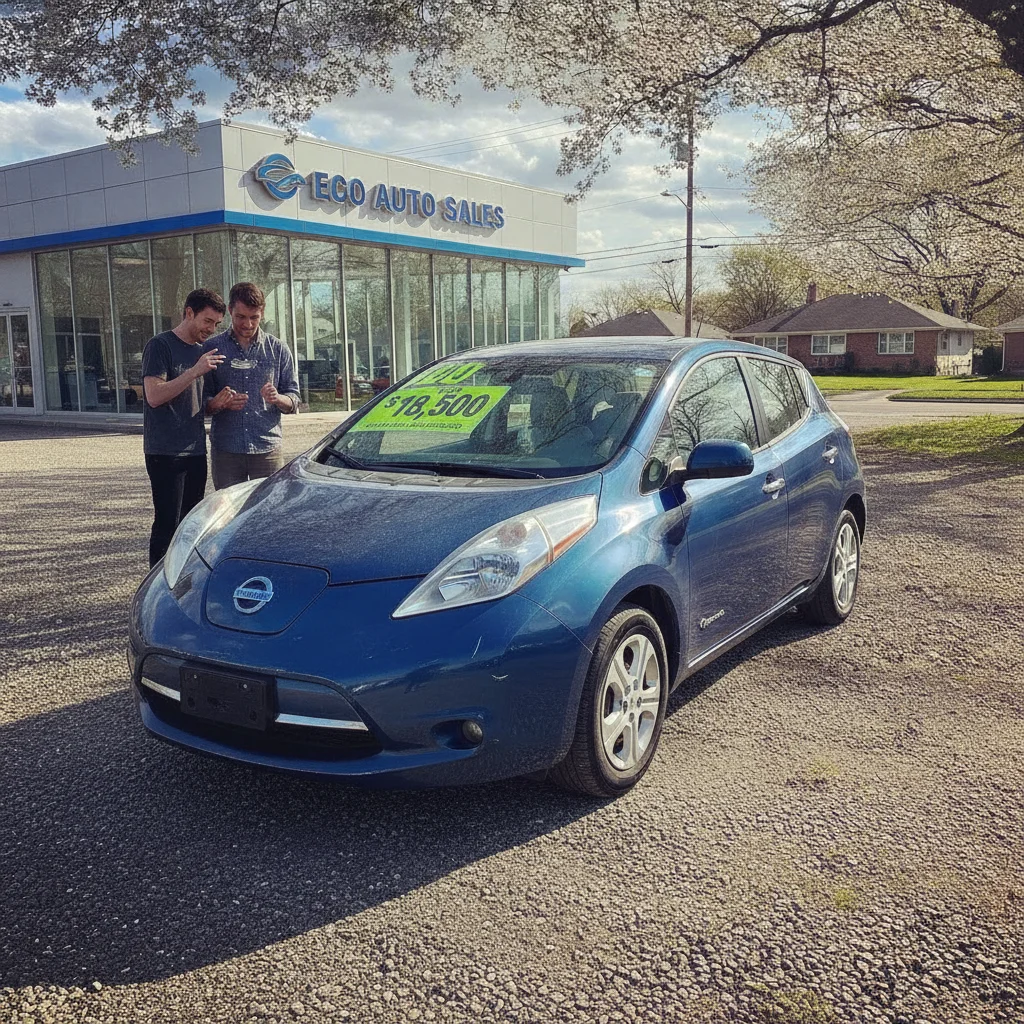
- Section 25E — Previously Owned Clean Vehicle Credit: Up to $4,000 (or 30% of the sale price, whichever is less) for qualifying used EVs purchased from a licensed dealer.
The Inflation Reduction Act of 2022 fundamentally restructured both credits, adding North American final assembly requirements, battery sourcing thresholds, income limits, and MSRP caps — none of which existed under the prior law. If you bought an EV before 2023, the rules were different. For a full background on the policy changes and credit structure, see our federal EV tax credit explainer.
Form 8936 is filed as part of your annual federal return — you attach it to your Form 1040 for the tax year in which you took delivery of the vehicle. You cannot amend a prior year's return to claim it for a vehicle you started using in a different year.
It's also worth understanding what Form 8936 doesn't cover: utility rebates, state EV grants, and manufacturer incentives are separate from the federal credit and don't flow through this form at all. If you're interested in savings that don't require a tax return, see our overview of EV incentives that don't require filing a tax return.
Who Can Claim It — and Who Gets Excluded
Eligibility for the Form 8936 credit depends on three overlapping layers: the buyer, the vehicle, and the transaction structure. Failing any one layer disqualifies the claim.
Buyer Requirements
You must be the original purchaser of a new vehicle (or purchasing a qualifying used vehicle from a dealer). You cannot claim the credit for a vehicle you lease — the leasing company holds the credit, though some lessors pass the benefit through as a lower payment. You also cannot claim the credit if you purchased the vehicle for resale.
Income limits (MAGI-based):
| Filing Status | New Vehicle Limit | Used Vehicle Limit |
|---|---|---|
| Married Filing Jointly | $300,000 | $150,000 |
| Head of Household | $225,000 | $112,500 |
| Single / All Others | $150,000 | $75,000 |
You can use either your current-year or prior-year MAGI — whichever is lower — to test eligibility. This is an underused provision that can help buyers who had an unexpectedly high-income year.
Vehicle Requirements
For new vehicles, the car must have final assembly in North America and meet separate battery component and critical mineral sourcing thresholds (each threshold unlocks $3,750 of the $7,500 credit). MSRP must be $80,000 or less for SUVs, vans, and pickups; $55,000 or less for sedans and other body styles.
For used vehicles, the vehicle must be at least two model years old at purchase, priced at $25,000 or under, and purchased through a licensed dealer — private party sales are explicitly excluded. Each vehicle's VIN can only be used to claim the used credit once in its lifetime.
Vehicle Must Qualify at Time of Purchase
Eligibility requirements — including battery sourcing, final assembly location, and MSRP caps — are determined based on the vehicle at the time you take delivery. A vehicle that qualified when you signed a purchase agreement may not qualify if the IRS updates its list before you take possession. Always verify current eligibility at fueleconomy.gov before finalizing your purchase.
Don't Confuse Model Year With Tax Year
The tax year for claiming the credit is the year you placed the vehicle in service (i.e., took delivery), not the model year of the vehicle. A 2024 model-year EV picked up in December 2024 is claimed on your 2024 return, while a 2025 model taken home in late 2024 is also claimed on your 2024 return.
Income Limits Use Modified AGI — Not Gross Income
The IRS uses your modified adjusted gross income (MAGI) to apply income thresholds, not your W-2 gross income. MAGI can include foreign income, student loan interest deductions, and other add-backs. If you're close to a threshold, calculate your MAGI carefully — or consult a tax professional — before assuming you qualify.
IRS Form 8936
The actual form you complete to calculate and claim the Clean Vehicle Credit on your federal return.
IRS Form 1040 or 1040-SR
Your main federal income tax return — Form 8936's calculated credit flows to Schedule 3 and then to your 1040.
Vehicle Time-of-Sale Report
Dealer-issued document confirming the vehicle was registered with the IRS as a qualifying sale; required to substantiate your claim.
IRS Energy Credits Online Portal (IRS.gov)
Dealers use this portal to register sales; buyers can use it to check whether their vehicle's sale was properly reported.
fueleconomy.gov EV Eligibility Tool
Maintained by the Department of Energy; lists currently qualifying vehicles with MSRP caps and battery sourcing status.
Tax preparation software (TurboTax, H&R Block, FreeTaxUSA, etc.)
Walks you through Form 8936 line by line and automatically transfers the credit to your 1040.
The 2024 Transfer Election: Taking the Credit at the Dealer
One of the most significant — and least understood — changes in recent EV tax policy is the ability to transfer your Section 30D or Section 25E credit directly to a participating dealer at the time of purchase. This option became available January 1, 2024.
Here's how it works in practice: instead of waiting to claim the credit on your return, you elect at the time of purchase to transfer the credit to the dealer. The dealer applies it as a direct reduction to your purchase price — effectively acting like an instant rebate. The dealer then claims the credit from the IRS.
Key mechanics:
- You must make the election at the time of sale — it cannot be done retroactively.
- The dealer must be registered in the IRS Energy Credits Online portal; not all dealers participate.
- You must provide your taxpayer identification number to the dealer at purchase.
- If you later file your return and the IRS determines you were ineligible (e.g., your income exceeded the limit), you will owe the transferred credit back as additional tax.
The transfer option is particularly valuable for buyers whose federal tax liability is below $7,500. Under the traditional credit structure, you'd only benefit up to your actual liability. With the transfer, you receive the full eligible amount as a price reduction regardless of your personal tax situation.
Even if you elect the transfer, you still must complete and attach Form 8936 to your federal return — but the credit is reported as already used rather than as a current-year credit against your liability.
Use Your Prior-Year Return as a Baseline
Your federal tax liability on last year's return is a solid starting estimate for this year's liability. Look at line 24 of Form 1040 (total tax). If that number is below $7,500, temper your expectations for the full credit — and consider whether the dealer transfer option makes more sense for your situation.
Keep the Dealer-Issued Time-of-Sale Report
When you purchase a qualifying vehicle, dealers are required to provide a Time-of-Sale report containing the VIN, sale date, and a confirmation that the vehicle was registered with the IRS. Hold onto this document — you'll need the VIN and purchase details to complete Form 8936, and the IRS may request it to verify your claim.
Check Both MAGI Thresholds
The IRS allows you to use either your current-year MAGI or your prior-year MAGI to determine eligibility, and you qualify if either one falls under the limit. This is especially useful if you had an unusually high-income year due to a one-time event like a business sale or large bonus.
Common Mistakes — and How to Avoid Them
Form 8936 is not a complex form, but the eligibility rules surrounding it are easy to misread. These are the errors that show up most often:
Assuming the vehicle qualifies without checking
Battery sourcing rules disqualify a significant portion of EVs that might otherwise seem eligible. Some vehicles qualify for only the $3,750 partial credit. The qualifying vehicle list changes as manufacturers update their supply chains. Always verify using your actual VIN at fueleconomy.gov — not just the model name.
Counting on the full credit when your tax liability is lower
If your federal tax before credits is $4,200 and you have no other nonrefundable credits, the maximum Form 8936 benefit you can use is $4,200 — not $7,500. The remaining $3,300 is not carried forward and not refunded. Estimate your liability before your purchase, not after.
Claiming the credit for a leased vehicle
If you leased your EV, you do not claim Form 8936. The manufacturer or leasing company claims the Section 30D credit. You may have received a lower lease payment as a result, but the credit is not yours to claim on your return.
Missing the Time-of-Sale report from the dealer
Dealers are legally required to provide this document and to register the sale in the IRS portal. If you didn't receive one, contact the dealer immediately. Without it, your claim is difficult to substantiate if the IRS inquires.
Using the wrong tax year
The credit belongs to the year you took delivery, period. If you put down a deposit in December 2024 and drove the car home in January 2025, it's a 2025 credit — claimed on your 2025 return filed in 2026.

For buyers navigating both federal and state incentives, understanding how these layers interact matters. EV insurance costs are another post-purchase consideration worth planning for — see our EV insurance guide for what to expect on premiums and coverage differences versus gas vehicles.

All claims are backed by peer-reviewed research. Sources on request.