Key Takeaways
Our Verdict
The federal EV tax credit offers the larger dollar amount for most buyers — up to $7,500 on a new EV — but its nonrefundable structure means it only benefits you if you have sufficient federal tax liability. State rebates are simpler and more universally accessible, delivering cash value regardless of what you owe the IRS. For most buyers, the winning strategy is to qualify for both and stack them wherever possible.
| Best for | Recommended |
|---|---|
| Buyers with strong federal tax liability who owe $7,500 or more to the IRS | Federal EV Tax Credit |
| Lower-income buyers or retirees with limited federal tax liability | State Rebate |
| Buyers who want immediate savings reflected in the purchase price | Federal Credit via Point-of-Sale Transfer (2024+) |
| Buyers in high-incentive states seeking to maximize total savings | Stacked Federal Credit + State Rebate |
The Core Structural Difference: Where the Money Actually Comes From
Here's the bluntest way to put it: a tax credit and a rebate are not the same thing, even if both show up in EV marketing as "savings." The distinction matters enormously to your wallet, and confusing the two is one of the most common mistakes first-time EV buyers make.
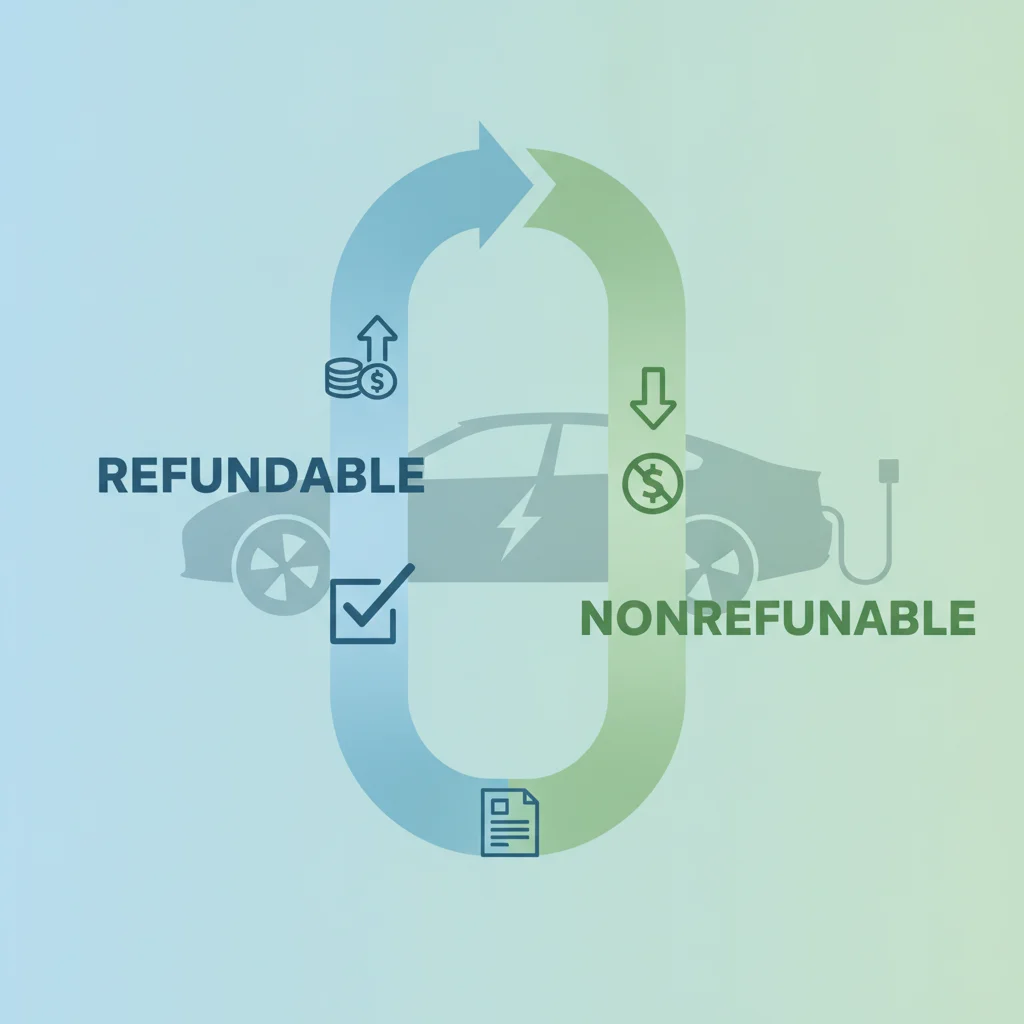
The federal EV tax credit — structured under Section 30D of the Internal Revenue Code — reduces the amount of federal income tax you owe for the year you purchase the vehicle. If you owe $6,000 in federal taxes and qualify for a $7,500 credit, your liability drops to zero. But you do not receive the extra $1,500 as a refund. The credit is nonrefundable, which means any portion that exceeds your tax liability simply disappears. Understanding the nonrefundable nature of the federal credit is essential before you count on the full $7,500.
A state rebate, by contrast, is a direct cash payment — typically issued by a state energy agency, public utility commission, or DMV — that is disbursed after you purchase or lease a qualifying EV. You don't need to owe state taxes. You don't need to wait until April to see the money. Many rebates arrive as a check, a prepaid card, or a direct bank transfer within weeks of submitting your application. The value is fixed and unconditional on your income tax situation (though it may have its own income eligibility tests).
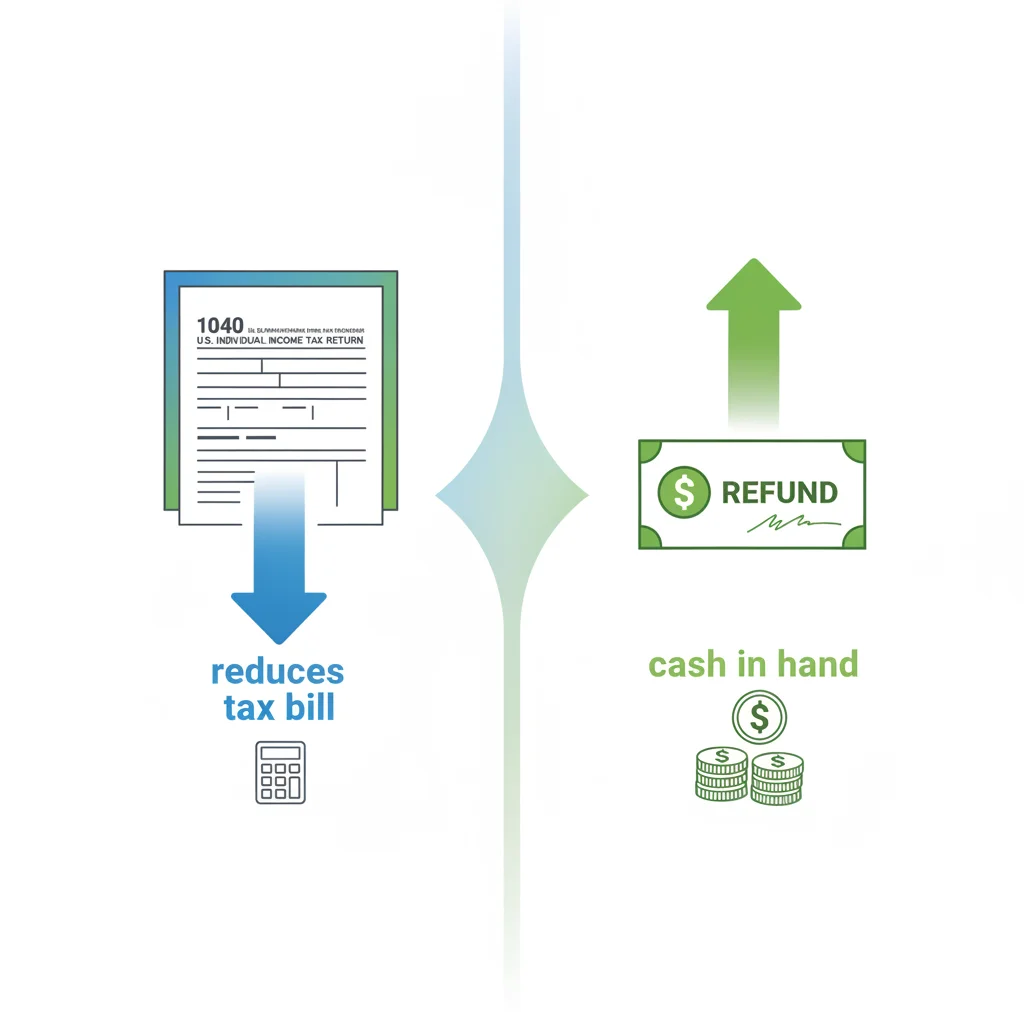
This structural gap — credit versus cash — is what drives every other difference in how these programs affect your buying strategy.
How the Federal EV Tax Credit Actually Works
The federal clean vehicle credit was substantially restructured by the Inflation Reduction Act of 2022 and took its current form for tax year 2023. Here are the key mechanics every buyer needs to understand:
Maximum Value and Vehicle Eligibility
The credit tops out at $7,500 for a new EV and $4,000 for a used EV (or 30% of the sale price, whichever is lower). Not every EV earns the full amount — the credit is structured in two $3,750 components tied to where the battery minerals were sourced and where the battery components were assembled. A vehicle can earn one, both, or neither of these halves depending on its supply chain. The full federal credit eligibility breakdown covers which vehicles currently qualify and why some popular models fall short.
MSRP and Income Caps
- MSRP limits: Sedans, wagons, and hatchbacks must have an MSRP at or below $55,000. SUVs, trucks, and vans have a $80,000 cap.
- Income limits (AGI): Single filers are capped at $150,000; heads of household at $225,000; married filing jointly at $300,000. Exceed these thresholds and you receive nothing.
The 2024 Point-of-Sale Transfer Option
Starting January 1, 2024, qualified buyers can transfer the federal credit directly to a participating dealership. The dealer applies the credit as an immediate price reduction at signing — you never have to wait for tax season. This is a significant quality-of-life improvement, though it requires IRS pre-registration on the dealer's part and still demands that you meet all standard eligibility criteria. If it turns out at tax time that you didn't actually qualify, the IRS can claw back the benefit.
| Federal EV Tax Credit | State EV Rebate | |
|---|---|---|
| Mechanism | Reduces federal income tax owed | Direct cash payment to buyer |
| Maximum value (new EV) | Up to $7,500 | Varies; typically $500–$7,500 |
| Requires tax liability | Yes — nonrefundable | No — cash regardless of taxes owed |
| Income limits | Yes ($150K–$300K AGI depending on filing status) | Varies by state; some programs have no cap |
| Vehicle eligibility rules | IRS list; MSRP cap; battery sourcing rules | State-specific; often broader than federal |
| When you receive the benefit | At tax filing or point-of-sale (2024+) | Weeks to months after application |
| Application required | Filed with IRS Form 8936 | Yes — separate state application |
| Funding availability | Not subject to annual caps | Limited annual funding; first-come basis |
| Can be stacked with the other | Yes | Yes |
| Works for leased vehicles | Goes to lessor; may be passed through | Varies by state — some allow lessee claim |
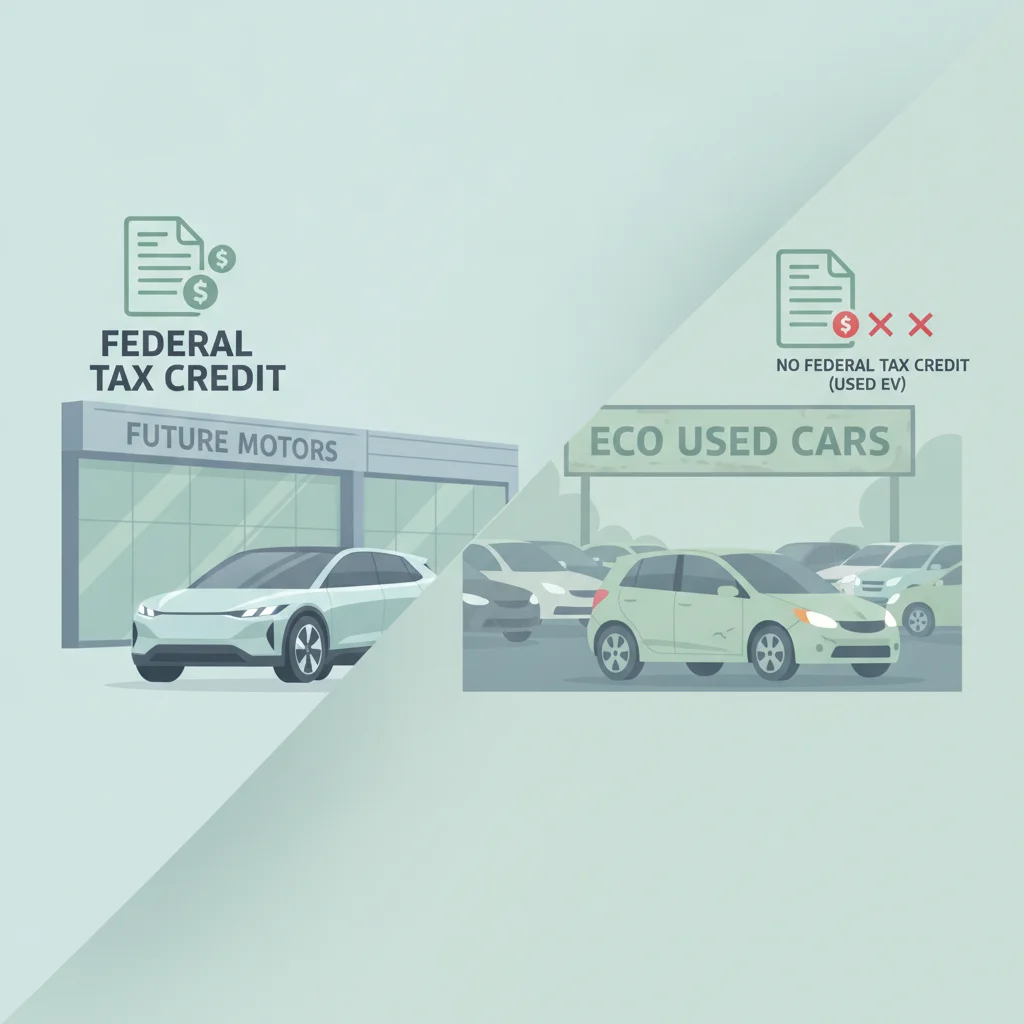
How the credit rules differ for new versus used EV buyers is another layer worth understanding — the used EV credit comes with its own set of dealer and buyer restrictions.
How State EV Rebates Work
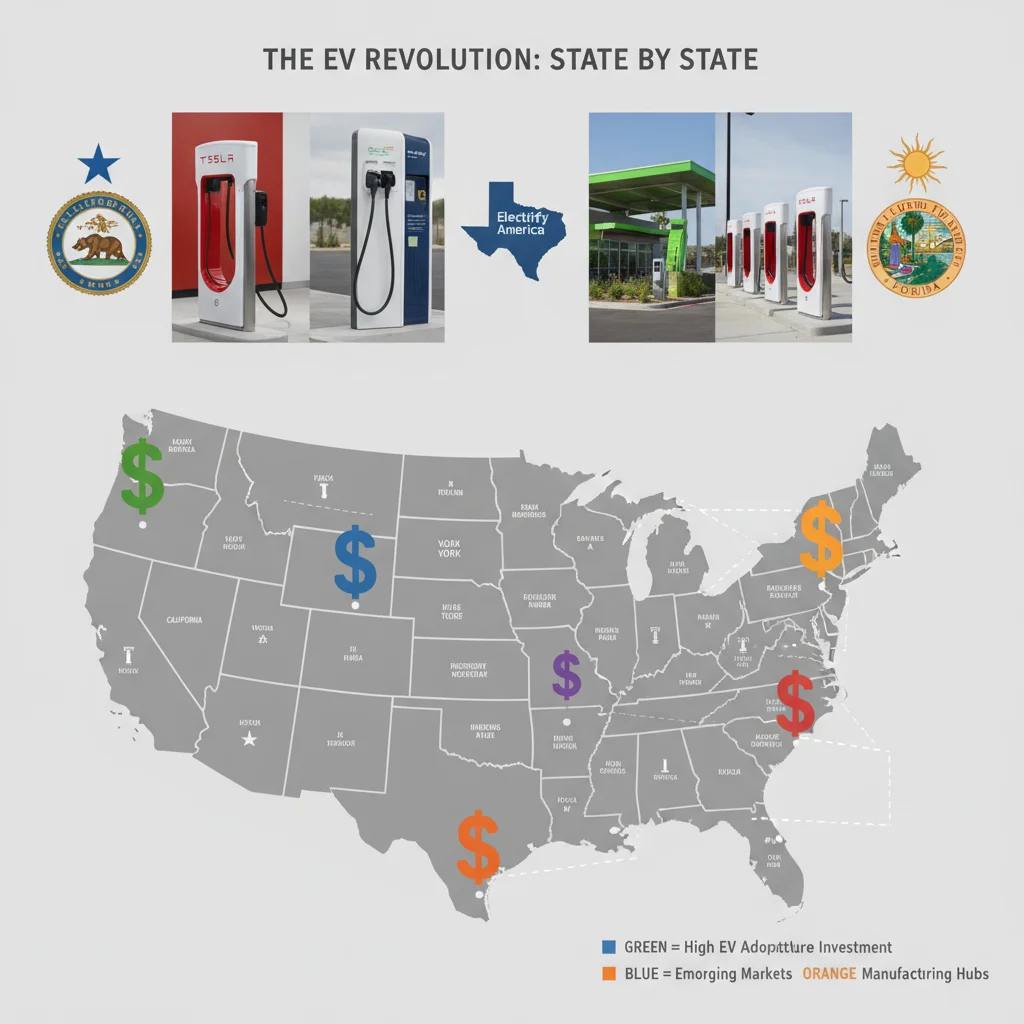
State rebates are administered locally, which means the rules, amounts, and even the concept of what qualifies can vary dramatically from one state to the next. California's Clean Vehicle Rebate Project (CVRP), for example, has historically offered up to $7,500 for lower-income buyers — a remarkable match for the federal credit — while many other states offer $500 to $2,500. Some states offer nothing at all.
Common Features Across State Rebate Programs
- Post-purchase application process
- Most state rebates require you to buy or lease the vehicle first, then submit an application with your purchase documentation. Approval timelines range from a few weeks to several months.
- First-come, first-served funding
- Many state programs run until annual funding is exhausted. Waiting too long in a calendar year can mean missing out entirely — even if you're fully eligible.
- Income-based tiering
- States like California, Colorado, and Connecticut offer larger rebates to lower-income households, making state programs particularly valuable for buyers who might not benefit much from the nonrefundable federal credit.
- Vehicle eligibility differs from federal rules
- A vehicle that doesn't qualify for the federal credit (due to assembly location rules, for instance) may still qualify for a state rebate. The state sets its own vehicle list independently.
Check Your State's Program Before You Buy
State rebate programs frequently run out of annual funding before year-end — California's CVRP has had waitlists in prior years. Research your state's current funding status before finalizing any purchase, not after. The U.S. Department of Energy's Alternative Fuels Data Center (afdc.energy.gov) maintains an up-to-date incentive lookup tool by ZIP code and vehicle type.
Run the Numbers Before Choosing Point-of-Sale Transfer
The 2024 point-of-sale credit transfer option is genuinely useful, but it requires IRS pre-approval for the dealer and an IRS account registration for you. If your eligibility is borderline — say, your income is close to the AGI cap or you're unsure about your tax liability — consult a tax professional before transferring the credit. A miscalculation can trigger repayment to the IRS.
A breakdown of major state EV incentive programs is worth bookmarking before you finalize any EV purchase, especially if you're in California, Colorado, New York, or Connecticut.
Side-by-Side: Federal Credit vs. State Rebate
The table below lays out how these two incentive structures compare across the criteria that matter most to a car buyer. Keep in mind that state rebate values are illustrative — your state's program may look quite different.
$7,500
Maximum federal new EV tax credit
Per IRS Section 30D as structured under the Inflation Reduction Act of 2022, split into two $3,750 battery-component tranches.
$4,000
Maximum federal used EV credit
The used EV credit equals 30% of the sale price or $4,000, whichever is lower, per IRS guidelines for qualifying pre-owned clean vehicles.
~$2,000
Average state EV rebate (U.S.)
Based on NCSL and AFDC data tracking state-level rebate programs across the U.S. as of 2023–2024; amounts vary widely by state.
48+
States with some form of EV incentive
According to the U.S. Department of Energy's Alternative Fuels Data Center, most U.S. states offer at least one form of EV purchase or registration incentive.
$15,000+
Combined savings possible in top incentive states
In California and Colorado, stacking maximum federal, state, and utility rebates can yield combined incentives exceeding $15,000 for qualifying lower-income buyers.
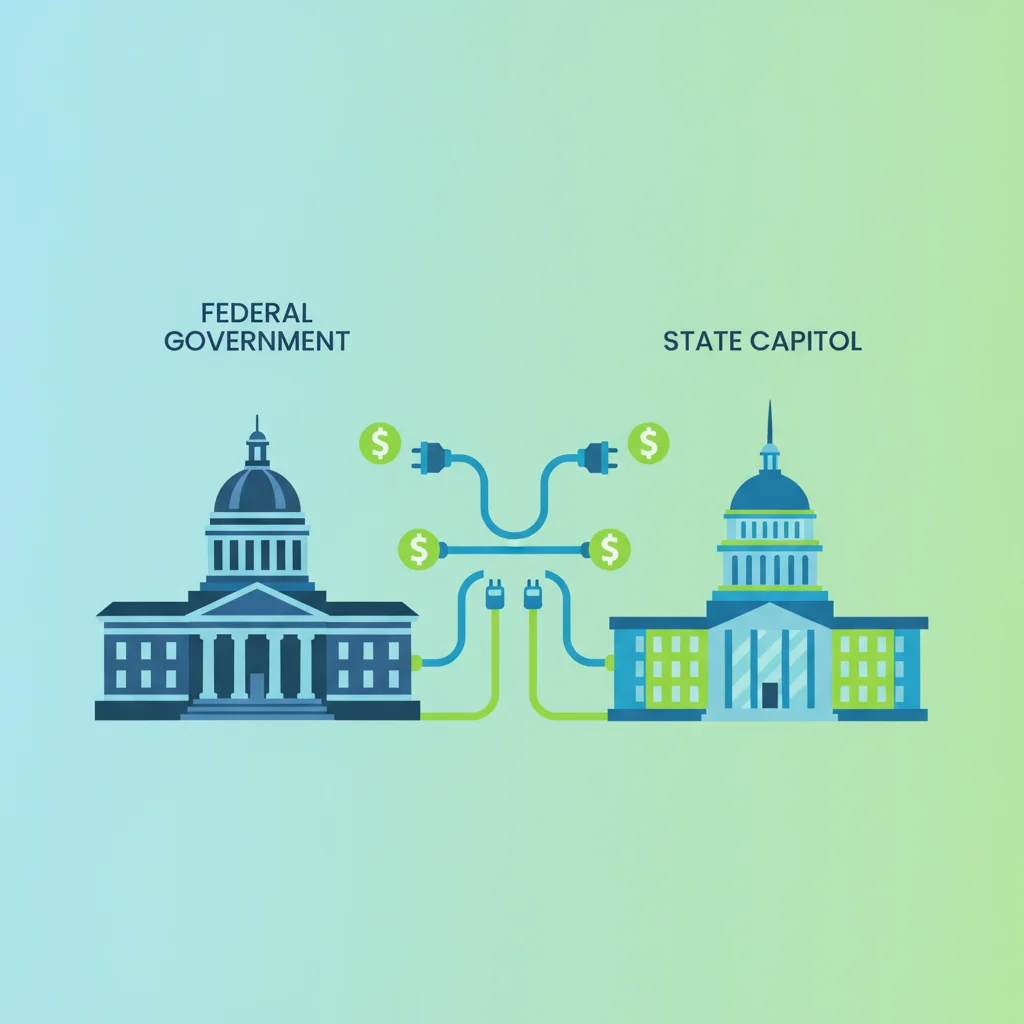
One point worth emphasizing: the comparison above assumes a buyer who is trying to use one or the other. In practice, the smartest move is typically to pursue both simultaneously. Stacking state incentives on top of the federal credit is legal, common, and can push total savings well above $10,000 in high-incentive states.
Don't Let Dealers Bundle the Credit Into Their Pricing
Some dealers — particularly in high-demand markets — will present pricing that assumes you're receiving the federal tax credit, then treat the credit as if it belongs to them in the negotiation. The federal credit is yours, not theirs (unless you use the point-of-sale transfer and the dealer applies it as a price reduction). Always negotiate the out-the-door price on its own merits before any incentive discussion enters the room.
State Rebates Are Not Guaranteed at Purchase
Unlike the point-of-sale federal credit transfer, state rebates almost always require a post-purchase application. If you budget the rebate into your purchase affordability calculation and then miss the application deadline or find that funding is exhausted, you'll have paid more than you planned. Treat the state rebate as a bonus you'll pursue diligently — not a certainty you can bank on before you've applied.
Who Benefits Most From Each Incentive Type
The structural differences between these programs mean they don't benefit all buyers equally. Here's how to think about which one actually helps you more:
The Federal Credit Favors Higher-Income, Higher-Tax-Liability Buyers
If you're a W-2 employee earning $120,000 a year and your federal tax liability after all other deductions and credits is around $12,000, you can absorb the full $7,500 federal credit with room to spare. You'll want to make sure the vehicle qualifies and that your AGI stays under the income cap. For you, the federal credit is essentially free money — the maximum value is yours to claim.
But if you're retired and living on Social Security and a small pension, your federal tax liability might be $1,200. The federal credit still helps — but only up to $1,200. The remaining $6,300 is lost. This is why understanding the nonrefundable structure is not a technicality — it's a real constraint that affects a large portion of prospective EV buyers.
State Rebates Are More Democratically Accessible
Because a rebate doesn't depend on your tax bill, it's equally valuable to a retiree, a freelancer with variable income, or a middle-income household. Some states specifically design their programs to be more generous to lower-income buyers, acknowledging the equity gap that the federal credit inadvertently creates.
Leasing Changes the Math Entirely
If you lease an EV rather than buy it, the federal credit flows to the leasing company (the actual vehicle owner) under the commercial vehicle credit rule. Some lessors pass this savings through as a lower capitalized cost — but not all. Leasing versus buying when tax credits are in play is a crucial comparison if you're on the fence about ownership structure.

Practical Strategy: Maximizing Both Incentives
The federal credit and state rebates are designed independently, but there's no prohibition on collecting both. Here's a practical framework for approaching your EV purchase to maximize total savings:
- Confirm federal eligibility first. Check the IRS list of qualifying vehicles, verify your AGI falls under the income cap, and estimate your federal tax liability for the year. Use last year's return as a starting point. If your liability is significantly below $7,500, factor that shortfall into your real net savings calculation.
- Research your state's current rebate program. State programs change constantly — funding gets exhausted, income limits shift, and vehicle eligibility lists are updated. Check directly with your state energy commission or DMV, not just third-party sites that may have outdated information.
- Check for utility rebates. Many electric utilities offer their own rebates on top of state programs — sometimes $500 to $1,500 for EV purchases or home charger installation. These are often overlooked entirely.
- Decide on point-of-sale transfer vs. filing. If your dealership participates in the 2024 IRS transfer program and you're confident in your eligibility, taking the credit at the point of sale locks in the savings immediately. Just be aware of the potential recapture risk if your eligibility is borderline.
- Stack strategically. In California, for instance, a qualifying EV purchase in 2024 could net the $7,500 federal credit plus a state rebate up to $7,500 for lower-income buyers, plus a utility rebate. That's a realistic $15,000+ in combined savings off purchase price — before negotiation.
Check Your State's Program Before You Buy
State rebate programs frequently run out of annual funding before year-end — California's CVRP has had waitlists in prior years. Research your state's current funding status before finalizing any purchase, not after. The U.S. Department of Energy's Alternative Fuels Data Center (afdc.energy.gov) maintains an up-to-date incentive lookup tool by ZIP code and vehicle type.
Run the Numbers Before Choosing Point-of-Sale Transfer
The 2024 point-of-sale credit transfer option is genuinely useful, but it requires IRS pre-approval for the dealer and an IRS account registration for you. If your eligibility is borderline — say, your income is close to the AGI cap or you're unsure about your tax liability — consult a tax professional before transferring the credit. A miscalculation can trigger repayment to the IRS.
For a deeper look at which EV type — BEV, PHEV, or HEV — fits your lifestyle and which incentive structures apply, the EV types explained guide provides a useful foundation.
Common Mistakes That Cost Buyers Money
A surprising number of EV buyers leave money on the table — not because incentives weren't available, but because they misunderstood the rules or missed a deadline. Here are the pitfalls that come up most often:
Assuming the Full $7,500 Is Guaranteed
Many buyers see "up to $7,500" in ads and assume that's what they're getting. In reality, the credit could be $3,750, $0, or somewhere in between — depending on the vehicle's battery sourcing, your income, and your tax liability. Verify the specific credit amount for your chosen vehicle before signing.
Missing State Application Deadlines or Funding Cutoffs
State rebates are not automatic. You typically need to apply within a specific window after purchase — sometimes 90 days, sometimes less. Miss the window or apply after funding is exhausted, and you get nothing. Set a calendar reminder the day you take delivery.
Confusing the Credit With a Price Reduction at the Dealership
Unless you're using the 2024 point-of-sale transfer option at a participating dealer, the federal credit is between you and the IRS — not the dealer. Some dealers attempt to "price in" the credit by inflating their asking price, knowing buyers expect the credit to offset it. Negotiate the vehicle price independently of any tax credit discussion.
Don't Let Dealers Bundle the Credit Into Their Pricing
Some dealers — particularly in high-demand markets — will present pricing that assumes you're receiving the federal tax credit, then treat the credit as if it belongs to them in the negotiation. The federal credit is yours, not theirs (unless you use the point-of-sale transfer and the dealer applies it as a price reduction). Always negotiate the out-the-door price on its own merits before any incentive discussion enters the room.
State Rebates Are Not Guaranteed at Purchase
Unlike the point-of-sale federal credit transfer, state rebates almost always require a post-purchase application. If you budget the rebate into your purchase affordability calculation and then miss the application deadline or find that funding is exhausted, you'll have paid more than you planned. Treat the state rebate as a bonus you'll pursue diligently — not a certainty you can bank on before you've applied.
Overlooking Insurance Cost Changes
An EV purchase changes more than just your fuel costs. EV insurance costs and how they differ from gas car coverage is often higher due to vehicle value and repair costs — factor that into your total cost of ownership before the incentives make the deal look too good to resist.
The Bottom Line on Federal Credits vs. State Rebates
The federal EV tax credit and state rebate programs are complementary tools — not competing ones. But they work through fundamentally different mechanisms, benefit different buyer profiles, and require different actions to claim. Treating them as interchangeable is a mistake that can cost you thousands of dollars.
The federal credit is larger in most cases, but its nonrefundable structure caps its real value for buyers with modest tax liability. The new point-of-sale transfer option partially addresses this by making the savings immediate, but the underlying limitation remains. State rebates are simpler, more accessible, and often more equitable — but they're smaller in most states and depend on active application and available funding.
The best outcome for most buyers is not choosing between the two — it's qualifying for both, understanding exactly how much each is worth in your specific situation, and building that into your negotiation and budgeting strategy from day one. The complete EV tax credit walkthrough is the right next step if you want to go deeper on the federal side before your next purchase.


All claims are backed by peer-reviewed research. Sources on request.