Key Takeaways
Up to $7,500 off your federal tax bill
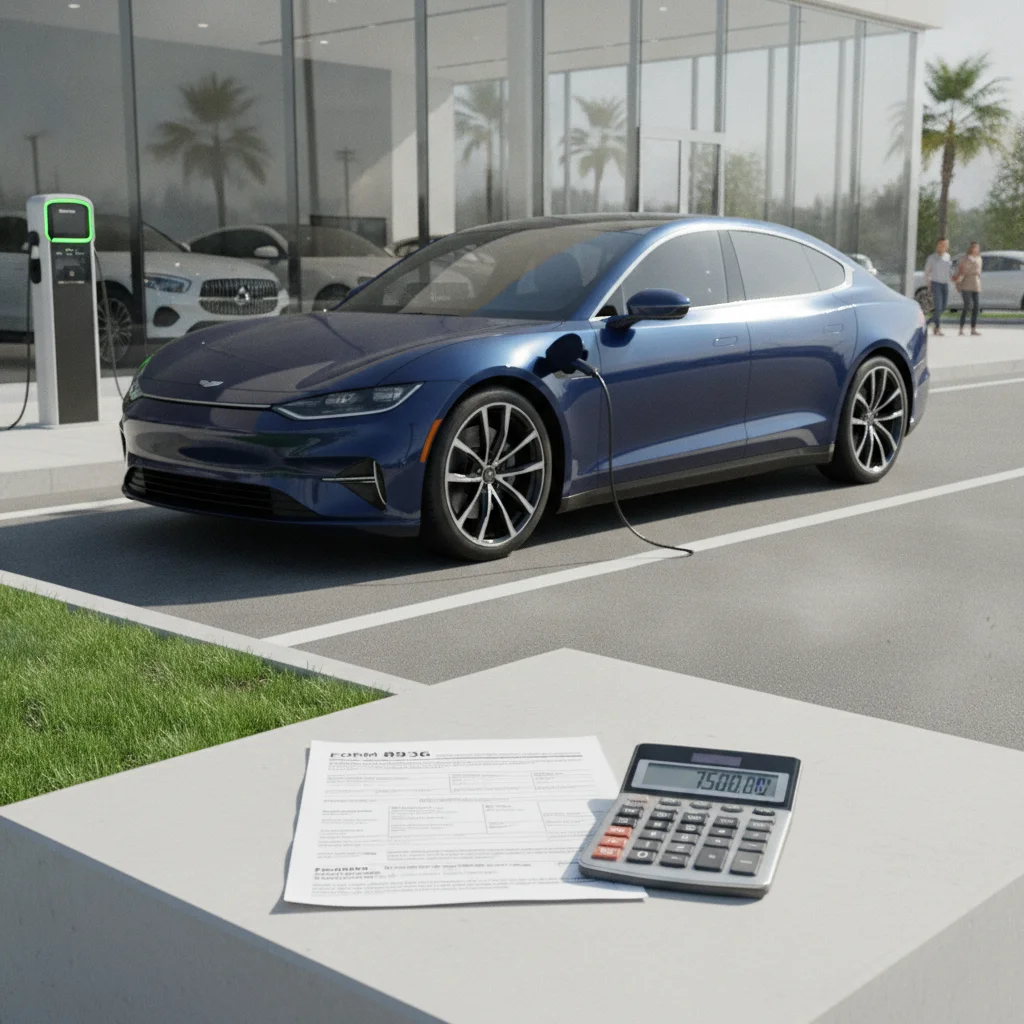
The maximum new EV credit is $7,500 — among the largest single consumer tax incentives currently available. For buyers with sufficient tax liability, this directly reduces out-of-pocket vehicle costs.
Point-of-sale transfer lowers price at purchase
Since January 2024, eligible buyers can transfer the credit to a registered dealer, effectively receiving the benefit as an upfront price reduction rather than waiting until tax season.
Stackable with state and local incentives
Many states offer separate EV rebates or tax credits that run concurrently with the federal program, meaning total incentives can exceed $10,000 in some states when combined.
Used EV credit opens access to more buyers
The $4,000 used EV credit — with lower income thresholds — extends incentives to buyers who can't afford or don't qualify for a new vehicle, broadening participation significantly.
MAGI look-back provision adds flexibility
Buyers can use either the current or prior year's MAGI — whichever is lower — to determine income eligibility. This helps buyers whose income fluctuates year to year.
Reduces total cost of EV ownership meaningfully
When combined with lower fuel and maintenance costs, a $7,500 credit can shift the break-even point versus a comparable gas vehicle significantly earlier in the ownership period.
Non-refundable — doesn't pay you back excess
If your federal tax liability is less than the credit amount, you lose the difference. There's no carryover to future years, which limits the benefit for lower-income buyers.
Strict income limits exclude many buyers
Single filers earning over $150,000 are ineligible for the new EV credit, and the used EV threshold is even tighter at $75,000. High earners in expensive markets may find the credit out of reach.
Vehicle eligibility is narrow and changes frequently
Only vehicles meeting North American assembly and battery sourcing requirements qualify, and the list changes as manufacturers adjust supply chains. A qualifying model today may not qualify next year.
MSRP caps rule out popular premium EV trims
Sedans priced above $55,000 and SUVs/trucks above $80,000 are ineligible. Many well-equipped versions of popular EVs exceed these thresholds, leaving buyers of certain trim levels without any credit.
Point-of-sale transfer carries income verification risk
Buyers who transfer the credit at the dealership but later find their income exceeded eligibility limits will owe the IRS the full credit amount at tax time — with no ability to reverse the transaction.
Battery sourcing rules can halve the credit
Vehicles meeting only one of two battery requirements — critical minerals or component assembly — receive just $3,750, not $7,500. Buyers assuming the full amount may be disappointed when they file.
Used EV credit has a $25,000 vehicle price cap
The used vehicle credit is capped at the lower of $4,000 or 30% of the purchase price, and only applies to vehicles under $25,000 sold by licensed dealers — not private party sales.
Our Verdict
The federal EV tax credit is a genuinely valuable incentive — but it rewards buyers who do their homework before signing anything. For buyers who meet the income thresholds, purchase an eligible vehicle, and understand the non-refundable nature of the credit, the savings can be substantial. For those who don't check eligibility upfront, the credit can disappoint or even create complications at tax time.
Best for moderate-to-high earners buying a qualifying new or used EV who have sufficient federal tax liability to absorb the credit and time to compare eligible models before purchase.
What the EV Tax Credit Actually Is
The federal EV tax credit — formally known as the Clean Vehicle Credit under the Inflation Reduction Act of 2022 — offers up to $7,500 off your federal tax bill when you purchase a new qualifying electric vehicle, or up to $4,000 for a used EV bought through a licensed dealer. It's one of the largest consumer-facing incentives the federal government currently offers, and for buyers in the right situation, it can meaningfully reduce the total cost of going electric.
But here's what trips up a lot of first-time buyers: this is a non-refundable tax credit, not a rebate or a check in the mail. It reduces the amount of federal income tax you owe — dollar for dollar — but it won't pay you back if your tax liability is smaller than the credit amount. If you owe $4,000 in federal taxes and claim a $7,500 credit, you save $4,000. The remaining $3,500 doesn't carry over to next year.

The rules governing which vehicles and buyers qualify were significantly tightened by the IRA, introducing vehicle price caps, income limits, and North American assembly and battery sourcing requirements. Understanding these guardrails before you shop is the single most important thing a first-time EV buyer can do. For a full breakdown of the rules from eligibility through filing, see our complete EV tax credit walkthrough.
The Pros: Why the EV Tax Credit Can Be a Game-Changer
When the stars align — right vehicle, right buyer, right tax situation — the EV tax credit delivers real, measurable value. Here's where it genuinely works in a buyer's favor.
Up to $7,500 off your federal tax bill
The maximum new EV credit is $7,500 — among the largest single consumer tax incentives currently available. For buyers with sufficient tax liability, this directly reduces out-of-pocket vehicle costs.
Point-of-sale transfer lowers price at purchase
Since January 2024, eligible buyers can transfer the credit to a registered dealer, effectively receiving the benefit as an upfront price reduction rather than waiting until tax season.
Stackable with state and local incentives
Many states offer separate EV rebates or tax credits that run concurrently with the federal program, meaning total incentives can exceed $10,000 in some states when combined.
Used EV credit opens access to more buyers
The $4,000 used EV credit — with lower income thresholds — extends incentives to buyers who can't afford or don't qualify for a new vehicle, broadening participation significantly.
MAGI look-back provision adds flexibility
Buyers can use either the current or prior year's MAGI — whichever is lower — to determine income eligibility. This helps buyers whose income fluctuates year to year.
Reduces total cost of EV ownership meaningfully
When combined with lower fuel and maintenance costs, a $7,500 credit can shift the break-even point versus a comparable gas vehicle significantly earlier in the ownership period.
$7,500
Maximum federal credit for new EV purchase
Per the Inflation Reduction Act of 2022, the Clean Vehicle Credit offers up to $7,500 for qualifying new electric vehicles purchased after August 16, 2022.
$4,000
Maximum federal credit for used EV purchase
The Used Clean Vehicle Credit, introduced in 2023, offers up to $4,000 or 30% of the sale price — whichever is less — for qualifying used EVs under $25,000.
$150,000
MAGI cutoff for single filer new EV credit
According to IRS guidance implementing the Inflation Reduction Act, single taxpayers with MAGI above $150,000 are ineligible for the new clean vehicle credit.
2024
Year point-of-sale credit transfer became available
The IRS enabled the transferability of the Clean Vehicle Credit to registered dealers starting January 1, 2024, allowing buyers to apply the credit directly at purchase.
$55,000
MSRP cap for new EV sedans and wagons
Under current IRS rules, sedans, wagons, and hatchbacks must be priced at or below $55,000 MSRP to qualify for the new EV credit — a threshold that excludes many premium trims.
One of the most underappreciated advantages is the ability to stack federal and state incentives. Many states — Colorado, California, New York, and others — offer their own rebates or credits that run concurrently with the federal program. A Colorado buyer purchasing an eligible EV could combine the $7,500 federal credit with a state tax credit worth up to $5,000, bringing the effective incentive to well over $10,000. Check your state's energy office or utility company for additional programs; the charging costs and savings hub also covers utility discounts that can further reduce your EV ownership costs.
The 2024 point-of-sale transfer option is another significant upgrade to the program. Rather than waiting until you file your taxes to see the benefit, eligible buyers can now transfer the credit to the dealer at purchase, effectively lowering the transaction price on the spot. This eliminates the cash-flow gap that previously made the credit less practical for buyers with tighter budgets. Our guide on how the point-of-sale credit transfer works explains exactly what to expect at the dealership.
The Cons: Where the EV Tax Credit Falls Short
The EV tax credit has real limitations that catch first-time buyers off guard. Going in clear-eyed about these constraints will help you avoid nasty surprises at tax time — or at the dealership.
Non-refundable — doesn't pay you back excess
If your federal tax liability is less than the credit amount, you lose the difference. There's no carryover to future years, which limits the benefit for lower-income buyers.
Strict income limits exclude many buyers
Single filers earning over $150,000 are ineligible for the new EV credit, and the used EV threshold is even tighter at $75,000. High earners in expensive markets may find the credit out of reach.
Vehicle eligibility is narrow and changes frequently
Only vehicles meeting North American assembly and battery sourcing requirements qualify, and the list changes as manufacturers adjust supply chains. A qualifying model today may not qualify next year.
MSRP caps rule out popular premium EV trims
Sedans priced above $55,000 and SUVs/trucks above $80,000 are ineligible. Many well-equipped versions of popular EVs exceed these thresholds, leaving buyers of certain trim levels without any credit.
Point-of-sale transfer carries income verification risk
Buyers who transfer the credit at the dealership but later find their income exceeded eligibility limits will owe the IRS the full credit amount at tax time — with no ability to reverse the transaction.
Battery sourcing rules can halve the credit
Vehicles meeting only one of two battery requirements — critical minerals or component assembly — receive just $3,750, not $7,500. Buyers assuming the full amount may be disappointed when they file.
Used EV credit has a $25,000 vehicle price cap
The used vehicle credit is capped at the lower of $4,000 or 30% of the purchase price, and only applies to vehicles under $25,000 sold by licensed dealers — not private party sales.
The Credit Is Non-Refundable — Plan Accordingly
A common misconception is that the EV tax credit functions like a rebate. It doesn't. It reduces your federal income tax liability to zero but stops there — no excess is refunded, and unused amounts cannot be carried forward. Before purchasing, estimate your actual federal tax bill for the year using last year's return as a baseline. If your liability is significantly below $7,500, you will only capture a fraction of the credit's maximum value.
Eligibility Can Shift Mid-Model-Year
Battery sourcing requirements under the IRA are phased in and increase annually, meaning a vehicle that qualified for the full $7,500 credit at the start of the year may only qualify for $3,750 — or nothing — later in the same model year as manufacturer supply chain thresholds are reassessed. The IRS updates its qualifying vehicle list periodically. Always check fueleconomy.gov for the current status of any specific make, model, year, and trim before signing a purchase agreement.
State Incentives Don't Always Mirror Federal Rules
State EV rebates and credits typically have their own eligibility criteria, income limits, and vehicle lists that do not necessarily align with the federal program. A vehicle that fails to qualify federally may still be eligible for a state rebate — and vice versa. Research your state's specific program through the state energy office or the Database of State Incentives for Renewables and Efficiency (DSIRE) to identify every available dollar before you buy.
One of the most frustrating aspects is vehicle eligibility volatility. The list of qualifying vehicles changes as manufacturers hit battery sourcing milestones or adjust MSRP pricing. A model that qualifies today may not qualify next quarter — and the reverse is also true. Always verify current eligibility directly through the IRS's fueleconomy.gov tool or your dealer's compliance documentation before purchasing.
The non-refundable nature of the credit deserves extra emphasis for first-time buyers. If your federal tax liability for the year is $3,000 and you claim the full $7,500 new EV credit, your tax bill drops to zero — but you don't receive a $4,500 refund. Many buyers conflate tax credits with rebates and are disappointed when they file. To avoid falling into this trap, review our piece on EV tax credit myths that cost buyers real money.
Income Limits and MSRP Caps: The Qualification Gauntlet
The IRA introduced hard income thresholds and vehicle price caps that did not exist under the previous credit structure. These rules were designed to target middle-income buyers and moderately priced EVs — but in practice, they exclude a meaningful slice of potential buyers.
Income Limits
| Filing Status | New EV Credit AGI Limit | Used EV Credit AGI Limit |
|---|---|---|
| Single filer | $150,000 | $75,000 |
| Head of household | $225,000 | $112,500 |
| Married filing jointly | $300,000 | $150,000 |
These limits are based on your Modified Adjusted Gross Income (MAGI) for either the current tax year or the prior tax year — whichever is lower. That's actually buyer-friendly: if you had a high-income year last year but income dropped this year, you may still qualify based on the current year's earnings.
Vehicle MSRP Caps
For new vehicles, SUVs, trucks, and vans must be priced at or below $80,000 MSRP. Sedans, wagons, and hatchbacks face a stricter cap of $55,000. For used EVs, the vehicle price cannot exceed $25,000. These caps eliminate a number of premium electric vehicles — including some trim levels of otherwise popular models — from eligibility.
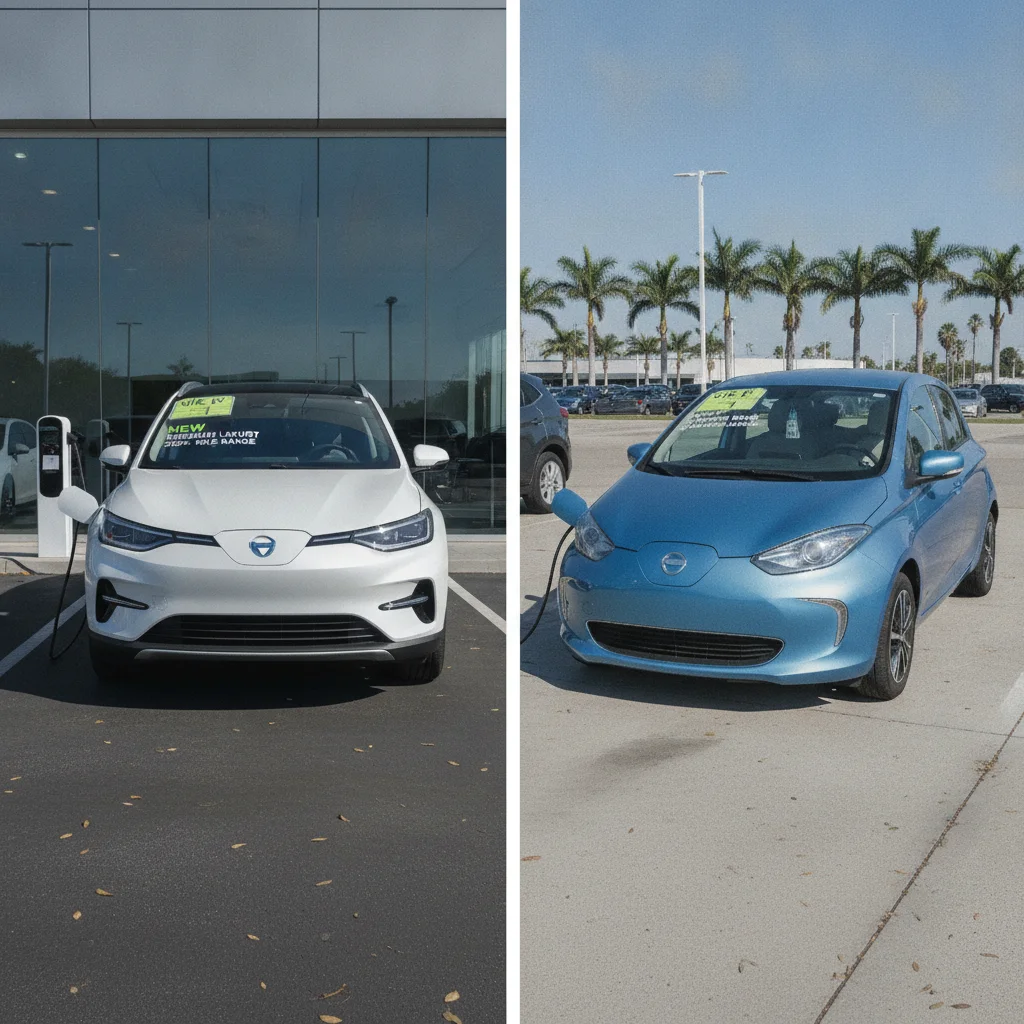
If you're weighing new vs. used, the two programs have meaningfully different structures. Our dedicated guide on new vs. used EV tax credits lays out exactly how each version of the credit works and which set of rules applies to your situation.
Battery Sourcing Requirements: The Hidden Disqualifier
One of the least-publicized reasons a vehicle may fail to qualify — or only partially qualify — for the credit is the IRA's battery content and critical mineral sourcing requirements. The law ties credit eligibility directly to how and where the vehicle's battery components are manufactured.
The $7,500 credit is split into two $3,750 components:
- Critical minerals requirement: A specified percentage of the battery's critical minerals must be extracted or processed in the U.S. or a country with a U.S. free trade agreement, or recycled in North America.
- Battery components requirement: A specified percentage of battery components must be manufactured or assembled in North America.
If a vehicle meets only one of the two requirements, it qualifies for $3,750 — not the full $7,500. This is why you see some models listed with a partial credit rather than the maximum. The thresholds increase annually, meaning a vehicle's eligibility status can shift from year to year even without any change in the car itself.
The Credit Is Non-Refundable — Plan Accordingly
A common misconception is that the EV tax credit functions like a rebate. It doesn't. It reduces your federal income tax liability to zero but stops there — no excess is refunded, and unused amounts cannot be carried forward. Before purchasing, estimate your actual federal tax bill for the year using last year's return as a baseline. If your liability is significantly below $7,500, you will only capture a fraction of the credit's maximum value.
Eligibility Can Shift Mid-Model-Year
Battery sourcing requirements under the IRA are phased in and increase annually, meaning a vehicle that qualified for the full $7,500 credit at the start of the year may only qualify for $3,750 — or nothing — later in the same model year as manufacturer supply chain thresholds are reassessed. The IRS updates its qualifying vehicle list periodically. Always check fueleconomy.gov for the current status of any specific make, model, year, and trim before signing a purchase agreement.
State Incentives Don't Always Mirror Federal Rules
State EV rebates and credits typically have their own eligibility criteria, income limits, and vehicle lists that do not necessarily align with the federal program. A vehicle that fails to qualify federally may still be eligible for a state rebate — and vice versa. Research your state's specific program through the state energy office or the Database of State Incentives for Renewables and Efficiency (DSIRE) to identify every available dollar before you buy.
First-time EV buyers often assume that if the brand name is well-known and the car is expensive, it must qualify. That's simply not how the rules work. Always verify eligibility using the IRS-maintained list at fueleconomy.gov before finalizing any purchase decision. For a broader orientation to incentive programs, the getting started with EV incentives guide is worth reading before you set foot in a dealership.
The Point-of-Sale Transfer: A Major Practical Upgrade
Before 2024, the EV tax credit was purely a tax-season benefit. You'd buy the car at full price, then wait months to realize the savings when you filed your return. That structure created a real cash-flow problem for buyers who needed the incentive to make the purchase affordable in the first place.
The point-of-sale transfer option changes that dynamic substantially. Starting January 1, 2024, eligible buyers can elect to transfer their credit to a registered dealer, who applies it as a reduction to the vehicle's purchase price. From the buyer's perspective, this functions like a discount at the point of sale — you're not paying full price and waiting for a tax refund.
There are a few important mechanics to understand:
- The dealer must be registered with the IRS to participate in the transfer program. Not all dealers have completed this registration.
- You still need to attest that you meet income eligibility requirements. If it later turns out you don't qualify — say, your income exceeded the cap for that tax year — you'll owe the credit back to the IRS when you file.
- The transfer is irrevocable once completed at the dealership. You can't change your mind after the transaction closes.
This last point is critical: the point-of-sale transfer shifts timing risk from the dealer to the buyer. If your income situation is uncertain, you may be better off claiming the credit on your tax return in the traditional manner rather than transferring it at purchase. See our full explainer on how the point-of-sale EV credit transfer works for step-by-step details.

How to Maximize the Credit as a First-Time Buyer
The buyers who get the most out of the EV tax credit aren't necessarily those with the highest incomes or the fanciest cars — they're the ones who verify eligibility before committing to a vehicle and structure their purchase to capture every available dollar.
Steps to take before you buy
- Estimate your tax liability. Pull last year's return and identify your total federal income tax owed (before payments and withholding). That number represents your maximum usable credit for the year.
- Check current vehicle eligibility. Use the IRS's fueleconomy.gov list, and filter specifically for the model year and trim you're considering — eligibility can vary by configuration.
- Confirm your MAGI is within limits. If your income was close to a threshold last year, consider whether this year's earnings might push you over — or pull you back into eligibility.
- Ask dealers about IRS registration. If you want to use the point-of-sale transfer, confirm the dealer is registered with the IRS under the Clean Vehicle Credit transfer program before you negotiate.
- Stack state and local incentives. Research your state's EV rebate programs, utility company incentives, and any local clean air programs. These can be applied alongside the federal credit.
One often-missed angle: EV insurance costs can be higher than expected for some models, which affects the total ownership calculation. Review our EV insurance guide to factor that into your decision alongside the tax credit savings.
The Credit Is Non-Refundable — Plan Accordingly
A common misconception is that the EV tax credit functions like a rebate. It doesn't. It reduces your federal income tax liability to zero but stops there — no excess is refunded, and unused amounts cannot be carried forward. Before purchasing, estimate your actual federal tax bill for the year using last year's return as a baseline. If your liability is significantly below $7,500, you will only capture a fraction of the credit's maximum value.
Eligibility Can Shift Mid-Model-Year
Battery sourcing requirements under the IRA are phased in and increase annually, meaning a vehicle that qualified for the full $7,500 credit at the start of the year may only qualify for $3,750 — or nothing — later in the same model year as manufacturer supply chain thresholds are reassessed. The IRS updates its qualifying vehicle list periodically. Always check fueleconomy.gov for the current status of any specific make, model, year, and trim before signing a purchase agreement.
State Incentives Don't Always Mirror Federal Rules
State EV rebates and credits typically have their own eligibility criteria, income limits, and vehicle lists that do not necessarily align with the federal program. A vehicle that fails to qualify federally may still be eligible for a state rebate — and vice versa. Research your state's specific program through the state energy office or the Database of State Incentives for Renewables and Efficiency (DSIRE) to identify every available dollar before you buy.
Bottom Line: Credit or Complication?
The EV tax credit is real money — but it's not unconditional money. The federal government has layered in enough qualification criteria that a meaningful portion of buyers and vehicles simply won't qualify for the full amount. That's not a reason to avoid EVs; it's a reason to approach the buying process with a clear checklist rather than an assumption that the credit is automatic.
For first-time buyers, the single biggest mistake is deciding on a vehicle first and checking eligibility second. Eligibility is a precondition of the savings, not an afterthought. Run the numbers on your tax liability, verify your chosen vehicle qualifies for the current year, understand whether the point-of-sale transfer fits your situation, and layer in any available state incentives.
Done right, the EV tax credit can reduce the effective cost of a new electric vehicle by thousands of dollars — making models that might otherwise be out of reach genuinely competitive on price. Done wrong, it produces either a smaller benefit than expected or a surprise tax obligation. The difference is preparation.

All claims are backed by peer-reviewed research. Sources on request.