Key Takeaways
IRA Battery Sourcing Requirements
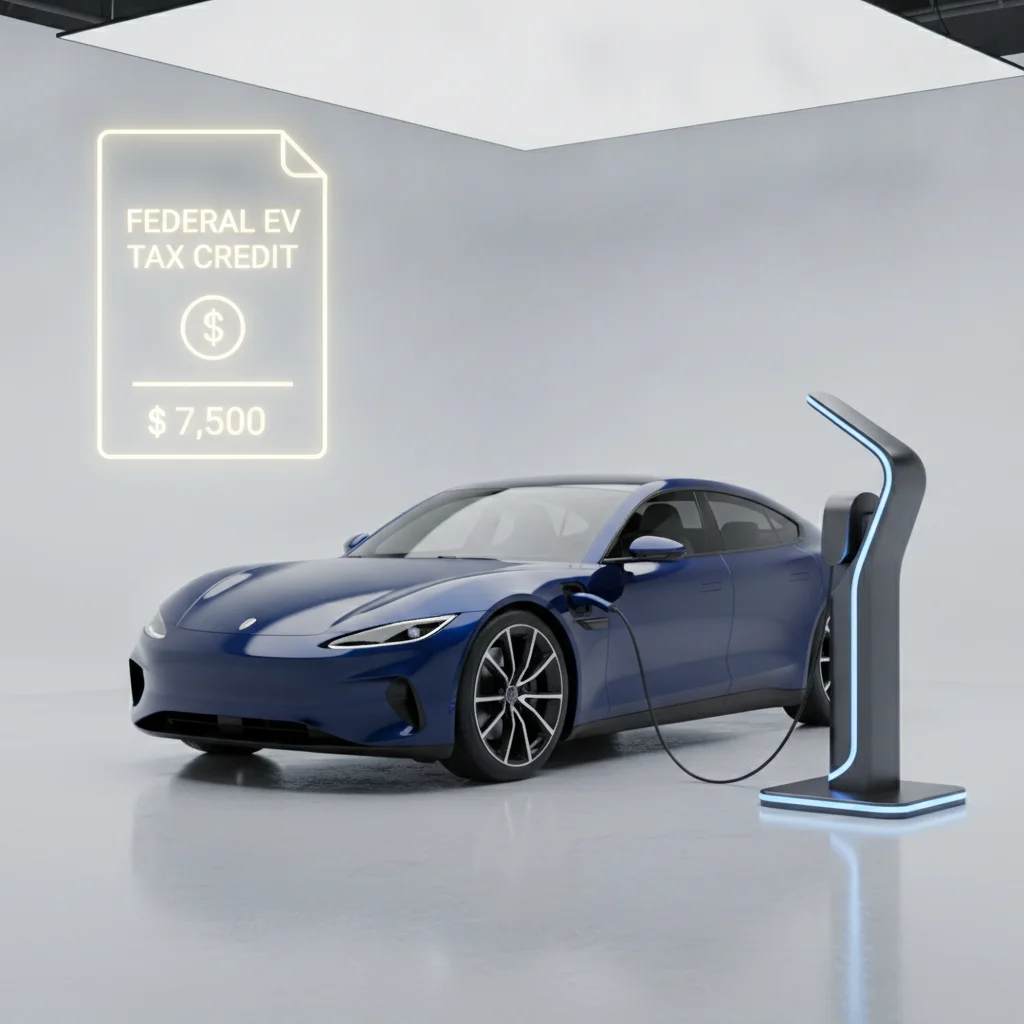
Under the Inflation Reduction Act (IRA), a new electric vehicle must meet two separate battery-related tests to qualify for the full $7,500 federal tax credit. One test looks at where the battery's critical minerals were extracted or processed. The other looks at where the battery components were manufactured or assembled. Failing either test cuts the credit in half; failing both eliminates it entirely.
The mineral and component thresholds are percentage-based and ratchet upward each year under IRS guidance. Vehicles must also meet North American final assembly requirements as a prerequisite before battery sourcing even applies.
Why Battery Sourcing Became a Condition of the Tax Credit
Before the Inflation Reduction Act passed in August 2022, the federal EV tax credit was primarily about sales volume — once a manufacturer sold 200,000 qualifying vehicles, the credit phased out. There were no requirements about where batteries came from. That changed fundamentally with the IRA.
Congress added supply chain conditions for two reasons. First, to reduce U.S. dependence on China, which dominates global battery mineral processing and battery component manufacturing. Second, to push automakers and battery suppliers to build out North American supply chains that didn't previously exist at scale.
The result is a credit structure that's explicitly tied to geopolitics. A car can be excellent, efficient, and American-branded — but if its lithium was refined in China or its battery cells assembled overseas, it may not qualify for any portion of the credit. For buyers, understanding these rules is the difference between expecting $7,500 in savings and actually receiving it.
The federal EV tax credit, explained covers the full picture of credit mechanics, income caps, and vehicle price limits. This article focuses specifically on the battery sourcing piece — the part most buyers find confusing and most articles gloss over.
How the Two-Part Battery Test Works
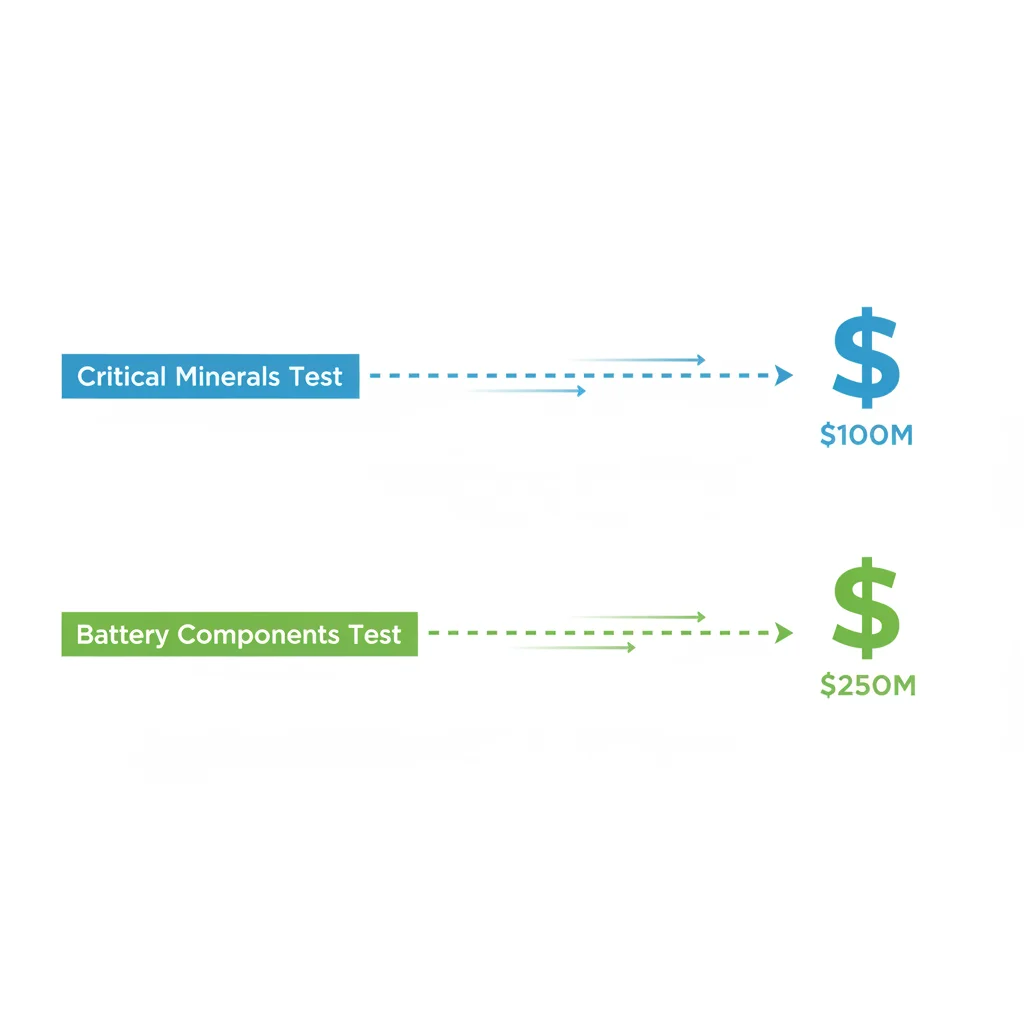
The IRA structures the $7,500 new EV credit as two independent $3,750 components. Each has its own test. A vehicle can pass one, both, or neither.
The Critical Minerals Test ($3,750)
This test asks: where were the battery's critical minerals extracted, processed, or recycled? The minerals in scope include lithium, cobalt, nickel, manganese, and graphite — the core ingredients in most lithium-ion battery chemistries.
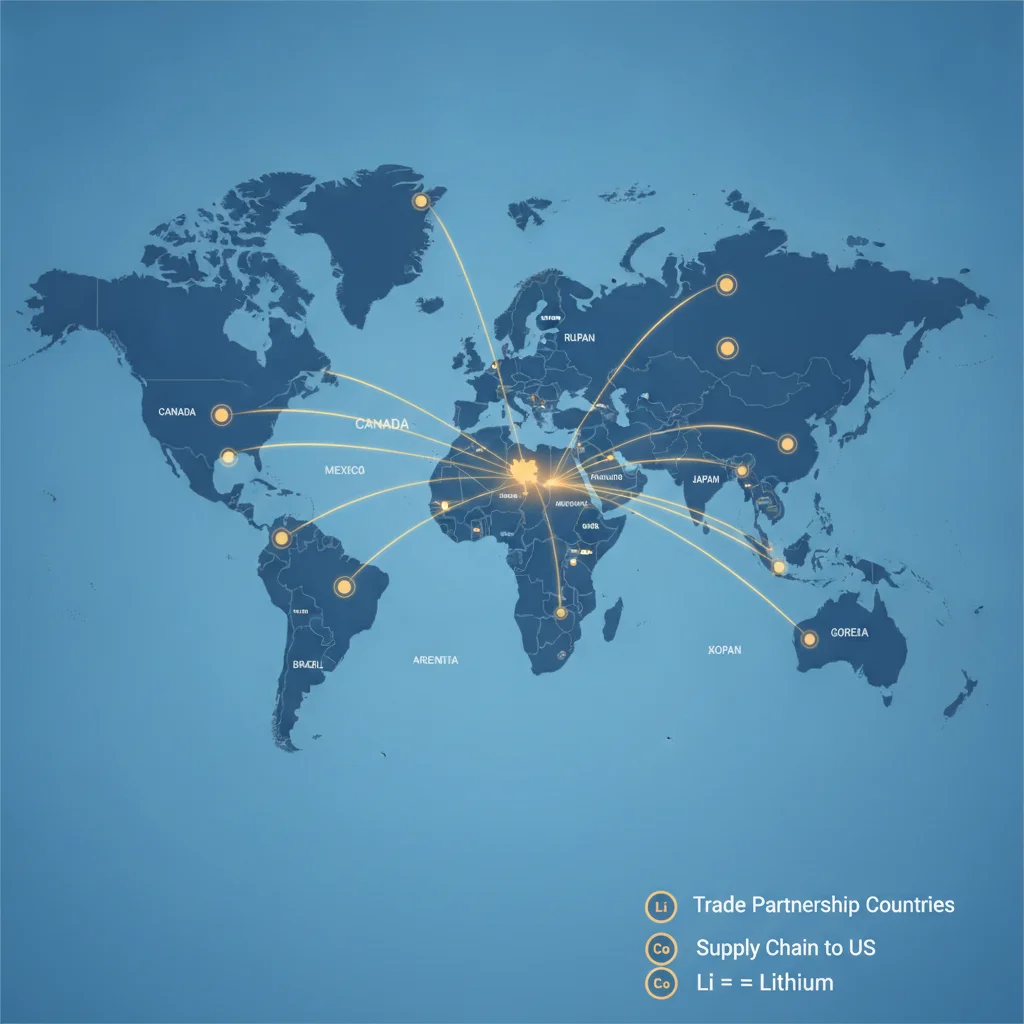
To pass, a qualifying percentage of the value of those minerals must come from the United States or a country with which the U.S. has a qualifying free trade agreement (FTA). The IRS has also extended the definition to include countries with qualifying critical minerals agreements (CMAs), which allows partners like Japan and EU member states to count even without a traditional FTA.
The required percentage started at 40% for vehicles placed in service in 2023 and increases by 10 percentage points each year, reaching 80% by 2027 where it holds.
40% → 80%
Critical minerals qualifying threshold, 2023–2027
The IRA ratchets up the required percentage of qualifying critical mineral value by roughly 10 points per year under IRS guidance.
50% → 100%
Battery components North America threshold, 2023–2029
The component manufacturing requirement escalates annually until full North American sourcing is required by 2029.
$3,750
Credit available if only one battery test is passed
Each of the two battery sourcing tests is worth half of the $7,500 maximum new EV credit under the IRA.
2024
Year FEOC component prohibition took effect
Vehicles placed in service from January 1, 2024 onward cannot claim any credit if battery components were made by a foreign entity of concern.
$7,500
Maximum new EV tax credit under the IRA
Buyers must meet income caps, vehicle price limits, and both battery sourcing tests to claim the full amount.
The Battery Components Test ($3,750)
This test asks: where were the battery components — specifically cells, modules, electrodes, and the battery management system — manufactured or assembled? Unlike the minerals test, this one doesn't use a list of qualifying countries. It's binary: components must be manufactured or assembled in North America (the U.S., Canada, or Mexico).
The required percentage of component value that must meet this standard started at 50% in 2023 and ratchets up to 100% by 2029.
The Prerequisite: North American Final Assembly
Before either battery test applies, the vehicle must be finally assembled in North America. If a vehicle fails this prerequisite — say, it's built in Germany or South Korea — it doesn't qualify for any portion of the credit, regardless of where its batteries come from. This rule eliminated a large number of previously popular EVs from European and Korean brands from eligibility immediately when the IRA took effect.
Used EV Credits Have Different Rules
The IRA also created a separate credit for used EVs — up to $4,000 or 30% of the sale price, whichever is less. Crucially, used EV credits do not include battery sourcing requirements. The used credit has its own income caps and vehicle price limits, but it's accessible for vehicles that fail the new vehicle battery tests entirely. If a vehicle you want doesn't qualify new, it may still generate a credit in the used market a few years later.
Eligibility Can Change Within a Model Year
The IRS allows manufacturers to submit updated vehicle eligibility documentation throughout the year. This means a vehicle that qualifies when a model year launches might lose eligibility — or gain it — as the production run progresses and battery sourcing changes. Always check fueleconomy.gov at the time of your specific purchase, not just when you start shopping.
The Foreign Entity of Concern Prohibition
Stacked on top of the two battery tests is a harder prohibition that phases in over time. The IRA bars any vehicle from claiming the credit if its battery contains components manufactured or assembled by a "foreign entity of concern" (FEOC), or if its critical minerals were extracted, processed, or recycled by an FEOC.
The U.S. Department of Energy defines FEOCs to include entities owned by, controlled by, or subject to the jurisdiction of China, Russia, North Korea, or Iran. In practice, this primarily targets China, given its dominance in battery supply chains.
The FEOC prohibition on battery components took effect for vehicles placed in service on or after January 1, 2024. The prohibition on critical minerals from FEOCs took effect January 1, 2025. These rules have already caused several vehicles to lose credit eligibility that previously held it.
“The foreign entity of concern rules are a meaningful tightening of the supply chain requirements. Automakers now have to verify not just their Tier 1 suppliers, but how deep the Chinese investment goes in the companies making battery materials — that's a level of supply chain transparency the industry didn't have before.”
— Corey Cantor, EV analyst, BloombergNEF
The practical implication is significant: even trace amounts of FEOC-sourced materials in a battery pack can disqualify a vehicle. This has pushed automakers to audit their supply chains several tiers deep — not just their direct suppliers, but the suppliers of their suppliers. That's genuinely new territory for the auto industry.
Track what changed in EV tax credit rules since the IRA for a chronological view of how these rules have been implemented and updated since 2022.
Which Vehicles Are Actually Passing These Tests?
The honest answer is: fewer than buyers might expect, and the list changes frequently. As of recent IRS updates, vehicles from Tesla, Ford, General Motors, Stellantis, and Rivian have had models qualifying for the full or partial credit — but qualification is vehicle- and sometimes trim-specific, not brand-wide.
Several patterns are worth understanding:
- Tesla has been active in shifting battery cell sourcing toward domestic and FTA-country suppliers, allowing multiple models to claim the full credit, though this can vary by battery chemistry and production batch.
- GM's Ultium platform was designed with domestic sourcing in mind, giving it a structural advantage — but FEOC compliance has required supply chain adjustments mid-cycle.
- Korean automakers (Hyundai, Kia, Genesis) initially lost eligibility due to the North American assembly requirement. Their new U.S. plants are beginning to change that picture, but battery sourcing compliance is a separate hurdle still being worked through.
- European brands with EVs assembled abroad remain ineligible for the new vehicle credit entirely, though they may qualify for the used EV credit under different rules.
Which EVs qualify for the federal tax credit right now is the most practical tool for staying current — eligibility changes as manufacturers update sourcing documentation with the IRS.
How Automakers Are Responding to Sourcing Pressures
The IRA's battery sourcing rules have triggered a substantial wave of supply chain investment — which is exactly what the legislation intended. Several dynamics are worth noting for buyers who want to understand the longer-term picture.
Domestic Battery Plant Construction
U.S. battery cell manufacturing capacity was minimal before the IRA. Since 2022, dozens of gigafactory announcements have followed from manufacturers including Panasonic, LG Energy Solution, Samsung SDI, and SK On — all building or expanding U.S. facilities in partnership with automakers. These plants are the foundation of compliant component sourcing.
Mineral Processing Investment
Battery-grade lithium, nickel, and cobalt processing capacity in the U.S. is growing but still far behind demand. Automakers have signed long-term offtake agreements with domestic and FTA-country miners to lock in qualifying supply. This is slower to build than assembly plants, which is why the minerals thresholds (while escalating) remain somewhat more achievable near-term than they will be by the late 2020s.
Supply Chain Transparency
The FEOC rules require automakers to trace materials several supplier tiers deep — a capability most didn't have. Third-party battery passport systems and blockchain-based tracing tools are being piloted to give manufacturers (and regulators) this visibility. It's an ongoing operational challenge.
Ask for the Manufacturer's IRS Attestation
Manufacturers are required to provide buyers with a written attestation confirming the vehicle's credit eligibility and the specific sourcing basis. Ask the dealer for this document before signing. It's your paper trail if the IRS ever questions the credit on your return — and it will tell you exactly which of the two battery tests the vehicle passed.
Monitor Eligibility for Your Shortlisted Vehicles
If you're a few months from buying, bookmark the fueleconomy.gov eligibility list and check it the week you're ready to purchase. Eligibility can shift with new IRS guidance or manufacturer supply changes. Setting a calendar reminder costs nothing; losing $3,750 because you relied on three-month-old information costs a lot.
For buyers, the takeaway is that the list of qualifying vehicles will likely grow over the next three to five years as this infrastructure comes online — but it will also continue to shift in the short term as vehicles gain or lose compliance mid-cycle.
What This Means When You're Shopping for an EV
Battery sourcing rules are abstract until you're at a dealership trying to figure out whether a specific trim on a specific vehicle qualifies for $7,500, $3,750, or nothing. Here's how to approach it practically.
Verify Before You Negotiate
Don't rely on a dealer's assurance that a vehicle qualifies. IRS eligibility is confirmed at fueleconomy.gov, which reflects the manufacturer's attestation to the IRS. Check the VIN-level data if possible, because some manufacturers have had different battery batches with different sourcing profiles within the same model year.
Understand What You're Getting If Only One Test Passes
A $3,750 credit is still a real saving — don't dismiss a vehicle that partially qualifies. If you're comparing two similar vehicles and one offers $3,750 while the other offers nothing, that's a meaningful price difference. Factor it into total cost of ownership alongside insurance and maintenance.
Speaking of which, how EV insurance works and what it costs is worth reviewing since EVs often carry higher premiums than comparable gas vehicles — a cost that can offset some of the credit's benefit if you're not accounting for it.
Time Your Purchase Strategically
Sourcing rules tighten each year. A vehicle that qualifies today under current thresholds might not qualify under 2026 or 2027 thresholds if its supply chain hasn't evolved. Conversely, a vehicle that currently fails might qualify once a new domestic battery plant comes online. Timing your EV purchase around tax credit rule changes walks through how to track upcoming guidance shifts.
The Point-of-Sale Credit Changes Things
Since 2024, buyers can transfer the credit to the dealer at point of sale and receive an immediate price reduction rather than waiting for a tax return. This makes credit qualification more tangible but also means dealers need to be current on eligibility. Verify independently rather than taking a dealer's claim at face value. Also note that this mechanism is separate from state rebates and utility incentives, which operate on their own timelines — EV incentives that don't require filing a tax return covers those alternatives.

All claims are backed by peer-reviewed research. Sources on request.