| IRA Signed Into Law | August 16, 2022 (U.S. Congress, 117th Session) |
| Maximum New EV Credit | $7,500 (IRC Section 30D, as amended by IRA) |
| Maximum Used EV Credit | $4,000 (IRC Section 25E, effective January 1, 2023) |
| Income Cap (Married Filing Jointly, New EV) | $300,000 MAGI (IRS, effective January 1, 2023) |
| New EV MSRP Cap (Cars/Sedans) | $55,000 (IRS, effective January 1, 2023) |
| New EV MSRP Cap (SUVs/Trucks/Vans) | $80,000 (IRS, effective January 1, 2023) |
| Point-of-Sale Transfer Option Available | January 1, 2024 (IRS Energy Credits Online portal) |
| Used EV Vehicle Price Cap | $25,000 (IRC Section 25E) |
| Manufacturer Sales Cap | Eliminated (was 200,000 units) (Removed by IRA, August 2022) |
| Battery Component Threshold (2025) | 60% North American assembly (IRS proposed guidance, 2023) |
Why the IRA Was a Clean Break From the Old EV Credit
Before August 2022, the federal EV tax credit — officially the IRC Section 30D credit — operated under a straightforward but flawed ruleset. Buyers could claim up to $7,500 on qualifying plug-in vehicles, but the credit phased out once a manufacturer sold 200,000 qualifying vehicles. That ceiling had already knocked out Tesla and General Motors from eligibility entirely, and Toyota was close behind. Meanwhile, a Nissan LEAF qualified but a Chevy Bolt didn't. The system rewarded early adopters of early EV brands, then cut them off.
The Inflation Reduction Act (IRA), signed into law on August 16, 2022, scrapped the manufacturer cap entirely. But it replaced it with something far more complicated: a web of income limits, vehicle price caps, battery component sourcing requirements, and final assembly restrictions. Some rules kicked in immediately. Others were phased in over 2023 and 2024. A few are still being refined by Treasury guidance.
Understanding what changed — and when — is essential if you're trying to figure out whether your next EV purchase qualifies. See our full breakdown of how the federal EV tax credit works for the foundational context before diving into this timeline.
| IRA Signed Into Law | August 16, 2022 (U.S. Congress, 117th Session) |
| Maximum New EV Credit | $7,500 (IRC Section 30D, as amended by IRA) |
| Maximum Used EV Credit | $4,000 (IRC Section 25E, effective January 1, 2023) |
| Income Cap (Married Filing Jointly, New EV) | $300,000 MAGI (IRS, effective January 1, 2023) |
| New EV MSRP Cap (Cars/Sedans) | $55,000 (IRS, effective January 1, 2023) |
| New EV MSRP Cap (SUVs/Trucks/Vans) | $80,000 (IRS, effective January 1, 2023) |
| Point-of-Sale Transfer Option Available | January 1, 2024 (IRS Energy Credits Online portal) |
| Used EV Vehicle Price Cap | $25,000 (IRC Section 25E) |
| Manufacturer Sales Cap | Eliminated (was 200,000 units) (Removed by IRA, August 2022) |
| Battery Component Threshold (2025) | 60% North American assembly (IRS proposed guidance, 2023) |
Timeline: Every Major Rule Change, Year by Year
August 16, 2022 — IRA Enacted
The moment the IRA was signed, a handful of rules took effect immediately:
- Manufacturer sales cap eliminated. Tesla, GM, and Toyota vehicles became eligible again (subject to new rules).
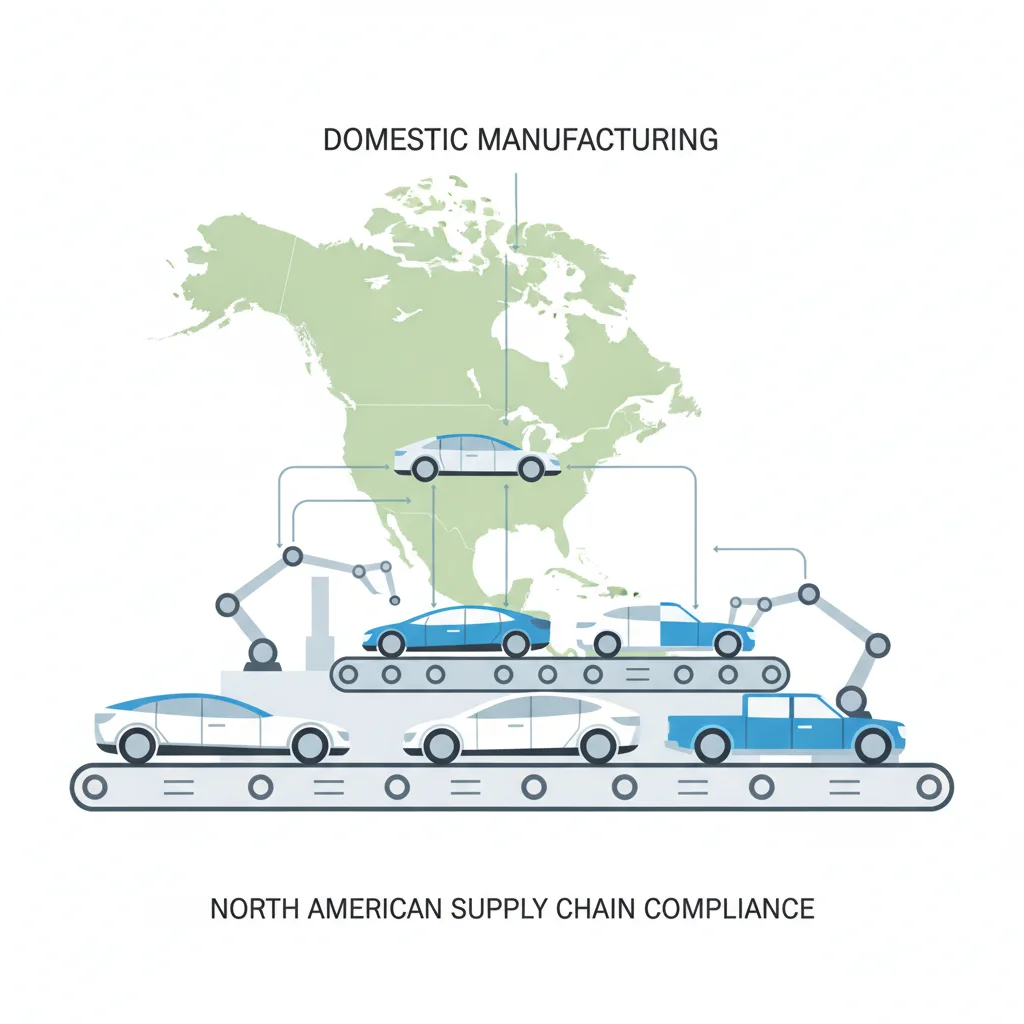
- Final assembly requirement. Only vehicles assembled in North America (U.S., Canada, or Mexico) could qualify. This instantly disqualified many popular EVs built in Europe and Asia, including the Hyundai IONIQ 5, Kia EV6, and BMW i4 — at least temporarily.
- Used EV credit created. For the first time, buyers of used electric vehicles could claim a credit of up to $4,000 (or 30% of the sale price, whichever is less).
- Commercial EV credit created (Section 45W). Businesses and tax-exempt entities could claim up to $7,500 for commercial clean vehicles, including EVs and fuel cell vehicles.
Notably, the battery sourcing rules — which would become the most consequential eligibility gatekeepers — were not yet in effect. Treasury needed time to define them.
January 1, 2023 — New Income and Price Caps Take Effect
Starting January 1, 2023, the credit became means-tested for the first time:
- Income limits (MAGI): $150,000 for single filers, $225,000 for heads of household, $300,000 for married filing jointly.
- Vehicle price caps: $55,000 MSRP for cars and sedans; $80,000 MSRP for SUVs, trucks, and vans.
- Used EV credit income limits: $75,000 single / $112,500 head of household / $150,000 married filing jointly, with a $25,000 vehicle price cap.
These rules applied based on the year of purchase or the year prior, whichever was lower — giving buyers some flexibility if their income fluctuated.
March 31, 2023 — Battery Sourcing Rules Phase In
The most technically complex provisions of the IRA finally activated on April 1, 2023, following Treasury's release of proposed guidance in late March. The $7,500 credit was split into two equal $3,750 components:
- Critical minerals requirement ($3,750): A specified percentage of the value of critical minerals in the battery must be extracted or processed in the U.S. or a country with a U.S. free trade agreement, or recycled in North America. The threshold started at 40% and rises each year toward 80% by 2027.
- Battery components requirement ($3,750): A specified percentage of the value of battery components must be manufactured or assembled in North America. The threshold started at 50% and climbs to 100% by 2029.
In practical terms, this immediately knocked some vehicles off the full $7,500 list. Many EVs qualified for only one half of the credit ($3,750) because their supply chains didn't yet meet both thresholds. The IRS published a running list of qualifying vehicles — which changed frequently as manufacturers adjusted their supply chains and certifications.
For a clear picture of how BEVs, PHEVs, and fuel cell vehicles are treated differently under these rules, see our guide on which EV types qualify for federal tax credits.
January 1, 2024 — Point-of-Sale Transfer Option Launches
This was arguably the single most buyer-friendly change since the IRA passed. Prior to 2024, the EV credit was nonrefundable — meaning you could only use it to offset federal income tax you actually owed. If your tax liability was $4,000, you could use $4,000 of a $7,500 credit and lose the rest. You couldn't carry it forward or get a refund for the unused portion.
Starting January 1, 2024, buyers gained the option to transfer their credit to the dealer at point of sale. In practice, this means the dealer applies the credit as a direct discount off the purchase price — and then claims the credit from the IRS themselves. The benefit is immediate and doesn't depend on your tax liability. You get the full dollar value regardless of what you owe in taxes that year.
Participating in this program required dealers to register with the IRS Energy Credits Online portal. Not all dealers enrolled immediately, but adoption grew rapidly through 2024. Buyers also needed to certify their income eligibility at the time of purchase — if the IRS later determines you exceeded the income cap, you may have to repay the credit.

January 1, 2024 — Leased EVs Under the Commercial Credit
A significant workaround that became formally established in 2024: leased EVs, regardless of where they're assembled or what their battery components look like, can qualify for the Section 45W commercial clean vehicle credit — up to $7,500. Leasing companies (lessors) claim the credit, and while they're under no legal obligation to pass it through to lessees, competitive market pressure pushed most major automakers' finance arms to reduce lease payments accordingly.
This opened a real path for vehicles like the Hyundai IONIQ 6 or Kia EV9 — which don't qualify for the consumer credit due to assembly location — to effectively benefit from an incentive through leasing. The tradeoff: you don't own the vehicle, and the lessee income limits don't apply (since the credit goes to the lessor).
Critical Mineral Thresholds Rising: 2025 and Beyond
The battery sourcing requirements are designed to tighten over time, pushing automakers to localize their supply chains:
| Year | Critical Minerals Threshold | Battery Components Threshold |
|---|---|---|
| 2023 | 40% | 50% |
| 2024 | 50% | 60% |
| 2025 | 60% | 60% |
| 2026 | 70% | 70% |
| 2027 | 80% | 80% |
| 2028 | 80% | 90% |
| 2029+ | 80% | 100% |
As thresholds rise, some vehicles that currently qualify for the full $7,500 may lose eligibility for one or both halves unless their manufacturers continue upgrading supply chain sourcing. This makes the IRS's vehicle eligibility list a document worth bookmarking and rechecking before any purchase.
$7,500
Maximum new EV credit under IRA
Split into two $3,750 components tied to battery sourcing requirements, per IRS guidance effective April 2023.
200,000
Former per-manufacturer sales cap (now eliminated)
Under pre-IRA rules, the credit phased out after each automaker sold 200,000 qualifying vehicles, disqualifying Tesla and GM buyers entirely.
2024
Year point-of-sale transfer became available
Starting January 1, 2024, buyers can transfer their credit to dealers as an immediate price reduction, regardless of personal tax liability.
100%
Target North American battery component content by 2029
Per IRA phase-in schedule, battery components must be 100% manufactured or assembled in North America by 2029 to qualify for that half of the credit.
$4,000
Maximum used EV tax credit
Available since January 1, 2023, capped at 30% of the sale price; vehicles must be priced at $25,000 or less to qualify.
What Changed for Used EVs Specifically
The used EV credit (Section 25E) was brand new under the IRA — no equivalent existed before 2023. Here's how it stacks up:
- Maximum credit: $4,000 or 30% of the vehicle sale price, whichever is less.
- Vehicle price cap: $25,000 MSRP or less at time of sale.
- Vehicle age requirement: At least two model years older than the calendar year of purchase.
- First-sale rule: The vehicle cannot have been previously sold under this credit provision — only the first used sale qualifies.
- Income limits (MAGI): $75,000 single / $112,500 head of household / $150,000 married filing jointly.
- No North American assembly requirement for used vehicles.
- No battery sourcing requirements for used vehicles.
Like the new vehicle credit, the used EV credit became transferable to dealers at the point of sale starting January 1, 2024. The same income certification and potential repayment rules apply.
The used EV credit is considerably simpler than the new vehicle credit — fewer boxes to check, no supply chain requirements — but the $25,000 price cap is a real constraint as used EV prices have risen. Many desirable used EVs, including Tesla Model Y and Model 3 examples from recent model years, have spent time above that threshold in the used market.
IRC Section 30D
The section of the Internal Revenue Code governing the federal clean vehicle tax credit for new electric and plug-in hybrid vehicles. The IRA substantially rewrote this section effective August 2022.
Modified Adjusted Gross Income (MAGI)
The income figure used to determine EV tax credit eligibility. It's your adjusted gross income with certain deductions added back. The IRS uses the lower of your current-year or prior-year MAGI for EV credit qualification.
Critical Minerals Requirement
One of two battery-related tests for the $7,500 new EV credit. A set percentage of the value of critical minerals (lithium, cobalt, nickel, etc.) in the battery must come from the U.S., a free trade agreement partner, or be recycled in North America.
Battery Components Requirement
The second battery-related test for the $7,500 new EV credit. A set percentage of the value of the battery's components must be manufactured or assembled in North America. This threshold rises annually through 2029.
Point-of-Sale Transfer
A mechanism available since January 1, 2024, that lets buyers transfer their EV tax credit to the dealer as an upfront price reduction. The dealer collects the credit from the IRS directly, so the benefit is immediate regardless of the buyer's personal tax liability.
Section 45W Commercial Credit
A separate federal tax credit for commercial clean vehicles, including those that are leased. Lessors (leasing companies) claim this credit for EVs regardless of assembly location, and many pass the savings to lessees through lower monthly payments.
North American Assembly Requirement
An IRA rule requiring that a new EV's final assembly take place in the United States, Canada, or Mexico for the vehicle to qualify for the Section 30D consumer credit. This requirement does not apply to used vehicles or leased vehicles under the commercial credit.
Nonrefundable Credit
A tax credit that can only reduce your federal income tax liability to zero — it cannot generate a refund if the credit exceeds what you owe. The new EV credit is nonrefundable unless transferred to the dealer at point of sale.
How to Stay Current and Time Your Purchase
The IRS maintains an updated list of qualifying vehicles at irs.gov under the Clean Vehicle Credits section, and the Department of Energy's fueleconomy.gov site aggregates this information as well. Both are updated as manufacturers submit certifications and as Treasury publishes new guidance.
A few practical rules for navigating this environment:
- Check the IRS list the week you're ready to buy, not months in advance. Eligibility changes when manufacturers update their supply chain certifications or when new Treasury guidance takes effect.
- Confirm the dealer is enrolled in the IRS portal if you want to use the point-of-sale transfer option. Ask explicitly — don't assume.
- Verify your income eligibility before finalizing the deal. If you're near the MAGI threshold, the IRA allows you to use the lower of the current year or prior year income — plan accordingly.
- Understand the SUV vs. sedan classification. Treasury has classified some vehicles (like the Tesla Model Y) as SUVs under the $80,000 cap and others as sedans under the $55,000 cap. This affects whether expensive models qualify at all.
- If the vehicle you want doesn't qualify for the consumer credit, explore leasing. The commercial credit path through leasing remains available regardless of assembly location and has no income ceiling for lessees.
For a deeper look at how to align your purchase timing with IRS guidance cycles, see our article on timing your EV purchase around tax credit rule changes. And if you want a full end-to-end walkthrough — from checking eligibility to filing your return — the complete EV tax credit walkthrough covers every step in detail.
One more thing worth tracking: legislative proposals to modify or repeal IRA provisions circulate regularly in Congress. The EV credit landscape in 2026 and beyond is not guaranteed. If you're on the fence between buying now versus later, the current rules are known quantities — future rules are not.
IRS Clean Vehicle Credits (irs.gov)
The IRS's official page lists currently qualifying new and used EVs, income requirements, and filing guidance. Updated as manufacturers submit certifications — bookmark it and check before any purchase.
fueleconomy.gov EV Incentives Tool
The Department of Energy's tool aggregates federal and state EV incentives by vehicle and ZIP code. Useful for quickly checking whether a specific model qualifies and what state-level credits stack on top.
IRS Energy Credits Online Portal
The portal dealers use to register for point-of-sale credit transfers. If your dealer hasn't enrolled, this is where they need to go — useful to reference if a dealership is unfamiliar with the transfer process.
EV Tax Credits: A Complete Walkthrough From Eligibility to Filing
Our end-to-end guide covers how to check eligibility, navigate the point-of-sale transfer, and correctly claim or reconcile the credit on your federal return.
EV Insurance Guide
Once you've sorted out the tax credit, insurance is the next cost to benchmark. Our <a href="/electric-vehicles/ev-ownership-costs/ev-insurance-guide">EV insurance guide</a> explains why EV premiums differ from gas vehicles and how to shop smartly.

All claims are backed by peer-reviewed research. Sources on request.