Key Takeaways
Over-the-Air (OTA) Update
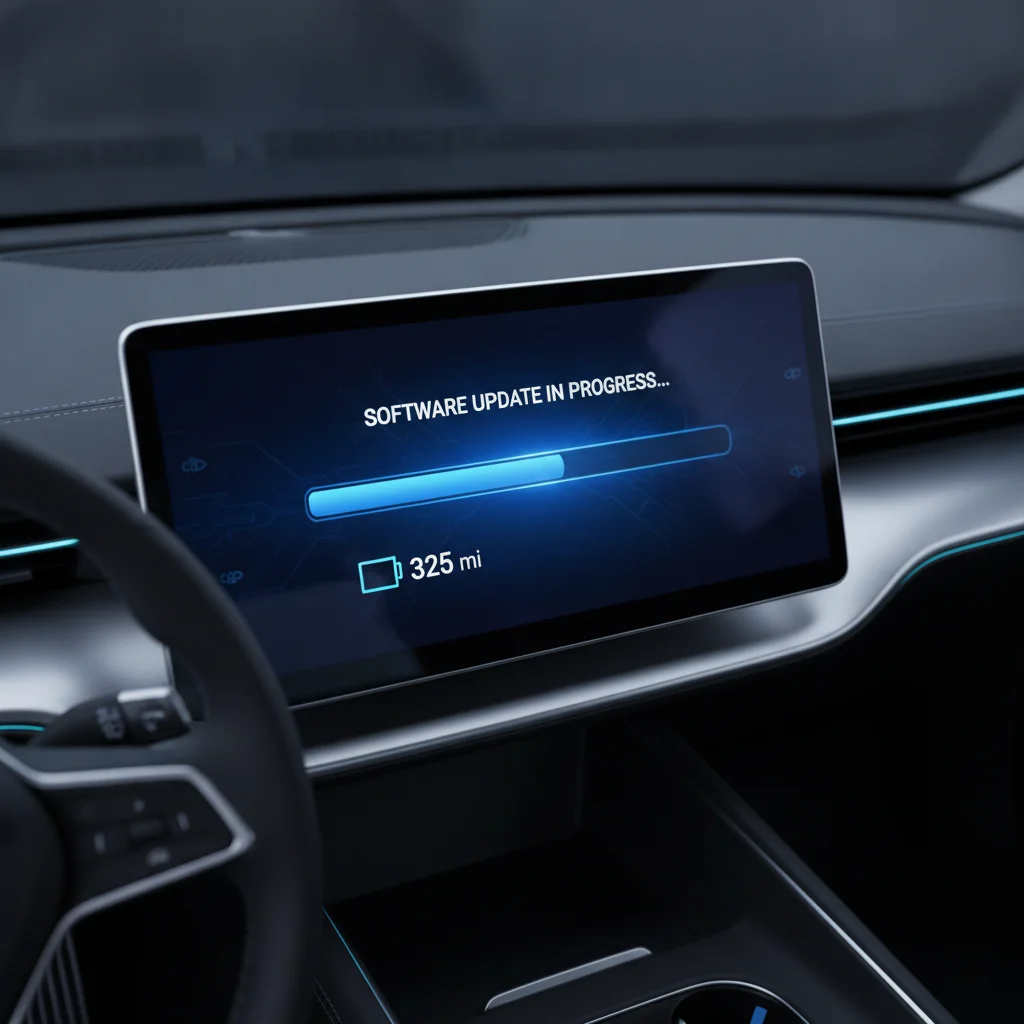
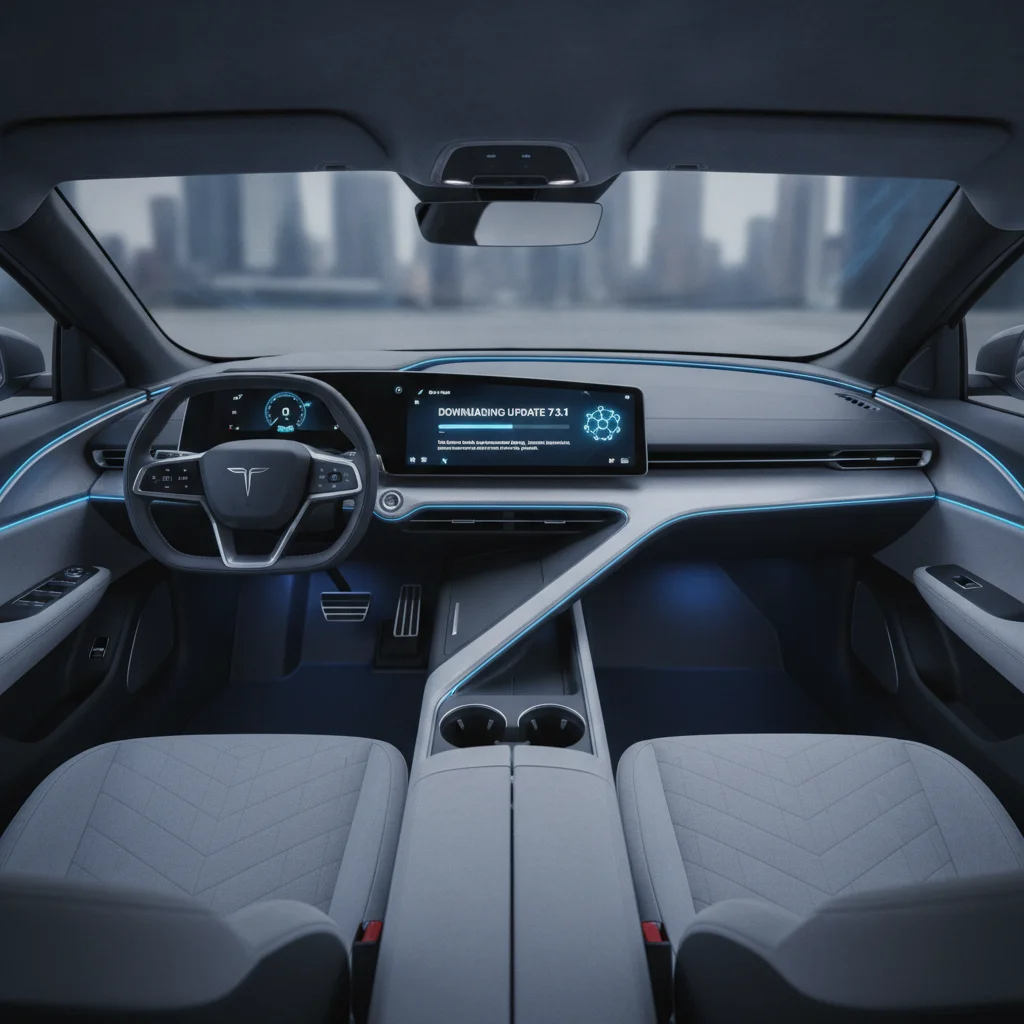
An over-the-air update is a software upgrade delivered to your vehicle remotely via a cellular or Wi-Fi connection — no dealership visit required. Automakers use OTA updates to fix bugs, improve vehicle performance, add new features, and address safety issues. Think of it like your smartphone downloading a new iOS or Android version overnight, except it's happening to your car.
OTA updates can target multiple Electronic Control Units (ECUs) simultaneously, including the battery management system, powertrain controller, and infotainment stack — though the depth of update depends on the vehicle's software architecture.
What OTA Updates Actually Do to Your Vehicle
When an over-the-air update lands on your EV, it isn't just refreshing the map app or tweaking the wallpaper on the infotainment screen. Depending on the automaker's software architecture, an OTA update can reach deep into the systems that control how your car accelerates, charges, regenerates energy, and manages battery temperature.
Here's a practical breakdown of what these updates can touch:
- Battery Management System (BMS): The software governing charge curves, thermal management, and usable capacity. OTA tweaks here can improve how aggressively the car uses the top and bottom of the battery buffer.
- Powertrain and motor control: Updates can adjust throttle response, traction control sensitivity, and regenerative braking behavior.
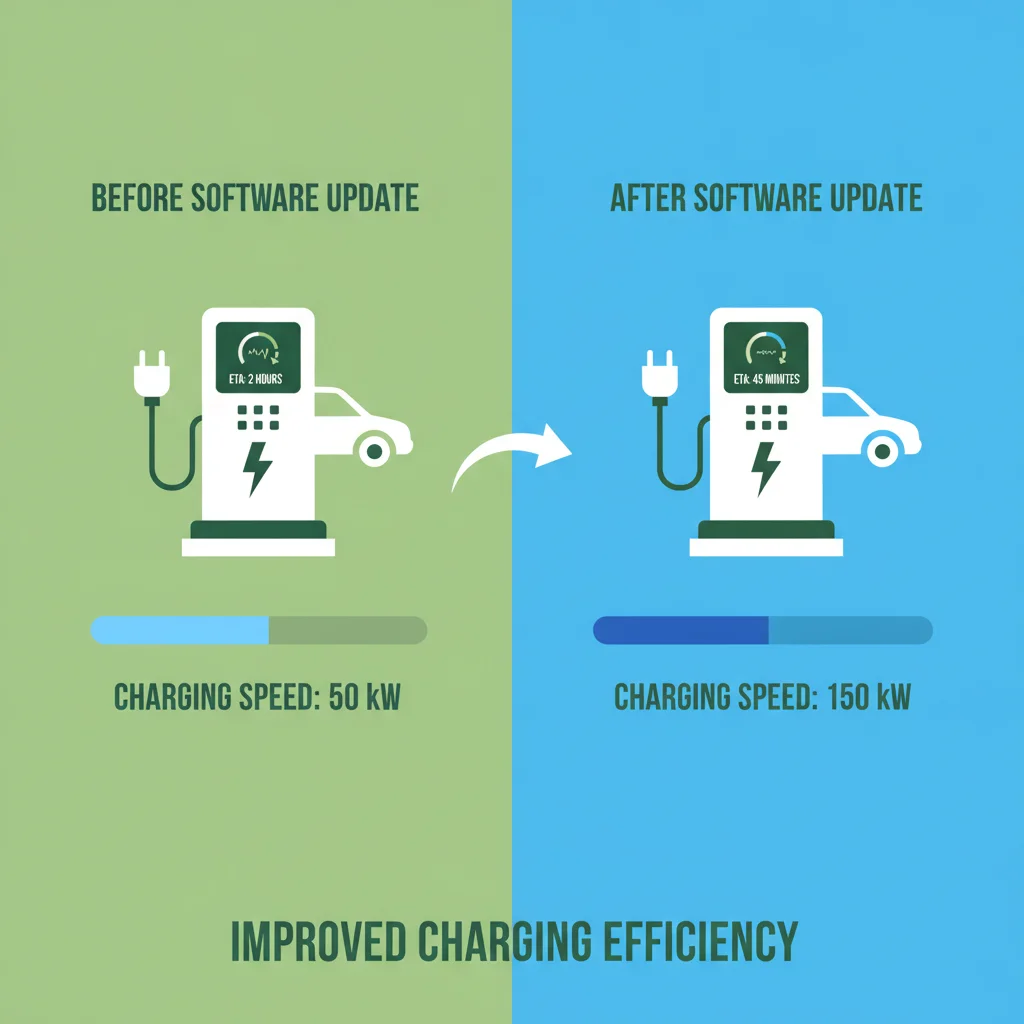
- DC fast charging optimization: Automakers can update the charging curve — the rate at which your car accepts power at different states of charge — to reduce charging time or protect battery longevity.
- Driver assistance systems: Lane-keeping, adaptive cruise, and automated parking features can be refined or expanded via software.
- Infotainment and UI: Navigation improvements, new voice commands, entertainment app additions.
- Safety and recall remediation: Critically, regulators increasingly allow automakers to fulfill safety recall obligations through OTA patches, avoiding service visits entirely.
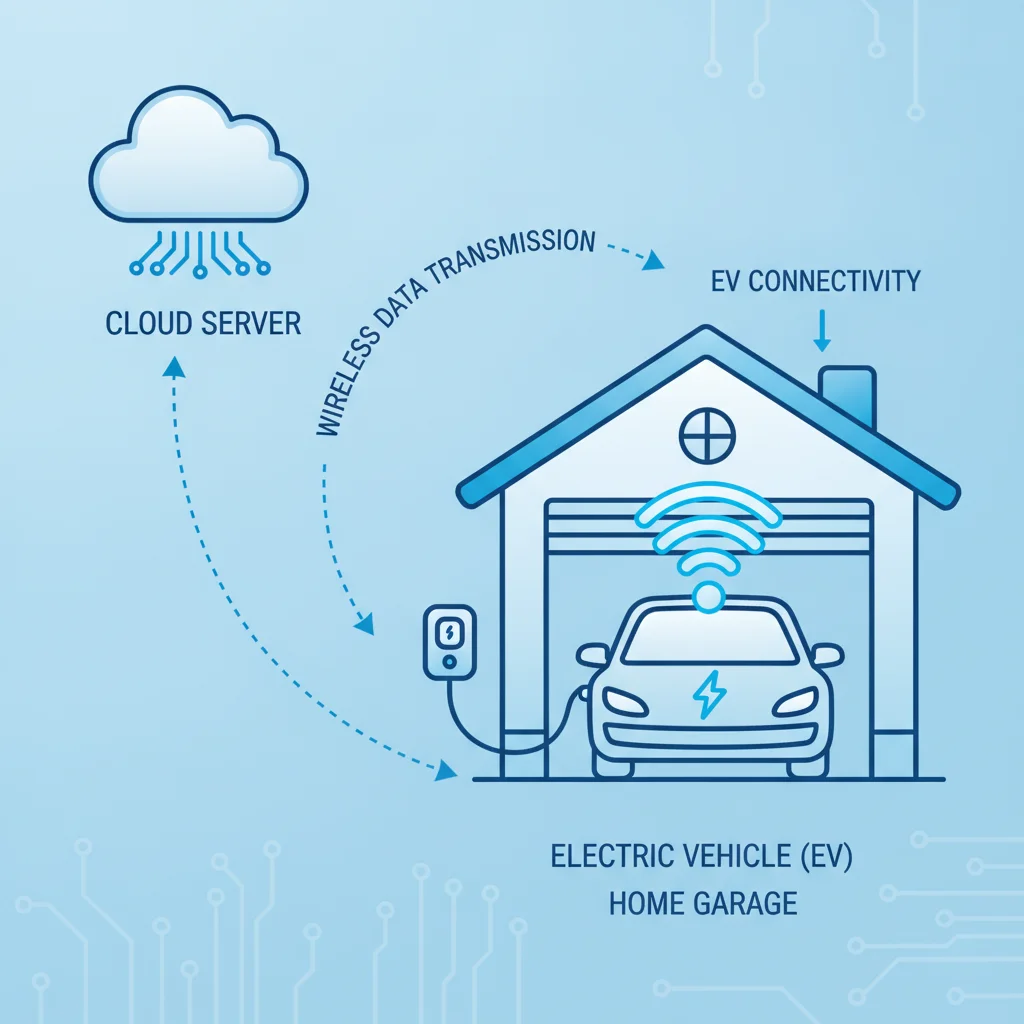
The depth of what an update can change depends entirely on how the car was designed. Vehicles built on a "software-defined" architecture — where hardware and software are intentionally decoupled — allow far broader OTA reach than older platforms where software was baked tightly into dedicated hardware modules.
OTA Depth Varies by Vehicle Architecture
Not every EV that supports OTA updates supports the same depth of changes. A vehicle may accept infotainment updates remotely but require a dealer visit for any changes to the powertrain or battery management system. This depends on how the car's electronic architecture was designed, not simply on the brand's intent. When researching a specific model, look for owner reports or press coverage of past updates to understand what has actually been delivered over the air.
NHTSA Oversight of OTA Safety Updates
The National Highway Traffic Safety Administration now requires automakers to report OTA-delivered safety fixes under the same recall framework as physical service campaigns. This means that if your EV receives an OTA update flagged as a safety recall, it will appear in NHTSA's public recall database — and you can verify it was applied. Checking the NHTSA recall database by VIN is a useful habit for any EV owner after a major software release.
Paid OTA Feature Unlocks: Know What You're Buying
Several automakers — including Tesla and BMW at various points — have offered or tested hardware features locked behind software paywalls, activatable via OTA purchase. This model is legitimate but warrants scrutiny. Before purchasing an OTA feature unlock, confirm whether it's a one-time purchase or a subscription, whether it transfers with the vehicle at resale, and what happens to the feature if you cancel a connected services plan.
Tesla Set the Standard, but the Field Is Catching Up
Tesla didn't invent the concept of updating vehicle software remotely, but it was the first automaker to build the entire vehicle experience around that capability from the ground up. Since 2012, Tesla has used OTA updates to deliver meaningful changes — including unlocking additional range on existing battery packs during emergencies, adding new Autopilot features, and overhauling the entire user interface without touching a single bolt.
“The best part is that our cars keep getting better over time. When you buy a Tesla, you're not buying a static product — you're buying into an evolving platform. That's a fundamentally different value proposition than the traditional automotive model.”
— Elon Musk, CEO, Tesla — remarks at product event, widely reported by automotive press
The competitive gap has narrowed substantially since 2020. Here's a realistic snapshot of where major manufacturers stand:
| Automaker / Platform | OTA Depth | Notable Capability |
|---|---|---|
| Tesla | Full vehicle | Powertrain, BMS, ADAS, infotainment |
| Rivian | Full vehicle | Camp Mode, off-road tuning, charging improvements |
| GM Ultium (Silverado EV, Equinox EV) | Broad | Super Cruise expansion, battery updates |
| Ford (Lightning, Mach-E) | Broad | BlueCruise updates, charging speed fixes |
| Hyundai/Kia E-GMP | Moderate-broad | 800V charging refinement, ADAS tuning |
| Volkswagen MEB platform | Moderate | Infotainment overhauls, range calibration |
| Legacy budget EVs (pre-2021) | Limited | Often infotainment only |
If OTA capability matters to you — and it should, because it directly affects how the car ages — ask specifically during the purchase process which systems are updatable over the air and which require a dealer visit. This is a question most salespeople won't volunteer an answer to.
Check Owner Forums Before Major Updates
When a significant OTA update rolls out, dedicated EV owner communities on Reddit and brand-specific forums often surface bugs within hours. Waiting a few days before installing a major powertrain or BMS update lets early adopters find the issues first. This is especially worth doing for updates that touch charging behavior or driver assistance systems.
Ask About OTA Depth Before You Buy
During the purchase process, ask the salesperson — or find in writing in the owner's manual — exactly which vehicle systems can be updated over the air. Some brands update only infotainment remotely and require a dealer visit for anything touching the powertrain or battery. This distinction matters significantly for long-term ownership experience.
Real Things OTA Updates Have Changed for Owners
Abstract explanations only go so far. Below are concrete, documented examples of OTA updates that changed what owners could do with their vehicles — drawn from real-world deployments.
These examples illustrate something important: OTA updates don't just maintain a vehicle at its original capability level — they can meaningfully expand it. That changes the ownership calculus. A car you buy today may perform measurably better in two years without you spending a dollar or visiting a dealership.
That said, it's equally important to understand the limits. Software cannot add kilowatt-hours to your battery pack, install new sensors, or upgrade physical charging hardware. For a clear-eyed view of those limits, our guide on what software updates can and cannot change is worth reading alongside this one.
The Range Question: What Updates Can and Cannot Fix
Range anxiety is the number-one concern for prospective EV buyers, and OTA updates are frequently cited — sometimes misleadingly — as a solution. Let's be direct about what's actually possible.
Over 12 million
Vehicles updated via OTA by Tesla since 2012
Tesla's cumulative OTA deployment represents the largest fleet software update program in automotive history, according to company disclosures.
~30%
Of NHTSA recalls resolved via OTA in recent years
NHTSA data from 2022–2023 showed a rising share of safety recalls being remedied through over-the-air software updates, primarily affecting Tesla and other EV-first brands.
2–7%
Potential range improvement from BMS recalibration
Independent EV researchers and automaker disclosures suggest BMS-targeted OTA updates can unlock 2–7% additional usable range in some battery configurations, though results vary by vehicle and pack age.
$0
Typical dealer visit cost for OTA-resolved recalls
When a safety recall is handled via OTA update, owners avoid the time and potential cost of a dealership visit — a meaningful ownership convenience benefit.
What OTA updates can do for range:
- Recalibrate the range estimation algorithm so the displayed number more accurately reflects real-world driving conditions
- Expand the usable portion of the battery buffer (the top and bottom margins automakers reserve for safety and longevity)
- Improve thermal management to reduce energy lost to heating and cooling the battery pack
- Optimize regen braking to recover more energy in stop-and-go traffic
- Reduce parasitic power draw from systems running in the background
What OTA updates cannot do for range:
- Add physical battery capacity — the cells in your pack are fixed at the factory
- Overcome chemistry degradation in older, high-mileage packs
- Eliminate the real-world impact of cold weather, highway speeds, or heavy loads
First-time EV buyers sometimes hear that "software updates improve range" and assume their car will get significantly better over time. That's a reasonable misreading of a more nuanced truth. For a fuller look at range expectations, our guide for new EV owners sets realistic benchmarks from day one. And if you've encountered specific range claims that sound too good to be true, our myth-busting article separates fact from marketing.
The Hidden Risk: When Updates Go Wrong
The benefits of OTA updates are real, but so are the risks. A software update is code — and code has bugs. Over the past several years, OTA updates from major automakers have caused:
- Infotainment screens freezing or rebooting unexpectedly
- Phantom warnings appearing on the instrument cluster
- Charging behavior becoming erratic after a BMS update
- Autopilot or driver assistance features behaving differently than expected after a recalibration
- In rare cases, features being temporarily removed and restored in a later patch
None of these are reasons to fear OTA updates — the alternative (never improving the vehicle) is worse. But they are reasons to be an informed owner rather than a passive one.
Check Owner Forums Before Major Updates
When a significant OTA update rolls out, dedicated EV owner communities on Reddit and brand-specific forums often surface bugs within hours. Waiting a few days before installing a major powertrain or BMS update lets early adopters find the issues first. This is especially worth doing for updates that touch charging behavior or driver assistance systems.
Ask About OTA Depth Before You Buy
During the purchase process, ask the salesperson — or find in writing in the owner's manual — exactly which vehicle systems can be updated over the air. Some brands update only infotainment remotely and require a dealer visit for anything touching the powertrain or battery. This distinction matters significantly for long-term ownership experience.
It's also worth understanding the regulatory dimension. The National Highway Traffic Safety Administration (NHTSA) has been developing clearer oversight frameworks for OTA updates as they become more common. Automakers are now required to report certain OTA-delivered safety fixes as recalls, even if no physical service is needed. This transparency benefits consumers but also signals that regulators take the stakes seriously.
OTA Depth Varies by Vehicle Architecture
Not every EV that supports OTA updates supports the same depth of changes. A vehicle may accept infotainment updates remotely but require a dealer visit for any changes to the powertrain or battery management system. This depends on how the car's electronic architecture was designed, not simply on the brand's intent. When researching a specific model, look for owner reports or press coverage of past updates to understand what has actually been delivered over the air.
NHTSA Oversight of OTA Safety Updates
The National Highway Traffic Safety Administration now requires automakers to report OTA-delivered safety fixes under the same recall framework as physical service campaigns. This means that if your EV receives an OTA update flagged as a safety recall, it will appear in NHTSA's public recall database — and you can verify it was applied. Checking the NHTSA recall database by VIN is a useful habit for any EV owner after a major software release.
Paid OTA Feature Unlocks: Know What You're Buying
Several automakers — including Tesla and BMW at various points — have offered or tested hardware features locked behind software paywalls, activatable via OTA purchase. This model is legitimate but warrants scrutiny. Before purchasing an OTA feature unlock, confirm whether it's a one-time purchase or a subscription, whether it transfers with the vehicle at resale, and what happens to the feature if you cancel a connected services plan.
OTA Updates, Ownership Costs, and Resale Value
Here's an angle that doesn't get enough attention: OTA capability has real financial implications for EV ownership beyond just features and performance.
Maintenance costs: When a software fix can be delivered remotely rather than requiring a dealer visit, you save time and potentially money. Many recalls and service bulletins that would have cost hours of your day — and potentially a loaner car — are resolved while you sleep. This is part of a broader shift in how EV maintenance works. Our comprehensive look at lifetime EV maintenance covers where software fits into the full ownership picture.
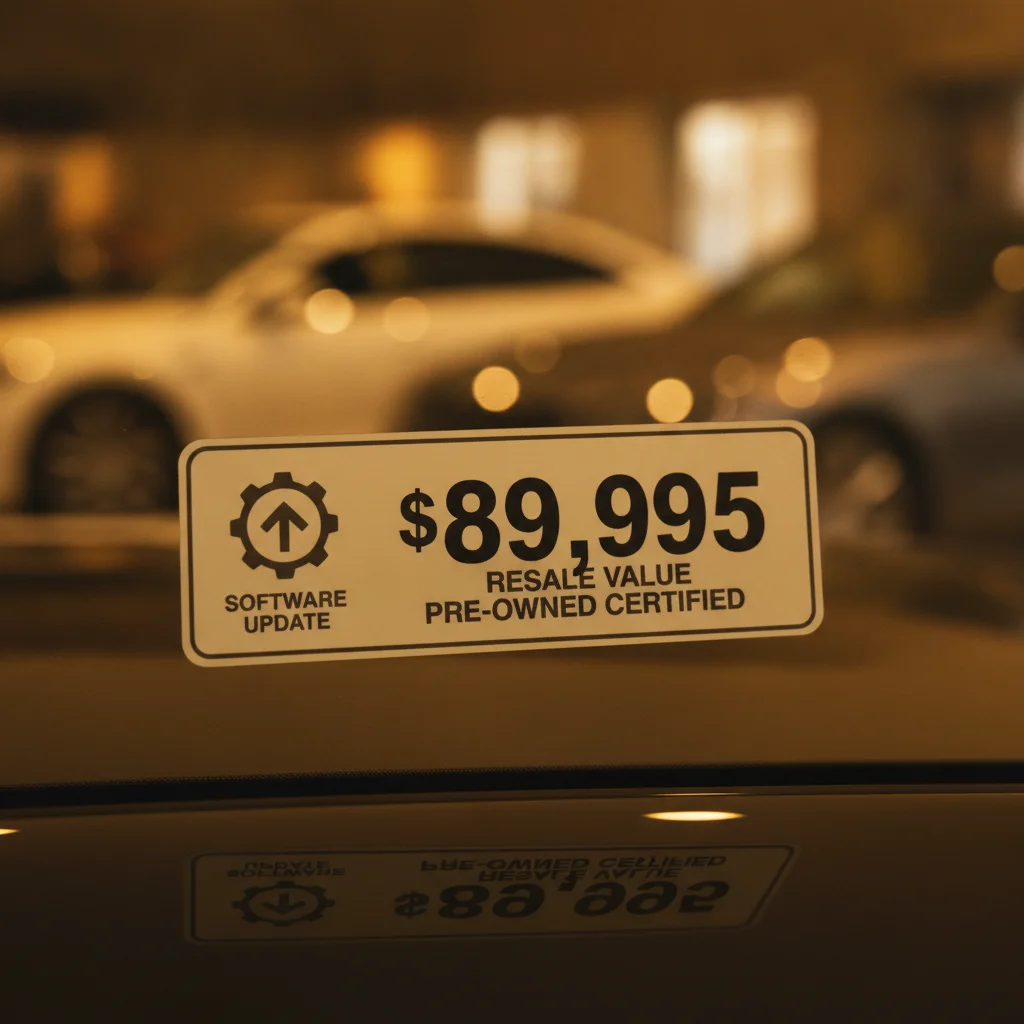
Resale value: A used EV from a brand with a strong OTA track record is a more compelling purchase than one that has been static since it left the factory. Buyers in the used market increasingly understand that a Tesla or Rivian from three years ago may have capabilities it didn't have when new — that's a genuine value proposition that supports residuals.
Insurance: As OTA updates add or refine safety features, the risk profile of the vehicle can shift. Some insurers are beginning to factor in active safety technology in their underwriting. If your vehicle receives a significant ADAS improvement through an OTA update, it may be worth a conversation with your insurer. For a broader look at how EV-specific factors affect coverage, see our EV insurance guide.
For a deeper technical look at how individual updates affect specific systems, our article on what EV software updates actually fix goes into the mechanics without requiring an engineering degree.
How to Be a Proactive OTA Owner
Most EV owners treat OTA updates passively — the notification appears, they tap "install tonight," and they move on. That's fine for routine updates. But for major releases, a slightly more active approach pays off.
- Read the release notes. Every meaningful OTA release includes notes — sometimes buried in an app, sometimes posted on the automaker's website. These tell you what changed, what was fixed, and occasionally what was removed.
- Check owner forums before installing major updates. Communities on Reddit, dedicated brand forums, and sites like Electrek often surface bugs within hours of a wide rollout. If a release is causing widespread issues, waiting a week for a corrective patch is a reasonable call.
- Note your baseline before a big update. If you're concerned about how a powertrain or charging update might affect your specific use case, jot down a few reference data points — typical range at your usual charging level, charging speed at your regular DC fast charger — so you have a before/after comparison.
- Report regressions promptly. If an update causes a problem, report it through the official app or support channel. Automakers use this feedback to prioritize corrective releases. The more quickly issues are reported, the faster patches arrive.
- Don't accept paid updates without understanding what you're buying. Feature unlocks delivered via OTA — things like enhanced acceleration modes or advanced autopilot tiers — are legitimate but warrant the same scrutiny as any purchase.
OTA Depth Varies by Vehicle Architecture
Not every EV that supports OTA updates supports the same depth of changes. A vehicle may accept infotainment updates remotely but require a dealer visit for any changes to the powertrain or battery management system. This depends on how the car's electronic architecture was designed, not simply on the brand's intent. When researching a specific model, look for owner reports or press coverage of past updates to understand what has actually been delivered over the air.
NHTSA Oversight of OTA Safety Updates
The National Highway Traffic Safety Administration now requires automakers to report OTA-delivered safety fixes under the same recall framework as physical service campaigns. This means that if your EV receives an OTA update flagged as a safety recall, it will appear in NHTSA's public recall database — and you can verify it was applied. Checking the NHTSA recall database by VIN is a useful habit for any EV owner after a major software release.
Paid OTA Feature Unlocks: Know What You're Buying
Several automakers — including Tesla and BMW at various points — have offered or tested hardware features locked behind software paywalls, activatable via OTA purchase. This model is legitimate but warrants scrutiny. Before purchasing an OTA feature unlock, confirm whether it's a one-time purchase or a subscription, whether it transfers with the vehicle at resale, and what happens to the feature if you cancel a connected services plan.
The bottom line is that OTA capability turns your EV into a product that evolves. Approached thoughtfully, that's a genuine advantage over traditional vehicle ownership. Understanding how to manage it is now a basic competency for anyone buying an electric vehicle — and the bar isn't high.

All claims are backed by peer-reviewed research. Sources on request.