Key Takeaways
Why Winter Is Different for EV Owners
If you've owned a gas car your whole life, winter prep probably means an oil change, a fresh set of wipers, and maybe tossing a bag of sand in the trunk. EV ownership in winter is a different conversation — not harder, but different. The physics of lithium-ion chemistry, the weight of the battery pack, and the absence of a combustion engine's waste heat all change how your vehicle behaves when temperatures drop below freezing.
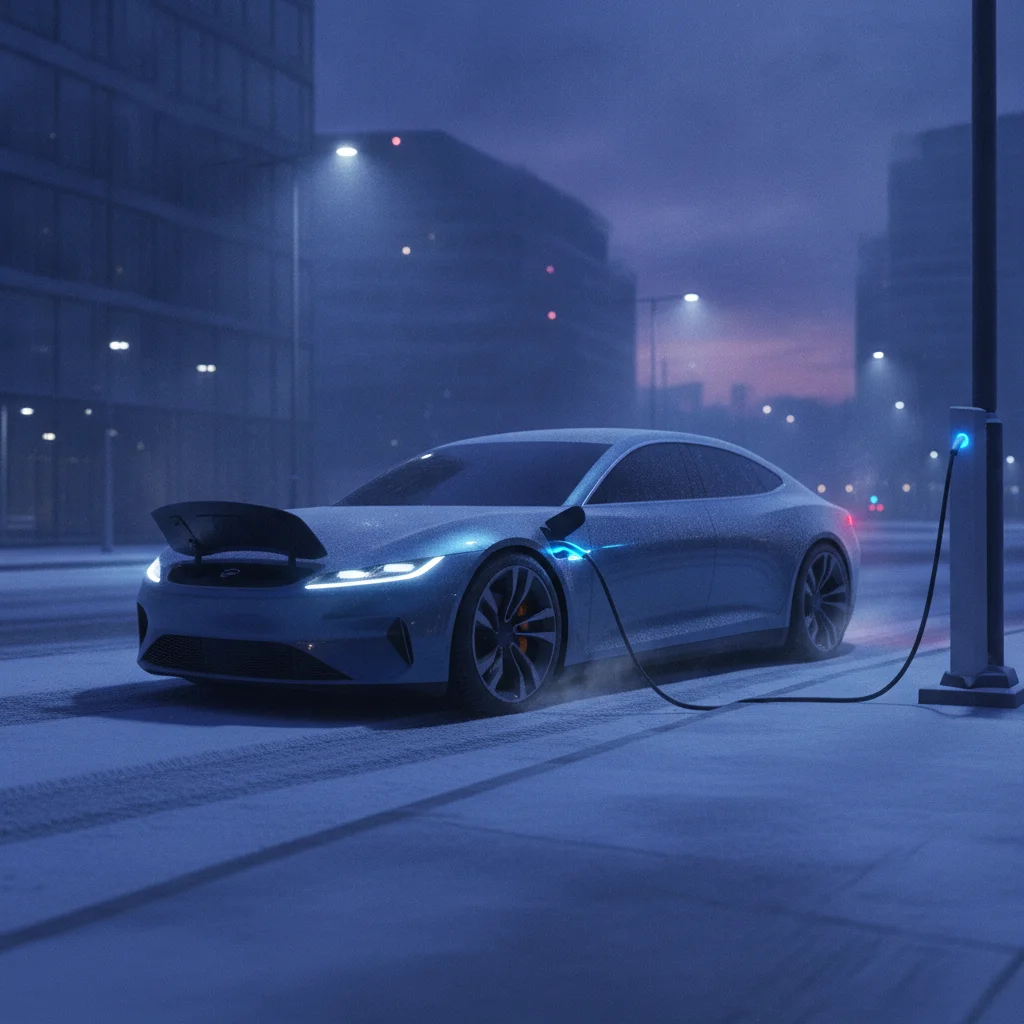
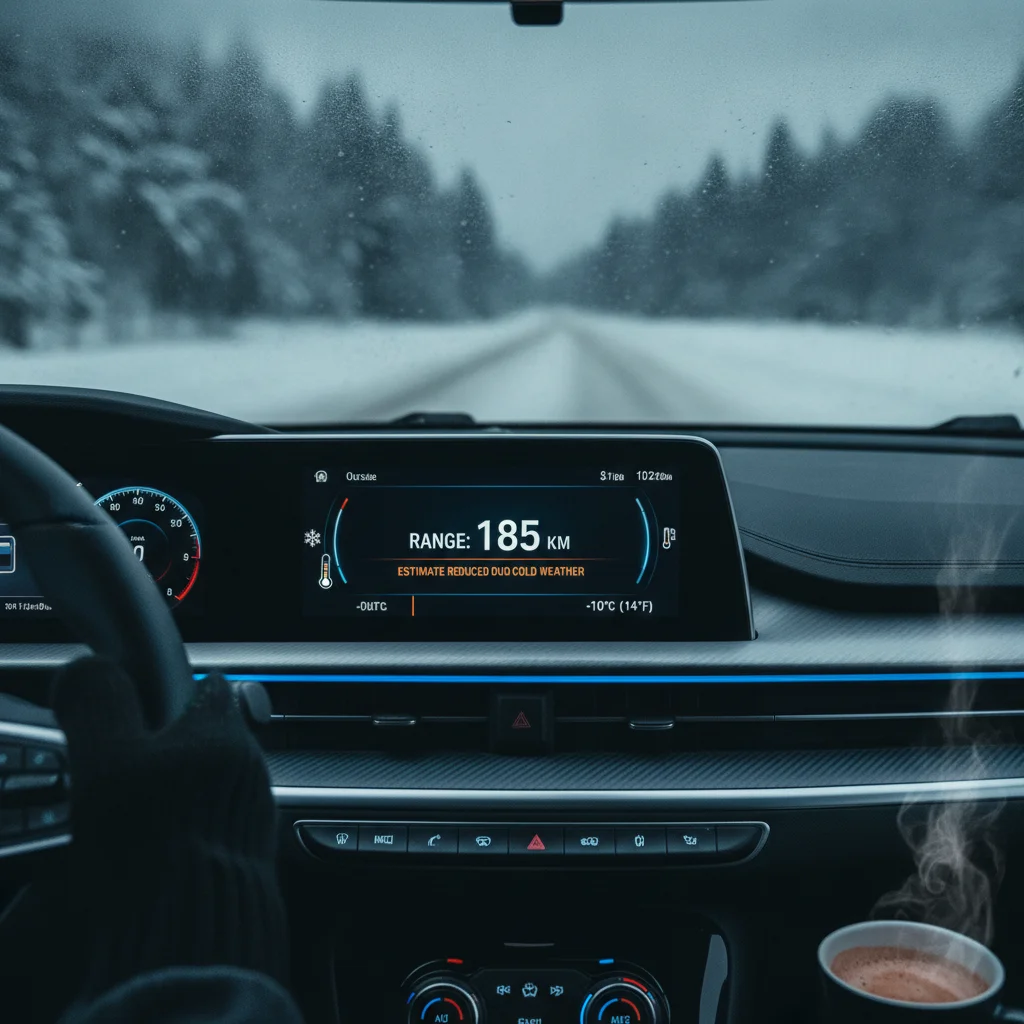
EV range can drop 20–40% in winter depending on temperature, driving style, and how aggressively you use cabin heat. That's not a defect — it's lithium-ion chemistry working exactly as expected. Cold slows the electrochemical reactions inside the cells, reducing the amount of energy you can extract per charge. Add resistive cabin heating (which pulls hard on the pack) and you're compounding the effect.
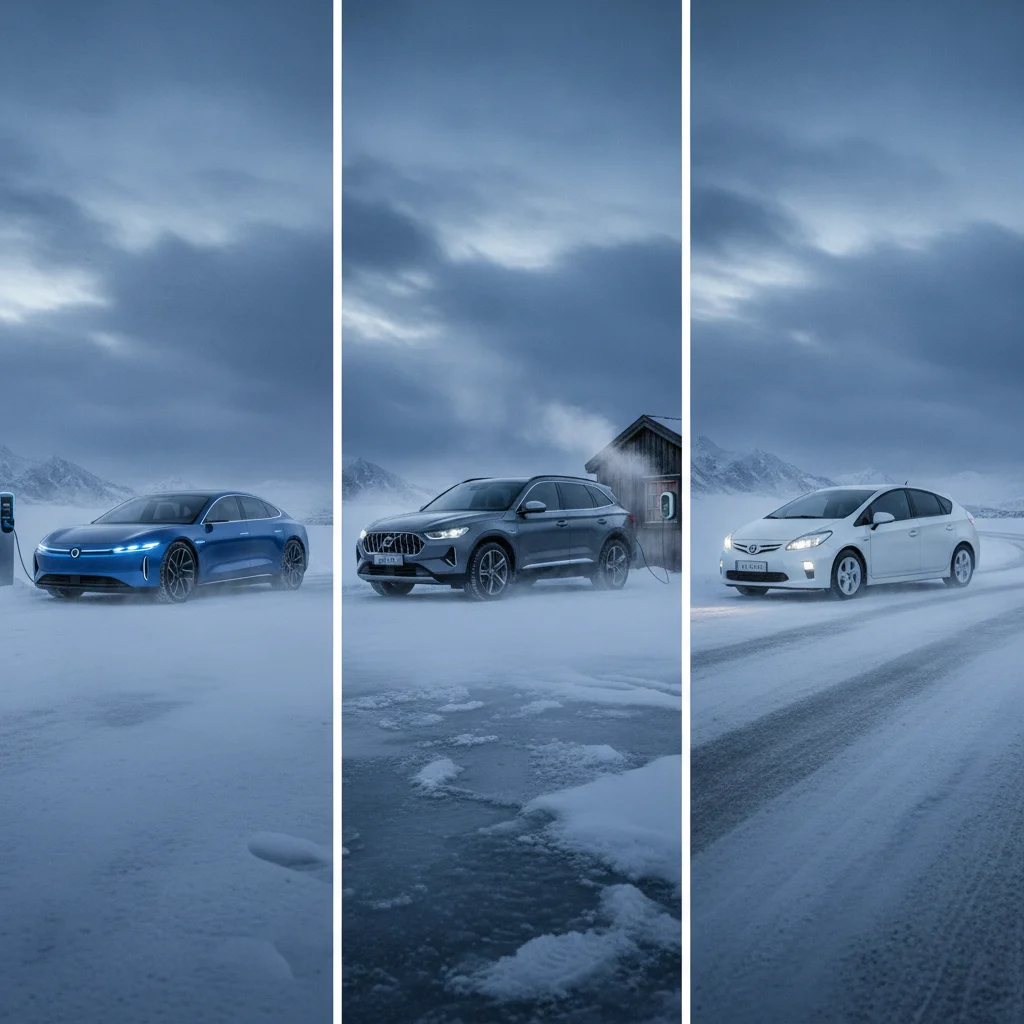
The good news: most of the winter EV performance hit is predictable and manageable. The steps in this guide walk you through the maintenance tasks, charging habits, and equipment choices that keep your EV performing reliably from first frost through the spring thaw. For a broader view of how different electrified vehicles handle cold weather differently, see our guide to cold weather and EV types.
What You'll Need Before You Start
Most of these steps don't require a shop visit or specialized tools. You'll need access to your vehicle's companion app, a tire pressure gauge, and a few minutes of attention before the season hits. A handful of items — like winter tires — involve upfront cost but pay dividends in safety and range efficiency.
What you will need
Digital Tire Pressure Gauge
Accurately check cold tire pressure before each significant temperature drop — cold air deflates tires faster than your TPMS will flag.
Winter / Snow Tires (full set of four)
Provide dramatically improved grip, shorter stopping distances, and more predictable handling on cold, icy, and snowy roads.
EV Companion App
Remotely precondition the battery and cabin while still plugged in, preserving range for the actual drive.
Tire Inflator / Portable Compressor
Top up tire pressure quickly at home when cold weather causes overnight pressure drops.
Winter-Rated Windshield Washer Fluid
Prevents washer lines from freezing and ensures visibility in sleet, slush, and road spray.
Winter Wiper Blades
Rubber-booted blades shed ice and snow that would otherwise jam standard wiper frames mid-storm.
Winter Upkeep Steps: Battery, Tires, and Systems
Follow these steps before temperatures drop and revisit the charging and preconditioning habits throughout the season. Tire and fluid checks should happen at the start of winter and again at the midpoint if you're in a region with long, harsh winters.
Check and Adjust Tire Pressure
For every 10°F drop in ambient temperature, tire pressure falls approximately 1 PSI. In a typical northern winter, that means your tires could lose 3–5 PSI from October to January without a single slow leak. Under-inflated tires increase rolling resistance, which directly cuts range on an EV — and increases the risk of handling problems on slippery surfaces.
What to do:
- Check pressure in the morning before the car has moved, when tires are cold. Post-drive readings are always higher and misleading.
- Inflate to the placard pressure (found on the driver-door jamb), not the maximum printed on the tire sidewall.
- Plan to check pressure every 2–3 weeks throughout winter, or after any significant temperature swing (10°F or more).
- Don't rely solely on your TPMS warning light — most systems only alert at 25% below recommended pressure, well past the efficiency sweet spot.
Switch to Winter Tires (or Confirm All-Season Adequacy)
EVs are heavier than equivalent gas vehicles — sometimes significantly so — and that mass makes stopping distances on ice noticeably longer. Winter tires use a different rubber compound (stays pliable below 45°F) and a tread pattern optimized for snow evacuation. The difference in stopping distance between all-season and winter tires in cold conditions is not marginal: independent testing routinely shows 20–40 ft shorter stops at 50 mph.
What to do:
- If you live where temperatures regularly drop below 40°F or you see snow and ice, fit dedicated winter tires — not all-seasons.
- If you're in a mild-winter climate (occasional frost, rare snow), performance all-season tires rated for winter are acceptable but not ideal.
- Install four winter tires, never just two. Mixing winter and all-season tires creates unpredictable handling imbalances.
- Check that your chosen winter tires are load-rated for your EV's heavier curb weight — not all tires rated for passenger cars are appropriate for heavy EVs.
Set Up and Use Battery and Cabin Preconditioning
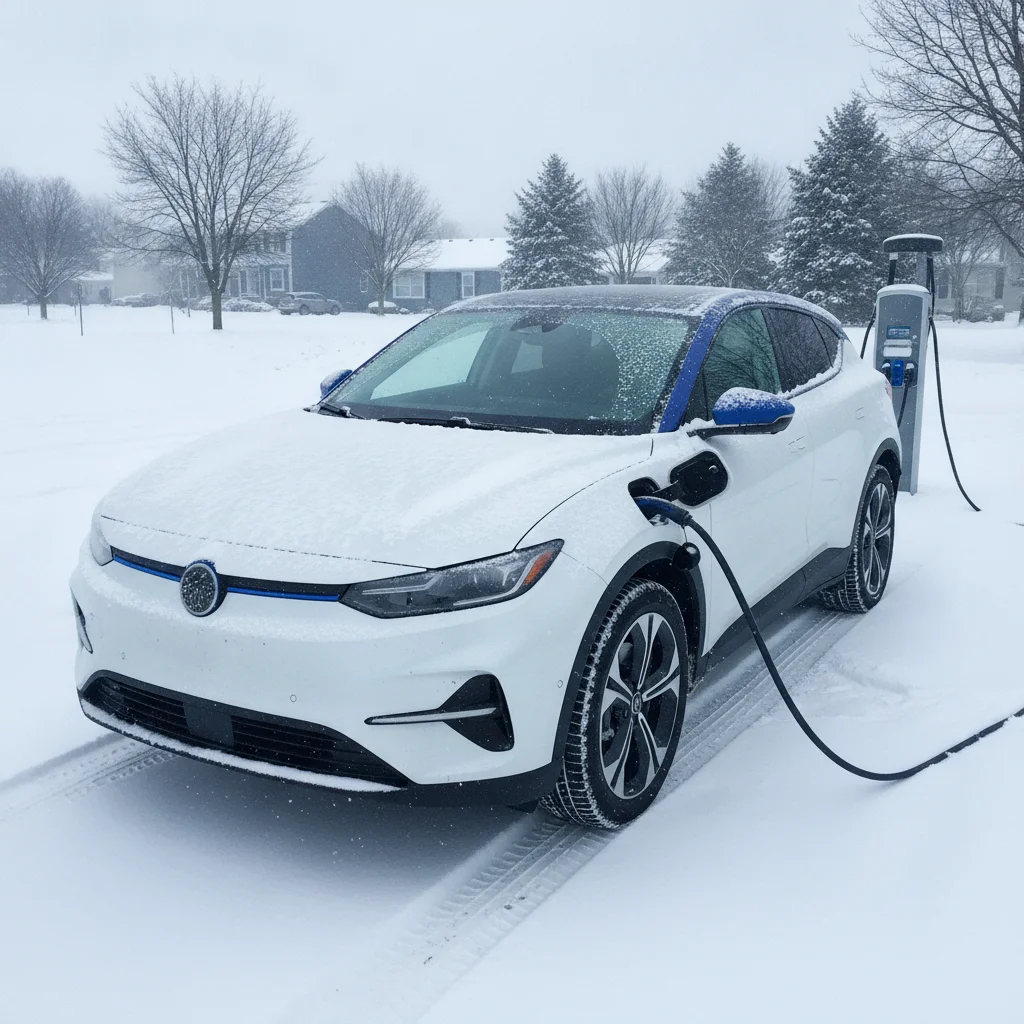
Preconditioning is the most impactful single habit an EV owner can develop for winter. It means using grid power — not the battery pack — to warm both the cabin and the battery cells to operating temperature before you unplug and drive. The result: you start your commute with a warm pack that accepts regenerative braking efficiently and a warm cabin that requires less ongoing HVAC energy.
What to do:
- Open your EV's companion app and locate the climate scheduling or departure timer function. Set it for 15–20 minutes before your typical departure time.
- Leave the car plugged into a Level 1 or Level 2 charger while preconditioning — this ensures the thermal system draws from the grid, not the pack.
- If your car supports battery preconditioning separately (some do, some don't), enable it. This is especially important if you plan to DC fast charge during the day.
- On days you'll be using the car but not at a predictable time, manually trigger preconditioning via the app 15–20 minutes before departure.
Inspect Thermal Management Coolant and Brake Fluid
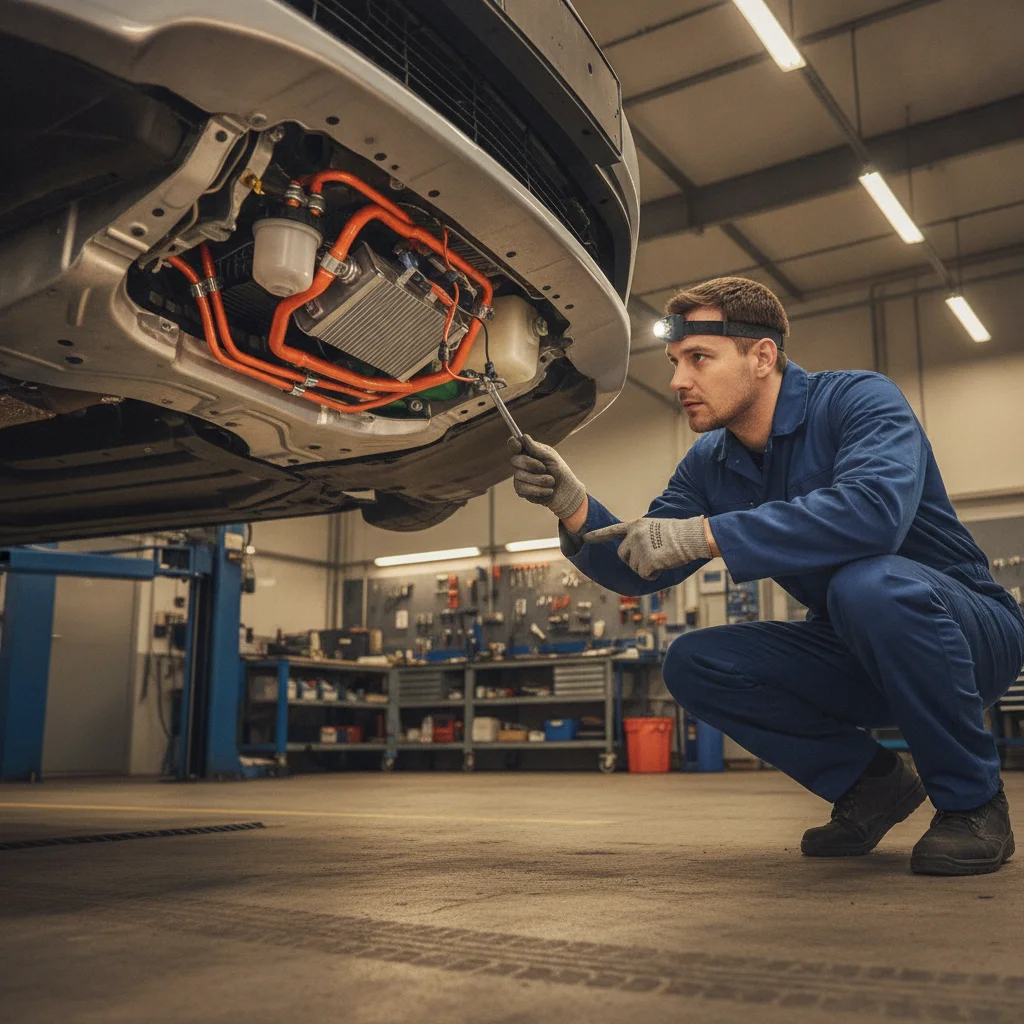
Two fluids are easy to overlook on an EV but matter most in winter: the battery thermal management coolant and the brake fluid. The coolant loop keeps your pack within operating temperature — if it's degraded or low, cold weather efficiency and charging speed both suffer. Brake fluid absorbs moisture over time, lowering its boiling point at precisely the moment winter roads demand confident braking.
What to do:
- Locate your thermal management coolant reservoir (check your owner's manual — it varies by make and model) and visually inspect the level and color. Healthy coolant is typically pink, orange, or blue-green depending on type; brown or murky fluid should be inspected by a technician.
- Check your service records. Most EV manufacturers recommend a coolant inspection every 4–5 years. If you don't have records, have a dealer or EV-capable independent shop check it.
- For brake fluid, use a moisture test strip (inexpensive, available online) or have a shop check it with a refractometer. If moisture content exceeds 3%, flush and replace.
- Document what you find and log the date so you have a service history baseline.
Adjust Your Charging Routine for Winter Conditions
Your charging behavior in summer doesn't translate directly to winter. Cold packs charge more slowly, and depleted cold packs charge much more slowly. A few habit adjustments make a meaningful difference in both convenience and battery longevity.
What to do:
- Set your daily charge limit to 80% for routine use; bump to 100% the night before a long trip and plan to drive within 1–2 hours of completing the charge.
- Raise your minimum charge floor from 10–15% (summer) to 20–25% (winter) to ensure the thermal system has enough reserve to manage cold nights.
- If your car supports departure-time charging, use it — the car will time charging to finish just before your scheduled departure, leaving the battery warm from the charger connection.
- When using a DC fast charger, navigate to the station via the built-in map app if your EV supports battery preconditioning for fast charging. This warms the pack en route and dramatically improves charging speed on arrival.
Check the 12V Auxiliary Battery
The 12V auxiliary battery is the quiet failure point many EV owners don't think about until it strands them. It powers your vehicle's low-voltage systems — unlocking doors, running the instrument cluster, enabling the main contactors that connect the high-voltage pack to the drivetrain. A failed 12V means a dead car even if the traction battery shows 80% charge.
What to do:
- Check when your 12V auxiliary battery was last replaced or tested. Most EVs use a small AGM (absorbed glass mat) lead-acid battery with a 4–6 year service life, though some newer models use a small lithium unit with longer life.
- If it's 4+ years old or you've noticed sluggish door locks, slow infotainment startup, or unexplained warning lights, have it load-tested at any auto parts store or shop — most do this for free.
- If the battery is marginal, replace it before winter. This is a relatively inexpensive repair compared to the inconvenience of a winter breakdown.
Inspect Wipers, Lights, and Weather Seals
These are quick checks that have outsized safety impact in winter conditions. EV motors are quiet, which makes road noise and poor visibility more disorienting — and EVs' heavy weight makes anything that reduces sight lines or traction more consequential.
What to do:
- Replace wiper blades that streak or chatter. Consider winter-specific blades with a rubber boot that prevents ice from packing into the frame.
- Top up windshield washer fluid with a winter-rated formula rated to at least -20°F. Check the reservoir before every major trip in heavy-slush conditions.
- Test all exterior lights — headlights, taillights, reverse lights, brake lights. EVs regenerate aggressively, meaning your brake lights may not activate in situations where a gas car would decelerate visibly. Functioning lights compensate.
- Inspect door and trunk weather seals for cracking or gaps. Compromised seals allow cold air into the cabin, increasing HVAC load and range loss. A thin coat of silicone lubricant on rubber seals prevents freezing and cracking.
Don't Let the Battery Sit at Low Charge in Cold
Leaving an EV at very low state of charge (below 10–15%) in freezing temperatures for extended periods stresses the cells and can accelerate long-term degradation. This is different from a gas car running low on fuel — a cold, deeply discharged lithium battery experiences chemical side reactions that a warm or fuller pack avoids. Keep the car plugged in when parked in winter, even if it's already at 80%.
Traction Control Is Not a Substitute for Winter Tires
Modern EVs have excellent traction control and stability systems, and instant torque delivery actually gives the electronics more to work with than a gas engine. But no electronic system overcomes the fundamental physics of a hard summer-compound tire on ice. Traction control prevents wheelspin; it cannot shorten stopping distances the way winter rubber does.
Park Indoors Whenever Possible
A garage — even an unheated one — can hold temperatures 15–20°F warmer than outdoor ambient overnight. That temperature buffer meaningfully reduces passive battery drain and keeps tires from stiffening as severely. If indoor parking isn't an option, orient the car so the side with the charging port faces away from prevailing wind.
Use Eco Mode in Cold Weather
Most EVs have an Eco or efficiency mode that reduces peak power output and softens throttle response. In winter, this setting also tends to moderate regenerative braking intensity, which reduces the risk of regen-induced wheel slip on icy roads. It's not just about range — it's also about predictability.
Track Range Changes Month to Month
Log your real-world range during the first cold snap of the season so you have a baseline for comparison. If you lose 30% of range in cold weather but then lose 45% the following winter under similar conditions, that gap may indicate battery degradation worth investigating — not just seasonal chemistry.
Fluids, Brakes, and Systems That Still Need Attention
One of the most common misconceptions about EVs is that they need almost no maintenance. That's true compared to internal combustion — but not completely true, and winter is when skipping inspections is most likely to cause problems.
Thermal Management Coolant
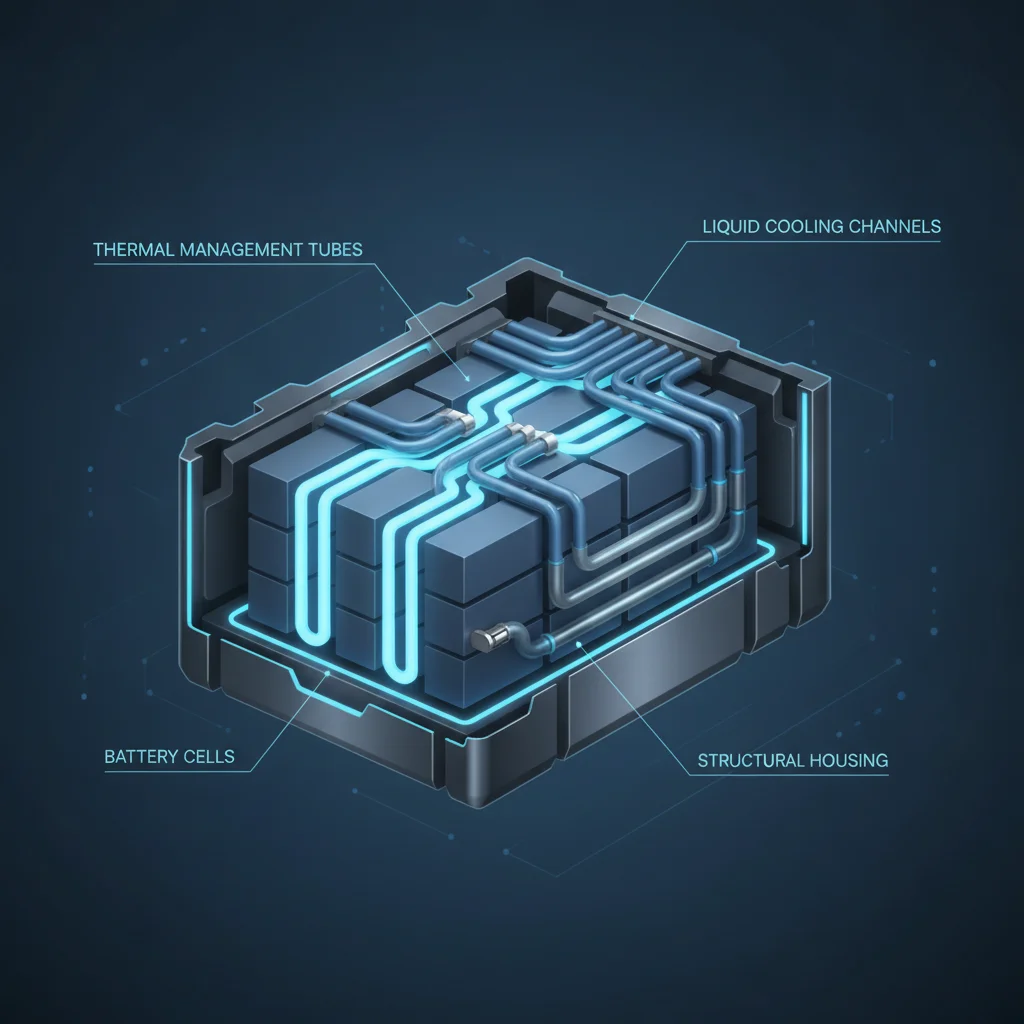
Your EV's battery pack relies on a liquid cooling and heating loop to stay within its optimal temperature window. This coolant degrades over time and can lose its freeze-point protection. Most manufacturers recommend inspecting it every 4–5 years, but if your vehicle has never had it checked and you're heading into a brutal winter, it's worth a look. For a deeper explanation of how this system works, see our article on thermal management systems in EVs.
Brake Fluid
EVs use regenerative braking extensively, which means the friction brakes see less use than on a gas car. That sounds like good news — and it is for pad wear — but brake fluid is hygroscopic (it absorbs moisture over time regardless of use). Moisture-contaminated fluid has a lower boiling point, which becomes a real issue on icy roads where repeated heavy braking heats the system. Check your owner's manual, but most manufacturers recommend inspecting brake fluid every 2 years.
Windshield Washer Fluid
Use a winter-rated washer fluid rated to at least -20°F. EV motors are quiet, which makes road spray on the windshield noticeably more distracting at highway speeds. Running out of washer fluid or using summer fluid that freezes in your lines is an easy problem to prevent.
Wiper Blades
Heavier EVs produce more tire spray in slush and rain. Consider winter wiper blades — they use a rubber boot to prevent snow and ice from clogging the blade frame. If your current blades streak or chatter, replace them before temperatures drop, not during a storm.
12V Auxiliary Battery
Every EV has a small 12V lead-acid or lithium auxiliary battery that powers low-voltage systems: lights, door locks, infotainment, and control modules. Cold kills weak 12V batteries just as it does in gas cars. If your auxiliary battery is more than 4–5 years old, have it load-tested before winter. A dead 12V can strand you even with a full main pack.
For a complete view of EV maintenance across all seasons, the annual EV ownership checklist breaks tasks down month by month.
Cold Weather Voids Some Charging Estimates
Your EV's onboard range estimate is typically calculated from recent driving history. In early winter, it may not yet reflect the full seasonal range reduction, leading you to believe you have more usable range than you do. Until the car has a few cold weeks of data, add a manual 20–30% buffer to any range estimate shown on the dash, particularly on unfamiliar routes.
Charging Strategy in Cold Weather
Winter changes not just how much charge you use but how effectively you can replenish it. Cold batteries charge more slowly — especially at DC fast chargers. Here's what to know.
Charge More Frequently, Not Just More Fully
In winter, it's better to charge more often than to let the battery drain deeply before each session. Maintaining a daily charge floor of around 20% and a ceiling of 80% protects battery health and gives the thermal management system more to work with when preconditioning. Only top up to 100% the night before a long trip, and plan to drive within a few hours of reaching full charge.
Precondition Before DC Fast Charging
If you're using a DC fast charger, your car's thermal management system needs to warm the pack to accept high-power charging. Many EVs do this automatically if you navigate to a charging station via the built-in nav — the car begins heating the battery en route. If yours doesn't, run the cabin heater for 10–15 minutes before arriving. Battery thermal management are the reason this matters: a cold pack may only accept 20–30 kW when it's capable of 150+ kW when warm.
Level 2 Charging Is Your Best Friend in Winter
Overnight Level 2 charging at home means you start every day with a warm, charged battery rather than a cold, depleted one. The car's thermal system runs while plugged in (using grid power, not the pack), so you arrive at the morning commute with a pre-warmed battery that performs closer to its rated capacity. If you don't have home charging, aim to charge at a Level 2 workplace or public station during daylight hours when ambient temperatures are higher.
Range Planning: Add a Buffer
In summer, you might route a trip with 5–10% buffer. In winter, use 15–25% as your minimum arrival charge. Cold snaps, traffic, and highway speeds all compound range loss unpredictably. Most EV navigation apps allow you to set a minimum charge buffer for route calculations — use it.
Driving Habits and Safety in Winter Conditions
EV-specific weight and torque characteristics change how you should approach winter driving, especially on ice and slush.
Understand Your Weight Penalty
Battery packs add significant mass — often 1,000 lbs or more compared to a similar gas vehicle. That weight improves stability in some conditions but increases stopping distances on slippery surfaces. Budget more following distance than you would in a gas car, particularly at the beginning of a trip when tires are cold and stiff.
Regenerative Braking on Ice
Aggressive regen can cause rear-wheel slip on slippery surfaces, similar to engine braking in a gas car. Many EVs offer a reduced-regen or one-pedal-off mode for winter driving. Check your vehicle's settings and consider reducing regen intensity on icy days. Your vehicle's traction control will typically intervene, but it's better to avoid the slip in the first place.
For a practical breakdown of how to adjust your driving technique on different winter surfaces, see our guide on driving on rain, ice, and slush.
Use Seat Heat and Steering Wheel Heat First
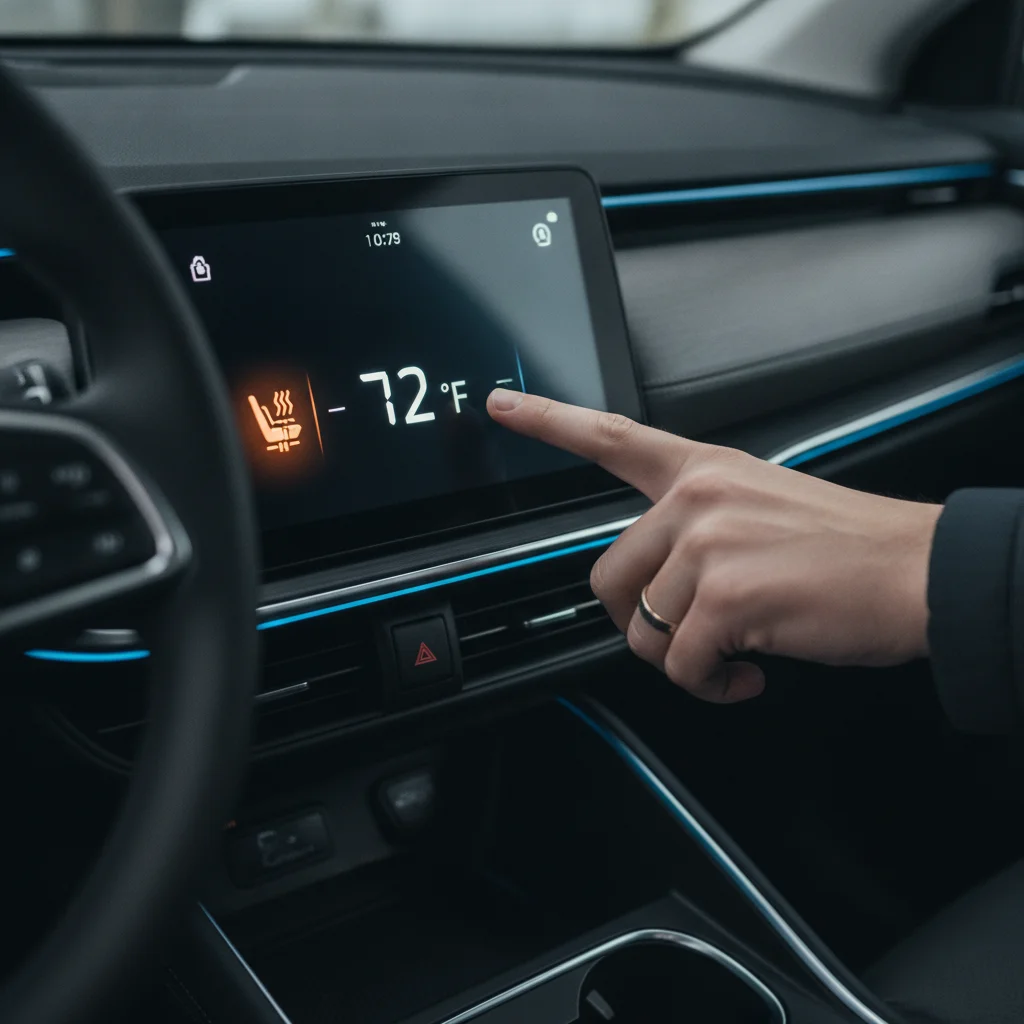
Cabin heating is the biggest range villain in winter. Seat heaters and steering wheel heaters warm you directly and use a fraction of the energy that the HVAC system consumes. Set the cabin temperature conservatively (68°F instead of 72°F) and layer up. If your vehicle has a heat pump, use it — heat pumps are significantly more efficient than resistive heating and can cut HVAC energy draw by 50% or more in moderate cold.
Insurance Considerations in Winter
Winter driving increases the risk of collision and comprehensive claims — and EVs cost more to repair than comparable gas vehicles because of battery proximity to collision zones and the cost of EV-trained technicians. Review your coverage before winter, particularly your collision deductible and whether your policy includes rental reimbursement (repairs take longer on EVs). For a full overview of how EV insurance works, see our EV insurance guide.

All claims are backed by peer-reviewed research. Sources on request.