Key Takeaways
EV Thermal Management System
An EV thermal management system (TMS) is the collection of hardware and software in an electric vehicle that keeps the battery pack — and other high-voltage components — within a safe, efficient temperature range. It heats the battery when it's too cold and cools it when it's too hot. Without it, extreme temperatures would rapidly degrade battery capacity, reduce range, and shorten the pack's usable life.
Modern TMS designs integrate with the battery management system (BMS) to make real-time adjustments at the cell level, balancing thermal load across the pack to minimize localized hot spots and uneven degradation.
Why Temperature Is the Biggest Threat to Your EV Battery
Lithium-ion chemistry is picky. Charge and discharge a battery at the right temperature and it will hold most of its capacity for a decade. Push it too hot or too cold repeatedly, and you'll be looking at meaningful range loss within a few years. That single fact is why thermal management sits at the center of EV engineering — and why it should sit at the center of your purchase decision.
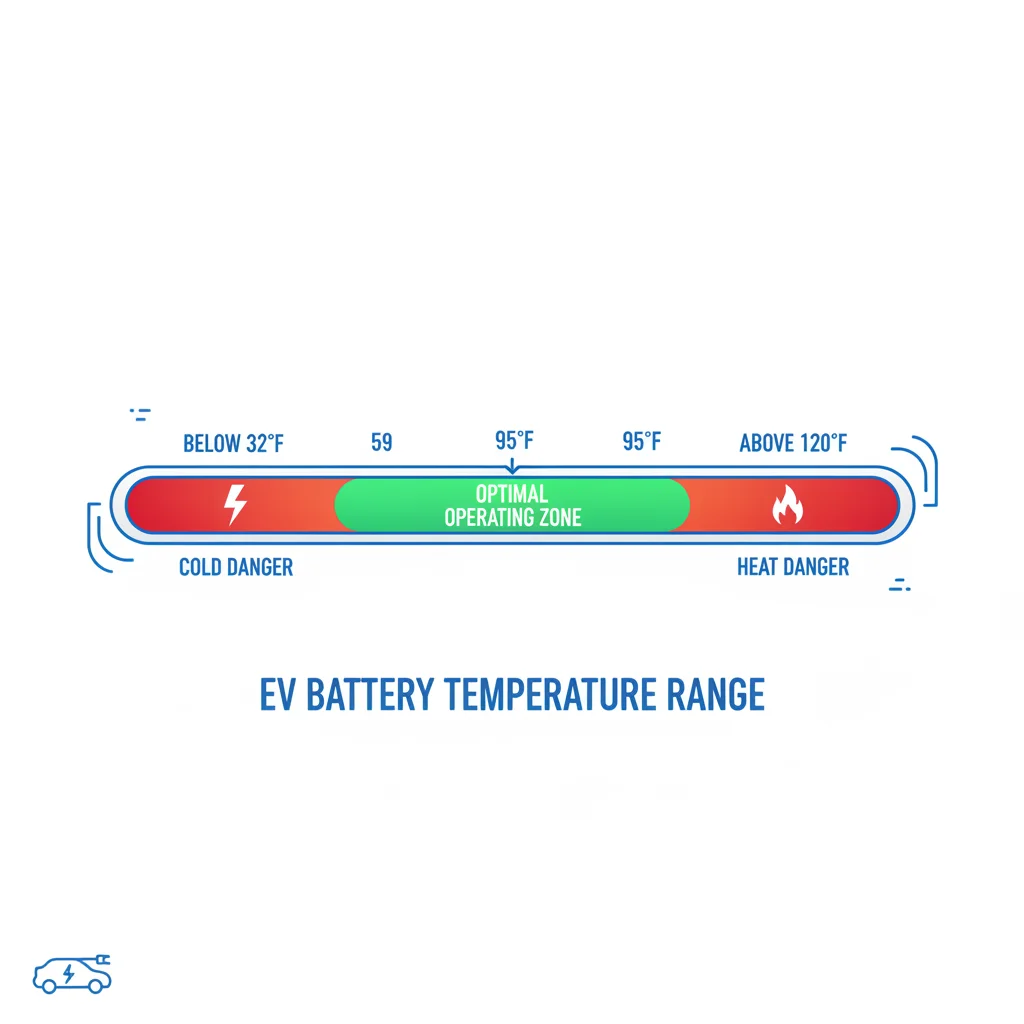
The ideal operating window for most EV battery packs is roughly 59°F to 95°F (15°C to 35°C). Inside that band, lithium ions shuttle between anode and cathode efficiently, internal resistance stays low, and chemical degradation is slow. Outside it, problems multiply fast.
- Too hot: Electrolyte breaks down, separator materials degrade, and in extreme cases thermal runaway — uncontrolled self-heating — becomes a risk.
- Too cold: Ion mobility drops, internal resistance spikes, and effective capacity can fall 20–40% on a bitter winter day. Charging too aggressively in the cold causes lithium plating on the anode, a form of permanent damage.
For a deeper look at what heat specifically does to lithium-ion chemistry inside a pack, see our article Summer Heat and EV Range: What Happens Inside a Hot Battery Pack. The short version: heat is quiet, insidious, and cumulative.
The thermal management system is the vehicle's answer to all of these threats. It is not a single component — it's an integrated architecture of sensors, coolant loops, heat exchangers, valves, heat pumps, and software working in concert.
The Three Core Approaches: Air, Liquid, and Refrigerant
Not all EVs manage heat the same way, and the differences in approach have real consequences for battery longevity and performance consistency.
20–40%
Temporary range loss in extreme cold
U.S. Department of Energy data shows EV range can drop 20–40% in temperatures below 20°F (-6°C), largely due to battery chemistry and cabin heating demand.
~25%
Long-term capacity loss in hot climates without liquid cooling
Studies of early Nissan Leafs operated in hot climates showed capacity losses exceeding 25% within 5 years, attributed in part to inadequate thermal management.
2–4x
Heat pump efficiency vs. resistive heating
A heat pump moves 2–4 kilowatts of heat for every 1 kilowatt of electricity consumed, versus a 1:1 ratio for resistive heaters, per engineering benchmarks across multiple EV platforms.
8 years / 100K miles
Federal EV battery warranty minimum
The U.S. Environmental Protection Agency mandates automakers provide at least an 8-year or 100,000-mile warranty on EV battery packs sold in America.
Air Cooling
The earliest mass-market EVs — including the original Nissan Leaf — used air cooling. Fans circulate ambient air around battery cells to carry heat away. It's simple and inexpensive, but it struggles in two key scenarios: sustained high-speed driving and DC fast charging. Both generate heat faster than air can dissipate it. The original Leaf's well-documented capacity degradation in hot climates became the cautionary tale that pushed the industry toward liquid systems.
Liquid Cooling (and Heating)
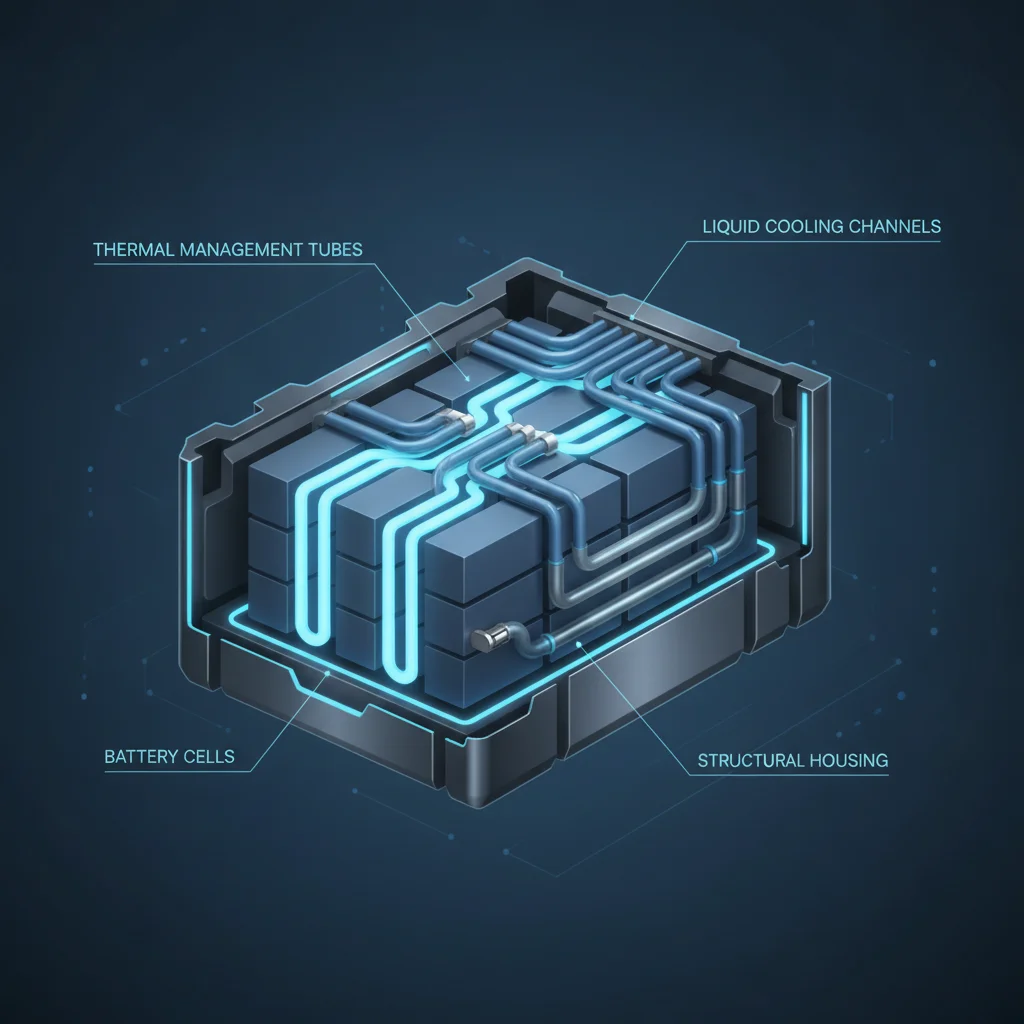
Today's mainstream approach runs coolant — typically a water-glycol mixture — through channels or plates that contact the battery cells directly or indirectly. The coolant absorbs heat from the cells and carries it to a chiller or radiator where it's expelled. The same loop can be reversed for heating: a resistive heater or heat pump warms the coolant, which then warms the battery before a cold-weather drive or charge session.
Tesla's approach uses a thin, ribbon-like coolant tube that winds between individual cells — maximizing contact area and thermal uniformity. GM's Ultium platform uses flat cooling plates between cell layers. Panasonic and CATL supply cells designed to integrate tightly with these cooling architectures. The specifics vary, but the principle is the same: get the coolant close to every cell, manage temperatures uniformly, and keep hot spots from forming.
“Thermal management is arguably the single most important engineering decision in the design of an EV battery pack. You can have the best cells in the world and destroy them with poor thermal architecture.”
— Venkat Srinivasan, Director, Argonne Collaborative Center for Energy Storage Science (ACCESS), Argonne National Laboratory
Refrigerant-Based (Direct) Cooling
Some premium systems — particularly in vehicles with 800-volt architectures like the Hyundai Ioniq 6 and Porsche Taycan — use refrigerant directly in cooling circuits close to or within the battery pack. This allows faster, more precise cooling during high-power DC fast charging. It's more complex and costly but delivers more consistent performance across a wider range of conditions.
Understanding how your battery's chemistry interacts with these cooling systems matters too. Our breakdown of Lithium-Ion vs. Lithium Iron Phosphate battery chemistry explains why LFP cells (used in some Tesla Standard Range and many Chinese-market EVs) tolerate heat better but need more aggressive warming in cold weather.
LFP Batteries and Cold Weather: A Special Case
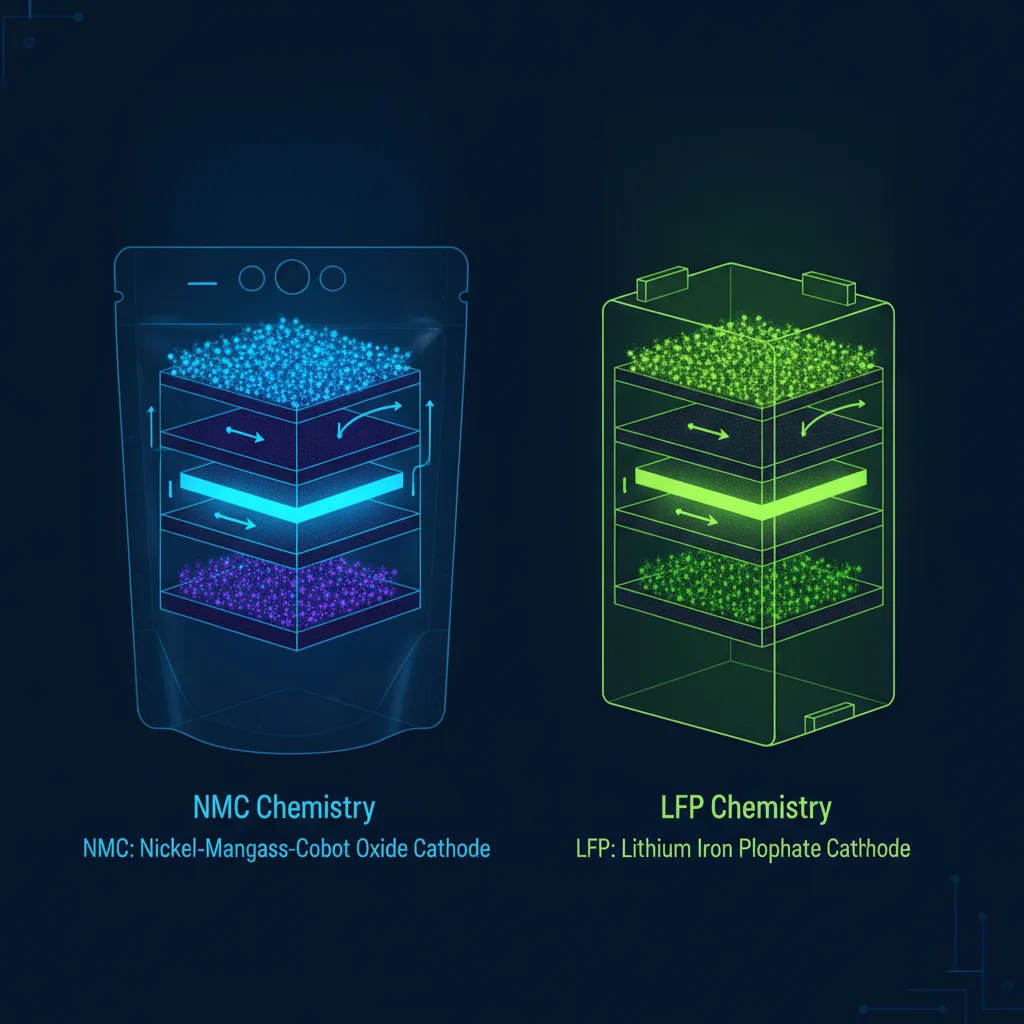
Lithium iron phosphate (LFP) cells — used in some Tesla Standard Range models, BYD vehicles, and others — are more tolerant of heat than standard NMC chemistry. However, they are more sensitive to cold and require active warming to charge efficiently below 50°F. If you're considering an LFP-equipped EV and live in a cold climate, confirm the vehicle's battery heating strategy before purchasing.
Heat Pumps: The Game-Changer for Winter Efficiency
Heating an EV cabin with a resistive electric heater is straightforward but expensive in terms of range. Resistive heaters convert electricity to heat at roughly 1:1 efficiency — one kilowatt of electricity yields one kilowatt of heat. A heat pump, by contrast, moves heat rather than generating it, achieving efficiencies of 2:1 to 4:1 depending on ambient temperature. That difference is significant when you're trying to keep winter range competitive.
Tesla added a heat pump to the Model Y in late 2020. Hyundai adopted one for the Ioniq 5 from launch. Volkswagen uses one in the ID.4. The trend is clear: heat pumps are becoming the standard for any EV where cold-weather range matters.
Use Preconditioning Every Time You Charge in Winter
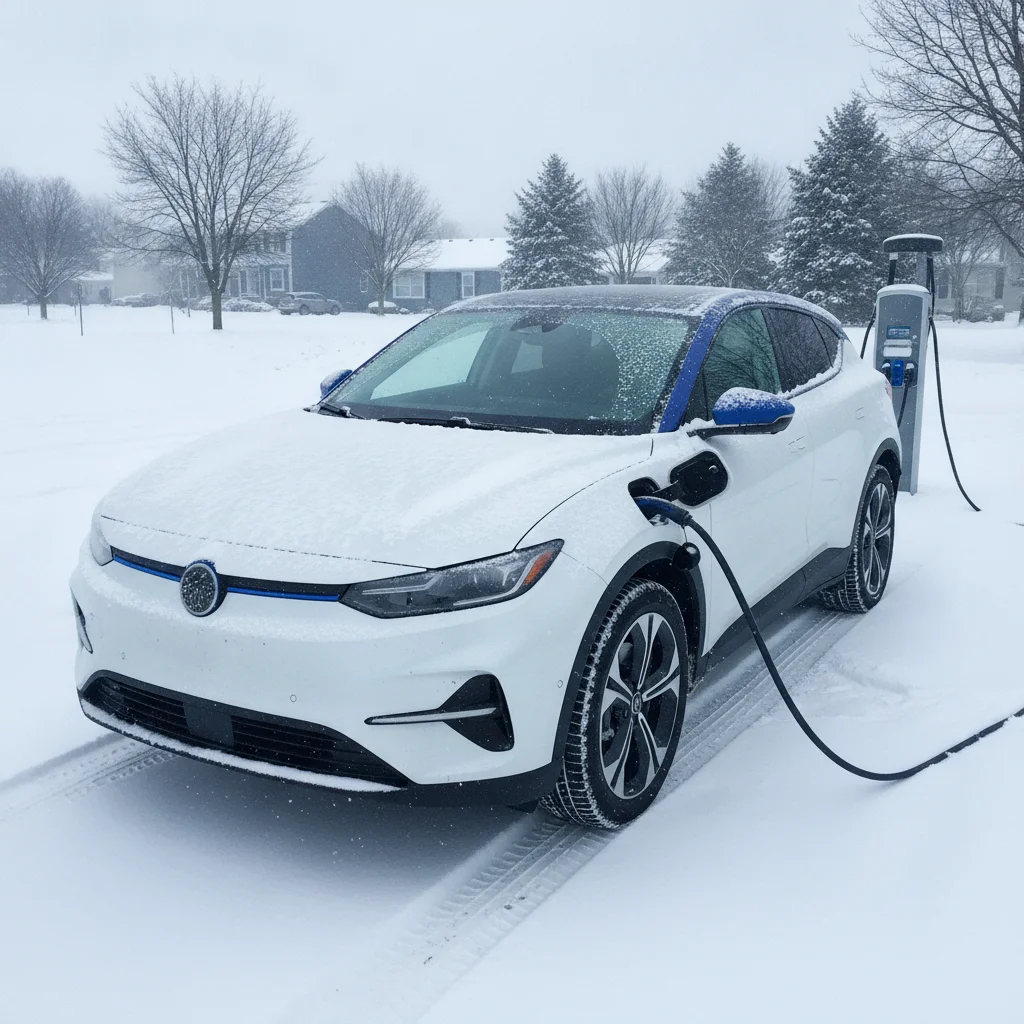
Set a departure time the night before on cold mornings so the TMS can warm the battery while you're still plugged in. This preserves your full range for the drive and protects cells from the lithium plating risk that comes with fast-charging a cold pack. The electricity used for preconditioning comes from the grid, not your battery.
Check for Heat Pump Before Buying in a Cold Climate
The heat pump option is not universal — on some models it's a higher-trim feature or an add-on. In cold climates, a vehicle without a heat pump can lose 30–40% more range to cabin heating in winter compared to a heat pump-equipped model. Confirm it's included on the specific trim you're buying, not just available on the lineup.
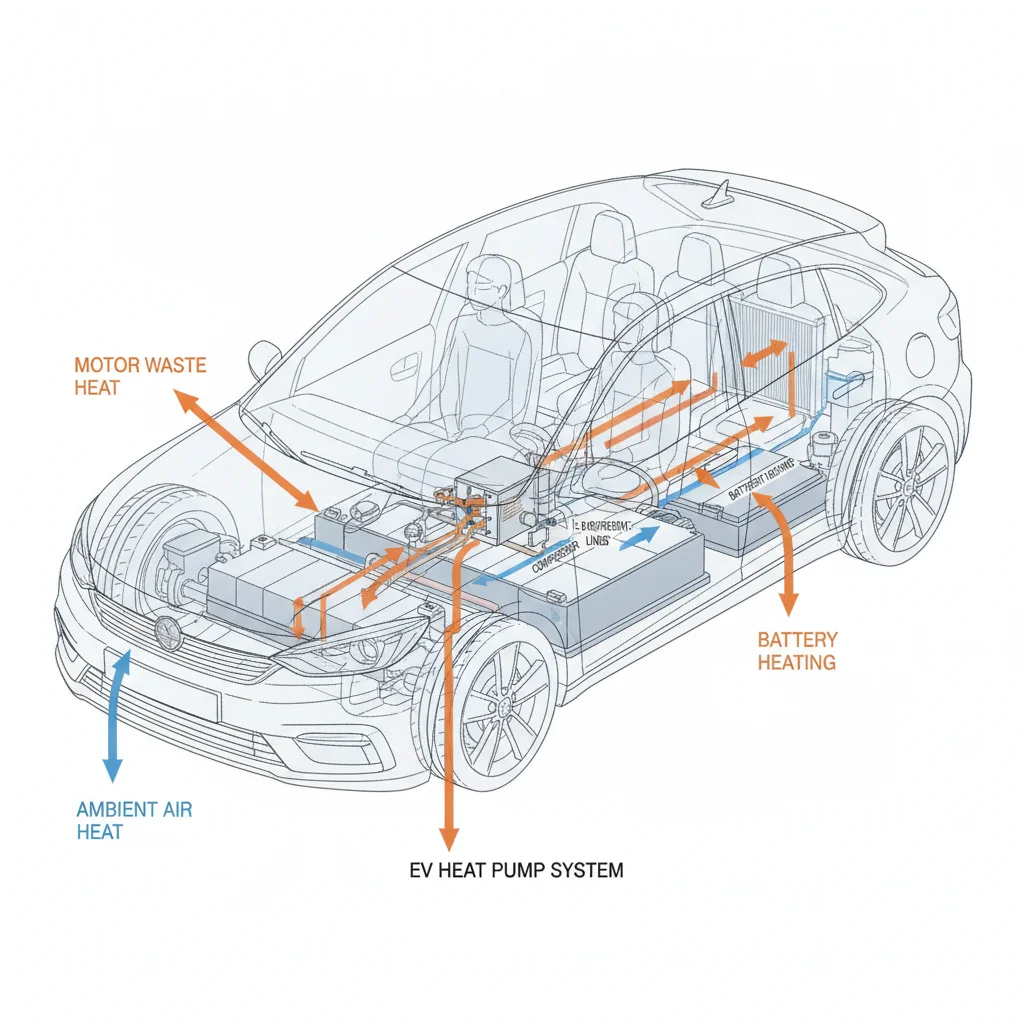
The heat pump in an EV isn't just for the cabin. Modern integrated TMS designs use the heat pump to warm the battery pack itself — extracting heat from the ambient air, the motor, and even the power electronics to bring the battery to optimal temperature before driving. This is more range-efficient than burning electricity with a resistive heater, especially in the 14°F to 32°F (-10°C to 0°C) range where heat pumps remain effective.
Below about 14°F (-10°C), heat pump efficiency drops and resistive heating takes over as supplemental support. This is why extreme cold — think Minnesota winters or Canadian prairie temperatures — remains the most challenging condition for any EV. Our guide to Owning an EV in Winter covers the practical ownership side of this in detail.
Preconditioning: The Most Underused TMS Feature
Preconditioning is the TMS doing its best work while the car is still parked and plugged in. The system brings the battery to its ideal temperature — warm in winter, cool in summer — before you start your drive, so you're not drawing down range to condition the pack while moving.
Most EVs today will precondition the battery automatically when you set a departure time in the app or car settings. Critically, when you navigate to a DC fast charger, many EVs now automatically begin warming the battery during the drive so it arrives at the charger ready to accept high charging rates. Without this, a cold battery may charge at 50 kW when it could otherwise accept 150+ kW, turning a 20-minute stop into 45 minutes.
Preconditioning is a genuine differentiator between EV brands. Some vehicles — particularly earlier PHEVs and lower-cost BEVs — lack effective battery preconditioning. If you drive in temperature extremes, it's worth confirming this capability before you buy. The cold weather performance differences between BEV, PHEV, and HEV types article breaks down which vehicle types handle this best.
How the BMS and TMS Work Together
The thermal management system doesn't operate in isolation. It takes direction from — and feeds data to — the battery management system (BMS), the onboard computer that monitors every cell group in the pack. The BMS tracks voltage, state of charge, internal resistance, and temperature at a granular level. When it detects thermal stress building in a cell group, it signals the TMS to increase cooling flow. When it sees a cold soak, it triggers preconditioning.
This coordination matters for two reasons. First, it makes thermal management proactive rather than reactive — the system doesn't wait for a cell to overheat; it prevents it. Second, it allows the BMS to make charge and discharge decisions based on real-time thermal state. If the battery is too cold, the BMS will limit maximum charge rate to protect cells from lithium plating. If it's dangerously hot, it will throttle power output to reduce heat generation.
For a complete picture of how the BMS operates, see our explainer: What the Battery Management System Does — and Why It's the Brain of Every EV. The TMS and BMS together are really one integrated system, and understanding both gives you a much clearer picture of why EV battery health varies so dramatically across brands and climates.

What to Look For When Buying — and What to Watch For When You Own
TMS quality isn't something most car shoppers ask about, but it should factor into your decision — especially if you live in a climate with temperature extremes or plan to use DC fast charging regularly.
At the Dealership or Configurator
- Active liquid cooling: Confirm the battery uses liquid cooling, not passive air cooling. This is now standard on most mainstream EVs but worth verifying on budget models.
- Heat pump inclusion: Check whether the heat pump is standard or an optional upgrade. On some models, it's only included on higher trims.
- Charge-speed preconditioning: Ask whether the vehicle automatically preconditions the battery when routing to a fast charger. Many do; some don't.
- Warranty coverage: Federal law requires an 8-year/100,000-mile battery warranty on EVs sold in the U.S. Some brands (Hyundai, Kia) offer 10 years. Understand what triggers a warranty claim — most require capacity to fall below 70% of original rating.
During Ownership
- Coolant service intervals: EV coolant doesn't need changing as often as engine coolant, but it's not maintenance-free. Check your owner's manual — intervals are typically every 5–7 years.
- Dashboard thermal warnings: Take these seriously. A persistent temperature warning after the car has had time to regulate is a sign the TMS needs attention.
- Unexpected range drops: A sudden, consistent range reduction — especially combined with slower charging — can indicate thermal management issues as well as cell degradation.
- Coolant leaks: Unlike engine coolant, EV battery coolant leaks are uncommon but serious. If you spot a puddle under the vehicle that isn't condensation, get it inspected.
Our maintenance-focused companion article How the Thermal Management System in Your EV Works — and When It Needs Attention covers the servicing side in detail. And for broader context on EV upkeep versus gas vehicle maintenance, the EV Maintenance Basics hub is a good starting point.
Use Preconditioning Every Time You Charge in Winter
Set a departure time the night before on cold mornings so the TMS can warm the battery while you're still plugged in. This preserves your full range for the drive and protects cells from the lithium plating risk that comes with fast-charging a cold pack. The electricity used for preconditioning comes from the grid, not your battery.
Check for Heat Pump Before Buying in a Cold Climate
The heat pump option is not universal — on some models it's a higher-trim feature or an add-on. In cold climates, a vehicle without a heat pump can lose 30–40% more range to cabin heating in winter compared to a heat pump-equipped model. Confirm it's included on the specific trim you're buying, not just available on the lineup.

All claims are backed by peer-reviewed research. Sources on request.