Key Takeaways
EV Thermal Management System
A thermal management system (TMS) is the collection of hardware and software in an electric vehicle that controls the temperature of the battery pack, electric motor, power electronics, and cabin. It keeps the battery within a narrow operating window — typically 59°F to 95°F (15°C to 35°C) — where cells deliver maximum range, accept charging efficiently, and degrade slowest. When temperatures drift outside that range, the TMS either removes heat or adds it before damage accumulates.
Most modern EVs use a refrigerant-based heat pump integrated with the cabin HVAC circuit, allowing the same compressor to both cool the battery on hot days and warm it on cold ones — a significant efficiency advantage over resistive heating alone.
Why Temperature Control Is the EV Battery's Most Critical Job
Lithium-ion cells are chemically finicky. Too cold, and lithium ions can't move freely between electrodes — capacity drops and, worse, charging at full speed risks plating metallic lithium on the anode, causing permanent damage. Too hot, and the electrolyte degrades, cell separators can break down, and in extreme cases thermal runaway becomes a possibility. That narrow operating corridor — roughly 60°F to 95°F — is why every serious EV manufacturer devotes significant engineering resources to thermal management.
This isn't a passive problem. A battery pack under heavy acceleration or DC fast charging generates substantial heat. A pack sitting in a -10°F parking lot in January is at the other extreme. The thermal management system has to handle both conditions, often with rapid transitions between them, while also managing the temperature needs of the motor inverter and onboard charger.
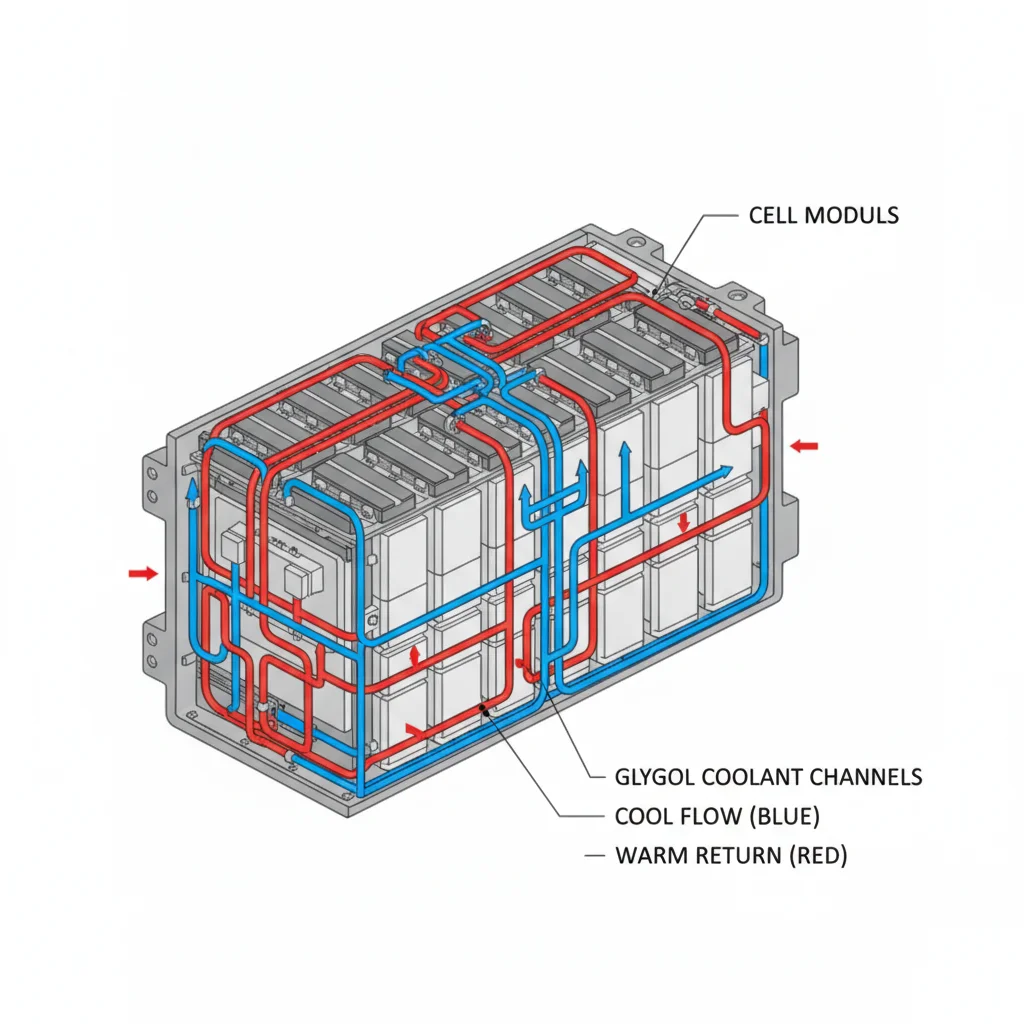
Understanding how this system works — and what maintenance it actually requires — is one of the more underappreciated aspects of EV ownership. Most owners correctly assume EVs need less upkeep than combustion vehicles. That's true. But "less" is not "none," and the TMS is where that distinction matters most. For a broader picture of the full maintenance landscape, see everything that goes into maintaining an EV over its lifetime.
The Main Components of an EV Thermal Management System
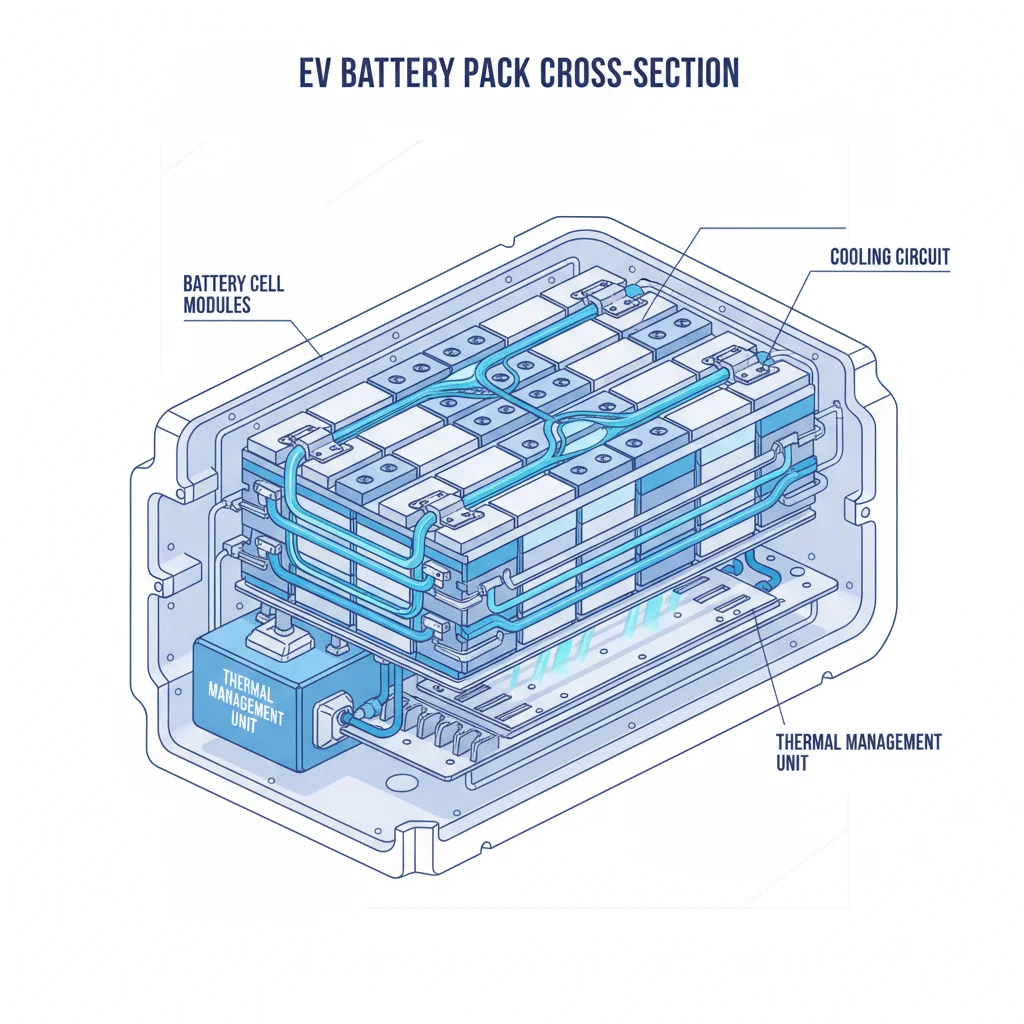
A modern liquid-cooled EV thermal management system is more sophisticated than most owners realize. It borrows concepts from industrial refrigeration and automotive HVAC and integrates them into a single coordinated loop. Here are the key components:
- Coolant loop and pump: A network of channels — often machined directly into the battery pack housing or threaded between cell modules — carries a glycol-water coolant mixture. An electric pump circulates it continuously during operation and charging. Unlike an engine's cooling system, this pump runs at variable speed directed by software, not engine RPM.
- Chiller (refrigerant-to-coolant heat exchanger): During hot conditions, the battery coolant loop connects to the vehicle's refrigerant circuit. The chiller extracts heat from the coolant and transfers it to the refrigerant, which carries it to the condenser and out of the vehicle. This is the same principle as your home AC, applied to a battery pack.
- Heat pump or PTC heater: In cold weather the system needs to add heat, not remove it. Premium EVs use a heat pump — essentially the refrigeration cycle run in reverse — to pull thermal energy from outside air and deliver it to both the cabin and battery. Budget systems use a resistive PTC (positive temperature coefficient) heater, which works but draws more energy and reduces range further.
- Thermal interface materials: Between the cells and the cooling channels sit thermal pads or potting compounds that ensure efficient heat transfer without electrical conductivity. These materials age and can degrade, though they're typically not a maintenance item until major battery service is required.
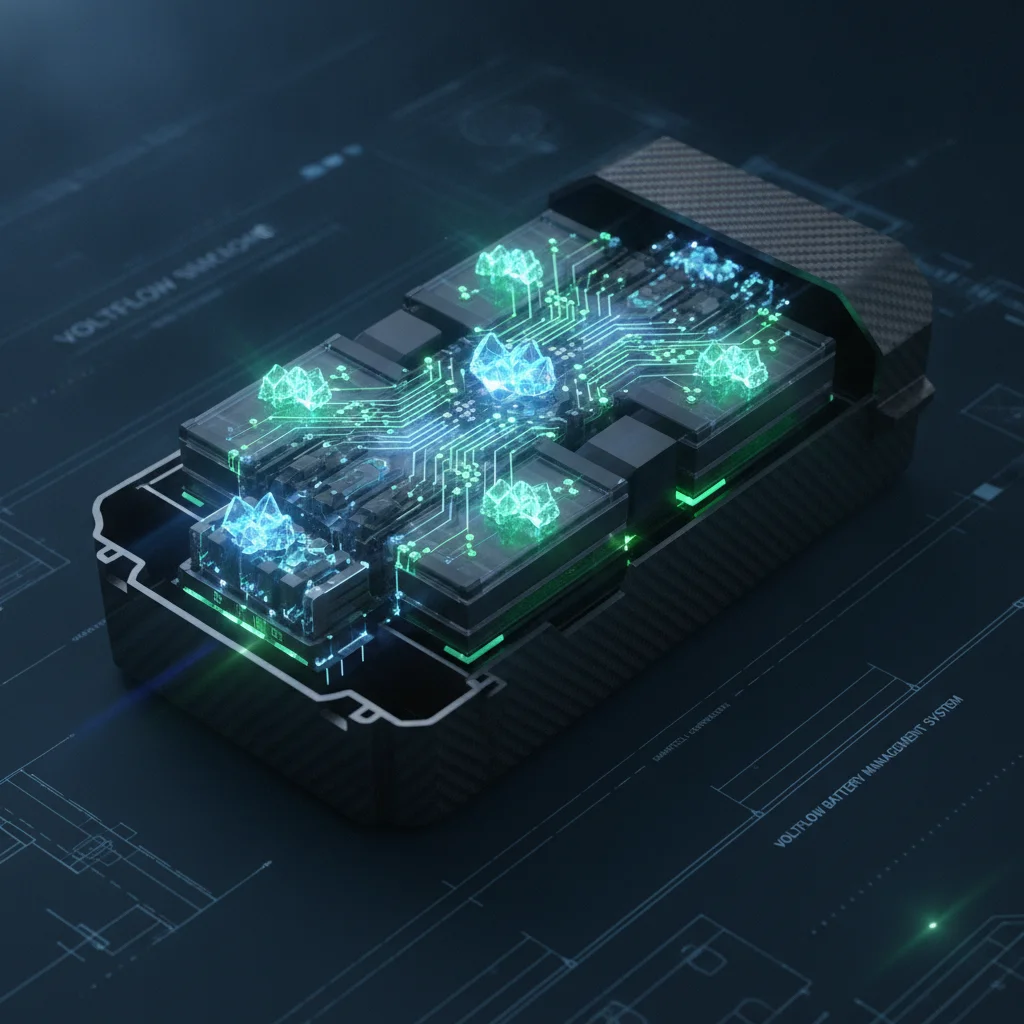
- Control software: The battery management system (BMS) and vehicle thermal controller coordinate the whole operation — adjusting pump speed, compressor load, and heating output based on cell temperatures reported by dozens of sensors embedded in the pack. For a deeper dive into the BMS itself, see what the battery management system does.
59°F–95°F
Optimal EV battery operating temperature range
Industry-wide consensus from lithium-ion cell manufacturers; temperatures outside this range accelerate degradation and reduce performance.
~40%
Range loss possible in extreme cold without preconditioning
U.S. Department of Energy testing showed EV range can drop 25–40% in temperatures around 20°F depending on vehicle design and heating system type.
7–10 years
Typical TMS coolant replacement interval
General industry guidance varies by manufacturer; always consult the specific model's owner's manual for confirmed service intervals.
$150–$300
Estimated cost of a TMS coolant flush at a dealer
Representative dealer pricing based on commonly reported owner costs; actual prices vary by region and vehicle model.
2x faster
Capacity degradation rate: air-cooled vs. liquid-cooled (hot climates)
Real-world data from early LEAF owners in hot-climate states showed roughly double the capacity loss rate compared to liquid-cooled EVs over similar mileage.
Air-cooled systems — used in first-generation Nissan LEAFs and a handful of others — replace the coolant loop with channels that direct airflow over or between cells. They're simpler and cheaper, but they can't remove heat as quickly, can't maintain cell-to-cell temperature uniformity as well, and are the reason early LEAFs in hot climates showed dramatically higher capacity loss than liquid-cooled competitors. When shopping for a used EV, confirming liquid vs. air cooling is one of the most consequential questions you can ask.
What the TMS Actually Does During Different Driving Scenarios
The thermal management system doesn't sit idle and wait for emergencies. It actively manages temperature through every phase of the vehicle's operation. Here's what's happening across a typical day:
Normal City Driving
At moderate loads and ambient temperatures, the battery generates modest heat and the TMS typically runs the coolant pump at low speed. The system monitors cell temperatures passively and may barely engage the chiller. Efficiency losses are minimal.
DC Fast Charging
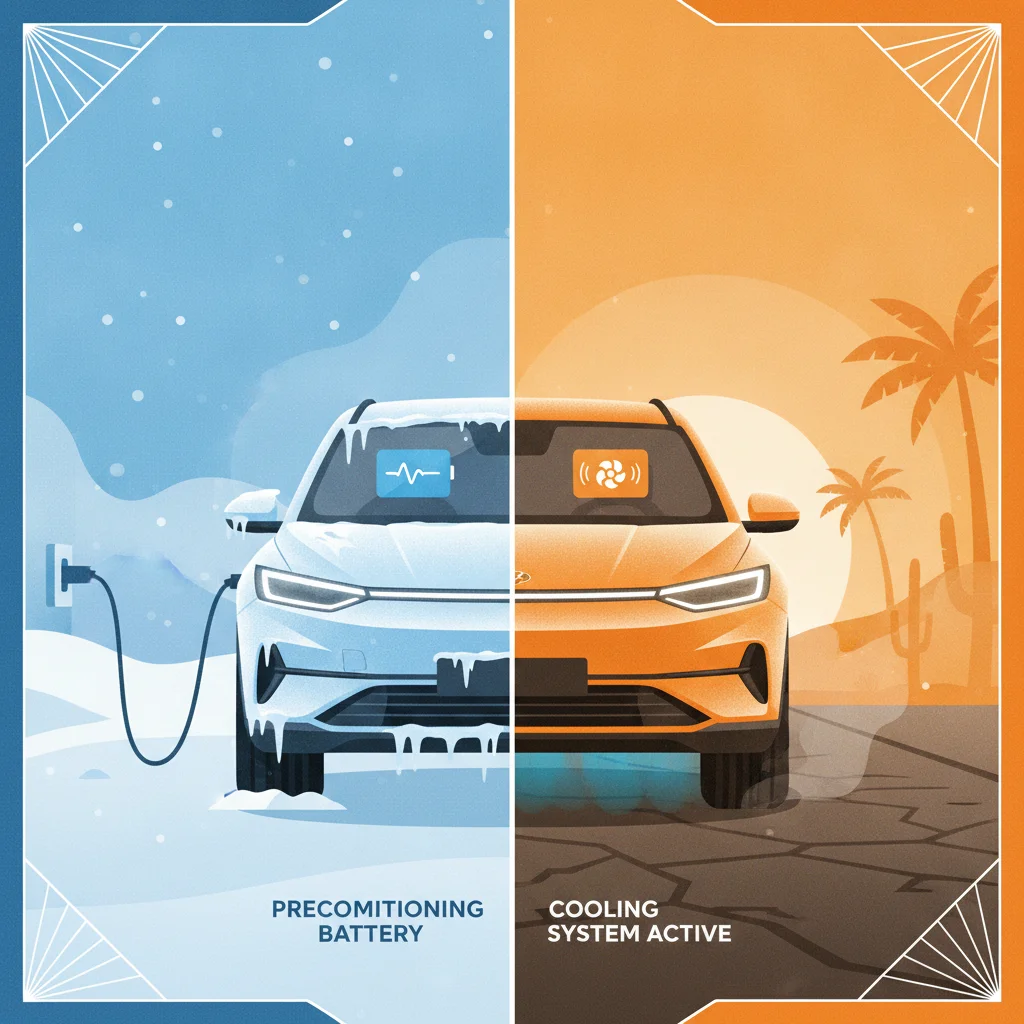
This is the highest-stress scenario for the TMS. A 150–350 kW charge session pushes a tremendous amount of energy into the pack in a short time, generating heat at a rate the passive coolant loop alone can't manage. The chiller kicks in, the pump ramps up, and the BMS may actually throttle charge speed if the TMS can't keep up — a phenomenon called charge tapering. If you arrive at a fast charger with a battery that's already hot from spirited driving, you may notice the charging speed cap lower than rated. Preconditioning via the navigation system (routing to a fast charger triggers this automatically on many EVs) lets the TMS pre-cool the pack en route.
Cold Weather Operation
Below about 40°F, the TMS switches from cooling to heating mode. The system warms the pack before allowing full power output and, critically, before accepting DC fast charging at full speed. If you've ever plugged into a fast charger on a frigid morning and watched charge speed creep up slowly over the first few minutes, you've seen the TMS at work — it's metering current while bringing cells up to safe temperature. Owning an EV in winter covers the full cold-weather picture, including how to use preconditioning to your advantage.
Parked in Extreme Heat
On a hot summer day, a parked EV may run its cooling loop periodically to prevent the pack from soaking to ambient temperature — especially if it's plugged in and the charge level is high. This is why some owners notice a small parasitic draw even on a parked, fully charged vehicle. The alternative — letting a hot battery sit at 100% state of charge — is far more damaging to long-term cell health.
Parasitic Draw While Parked Is Normal
If your EV shows a small energy draw while parked on a hot day — even fully charged — that's likely the TMS cycling to protect the battery. Most manufacturers design the system to run briefly if pack temperature rises above a threshold, particularly at high state of charge. This is expected behavior, not a fault. Parking in shade or a garage reduces how often the system needs to intervene.
Air-Cooled vs. Liquid-Cooled: A Used Car Consideration
When evaluating used EVs, confirming the cooling architecture is one of the highest-impact questions you can ask. Air-cooled packs in hot climates have a documented history of accelerated degradation. Liquid-cooled systems are far more resilient across a range of climates and charging behaviors. This distinction doesn't appear on most listing sites — you'll need to research the specific model.
TMS Maintenance: What's Actually Required and When
EVs genuinely require less maintenance than combustion vehicles. But the thermal management system has real service needs that some owners miss because they don't appear in traditional oil-change reminders.
Coolant Inspection and Replacement
The glycol-water mixture in the TMS cooling loop doesn't last forever. Over time it can acidify, accumulate contaminants, and lose its corrosion inhibitor effectiveness — which can damage the pump, heat exchanger, and aluminum battery housing. Most manufacturers recommend inspecting coolant condition around the 5-year mark and replacing it between 7 and 10 years (or 150,000 miles, whichever comes first). Some specify shorter intervals for vehicles in markets with extreme climates. Check your owner's manual; don't assume the interval matches what you'd expect from a combustion car radiator flush.
Use Built-In Navigation Before Every Fast Charge
Routing to a DC fast charger through your EV's built-in navigation — rather than a phone app — triggers automatic battery preconditioning on most vehicles. The TMS uses energy from the grid (if you're still plugged in) or from the battery to bring cells to the ideal charging temperature before you arrive. This consistently delivers faster charge sessions and reduces cell stress over time.
Budget for Coolant Service Before the 5-Year Mark
Most owners skip the TMS coolant check because no warning light prompts it. Set a calendar reminder at 4–5 years of ownership and have the coolant inspected at your next service appointment. Catching degraded coolant early costs far less than repairing corrosion damage to the cooling circuit components — or worse, dealing with a failure that accelerated battery degradation over thousands of miles.
Coolant Level Checks
Unlike engine coolant, the TMS coolant reservoir often isn't on the standard owner check list. Most vehicles have a separate reservoir for the battery cooling loop (distinct from any reservoir for the cabin HVAC system). A low level can indicate a leak — slow coolant loss that you won't notice until a warning light appears or performance degrades. A visual check once or twice a year takes 30 seconds and is worth adding to your routine. See the full EV maintenance schedule for a complete inspection checklist.
Cabin Air Filter
While not part of the TMS directly, the cabin air filter affects airflow through the HVAC system that shares components with the TMS on heat-pump-equipped vehicles. A clogged filter forces the compressor to work harder. Most manufacturers recommend replacement every 15,000–25,000 miles or 1–2 years.
Software Updates
A significant but often overlooked aspect of TMS maintenance. Manufacturers frequently push over-the-air updates that refine thermal control algorithms — adjusting cooling thresholds, improving heat pump efficiency, or fixing edge-case bugs. Keeping your vehicle's software current is part of maintaining the TMS at factory performance. Enable OTA updates if your vehicle supports them; don't decline them without a specific reason.
What You Don't Have to Do
You won't be replacing a thermostat, flushing a radiator (in the traditional sense), or servicing a water pump at 60,000 miles like you would on a combustion vehicle. The TMS pump is electric and typically designed to last the life of the vehicle. The refrigerant circuit is sealed and doesn't require scheduled servicing unless a leak or component failure occurs.
Warning Signs That Your TMS Needs Attention
The BMS monitors TMS performance continuously and will flag serious issues, but not every developing problem triggers an immediate dashboard alert. These are the patterns worth paying attention to:
- Reduced range that isn't weather-related: If you're losing significantly more range than expected in moderate conditions, and the loss has worsened progressively, degraded TMS performance (or underlying cell damage it failed to prevent) is a plausible cause.
- Charge speed consistently below rated maximum: Thermal throttling during fast charging is normal. But if your vehicle never reaches its rated peak charge speed even in mild conditions with a pre-conditioned battery, the TMS may not be cooling the pack adequately.
- Fan or pump noise: An unusual whine or cycling from the battery area — particularly when parked and plugged in — can indicate a struggling coolant pump or debris in the cooling circuit.
- Thermal-related dashboard warnings: Any warning explicitly referencing battery temperature, cooling system performance, or reduced power in non-extreme conditions warrants a dealer visit promptly, not at your next scheduled service.
- Coolant reservoir level drop between checks: Even a slow leak in the TMS circuit is a problem. The circuit is sealed; any level drop means something is wrong.
For a more detailed guide to battery-related symptoms and when they cross the threshold from "monitor it" to "get it checked now," see when your EV battery needs professional attention.
“The battery thermal management system is arguably the most important differentiator in long-term EV ownership costs. Get it wrong — through poor design or neglected maintenance — and you accelerate degradation that's expensive or impossible to reverse.”
— Venkat Srinivasan, Director, Argonne Collaborative Center for Energy Storage Science (ACCESS)
How to Protect Your TMS — and Your Battery — Over the Long Haul
Most TMS longevity comes down to operating habits, not service visits. These practices make a measurable difference:
Use Built-In Navigation Before Every Fast Charge
Routing to a DC fast charger through your EV's built-in navigation — rather than a phone app — triggers automatic battery preconditioning on most vehicles. The TMS uses energy from the grid (if you're still plugged in) or from the battery to bring cells to the ideal charging temperature before you arrive. This consistently delivers faster charge sessions and reduces cell stress over time.
Budget for Coolant Service Before the 5-Year Mark
Most owners skip the TMS coolant check because no warning light prompts it. Set a calendar reminder at 4–5 years of ownership and have the coolant inspected at your next service appointment. Catching degraded coolant early costs far less than repairing corrosion damage to the cooling circuit components — or worse, dealing with a failure that accelerated battery degradation over thousands of miles.
- Use precondition before fast charging in cold weather. Let the TMS warm the pack while you're still on home power or driving to the charger. Most EVs trigger this automatically when you navigate to a charger in the built-in system. Doing so reduces both charge time and cell stress.
- Avoid regularly charging to 100% unless you need it. High state-of-charge combined with high temperature is the fastest route to accelerated degradation. Many manufacturers recommend keeping daily charging to 80% for exactly this reason.
- Park in shade or a garage in extreme heat. The TMS will still work to manage temperature, but starting from a cooler ambient gives it far less work to do and reduces energy consumption in the process.
- Don't ignore software updates. This bears repeating. Thermal management improvements are among the most common items addressed in OTA updates from major EV manufacturers.
- Follow the manufacturer's coolant service schedule. It's inconvenient, costs $150–$300 at a dealer, and protects a $10,000–$20,000 battery pack. That math is straightforward.
The thermal management system is one of those components that rewards proactive attention with years of transparent, trouble-free operation. Ignore it — or neglect the modest maintenance it requires — and you'll eventually feel it in reduced range, slower charging, and potentially a battery replacement bill that no EV owner wants to see. For a comprehensive understanding of how the TMS fits into the broader architecture of your EV, the how EVs work hub covers the full system picture.

All claims are backed by peer-reviewed research. Sources on request.