Key Takeaways
Battery Management System (BMS)
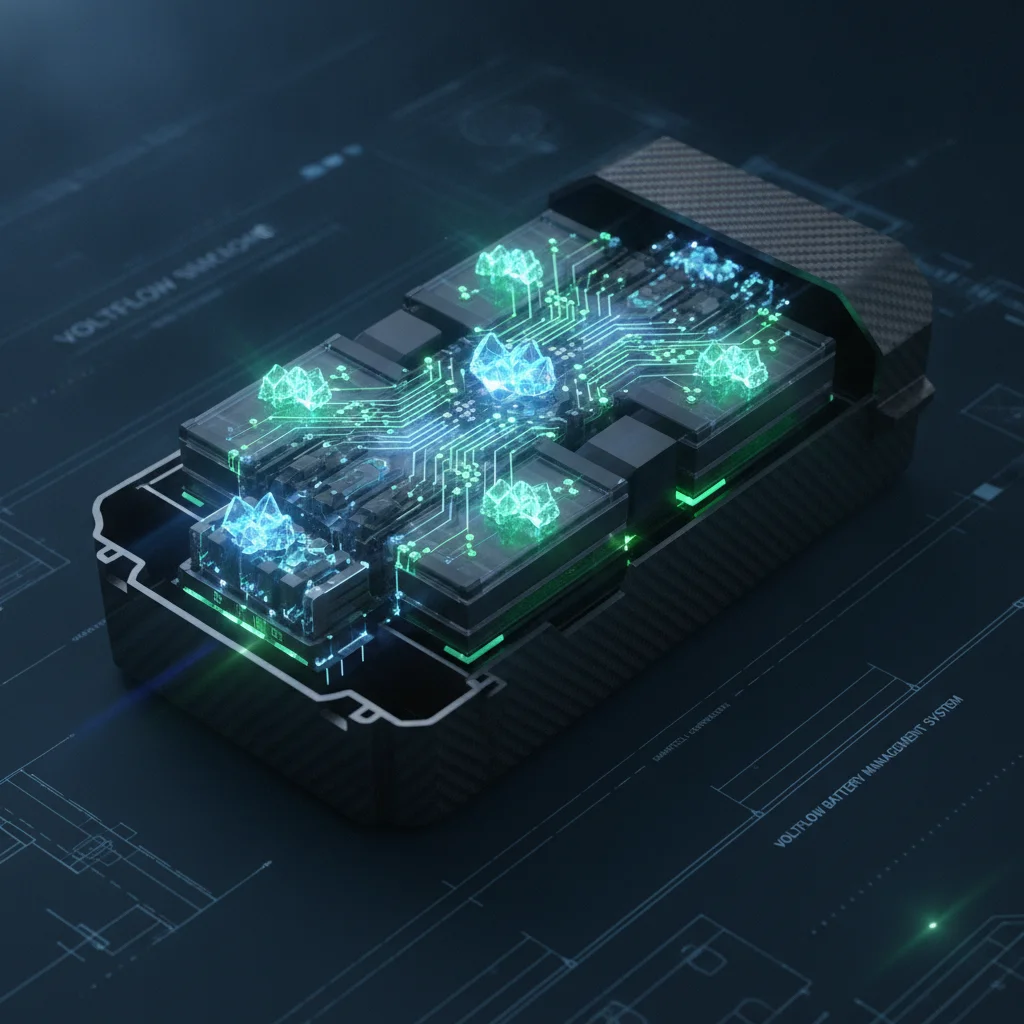
A battery management system is the electronic control unit that monitors, regulates, and protects the battery pack in an electric vehicle. It tracks the state of charge and health of individual cells, prevents overcharging or deep discharging, and coordinates with the thermal management system to keep the battery operating safely. Without a BMS, an EV's battery pack would degrade rapidly — or fail outright.
Modern BMS units communicate over a CAN bus or similar protocol, sampling cell voltages and temperatures at frequencies of 10–100 Hz and performing active or passive cell balancing to equalize charge across hundreds or thousands of cells simultaneously.
Why a Battery Pack Needs a Brain
A modern EV battery pack isn't a single battery. It's a precisely engineered system of hundreds or thousands of individual lithium-ion cells — each one a small electrochemical unit with its own voltage, temperature, and charge level. Leave those cells unsupervised and the results range from reduced range to thermal runaway. The battery management system exists to prevent all of that.
Think of it this way: you could fill a stadium with concert-goers (battery cells) and ask them all to do the same thing at exactly the same time. Without a coordinator (the BMS), some will move too fast, some too slow, and a few will do something dangerous. The BMS is that coordinator — issuing commands hundreds of times per second, monitoring every section of the crowd, and enforcing strict rules to keep everyone in sync.
To understand what the BMS actually does, it helps to first understand why individual cells in a pack are so difficult to manage. Even cells manufactured at the same facility on the same day will have slightly different characteristics. Over time, those differences compound. Some cells age faster, some hold slightly more charge, some run hotter under load. Without active management, the weakest cell in any group becomes the limiting factor for the entire pack.
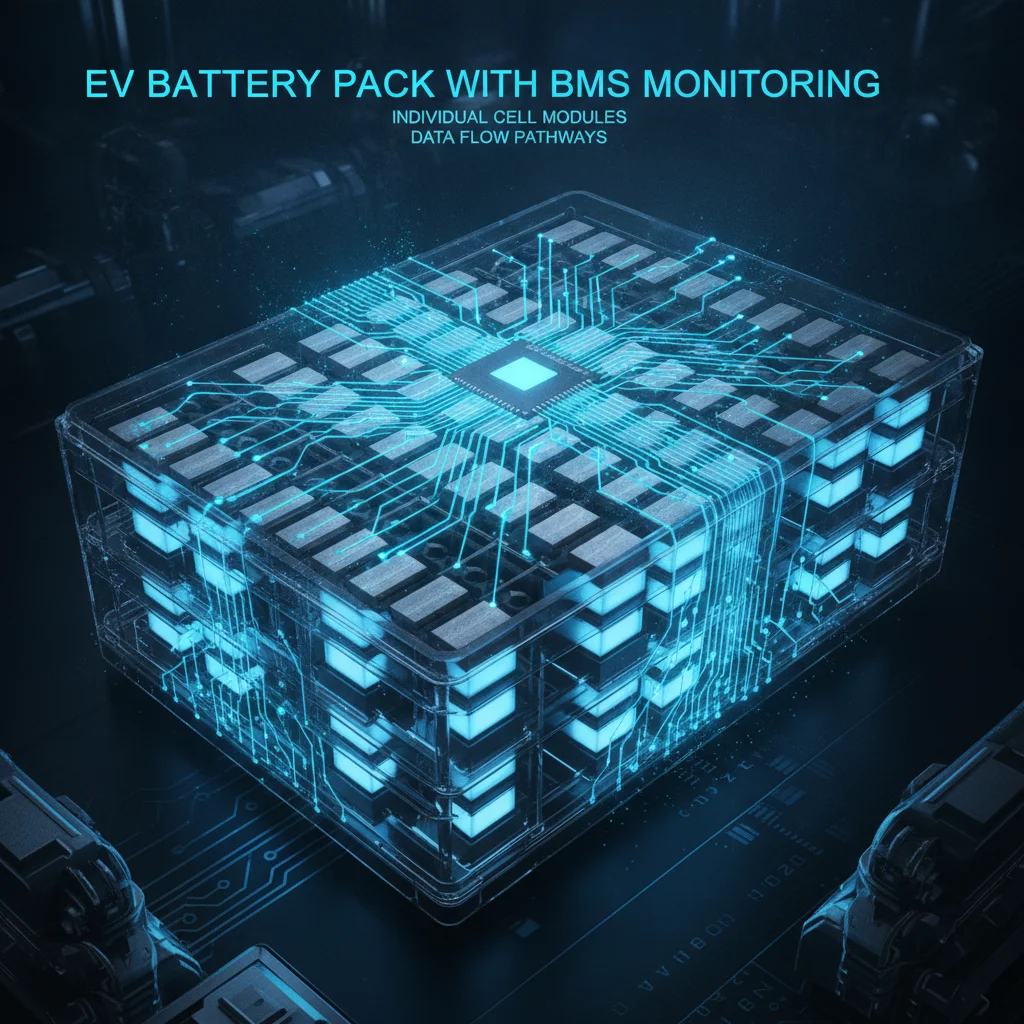
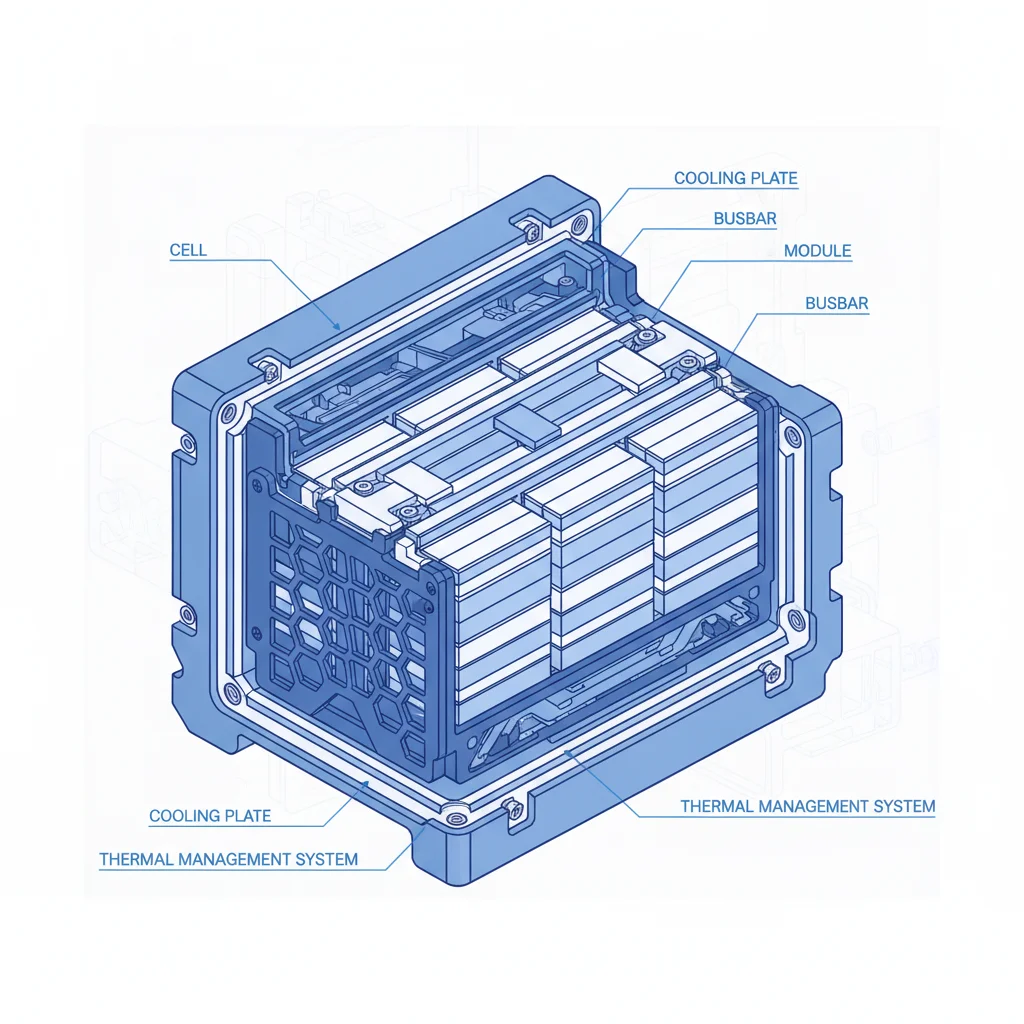
This is the foundational problem the BMS solves — and it solves it continuously, for the entire life of the vehicle. If you want to understand the physical structure being managed, how EV battery packs are built from cells to modules is worth reading first. The BMS operates across every layer of that structure.
The Core Jobs the BMS Performs
The BMS is responsible for several distinct but interconnected functions. Each one protects the battery in a different way, and together they determine how long your pack lasts and how safely it operates.
State of Charge Monitoring
The BMS calculates and tracks the state of charge (SOC) of the battery — expressed as a percentage, this is what shows up as your range estimate on the dashboard. But unlike a gas gauge that simply measures fluid level, estimating SOC in a lithium-ion pack is genuinely difficult. Voltage alone isn't enough; the BMS must also factor in temperature, current draw, and the battery's age-related changes to its internal resistance.
More advanced systems use algorithms — including variations of Kalman filtering — to continuously refine their SOC estimates. This is why the range number on your dashboard gets more accurate the longer you own the vehicle: the BMS has more data to work with.
20–40%
Winter range loss attributable to BMS-enforced cold limits
Cold-weather EV range testing by AAA and Consumer Reports consistently shows this range of reduction in sub-freezing temperatures, driven partly by BMS current restrictions on cold cells.
~90%
Average capacity retained by well-managed EV packs at 100,000 miles
Data aggregated by Recurrent Auto from tens of thousands of EVs in active use shows most newer EVs retain approximately 90% capacity at 100,000 miles — a figure dependent on BMS design quality.
8 years / 100,000 mi
Federal minimum EV battery warranty requirement
U.S. federal law mandates that automakers warranty EV battery packs for at least 8 years or 100,000 miles — a standard the BMS plays a central role in meeting.
Hundreds to thousands
Individual cells monitored simultaneously by a BMS
Depending on pack architecture, a single EV BMS may track voltage, temperature, and current for hundreds to over 7,000 individual cells in parallel — as is the case in large Tesla packs using cylindrical 18650 or 4680 cells.
State of Health Monitoring
Beyond charge level, the BMS tracks the battery's state of health (SOH) — a measure of how much of the original capacity remains. As lithium-ion cells age, they lose the ability to hold as much charge. The BMS quantifies this degradation, informs the vehicle's systems, and can adjust charging and discharging limits to slow further loss.
Overcharge and Over-Discharge Protection
These are the two cardinal sins of lithium-ion chemistry. Charge a cell beyond its maximum voltage ceiling and you risk plating metallic lithium on the anode — a process that permanently reduces capacity and, in severe cases, can cause a fire. Discharge a cell below its floor voltage and you damage the chemical structure of the electrodes irreversibly.
The BMS enforces hard limits on both ends. This is also why most EVs don't let you charge to a literal 100% — the displayed 100% is often a buffer below the cell's true maximum, protecting you from inadvertently stressing the chemistry.
Cell Balancing
Over time, cells within a pack drift to different charge levels. Without correction, the pack's usable capacity shrinks to whatever the weakest cell can handle. The BMS counteracts this through cell balancing — either passive (bleeding off charge from higher-capacity cells via resistors) or active (redistributing energy from stronger cells to weaker ones). Active balancing is more efficient but adds hardware complexity and cost.
“The battery management system is the single most important piece of software in an electric vehicle. Get it wrong and you can turn a great cell chemistry into a poor battery experience. Get it right and you can make modest cells punch well above their weight.”
— Venkat Srinivasan, Director, Argonne Collaborative Center for Energy Storage Science (ACCESS), Argonne National Laboratory
Thermal Monitoring and Coordination
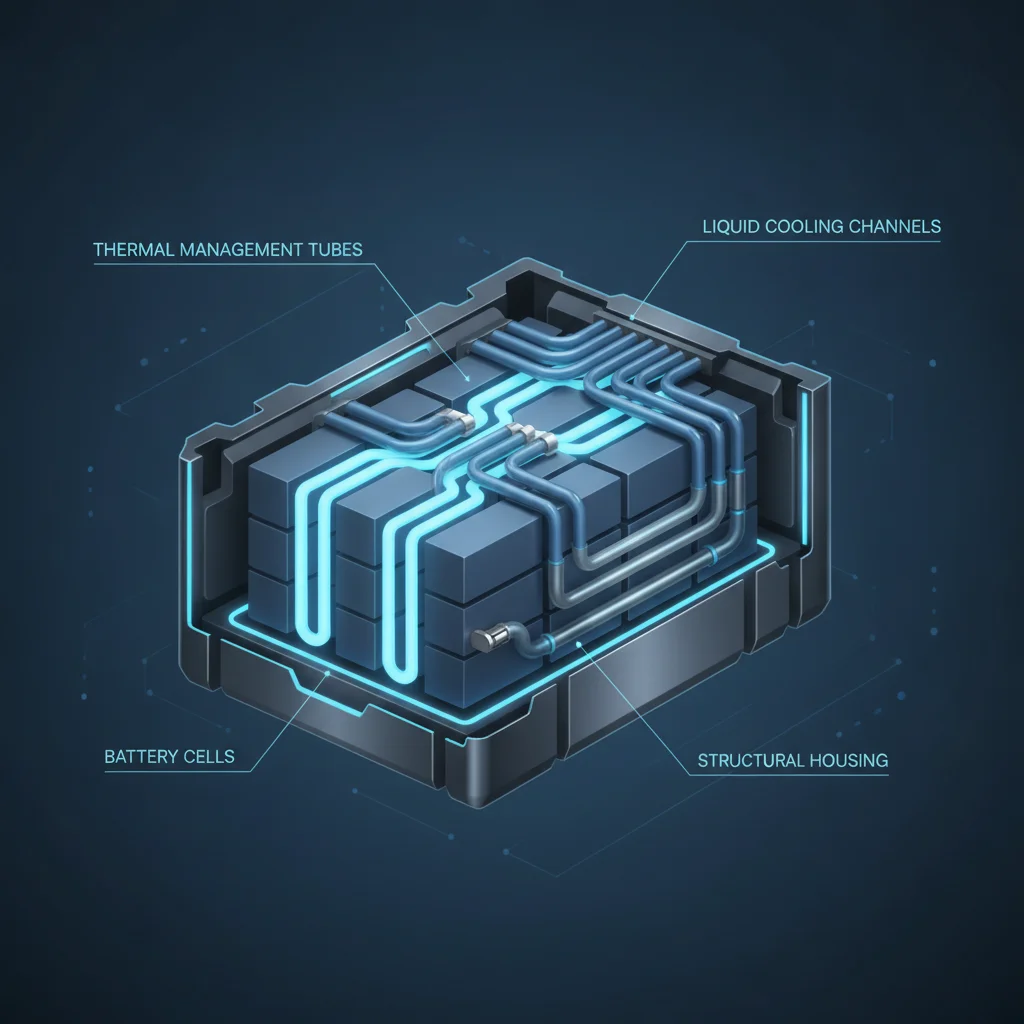
The BMS continuously reads temperature sensors distributed throughout the pack and works in coordination with the thermal management system — liquid cooling loops, heat pumps, and cell-level heating elements — to keep every cell within its safe operating band. For a deeper look at that side of the equation, the thermal management systems that protect EV batteries covers the hardware the BMS relies on.
BMS Behavior Varies by Manufacturer
There's no universal standard for how aggressively a BMS limits charge rate, balances cells, or responds to temperature extremes. Some automakers prioritize performance and set wider operating windows; others prioritize longevity with tighter limits. This is one reason you can't directly compare charge curve behavior between different EV brands — even when the cells themselves are similar chemistry.
Don't Ignore Repeated BMS Warnings
A one-time battery warning that clears itself may be a transient sensor reading. But repeated or persistent BMS fault codes are a signal that something in the pack — a cell group, a temperature sensor, or the balancing circuit — needs professional diagnosis. Continuing to fast-charge or demand high performance from a pack with an active fault can accelerate damage significantly.
How the BMS Shapes Your Day-to-Day Driving Experience
You've probably noticed behaviors in an EV that feel like the car is making its own decisions — and often, it is. The BMS is behind most of them.
The Charging Slowdown Above 80%
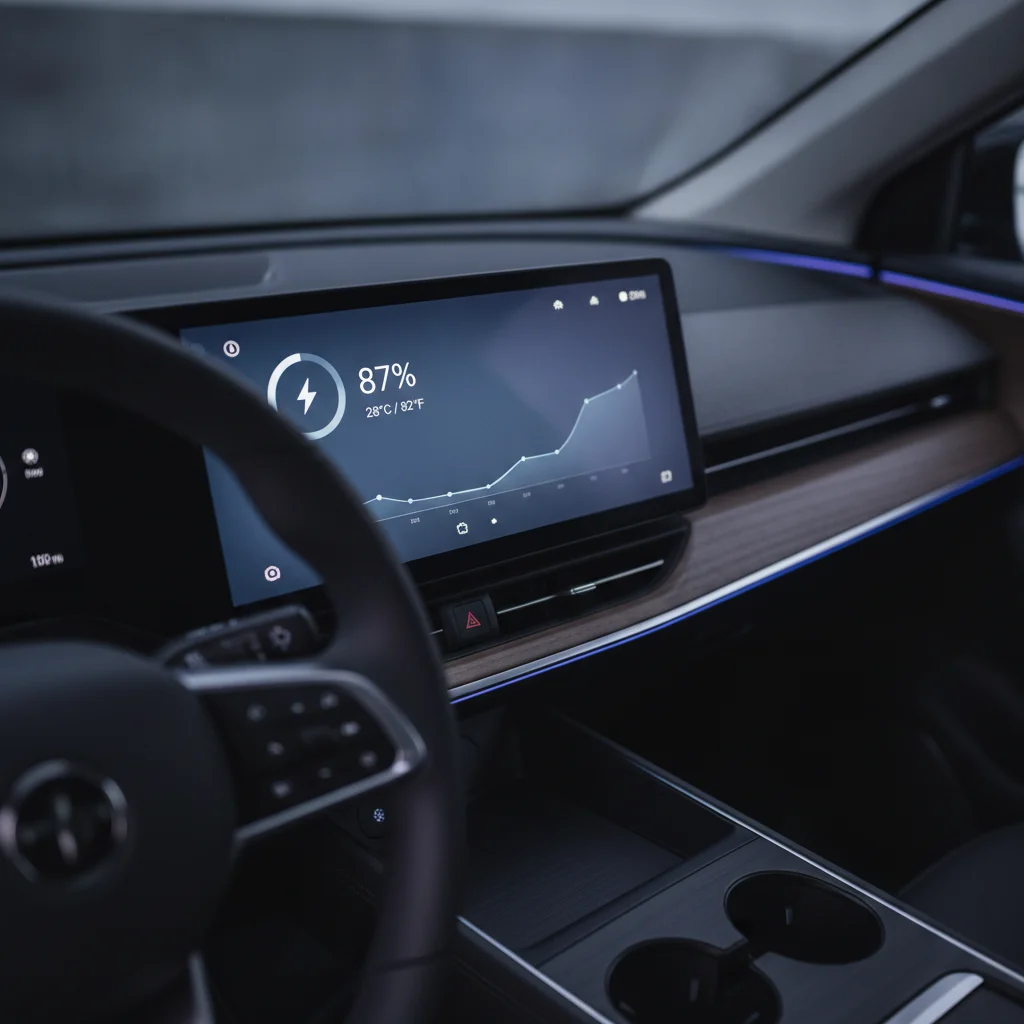
Almost every EV owner notices that charging slows significantly once the battery reaches around 80% capacity. This isn't a hardware limitation in the charger — it's the BMS deliberately reducing the charge rate to protect cells from the stress of high-rate charging at high state of charge. Lithium-ion cells are more vulnerable to damage in their upper charge range, so the BMS tapers the current accordingly.
Cold Weather Range Loss
In cold climates, your EV's stated range can drop by 20–40% in winter. Part of this is the energy cost of cabin heating, but part is the BMS itself. Cold cells have higher internal resistance and lower usable capacity, and the BMS recognizes this — restricting charge and discharge rates until the pack warms up. This is protective behavior, not a malfunction.
Regenerative Braking Limits
When you lift off the accelerator in an EV, the motor acts as a generator and pushes energy back into the battery. But if the battery is very cold or already near full charge, the BMS limits how much energy can flow back in. This is why regenerative braking can feel weaker immediately after a cold start or right after a full charge — the BMS is preventing overcharge.
Pre-Condition Before Fast Charging
Many EVs allow you to schedule or trigger battery pre-conditioning before arriving at a DC fast charger. This uses the thermal management system — coordinated by the BMS — to bring cells to optimal temperature before charging begins. The result is a faster, safer charge session with less stress on the cells. It's one of the most underused features in modern EVs.
Set a Daily Charge Limit of 80%
Most EVs allow you to cap daily charging at 80% via the vehicle's settings or companion app. The BMS enforces this limit automatically once configured. For daily commuting, this setting meaningfully reduces stress on cells in their upper voltage range — where lithium-ion chemistry is most vulnerable — and can extend long-term capacity retention noticeably over years of ownership.
Power Limits Under Stress
Floor the accelerator hard for an extended period and you may notice available power gradually reduce. The BMS is monitoring cell temperatures and imposing a power limit — sometimes called a "soft limit" — before temperatures reach a damaging range. Performance EVs handle this differently than economy EVs, which is one reason why thermal management design varies so significantly between segments.
BMS Design Differences Across Manufacturers
Not all battery management systems are created equal, and the differences have real consequences for owners. BMS quality shows up in three main areas: balancing strategy, thermal integration, and software sophistication.
Balancing Approach
Passive balancing is cheaper and simpler — it dissipates excess energy as heat via resistors. Active balancing is more efficient but requires additional circuitry and precise control algorithms. High-end EV manufacturers tend to use active or hybrid balancing strategies, which contributes to lower long-term degradation.
Software and Over-the-Air Updates
The BMS isn't just hardware — it runs software, and that software can be updated. Tesla pioneered the use of over-the-air (OTA) updates to modify BMS parameters, and most major EV makers have followed. This means a manufacturer can remotely adjust charge limits, recalibrate SOC estimates, or tighten thermal thresholds in response to real-world field data. It's one of the genuine advantages of a software-defined vehicle. The BMS you drive off the lot may be meaningfully different — and better — two years later without any trip to a service center.
Integration With Charging Infrastructure
More sophisticated BMS implementations communicate directly with DC fast chargers using protocols like ISO 15118, allowing the charger and vehicle to negotiate the optimal charge profile in real time. This results in faster, safer charging sessions — particularly evident in vehicles with good DC fast charge curves versus those that throttle more aggressively from the start.
What BMS Quality Means for Long-Term Ownership
When you're evaluating an EV to buy — new or used — the BMS is invisible but consequential. A well-designed BMS is one of the primary reasons some EVs retain 90% battery capacity after 100,000 miles while others drop to 80% in half that distance.
For used EV buyers specifically, understanding that the BMS tracks and enforces charging behavior helps explain why charging history matters. A vehicle that was regularly charged to 100% and depleted to near-zero — possibly because the previous owner ignored BMS-driven recommendations — may show more degradation than its mileage suggests.
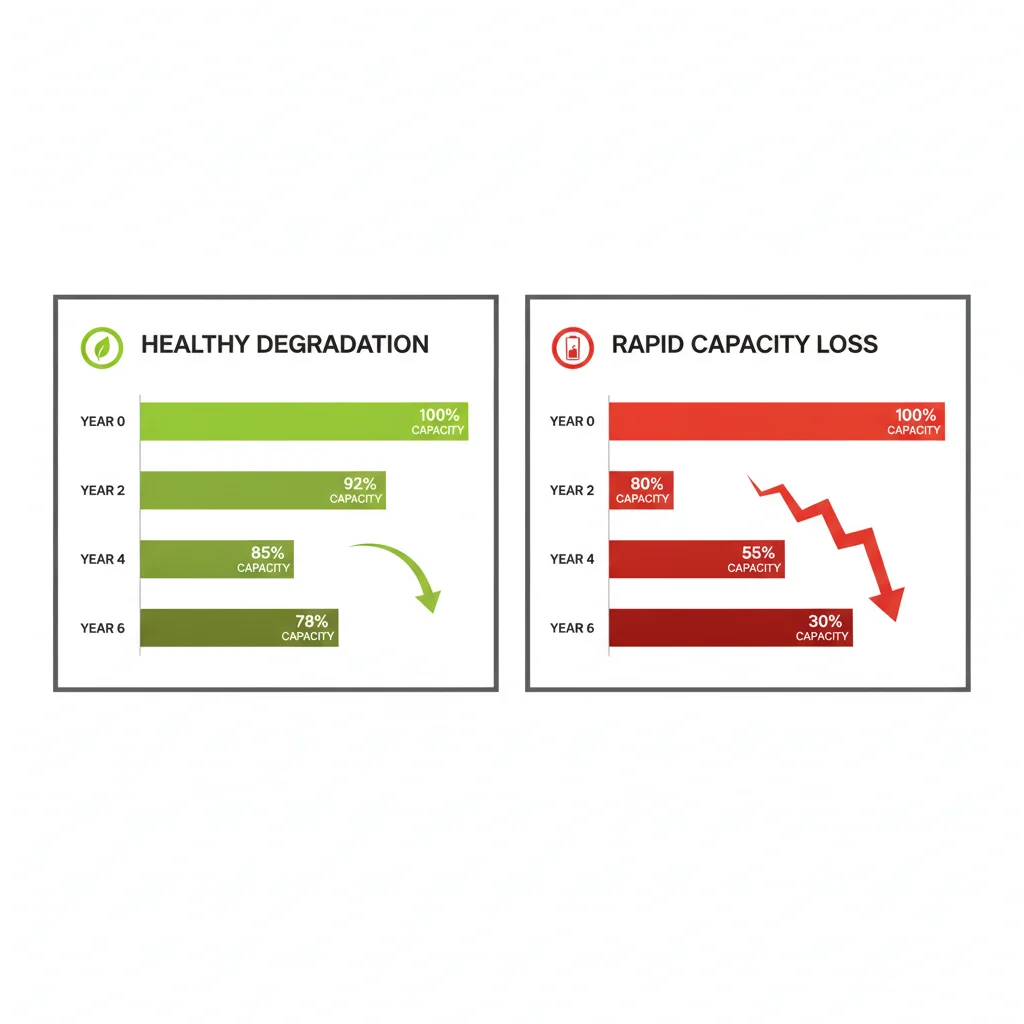
Manufacturer battery warranties — typically 8 years or 100,000 miles for the main pack — are partly backed by confidence in the BMS's ability to protect cells throughout that period. If the BMS fails to perform and cells degrade beyond the warranty threshold, that's a covered claim. But understanding the system helps you avoid pushing it unnecessarily.
The habits that work with the BMS rather than against it are straightforward: avoid regular 100% charges for daily driving, don't leave the pack near empty for extended periods, and let the car pre-condition the battery before DC fast charging sessions when that feature is available. The charging habits that preserve long-term EV battery capacity goes deeper on all of these practices.
The BMS is also part of the broader maintenance picture for electric vehicles. Unlike the oil changes and spark plug replacements of a gas car, EV maintenance centers on software, fluids in thermal systems, and monitoring battery health — all of which intersect with the BMS. The full scope of EV maintenance over a vehicle's lifetime puts the BMS in that broader context.
Pre-Condition Before Fast Charging
Many EVs allow you to schedule or trigger battery pre-conditioning before arriving at a DC fast charger. This uses the thermal management system — coordinated by the BMS — to bring cells to optimal temperature before charging begins. The result is a faster, safer charge session with less stress on the cells. It's one of the most underused features in modern EVs.
Set a Daily Charge Limit of 80%
Most EVs allow you to cap daily charging at 80% via the vehicle's settings or companion app. The BMS enforces this limit automatically once configured. For daily commuting, this setting meaningfully reduces stress on cells in their upper voltage range — where lithium-ion chemistry is most vulnerable — and can extend long-term capacity retention noticeably over years of ownership.
When the BMS Signals a Problem
The BMS communicates faults through the vehicle's warning system — typically a battery or check-engine icon on the dashboard, sometimes accompanied by reduced power or charging limits. Not all BMS alerts are emergencies, but none should be ignored.
Common BMS-Related Warnings
- Cell voltage imbalance: One or more cells are significantly out of balance with the rest of the pack. May indicate a failing cell or a balancing system fault.
- Temperature out of range: The BMS detected temperatures beyond safe operating limits. Could indicate a thermal management system failure — worth reading up on when the thermal management system needs attention.
- State of charge inconsistency: The BMS's SOC estimate is diverging from expected behavior, which may indicate cell degradation or a sensor fault.
- Communication fault: The BMS has lost contact with part of the pack's sensor network — a hardware issue requiring diagnosis.
In all cases, a dealership or qualified EV technician should retrieve the fault codes and assess whether the issue is a calibration problem (often resolvable via software) or a hardware fault requiring physical repair. Don't continue to fast-charge or drive at high power if a battery warning is active — the BMS may be in a protective mode for a reason.
BMS Behavior Varies by Manufacturer
There's no universal standard for how aggressively a BMS limits charge rate, balances cells, or responds to temperature extremes. Some automakers prioritize performance and set wider operating windows; others prioritize longevity with tighter limits. This is one reason you can't directly compare charge curve behavior between different EV brands — even when the cells themselves are similar chemistry.
Don't Ignore Repeated BMS Warnings
A one-time battery warning that clears itself may be a transient sensor reading. But repeated or persistent BMS fault codes are a signal that something in the pack — a cell group, a temperature sensor, or the balancing circuit — needs professional diagnosis. Continuing to fast-charge or demand high performance from a pack with an active fault can accelerate damage significantly.
The BMS is also part of what EV maintenance basics covers at a higher level — if you're newer to electric vehicle ownership, that hub is a good starting point for understanding how the BMS fits into the overall service picture.

All claims are backed by peer-reviewed research. Sources on request.