Key Takeaways
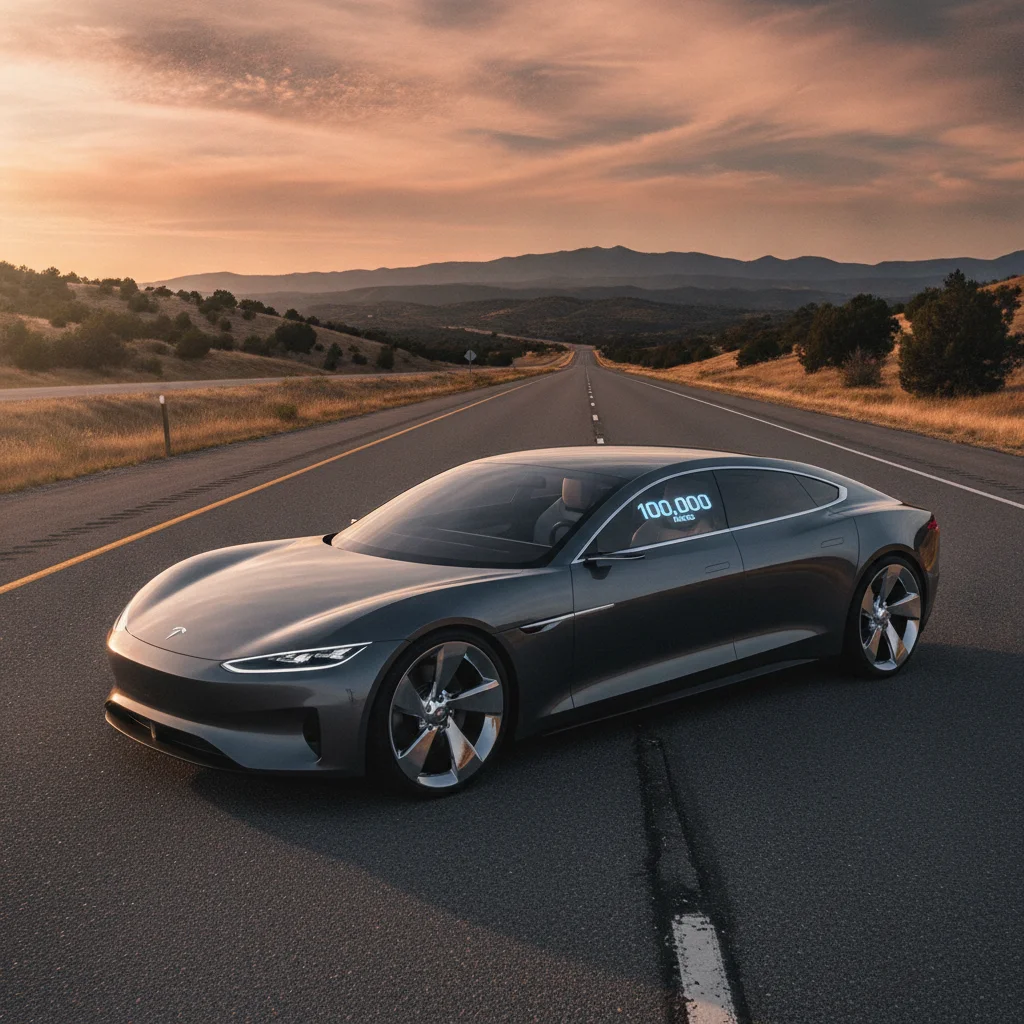
Why 100,000 Miles Is a Different Milestone in an EV
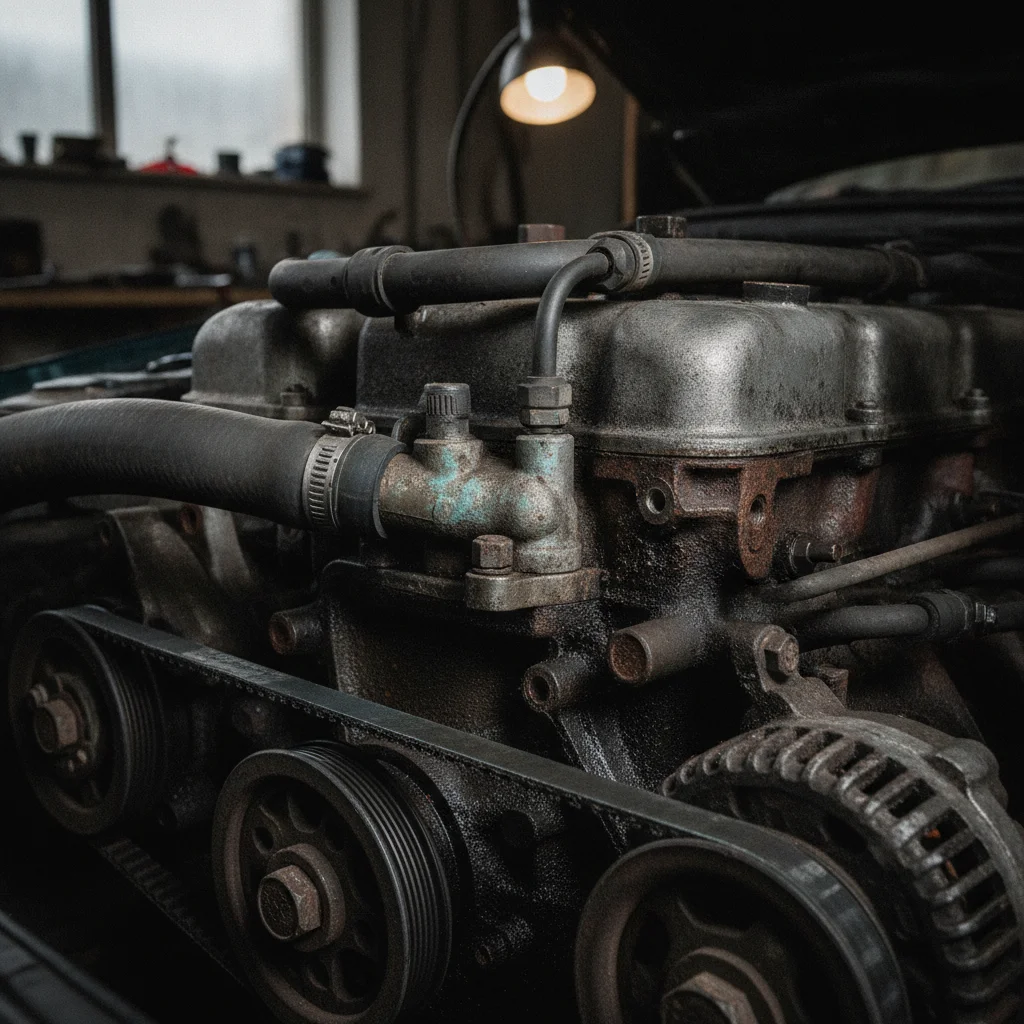
In the gas-car world, 100,000 miles is a psychological cliff — timing belts, water pumps, spark plugs, and transmission servicing all converge around that number. It's an expensive and stressful threshold. In an electric vehicle, the milestone feels different because the list of things that can wear out is fundamentally shorter. No combustion cycle means no pistons, no camshafts, no exhaust valves — entire categories of failure just disappear.
But "different" doesn't mean "nothing happens." High-mileage EV drivers face a distinct set of concerns that most manufacturer guides and dealership service departments are still catching up to document thoroughly. The wear patterns shift from powertrain-centric to system-level: thermal management, chassis components, software integrity, and the handful of fluids that EVs do use. If you're pushing your electric vehicle past six figures on the odometer, understanding these patterns is the difference between cheap upkeep and an expensive surprise.
For background on how the core components function — motors, inverters, battery packs — see our plain-language EV explainer. And if you're still in the early stages of ownership, EV Maintenance from Day One lays the groundwork this article builds on.
The Battery Pack: Managing Degradation, Not Fearing It
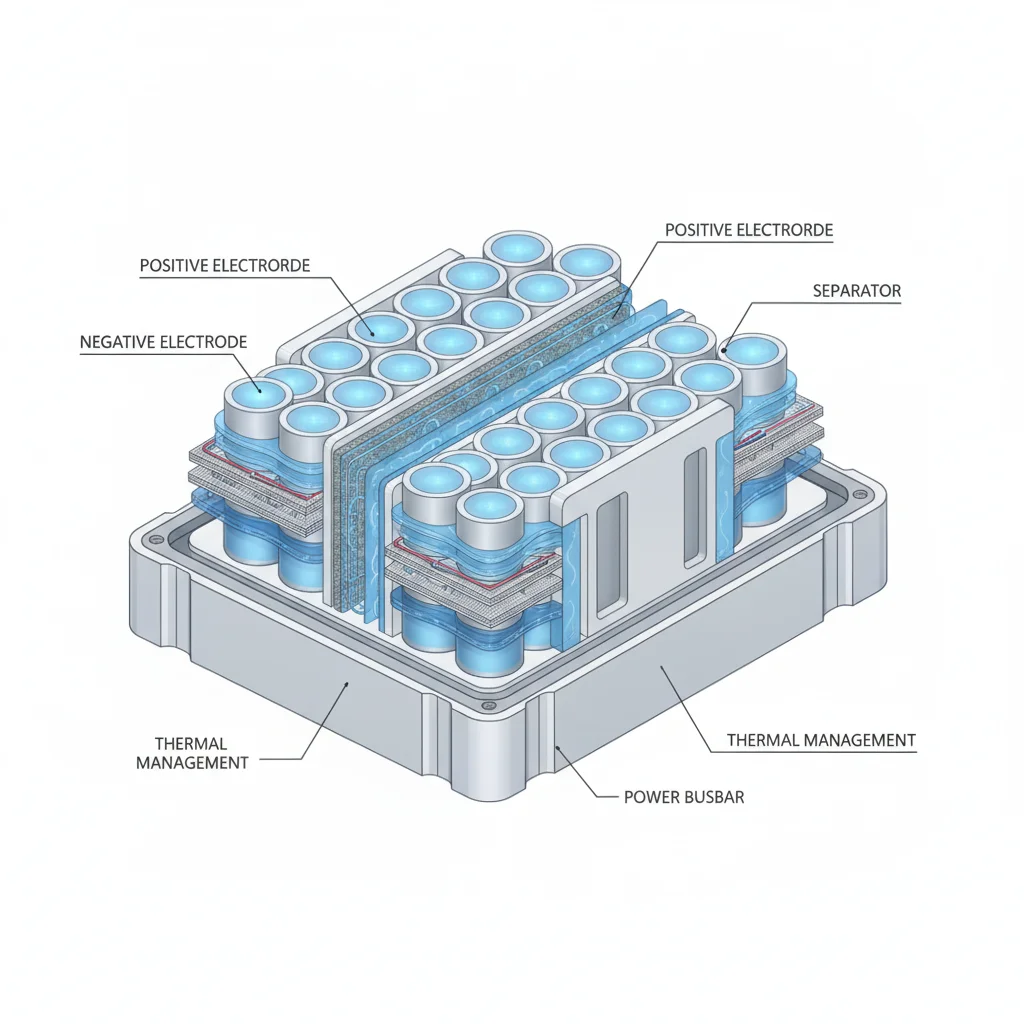
The most anxiety-inducing question high-mileage EV owners ask is simple: how much range am I losing? Real-world data from large fleets and third-party tracking tools consistently shows that most modern lithium-ion packs retain well above 80% of original capacity at 100,000 miles — though that figure varies meaningfully by model, charging behavior, and climate. Our detailed breakdown of how much range EVs actually lose over time puts the real-world numbers in context.
After 100,000 miles, the degradation curve typically begins to flatten. The rapid capacity loss that happens in the first 20,000–30,000 miles (as the electrolyte settles and the anode stabilizes) has already occurred. What you're managing now is slow, incremental fade — and the habits that matter most are the same ones that mattered from day one:
- Avoid routine charging to 100% unless you need the full range for a specific trip. Keeping the daily charge ceiling at 80–90% reduces stress on the cells at high state-of-charge.
- Minimize DC fast charging frequency. DCFC is convenient but generates heat that accelerates cell aging. High-mileage drivers who fast-charge daily see measurably steeper degradation curves than those who rely primarily on Level 2 at home.
- Let the pack cool before plugging in after a fast charge. Charging a hot pack locks in heat stress. Most modern EVs handle this automatically through thermal management, but in extreme heat you can park in shade first.
80%+
Battery capacity retained at 100,000 miles
Multiple third-party studies tracking real-world EV fleets find the majority of modern lithium-ion packs retain above 80% original capacity at 100k miles.
~40%
Lower maintenance cost vs. comparable gas vehicles
According to U.S. Department of Energy analysis, EV owners spend roughly 40% less on scheduled maintenance over the vehicle's lifetime compared to gas-car owners.
3–5 years
Typical 12V auxiliary battery lifespan
Industry service data consistently shows lead-acid 12V batteries in EVs failing within 3–5 years, making them one of the most common high-mileage breakdown causes.
If you're noticing a sudden drop in range rather than gradual decline, that's a different signal — it may indicate a failed cell group or a thermal management issue that warrants a battery diagnostic scan, not just a shrug.
Best Practices for High-Mileage EV Maintenance
Here's where the rubber meets the road. These aren't generic reminders to "check your fluids" — these are the specific practices that separate high-mileage EVs that run indefinitely from ones that develop expensive problems around the 100k mark.
Schedule a professional battery health diagnostic at 100,000 miles, not just a range check.
Self-reported range estimates can mask uneven cell degradation. A proper diagnostic using manufacturer or third-party tools (such as a state-of-health scan via OBD adapter and BMS access) reveals how individual cell groups are performing, not just aggregate capacity. Catching a failing cell group early can prevent cascading damage to neighboring cells.
Rotate tires every 5,000–6,000 miles rather than the standard 7,500-mile interval.
EV battery packs add significant weight concentrated low in the chassis. Combined with instant torque that increases wear at the contact patch during acceleration, tires on electric vehicles — especially rear-wheel-drive models — wear asymmetrically and faster than on equivalent gas vehicles. Shortening the rotation interval meaningfully extends overall tire life.
Inspect and service brake calipers annually even when pads show minimal wear.
Regenerative braking reduces how often friction brakes are applied, which sounds beneficial but allows corrosion and debris to accumulate on rotors and caliper slide pins. Seized calipers can cause uneven pad wear, brake drag that reduces efficiency, and ultimately complete caliper failure requiring expensive replacement.
Test and replace the 12V auxiliary battery proactively, not reactively.
This is the single most overlooked maintenance item in high-mileage EVs. The 12V battery powers the systems that activate the main pack — without it, the car is completely inoperative regardless of main battery charge level. Lead-acid 12V batteries have a finite lifespan of 3–5 years and often fail without warning in cold weather.
Verify thermal management coolant condition and top off or flush at the 100k milestone.
EV coolant additives that protect aluminum components and prevent biological growth in the cooling loop degrade over time, independent of mileage. High-mileage drivers who reach 100,000 miles in fewer years than average may need to service coolant on a time-based schedule rather than relying solely on mileage triggers.
Audit your software version and run a system-wide fault code scan annually.
EV manufacturers release firmware updates that improve battery management algorithms, thermal calibration, and charging behavior. Running outdated firmware can mean your vehicle's BMS is making suboptimal charge and discharge decisions — accelerating degradation. Separately, EV diagnostic fault codes don't always trigger dashboard warnings but can reveal inverter stress, isolation faults, or cooling system anomalies.
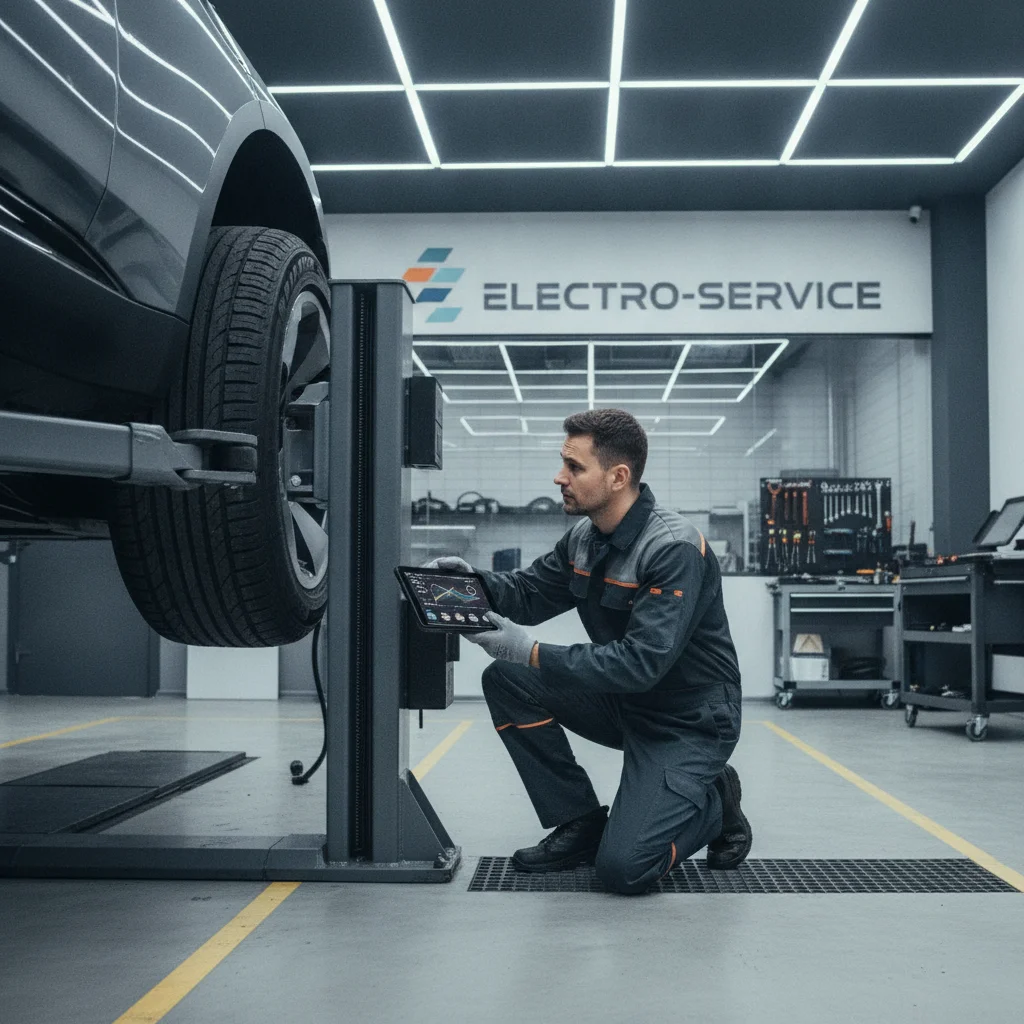
Tires and Brakes: The Two Systems That Wear Faster Than You Think
EVs are heavy. A typical mid-size electric sedan weighs 500–1,000 lbs more than its gas equivalent, and that mass accelerates tire wear — particularly at the rear on rear-wheel-drive models. High-mileage drivers should expect to go through tires faster than the odometer interval suggests, and should be rotating every 5,000–6,000 miles rather than the 7,500-mile standard. After 100,000 miles, inspect for irregular wear patterns that might indicate alignment drift or suspension bushing wear.
Weigh Your EV Before Choosing Replacement Tires
Not all replacement tires are spec'd for EV load ratings. When shopping for tires at high mileage, confirm the load index on the replacement matches or exceeds the original spec — especially on heavier SUV-format EVs like the Rivian R1T or Kia EV9. Running undersized tires on a heavy EV accelerates wear and can affect handling. Check the door placard for the OEM spec before buying.
Brakes tell a counterintuitive story in EVs. Regenerative braking does most of the deceleration work, which means brake pads can last 80,000–100,000 miles or more on some models — roughly double the lifespan of gas-car pads. Sounds like pure good news, but there's a catch: rotors and calipers that rarely see friction can corrode and seize. After 100,000 miles, have a technician inspect caliper slide pins and rotor surfaces even if the pads look brand new. Seized calipers are a common failure mode on older, low-use EV braking systems. Compare this pattern to what happens in high-mileage gas-car brake systems, where pad wear is the primary concern.
Budget for a brake fluid flush at the 100k mark regardless of pad condition. Brake fluid is hygroscopic — it absorbs moisture over time — and many EV owners skip this service precisely because the brakes feel fine. Degraded fluid reduces wet boiling point and can cause corrosion inside calipers.
Cooling Systems and Fluids You Can't Ignore
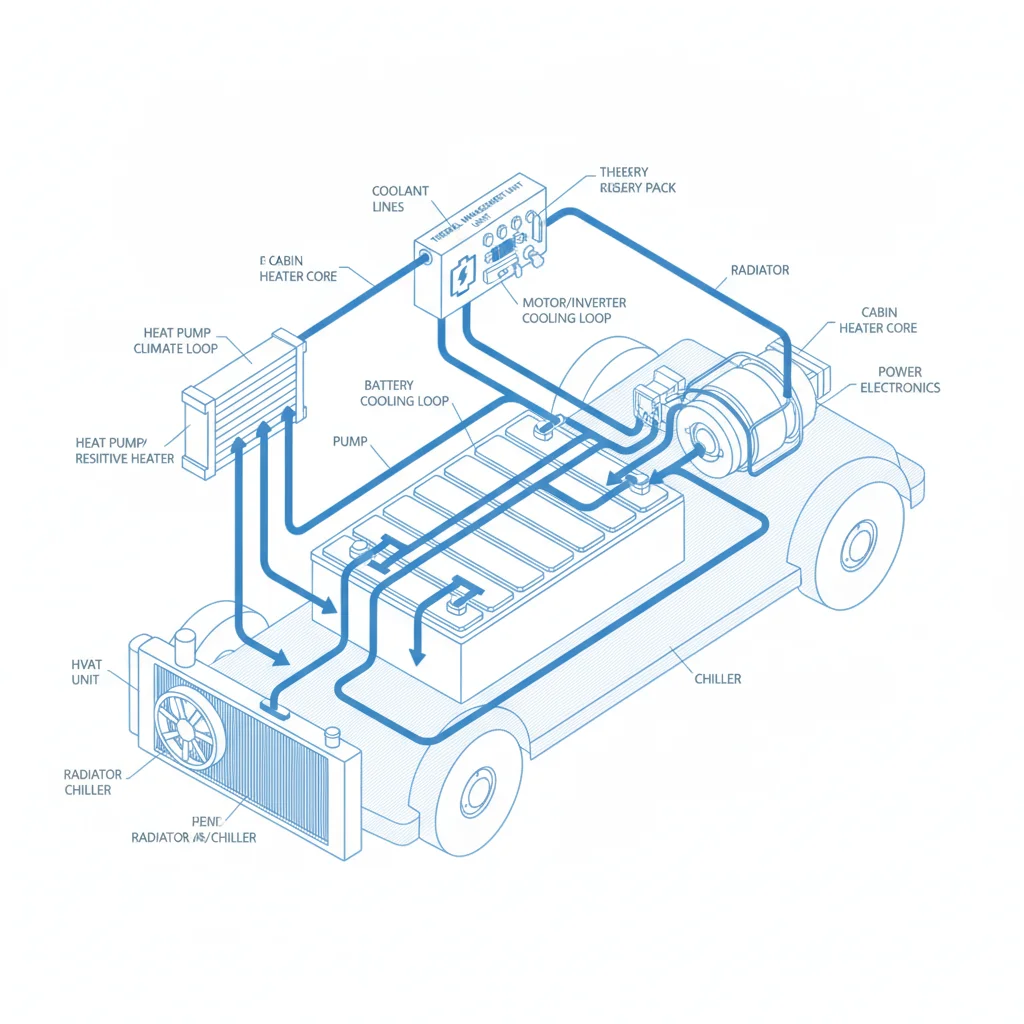
EVs don't need engine oil, but they do circulate coolant — often through multiple loops covering the battery pack, motor inverter, and cabin HVAC system. This is one of the most underserviced areas in high-mileage EVs because owners assume "no combustion = no coolant issues." That assumption is wrong.
EV Coolant Is Not Universal
EVs use specific low-conductivity coolant formulations designed to prevent electrical arcing in the battery thermal loop. Using standard automotive coolant can damage the system. Always verify the fluid spec in your owner's manual or with a qualified EV technician before adding or replacing coolant — do not use whatever is on the shelf at an auto parts store.
Battery Warranty Terms Vary Significantly
Federal law requires EV manufacturers to warranty battery packs for at least 8 years or 100,000 miles for vehicles sold in the U.S., but coverage details differ. Some manufacturers guarantee capacity above a specific threshold (commonly 70%), while others only cover outright failure. Review your specific warranty document and file any degradation claims before coverage lapses at the 100k mark.
Specific intervals vary by manufacturer, but a reasonable rule of thumb for high-mileage drivers is to have the thermal management coolant inspected at 100,000 miles and replaced if the additive package is depleted. Some manufacturers (Tesla, for example) recommend a coolant replacement interval of around 150,000 miles or 8–10 years — but high-mileage drivers will hit that threshold much faster on calendar time than average owners, so time-based intervals may be more relevant than mileage-based ones for some fleets.
Transmission fluid is another item that EVs technically have but rarely discuss. Single-speed reduction gearboxes use a small volume of fluid that can break down under sustained high-torque use. If your EV has logged 100,000 miles with a lot of towing, mountain driving, or aggressive acceleration, have the gearbox fluid inspected. This is especially true for older models (pre-2018) that may have less robust sealing on the gearbox assembly.
For a full map of every fluid and service interval across an EV's lifespan, see our comprehensive EV lifetime maintenance guide.
The 12V Battery: The Most Commonly Overlooked Component
Almost every EV on the road today runs a separate 12V lead-acid or lithium auxiliary battery that powers low-voltage systems: door locks, lights, the BMS interface, and the relay that connects the main pack to the drivetrain. When this battery fails, the car won't start — even if the main pack is fully charged. It's a jarring experience that catches many owners off guard.
Lead-acid 12V batteries typically last 3–5 years. If your EV has crossed 100,000 miles and you haven't replaced the 12V battery, it's worth checking its health proactively rather than waiting for a roadside failure. This is a cheap, straightforward service (usually $150–$300 including the battery) that eliminates one of the most common high-mileage EV breakdown causes.
“The biggest mistake high-mileage EV owners make is assuming that because they haven't needed oil changes, they don't need to think about maintenance at all. The thermal system, the auxiliary battery, the chassis — those are all aging on a normal clock.”
— Jake Fisher, Senior Director of Auto Testing, Consumer Reports
Some newer EVs (including certain Tesla and Rivian models) use a lithium 12V auxiliary battery with a longer service life, but the same principle applies: it's a wear item with a finite lifespan that doesn't always give warning before it fails. Check your owner's manual for the specification and replacement interval.
Software, Diagnostics, and Warranty Transitions
An EV is as much a software platform as it is a mechanical machine. At 100,000 miles, it's worth auditing the health of the digital systems, not just the physical ones. This means:
- Ensuring your software is current. Over-the-air updates often contain battery management improvements, charging optimizations, and thermal calibration refinements. A vehicle running firmware from three years ago may be managing its pack less efficiently than it could be.
- Running a full diagnostic scan. Unlike gas cars, EVs store detailed fault codes related to the battery, inverter, and charging system that don't always trigger a dashboard warning. A scan at a qualified EV shop (not just a general mechanic with a standard OBD reader) can surface latent issues before they become expensive.
- Reviewing remaining warranty coverage. Most EV battery warranties cover 8 years or 100,000 miles — whichever comes first. If you're at the threshold, check whether a degradation warranty claim is available before coverage expires. Some manufacturers guarantee capacity above a certain threshold (e.g., 70% of original); if you're below that, you may be entitled to a repair or replacement under warranty.
High-mileage EV ownership also has insurance implications worth revisiting. As the vehicle ages and the resale value adjusts, your coverage needs may shift — see our EV insurance guide for how to recalibrate your policy at this stage. And if you're weighing whether to keep pushing miles on your current EV or switch models, the math on high-mileage vs. low-mileage EV economics is worth reviewing.
For context on how gas-car service protocols shift at this mileage — and how the EV approach compares — see service adjustments that keep high-mileage vehicles running.
Building Your 100k-Plus EV Maintenance Schedule
Here's a practical summary of what high-mileage EV owners should be tracking. This isn't a one-time checklist — it's an ongoing rhythm that changes at specific intervals.
| Service Item | Interval / Trigger | Priority |
|---|---|---|
| Tire rotation | Every 5,000–6,000 miles | High |
| Tire replacement | Every 25,000–40,000 miles (inspect tread depth) | High |
| Brake fluid flush | Every 2 years regardless of mileage | High |
| Brake caliper / rotor inspection | Annually after 100k miles | Medium–High |
| 12V auxiliary battery | Every 3–5 years (check health proactively) | High |
| Coolant / thermal fluid inspection | At 100k miles, then every 50k or per OEM | Medium–High |
| Gearbox fluid (if applicable) | At 100k miles if towing/heavy use | Medium |
| Software audit / OTA status | Annually | Medium |
| Full diagnostic scan | At 100k miles and every 25k after | Medium |
| Cabin air filter | Every 15,000–25,000 miles | Low–Medium |
| Wiper blades | Annually or as needed | Low |
The overall cost picture remains favorable. High-mileage EV owners still spend substantially less on maintenance than equivalent gas-car owners — the absence of oil changes, spark plugs, timing belts, and exhaust components adds up to thousands of dollars over the life of the vehicle. But "less maintenance" is not the same as "no maintenance," and the owners who treat it that way are the ones who end up with corroded calipers, failed 12V batteries, and degraded cooling systems at the worst possible moment.

All claims are backed by peer-reviewed research. Sources on request.