| Average battery retention at 100,000 miles | ~88% of original capacity (Recurrent Auto, 2023 fleet analysis (15,000+ EVs)) |
| Median annual degradation rate (early years) | ~2.3% per year (Geotab fleet study, 6,000+ commercial EVs) |
| Federal battery warranty minimum | 8 years / 100,000 miles (U.S. EPA regulatory requirement) |
| Typical replacement threshold under warranty | Below 70% original capacity (Standard across most major automakers) |
| Chemistry with slowest degradation rate | Lithium Iron Phosphate (LFP) (Multiple peer-reviewed studies, 2020–2023) |
| Steepest degradation period | First 10,000–20,000 miles (Recurrent Auto and Plug In America survey data) |
What the Data Actually Shows About EV Battery Degradation
Battery degradation is the single most cited anxiety among prospective EV buyers — and also one of the most misunderstood. The fear is intuitive: smartphone batteries noticeably deteriorate within two or three years, so why would a car battery be different? The answer lies in engineering intent, thermal management, and the buffer systems built into every modern EV pack.
| Average battery retention at 100,000 miles | ~88% of original capacity (Recurrent Auto, 2023 fleet analysis (15,000+ EVs)) |
| Median annual degradation rate (early years) | ~2.3% per year (Geotab fleet study, 6,000+ commercial EVs) |
| Federal battery warranty minimum | 8 years / 100,000 miles (U.S. EPA regulatory requirement) |
| Typical replacement threshold under warranty | Below 70% original capacity (Standard across most major automakers) |
| Chemistry with slowest degradation rate | Lithium Iron Phosphate (LFP) (Multiple peer-reviewed studies, 2020–2023) |
| Steepest degradation period | First 10,000–20,000 miles (Recurrent Auto and Plug In America survey data) |
The most comprehensive long-term dataset available comes from Recurrent Auto, which has tracked real-world battery health across more than 15,000 EVs. Their 2023 analysis found that the average EV retains approximately 88% of its original range after 100,000 miles — a figure that aligns closely with Plug In America's multi-year survey data. A separate analysis by Geotab, covering a fleet of over 6,000 commercial EVs, reported a median annual degradation rate of roughly 2.3% per year in the first few years, declining to under 1% annually as the battery chemistry stabilizes.
These numbers tell a fundamentally different story than smartphone comparisons. A vehicle battery is engineered to survive in the range of 1,500 to 3,000 full charge cycles, compared to fewer than 500 for most consumer electronics. Combined with active thermal management systems that regulate temperature during charging and discharging, modern EV packs are purpose-built for longevity in a way that handheld devices simply are not.
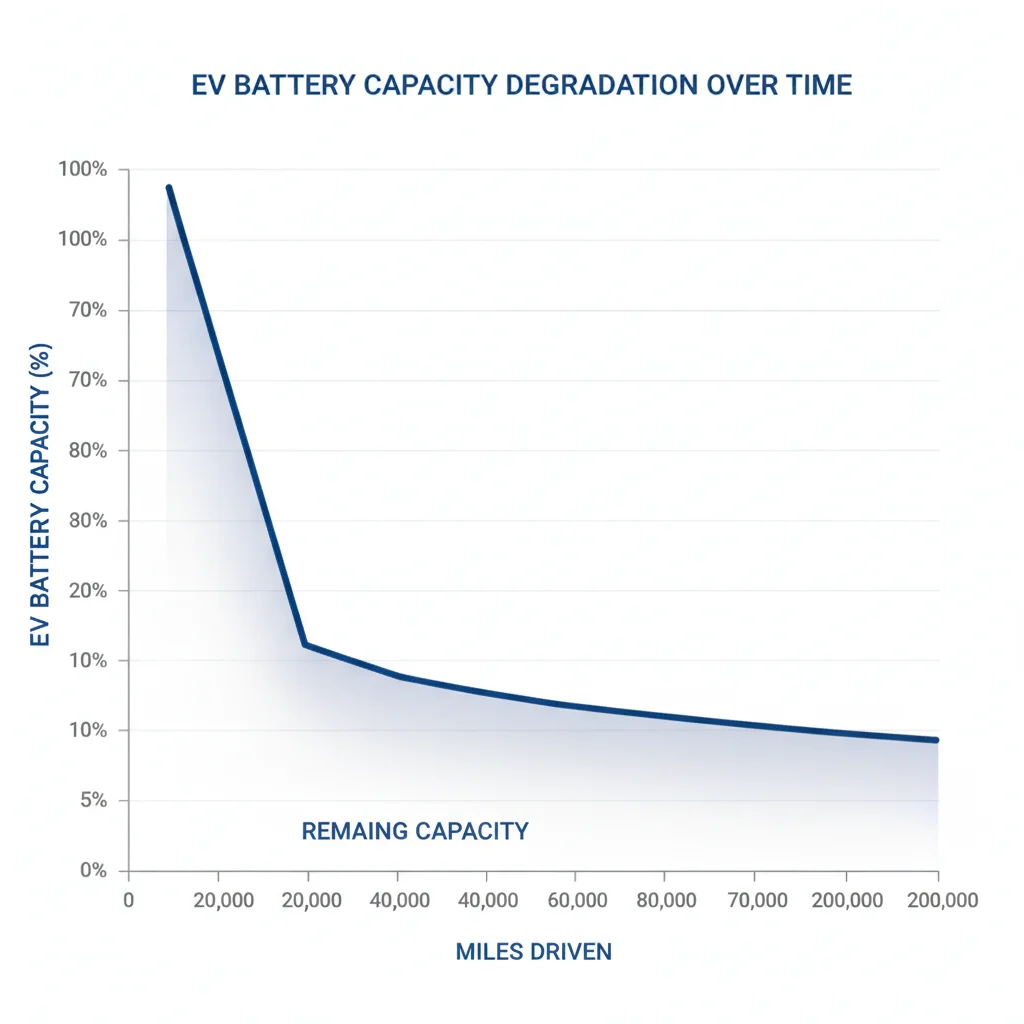
It is also worth noting that degradation is not linear. Most EVs experience the steepest capacity loss in the first 10,000 to 20,000 miles — sometimes called the "break-in" drop — followed by a long plateau where annual losses slow considerably. For the average driver covering 12,000 miles per year, reaching 100,000 miles takes over eight years. Based on current data, that driver can expect to still have a functional, capable battery with meaningful real-world range.
Degradation by Brand and Model: Not All Batteries Age Equally
Broad averages are useful context, but they can mask significant variation between manufacturers and chemistry types. Recurrent's vehicle-level data reveals a wide spread: some models show less than 5% total capacity loss at 100,000 miles, while a handful of older designs have exhibited losses exceeding 20% at the same mileage threshold.
88%
Average battery capacity retained at 100K miles
According to Recurrent Auto's 2023 analysis of over 15,000 real-world EVs.
2.3%
Median annual degradation in early ownership years
Reported by Geotab in a fleet study covering more than 6,000 commercial electric vehicles.
>30%
Capacity loss seen in some first-gen Nissan LEAFs
Passively cooled early LEAF models in hot climates (e.g., Arizona) before 80,000 miles, per owner surveys.
1.6 pp
Extra capacity loss from DCFC-dominant charging
Idaho National Laboratory, 2022 — additional degradation vs. L2-primary charging over 50,000 miles.
90%+
Capacity retention for top-performing Tesla models
Owner-reported data from Plug In America and Recurrent for Model 3/Y at or beyond 150,000 miles.
Tesla vehicles — particularly Model 3 and Model Y — consistently rank among the top performers in long-term retention studies, with many owner-reported figures showing 90% or better capacity at 150,000 miles. Chevrolet's Bolt EV has also performed well in independent tracking, owing in part to its conservative battery management system (BMS) that limits usable charge even at the "100%" setting. Nissan's first-generation LEAF, by contrast, became the cautionary example: early models without active thermal management degraded significantly faster in hot climates, with some Arizona owners reporting losses above 30% before 80,000 miles.
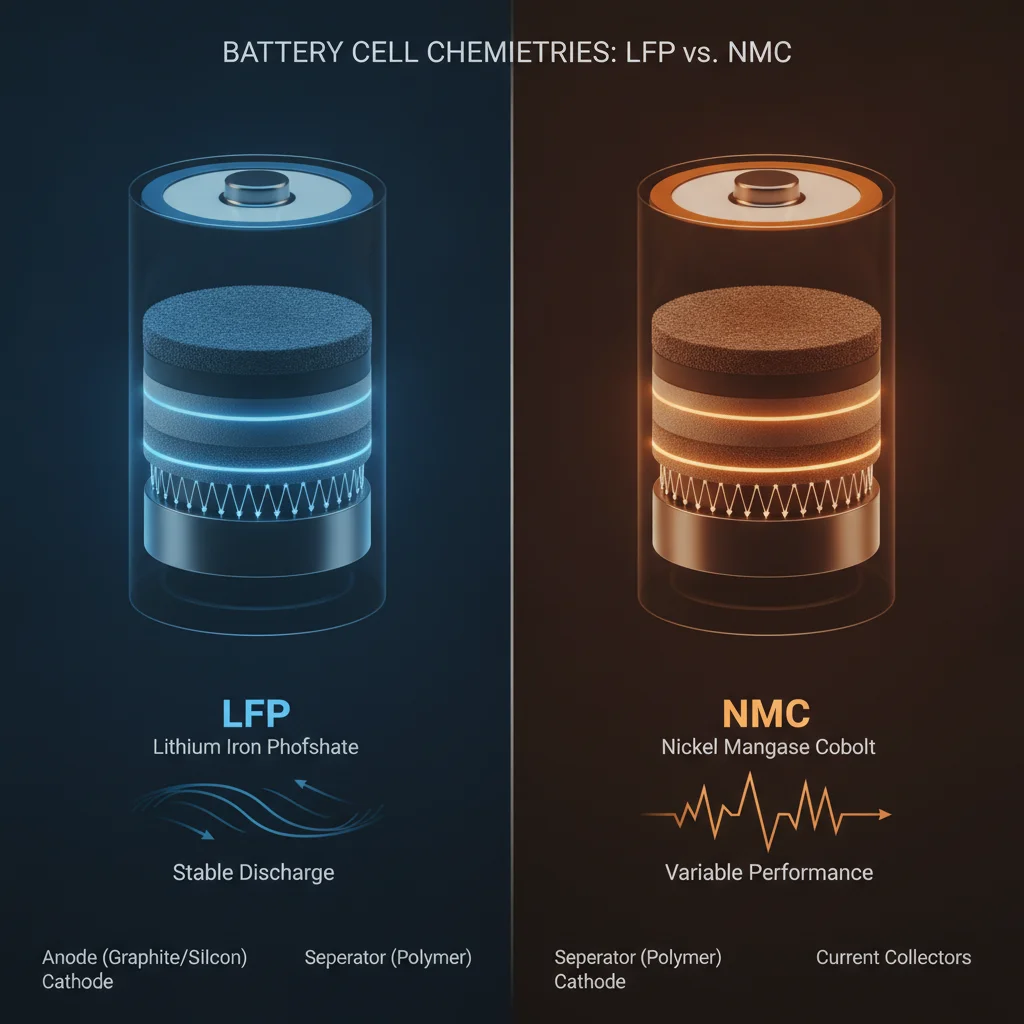
The chemistry matters too. Lithium iron phosphate (LFP) cells — used in Tesla's Standard Range vehicles and many BYD models — degrade more slowly than nickel manganese cobalt (NMC) formulations under repeated full-charge cycles, and they tolerate being held at 100% state of charge far better. NMC packs offer higher energy density (more miles per kilogram) but require more conservative charging habits to maximize longevity.
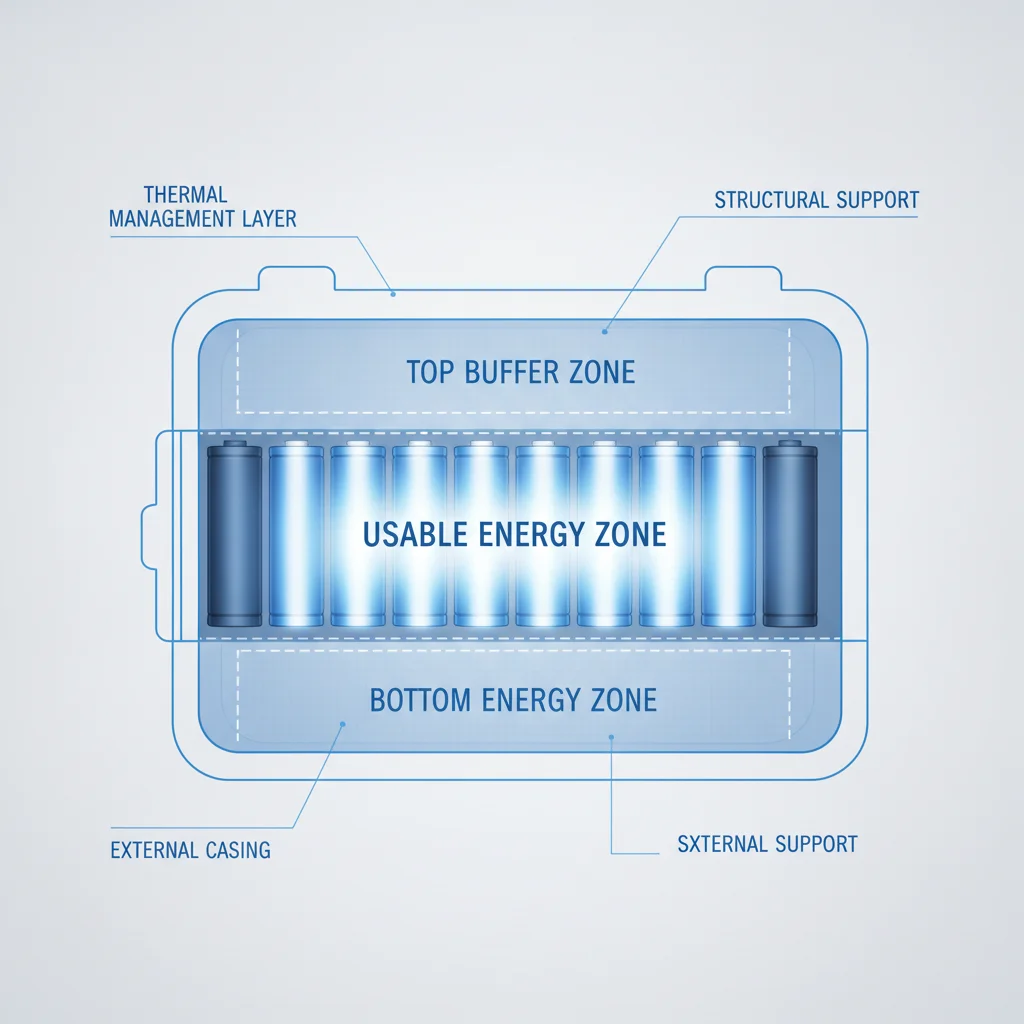
Understanding what usable battery capacity actually means is essential context here: manufacturers already reserve a buffer — typically 5% to 10% at the top and bottom — that the driver never accesses. This buffer partially absorbs degradation in the early years, which is one reason real-world range loss often feels less dramatic than the raw chemistry numbers would suggest.
The Factors That Accelerate or Slow Battery Aging
Degradation is not purely a function of time or mileage — it is driven by specific electrochemical stresses. Knowing which habits accelerate aging gives owners actionable leverage over their battery's long-term health.
Battery Degradation
The gradual loss of a battery's ability to hold its original charge capacity over time and use. It results from chemical changes inside the cells and manifests as reduced driving range.
State of Charge (SoC)
The current charge level of a battery expressed as a percentage of its total usable capacity. A SoC of 80% means the battery holds 80% of what it can store at full charge.
Battery Management System (BMS)
The onboard electronics that monitor and regulate battery temperature, charge rate, and discharge limits. It protects cells from conditions that would accelerate degradation or cause damage.
Lithium Iron Phosphate (LFP)
A battery chemistry known for its thermal stability, long cycle life, and resistance to degradation when charged to 100%. It offers lower energy density than NMC but superior longevity.
Nickel Manganese Cobalt (NMC)
A common EV battery chemistry that provides high energy density — more range per kilogram — but is more sensitive to heat and chronic full-charge states than LFP.
DC Fast Charging (DCFC)
High-power charging (typically 50 kW to 350 kW) that uses direct current to rapidly add range. It introduces more thermal and electrical stress than Level 2 AC charging when used frequently.
Usable Capacity
The portion of a battery's total energy storage that the driver can actually access. Manufacturers reserve a buffer at both the top and bottom to protect cells, so usable kWh is always less than the total pack size.
Thermal Management System
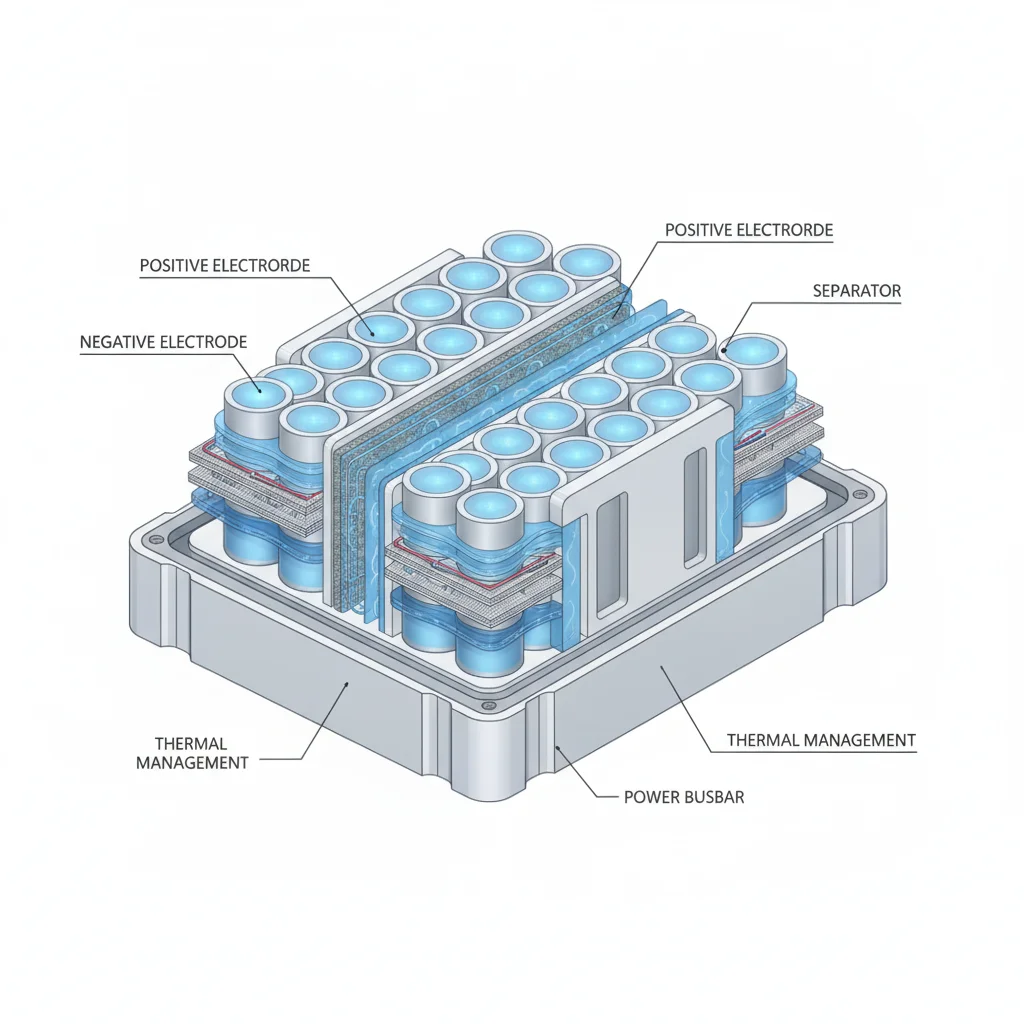
A system — using liquid cooling, air cooling, or heat pump technology — that maintains battery cell temperatures within an optimal operating range during driving and charging.
Heat Is the Primary Accelerant
Elevated temperatures speed lithium-ion degradation more than any other single factor. Parking a vehicle in direct sunlight in a hot climate, operating without a functional thermal management system, or DC fast charging (DCFC) at high ambient temperatures all expose the cells to conditions that accelerate electrolyte breakdown and lithium plating. Geotab's fleet data confirms that EVs operated in climates above 77°F (25°C) show measurably faster degradation than those in temperate zones.
Frequent DC Fast Charging
DCFC delivers high-current power that generates internal heat and mechanical stress on electrode materials. Occasional fast charging poses negligible long-term risk — it is a design requirement modern packs must meet. But daily fast charging as a primary charging method does correlate with slightly accelerated capacity loss over time, particularly with NMC chemistry. A 2022 Idaho National Laboratory study found that DCFC-dominant charging patterns produced approximately 1.6 percentage points more capacity loss over 50,000 miles compared to L2 home charging as the primary method.
Chronic High State of Charge
Keeping a battery at or near 100% state of charge for extended periods creates thermodynamic stress at the cathode. Most manufacturers and BMS software now recommend daily charging to 80%, reserving 100% for days when full range is needed. LFP chemistry is a notable exception — its flat voltage curve means it actually benefits from regular full charges to maintain accurate state-of-charge calibration.
Deep Discharges
Repeatedly running the pack below 10–15% state of charge subjects the anode to litholytic stress that compounds over time. The usable capacity buffer on the low end is designed to prevent the worst of this, but drivers who routinely push to zero before charging are doing measurable long-term harm.
For a detailed breakdown of the habits that protect long-term capacity, see EV battery health practices that preserve range.
How Range Loss Translates to Real-World Driving Impact
Percentage figures are analytically tidy but can be abstract. Translating them into miles makes the practical stakes clearer.
Consider a 2020 Tesla Model 3 Long Range, EPA-rated at 322 miles. If that vehicle retains 88% capacity at 100,000 miles — the fleet average — its effective range drops to approximately 283 miles. That is a 39-mile reduction. For most daily commuting patterns, which average under 40 miles per day nationally, that vehicle remains entirely practical. The calculus changes if you regularly make long highway trips where every mile of buffer matters, or if range anxiety already defines your relationship with the car.
Now consider an older Nissan LEAF with a 40 kWh pack and an EPA rating of 150 miles. A 20% loss — plausible for a passively cooled pack in a warm climate — brings that to 120 miles. At that point, the vehicle's utility starts narrowing meaningfully. The range tier you started in matters: degradation hits harder when there is less range to spare.
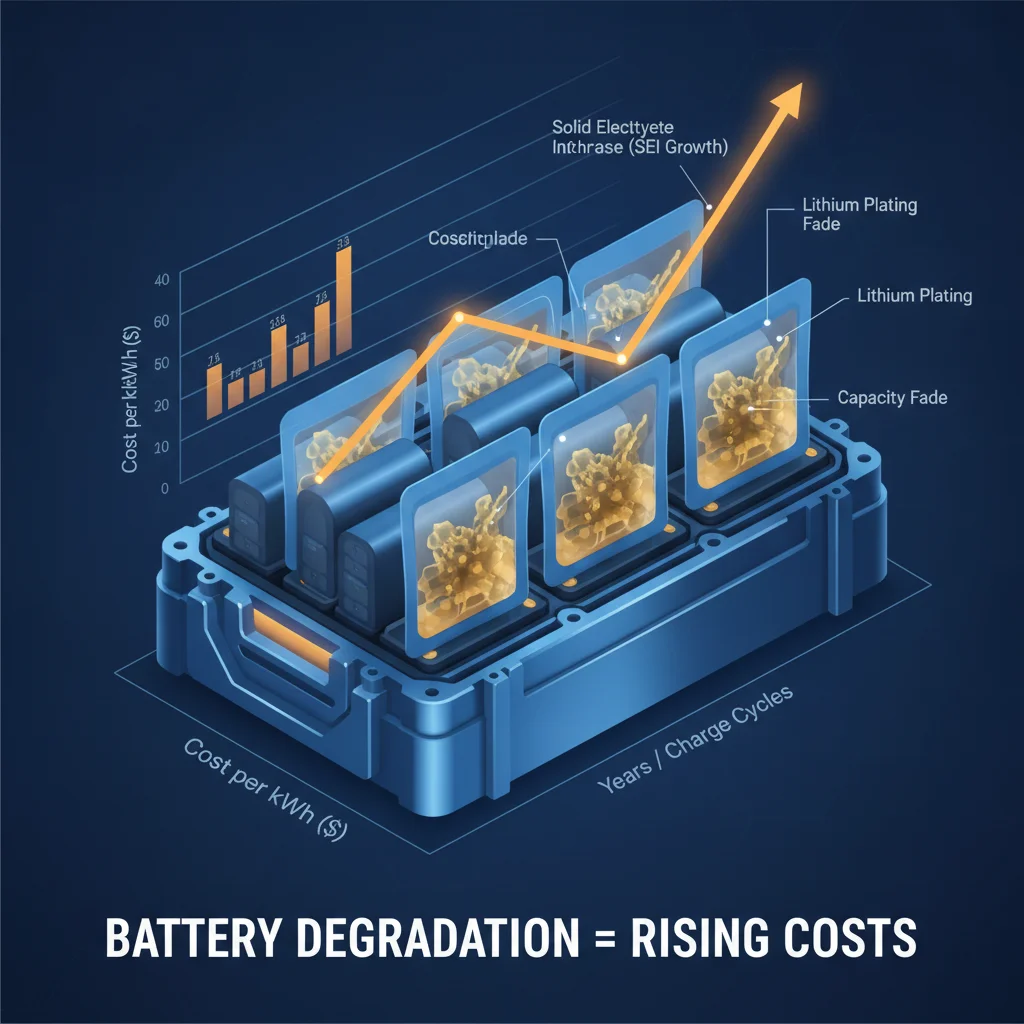
Degradation also has a direct financial consequence beyond utility. As real-world capacity declines, you are paying more per effective mile at the charger — a dynamic explained in detail in how battery degradation affects long-term EV charging costs. And because real-world range already deviates from EPA ratings due to driving speed, weather, and HVAC load, the gap between rated and delivered range can compound over time. Real-world range directly shapes your effective charging cost in ways most buyers do not fully anticipate at purchase.
When Range Loss Becomes a Practical Problem
For most drivers, losing 10–12% of range over 100,000 miles is a manageable reduction. The impact becomes significant when a vehicle's original range was already modest — under 150 miles — or when the owner regularly makes long trips that require the full rated range. Before purchasing a used EV, ask for a battery health report and factor any detected degradation into your range planning.
For high-mileage drivers, the considerations shift further. EV maintenance priorities change after 100,000 miles, and battery health monitoring becomes a more active discipline than it is for average-mileage owners.
Manufacturer Warranties and What They Actually Guarantee
Federal regulations require automakers to warranty EV batteries for at least 8 years or 100,000 miles, whichever comes first. But the threshold for a warranty-covered replacement is important to understand: most manufacturers only cover battery replacement if capacity drops below 70% of original. Some brands — including Hyundai, Kia, and certain Tesla configurations — have set that threshold at 70% for replacement, while offering coverage up to 150,000 miles or 10 years.
Given that the average fleet degrades to around 88% at 100,000 miles, most owners will not approach the replacement threshold under normal use. The warranty functions more as protection against manufacturing defects and premature failure outliers than as a routine expectation of cell replacement. That said, vehicles operated in extreme climates or with particularly aggressive charging patterns represent a smaller population where warranty claims are more likely.
When evaluating a used EV, request a battery health report if the manufacturer or a third-party tool supports it. Tesla's in-vehicle health estimate, Chevrolet's Bolt data via OBD-II readers, and Nissan's LEAF Capacity Bar system all give buyers some visibility into remaining capacity before purchase. A vehicle showing 85% or higher at under 80,000 miles is generally in good shape; one showing below 80% merits closer scrutiny and negotiation leverage on price.
For a broader framework on how to compare EVs honestly — including range ratings, efficiency metrics, and degradation context — see the full picture on EV range. And for ongoing maintenance considerations across the ownership lifecycle, the EV maintenance basics hub provides a structured reference covering what actually needs attention over time.
Recurrent Auto Battery Report
Recurrent tracks real-world battery health across thousands of EVs by model and year. Their free reports give used-car buyers data on how a specific vehicle's battery compares to its peers.
Plug In America Survey Data
Plug In America's long-running owner survey compiles self-reported range and battery data from thousands of EV drivers, offering one of the longest longitudinal datasets on consumer EV battery performance.
EV Battery Degradation Calculator
Several third-party tools let you input your vehicle's make, model, mileage, and climate zone to estimate expected capacity loss and projected range over a defined ownership period.
Geotab EV Fleet Sustainability Report
Geotab's annual analysis of commercial EV fleet data includes one of the most rigorous independent assessments of battery degradation rates by vehicle type and operating conditions.
All claims are backed by peer-reviewed research. Sources on request.