Key Takeaways
BEV vs. PHEV Insurance Risk
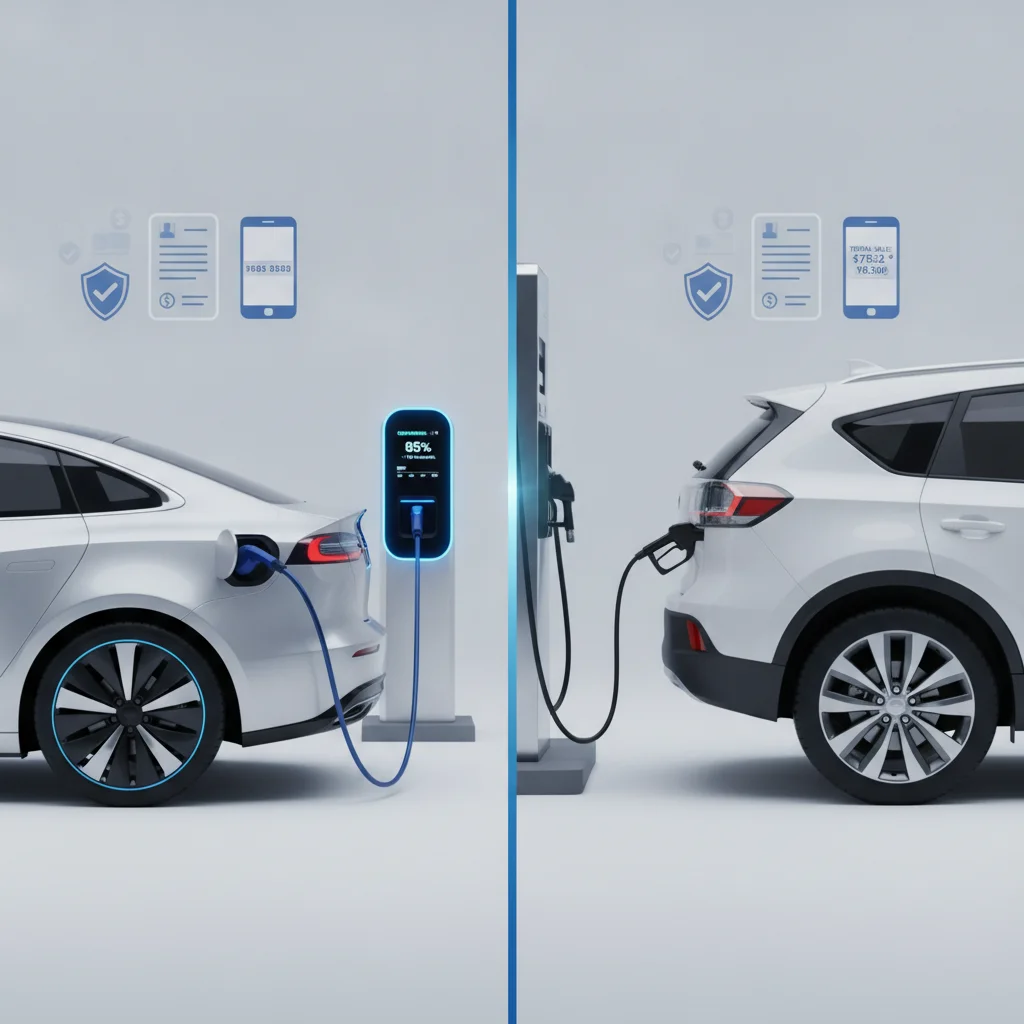
When an insurer prices a battery electric vehicle (BEV) or plug-in hybrid electric vehicle (PHEV), it applies a distinct risk formula to each. BEVs run entirely on electricity and carry higher replacement costs, more complex repair profiles, and no combustion-related risks. PHEVs combine an electric motor with a gasoline engine, creating a hybrid risk picture that touches both worlds. The premium you pay reflects which of these profiles your vehicle falls into.
Actuaries weight BEV risk heavily on battery replacement cost and limited repair facility availability; PHEV models add powertrain complexity risk because insurers must account for both the combustion and electric drivetrain components separately.
Why Vehicle Powertrain Type Changes the Insurance Equation
Auto insurers have spent decades building actuarial models around internal combustion engine vehicles — data-rich environments where repair costs, failure modes, theft rates, and total-loss thresholds are well understood. The arrival of BEVs and PHEVs disrupted that baseline. Each powertrain type introduced new variables that don't map cleanly onto legacy frameworks, forcing underwriters to develop separate risk profiles from scratch.
The result is that two vehicles sitting at the same sticker price and driven by the same person can carry meaningfully different insurance premiums solely because one is a BEV and the other is a PHEV. Understanding why requires a look at the specific risk categories insurers evaluate — and how each vehicle type scores across them.
EVs already cost more to insure than comparable gas vehicles, but the BEV-vs.-PHEV distinction adds another layer that many buyers overlook entirely when shopping for coverage.

The Core Risk Factors Insurers Assess for BEVs
Battery electric vehicles present a concentrated set of risk variables that insurers have had to price carefully as claims data has accumulated over the past several years.
Repair Cost and Parts Availability
BEV collision repairs are consistently more expensive than equivalent ICE repairs, for several reasons. High-voltage battery packs sit low in the chassis, meaning even moderate underbody impacts can trigger battery inspection or replacement protocols. Structural aluminum and advanced composites used in many BEV platforms require specialized tools and techniques. And original equipment manufacturer (OEM) parts for newer BEV models are often sourced through limited channels, extending repair timelines and pushing up costs.
According to CCC Intelligent Solutions' industry repair data, EV repair costs run approximately 25–30% higher per claim than comparable ICE vehicles. That differential feeds directly into collision and comprehensive premiums.
~27%
Higher average EV repair cost vs. ICE
CCC Intelligent Solutions' repair industry data shows EV collision repairs run roughly 25–30% more expensive per claim than comparable internal combustion engine vehicles.
30–50%
Battery pack share of BEV replacement value
Industry analysts estimate the high-voltage battery pack represents 30–50% of a BEV's total replacement value, making it the single largest cost driver in total-loss and major damage claims.
$5K–$20K+
BEV battery replacement cost range
Replacement costs for BEV battery packs range from approximately $5,000 for compact models to over $20,000 for large-format packs in full-size trucks and premium sedans, per OEM service data.
8–25 kWh
Typical PHEV battery pack size
PHEV battery packs are substantially smaller than BEV equivalents, reducing both replacement cost exposure and the likelihood of a battery-triggered total-loss determination.
2–3x
Longer EV repair cycle vs. ICE repairs
Mitchell International's claims data indicates EV repairs take two to three times longer on average than comparable ICE vehicle repairs, driving up rental reimbursement costs and total claim expense.
Battery Valuation and Total-Loss Thresholds
The battery pack is the single most expensive component in any BEV, typically representing 30–50% of the vehicle's total replacement value. This creates a total-loss math problem: a BEV that sustains damage requiring battery replacement may cross the total-loss threshold at a much lower damage severity than an ICE vehicle of equivalent value. Insurers have adjusted their algorithms accordingly, often setting more conservative total-loss triggers for BEV models.
Battery replacement costs vary widely — from roughly $5,000 for smaller packs to over $20,000 for large-format packs in full-size trucks or premium sedans. This range forces underwriters to model battery cost as a distinct line item rather than folding it into a general parts cost estimate.
Certified Repair Network Constraints
Not every body shop is equipped to work on high-voltage EV systems. Many manufacturers require or strongly recommend certified repair facilities for structural or high-voltage work. Fewer certified shops mean longer rental periods during repairs, higher labor costs, and — in some markets — effectively no local repair option. Insurers who operate in regions with thin certified-shop networks may rate BEVs higher to account for this exposure.
Find a Certified Repair Shop Before You Need One
Before finalizing your insurance carrier choice, look up which OEM-certified repair shops in your area are in-network with each carrier you're considering. For BEVs especially, the absence of a certified local shop can mean extended repair timelines and higher out-of-pocket rental costs. Some manufacturers publish certified shop locators on their websites.
Review Your Policy at Each Renewal
EV parts costs and certified repair network availability change faster than in the ICE vehicle market. What was an appropriate coverage limit or a competitive premium at purchase may look very different 12 months later. Set a calendar reminder to request updated quotes from at least two additional carriers at each renewal period.
Theft and Fire Risk
BEV theft rates differ substantially by model. Some high-demand BEV platforms have elevated theft rates due to secondary market demand for parts, while others benefit from software-based immobilization that outperforms traditional ignition-based systems. Fire risk from lithium-ion batteries, while statistically rare, presents a novel claim category — EV battery fires require specialized suppression and may render a vehicle a total loss even after limited flame exposure due to thermal runaway risk. Carriers with significant BEV books have begun pricing this risk into comprehensive premiums.
How PHEV Risk Profiles Differ — and Where They Overlap
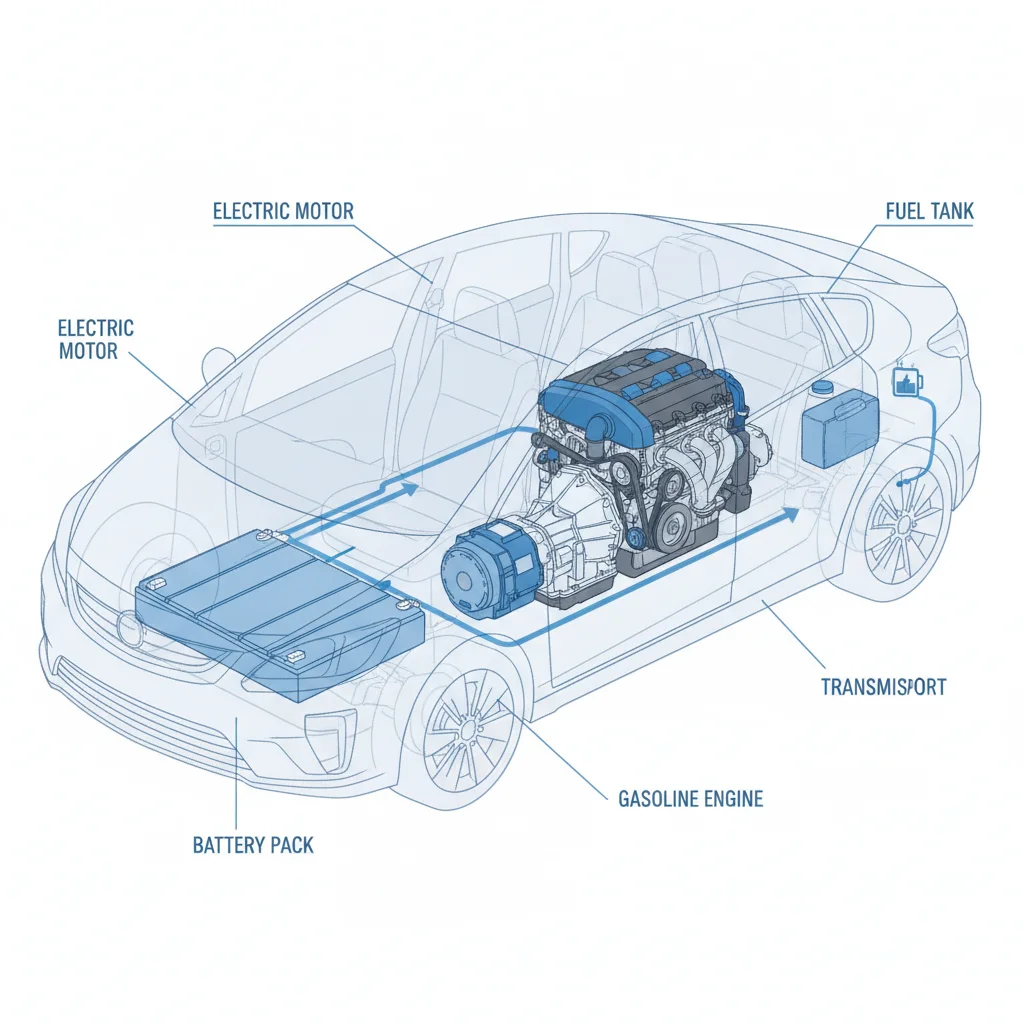
Plug-in hybrid vehicles carry a more complex risk profile precisely because they straddle two powertrain paradigms simultaneously. They are not simply cheaper BEVs; they are a distinct vehicle category with their own actuarial quirks.
Dual Powertrain Complexity
A PHEV technician must be qualified to service both a combustion engine and a high-voltage electric system. That dual-certification requirement is less common in the general repair population, which can extend repair timelines in markets where EV-certified shops are scarce. Labor hours for repairs that touch the powertrain interface — where combustion and electric systems coordinate — can be substantially higher than for either pure-ICE or pure-BEV work.
Insurers have begun tracking PHEV claims specifically to separate their cost profile from both ICE and BEV benchmarks. Early data suggests PHEV repair costs fall between ICE and BEV averages, but the variance is high depending on whether the damage involves the combustion drivetrain, the electric components, or both.
Smaller Battery Packs, Lower Battery Risk
PHEV battery packs are significantly smaller than BEV packs — typically 8–25 kWh compared to 60–100+ kWh for BEVs. This means battery replacement, when required, costs substantially less and is less likely to trigger a total-loss determination. For insurers, this reduces the tail risk that drives BEV premiums upward.
However, PHEV batteries are positioned differently across models, and some configurations place the pack in locations that may be more vulnerable to impact damage than BEV skateboard-style pack layouts. Underwriters evaluate this on a model-by-model basis.
Combustion Components Add ICE-Style Risk Back In
PHEVs retain many of the mechanical failure modes of ICE vehicles: cooling systems, exhaust components, fuel systems, and transmission interfaces can all produce claims that a BEV avoids entirely. This means PHEV owners face a broader range of potential mechanical breakdowns, though comprehensive and collision coverage is not affected by mechanical failure (that falls to extended warranties or service contracts).
For liability and uninsured motorist coverage, PHEV and BEV risk profiles look more similar, since driving dynamics and accident probability are primarily a function of the driver and operating environment rather than powertrain type.
Range Anxiety Doesn't Directly Affect Premiums
Some PHEV owners assume their vehicle's ability to run on gasoline when the battery is depleted reduces their insurance risk profile versus a BEV. For most coverage categories, it doesn't — insurers rate on repair cost, not on whether you might be stranded. However, the smaller battery pack size and lower replacement cost do produce indirect pricing benefits.
Commercial and Rideshare Use Adds Another Layer
If you use a BEV or PHEV for rideshare or delivery, standard personal auto policies typically exclude coverage during commercial use periods. This is not unique to EVs, but the higher repair costs mean the coverage gap is more financially consequential. A rideshare endorsement or commercial policy is essential regardless of powertrain type.
Risk Tier Placement: Where BEVs and PHEVs Land in Carrier Portfolios
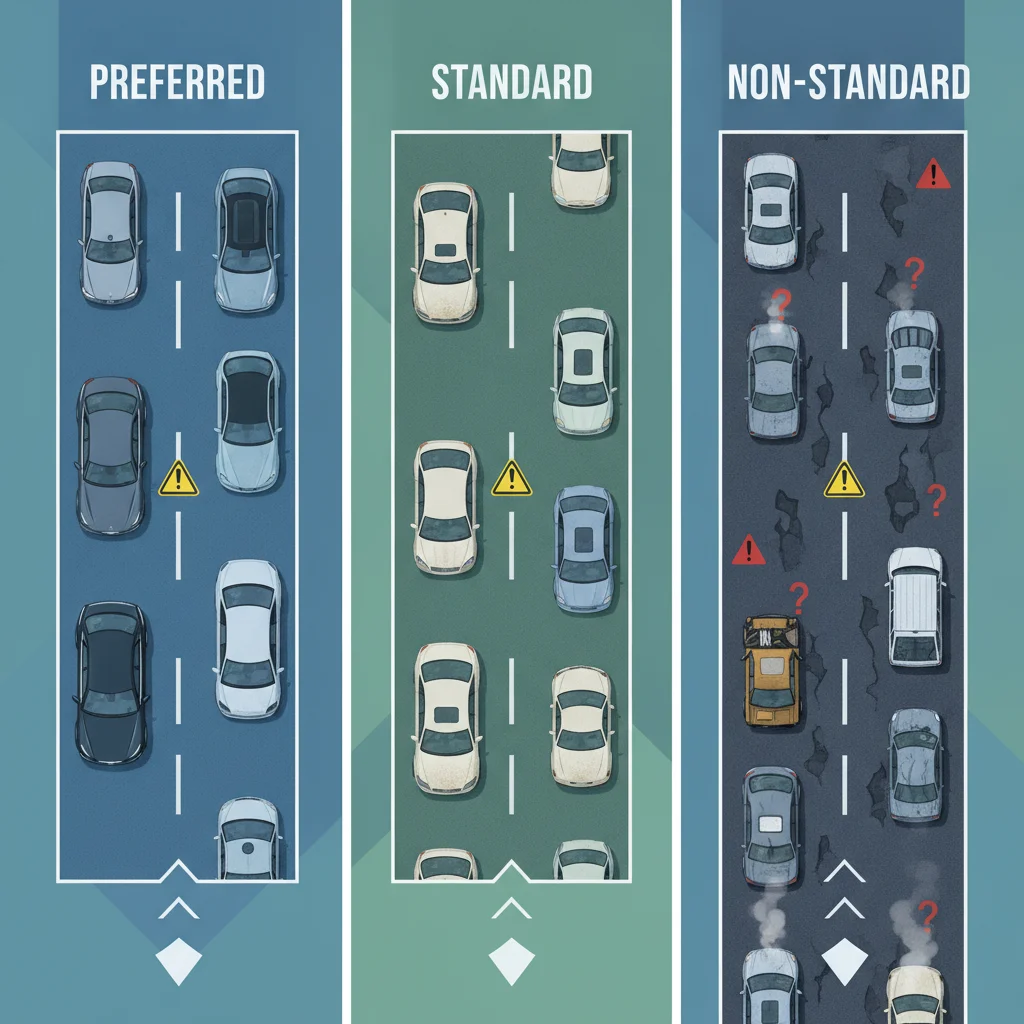
Insurance carriers segment their customers into risk tiers — preferred, standard, and non-standard — based on a combination of driver characteristics and vehicle risk. The vehicle itself can push a driver into a different tier or carrier pool simply by virtue of its repair cost profile.
Understanding how risk tiers work matters especially for EV owners because the vehicle's cost category interacts with driver tier placement to set the base rate. A BEV with an expensive repair profile can effectively narrow the pool of competitive quotes a driver receives, even if that driver has an excellent record.
Some premium BEV models — particularly those priced above $80,000 — may only be actively quoted by a subset of carriers with robust high-value vehicle programs. Others, especially mass-market BEVs in the $35,000–$55,000 range, have enough claims history that most major carriers are comfortable pricing them competitively.
“The EV insurance market is still early. Carriers that invested in building BEV-specific actuarial models are pricing more accurately today, but there's still meaningful spread between carriers — and that spread is wider for BEVs than for any other vehicle segment.”
— Carla Brandt, Senior Auto Actuary, independent insurance consulting practice
PHEVs, by contrast, tend to fall into standard risk pools with most major carriers, since their repair profiles are closer to ICE norms. This translates to more competitive pricing and broader carrier availability for PHEV owners compared to equivalent BEV buyers.
See also: how EV policies differ from conventional auto coverage in structure and cost.
Battery Coverage: The Policy Detail That Matters Most
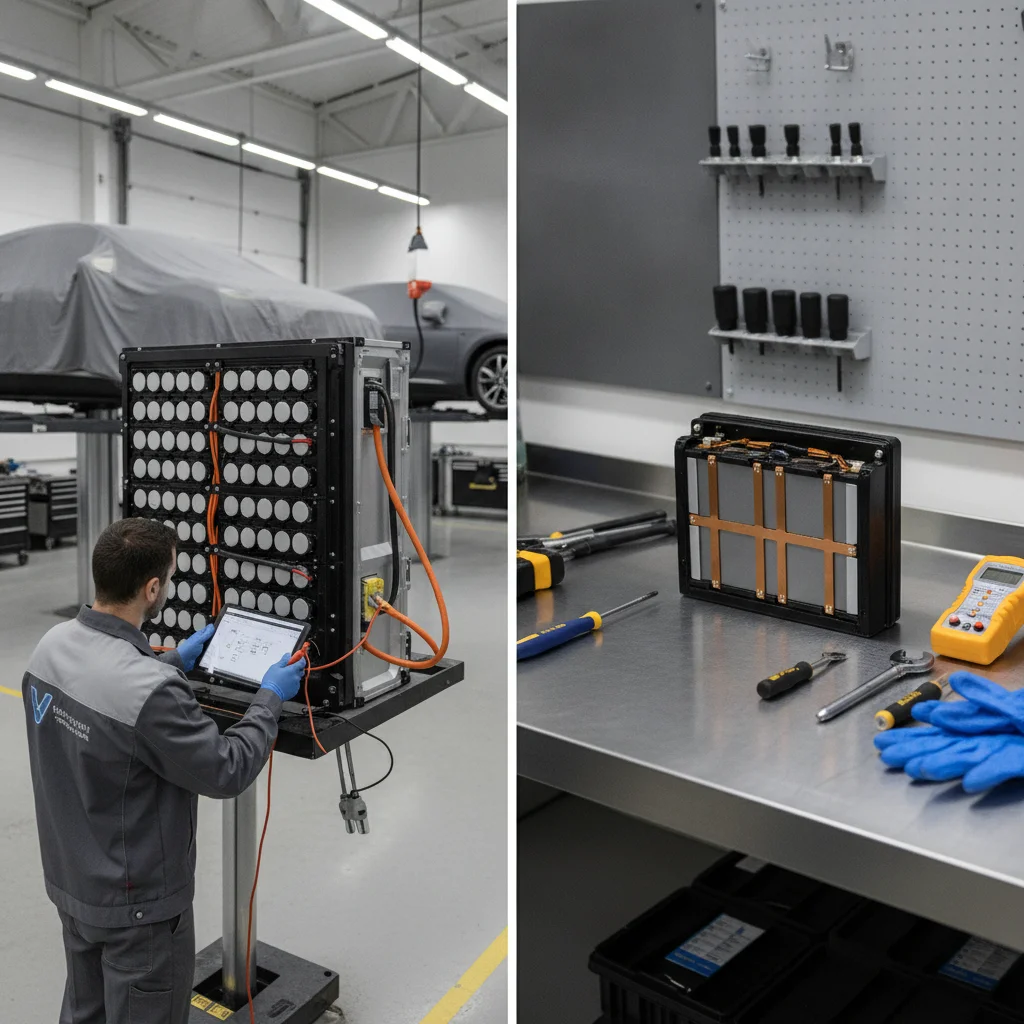
Regardless of whether a vehicle is a BEV or PHEV, battery coverage deserves specific scrutiny when reviewing policy language. Standard policies cover battery damage resulting from covered perils — collision, fire, theft, flood. What they do not cover is capacity degradation, manufacturing defects (which fall to the manufacturer warranty), or software-related battery management failures.
The distinction becomes consequential in several scenarios:
- Flood damage: A battery pack submerged in saltwater may appear functional initially but suffer accelerated degradation weeks later. Whether that latent damage qualifies as a covered claim is a policy-specific determination, and the answer varies across carriers.
- Collision-triggered battery inspection: Many OEMs require battery inspection and potential replacement after any impact above a certain threshold, even if the pack shows no visible damage. Whether insurers cover a precautionary replacement versus an evidenced-damaged replacement is not uniformly addressed in standard policy language.
- Thermal event follow-on damage: If a battery begins thermal runaway after a collision, the resulting fire damage may be covered under both collision (the triggering event) and comprehensive (fire). How carriers split these perils matters for deductible calculations.
For PHEV owners, battery-specific coverage concerns are lower in severity but not absent. A damaged PHEV pack that forces the vehicle to run exclusively on its combustion engine may or may not constitute a covered loss depending on whether the vehicle remains operable. Reviewing policy language with your agent before a claim occurs is worthwhile.
Used EV buyers face additional battery risk considerations beyond what applies to new vehicle purchasers.
How to Use This Knowledge When Shopping for Coverage
Armed with an understanding of how insurers differentiate BEV and PHEV risk, you can approach coverage shopping more strategically than the average buyer.
Quote Widely — The BEV Premium Gap Is Not Uniform
Different carriers have different claims histories, different actuarial models, and different appetites for EV risk. One carrier may rate a BEV 40% above its ICE equivalent; another with more EV exposure may rate it 18% above. The only way to find the best rate is to collect multiple quotes rather than defaulting to your existing carrier.
Ask Specifically About Battery Coverage Language
Request a plain-language explanation of how your carrier handles battery damage that results from covered perils, particularly in scenarios where damage is not immediately evident. If the policy language is ambiguous, ask for a written endorsement clarifying coverage before you bind.
Consider the Certified Shop Network in Your Area
Before selecting a carrier, confirm which certified repair facilities in your area are in-network. A carrier with a generous premium rate but limited certified shop access in your market may result in worse claims outcomes than a slightly higher-priced carrier with strong local network coverage.
Revisit Coverage Limits Annually
BEV values have been volatile, and parts costs continue to evolve as supply chains mature. What was an appropriate coverage limit at purchase may be misaligned with replacement reality one year later. Annual reviews are more important for BEV and PHEV owners than for ICE vehicle owners.
If you want to understand the full financial picture of owning either vehicle type, it's worth reviewing how the federal tax credit treats BEVs and PHEVs differently alongside your insurance costs.
Find a Certified Repair Shop Before You Need One
Before finalizing your insurance carrier choice, look up which OEM-certified repair shops in your area are in-network with each carrier you're considering. For BEVs especially, the absence of a certified local shop can mean extended repair timelines and higher out-of-pocket rental costs. Some manufacturers publish certified shop locators on their websites.
Review Your Policy at Each Renewal
EV parts costs and certified repair network availability change faster than in the ICE vehicle market. What was an appropriate coverage limit or a competitive premium at purchase may look very different 12 months later. Set a calendar reminder to request updated quotes from at least two additional carriers at each renewal period.
All claims are backed by peer-reviewed research. Sources on request.