
Key Takeaways
Option A
Garaging at Home
The lower-risk, lower-premium parking choice.
Best for: Homeowners or renters with private garage access who want to maximize every possible insurance discount.
Option B
Street Parking
The convenient but statistically riskier alternative.
Best for: Urban dwellers without off-street parking options who need to understand the rate impact they're absorbing.
If you have garage access and want to lower your premium
Garaging at Home
Declaring a private garage is one of the few passive premium reducers available to you — no driving behavior change required.
If you live in a dense urban area with no off-street parking
Street Parking
You can't choose what doesn't exist, but you can offset the rate impact by shopping multiple carriers and increasing your deductible on comprehensive coverage.
If you're comparing rentals or homes and insurance cost matters
Garaging at Home
A unit with private garage access can generate enough insurance savings over time to offset a modest rent premium, especially in high-theft ZIP codes.
If you drive a high-value or frequently stolen vehicle
Garaging at Home
Insurers price theft and comprehensive risk heavily for desirable vehicles; a garaged location meaningfully reduces those exposure scores.
If you split nights between a garage and street parking
Garaging at Home
If your primary overnight location is a private garage, you should declare it honestly — but discuss mixed-use situations with your agent to ensure accurate representation.
Why Insurers Care Where You Park Overnight
When you apply for or renew an auto insurance policy, your carrier asks a question that surprises many drivers: where is the vehicle principally garaged? It sounds bureaucratic, but the answer feeds directly into underwriting models that help price your risk. Your car's overnight parking location isn't just logistical data — it's a proxy for a cluster of risks that actuaries have been tracking for decades.
The short version: a vehicle parked on a public street is exposed to more potential adverse events per year than one locked inside a private structure. Hit-and-run incidents, door-ding damage, vandalism, catalytic converter theft, and weather-related claims all happen at higher rates for street-parked vehicles. Insurers know this, and they price accordingly.
But the relationship between parking location and premium is more nuanced than a simple garage-discount checkbox. It intersects with your ZIP code's crime index, the age and value of your vehicle, which coverages you carry, and how your carrier's proprietary rating algorithm weights each factor. Understanding the mechanics helps you represent your situation accurately — and potentially identify savings you've been leaving on the table.

It's also worth noting that parking location is just one thread in a larger fabric of rating variables. As we explore in our guide to how the car you drive shapes the price you pay to insure it, the make, model, theft rate, and repair cost of your vehicle often carry more weight than any single environmental factor. Parking location amplifies or moderates those vehicle-level risks rather than overriding them.
The Risk Profile of Each Parking Situation
To understand the rate difference, it helps to think the way an underwriter does. They're not making a moral judgment about street parking — they're assessing the statistical probability that a claim will be filed under each coverage type. Let's walk through the exposures that differ meaningfully between a private garage and a public street.
Comprehensive Coverage Exposure
Comprehensive claims — covering theft, vandalism, weather events, and falling objects — are where the parking location gap is widest. A car sitting on a street overnight is accessible to anyone passing by. Catalytic converter theft, in particular, has surged since 2020, with the National Insurance Crime Bureau (NICB) reporting theft rates climbing over 1,000% in some metro areas between 2019 and 2022. A garaged vehicle eliminates most of this exposure by adding a physical barrier and reducing visibility to opportunistic thieves.
Weather is another factor. Hailstorms, flash flooding, and falling tree limbs cause billions in comprehensive claims each year. A vehicle inside an enclosed garage is largely shielded from hail and debris, while a street-parked car is fully exposed. In hail-prone states like Colorado, Kansas, and Texas, this difference alone can drive meaningful premium variation.
Collision Coverage Exposure
Street-parked cars face a higher frequency of low-speed collision damage that a garaged vehicle simply can't encounter — sideswipes from passing cars, shopping carts, cyclists, and most notably, hit-and-run events that leave the insured driver holding the repair bill. The Insurance Research Council estimates that roughly one in six drivers nationwide is uninsured, meaning a hit-and-run on a public street has a meaningful probability of becoming a collision or uninsured motorist claim.
Garages aren't collision-risk-free — backing into a door frame is a genuine hazard — but the frequency and severity of incidents is structurally lower.
| Criterion | Garaging at Home | Street Parking |
|---|---|---|
| Theft exposure | Low — physical barrier deters access | High — fully accessible to passersby |
| Vandalism risk | Minimal — out of public sight | Elevated — visible and accessible overnight |
| Hail / weather damage | Very low — enclosed structure provides shelter | Full exposure to hail, flooding, debris |
| Hit-and-run risk | Near-zero while parked | Meaningful — occurs in traffic lanes and curb areas |
| Catalytic converter theft | Low — locked space reduces opportunity | High — one of the fastest-growing claim types |
| Comprehensive premium impact | Generally lower rates | Generally higher rates |
| Collision premium impact | Modestly lower — fewer low-speed incidents | Modestly higher — sideswipes, door dings more common |
| Disclosure requirement | Must accurately list as primary garage | Must list actual street parking address |
| Anti-theft discount eligibility | Available — compounds with garage benefit | Available — meaningful offset for street risk |
Liability Exposure
Your liability coverage is tied to where you drive, not where you park, so parking location has minimal direct impact here. However, some insurers consider whether the vehicle is stored in a high-traffic urban area when assessing overall risk territory, which can influence the territory multiplier applied to your entire policy.
1,000%+
Catalytic converter theft increase, 2019–2022
The National Insurance Crime Bureau reported over a tenfold rise in catalytic converter theft nationally between 2019 and 2022, disproportionately affecting street-parked vehicles.
1 in 6
U.S. drivers estimated to be uninsured
According to the Insurance Research Council, roughly one in six drivers lacks insurance coverage, raising the financial stakes of a street-level hit-and-run collision.
$400/yr
Potential premium savings from switching to garage
Drivers in high-theft urban markets have reported annual premium reductions of up to $400 after updating their listed parking location from street to private garage.
10%
Rule of thumb for dropping comprehensive
Industry guidance suggests reconsidering comprehensive coverage when the annual premium plus deductible approaches 10% of the vehicle's actual cash value.
How Much Does It Actually Affect Your Quote?
The honest answer is: it depends, and the range is wide. There's no universal garage discount percentage that all insurers apply. Rating algorithms are proprietary, and the weighting of parking location varies by carrier, state, and the specific coverages in question.
That said, industry data and carrier filings give us useful reference points. Drivers in dense urban markets — New York City, Chicago, Los Angeles — who move from street parking to a private garage have reported premium reductions of $100 to $400 per year on policies with full comprehensive and collision coverage. In lower-theft suburban markets, the difference may be negligible on comprehensive but still visible on vehicle theft-related surcharges.
The impact is most pronounced when:
- Your vehicle has a high theft rate. Models like the Honda Civic, Chevrolet Silverado, and Hyundai Sonata consistently appear on NICB's most-stolen lists. Insurers may apply steeper location adjustments for these vehicles.
- You're in a high-crime ZIP code. Your parking location is rated at the ZIP code level. A garage in a neighborhood with a high vehicle crime index still earns credit over street parking, but the territory risk floor is higher for everyone in that area.
- You carry low deductibles. The lower your comprehensive and collision deductibles, the more the insurer is exposed to small claims — and the more parking location risk matters to them.

It's also worth understanding that insurers don't just ask about garage versus street. Many ask for the specific parking type: enclosed private garage, open carport, private driveway, public lot, or street. Each step down from an enclosed structure typically moves you toward a slightly higher risk classification, though the sharpest break is between off-street and on-street.
Carports and Driveways: The Middle Ground
Not every off-street option is an enclosed garage. Carports offer weather protection for hail and light debris but provide no security barrier against theft or vandalism. Private driveways offer slightly less foot-traffic exposure than a public street but no weather shelter. Most insurers distinguish between these options in their application questions, so listing your actual parking type — not just "off-street" — matters. When in doubt, call your agent and describe your exact situation rather than guessing at which box to check.
The Accuracy Obligation: What You Must Disclose
Some drivers, aware that a garaged address produces a lower quote, are tempted to list a relative's suburban address with a garage as their primary parking location — even though the car actually lives on a city street. This practice, known informally as "rate evasion" or more formally as material misrepresentation, is insurance fraud. It can result in claim denial, policy cancellation, and in severe cases, prosecution.
The insurer's exposure changes meaningfully based on where the car is actually parked. If you declare a low-risk suburban garage but park on a high-crime urban street, you're paying a premium that doesn't reflect the risk the insurer is actually absorbing. When a claim occurs, investigators can and do verify parking location through a range of means: incident location, GPS data if telematics is installed, photos, and witness statements.
The practical guidance here is straightforward: list your actual, principal overnight parking location. If you use your car at multiple addresses — say, a city apartment during the week and a suburban home on weekends — discuss that with your agent. Most carriers have established protocols for mixed-use situations, and some will rate based on the primary address with a disclosure of the secondary one. Honest disclosure protects you at claim time, which is the only moment your coverage actually matters.
If your situation is genuinely mixed — for example, you're a remote worker who recently moved but kept the same insurer — update your policy promptly. Rating territory and parking location changes can affect your premium going forward, but they typically don't trigger retroactive issues if you disclose promptly and in good faith.
Practical Steps to Optimize Your Rate Within Your Real Situation
Whether you park in a garage or on the street, there are legitimate strategies for managing the cost impact of your parking situation.
If You Have Garage Access
Make sure your policy reflects it. This sounds obvious, but drivers who move and update their address sometimes fail to specify the parking type at the new location. When you notify your insurer of an address change, confirm you're also updating the listed parking type. If you recently transitioned from renting to owning a home with a garage, that's worth a proactive call to your agent — not just an address update online.
If You Park on the Street
You have fewer levers, but they're not nonexistent:
- Raise your comprehensive deductible. If you're paying for low-deductible comprehensive coverage on a vehicle worth $8,000, consider whether a higher deductible better matches your actual financial risk tolerance. A jump from a $250 to a $1,000 comprehensive deductible can cut that coverage's cost significantly.
- Add anti-theft devices. A visible steering wheel club or a GPS tracker qualifies for discounts at many carriers. Some insurers offer meaningful reductions for aftermarket immobilizers or factory-installed alarm systems.
- Shop by carrier, not just price. Different insurers weight street parking differently. A carrier that's underwritten more urban risk may be more competitive for a city dweller than one whose book of business skews suburban.
- Evaluate your comprehensive coverage need. On older, lower-value vehicles, carrying comprehensive at all may not be cost-effective regardless of where you park. Use the general rule of thumb: if the annual comprehensive premium plus deductible approaches or exceeds 10% of the vehicle's actual cash value, the math may favor dropping it.
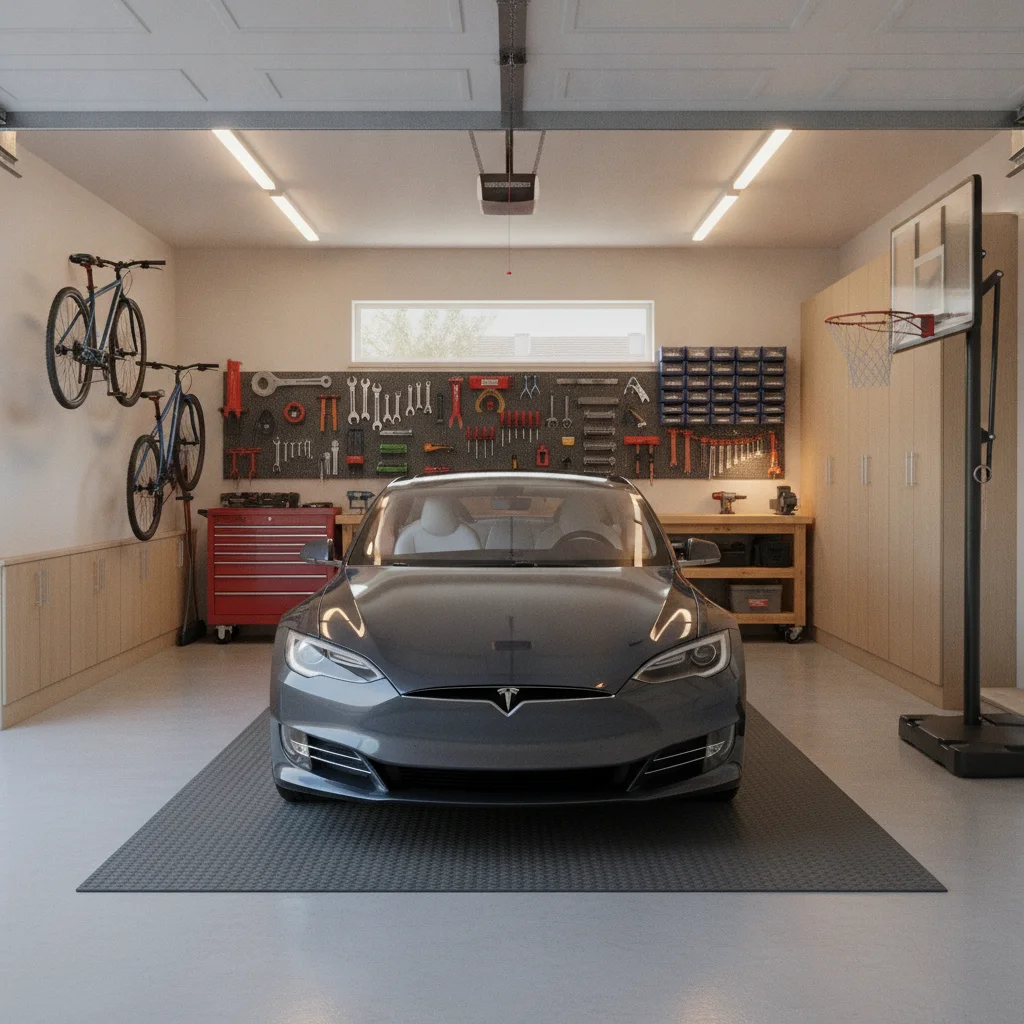
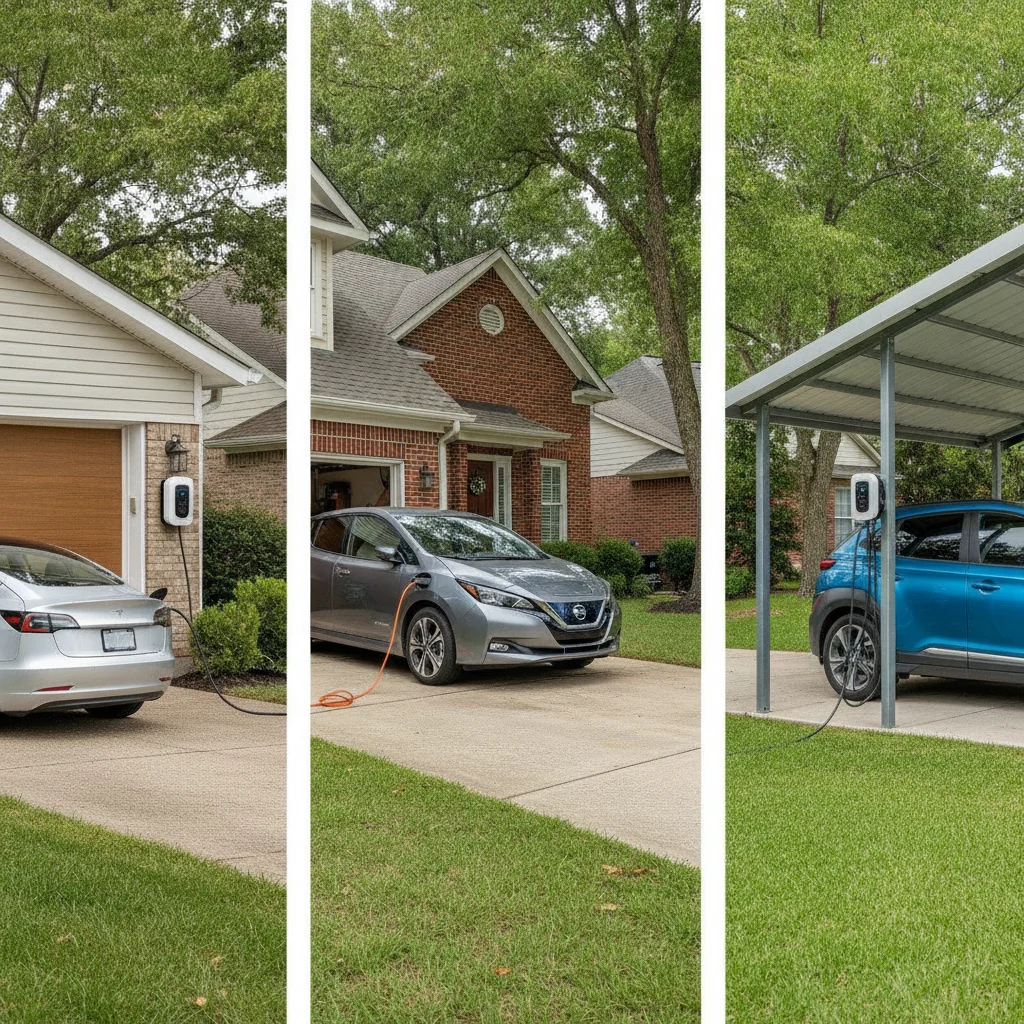
For EV owners, parking location intersects with charging infrastructure as well as insurance. Garage, driveway, or carport access shapes your home charging setup in ways that compound the financial and practical advantages of off-street parking. And if you're curious how geography broadly affects what EV owners pay, where you live affects EV insurance rates in ways that overlap with the parking location discussion here.
The Bottom Line: Location Is a Real Variable, Not a Loophole
The gap between garaging your car and leaving it on the street is real — actuarially documented, consistently priced, and carrier-agnostic in direction even when it varies in magnitude. Drivers who have honest access to a private garage and fail to declare it are paying more than they need to. Drivers who declare garage access they don't actually use are skating toward fraud and claim vulnerability.
For the large share of American drivers who simply don't have a choice — dense urban renters, apartment dwellers in markets where off-street parking is scarce or prohibitively expensive — the parking situation becomes one of several manageable risk factors rather than a binary savings switch. Adjusting deductibles, adding anti-theft measures, and shopping carriers that specialize in urban risk can each shave cost at the margins.
The deeper lesson is that auto insurance pricing is a mosaic of factors, each contributing a piece of your final premium. Parking location is a meaningful tile in that mosaic, but it sits alongside your vehicle's profile, your driving history, your coverage selections, and your ZIP code's broader risk environment. Understanding how these factors interact — rather than fixating on any single one — is how you build a policy that's both adequately protective and reasonably priced.
For a fuller picture of how the vehicle itself shapes your quote, see our analysis of how the car you drive shapes the price you pay to insure it. The car and the parking location together form the physical risk profile your insurer prices — understanding both gives you the clearest view of where your premium dollars are actually going.

All claims are backed by peer-reviewed research. Sources on request.