Key Takeaways
EV Battery Insurance Coverage
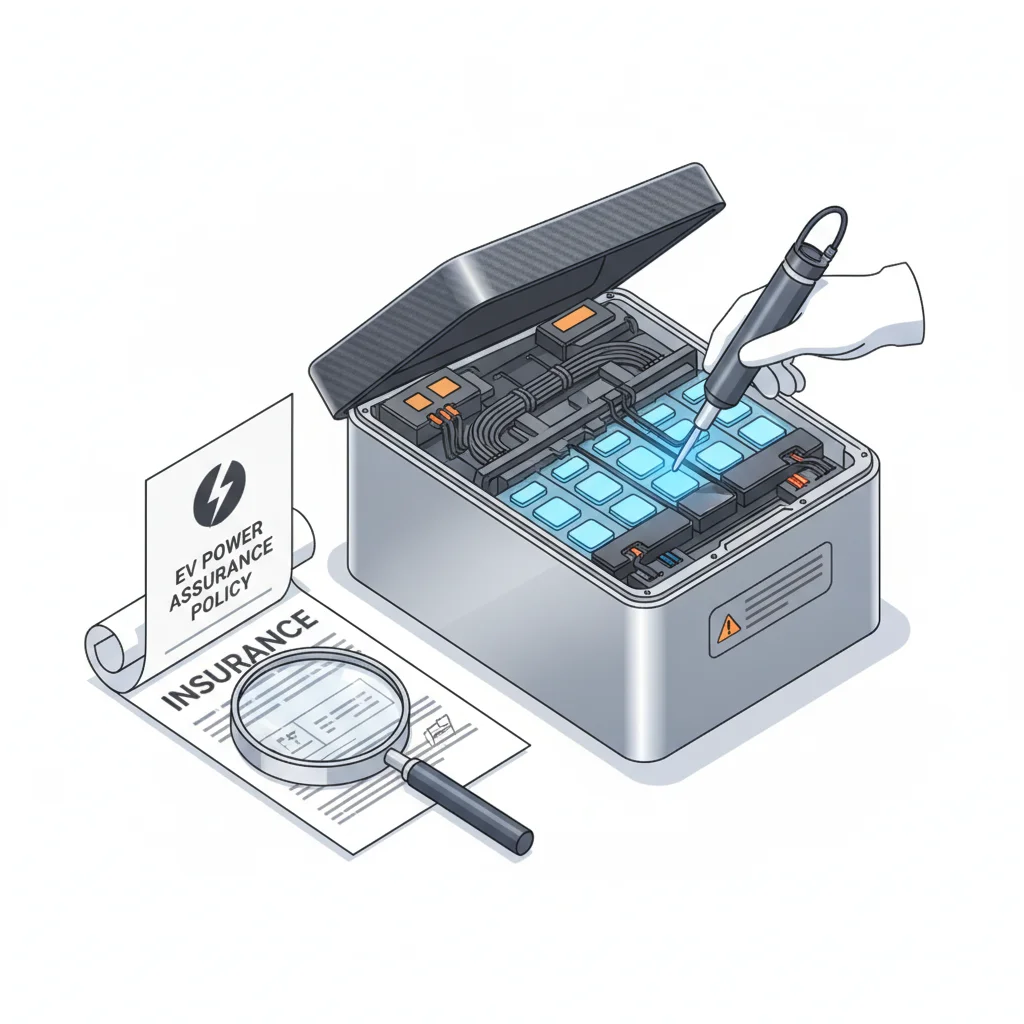
EV battery insurance coverage refers to the protection an auto insurance policy extends to an electric vehicle's high-voltage battery pack — its most expensive single component. Standard auto insurance policies may cover battery damage caused by a collision or certain perils like fire or theft, but they typically do not cover degradation, manufacturing defects, or charging-related failures. Whether and how a battery is covered depends heavily on the specific policy language, coverage types selected, and the insurer.
High-voltage traction batteries in EVs are classified as integral vehicle components, meaning their replacement cost is factored into total loss calculations — which can trigger a total-loss determination even when the rest of the vehicle is structurally intact.
Why EV Battery Coverage Is Its Own Problem
When most drivers think about auto insurance, they picture coverage for fender benders, theft, and hail damage. That mental model works reasonably well for conventional internal combustion vehicles. It starts to break down the moment you add a battery pack that costs more than many used cars.
The traction battery in a modern electric vehicle — the large, flat pack that powers the motor and defines the car's range — typically represents 30% to 50% of the vehicle's total manufacturing cost. For a mid-range EV priced around $45,000, that translates to a battery replacement price anywhere from $10,000 to $22,000 at current rates, depending on the brand, chemistry, and capacity. Luxury EV batteries can run considerably higher.
Standard auto insurance policies were not written with this component in mind. The policy language was largely codified before mass-market EVs existed, and many insurers have been slow to update their products to reflect how different EV repair economics really are. The result is a coverage landscape full of ambiguity — and costly surprises for owners who assume they're fully protected.
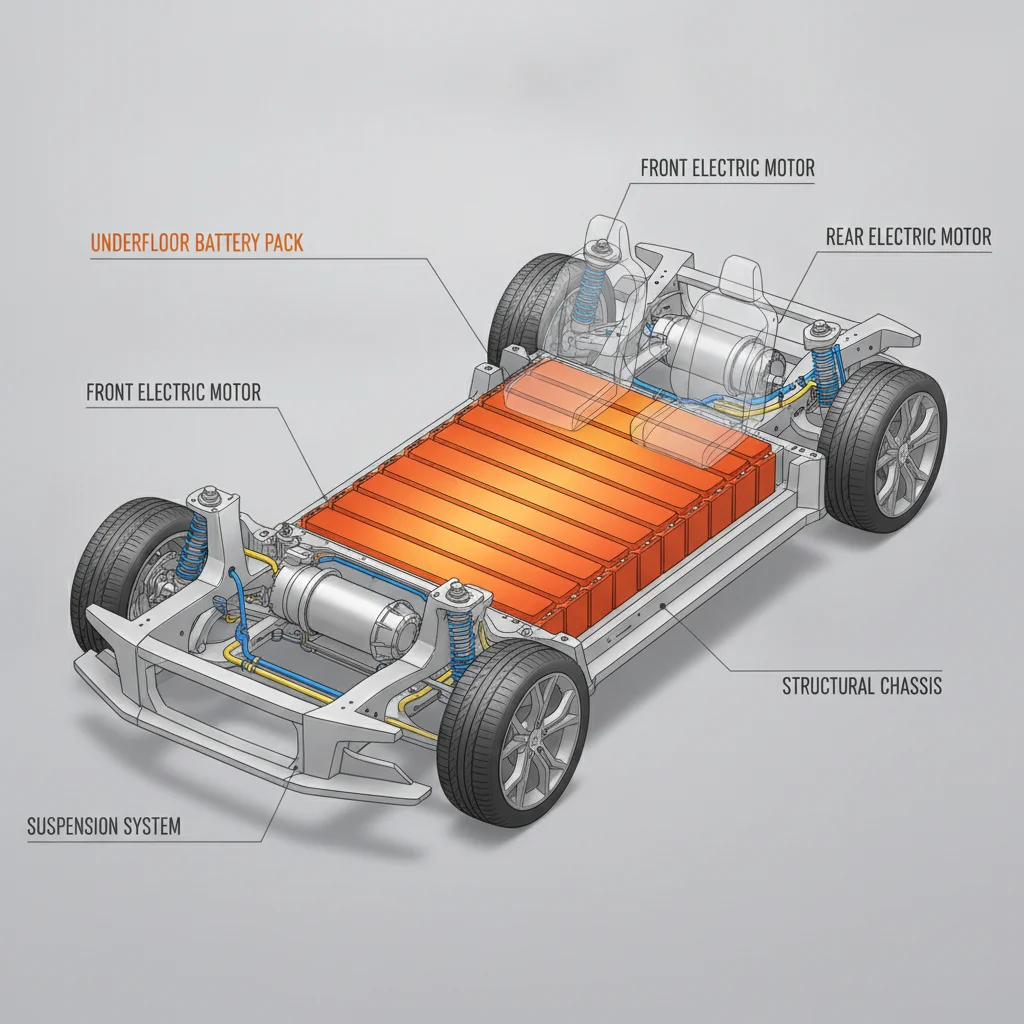
Understanding where your policy stands requires breaking down the types of coverage you carry, what triggers each type, and where battery-specific exclusions lurk in the fine print. For a broader look at how EV insurance differs structurally from conventional auto coverage, see EV Insurance vs. Traditional Auto Insurance: How the Policies Differ.
What Standard Coverage Types Actually Do (and Don't) Cover
The two core physical damage coverages on any auto policy are collision and comprehensive. Both can apply to EV battery damage — under specific circumstances.
Collision Coverage
Collision coverage pays for damage to your vehicle resulting from an impact with another vehicle or object, regardless of fault. If you're in an accident that physically damages the battery pack — say, a rear-end collision that compresses the undercarriage — collision coverage should pay for repair or replacement of the battery, minus your deductible. The same applies if a single-car accident damages the pack.
The key caveat: the damage must be sudden and accidental, directly traceable to the collision event. Insurers will require documentation, and in complex cases involving high-voltage systems, may send a specialist adjuster or require teardown inspection to confirm the battery was damaged by the accident and not by pre-existing degradation.
Comprehensive Coverage
Comprehensive covers damage from events other than collisions — fire, theft, vandalism, falling objects, flooding, and certain weather events. This is where EV battery coverage gets more complicated.
- Fire: Battery fires are covered under comprehensive in most cases, though some insurers have begun scrutinizing thermal runaway events to determine whether a manufacturing defect (excluded) contributed to the fire.
- Flooding: Water ingress into a battery pack from flood events is generally covered under comprehensive — but damage from using a flooded charger or improper exposure may be treated differently depending on the policy.
- Theft: A stolen vehicle is covered. But standalone battery theft — increasingly a concern as battery recycling markets grow — may or may not be covered depending on how your policy defines removable components.
Collision vs. Comprehensive: A Quick Distinction
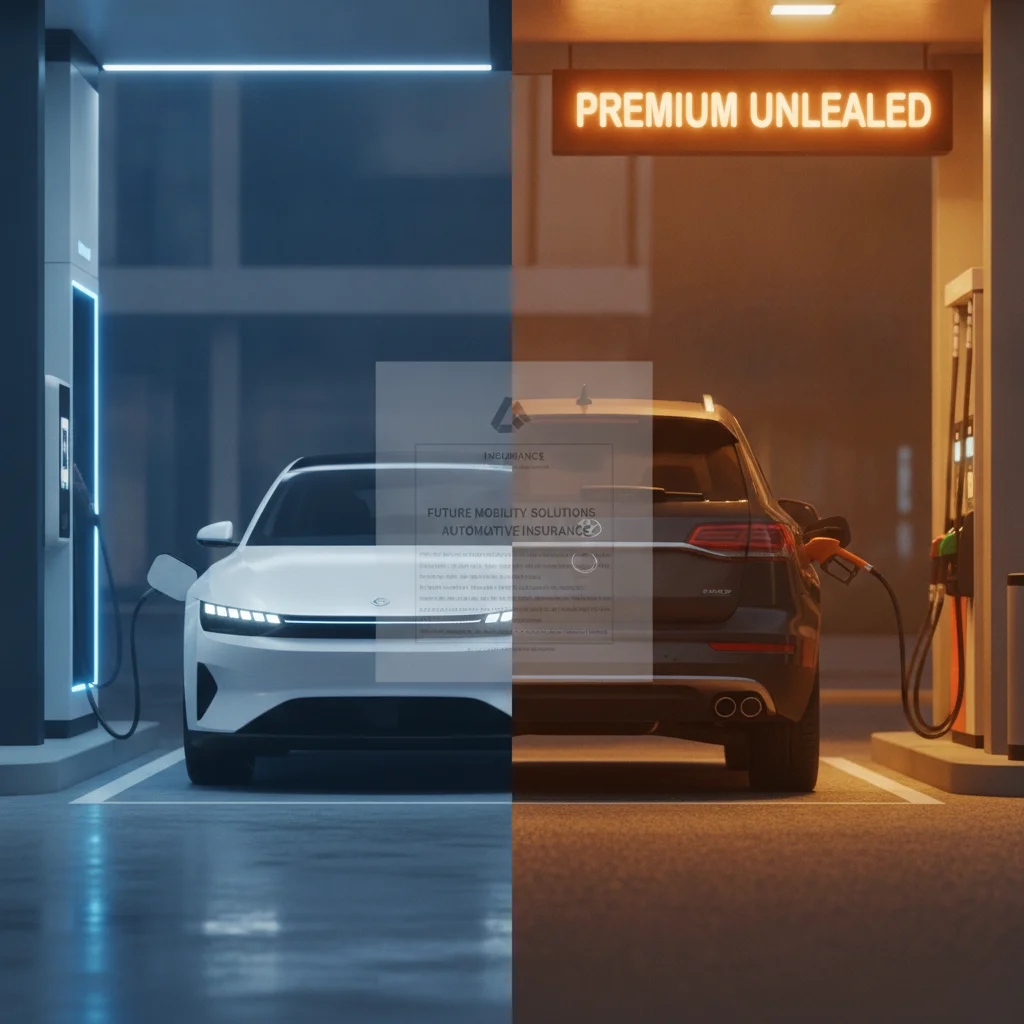
Collision coverage applies when your vehicle hits something — another car, a guardrail, a parking barrier. Comprehensive covers virtually everything else: fire, theft, weather, flooding, falling objects. Both can cover EV battery damage, but only under their respective trigger conditions. Knowing which type you're relying on matters when you file a claim.
Manufacturer Warranty Is Not Insurance
Many EV owners conflate manufacturer battery warranties with insurance coverage. They are entirely separate protections. The warranty covers defects and premature capacity loss as defined by the automaker; insurance covers physical damage from covered perils. A warranty claim goes to the dealer or manufacturer; an insurance claim goes to your insurer. Both can coexist — a battery damaged in an accident might be repaired under insurance while a separate degradation issue is addressed under warranty.
EV Tax Credits Don't Affect Insurance Costs Directly
Some owners wonder whether claiming federal or state EV tax credits affects their insurance premiums. It doesn't — directly. However, credits reduce your effective purchase price, which may influence the loan amount you carry and whether gap insurance makes sense for your situation. For information on credit eligibility, see <a href="/electric-vehicles/ev-ownership-costs/ev-tax-credits">EV Tax Credits</a>.
For a detailed breakdown of how each coverage type applies to EV-specific scenarios, Comprehensive vs. Collision Coverage: How Each Applies to Electric Vehicles walks through the mechanics.
The Exclusions That Catch EV Owners Off Guard
The more consequential part of EV battery coverage isn't what's included — it's what's excluded. And the exclusions are significant.
$10K–$22K
Typical EV battery replacement cost
Estimates from repair data aggregators and OEM service pricing as of 2024; luxury EV batteries can exceed $30,000.
30–50%
Share of vehicle cost represented by battery
BloombergNEF and industry analyses consistently place the traction battery at roughly one-third to one-half of total EV manufacturing cost.
8 years / 100K mi
Minimum federal EV battery warranty requirement
U.S. EPA regulations require automakers to warranty EV traction batteries for at least 8 years or 100,000 miles — whichever comes first.
70–80%
Common total-loss threshold (% of ACV)
Most U.S. insurers declare a total loss when repair costs exceed 70%–80% of actual cash value; the exact threshold varies by state law and insurer.
43%
EV owners unaware of battery coverage gaps
A 2023 survey by J.D. Power found a significant share of EV owners were uncertain or incorrect about what their policy covered regarding the battery.
Gradual Degradation
All lithium-ion batteries lose capacity over time. This is physics, not failure. A 5-year-old EV that now delivers 15% less range than when it was new is experiencing normal degradation — and no auto insurer covers this. It's analogous to engine wear in a conventional vehicle: expected, gradual, and firmly outside the scope of an insurance claim.
Manufacturer Defects
If a battery fails due to a manufacturing defect — a cell separator failure, a weld issue, or a BMS (battery management system) malfunction — that's a product liability issue, not an insurance one. The remedy is a warranty claim with the manufacturer, not an insurance claim. Owners of vehicles still under the manufacturer's battery warranty (typically 8 years/100,000 miles for most EVs) have recourse there, but older out-of-warranty vehicles face a gap.
Charging Damage
This is one of the murkiest areas. Damage caused by using an incompatible charger, a faulty third-party charging unit, or consistent overcharging may be classified as owner negligence or improper use — both exclusion triggers in most standard policies. If you plug into a compromised public charger that sends a voltage spike, making a coverage claim is possible, but success is far from guaranteed.
Wear and Tear
Beyond degradation, physical wear on battery cooling systems, connectors, or the pack enclosure itself — if not caused by a covered peril — falls under the standard wear-and-tear exclusion found in virtually every auto policy. This matters because battery cooling system failures can accelerate degradation and, in some cases, trigger thermal events.
Always Get Coverage Confirmations in Writing
When you call your insurer to ask about EV battery coverage specifics, request a written summary of what they tell you — by email or through their online portal. Verbal assurances from a customer service representative are not binding on the policy. Written documentation protects you if coverage is later disputed at claim time.
Check Charging Equipment Before You Plug In
Inspect public and home charging equipment regularly for damage, corrosion, or signs of malfunction. Using a compromised charger isn't just a safety risk — it can give an insurer grounds to invoke an improper-use exclusion if charging equipment is the proximate cause of battery damage. EVSE-certified equipment and smart chargers with surge protection are worth the investment.
Shop for EV-Specific Policies Annually
The EV insurance market is evolving rapidly. Policies and endorsements that didn't exist two years ago are increasingly available, and premium pricing has shifted as insurers accumulate more EV claims data. Reviewing your coverage options at each renewal — not just on initial purchase — ensures you're not paying for outdated coverage or missing newer protections that fit your situation better.
EV owners who believe common misconceptions about what their policy covers are often blindsided at claim time. EV Insurance Myths That Are Costing Owners Real Money addresses several of these assumptions directly.
The Total-Loss Problem: When Partial Battery Damage Totals the Car
One of the most financially disorienting aspects of EV battery damage is how quickly a partial failure can total an otherwise intact vehicle. Insurers declare a total loss when the cost of repair exceeds a threshold — typically 70% to 80% of the vehicle's actual cash value (ACV), though this varies by state.
Because the battery alone can represent 40% or more of an EV's value, damage that affects even a portion of the pack can push repair costs past that threshold. A low-speed collision that cracks the battery enclosure and requires pack replacement on a 3-year-old EV worth $32,000 could generate a repair estimate north of $20,000 — easily triggering a total loss declaration even though the body, interior, and drivetrain are untouched.
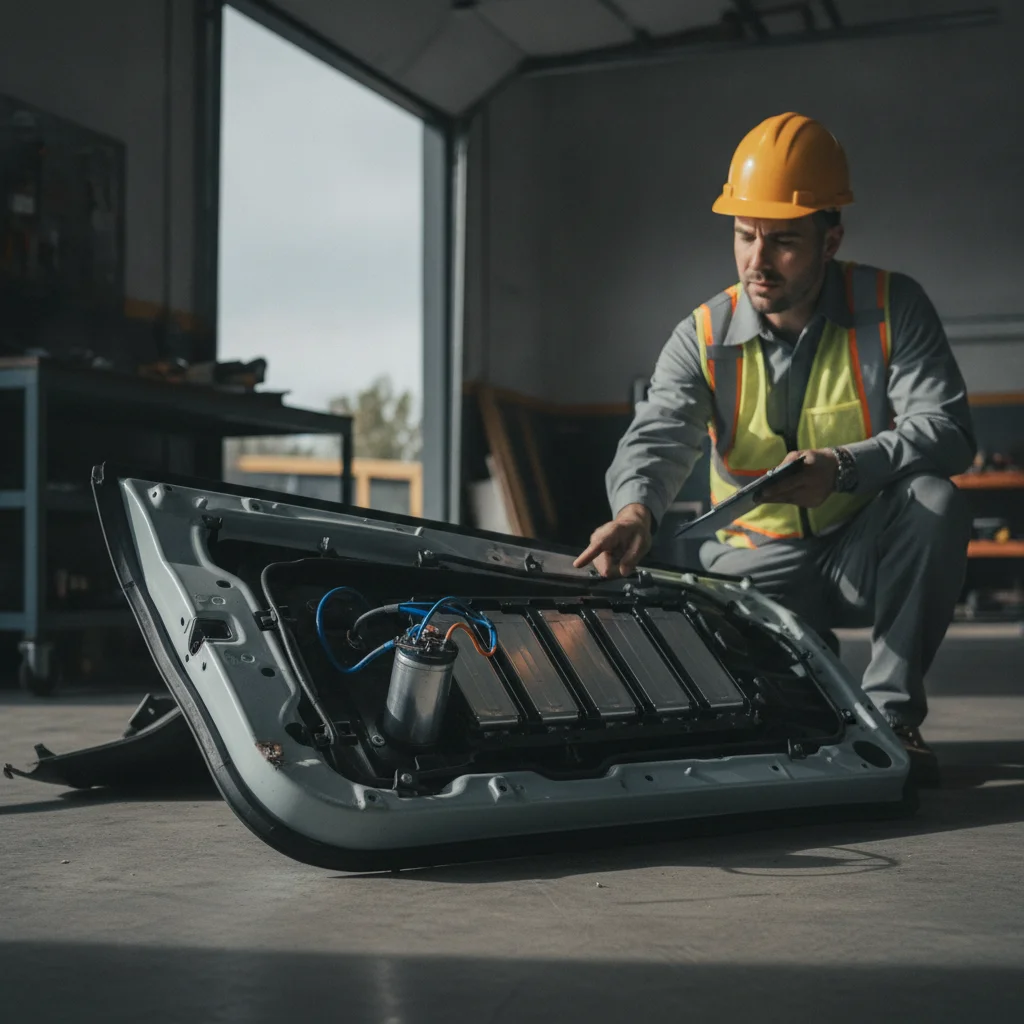
This creates a particularly painful dynamic for owners who have financed their vehicles. If the ACV has dropped faster than the loan balance — common in the first few years of EV ownership — a total-loss payout may not cover the outstanding loan. Gap insurance, which covers the difference between ACV and loan balance, becomes especially valuable in this context.
The downstream implications of battery-related total losses — including how insurers calculate ACV, how salvage titles affect resale, and what owners can expect from the claims process — are covered in depth in What Happens to Your Insurance When an EV Battery Is Totaled.
“The insurance industry is still catching up to the economics of electric vehicles. When a battery pack costs more than the entire repair budget of a conventional car, the standard total-loss framework simply wasn't designed to handle it — and that gap costs EV owners real money.”
— Michelle Krebs, Executive Analyst, Cox Automotive
Specialized EV Endorsements and What to Look For
A growing number of insurers now offer EV-specific policy endorsements designed to address gaps in standard coverage. These aren't universal, and the specific protections they offer vary considerably — but knowing what's available helps you ask better questions when shopping for or renewing coverage.
Battery Replacement Endorsements
Some insurers offer add-on endorsements that extend coverage to battery replacement in scenarios that standard policies exclude. The specifics vary: some cover battery failure due to power surge events, others extend to out-of-warranty degradation beyond a defined capacity threshold (e.g., if capacity falls below 70% within a specified period). Read the fine print carefully — coverage triggers, waiting periods, and claim limits differ significantly between products.
New Parts or OEM Coverage
Standard policies may replace a damaged battery with a remanufactured or aftermarket unit. For a vehicle still under manufacturer warranty, using non-OEM parts could void portions of that warranty. Some policies offer an endorsement guaranteeing original equipment manufacturer (OEM) parts for repairs, which matters considerably when the part in question is a $15,000 battery pack.
Agreed Value vs. Actual Cash Value
Conventional policies pay ACV at total loss — depreciated value. Some specialty or collector-vehicle style EV policies offer agreed value coverage, where the payout is a pre-set amount regardless of depreciation. This can meaningfully reduce the gap problem for newer, higher-value EVs.
Always Get Coverage Confirmations in Writing
When you call your insurer to ask about EV battery coverage specifics, request a written summary of what they tell you — by email or through their online portal. Verbal assurances from a customer service representative are not binding on the policy. Written documentation protects you if coverage is later disputed at claim time.
Check Charging Equipment Before You Plug In
Inspect public and home charging equipment regularly for damage, corrosion, or signs of malfunction. Using a compromised charger isn't just a safety risk — it can give an insurer grounds to invoke an improper-use exclusion if charging equipment is the proximate cause of battery damage. EVSE-certified equipment and smart chargers with surge protection are worth the investment.
Shop for EV-Specific Policies Annually
The EV insurance market is evolving rapidly. Policies and endorsements that didn't exist two years ago are increasingly available, and premium pricing has shifted as insurers accumulate more EV claims data. Reviewing your coverage options at each renewal — not just on initial purchase — ensures you're not paying for outdated coverage or missing newer protections that fit your situation better.
For a comprehensive overview of coverage types, premium factors, and insurer options tailored specifically to EV owners, EV Insurance From Start to Finish: Everything Owners Need to Know is the most thorough single resource available.
Practical Steps to Audit Your Current Coverage
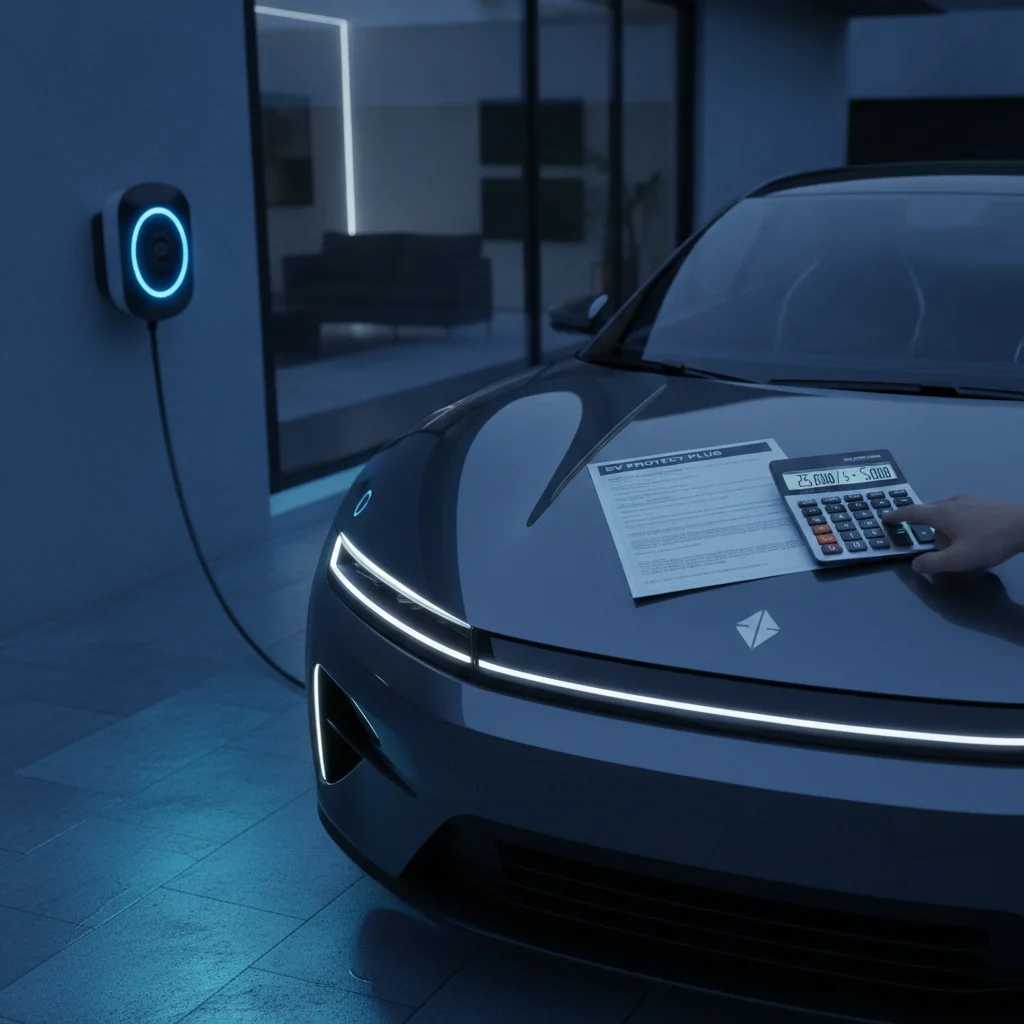
Given the complexity of EV battery coverage, passively assuming your policy is adequate is a genuine financial risk. The following steps can help you understand exactly where you stand.
- Pull your declarations page and read the exclusions section. Look specifically for language around "wear and tear," "mechanical or electrical breakdown," "gradual deterioration," and "improper use." These are the clauses most likely to exclude battery damage claims.
- Call your insurer and ask direct questions. Ask: Does my policy cover EV battery damage from a collision? What about from flooding? From a charging-related failure? Is battery degradation covered under any circumstance? Document the responses in writing if possible.
- Check your manufacturer battery warranty. Know how many years and miles remain. For most EVs sold after 2015, federal regulations require at least 8 years/100,000 miles of battery warranty coverage. Some brands offer more.
- Assess your loan balance vs. ACV. If you're upside down on your loan, gap coverage isn't optional — it's essential. This is especially true for EVs, which can depreciate rapidly in the first 1–3 years.
- Compare EV-specialized insurers. Companies like Tesla Insurance (for Tesla owners), Nationwide, and several specialty carriers have developed EV-specific products. Getting quotes from multiple sources — including EV-focused carriers — can reveal meaningful differences in both price and coverage scope.
Collision vs. Comprehensive: A Quick Distinction
Collision coverage applies when your vehicle hits something — another car, a guardrail, a parking barrier. Comprehensive covers virtually everything else: fire, theft, weather, flooding, falling objects. Both can cover EV battery damage, but only under their respective trigger conditions. Knowing which type you're relying on matters when you file a claim.
Manufacturer Warranty Is Not Insurance
Many EV owners conflate manufacturer battery warranties with insurance coverage. They are entirely separate protections. The warranty covers defects and premature capacity loss as defined by the automaker; insurance covers physical damage from covered perils. A warranty claim goes to the dealer or manufacturer; an insurance claim goes to your insurer. Both can coexist — a battery damaged in an accident might be repaired under insurance while a separate degradation issue is addressed under warranty.
EV Tax Credits Don't Affect Insurance Costs Directly
Some owners wonder whether claiming federal or state EV tax credits affects their insurance premiums. It doesn't — directly. However, credits reduce your effective purchase price, which may influence the loan amount you carry and whether gap insurance makes sense for your situation. For information on credit eligibility, see <a href="/electric-vehicles/ev-ownership-costs/ev-tax-credits">EV Tax Credits</a>.
Understanding how EVs work — including the battery management systems that govern charging and thermal regulation — can help you ask more precise questions of your insurer and avoid behaviors that might trigger exclusion clauses. How EVs Work provides a solid technical foundation.
All claims are backed by peer-reviewed research. Sources on request.