Key Takeaways
Option A
Comprehensive Coverage
The non-collision shield against unpredictable events.
Best for: EV owners seeking protection from theft, weather damage, falling objects, fire, and animal strikes — losses entirely outside the driver's control.
Option B
Collision Coverage
The at-fault protection for impact-related damage.
Best for: EV owners who want repair or replacement coverage after their vehicle strikes another car, a guardrail, or any fixed object.
If your EV is leased or financed
Both Comprehensive and Collision Coverage
Lenders and lessors legally require both. Dropping either puts you in breach of contract and leaves you exposed to five-figure repair bills.
If you live in an area prone to hailstorms, flooding, or vehicle theft
Comprehensive Coverage
EVs are high-value theft targets and their battery packs are particularly susceptible to water intrusion damage — comprehensive is non-negotiable in high-risk regions.
If you regularly drive in dense urban or highway traffic
Collision Coverage
Higher accident exposure means collision claims are a realistic probability. EV body repairs and structural scans after impacts cost significantly more than on ICE vehicles.
If your EV's market value has depreciated significantly
Evaluate Collision Coverage carefully
Once actual cash value drops close to your annual premium plus deductible, the financial case for collision coverage weakens — run the numbers annually.
If you own a new or high-value EV like a Rivian, Lucid, or Tesla Model S
Both Comprehensive and Collision Coverage
Replacement costs and specialized repair networks make both coverages essential. Consider an agreed value or gap policy on top of standard coverage.
Why These Two Coverages Matter More for EVs
Most drivers understand that comprehensive and collision are the two physical damage coverages that protect a vehicle beyond liability. But when the vehicle in question is an electric car, the stakes attached to both coverages shift in ways that most insurance buyers never anticipate.
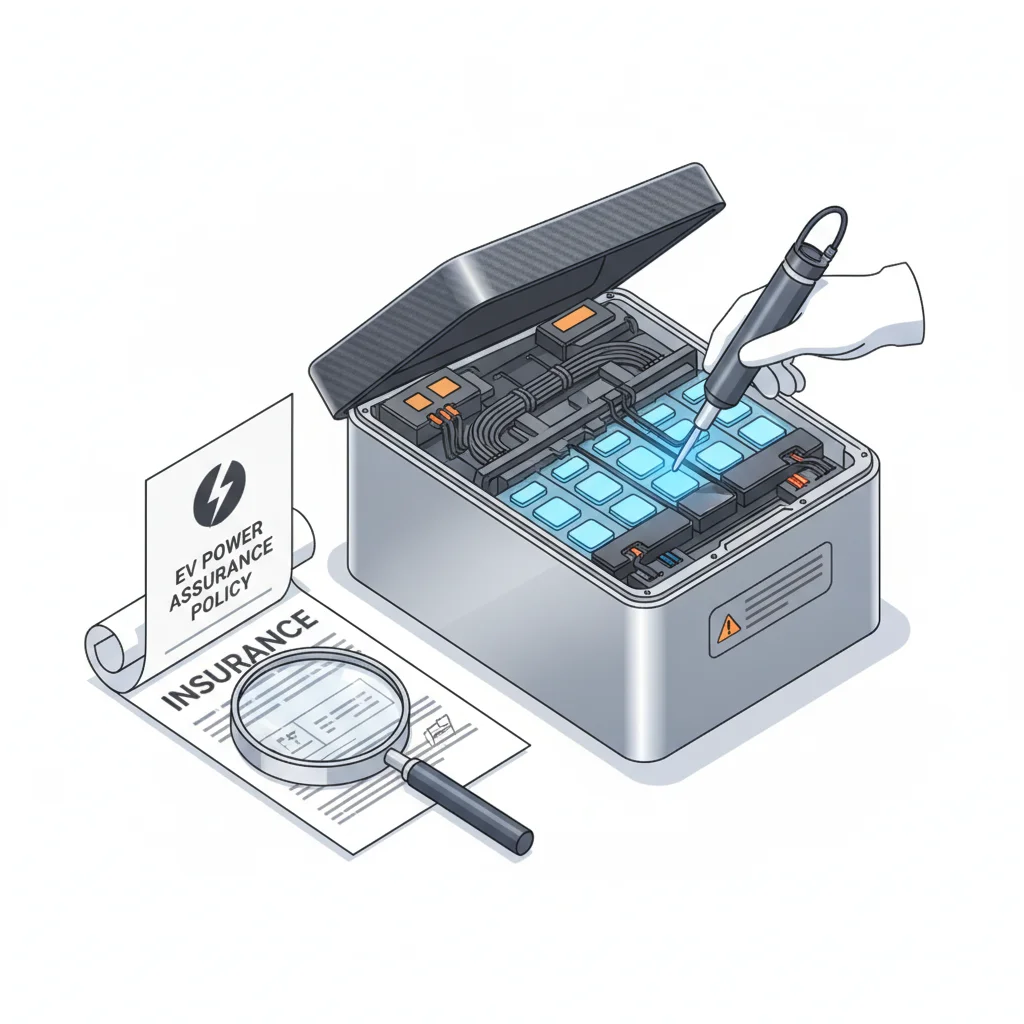
EVs carry battery packs that can cost anywhere from $5,000 to over $20,000 to replace, depending on the make and model. Their aluminum-intensive structures and specialized sensors require repair at certified shops, not general body yards. Labor rates at EV-capable facilities run higher, and parts lead times often stretch longer. The result: a fender-bender that costs $1,800 to repair on a conventional sedan might generate a $6,000 estimate on a mid-range EV.
Against that backdrop, which coverage applies to which situation — and where the gaps are — becomes a genuinely consequential question. Collision and comprehensive coverage are legally distinct products that trigger under completely different circumstances. Conflating them, or assuming one substitutes for the other, leaves EV owners exposed to losses that can total a significant fraction of the vehicle's value.
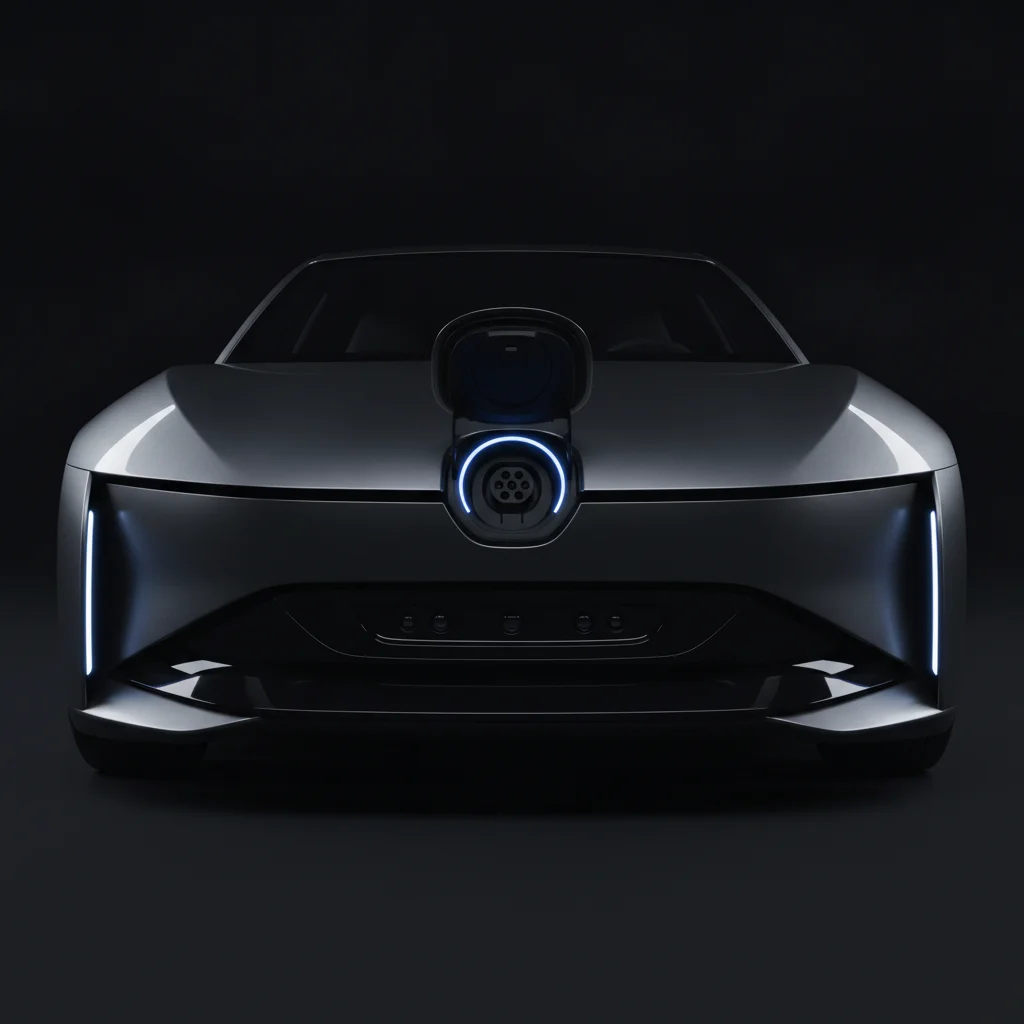
This comparison breaks down exactly how each coverage type functions, which EV-specific damage scenarios fall under each, and where standard policy language may create unexpected gaps when expensive electric components are involved.
Comprehensive Coverage: What It Protects for EV Owners
Comprehensive coverage pays for damage to your vehicle caused by events outside a collision — broadly defined as anything other than your car making contact with another vehicle or object. The standard list includes theft, vandalism, fire, flooding, hail, falling trees, windshield cracks, and animal strikes.
For EV owners, several of these perils carry outsized financial risk:
- Theft: EVs are increasingly targeted, particularly in markets where battery components have secondary value. A total theft claim triggers comprehensive, not collision.
- Flooding and water intrusion: Floodwater can penetrate battery management systems, causing degradation or catastrophic failure. This is a comprehensive event — and one that may not produce visible damage immediately, making timely claims documentation critical.
- Fire: Thermal runaway events — where a lithium-ion battery enters an uncontrolled self-heating cycle — are covered under comprehensive as a fire loss. These fires are notoriously difficult to extinguish and often result in total vehicle losses.
- Hail: Body panel damage on EVs can be disproportionately expensive because aluminum panels used on many models don't respond to conventional paintless dent repair the same way steel does.
Animal Strikes: A Commonly Miscategorized Claim
Colliding with an animal — a deer, a dog, or even a large bird — is classified as a comprehensive event, not a collision, under standard policy language. For EVs equipped with forward-facing sensors and cameras embedded in the front fascia, these strikes can trigger repair estimates far exceeding what the visible body damage would suggest. Always file under comprehensive for animal strike events; using collision would apply your collision deductible unnecessarily and could affect your collision loss history.
When Battery Damage Crosses Coverage Types
Battery damage can be triggered by both comprehensive and collision events — and in some cases, the cause is disputed. If your EV battery degrades following a flood event but you also had a minor unreported fender-bender weeks earlier, insurers may investigate causation carefully. Document all incidents promptly, and request a battery diagnostic report whenever your vehicle sustains any impact, even seemingly minor ones. This documentation protects your ability to file a timely and well-supported claim under the correct coverage type.
Gap Insurance and EV Depreciation
EVs depreciate faster than the average vehicle in their first three years, largely due to rapid technology evolution and improving range figures in newer models making older EVs less desirable. This accelerated depreciation, combined with typically high purchase prices and long loan terms, creates meaningful gap between ACV payouts and outstanding loan balances after a total loss. Gap coverage — available as a standalone policy or dealership add-on — bridges that financial shortfall and is particularly worth evaluating when purchasing a new EV with less than 20% down.
One frequently overlooked comprehensive trigger is a collision with an animal. If a deer strikes your EV and damages the front fascia housing the radar and camera suite, that repair — potentially $3,000 or more once sensors are recalibrated — falls under comprehensive, not collision. The distinction matters because many drivers carry different deductibles for each coverage type.
Battery damage that results from a non-collision event — flooding, fire, or a manufacturer defect that triggers a recall — is where comprehensive coverage intersects with EV warranty terms. Understanding what your insurer covers versus what falls under the manufacturer's battery warranty is essential. See what standard policies actually cover for battery damage for a detailed breakdown of those overlapping protections and exclusions.
$5,000–$20,000+
EV battery pack replacement cost
Battery replacement estimates from major EV manufacturers and third-party repair shops as of 2024, varying widely by chemistry and pack size.
26%
Higher average EV repair cost vs. ICE vehicles
According to a 2023 Mitchell industry claims analysis, EV collision repair costs averaged 26% more than equivalent gasoline vehicle repairs.
3x
Longer average EV repair cycle time
CCC Intelligent Solutions' 2023 Crash Course report found EV repairs take roughly three times longer than ICE vehicle repairs due to parts availability and certified shop constraints.
~$42,000
Average EV transaction price in 2024
Kelley Blue Book's 2024 data placed average new EV transaction prices around $42,000, significantly above the $35,000 average for all new vehicles — raising the stakes on physical damage claims.
Collision Coverage: How It Functions When Your EV Is Damaged in an Impact
Collision coverage pays to repair or replace your vehicle after it makes physical contact with another vehicle or a stationary object — a guardrail, a parking structure pillar, a tree you struck while driving. Fault is largely irrelevant: collision pays regardless of who caused the accident, though your insurer may pursue subrogation against the at-fault party's insurer afterward.
For EV owners, the collision scenario introduces repair complexities that directly affect how claims are settled:
- Structural scanning requirements: Many modern EVs — particularly those with skateboard battery architectures like the Tesla Model 3 or Chevrolet Equinox EV — require full structural scans after any significant impact to assess battery module integrity. These diagnostic procedures alone can add $500–$1,500 to a claim before any physical repair begins.
- Certified repair network limitations: Several manufacturers, including Tesla, Rivian, and BMW, require collision repairs be performed at brand-certified body shops. If your insurer's preferred shop isn't certified, you may face a dispute over labor rates or repair authorization.
- Total loss thresholds: Because EVs carry high repair costs relative to their actual cash value — especially as they age — insurers reach total loss thresholds more quickly than on comparable ICE vehicles. A 3-year-old EV with $28,000 in ACV might be totaled on a repair estimate that would never trigger a write-off on a $28,000 gasoline sedan.
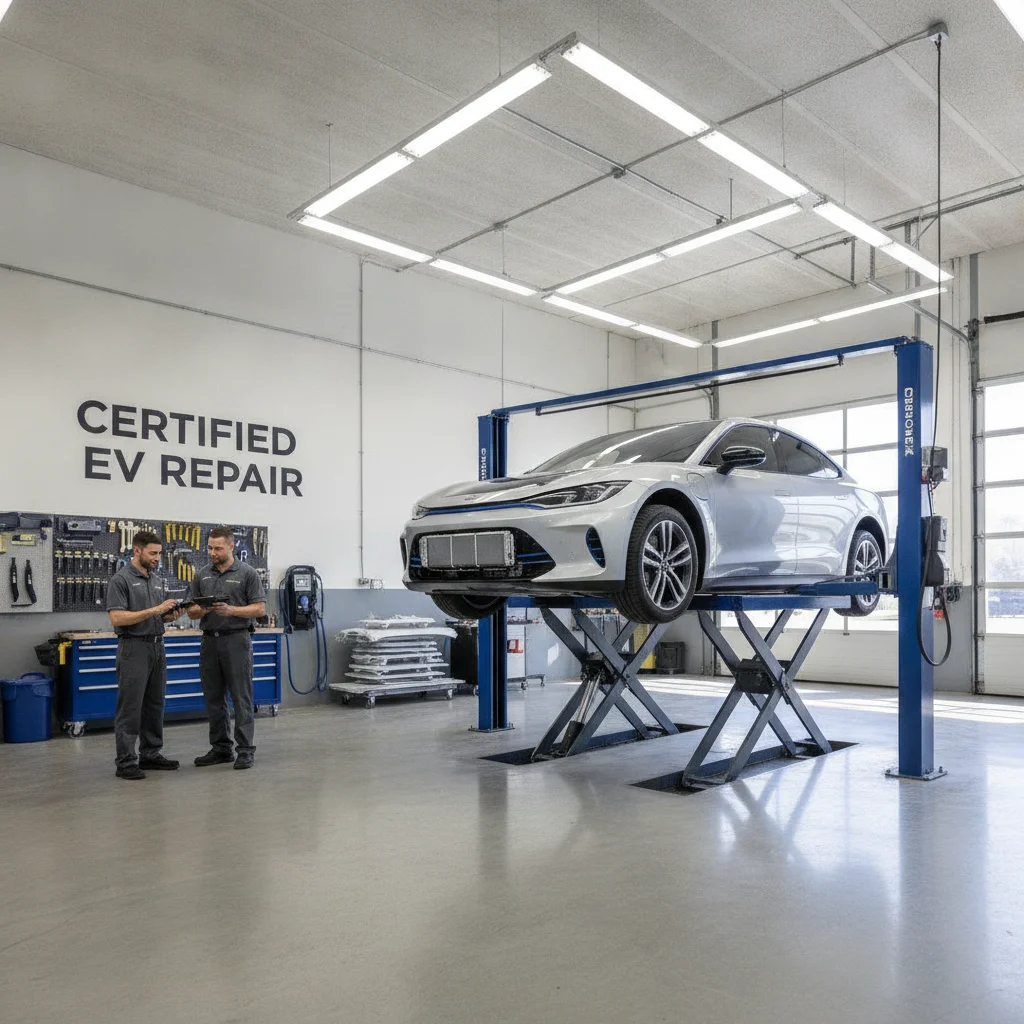
The financial gap between actual cash value payouts and the amount remaining on an EV loan is a real risk. EVs tend to depreciate faster than average in their early years, while loans amortize slowly. If your EV is totaled in a collision, collision coverage pays ACV — not the loan payoff amount. Gap insurance exists precisely to cover this difference. For more on how physical damage coverages interact with vehicle value at the high end of the market, see how high-value vehicle policies differ from standard coverage.
Head-to-Head: How the Two Coverages Compare
The table below summarizes the core distinctions between comprehensive and collision as they apply to EV ownership. Understanding these differences side-by-side helps clarify which coverage to prioritize — and where carrying both is essential.
| Criterion | Comprehensive Coverage | Collision Coverage |
|---|---|---|
| Trigger event | Non-collision loss (theft, weather, fire, animals) | Vehicle impacts another car or fixed object |
| Fault relevance | Not applicable — fault doesn't determine coverage | Pays regardless of fault; insurer may subrogate |
| Typical EV scenarios | Hail damage, flood, theft, thermal runaway fire | Fender-benders, parking impacts, multi-vehicle crashes |
| Battery damage coverage | Yes, for fire, flood, and non-collision events | Yes, if impact causes battery or structural damage |
| Average deductible range | $100–$500 (often set lower) | $500–$2,000 (often set higher) |
| Total loss risk for EVs | High — battery fires typically total the vehicle | High — repair costs reach total loss threshold faster |
| Required by lenders/lessors | Yes | Yes |
| Specialist repair shop impact | Relevant for hail/vandalism panel work | Critical — certified structural and sensor repairs required |
| Premium driver for EVs | Higher in hail-prone, flood-prone, high-theft areas | Higher for urban drivers and new/high-value EVs |
One nuance worth highlighting: deductibles for comprehensive and collision are set independently. Many EV owners carry a lower comprehensive deductible (say, $250) and a higher collision deductible ($1,000) because the frequency and severity of non-collision events like hail is harder to control, while collision risk can be partially mitigated through careful driving. Adjusting these deductibles thoughtfully can optimize premium spend without dramatically shifting your risk exposure.
EV-Specific Scenarios That Reveal the Coverage Boundary
Theory is useful, but the coverage distinction becomes concrete in real-world EV ownership situations. Here are specific scenarios that illustrate exactly where the line falls:
Scenario 1: Hailstorm damages your Model Y's hood and roof
Coverage: Comprehensive. Hail is a weather event, not a collision. Your comprehensive coverage applies, subject to your comprehensive deductible. Aluminum-intensive panels on many EVs may require full replacement rather than repair, potentially totaling older vehicles.
Scenario 2: You back into a concrete pillar in a parking garage
Coverage: Collision. Any contact between your vehicle and a stationary object is a collision event. If the impact damaged rear sensors or the rear fascia housing, expect repair costs well above what a comparable ICE vehicle would incur.
Scenario 3: Your EV battery is damaged by floodwater after a hurricane
Coverage: Comprehensive. Flooding is a comprehensive peril. The challenge here is that battery damage from water intrusion may not manifest immediately — cells can degrade over weeks, making prompt diagnostic documentation essential to support your claim.
Scenario 4: A driver runs a red light and T-bones your EV
Coverage: Collision (your policy) or the at-fault driver's property damage liability. If the other driver carries adequate liability limits, their policy pays. If they're uninsured or underinsured, your collision coverage steps in, subject to your deductible. Note that the structural scan costs and battery diagnostic fees must also be documented and included in the repair estimate.
Scenario 5: Your EV catches fire due to thermal runaway while parked
Coverage: Comprehensive. Spontaneous fire is a comprehensive event. However, if the fire resulted from a manufacturer defect, a recall-related battery issue, or a known software flaw, the automaker's warranty may bear primary responsibility. This is a developing area of EV claims law. For a deeper examination of how battery-specific damage is treated, see our analysis of EV battery damage and insurance coverage.
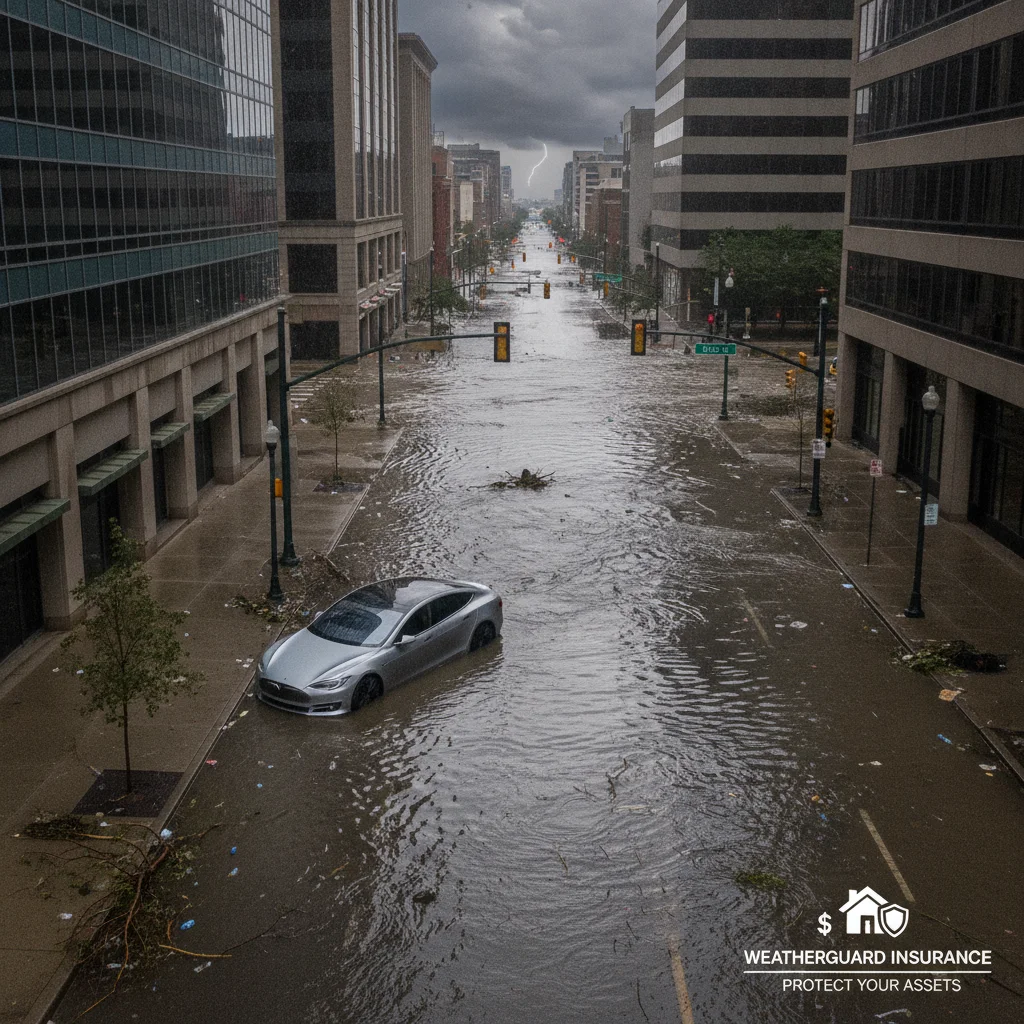
These scenarios underscore why EV owners need to read their policies carefully — not just which coverage applies, but what exclusions, sub-limits, or conditions might affect a payout.
Optimizing Your Coverage Strategy as an EV Owner
Armed with a clear picture of how each coverage type functions, EV owners can make more intentional decisions about their policies rather than defaulting to minimum required limits.
Evaluate ACV vs. replacement cost
Standard collision and comprehensive policies pay actual cash value — the depreciated market value of your vehicle at the time of loss. For new or near-new EVs, ACV and replacement cost are close. For a three- to five-year-old EV, the gap can be significant. Some insurers offer new car replacement endorsements for the first two or three years of ownership, which can be well worth the premium on a $50,000+ EV.
Verify certified repair shop access
Before a claim occurs, confirm that your insurer will authorize repairs at your manufacturer's certified collision network. Tesla, for example, has a defined certified body shop program; non-certified repairs can void structural warranties and create safety concerns. This is one area where comparing policies across vehicle types reveals meaningful differences between standard insurers and EV-specialized underwriters.
Consider gap coverage if you're financing
Given EV depreciation patterns and high purchase prices, gap insurance is one of the most financially logical add-ons available. It covers the difference between ACV and your outstanding loan balance after a total loss — a gap that can easily reach $8,000–$12,000 on a recently purchased EV.
Reassess annually as the vehicle ages
The calculus for carrying collision coverage shifts as a vehicle depreciates. Once your EV's market value approaches the level where annual collision premium plus deductible equals or exceeds likely claim value, you've reached the break-even point. Run those numbers each renewal cycle.
Animal Strikes: A Commonly Miscategorized Claim
Colliding with an animal — a deer, a dog, or even a large bird — is classified as a comprehensive event, not a collision, under standard policy language. For EVs equipped with forward-facing sensors and cameras embedded in the front fascia, these strikes can trigger repair estimates far exceeding what the visible body damage would suggest. Always file under comprehensive for animal strike events; using collision would apply your collision deductible unnecessarily and could affect your collision loss history.
When Battery Damage Crosses Coverage Types
Battery damage can be triggered by both comprehensive and collision events — and in some cases, the cause is disputed. If your EV battery degrades following a flood event but you also had a minor unreported fender-bender weeks earlier, insurers may investigate causation carefully. Document all incidents promptly, and request a battery diagnostic report whenever your vehicle sustains any impact, even seemingly minor ones. This documentation protects your ability to file a timely and well-supported claim under the correct coverage type.
Gap Insurance and EV Depreciation
EVs depreciate faster than the average vehicle in their first three years, largely due to rapid technology evolution and improving range figures in newer models making older EVs less desirable. This accelerated depreciation, combined with typically high purchase prices and long loan terms, creates meaningful gap between ACV payouts and outstanding loan balances after a total loss. Gap coverage — available as a standalone policy or dealership add-on — bridges that financial shortfall and is particularly worth evaluating when purchasing a new EV with less than 20% down.
For a broader look at how EV ownership changes the entire insurance equation — not just physical damage coverages — comparing EV insurance to traditional auto insurance walks through liability, uninsured motorist, and specialty add-on differences that matter just as much as collision and comprehensive selections.
EV ownership also varies significantly by vehicle type — battery-electric vehicles face different repair cost profiles than plug-in hybrids, which retain a conventional drivetrain alongside the electric system. If you're still navigating which EV type suits your situation, our EV types overview explains the key distinctions between BEVs, PHEVs, and HEVs and how they affect ownership costs including insurance.
All claims are backed by peer-reviewed research. Sources on request.