Key Takeaways
Heat-Induced EV Range Loss
Heat-induced EV range loss refers to the reduction in usable driving distance that occurs when an electric vehicle's battery pack is exposed to high ambient temperatures. Unlike cold weather — which slows chemical reactions inside the battery — extreme heat accelerates them in damaging ways, forcing the vehicle's thermal management system to consume extra energy and, over time, permanently reducing the battery's capacity. Most drivers notice a measurable range drop when temperatures exceed 95°F (35°C).
At the electrochemical level, elevated temperatures increase lithium-ion mobility but also accelerate electrolyte decomposition, solid-electrolyte interphase (SEI) layer growth, and cathode degradation — all of which reduce both immediate performance and long-term cycle life.
Why Summer Is Harder on EV Batteries Than Most Drivers Expect
There's a common assumption in EV discussions that cold weather is the battery's worst enemy. Cold does hurt range — often dramatically — but it does so in a reversible way: warm the battery up, and most of the capacity comes back. Heat is a different problem. The damage it inflicts accumulates over time, and a meaningful portion of it never reverses.
Data from Recurrent Auto, which tracks real-world battery performance across thousands of EVs, consistently shows range reductions of 10–20% during periods of extreme summer heat, before air conditioning is even considered. Add a working HVAC system drawing 3–5 kW on a hot day — as covered in detail in how HVAC use affects EV range — and summer driving can look quite different from what the window sticker promised.
Understanding what's physically happening inside the pack helps set realistic expectations and informs better daily habits — without requiring a chemistry degree.
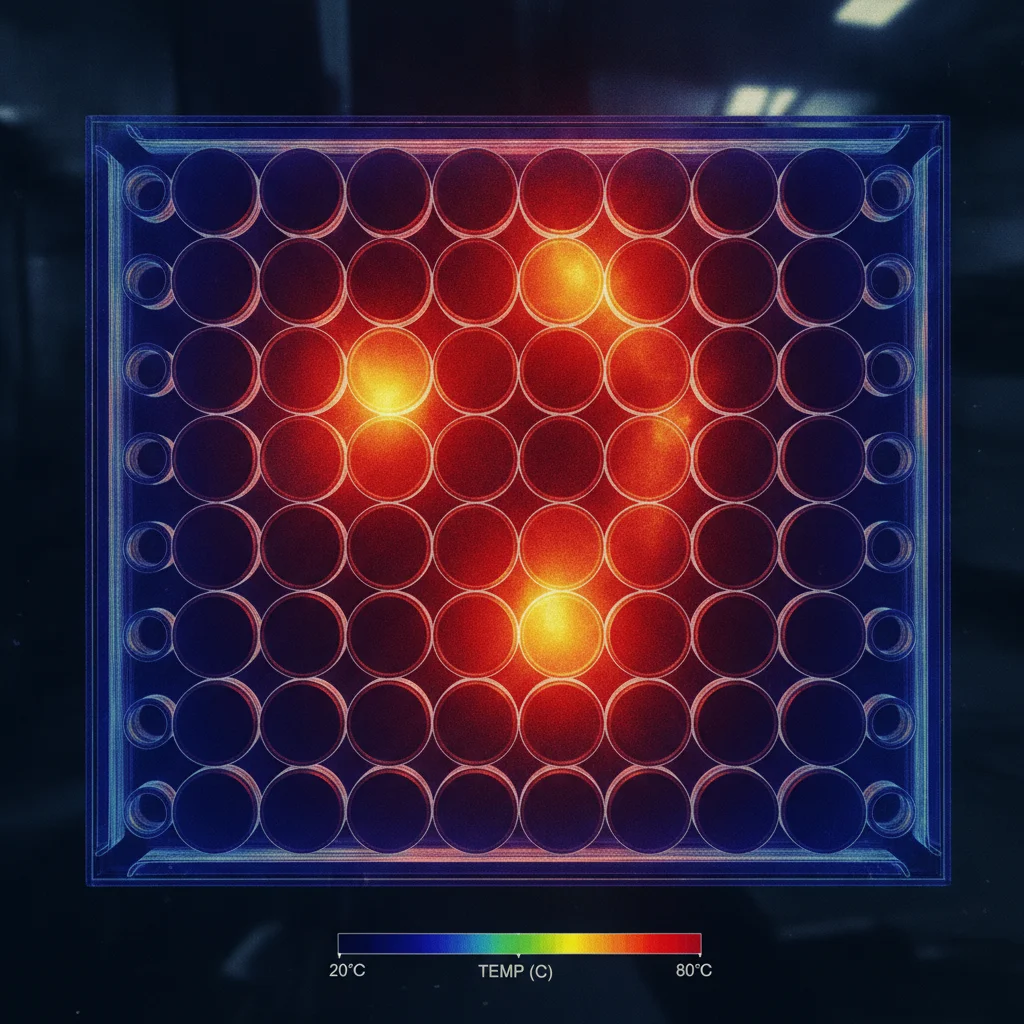
What Heat Does to Lithium-Ion Chemistry
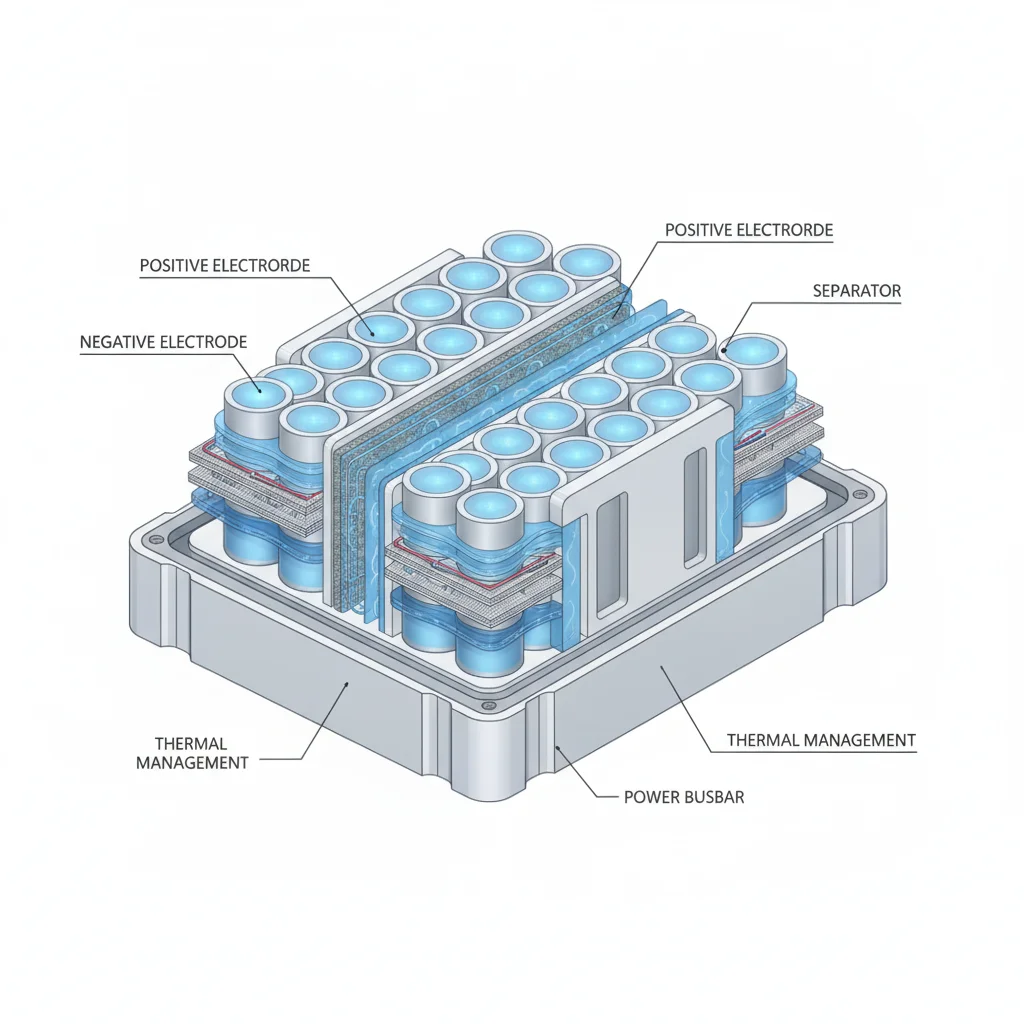
A lithium-ion cell stores and releases energy by moving lithium ions between a graphite anode and a metal-oxide cathode through a liquid electrolyte. That process works best within a relatively narrow temperature band — roughly 59–95°F (15–35°C) for most commercial battery chemistries. Outside that range, things get complicated.
At high temperatures, the electrolyte becomes more chemically reactive. It begins to break down, forming gases and depositing byproducts on the electrode surfaces. The most consequential of these is the growth of the solid-electrolyte interphase (SEI) layer — a thin film that forms on the anode during normal operation. A thin, stable SEI is actually necessary and protective. But heat causes it to grow thicker and less uniform, which permanently traps lithium ions and reduces the amount available for future charge-discharge cycles.
At the cathode, heat can trigger structural changes in the metal-oxide lattice — particularly in nickel-rich NMC chemistries, which offer high energy density but are more temperature-sensitive. These changes don't reverse when the battery cools down.
“Heat is the silent killer of lithium-ion batteries. Cold damages your range today; heat damages your range permanently. The asymmetry matters enormously for long-term EV ownership decisions.”
— Venkat Srinivasan, Director, Argonne Collaborative Center for Energy Storage Science (ACCESS)
The net result: each high-heat episode removes a small but permanent slice of the battery's total capacity. Most drivers won't notice after a single summer heat wave. But after several years of hot-climate operation, the cumulative loss becomes measurable — a topic explored in depth when looking at how much range EVs actually lose over time.
Not All Range Loss Is Permanent
Some of the range reduction you observe on a hot summer day is temporary — caused by the thermal management system consuming power and by minor, reversible changes in cell chemistry at elevated temperatures. Permanent degradation builds gradually over many high-heat cycles. This means a single hot day won't measurably shrink your battery forever, but a pattern of hot-climate operation over years will produce compounding, irreversible capacity loss.
Used EV Buyers: Request Battery Health Reports
When purchasing a used EV that spent time in a hot-climate state, ask for a third-party battery health report from services like Recurrent Auto or Lectrix. These reports pull real-world state-of-health data from the vehicle's history, giving you a far more accurate picture of remaining capacity than the odometer reading alone. A vehicle with 50,000 miles from Phoenix may have meaningfully less usable capacity than one from Portland with the same mileage.
How Thermal Management Systems Respond — and What That Costs
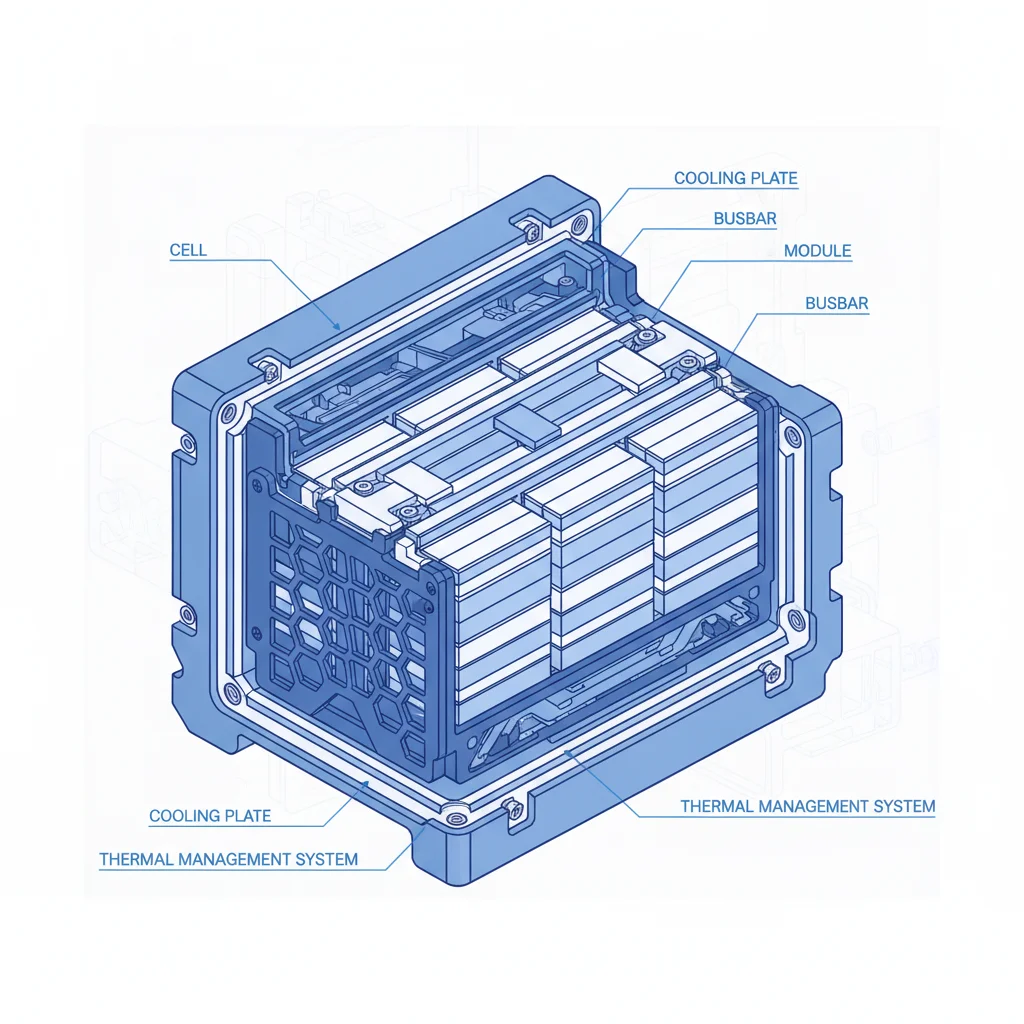
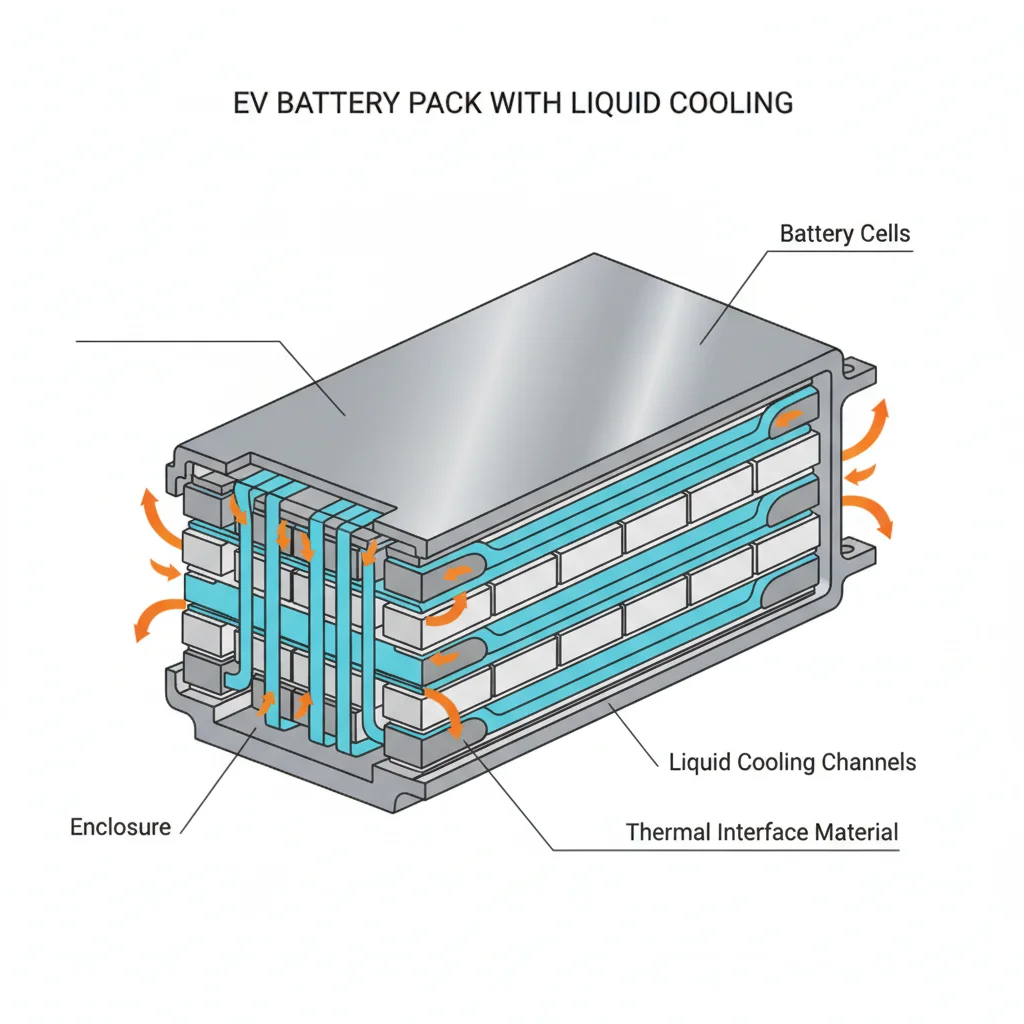
Modern EVs don't leave battery temperature to chance. They use dedicated thermal management systems (TMS) to keep cells within their optimal operating range. When temperatures climb, the TMS switches from passive monitoring to active intervention — and that intervention draws power from the same battery pack that's trying to move the car.
Most systems use one of three approaches:
- Liquid cooling: Coolant circulates through channels or plates adjacent to the battery modules, carrying heat away to a radiator. This is the most effective method and is used by the majority of long-range BEVs on the market.
- Air cooling: Ambient or cabin air is directed across the cells. Less energy-intensive but also less effective at extreme temperatures.
- Phase-change materials: Less common in consumer EVs; these absorb heat through a change in physical state (solid to liquid), buffering temperature spikes.
In a liquid-cooled system operating in 100°F (38°C) heat, the chiller compressor can consume 1–2 kW continuously — energy that isn't moving the car. Add the cabin air conditioning compressor (often shared with the battery cooling loop on some vehicles) and total thermal load can reach 4–6 kW on a very hot day. For a 75 kWh pack providing a 250-mile range, that load represents a significant parasitic drain.
10–20%
Range lost in extreme summer heat
According to real-world tracking data from Recurrent Auto, covering thousands of EVs across U.S. climate zones.
1–2 kW
Power drawn by battery cooling alone
Liquid-cooled thermal management systems consume this continuously when managing battery temperature in 100°F+ ambient heat.
4–6 kW
Total summer thermal load (battery + cabin)
Combined battery cooling and cabin air conditioning draw in extreme heat, based on manufacturer thermal data and independent testing.
6°F
Average higher degradation rate in hot climates
Geotab fleet analysis shows EVs operated in consistently hot climates degrade measurably faster than those in temperate regions over equivalent mileage.
75°F
EPA test temperature (baseline condition)
The EPA's standardized test cycle is conducted at approximately 75°F — a condition rarely matched by summer driving in hot-climate U.S. states.
To understand the full anatomy of how these packs are constructed and why pack layout affects thermal management efficiency, see EV batteries from cell to pack.
Fast Charging in Heat: A Compounding Stress Factor
DC fast charging already generates significant heat as a byproduct — it's a consequence of pushing high current through the internal resistance of each cell. When the ambient temperature is already high and the pack is thermally stressed, adding fast-charging heat on top can push cell temperatures into ranges the BMS (Battery Management System) is programmed to avoid.
The typical response is charge rate throttling: the BMS automatically reduces the maximum charging power to prevent thermal runaway or accelerated degradation. This means a session that might deliver 150 kW in mild weather could be capped at 80–100 kW on a hot afternoon, extending charging time noticeably.
Pre-Condition Before You Unplug
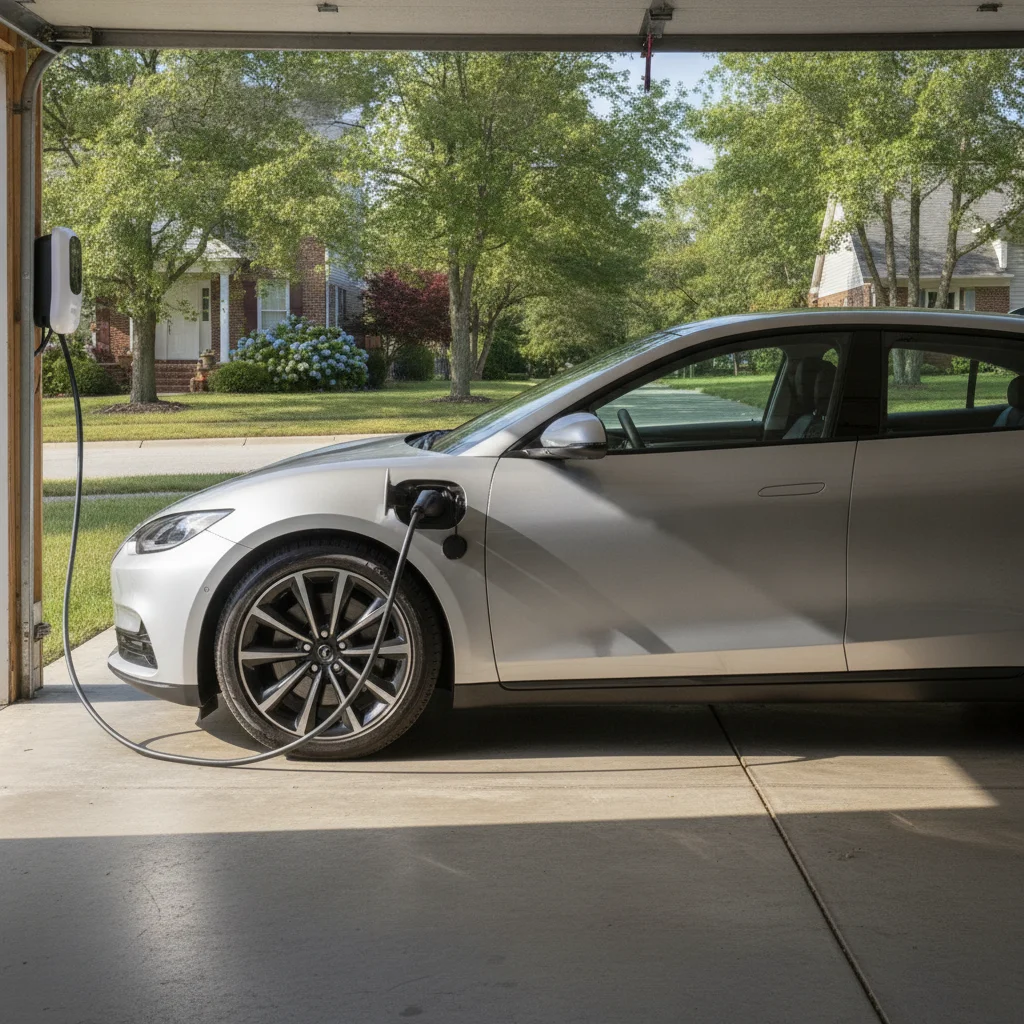
Set a departure time in your EV's app so the vehicle pre-cools the cabin and battery while still drawing power from the charger or wall outlet. This is the single most effective summer habit for preserving both daily range and long-term battery health. Even 15–20 minutes of pre-conditioning can meaningfully reduce the thermal load during the first phase of your drive.
Time Your Fast Charging for Cooler Hours
DC fast charging generates its own heat as a byproduct of high current flow. When the battery is already hot from summer ambient temperatures, charging adds thermal stress on top of existing stress. Scheduling fast-charge sessions for early morning or after sunset — when ambient temperatures are lower — reduces charge throttling and limits cumulative heat-related degradation.
Some vehicles — particularly those with sophisticated bidirectional thermal conditioning — can pre-cool the battery before a scheduled fast-charge stop, a feature increasingly common in vehicles designed for efficient road-trip use. But this pre-conditioning also consumes range en route, so the net impact depends on the length of the drive and the ambient conditions.
The interaction between charging behavior and long-term degradation is meaningful. Research from institutions including Idaho National Laboratory has shown that high-temperature fast charging produces disproportionate SEI growth compared to the same charging done at lower temperatures — reinforcing the value of charging during cooler morning or evening hours during summer months.
Heat vs. Cold: Different Problems, Different Stakes
It's worth putting summer range loss in context relative to winter range loss, since both are frequently misunderstood. Cold weather can reduce EV range by 20–40% — a larger acute impact than summer heat in most cases. But the mechanism and the long-term consequences are fundamentally different.
Cold slows the electrochemical reactions inside the cell, reducing the rate at which lithium ions can migrate. This causes temporary capacity loss that largely reverses as the battery warms up. It also increases internal resistance, which reduces peak power output and efficiency. These effects are real and disruptive — but they don't permanently shrink the battery's total capacity the way heat does.
Heat, by contrast, drives irreversible chemical reactions. The SEI layer doesn't thin back down when autumn arrives. The electrolyte decomposition doesn't undo itself. This is why EVs operated in hot climates — Phoenix, Las Vegas, Miami — tend to show measurably higher long-term degradation rates than comparable vehicles in Seattle or Minneapolis, even when driven a similar number of miles.
For a comprehensive look at how temperature extremes affect different EV types — including PHEVs and HEVs that have smaller battery packs — see how temperature affects BEV, PHEV, and HEV performance.
Practical Strategies to Reduce Heat-Related Range Loss
Some heat exposure is unavoidable in summer, but several habits meaningfully reduce the thermal burden on the battery — and on your daily range budget.
Pre-condition while plugged in
Most EVs allow you to set a departure time through the app or infotainment system. When the vehicle pre-conditions the cabin while still connected to shore power, it cools the interior using grid electricity rather than battery energy. Some systems extend this to the battery pack itself, pre-cooling it before a scheduled drive. This is one of the highest-leverage behaviors available to summer EV drivers.
Prioritize shaded or covered parking
A vehicle parked in direct sunlight on black asphalt in 100°F heat can see interior temperatures exceed 140°F (60°C) and battery soak temperatures well above ambient. Even partial shade — a tree canopy, a building overhang — measurably reduces the thermal load the TMS has to manage when you start driving.
Charge during cooler hours
Early morning charging, when ambient temperatures are lowest, reduces both the thermal stress on the cells and often the electricity cost if you're on a time-of-use rate. Avoid scheduling DC fast-charge sessions during the hottest part of the afternoon when possible.
Keep state of charge in the middle range
Cells at very high states of charge (above 90%) are more chemically reactive and more heat-sensitive. Maintaining a daily charge limit of 80% isn't just about cycle life in the abstract — it also reduces the immediate thermal vulnerability of the pack on hot days.
Pre-Condition Before You Unplug
Set a departure time in your EV's app so the vehicle pre-cools the cabin and battery while still drawing power from the charger or wall outlet. This is the single most effective summer habit for preserving both daily range and long-term battery health. Even 15–20 minutes of pre-conditioning can meaningfully reduce the thermal load during the first phase of your drive.
Time Your Fast Charging for Cooler Hours
DC fast charging generates its own heat as a byproduct of high current flow. When the battery is already hot from summer ambient temperatures, charging adds thermal stress on top of existing stress. Scheduling fast-charge sessions for early morning or after sunset — when ambient temperatures are lower — reduces charge throttling and limits cumulative heat-related degradation.
For buyers choosing between EV types based on climate considerations, the EV Types Explained hub offers a structured comparison of how BEVs, PHEVs, and HEVs each handle the thermal challenges of daily driving.
Battery Chemistry and Pack Design: Not All EVs Are Equal
Manufacturer choices at the cell and pack level create real differences in heat resilience that aren't visible on a spec sheet. Two vehicles with identical EPA-rated ranges can behave quite differently on a 105°F afternoon.
Lithium iron phosphate (LFP) cells, used in many Tesla Standard Range vehicles, BYD products, and increasingly in other manufacturers' entry-level trims, are inherently more thermally stable than nickel-manganese-cobalt (NMC) chemistries. Their lower energy density is a drawback for range per kilogram, but their flatter voltage curve and thermal stability give them an advantage in hot-climate durability.
Cooling architecture matters just as much as chemistry. A well-designed liquid-cooled pack with uniform cell-level temperature control can maintain cells within a 5°F spread even under aggressive conditions. Poorly designed systems — or air-cooled packs — may allow hot spots to develop, creating localized degradation that the overall battery statistics won't immediately reveal.
Third-party tracking services like Recurrent Auto and Geotab publish fleet-level degradation data broken down by model, climate, and usage pattern. This data is increasingly valuable for used-EV buyers evaluating vehicles operated in hot-climate states, where heat-related degradation may not be apparent from the odometer reading alone. Understanding this data is an important part of navigating the fundamentals of how EVs work.
Not All Range Loss Is Permanent
Some of the range reduction you observe on a hot summer day is temporary — caused by the thermal management system consuming power and by minor, reversible changes in cell chemistry at elevated temperatures. Permanent degradation builds gradually over many high-heat cycles. This means a single hot day won't measurably shrink your battery forever, but a pattern of hot-climate operation over years will produce compounding, irreversible capacity loss.
Used EV Buyers: Request Battery Health Reports
When purchasing a used EV that spent time in a hot-climate state, ask for a third-party battery health report from services like Recurrent Auto or Lectrix. These reports pull real-world state-of-health data from the vehicle's history, giving you a far more accurate picture of remaining capacity than the odometer reading alone. A vehicle with 50,000 miles from Phoenix may have meaningfully less usable capacity than one from Portland with the same mileage.
Setting Realistic Summer Range Expectations
The EPA range figure on a new EV's window sticker is generated under controlled laboratory conditions at approximately 75°F (24°C) — a temperature that represents neither a Phoenix August afternoon nor a Minnesota January morning. Real-world summer range in hot climates sits reliably below that number, and understanding by how much is essential for trip planning.
A reasonable working model for most liquid-cooled BEVs in 95–105°F heat, before accounting for air conditioning:
| Ambient Temperature | Approximate Range Impact |
|---|---|
| 75°F (24°C) — EPA baseline | 0% (reference) |
| 95°F (35°C) | –5 to –10% |
| 100°F (38°C) | –10 to –15% |
| 105°F+ (40°C+) | –15 to –20% |
Add air conditioning — typically 2–5 kW of load depending on vehicle size, cabin temperature differential, and humidity — and summer range in extreme heat can fall 20–30% below the EPA figure for a heavily used HVAC system.
These aren't worst-case scare figures. They're data-grounded planning numbers. An EV rated at 300 miles EPA might deliver 240–255 miles on a 100°F day with moderate air conditioning use. That's still a capable vehicle — but it's a different vehicle than the one described on the sticker, and planning accordingly makes for better travel decisions.
The same discipline applies to understanding cold-weather behavior: cold weather can reduce EV range by 20–40%, a figure that catches many new EV owners off guard in their first winter. Summer and winter both require calibrating expectations away from the EPA label — and toward the conditions you'll actually be driving in.
All claims are backed by peer-reviewed research. Sources on request.