Key Takeaways
Recaptures kinetic energy on every deceleration
Rather than wasting braking energy as heat, one-pedal driving feeds it back into the battery. In urban driving cycles, this can improve effective range by 10–20% compared to relying solely on friction brakes.
Reduces friction brake wear significantly
With regenerative braking handling most deceleration, physical brake pads last two to three times longer than in conventional vehicles, reducing a recurring maintenance cost over the ownership period.
Simplifies the driving task in stop-and-go traffic
Using a single pedal to modulate both acceleration and deceleration reduces foot movement and mental load in heavy traffic, which many drivers find less fatiguing over long commutes.
Encourages anticipatory, smoother driving style
The technique rewards drivers who read traffic further ahead and plan deceleration arcs, a habit that independently reduces energy consumption and improves safety margins.
Downhill grades can actively restore range
On sustained descents with battery headroom available, strong regen can add net miles to the battery rather than merely maintaining speed, turning geography into a charging opportunity.
Friction brakes remain fully functional in emergencies
Brake-by-wire systems blend regen and friction braking automatically, ensuring full stopping power is available regardless of regen mode, battery charge level, or driving speed.
Learning curve disrupts ingrained two-pedal habits
Drivers with decades of conventional experience often find the transition jarring for the first one to two weeks, resulting in jerky stops as they reflexively brake when the car is already decelerating.
Minimal benefit at sustained highway speeds
Constant-speed highway driving provides few deceleration events to exploit, and lifting off to engage regen when you intend to resume speed wastes energy through motor conversion losses.
Disabled or reduced near 100% state of charge
A nearly full battery cannot safely accept regen current, so drivers starting a descent after a full charge lose the feature's benefits and must rely on friction brakes for the entire descent.
Implementation varies widely across manufacturers
Some EVs offer true one-pedal stop capability while others provide aggressive-but-not-stopping regen, creating inconsistent experiences that can confuse drivers switching between vehicles.
Can feel abrupt to passengers unfamiliar with EVs
The rapid deceleration when lifting off the pedal is unexpected for passengers accustomed to conventional cars, sometimes causing discomfort or mild motion sickness, particularly in rear seats.
Coasting is sometimes more efficient than maximum regen
When a driver plans to return to speed shortly after lifting off, coasting with minimal regen avoids conversion losses. Defaulting to maximum regen in all situations is not always the optimal strategy.
Our Verdict
One-pedal driving is a genuinely useful efficiency tool for urban and suburban EV drivers who encounter frequent stops and moderate-speed deceleration. Its range benefits are real but context-dependent — most pronounced in stop-and-go traffic and least impactful at highway speeds. The learning curve is real, but most drivers who commit to it report that the technique feels intuitive within a few weeks.
Best for EV owners who do the majority of their driving in city or suburban environments and want to maximize every kilowatt-hour without changing vehicles or charging habits.
What One-Pedal Driving Actually Does
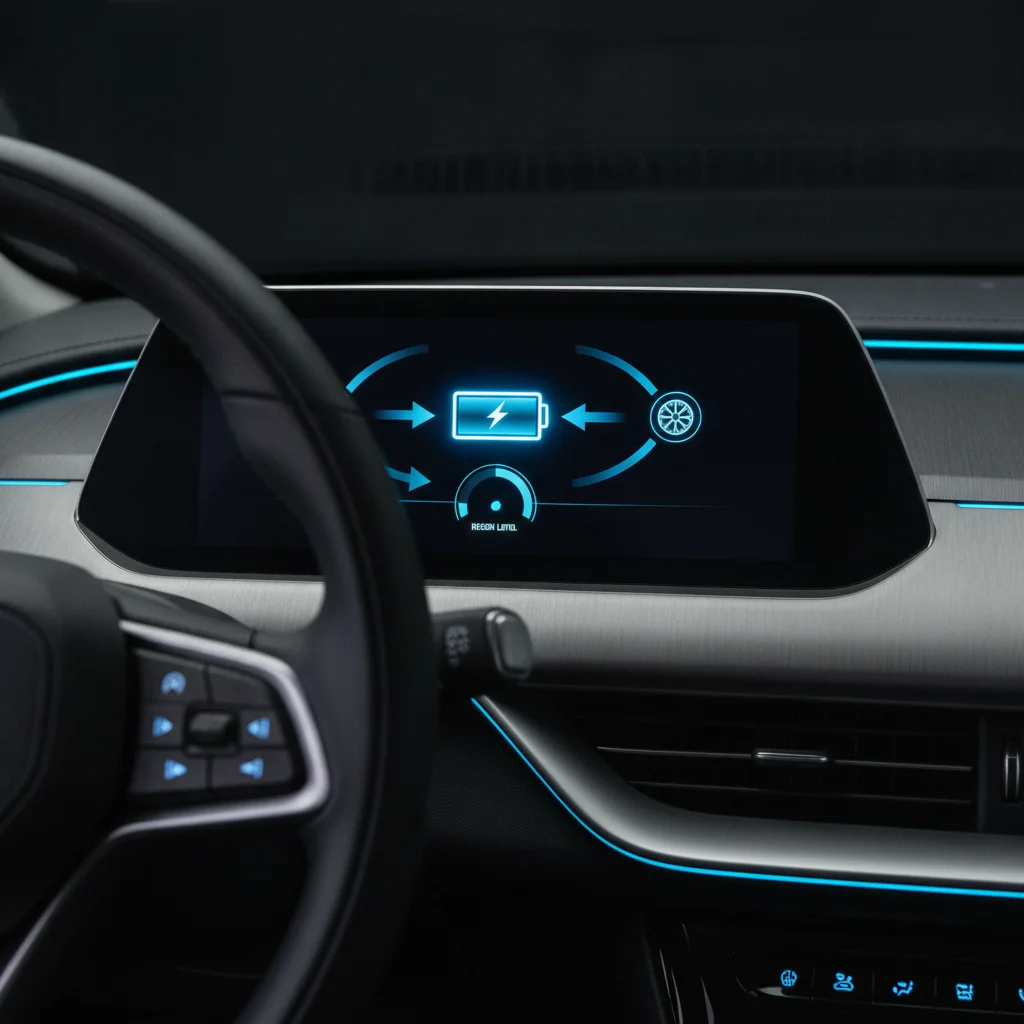
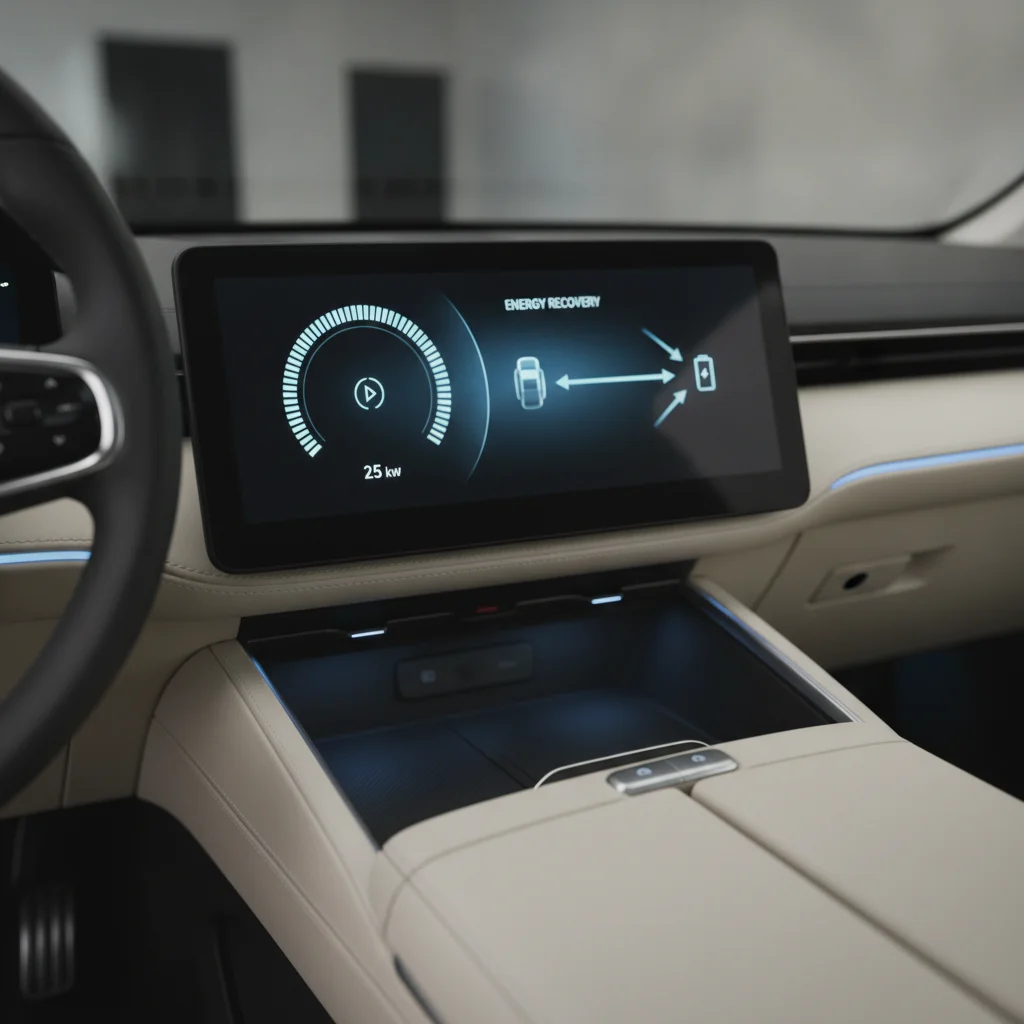
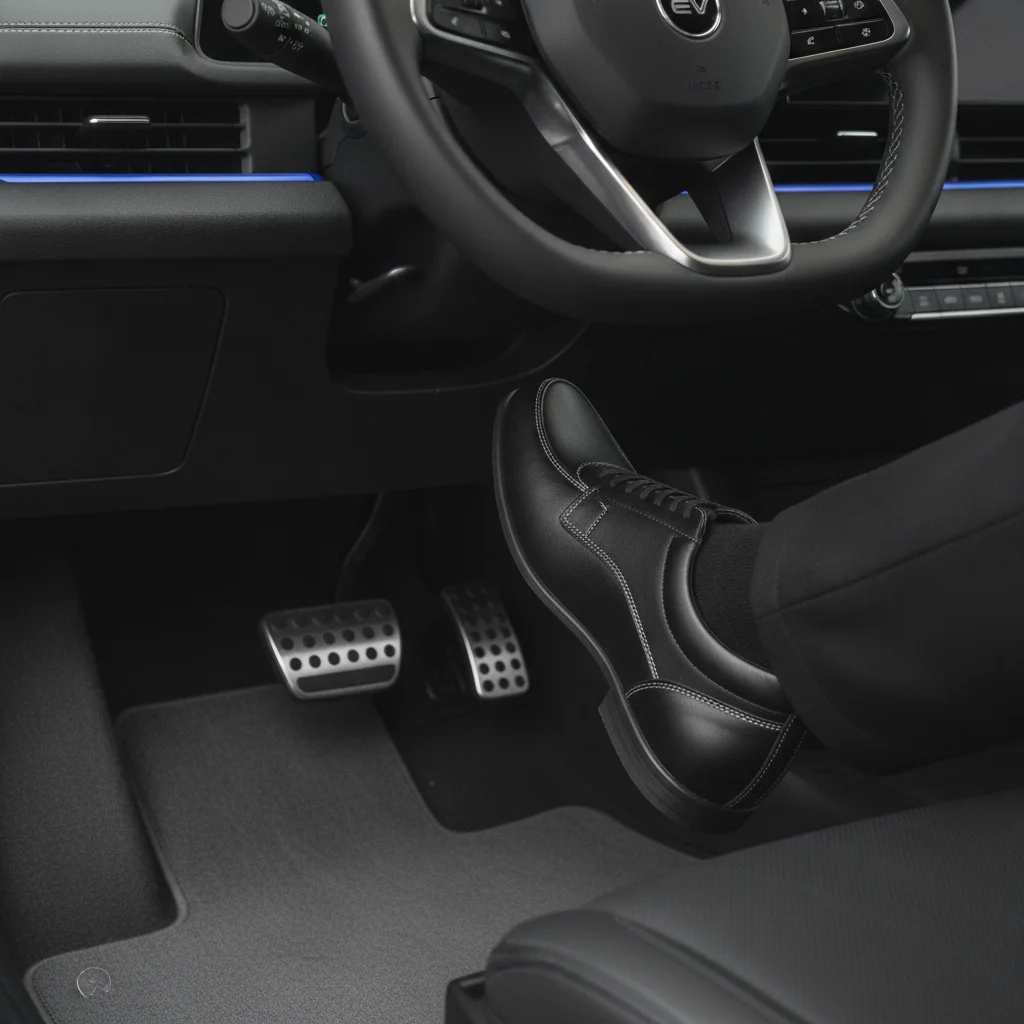
Strip away the marketing language and one-pedal driving is a specific calibration of regenerative braking: when you lift your foot from the accelerator, the electric motor immediately switches into generator mode, converting the car's kinetic energy back into electricity and feeding it into the battery pack. The drag created by this energy conversion slows the car — sometimes enough to bring it to a complete stop without touching the brake pedal at all.
To understand the underlying physics, it helps to read our deep-dive on regenerative braking, which explains exactly how the motor-generator transition works and why EVs recover energy that conventional cars waste entirely as heat.
One-pedal mode is not a binary on/off setting on every vehicle. Manufacturers implement it differently:
- Full one-pedal stop: The car decelerates hard enough to reach zero mph without the friction brakes — Tesla's standard regen mode, Hyundai IONIQ 6's maximum paddle position, and Chevrolet Equinox EV's strongest regen setting all qualify.
- Strong-but-not-stopping regen: Some vehicles, like certain Volkswagen ID.4 configurations, provide aggressive deceleration that slows the car significantly but requires a brief tap of the brake pedal to achieve a complete stop.
- Adjustable paddles: Vehicles including the Kia EV6 and BMW i4 let drivers dial in up to five regen levels via steering-wheel paddles, giving granular control rather than a single mode.
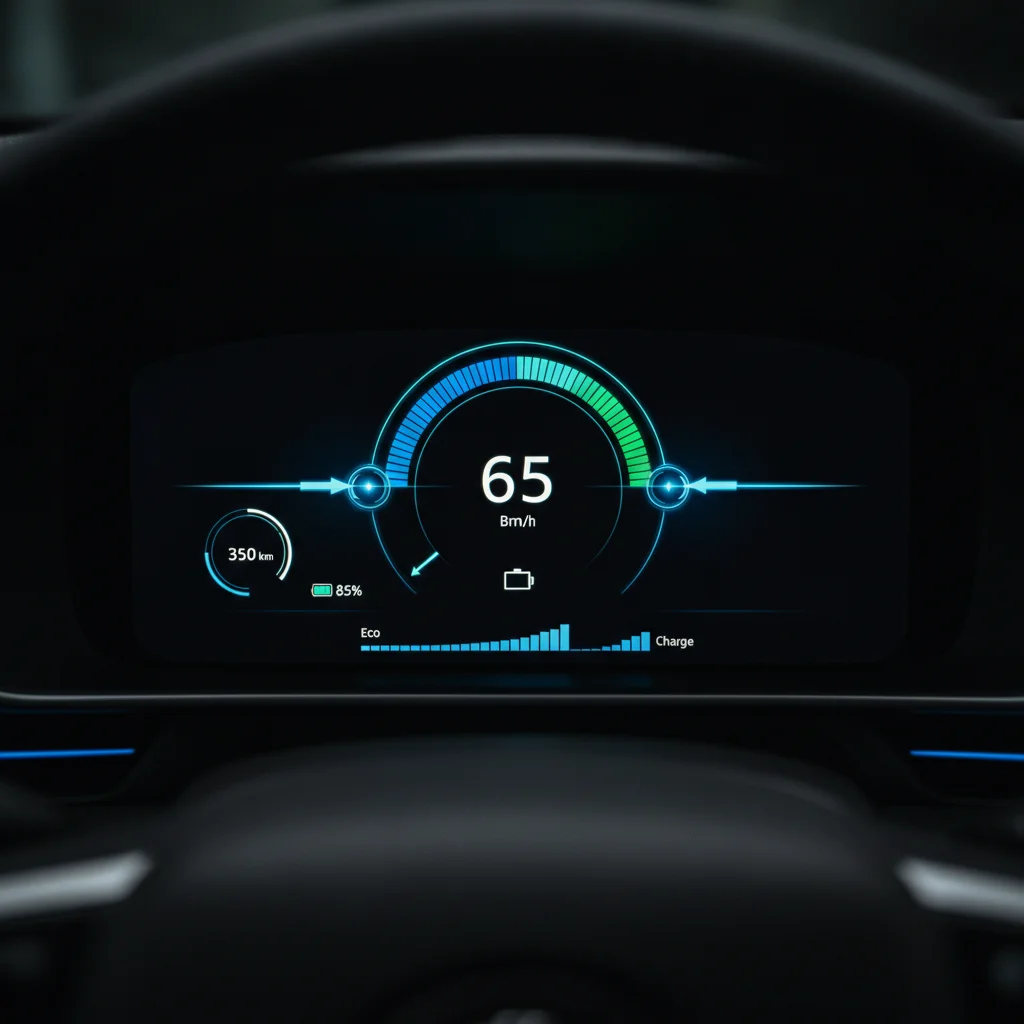
Importantly, the friction brake system remains active at all times. Brake-by-wire systems blend regenerative and friction braking seamlessly, with the physical calipers engaging automatically if the deceleration demand exceeds what regen can deliver — or if the battery is too full to accept more charge. This is why one-pedal driving does not reduce emergency stopping capability.
Where One-Pedal Driving Earns Its Efficiency Reputation
The efficiency case for one-pedal driving is strongest in specific driving environments. Understanding those contexts helps set realistic expectations rather than accepting blanket claims about range gains.
60–70%
Kinetic energy recovered during moderate regen deceleration
Engineering analyses of EV regenerative systems indicate that motor-generator roundtrip efficiency during controlled deceleration typically falls in the 60–70% range under optimal conditions.
10–20%
Potential urban range improvement with aggressive regen use
Multiple EV owner studies and manufacturer data suggest urban driving with maximum regenerative braking can increase effective range by 10–20% versus relying primarily on friction brakes.
2–3×
Longer brake pad life in one-pedal EV drivers
EV fleet maintenance data indicates that drivers using strong regenerative braking consistently achieve two to three times the brake pad longevity of equivalent friction-brake-dependent vehicles.
0.2–0.3g
Deceleration force in maximum regen mode
Instrumented testing of EVs with strong one-pedal settings shows deceleration forces comparable to moderate conventional braking, roughly 0.2 to 0.3g depending on vehicle and speed.
City and Stop-and-Go Traffic
Urban driving is where one-pedal mode shines. Every time you decelerate from 30 mph to a stop at a red light, you're converting kinetic energy that would otherwise be lost. Regenerative braking systems on modern BEVs can recapture roughly 60–70% of that kinetic energy under moderate deceleration rates — a figure that drops toward zero in a conventional car with friction brakes alone. Across a typical urban commute with dozens of stop cycles, those increments compound into meaningful range extension.
For a broader look at how much range regen actually adds back in practice, see our analysis of how regenerative braking extends EV range.
Suburban Arterial Roads
Traffic lights spaced a quarter to half a mile apart — typical of suburban commercial corridors — also favor one-pedal operation. Speeds are moderate (35–50 mph), giving the motor enough time to scrub speed progressively and recover meaningful energy before the stop. The deceleration profile here matches the sweet spot where regen efficiency is highest: not so slow that little energy is available, not so fast that the battery's charge acceptance rate limits recovery.
Downhill Grades
Gravity-fed descents are where regen can genuinely surprise drivers. Holding a consistent speed downhill using one-pedal mode means the motor is continuously generating electricity rather than the friction brakes dissipating energy as heat. Mountain routes that punish conventional EVs with hot brake smell can actually add range on descent if the battery has headroom to accept the charge. The key caveat: if the battery is at or near 100% state of charge, regen is limited or disabled entirely to protect cell chemistry, and friction brakes must handle the load.
Battery State of Charge Limits Regen
Regenerative braking can only feed energy into the battery if the battery has capacity to accept it. Most EVs automatically scale back or disable regen when the state of charge exceeds roughly 95–100%. This is a battery protection mechanism, not a malfunction. Drivers planning routes with long descents should consider charging to 80–90% rather than 100% to preserve regen availability throughout the trip.
One-Pedal Driving Is Not a Universal EV Feature
Despite its growing popularity, true one-pedal driving — where regen alone brings the car to a complete stop — is not standard across all EVs. Some models provide adjustable regen strength but require the brake pedal for the final stop. Before purchasing, confirm the vehicle's regen capability and whether one-pedal mode can be set as the default to avoid resetting it at every drive cycle.
Cold Weather Reduces Regenerative Braking Strength
Lithium-ion batteries in cold temperatures have reduced charge acceptance rates, which limits how much current a regenerative braking system can push into the pack. In freezing conditions, maximum regen deceleration force may be noticeably reduced, and drivers should anticipate relying more on friction brakes. This effect diminishes as the battery warms up through normal use.
When One-Pedal Driving Delivers Diminishing Returns
The efficiency gains from one-pedal driving are not uniform across all driving scenarios. In some conditions, the technique provides minimal benefit — and in a few edge cases, it can slightly reduce efficiency compared to coasting.
Highway Cruising
At constant highway speeds with wide spacing between vehicles, there is little opportunity to use regen productively. Lifting off the accelerator to engage heavy regen at 70 mph when you plan to return to speed a few seconds later wastes energy: you convert kinetic energy to electricity, incur motor and inverter conversion losses doing so, then consume electricity to accelerate again. Coasting in a lower-regen mode (or switching to a "glide" mode where available) is more efficient when you intend to resume speed.
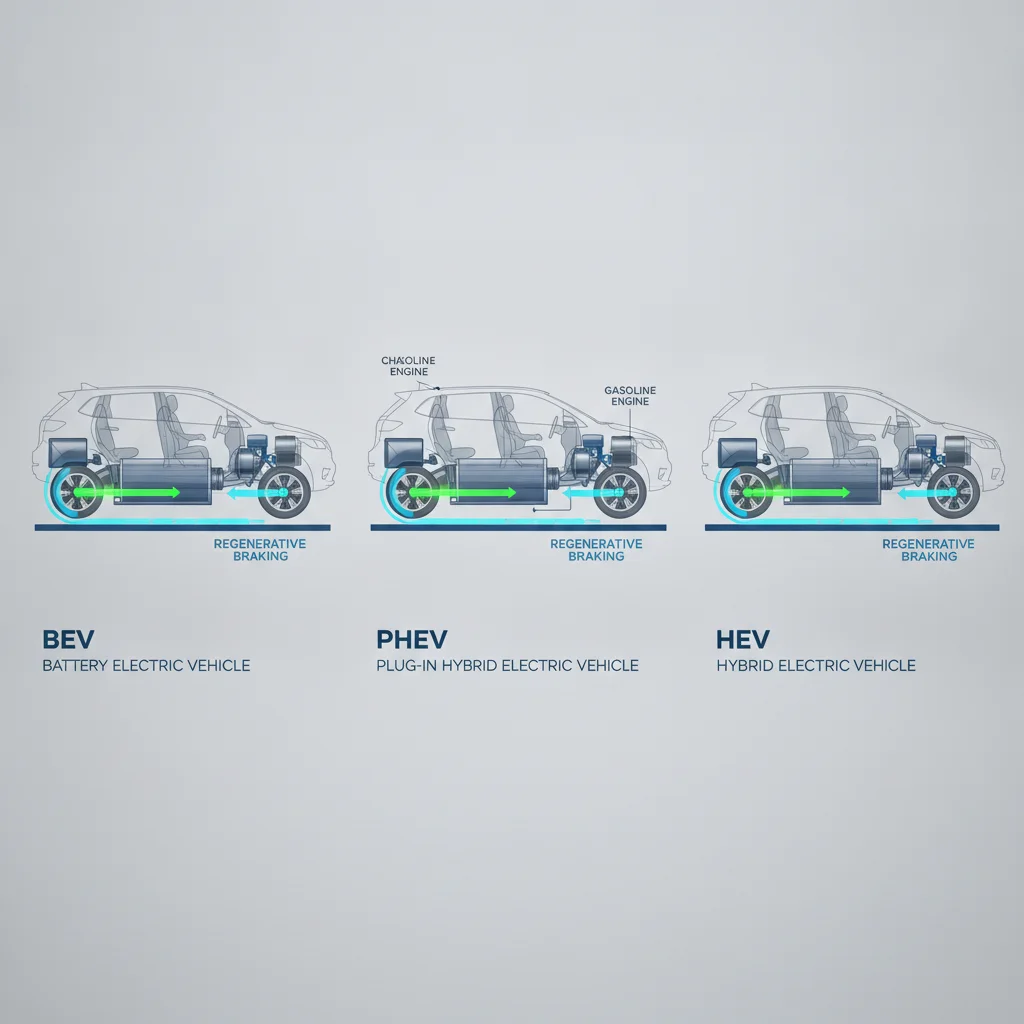
This dynamic — where different electrified vehicles handle highway energy recovery — is explored in detail in our comparison of regenerative braking across EV types.
Full Battery State of Charge
A lithium-ion battery near 100% charge cannot safely accept additional current from regenerative braking without risking cell damage. Most EVs automatically reduce or disable regen when the battery is full, meaning that descending a mountain right after charging to 100% may yield no energy recovery at all — and full reliance on friction brakes. Drivers who plan routes with significant descents are often better served charging to 80–90% rather than 100%.
Light, Predictable Traffic
On lightly traveled roads where you rarely need to brake, one-pedal driving offers little advantage over coasting. If you can predict a green light will hold and choose to coast toward it rather than lifting off sharply to engage regen, you arrive with more kinetic energy and waste less on conversion losses. Smooth, anticipatory driving — not maximum regen use — is the true efficiency ideal.

Pros and Cons: A Balanced Assessment
One-pedal driving carries a mix of genuine advantages and real limitations. The balance tips differently depending on your driving environment and personal preferences.
Recaptures kinetic energy on every deceleration
Rather than wasting braking energy as heat, one-pedal driving feeds it back into the battery. In urban driving cycles, this can improve effective range by 10–20% compared to relying solely on friction brakes.
Reduces friction brake wear significantly
With regenerative braking handling most deceleration, physical brake pads last two to three times longer than in conventional vehicles, reducing a recurring maintenance cost over the ownership period.
Simplifies the driving task in stop-and-go traffic
Using a single pedal to modulate both acceleration and deceleration reduces foot movement and mental load in heavy traffic, which many drivers find less fatiguing over long commutes.
Encourages anticipatory, smoother driving style
The technique rewards drivers who read traffic further ahead and plan deceleration arcs, a habit that independently reduces energy consumption and improves safety margins.
Downhill grades can actively restore range
On sustained descents with battery headroom available, strong regen can add net miles to the battery rather than merely maintaining speed, turning geography into a charging opportunity.
Friction brakes remain fully functional in emergencies
Brake-by-wire systems blend regen and friction braking automatically, ensuring full stopping power is available regardless of regen mode, battery charge level, or driving speed.
Learning curve disrupts ingrained two-pedal habits
Drivers with decades of conventional experience often find the transition jarring for the first one to two weeks, resulting in jerky stops as they reflexively brake when the car is already decelerating.
Minimal benefit at sustained highway speeds
Constant-speed highway driving provides few deceleration events to exploit, and lifting off to engage regen when you intend to resume speed wastes energy through motor conversion losses.
Disabled or reduced near 100% state of charge
A nearly full battery cannot safely accept regen current, so drivers starting a descent after a full charge lose the feature's benefits and must rely on friction brakes for the entire descent.
Implementation varies widely across manufacturers
Some EVs offer true one-pedal stop capability while others provide aggressive-but-not-stopping regen, creating inconsistent experiences that can confuse drivers switching between vehicles.
Can feel abrupt to passengers unfamiliar with EVs
The rapid deceleration when lifting off the pedal is unexpected for passengers accustomed to conventional cars, sometimes causing discomfort or mild motion sickness, particularly in rear seats.
Coasting is sometimes more efficient than maximum regen
When a driver plans to return to speed shortly after lifting off, coasting with minimal regen avoids conversion losses. Defaulting to maximum regen in all situations is not always the optimal strategy.
For a more detailed comparison of situations where one-pedal driving helps versus frustrates, see our honest assessment of one-pedal driving pros and cons.
The Learning Curve: What New EV Drivers Experience
Driver adaptation is one of the least-discussed but most practically important aspects of one-pedal driving. Decades of muscle memory built around a two-pedal system don't evaporate overnight.

Phase 1: The Lurch (Days 1–3)
Most new one-pedal drivers report instinctively reaching for the brake pedal even when the car is already slowing appropriately. The car's behavior feels abrupt — a passenger car in heavy regen can decelerate at 0.2–0.3g, similar to moderate conventional braking. This triggers an automatic response to stabilize oneself by pressing the brake, which can cause jerky stops.
Phase 2: Recalibrating Lift-Off Timing (Days 4–14)
The key skill is learning to lift the accelerator earlier than you would in a conventional car — sometimes 50 to 100 feet sooner at city speeds. Once drivers internalize this timing shift, one-pedal operation becomes fluid. The car slows predictably, and the driver modulates speed with the accelerator rather than alternating between two pedals.
Phase 3: Anticipatory Driving (Beyond Week 2)
Experienced one-pedal drivers often describe a shift toward more anticipatory driving: watching traffic signals further ahead, reading the flow of cars earlier, and planning deceleration arcs rather than reacting to them. This behavioral shift independently improves efficiency beyond the energy recovered by regen itself. It also reduces stress in traffic, since fewer reactive braking events occur.
How One-Pedal Driving Fits Into the Broader EV Ecosystem
One-pedal driving is one tool within a larger set of EV efficiency strategies, not a standalone solution to range anxiety. Its relationship to other techniques and vehicle features is worth understanding.
Brake Pad Longevity
Because friction brakes are used far less frequently in one-pedal mode, brake pad wear slows dramatically. Many EV owners report going 50,000–80,000 miles between brake pad replacements — compared to 30,000–40,000 miles typical in conventional vehicles. This translates into direct ownership cost savings that offset the EV's typically higher purchase price over time.
Hybrid Parallels
While hybrids use regenerative braking, most do not offer true one-pedal driving. Their regen is typically less aggressive and blended automatically with friction braking without driver control. Understanding why hybrids achieve better city MPG through regen provides useful context for how the same principle scales up in a pure BEV.
Trip Planning Implications
Knowing when one-pedal driving helps and when it doesn't should inform how you think about route efficiency. City-heavy commutes can realistically add 10–15% to effective range through aggressive regen use. Highway-dominated trips should be planned based on the vehicle's EPA highway rating, with regen providing only marginal benefit at best. For context on the broader how EVs work, understanding the full drivetrain picture helps calibrate expectations.

All claims are backed by peer-reviewed research. Sources on request.