Key Takeaways
Why Hybrid Myths Are Still Doing Real Damage
Hybrid vehicles have been on sale in the United States since 1999, when the Honda Insight arrived a few months after the Toyota Prius. That's more than two decades of real-world data, yet buyer confusion about how hybrids actually work has barely budged. I hear the same bad assumptions repeated at dealerships, in online forums, and in conversations with first-time buyers every year.
Part of the problem is that "hybrid" now covers a wide range of powertrains — from mild hybrids that can't propel a car on electricity alone, to plug-in hybrids (PHEVs) that can cover 30–50 miles on battery power before the gas engine takes over. Lumping them together breeds misunderstanding. Another part is that early hybrids genuinely had limitations that the current generation has largely solved, and the old reputation sticks.
These myths matter financially. A buyer who thinks hybrids are slow might skip a fuel-efficient option that actually suits their needs. A buyer who overestimates battery replacement risk might pay thousands extra for a gas-only vehicle to avoid a cost that may never materialize. And a buyer who doesn't understand PHEV charging might leave significant fuel savings on the table.
If you're also navigating broader car-buying misconceptions, our piece on used car myths that cost buyers real money covers similar ground for the used-car market. For a parallel look at EV-specific myths, see our common EV myths guide.
The Myth-by-Myth Breakdown
Below are the most persistent hybrid misconceptions I encounter, each paired with what the evidence actually shows. These cover standard hybrids (HEVs) and plug-in hybrids (PHEVs) — I'll flag which applies where the distinction matters.
Myth
You never have to charge a hybrid — they're completely self-sufficient.
Fact
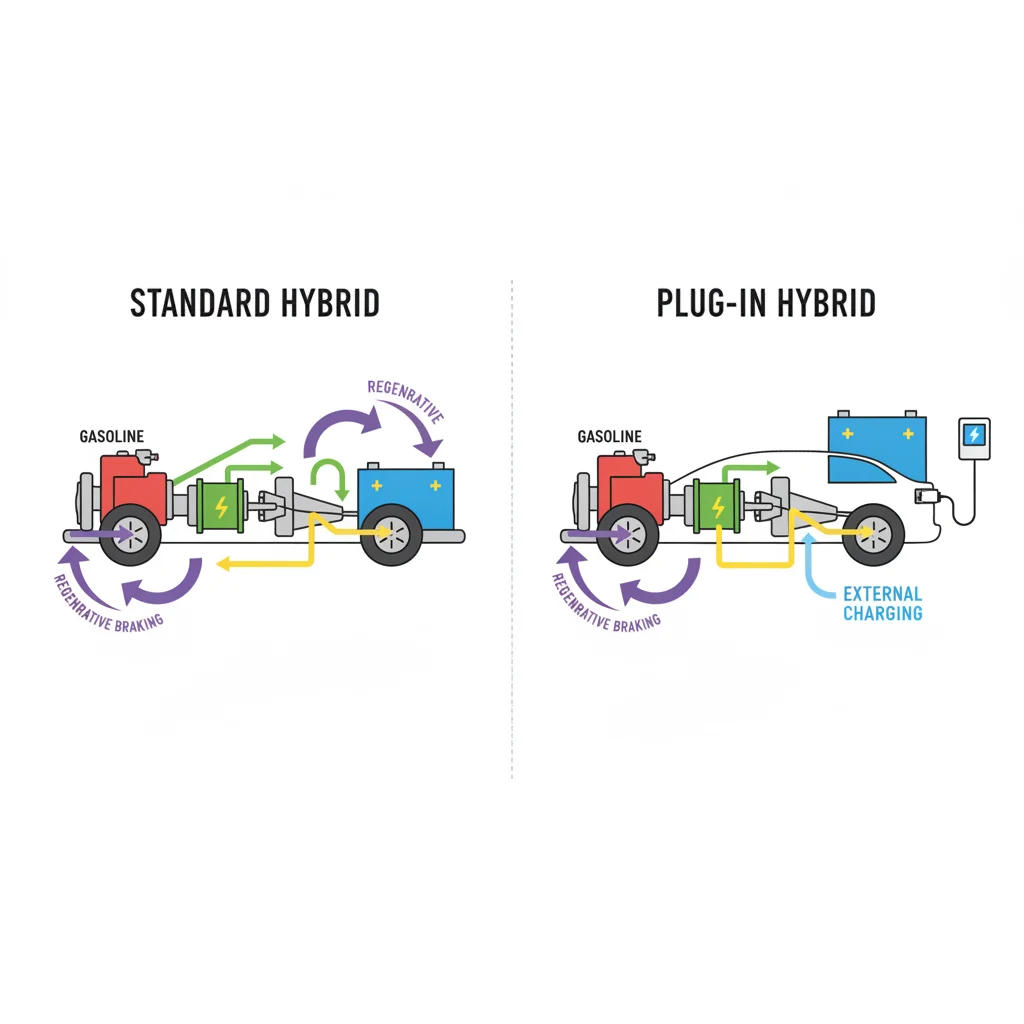
Standard hybrids (HEVs) charge themselves through regenerative braking and never need a plug. Plug-in hybrids (PHEVs) require external charging to unlock their full efficiency benefits.
This is probably the single most common hybrid misconception, and it's understandable — the original Toyota Prius was marketed heavily on the "no plug needed" angle. For a standard full hybrid like a Toyota Camry Hybrid or Honda CR-V Hybrid, that's still true. The high-voltage battery charges itself through regenerative braking (capturing energy normally lost as heat when you slow down) and through the engine acting as a generator during certain driving conditions.
PHEVs are a different story. A vehicle like the Toyota RAV4 Prime or Hyundai Tucson PHEV carries a much larger battery — often 14–18 kWh versus the 1–2 kWh in a standard hybrid. That larger battery allows 20–50 miles of all-electric driving, but it can't fully recharge through regenerative braking alone. If you drive a PHEV without ever plugging it in, you'll essentially be driving a heavier-than-normal gas car with worse fuel economy than a standard hybrid, because you're lugging around battery weight that never gets properly used.
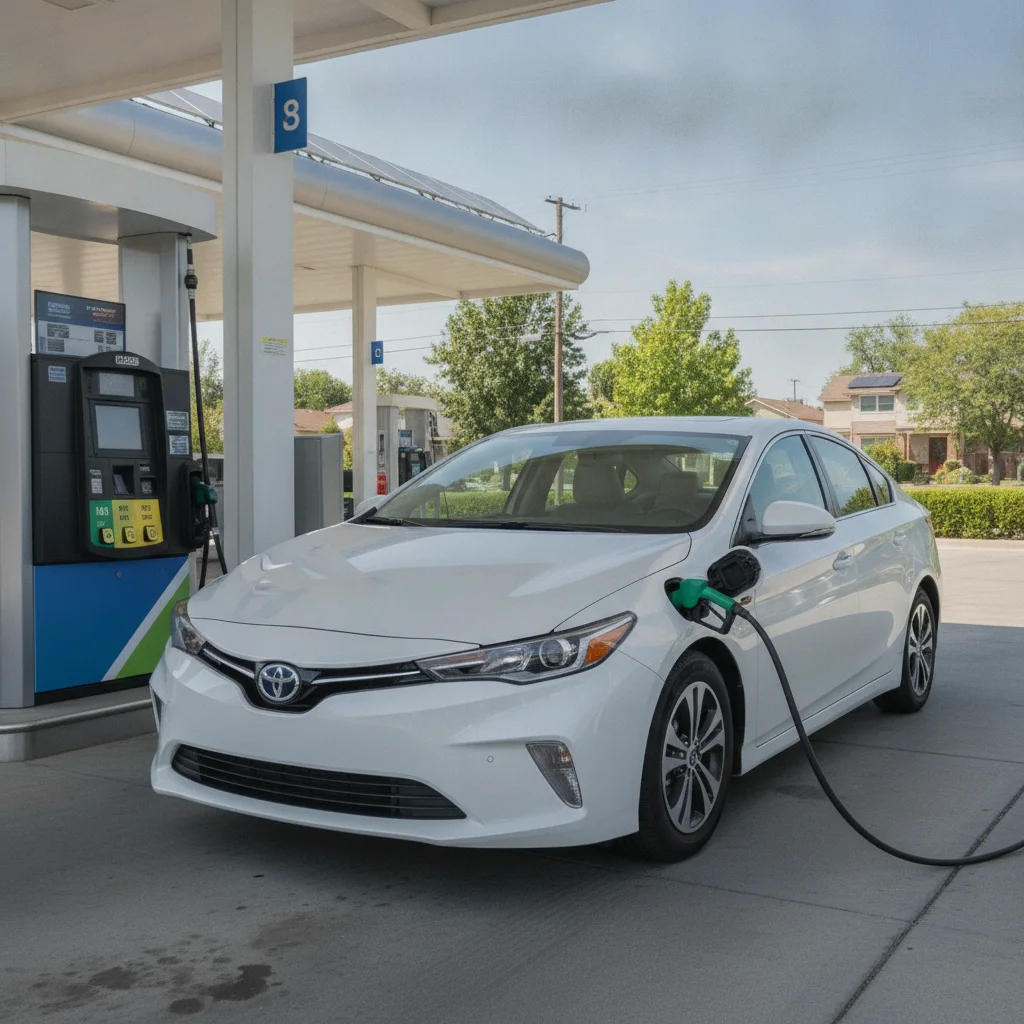
The practical upshot: if you're buying a PHEV, plan for regular charging. A Level 2 home charger (240V) will fully charge most PHEVs overnight. Even a standard 120V outlet will do the job if you have 8–12 hours. The public charging network is also an option for top-ups during the day.
Myth
Hybrid batteries die around 100,000 miles and cost a fortune to replace.
Fact
Real-world hybrid battery longevity regularly exceeds 150,000–200,000 miles, and replacement costs have dropped substantially — and are rarely necessary for most owners.
This myth originated in the early 2000s when hybrid battery replacement costs were genuinely scary and real-world longevity data was limited. The landscape has changed dramatically. Toyota's internal data and third-party studies consistently show Prius high-voltage batteries lasting well beyond 150,000 miles, with many taxi fleets reporting 300,000+ miles without replacement. Consumer Reports' reliability data shows hybrid battery failure rates are low enough that it rarely appears as a significant ownership concern.
On the cost side: a replacement Prius battery from Toyota runs roughly $2,000–$4,000 installed at a dealer. Third-party refurbished options can be found for $1,000–$2,500. That's a real expense, but spread over a vehicle that may have saved $8,000–$15,000 in fuel over its lifetime, the math still often favors the hybrid.
Federal law requires hybrid and EV high-voltage batteries to be warranted for at least 8 years or 100,000 miles. In California and states following California emissions standards (roughly 17 states), the minimum is 10 years or 150,000 miles — whichever comes first. Many buyers never reach a point where an out-of-warranty replacement is needed.
Myth
Hybrids are slow and boring to drive — they're built for economy, not performance.
Fact
Many modern hybrids match or beat their gas-only equivalents in acceleration, and performance-oriented hybrids are genuinely quick by any standard.
Early hybrids were tuned almost exclusively for efficiency. The original Prius did 0–60 mph in about 10.5 seconds — leisurely by any measure. That bias toward economy over performance set a perception that stuck even as the technology moved on.
Today's reality is different. Electric motors deliver maximum torque instantly, from a dead stop, which means hybrid powertrains can actually feel quicker off the line than their horsepower ratings suggest. The Toyota RAV4 Prime does 0–60 in 5.4 seconds. The Lexus NX 450h+ hits it in 6.0 seconds. The Hyundai Tucson PHEV is mid-7s — comparable to many turbocharged competitors. At the extreme end, the BMW XM Label Red hybrid produces 738 combined horsepower.
Even mainstream fuel-economy hybrids have improved. The 2024 Toyota Camry Hybrid's top trim makes 225 horsepower and does 0–60 in about 6.3 seconds — quicker than many non-hybrid competitors in its class. The Honda CR-V Hybrid similarly outpaces the non-hybrid version in real-world driving feel because of that instant electric torque.
If performance has been your reason for skipping hybrids, it's worth revisiting. The instant-torque characteristic of electric drive actually suits spirited driving well.
Myth
Hybrids don't save enough fuel to justify the higher purchase price.
Fact
For most buyers, the fuel savings from a hybrid offset the price premium within 3–5 years, and total cost of ownership often favors the hybrid over a full loan term.
Whether a hybrid "pays off" depends on your specific situation — fuel prices, annual mileage, how you drive, and how long you keep the vehicle. But the generic claim that hybrids never pencil out doesn't hold up to the math for most American drivers.
Consider a practical example using 2024 figures. A Toyota Camry LE (gas) has an EPA rating of 32 mpg combined and an MSRP around $28,400. The Camry Hybrid LE is rated 51 mpg combined with an MSRP around $30,900 — a $2,500 premium. At 15,000 miles per year and $3.50/gallon:
- Gas Camry annual fuel cost: ~$1,641
- Hybrid Camry annual fuel cost: ~$1,029
- Annual savings: ~$612
- Break-even: approximately 4.1 years
For buyers who drive more than 15,000 miles annually or who live in areas with higher fuel costs, break-even comes sooner. Buyers who keep vehicles 8–10 years (which is close to the US average ownership duration) accumulate $4,000–$6,000+ in fuel savings over the loan term, far exceeding the initial premium.
Add lower brake maintenance costs due to regenerative braking, and the case strengthens further. PHEVs whose owners charge regularly show even more dramatic per-mile cost reductions.
Myth
Hybrids are complicated to maintain and most mechanics can't work on them.
Fact
Hybrid maintenance is largely identical to conventional gas car maintenance, and the dealer and independent repair network for established hybrid platforms is now very mature.
In 2002, finding an independent mechanic comfortable with a Prius high-voltage system was genuinely difficult. In 2024, the Toyota Prius alone has been on sale for 25 years with millions of units in circulation — the knowledge base is deep and widely distributed.
For day-to-day maintenance, hybrids require the same service as any gas vehicle: oil changes, air filters, tire rotations, and coolant flushes. The hybrid-specific components — the high-voltage battery, the power electronics, the electric motors — are engineered for longevity and sealed systems that rarely need service between major intervals.
Brake service is actually less frequent on hybrids because regenerative braking handles the majority of stopping energy, reducing wear on physical brake pads and rotors. Many Toyota Prius owners report going 80,000–100,000 miles before needing pad replacement.
The one legitimate caveat: if you're buying an off-brand or obscure hybrid that lacks a wide dealer or independent service network, the maintenance story is harder. Stick to established platforms — Toyota, Honda, Ford, Hyundai/Kia — and the service ecosystem is robust.
[important_callout]Myth
Hybrids are just as bad for the environment as gas cars when you factor in battery production.
Fact
Lifecycle emissions studies consistently show hybrids produce significantly less total greenhouse gas than equivalent gas-only vehicles, even accounting for battery manufacturing.
This argument — sometimes called the "long tailpipe" or "dirty manufacturing" objection — gets applied to both hybrids and full EVs. For full EVs, the grid-source energy question is more complex. For hybrids, the math is more straightforward because hybrid batteries are substantially smaller than EV batteries, meaning the manufacturing carbon footprint is lower.
A comprehensive lifecycle analysis by the Union of Concerned Scientists found that a hybrid vehicle produces roughly 30–40% less lifetime greenhouse gas emissions than a comparable gas-only vehicle, even accounting for battery production and end-of-life processing. The smaller battery in a standard HEV (often 1–2 kWh) has a modest manufacturing footprint that's offset quickly by reduced tailpipe emissions during operation.
PHEVs sit between HEVs and full EVs on the lifecycle emissions scale — their larger batteries carry a bigger upfront manufacturing cost, but owners who charge regularly see significant emissions reductions in operation. The full picture depends heavily on your regional grid's energy mix, but in most US regions PHEVs come out ahead of gas equivalents on lifecycle emissions.
Battery recycling programs are also maturing. Toyota, Honda, and others have established take-back programs, and the secondary market for refurbished hybrid batteries (for use in replacement applications) extends useful battery life before end-of-life recycling.
Myth
PHEVs get great fuel economy even if you never plug them in.
Fact
A PHEV driven without charging regularly will often achieve worse real-world fuel economy than a standard full hybrid, because it carries significant extra battery weight.
This is a trap that catches buyers who are attracted to a PHEV's headline EPA numbers without reading the fine print. The EPA reports two MPG figures for PHEVs: one for all-electric operation and one for "charge-sustaining" mode (running as a conventional hybrid after the battery is depleted). The charge-sustaining MPG is the relevant figure if you never plug in.
For many PHEVs, charge-sustaining MPG is lower than an equivalent non-plug-in hybrid. The Jeep Wrangler 4xe, for example, gets 49 MPGe combined in electric mode but drops to just 20 mpg in charge-sustaining mode — lower than a conventional Wrangler in some configurations, because it's hauling around a 17.3 kWh battery pack. The Toyota RAV4 Prime fares better at 38 mpg charge-sustaining, which is excellent — but it's still a case where the electric range benefit is only realized through regular charging.
If your living situation doesn't allow for regular charging — apartment parking, street parking, frequent travel — a standard full hybrid will likely deliver better real-world efficiency and a lower total cost of ownership than a PHEV purchased without a charging plan. See our piece on charging cost myths for related guidance on how charging economics actually work.
51 MPG
Combined EPA rating, 2024 Toyota Camry Hybrid LE
Compared to 32 MPG for the non-hybrid Camry LE — a 59% improvement on the same basic platform.
$7,500
Maximum federal tax credit for qualifying PHEVs
Under the Inflation Reduction Act, eligible plug-in hybrids can qualify for the full federal EV tax credit, subject to income and MSRP limits.
8 yrs / 100K mi
Federal minimum hybrid battery warranty
Federal law mandates at least 8-year/100,000-mile coverage on hybrid high-voltage batteries; California-standard states require 10 years/150,000 miles.
~30–40%
Lifecycle GHG reduction vs. gas equivalent
According to Union of Concerned Scientists lifecycle analyses, hybrids produce significantly fewer total greenhouse gas emissions even accounting for battery manufacturing.
5.4 sec
0–60 mph time, Toyota RAV4 Prime
The RAV4 Prime's combined 302 horsepower hybrid system makes it one of the quicker compact SUVs in its class, regardless of powertrain type.
Understanding the Hybrid Spectrum Before You Shop
One root cause of nearly every myth on this list is that buyers treat "hybrid" as a single category when it's really a spectrum. Here's a plain-language breakdown:
- Mild Hybrid (MHEV): A small battery-assist system that reduces engine load but cannot drive the wheels on electricity alone. Fuel savings are modest — typically 10–15%. Examples: Ram 1500 eTorque, some Ford F-150 variants.
- Full Hybrid (HEV): Can propel the car on electricity alone at low speeds. Self-charges through regenerative braking. No plug needed. Examples: Toyota Camry Hybrid, Honda CR-V Hybrid, Ford Escape Hybrid.
- Plug-In Hybrid (PHEV): Larger battery that can be charged externally. Offers meaningful all-electric range (20–50+ miles depending on model) before transitioning to hybrid mode. Examples: Toyota RAV4 Prime, Hyundai Tucson PHEV, Jeep Wrangler 4xe.
If you want to go deeper on how electric drivetrains function across these categories, the How EVs Work hub offers solid plain-language explanations of motors, batteries, and power management.

Don't Confuse Mild Hybrids With Full Hybrids
Some manufacturers label vehicles as "hybrid" when they only include a mild-hybrid assist system that cannot drive the wheels on electricity alone. Fuel savings from mild hybrids are real but modest — typically 10–15%. If you're expecting significant electric-drive capability or major fuel economy gains, verify that you're buying a full hybrid (HEV) or plug-in hybrid (PHEV), not just a MHEV badge.
PHEV Range Claims Assume Regular Charging
Advertised PHEV electric ranges — often 25–50 miles — assume a fully charged battery. Cold weather, highway speeds, and cabin heating or cooling all reduce real-world electric range, sometimes by 20–40%. If you're buying a PHEV partly for electric-only commuting, test your actual route conditions before assuming the EPA range figure will hold.
Check Assembly Requirements Before Assuming Federal Credit Eligibility
Several popular PHEVs sold in the US are assembled outside North America and therefore do not qualify for the federal tax credit, regardless of price or buyer income. The list of eligible vehicles changes as manufacturers adjust supply chains. Always verify current eligibility at the IRS or fueleconomy.gov before factoring the credit into your purchase budget.
Hybrid Incentives: What Buyers Often Miss
Incentive confusion deserves its own section because misinformation here has a direct dollar impact. Under the Inflation Reduction Act (IRA), standard hybrids (HEVs) do not qualify for the federal EV tax credit — they aren't plug-in vehicles. PHEVs, however, can qualify for up to $7,500 in federal tax credits if the vehicle and the buyer both meet eligibility requirements.
Key eligibility filters that catch buyers off guard:
- Income caps: Single filers with MAGI above $150,000 and joint filers above $300,000 do not qualify.
- MSRP caps: SUVs and trucks must be under $80,000; sedans under $55,000.
- Assembly requirements: The vehicle must be assembled in North America. This disqualifies several popular PHEVs — always verify before purchase.
- Point-of-sale transfer: Since 2024, buyers can transfer the credit to dealers at the point of sale, effectively reducing the purchase price instead of waiting for a tax refund.
State incentives layer on top of federal ones and vary significantly. Some states offer rebates, HOV lane access, or reduced registration fees for PHEV owners regardless of federal eligibility. Check your state's energy office before ruling out a PHEV on cost grounds.
High-Voltage Battery: Don't DIY
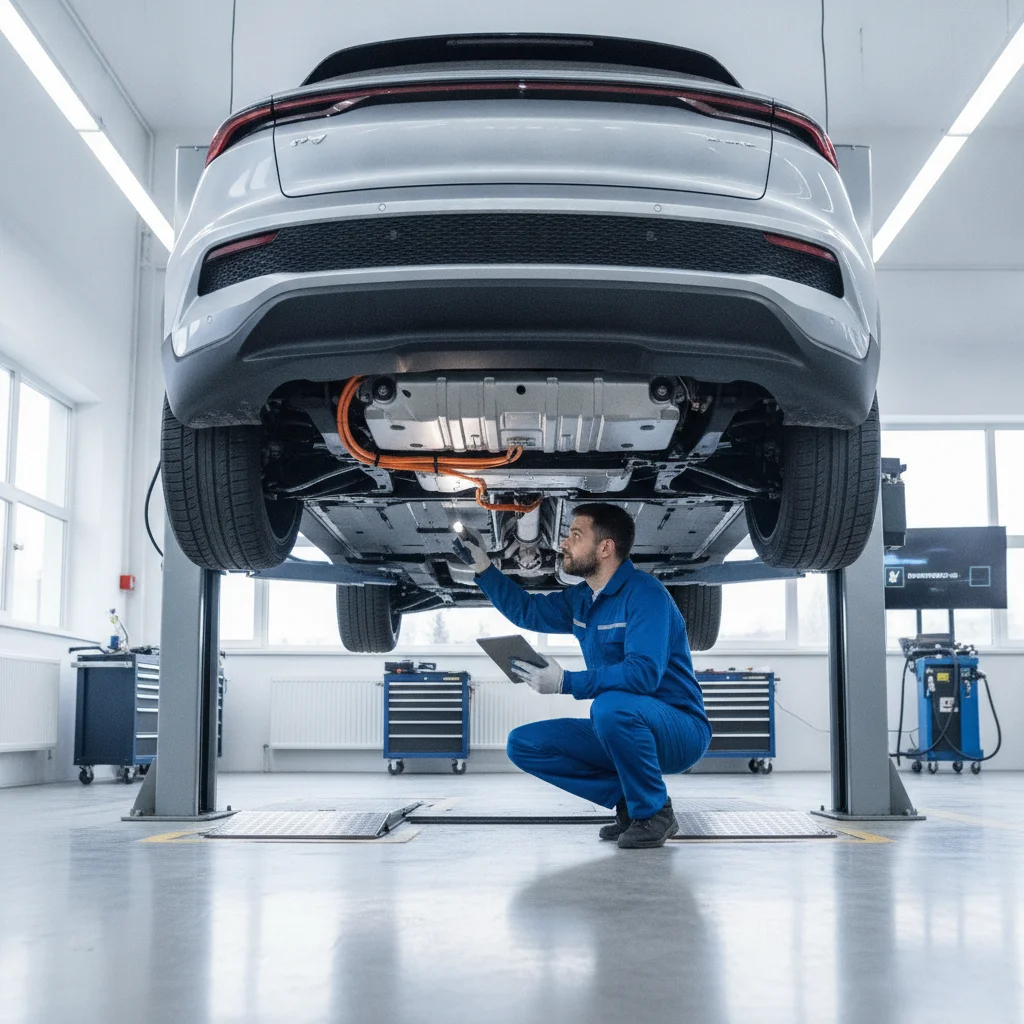
Hybrid high-voltage battery systems operate at 200–650 volts — levels that are potentially fatal. Unlike 12V batteries, these systems require specialized training, insulated tools, and safety protocols to service safely. Even experienced mechanics without hybrid-specific training should not attempt high-voltage component work. Always use a dealer or an independent shop with certified hybrid technicians for any work involving the high-voltage system, inverter, or electric motor assemblies.
PHEV Tax Credit: Verify Before You Sign
The federal PHEV tax credit can be worth up to $7,500, but eligibility depends on three separate criteria: buyer income limits, vehicle MSRP caps, and North American assembly requirements. All three must be satisfied simultaneously. Dealers are not always up to date on which vehicles qualify — verify independently at IRS.gov or fueleconomy.gov before using an expected credit as part of your purchase math. Claiming a credit you don't qualify for creates a tax liability.

The Maintenance Reality Check
Hybrid drivetrains have a reputation for complexity, but the maintenance story is more straightforward than most buyers expect. Here's where hybrids actually differ from conventional gas vehicles in practice:
| Maintenance Item | Conventional Gas Car | Full Hybrid (HEV) |
|---|---|---|
| Oil changes | Every 5,000–7,500 miles (conventional) or 7,500–10,000 miles (synthetic) | Same intervals, sometimes longer due to reduced engine cycling |
| Brake pads | Every 30,000–70,000 miles depending on driving style | Often 80,000–100,000+ miles due to regenerative braking |
| Transmission service | Required every 30,000–60,000 miles on automatics | CVT or e-CVT often sealed for life; fewer fluid changes |
| 12V battery | Replacement every 3–5 years | Same, plus high-voltage battery (separate) |
| High-voltage battery | N/A | Typically warranted 8 years/100,000 miles federally; real-world longevity often exceeds this |
The brake savings alone can be substantial over a vehicle's lifetime. Toyota reports that some Prius owners go 150,000+ miles before needing brake pad replacement — a figure unheard of in conventional vehicles.
For a comparison of how EV-specific maintenance myths play out differently, see our article on EV maintenance myths that cost owners time and money.

Bottom Line: How to Shop for a Hybrid Without the Baggage
Hybrids represent one of the most financially rational vehicle choices for a wide range of American drivers — particularly those who do a lot of city driving, have predictable daily commutes, or want lower fuel costs without the range or charging logistics of a full EV. But only if you go in with accurate expectations.
A few practical rules for hybrid shopping:
- Identify which hybrid type you're actually buying. Ask specifically whether it's a mild hybrid, full hybrid, or PHEV. Each has a different value proposition.
- Run the fuel math for your actual driving pattern. A PHEV's electric range only saves money if you can charge regularly. If you park on the street with no access to a home charger, a standard HEV may be the better pick.
- Factor in incentives before comparing sticker prices. A PHEV priced $4,000 higher than a comparable HEV may be cheaper net-of-incentives if you qualify for the federal credit.
- Don't pay extra for an extended battery warranty if the factory one is solid. Most hybrid high-voltage batteries are warranted to 8 years/100,000 miles federally; California-emission-standard states require 10 years/150,000 miles. That's meaningful coverage.
- Test drive performance variants. If you dismissed hybrids as sluggish, spend 10 minutes in a RAV4 Prime, a Hyundai Tucson PHEV, or a Lexus NX 450h+. The data — and the seat of your pants — will likely update your priors.
If you're also evaluating online purchase options, our guide to online car buying myths can help you avoid a separate set of outdated assumptions that slow down the buying process.
The hybrid market in 2024 and beyond offers more choices, better performance, and stronger economics than at any point in the technology's history. The biggest risk isn't the battery — it's walking away from a good deal because of a myth that stopped being true years ago.

All claims are backed by peer-reviewed research. Sources on request.