Key Takeaways
EV Range Gap
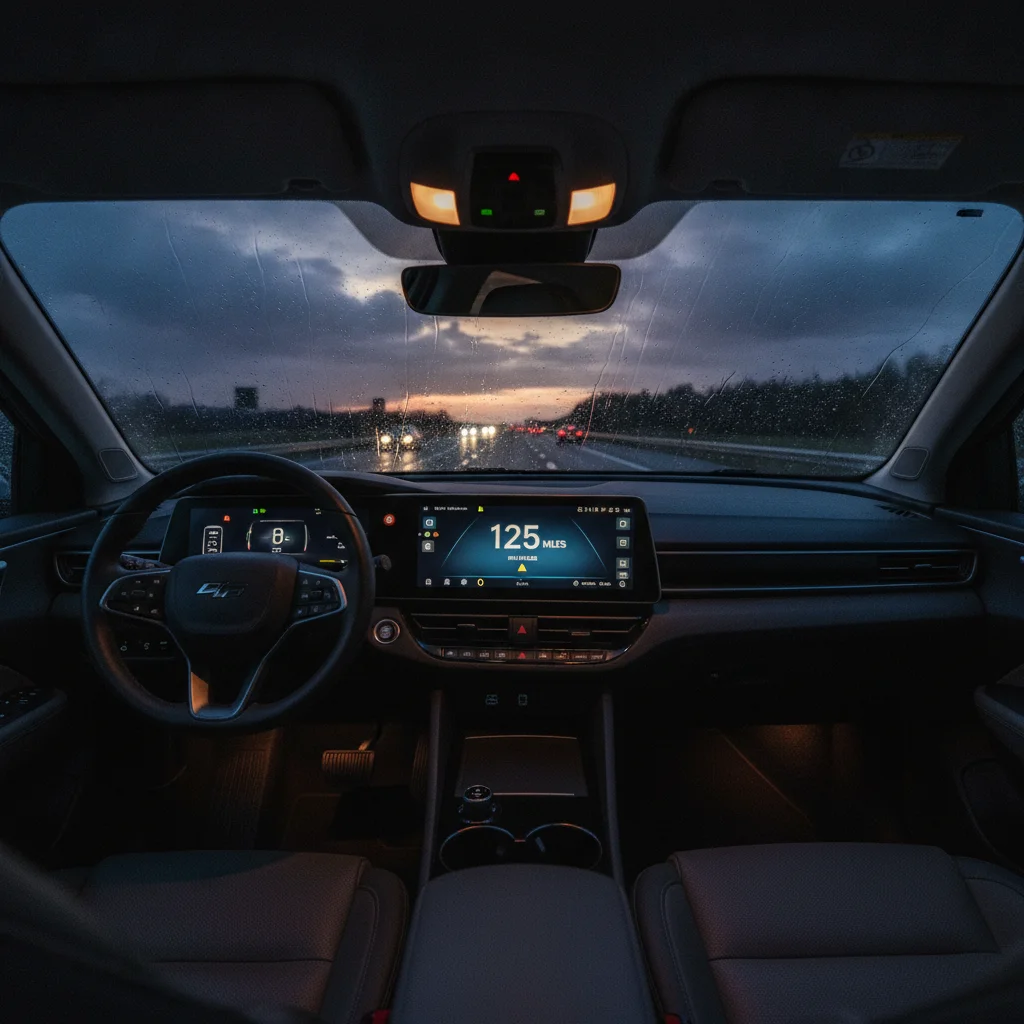
The EV range gap is the difference between the estimated driving range printed on a vehicle's window sticker — based on EPA laboratory testing — and the actual miles a driver gets in everyday conditions. This gap exists because laboratory tests cannot fully replicate real-world variables like cold weather, highway speeds, heavy cargo, and air conditioning use. For most EVs, real-world range lands somewhere between 10% and 30% below the advertised figure.
EPA range estimates are derived from a dynamometer cycle (the Multi-Cycle Test) run at moderate temperatures (around 72°F) with climate controls off, then adjusted by a correction factor. The agency applies a roughly 30% downward adjustment to raw cycle scores, but that factor still cannot account for every real-world variable.
The Lab vs. The Road: How EPA Range Is Calculated
Every new EV sold in the United States carries an EPA-estimated range on its Monroney label, the window sticker you see at the dealership. That number feels authoritative — but understanding exactly how it's produced explains immediately why your real-world mileage will differ.
The EPA uses a standardised laboratory procedure called the Multi-Cycle Test. Engineers place the vehicle on a chassis dynamometer — essentially a stationary set of rollers that simulates road load — and run it through two drive cycles: the Urban Dynamometer Driving Schedule (UDDS) and the Highway Fuel Economy Test (HWFET). The UDDS cycle tops out at just 56.7 mph with frequent stops; the HWFET cycle peaks at 60 mph. Both cycles are run at approximately 72°F (22°C) with the heating and air conditioning systems switched off.
The raw result from those cycles is then multiplied by a correction factor — historically around 0.70 — to better reflect real-world conditions. Even so, that corrected number represents an idealised scenario that most drivers will never replicate.
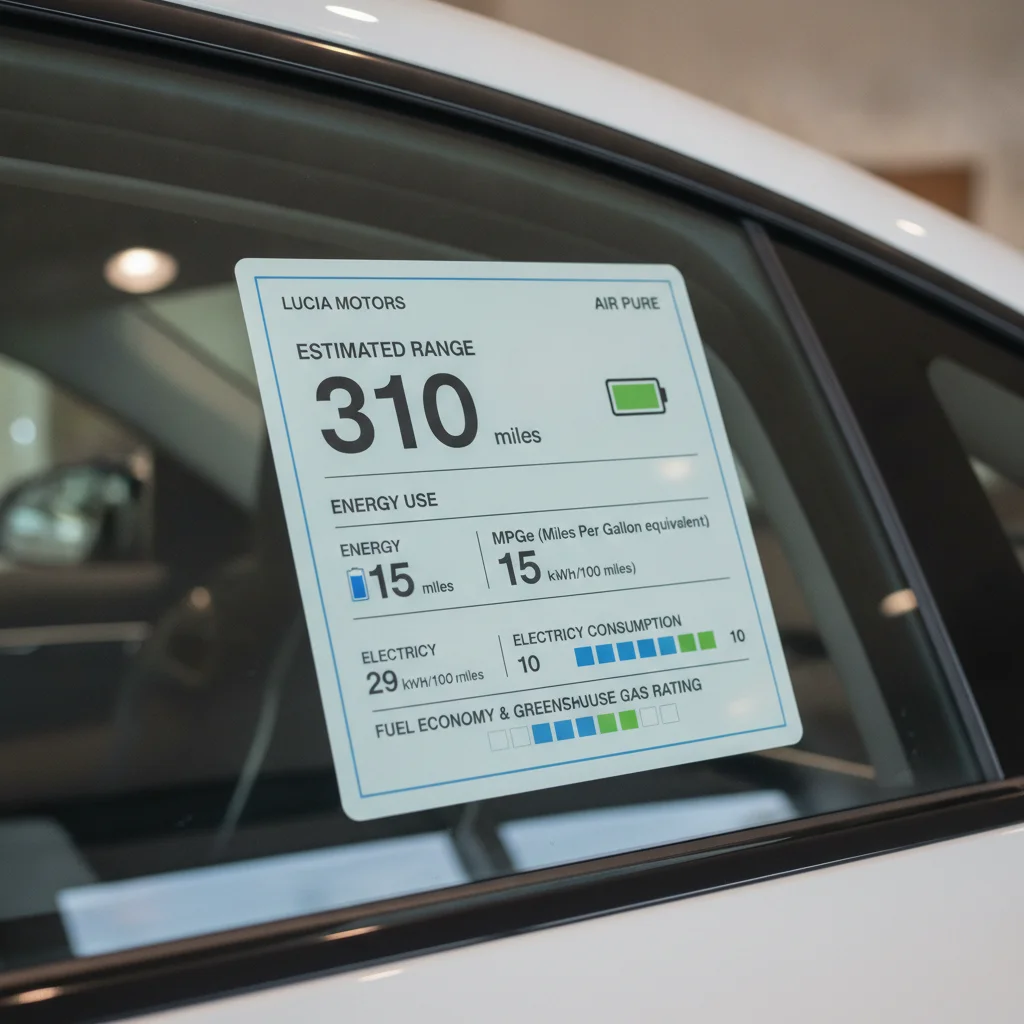
It's worth noting that the EPA does not conduct most testing itself. Automakers run their own tests and submit results; the EPA audits a sample for accuracy. This system works reasonably well, but it also means manufacturers can legally optimise their vehicles for the specific test cycle without committing fraud — a practice sometimes called "cycle beating."
For a deeper look at how the rated range is constructed versus what happens on public roads, see why your EV's rated range and real-world range never match.
EPA Testing Is a Standardised Tool, Not a Promise
The EPA range figure is designed to allow fair comparison between vehicles under identical conditions — not to predict your personal experience. Think of it the same way you approach the EPA fuel economy estimate on a gasoline vehicle: a useful benchmark that will vary in practice. The key is understanding which direction your specific conditions push the number, and by how much.
Battery Warranty Does Not Guarantee Original Range
Federal warranty rules require manufacturers to cover batteries for at least eight years or 100,000 miles, but the coverage floor is typically 70% of original capacity. A vehicle rated at 300 miles could legally retain only 210 miles of maximum range and still fall within warranty terms. Buyers of used EVs should always request a battery health report or test charge before completing a purchase.
Cold Weather: The Biggest Single Range Killer
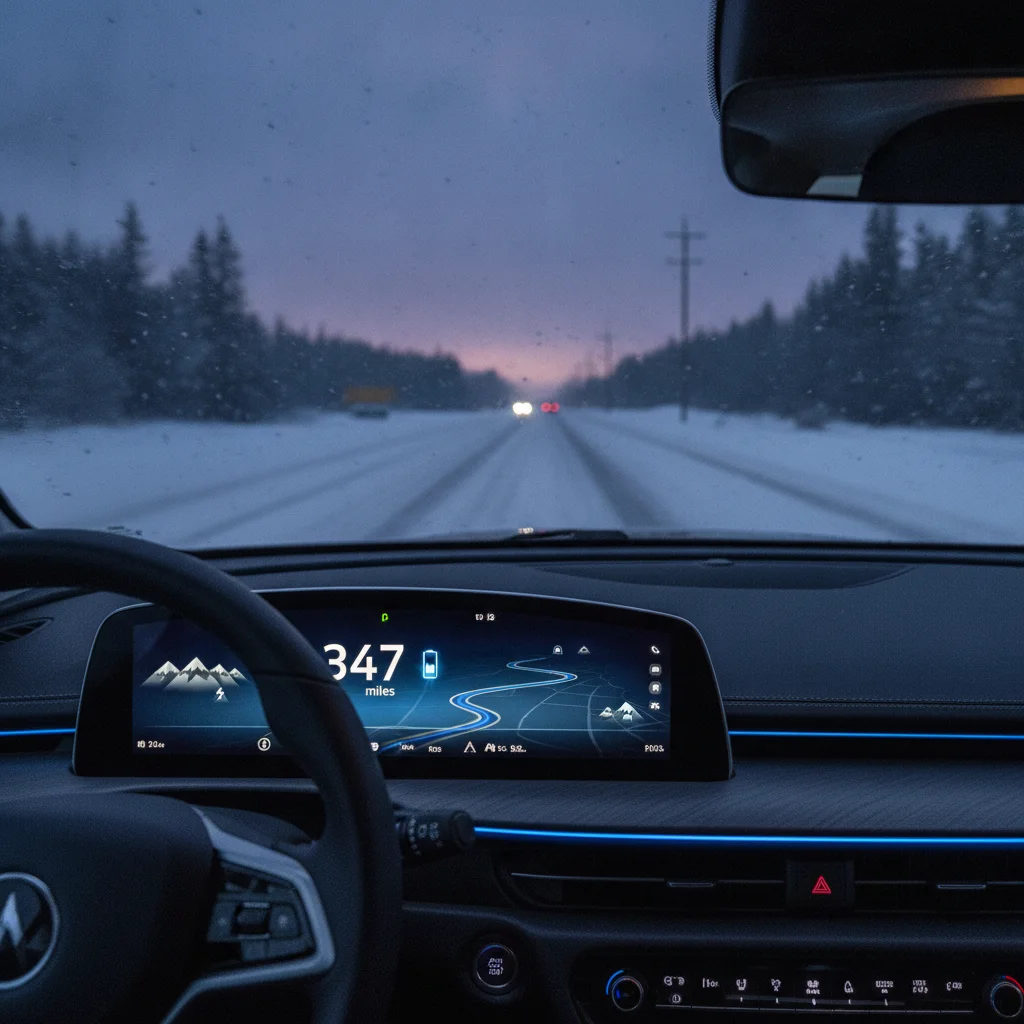
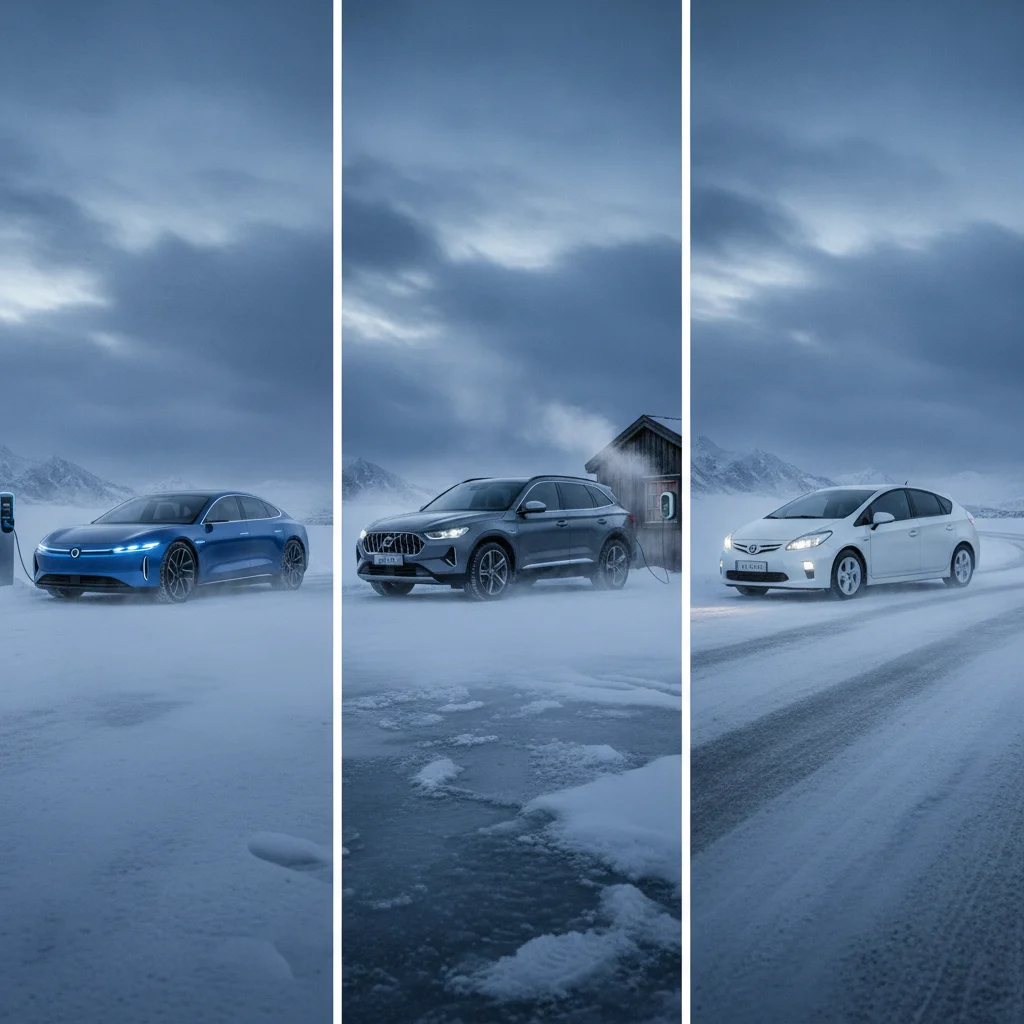
Temperature is the most dramatic and least controllable variable separating EPA estimates from real-world results. Lithium-ion batteries — the chemistry used in every mainstream BEV on sale today — are governed by electrochemical reactions that slow considerably as temperature drops. At 20°F (-7°C), a battery may deliver 70–80% of the energy it would supply at 70°F. At 0°F (-18°C), the loss can exceed 40% under full heating load.
41%
Range loss in extreme cold with heat running
AAA testing found EV range dropped an average of 41% when outside temperatures fell to 20°F and cabin heaters were in use.
20–30%
Highway range shortfall vs. EPA estimate
Edmunds steady-state 70-mph range testing of multiple EVs consistently showed real highway range 20–30% below EPA-rated figures.
~90%
Battery capacity retained after 5 years
Recurrent's analysis of real-world EV battery data found most vehicles retain approximately 90% of original capacity after five years of typical use.
3–5 kW
Continuous power draw from resistive cabin heat
Engineering analyses and EV energy monitoring data show resistive heating systems draw 3–5 kilowatts continuously, directly from the traction battery.
73%
More energy per mile at 75 mph vs. 55 mph
Aerodynamic drag physics and road-load calculations show driving at 75 mph requires approximately 73% more energy per mile than 55 mph.
The cold-weather penalty operates through two separate mechanisms. First, the battery itself loses usable capacity and power output in the cold. Second — and often overlooked — the cabin heating system draws directly from the traction battery because EVs have no waste engine heat to redirect into the cabin. A resistive cabin heater running at full power can consume 3–5 kilowatts continuously, the equivalent of driving at highway speed on a separate invisible trip.
Heat pump systems, now standard or optional on many newer models, reclaim heat from the ambient air and the battery's own thermal losses. They consume roughly one-third to one-half the energy of resistive heating — a meaningful improvement that still does not close the gap entirely, especially in extreme cold where heat pumps lose efficiency.
Precondition Your EV Before Winter Drives
Use your vehicle's app or scheduled departure feature to warm the cabin and battery while still plugged into the charger. This consumes grid electricity rather than stored battery energy, preserving significantly more range for your trip. Most modern EVs — from the Chevrolet Equinox EV to the Tesla Model Y — support this feature natively.
Check Tire Pressure Monthly in Winter
Cold air causes tire pressure to drop roughly 1 PSI for every 10°F decrease in temperature. Underinflated tires increase rolling resistance and reduce range by 3–4% — a quiet but measurable drain. Make a habit of checking pressure on cold mornings once a month throughout the winter season.
For a complete breakdown of how different electrified drivetrains handle winter conditions, see how cold weather affects BEV, PHEV, and HEV performance.
Hot weather introduces a different problem. Temperatures above 95°F (35°C) force the battery's thermal management system — typically a liquid cooling loop — to work overtime. Running the air conditioning simultaneously compounds the drain. Consumer Reports and AAA testing consistently show a 15–20% range reduction in extreme heat with AC running, though the effect is less severe than cold-weather losses.
Speed, Aerodynamics, and the Highway Penalty
Aerodynamic drag is one of physics' most unforgiving rules: resistance increases with the square of velocity, and the power required to overcome it increases with the cube of velocity. In practical terms, driving at 75 mph requires roughly 73% more energy per mile than driving at 55 mph. Since the EPA's highway test cycle peaks at 60 mph, any driver who regularly travels at 70–80 mph — the norm on U.S. interstates — is operating entirely outside the conditions that generated their sticker estimate.

Independent range testing by Edmunds, which drives vehicles at a steady 70 mph on a closed loop until the battery is depleted, routinely shows highway-only range landing 20–30% below EPA figures for most models. Some vehicles fare worse — a few long-range variants that look impressive on paper fall toward the back of the pack once real highway aerodynamics are applied.
Vehicle shape matters enormously here. A crossover SUV with a drag coefficient (Cd) of 0.29 will outperform an otherwise similar vehicle with a Cd of 0.34 by a measurable margin at speed. This is part of why purpose-built EVs like the Tesla Model 3 and the Hyundai IONIQ 6 — both designed from the ground up with aerodynamics as a priority — tend to show smaller highway range gaps than EV conversions of existing SUV platforms.
“Speed is the single biggest lever most EV drivers can pull to improve real-world range. Slowing from 80 mph to 65 mph on a long highway trip can recover the equivalent of dozens of miles — more than any driving mode or regenerative braking setting.”
— Björn Nyland, Independent EV range tester and automotive content creator with over a decade of real-world EV data
Drivers who use cruise control set to 65 mph, allow regenerative braking to slow the vehicle where practical, and minimise unnecessary lane changes consistently report range figures closer to EPA estimates than those who drive aggressively. The physics are clear: speed is the dominant variable once temperature is controlled.
HVAC, Accessories, and the Phantom Loads
Heating and cooling get the most attention, but a modern electric vehicle runs a surprising array of electronics that each nibble at available range. The cumulative effect of these "phantom loads" is rarely discussed in advertised range figures.
- Cabin heating (resistive): 3–5 kW continuous draw
- Cabin heating (heat pump): 1–2 kW continuous draw
- Air conditioning: 1.5–3 kW depending on ambient temperature and cabin size
- Heated seats and steering wheel: 50–150 W each — far more efficient than cabin heating
- Headlights (LED): 50–100 W total, negligible at scale
- Infotainment and displays: 50–150 W
- DC-DC converter (12V systems): 200–400 W
None of these systems appear in the EPA test cycle — which is run with HVAC off — yet collectively they can add 2–6 kW of parasitic load in real-world driving. On a 250-mile-rated vehicle consuming roughly 3 miles per kWh, a continuous 3 kW HVAC load effectively adds the equivalent of 1 kWh per mile of wasted overhead, meaningfully compressing usable range.
The practical takeaway: on cold days, preconditioning your vehicle while it is still plugged in uses grid power rather than battery energy to warm the cabin. That single habit, available in the mobile app on most modern EVs, can preserve 10–20 miles of real-world range before you even leave the driveway.
Cargo, Passengers, Tires, and Terrain
Beyond weather and speed, a cluster of secondary factors compounds the range gap in ways that are easy to underestimate.
Weight
Adding passengers and cargo increases the energy required for acceleration and climbing grades. A fully loaded five-passenger vehicle with luggage can weigh 800–1,200 pounds more than the same vehicle tested empty at the EPA. Heavier vehicles also require more braking energy — though regenerative braking recaptures some of that, it cannot return 100% of the kinetic energy invested.
Tire Pressure and Rolling Resistance
Underinflated tires increase rolling resistance, which increases energy consumption. A tire running 8 PSI below specification can increase energy consumption by 3–4%. Many EV owners neglect tire pressure, especially in winter when cold air causes pressure to drop naturally — roughly 1 PSI per 10°F temperature decrease.
Grade and Terrain
Climbing elevation requires energy; descending recovers some through regeneration. In hilly or mountainous terrain, net energy consumption rises even if the route starts and ends at the same elevation, because regenerative braking is less than 100% efficient. Drivers in Denver or the Appalachians routinely report range below EPA estimates on their regular commutes.
Wheel and Tire Choices
Larger wheels and performance tires increase rolling resistance and aerodynamic drag, particularly at speed. Choosing a sport package or aftermarket alloys can quietly reduce range by 5–10% — a fact that manufacturers' own configurators rarely highlight prominently.
Precondition Your EV Before Winter Drives
Use your vehicle's app or scheduled departure feature to warm the cabin and battery while still plugged into the charger. This consumes grid electricity rather than stored battery energy, preserving significantly more range for your trip. Most modern EVs — from the Chevrolet Equinox EV to the Tesla Model Y — support this feature natively.
Check Tire Pressure Monthly in Winter
Cold air causes tire pressure to drop roughly 1 PSI for every 10°F decrease in temperature. Underinflated tires increase rolling resistance and reduce range by 3–4% — a quiet but measurable drain. Make a habit of checking pressure on cold mornings once a month throughout the winter season.
Battery Age and Long-Term Degradation
Even a brand-new EV driven perfectly will eventually see its maximum range decline as the battery ages. Lithium-ion cells lose a small percentage of capacity with each charge-discharge cycle, a process called capacity degradation. The rate of degradation depends on charging habits, temperature exposure, and depth of discharge.
Recurrent, a data firm that aggregates real-world battery health data from tens of thousands of EVs, has found that most EV batteries retain around 90% of original capacity after five years of typical use. Vehicles that frequently charge to 100% and discharge to near zero degrade faster than those kept in the 20–80% state-of-charge window — a range most automakers now recommend for daily use.
41%
Range loss in extreme cold with heat running
AAA testing found EV range dropped an average of 41% when outside temperatures fell to 20°F and cabin heaters were in use.
20–30%
Highway range shortfall vs. EPA estimate
Edmunds steady-state 70-mph range testing of multiple EVs consistently showed real highway range 20–30% below EPA-rated figures.
~90%
Battery capacity retained after 5 years
Recurrent's analysis of real-world EV battery data found most vehicles retain approximately 90% of original capacity after five years of typical use.
3–5 kW
Continuous power draw from resistive cabin heat
Engineering analyses and EV energy monitoring data show resistive heating systems draw 3–5 kilowatts continuously, directly from the traction battery.
73%
More energy per mile at 75 mph vs. 55 mph
Aerodynamic drag physics and road-load calculations show driving at 75 mph requires approximately 73% more energy per mile than 55 mph.
Federal regulations require EV manufacturers to warrant the battery for at least eight years or 100,000 miles, whichever comes first, with a minimum capacity retention floor — typically 70% of original capacity. That means a vehicle rated for 300 miles could legally lose 90 miles of range and still be within warranty.
For owners who regularly fast-charge, temperature extremes accelerate degradation slightly. Data from Recurrent and Geotab suggests that frequent DC fast charging — above 80% of sessions — correlates with marginally higher degradation rates over five-plus years, though the effect is smaller than many early EV narratives suggested.
EPA Testing Is a Standardised Tool, Not a Promise
The EPA range figure is designed to allow fair comparison between vehicles under identical conditions — not to predict your personal experience. Think of it the same way you approach the EPA fuel economy estimate on a gasoline vehicle: a useful benchmark that will vary in practice. The key is understanding which direction your specific conditions push the number, and by how much.
Battery Warranty Does Not Guarantee Original Range
Federal warranty rules require manufacturers to cover batteries for at least eight years or 100,000 miles, but the coverage floor is typically 70% of original capacity. A vehicle rated at 300 miles could legally retain only 210 miles of maximum range and still fall within warranty terms. Buyers of used EVs should always request a battery health report or test charge before completing a purchase.
Making Sense of the Gap: Planning Around Real-World Range
Accepting that real-world range will differ from the EPA number is the first step toward stress-free EV ownership. The second step is building a mental model of your personal range under your specific driving conditions.
A useful rule of thumb: take the EPA estimate, subtract 20% as a baseline real-world adjustment, then subtract an additional 10–15% if you drive primarily at highway speeds, or 15–25% if you regularly experience temperatures below 32°F. The result is a conservative planning range that will rarely leave you stranded.
For example, a vehicle rated at 300 miles by the EPA might deliver:
- Mild weather, mixed driving: 240–260 miles
- Highway at 75 mph, 65°F: 210–230 miles
- Cold weather (20°F), highway: 165–195 miles
Trip planning tools — built into most EV navigation systems and available through apps like ABRP (A Better Route Planner) — automatically factor in temperature, elevation, and speed to suggest charging stops. Using these tools rather than relying on the bare EPA figure transforms range anxiety into a manageable scheduling task.
Understanding the true cost of charging on those stops is equally important. See how to estimate and reduce EV charging costs for a full breakdown of public vs. home charging economics.
It's also worth comparing how this range gap compares to similar discrepancies in the PHEV world — where advertised fuel savings can prove equally elusive. Why PHEVs don't always deliver their advertised fuel savings explores the parallel problem for plug-in hybrid owners.
And for drivers weighing the financial picture of EV ownership more broadly, how EV insurance works and why premiums may differ is worth reviewing alongside range expectations — because a shorter usable range affects how and where you drive, which in turn affects your risk profile.
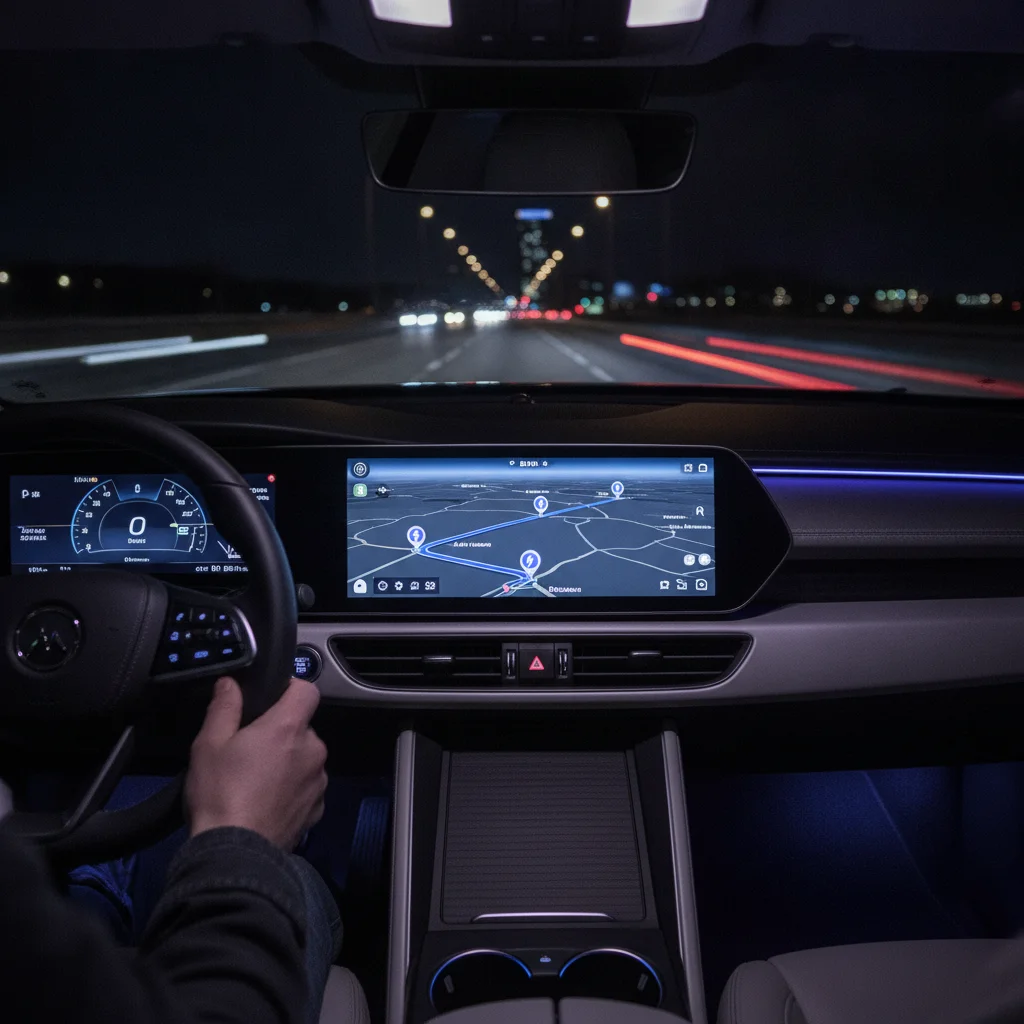
Ultimately, the EV range gap is not a defect or a manufacturer deception — it is an unavoidable consequence of standardised testing meeting the messy complexity of real roads, real weather, and real driving behavior. Knowing the gap exists, understanding its causes, and planning accordingly is what separates a frustrated EV owner from a confident one.
All claims are backed by peer-reviewed research. Sources on request.