Key Takeaways
Option A
Hybrid Vehicle (HEV)
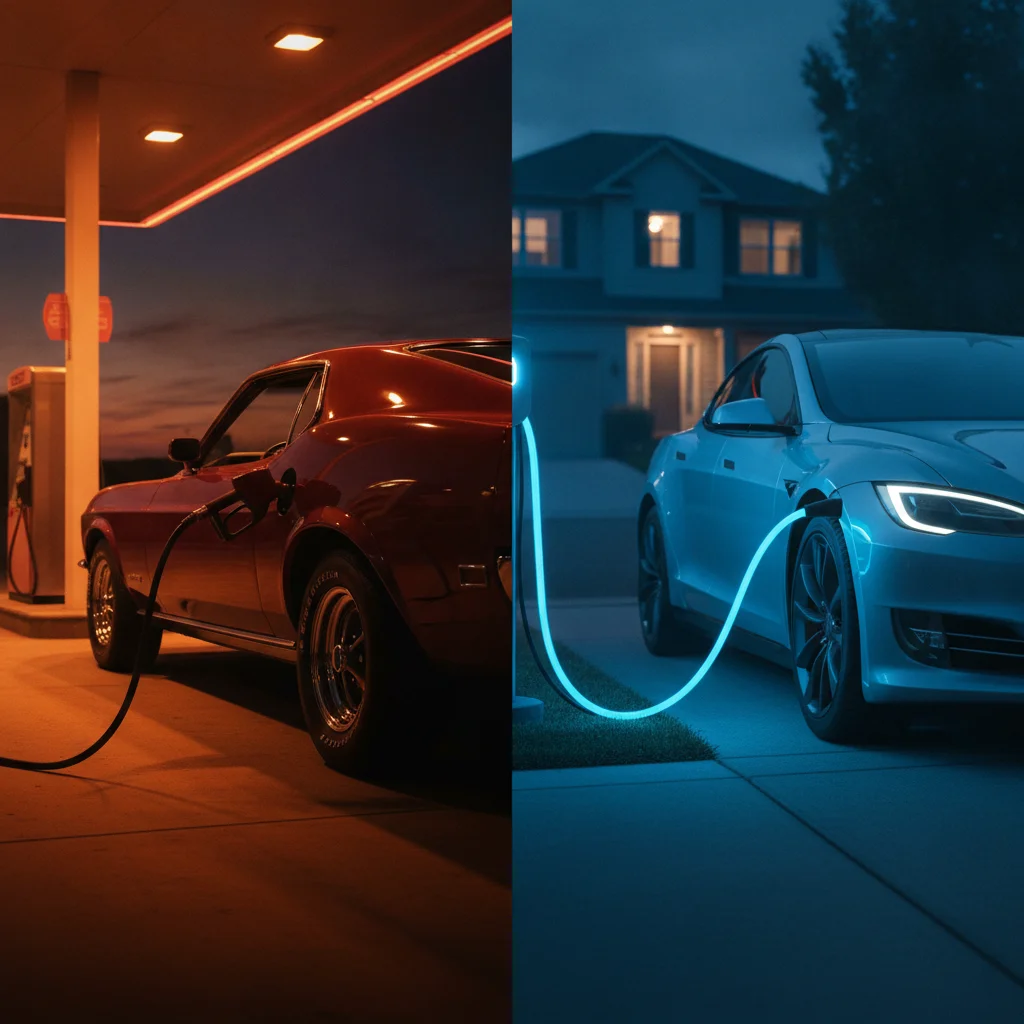
The familiar choice that never needs plugging in.
Best for: Drivers who want better fuel economy without changing any habits around fueling or charging.
Option B
Battery Electric Vehicle (BEV)
The all-in, zero-tailpipe-emission choice for the grid age.
Best for: Drivers with home charging access who want to eliminate gas costs and tailpipe emissions entirely.
If you rent, live in an apartment, or lack reliable charging access
Hybrid Vehicle (HEV)
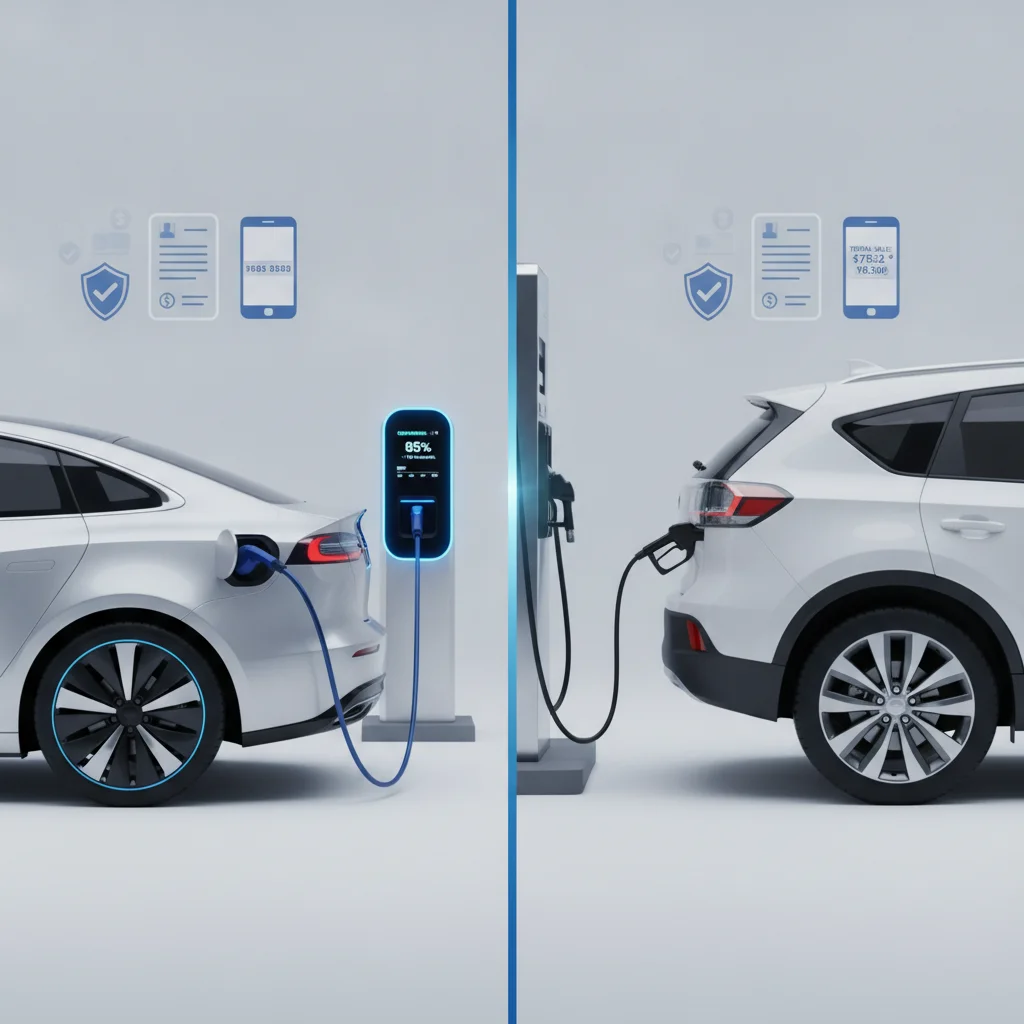
A hybrid never needs a plug. You refuel exactly as you always have, while still getting significantly better mpg than a comparable gas-only vehicle.
If you have a home garage or dedicated parking with a Level 2 charger
Battery Electric Vehicle (BEV)
Home charging means you start every day with a full 'tank' at roughly one-quarter the per-mile cost of gasoline, making the economics compelling over time.
If you drive primarily short urban or suburban daily distances under 50 miles
Battery Electric Vehicle (BEV)
Short, predictable trips are where EVs shine — you may rarely need public charging at all, maximizing the cost advantage.
If you frequently take long road trips with unpredictable routing
Hybrid Vehicle (HEV)
Gas stations remain far more abundant than fast chargers on many routes; a hybrid lets you refuel in five minutes anywhere in the country.
If minimizing total upfront cost is your primary concern
Hybrid Vehicle (HEV)
Hybrids carry a smaller price premium over their gas equivalents than battery-electric models, and they require no home charging equipment investment.
How Each Powertrain Actually Works
The confusion between hybrids and electric cars is understandable — both involve electric motors and batteries. But the architecture underneath the hood is meaningfully different, and that difference shapes everything from your daily routine to your insurance premium.
The Hybrid (HEV) Powertrain
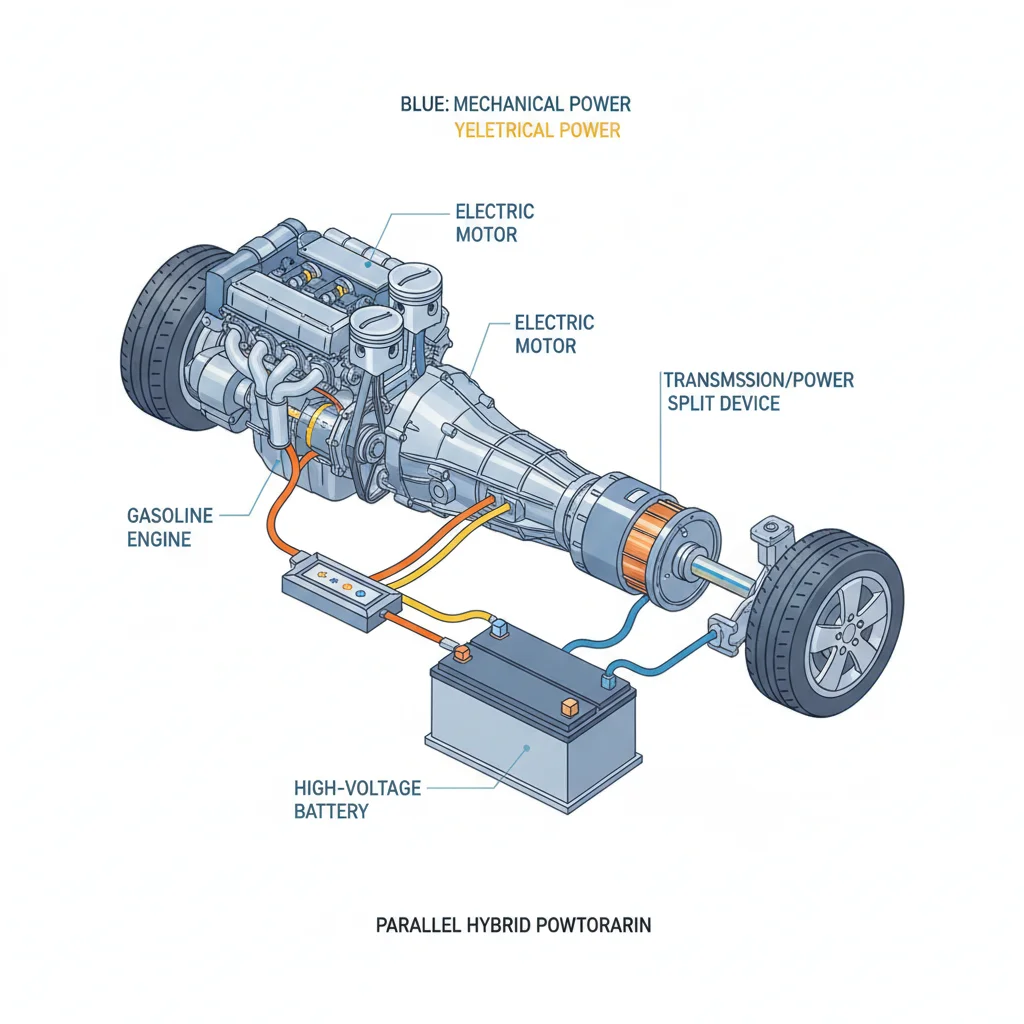
A conventional hybrid, or HEV, pairs an internal combustion engine with an electric motor and a relatively small battery pack — typically 1–2 kWh of usable capacity. The battery is charged automatically through regenerative braking and by the engine itself; it never needs to be plugged in. At low speeds and light loads, many hybrids can travel short distances on electricity alone, but the electric motor's primary job is to assist the gas engine — reducing fuel burn during acceleration and recapturing energy that would otherwise be lost as heat when braking.
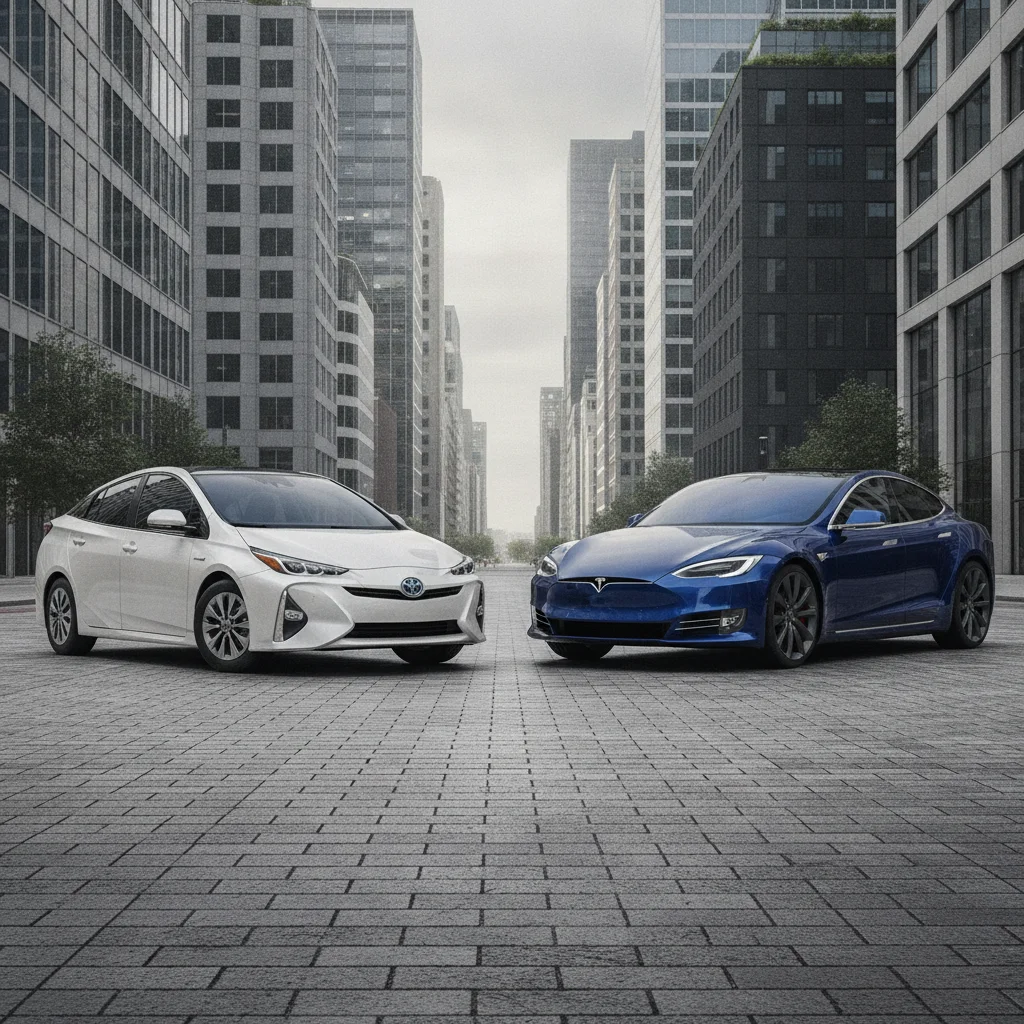
The Toyota Prius is the textbook example. It uses a power-split device to blend engine and motor output seamlessly, and the system manages itself without any input from the driver. You fill up at a gas station. That's it.
The Battery Electric Vehicle (BEV) Powertrain
A BEV contains no combustion engine at all. One or more electric motors draw power from a large lithium-ion (or lithium iron phosphate) battery pack — typically 50–100+ kWh of capacity — that must be replenished by plugging into an electrical source. There is no backup fuel system. When the battery is depleted, the car stops until it's recharged.
The absence of an engine eliminates dozens of components: no oil changes, no timing belts, no exhaust system, no multi-speed transmission in most designs. That mechanical simplicity is one reason many EV owners report lower maintenance costs over time. For a deeper look at what's under the hood, see the How EVs Work hub for plain-language explanations of motors, batteries, and drivetrains.
Where Plug-In Hybrids Fit
A plug-in hybrid (PHEV) deliberately straddles both worlds. It has a larger battery than a standard hybrid — enough for 20–50 miles of electric-only range — and it can be charged from an outlet. But it also has a gasoline engine for longer trips. PHEVs are neither a full hybrid nor a full EV, and that distinction matters when you're comparing costs, tax credits, and insurance rates. See our guide to HEVs vs. PHEVs for a detailed breakdown of how that one charging difference reshapes ownership.
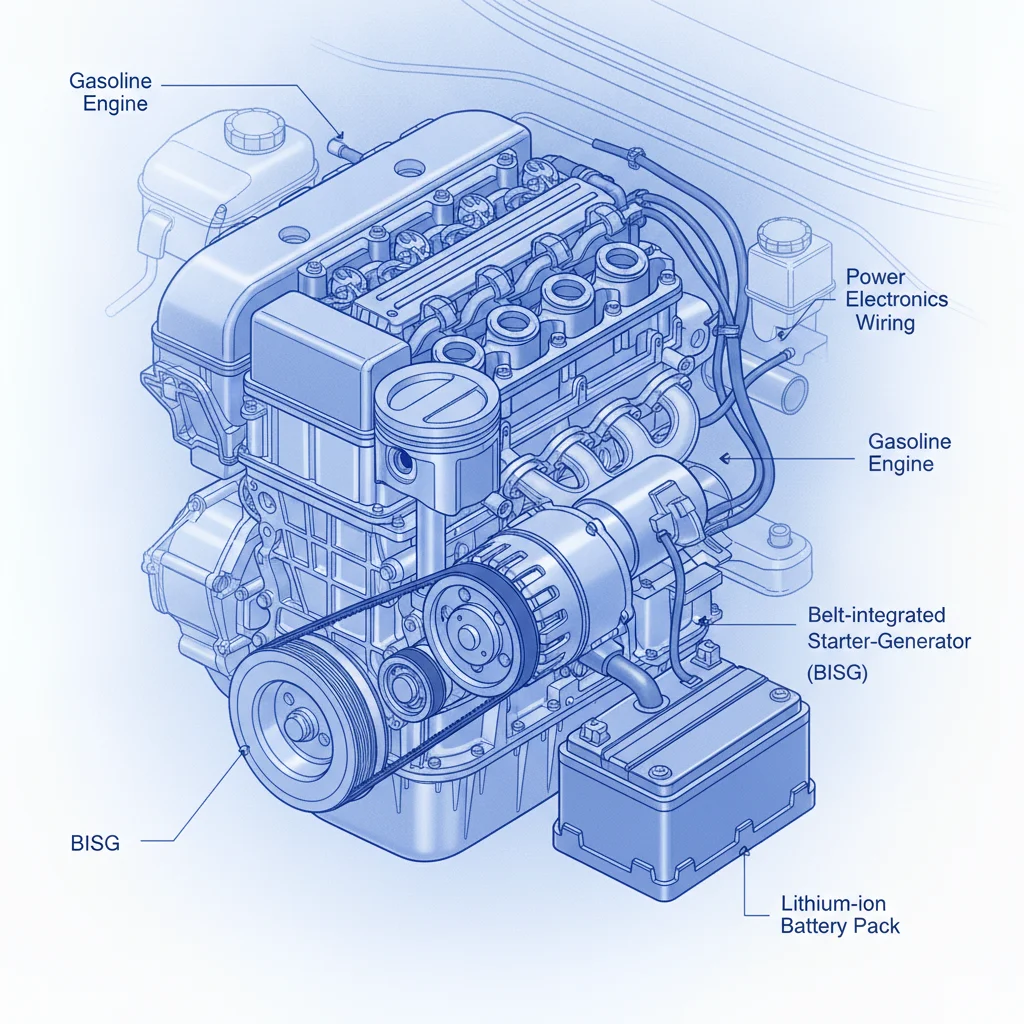
There's also a fourth category worth knowing: the mild hybrid (MHEV). These vehicles use a small 48-volt battery system to assist the engine but cannot propel the car on electricity alone. The fuel economy gains are real but modest. Mild hybrids are a category of their own and shouldn't be confused with full hybrids or EVs.
Head-to-Head: Hybrid vs. Electric Across the Metrics That Matter
Here's how a conventional hybrid and a battery electric vehicle compare across the criteria that most directly affect your wallet and your lifestyle.
| Criterion | Hybrid (HEV) | Battery Electric (BEV) |
|---|---|---|
| Energy source | Gasoline (self-charging battery assist) | Electricity only (must plug in) |
| Typical battery size | 1–2 kWh | 50–100+ kWh |
| Refueling/recharging time | 5 minutes at any gas station | 20–60 min (DC fast) or 8–12 hrs (Level 2 home) |
| Effective range | 400–600 miles per tank | 200–350 miles per charge (EPA rated) |
| Average purchase price premium | $2,000–$4,000 over gas equivalent | $5,000–$15,000 over gas equivalent |
| Federal tax credit eligibility | None | Up to $7,500 (if income/price rules met) |
| Per-mile fuel cost | ~$0.07/mile at $3.50/gal, 50 mpg | ~$0.03–0.05/mile at home charging rates |
| Routine maintenance | Oil changes, filters, standard service | Minimal — tires, filters, brake fluid |
| Tailpipe emissions | Yes (reduced vs. gas-only) | None at point of use |
| Typical insurance premium vs. gas car | Slight increase or neutral | Moderate to significant increase |
50+ mpg
Typical city fuel economy, Toyota Prius HEV
EPA-rated fuel economy for the 2024 Toyota Prius, one of the most efficient conventional hybrids on sale in the US.
$0.03–0.05
Per-mile electricity cost for BEV at home
Based on the national average residential electricity rate of approximately $0.16/kWh reported by the U.S. Energy Information Administration.
~20%
Lower maintenance cost reported by EV owners
Consumer Reports survey data indicates battery electric vehicle owners report significantly lower average maintenance and repair costs than gas and hybrid car owners.
67%
EV owners with home charging access
A 2023 J.D. Power EV experience study found roughly two-thirds of US BEV owners rely primarily on home charging for their daily energy needs.
A few of these rows deserve extra explanation. The purchase price gap is real but narrowing — several entry-level BEVs now start below $30,000 before incentives, and the federal clean vehicle tax credit (up to $7,500) can close the gap further, though eligibility rules are strict. The charging infrastructure point is less about whether chargers exist and more about whether you have reliable access to one at home or work. A driver with a dedicated Level 2 home charger has a fundamentally different experience than one relying entirely on public DC fast chargers.
PHEVs: The Middle Category Worth Knowing
Plug-in hybrids (PHEVs) don't fit neatly into the hybrid vs. EV binary. They have batteries large enough for meaningful electric-only driving — typically 20–50 miles — but also carry a full gasoline engine for longer range. For buyers who want some EV benefit without committing fully, they're a legitimate option worth evaluating separately. See our dedicated <a href="/electric-vehicles/ev-basics/ev-types-explained/plug-in-hybrids-demystified-why-they-exist-and-who-theyre-actually-for">PHEV explainer</a> for a full breakdown.
Cold Weather Affects EVs More Than Hybrids
Lithium-ion batteries lose efficiency in cold temperatures, and BEV range can drop 20–40% in extreme winter conditions. Hybrids are less affected because the combustion engine generates heat naturally and the battery is smaller. If you live in a region with harsh winters and limited indoor parking, this is a practical factor to weigh — not a dealbreaker, but worth modeling against your specific commute.
On running costs, the math generally favors EVs — the U.S. Energy Information Administration estimates the average cost of electricity at roughly $0.16 per kWh nationally, which translates to about 3–5 cents per mile for a typical EV. Gasoline at $3.50/gallon in a 50 mpg hybrid works out to about 7 cents per mile. The hybrid is still cheaper to run than a gas car, but the EV is usually cheaper than the hybrid — assuming you're charging at home rates, not expensive public DC fast chargers.
The Real-World Ownership Experience
Numbers on a spec sheet don't always translate cleanly into daily life. Here's what actually changes when you own one versus the other.
Fueling and Charging Routines
A hybrid owner's routine is essentially unchanged from a gas-car owner's. You stop at a gas station every one to two weeks, spend five minutes, and drive away. The car handles its own energy management.
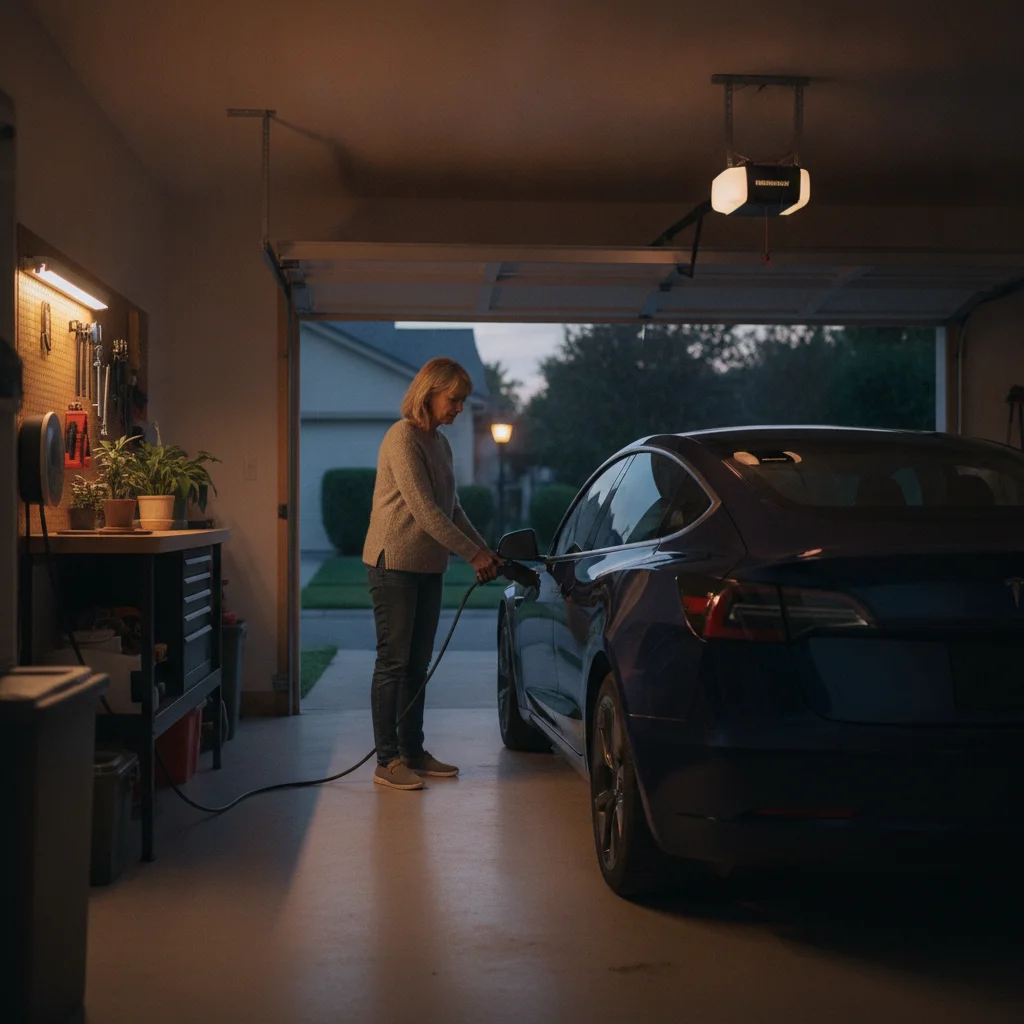
An EV owner's routine is different but — for most people with home charging — arguably simpler. You plug in at home most nights the way you plug in a phone, and you almost never need to stop at a fueling station for routine driving. The friction appears on long trips, where you need to plan around charging stops of 20–45 minutes at a DC fast charger. For buyers on the fence about this trade-off, it's worth honestly assessing how often you drive more than 200–250 miles in a single day.
Maintenance Costs
Hybrids still require oil changes, coolant flushes, spark plugs, and all the standard engine service — just less frequently than a conventional car due to reduced engine load. Their brake pads also last longer thanks to regenerative braking. But they are not low-maintenance vehicles in the way an EV is.
BEVs have no engine oil, no transmission fluid (in most designs), no exhaust system, and no spark plugs. Brake maintenance is minimal. The main scheduled service items are tire rotations, cabin air filter replacements, and periodic battery health checks. Consumer Reports data consistently shows EV owners report lower average maintenance costs than both hybrid and gas-car owners.
Range Anxiety and Real Range
A hybrid's effective range is essentially unlimited — you refuel with gasoline wherever you find a pump. A BEV's EPA-rated range is typically 200–350 miles for mainstream models, but real-world range varies with temperature, speed, and climate control use. Cold weather can reduce range by 20–40% in extreme conditions. This is a legitimate consideration, not just a marketing talking point from the gas industry — it's a factor to weigh honestly against your specific driving patterns.
Insurance and Tax Implications
Insurance premiums for BEVs are generally higher than for comparable hybrids, primarily because repair costs for EV battery systems and specialized components tend to be higher. Insurers model risk differently for each powertrain type — if you want to understand how that pricing works, see our EV Insurance Guide and the more detailed breakdown of how insurers price BEVs vs. PHEVs.
On the tax credit side, both PHEVs and BEVs can qualify for the federal clean vehicle credit under the Inflation Reduction Act, but the amounts and eligibility criteria differ. Standard hybrids (HEVs) do not qualify at all. For a precise breakdown of the credit rules by vehicle type, see our piece on how the tax credit treats PHEVs vs. BEVs differently.
Decoding Automaker Marketing: What the Badges Actually Mean
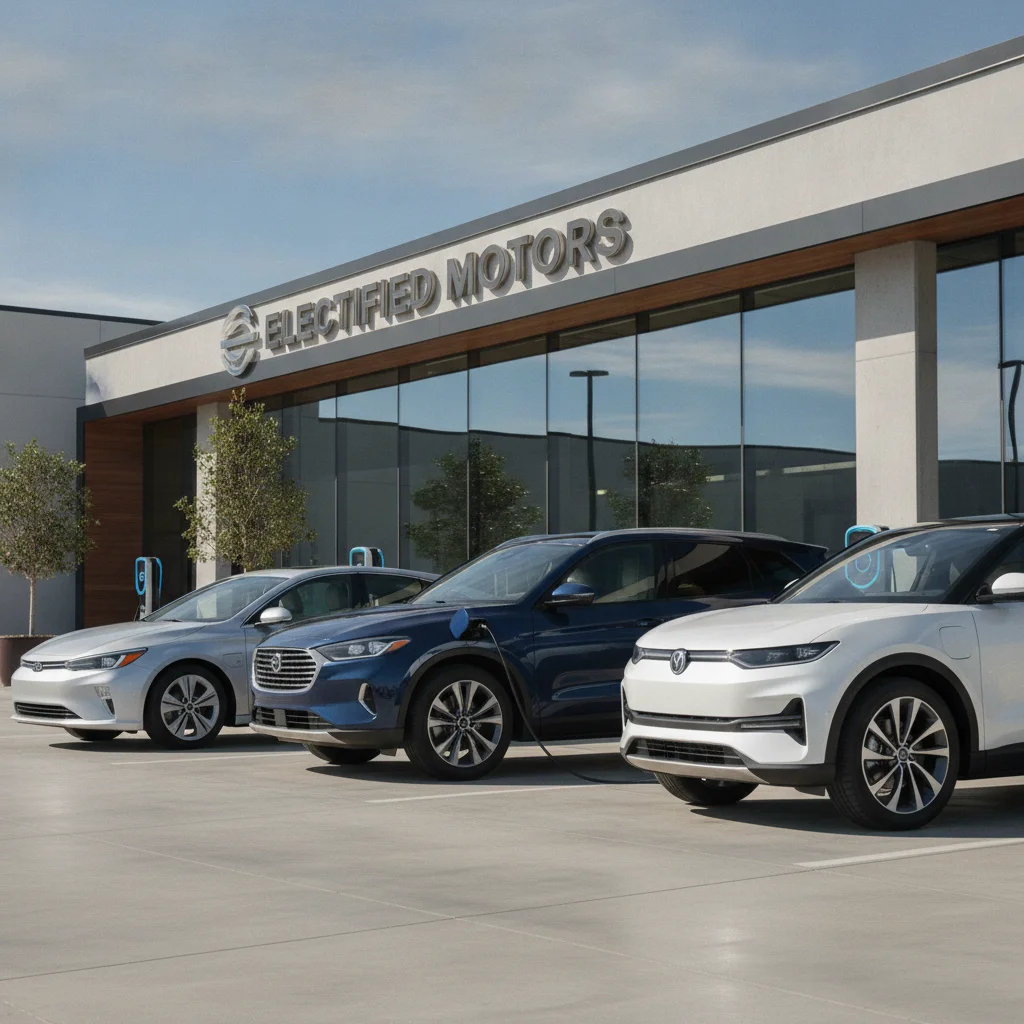
One genuine source of buyer confusion is that automakers use wildly inconsistent terminology. Toyota uses "Hybrid" for its HEVs and "Prime" for its PHEVs. Honda uses "Hybrid" for both full hybrids and mild hybrids depending on the model year. Ford uses "Hybrid" and "Plug-In Hybrid" more cleanly, but also markets its EV lineup under the "Lightning" and "Mustang Mach-E" names without explicit powertrain labeling in the badge itself. Audi uses "e-tron" for both its BEVs and its PHEVs. BMW uses the "i" prefix for EVs but also has PHEV variants of its non-i models.
The short answer: always verify the powertrain type in the vehicle specs, not just the badge. Look for whether the vehicle has a plug (and what size battery), whether it has a combustion engine, and what the EPA fuel economy label says. Our guide on how automakers classify their electrified lineups walks through brand-specific naming conventions in detail.
The EPA fuel economy label is your most reliable guide. BEVs will show MPGe (miles per gallon equivalent) with no gasoline consumption figure. PHEVs will show both an electric-only MPGe and a combined gas+electric figure. HEVs will show a standard mpg figure, usually 40–60 mpg for city driving. If you see a plug symbol on the label, the vehicle can charge from an outlet. If you don't, it's either a standard hybrid or a mild hybrid.
Who Should Consider a PHEV Instead?
If you're drawn to the EV concept but genuinely concerned about range or charging access, a plug-in hybrid deserves serious consideration — it's not just a compromise vehicle. For many buyers, especially those without home charging who still want to run on electricity for daily commutes, a PHEV delivers most of the per-mile cost savings of an EV with none of the range anxiety. Our detailed look at who plug-in hybrids are actually built for covers the real-world use cases where PHEVs outperform both HEVs and BEVs.
Making the Call: Which One Is Right for You?
The honest answer is that neither powertrain is universally superior — they serve different drivers well. The decision framework is simpler than most automotive coverage makes it seem.
Choose a Hybrid (HEV) if:
- You have no reliable access to home, workplace, or public charging
- You frequently drive long distances and can't afford multi-hour charging stops
- You want to minimize upfront cost while improving fuel economy
- You want an ownership experience identical to a gas car with better mpg
Choose a Battery Electric Vehicle (BEV) if:
- You have a home garage or reliable Level 2 charging access
- Most of your driving is under 200 miles per day
- You want to eliminate gasoline costs and tailpipe emissions entirely
- You qualify for the federal tax credit and can capture the full benefit
- You value the lower long-term maintenance cost trajectory
One final consideration: resale value. Both EVs and hybrids have shown resilience in used car markets, but EV residuals have been more volatile — partly because new model price cuts (Tesla's price reductions in 2023, for example) ripple into used values. Hybrids, particularly the Toyota Prius and RAV4 Hybrid, have shown unusually strong used-market demand. This won't make or break your decision, but factor it into the total-cost-of-ownership math if you tend to sell or trade every three to five years.
The electrified vehicle landscape is expanding fast. Prices are falling, charging networks are growing, and automaker lineups are diversifying. The hybrid vs. EV question you're answering today may look quite different in three years — but the underlying framework for making the decision will remain the same: match the powertrain's strengths to your actual driving life, not to an aspirational version of it.

All claims are backed by peer-reviewed research. Sources on request.