Key Takeaways
State of Charge (SoC)
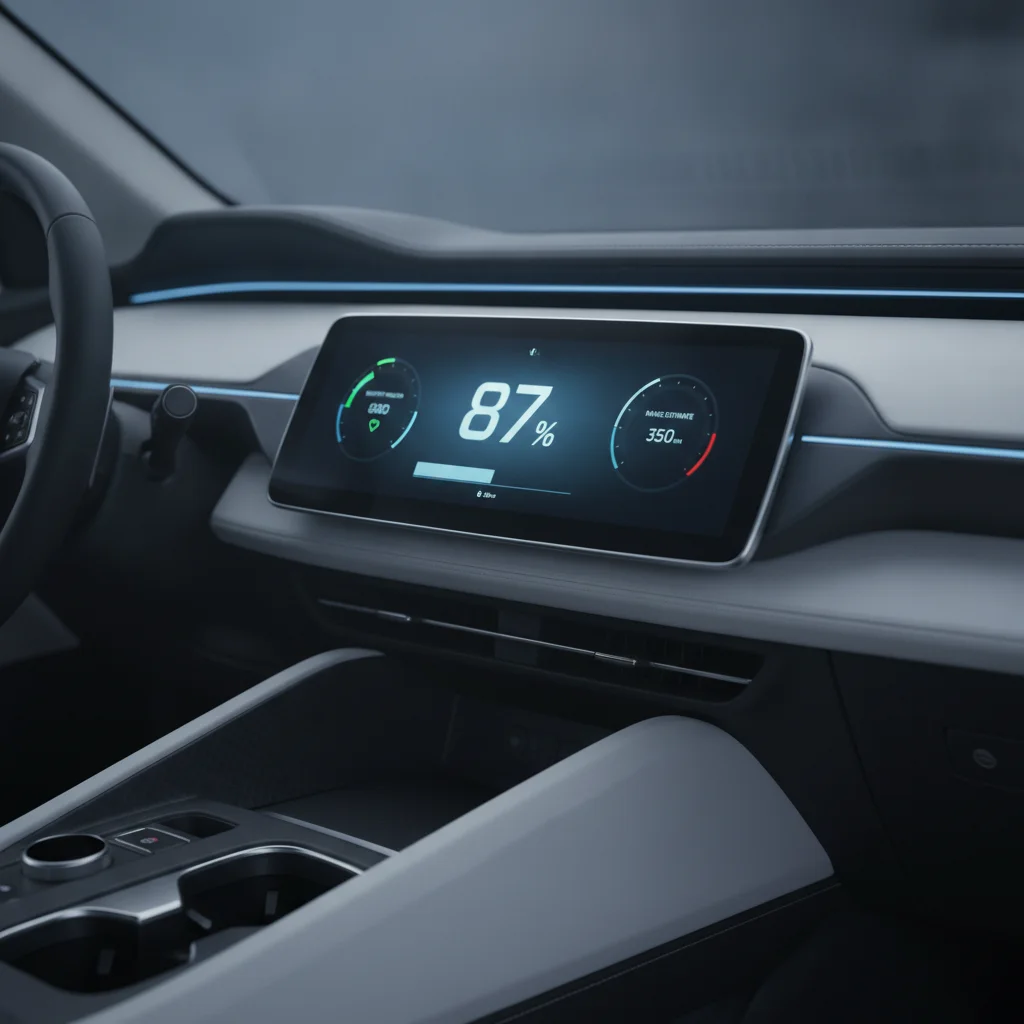
State of charge is the percentage of energy currently stored in your EV's battery relative to its total usable capacity — essentially the battery equivalent of a fuel gauge. A reading of 80% means four-fifths of the battery's usable energy is available, while 20% means it is nearly depleted. Unlike a gas tank, however, the extremes of the EV battery scale — very high and very low charge levels — carry real consequences for long-term battery health.
SoC is measured by the battery management system (BMS) using a combination of voltage readings, current integration (coulomb counting), and temperature compensation. The displayed percentage typically reflects usable capacity, not total chemical capacity, as manufacturers reserve top and bottom buffers.
What State of Charge Actually Measures
Ask most EV owners what the percentage on their dashboard means and the answer seems obvious: how much battery is left. That's correct in the same way a fuel gauge is correct — but the analogy breaks down quickly once you understand what's happening inside the pack.
State of charge (SoC) is a real-time estimate calculated by the battery management system. It does not measure a simple, fixed quantity. Instead, the BMS constantly reconciles voltage, current flow, temperature, and historical degradation data to produce a number it considers accurate. That number reflects usable stored energy — not total chemical energy — because manufacturers reserve capacity buffers at both ends of the scale that the driver never sees.
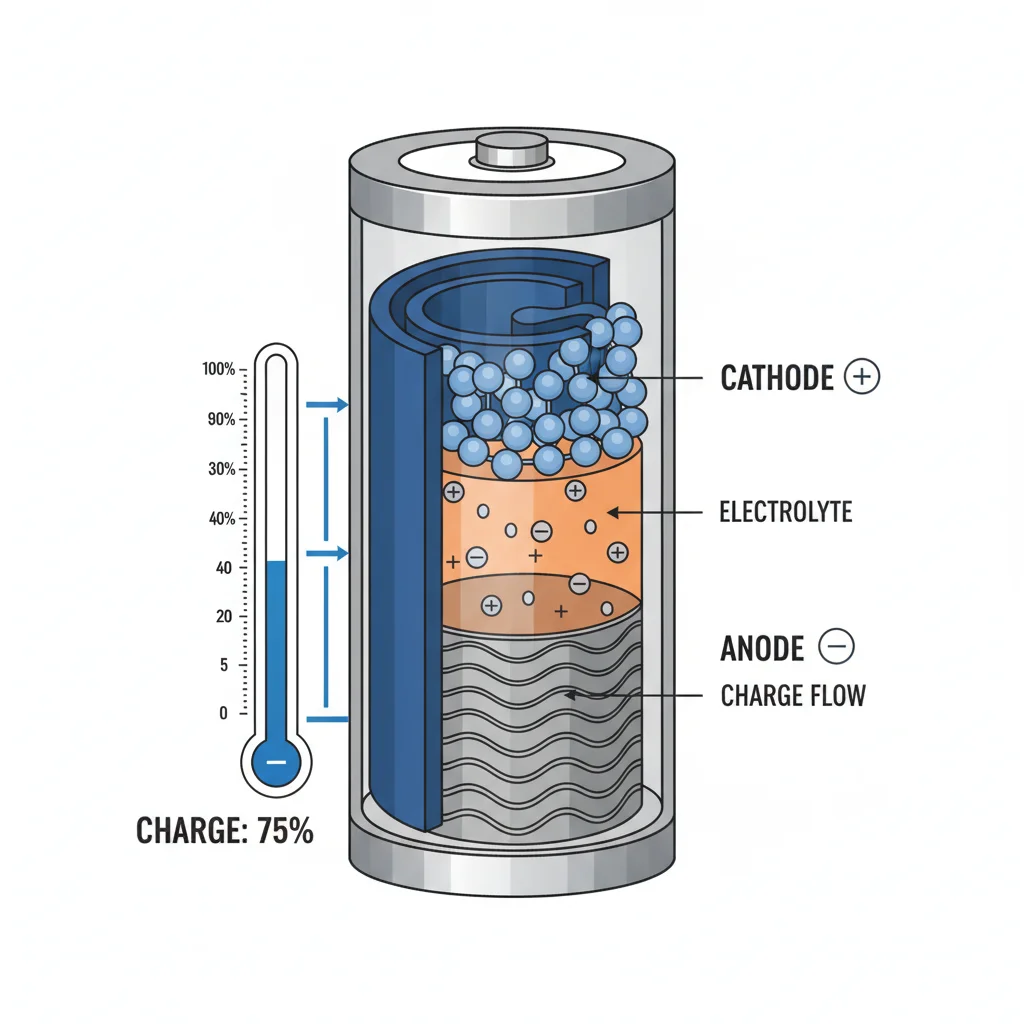
Those hidden buffers are significant. On most production EVs, the top buffer prevents cells from reaching true 100% chemical saturation, and the bottom buffer keeps cells from falling to zero volts — a state that causes irreversible damage. When your dashboard reads 100%, you are likely at 95–98% of the pack's real electrochemical capacity. When it reads 0%, there are still a few miles of emergency reserve built in.
Understanding this helps clarify why SoC management matters: every percentage point you see on screen is already the result of deliberate engineering decisions about battery protection. The choices you make on top of those decisions — your daily charge target — determine how quickly the underlying chemistry degrades.
For a deeper comparison of the two most important battery metrics, see State of Charge vs. State of Health, which explains how SoH tracks long-term capacity loss alongside your daily SoC readings.
The Chemistry Behind Why 100% Hurts
Lithium-ion batteries store energy by moving lithium ions between a cathode and an anode. At high SoC, the cathode material — typically nickel-manganese-cobalt (NMC) or lithium iron phosphate (LFP) — holds a large proportion of its lithium ions in a strained, high-energy state. Sustained high voltage accelerates two degradation mechanisms: electrolyte oxidation at the cathode surface and the growth of a resistive film called the solid electrolyte interphase (SEI) on the anode.
“The single biggest lever most EV owners have to improve long-term battery retention is simply not charging to 100% every night. The cells don't care about the charging event itself as much as they care about sitting at high voltage for hours afterward.”
— Venkat Srinivasan, Director, Argonne Collaborative Center for Energy Storage Science (ACCESS)
Both processes are temperature-sensitive. A battery at 95% SoC in a 90°F parking lot degrades considerably faster than the same battery at 80% SoC in a garage. This is why the time spent at high SoC — not just the act of reaching it — is the critical variable.
~20%
Typical range loss at 100K miles with good charging habits
Studies of real-world Tesla fleet data and Plug In America survey results suggest well-managed EVs lose roughly 10–20% of original range by 100,000 miles, with charging behavior cited as a primary variable.
80%
Recommended daily charge limit by most automakers
Ford, Hyundai, GM, Rivian, and Tesla (for NMC vehicles) all recommend 80% as the standard daily charge target in owner documentation and in-car prompts.
2–4x
Faster degradation at high SoC vs. moderate SoC
Battery research from institutions including Stanford and published in the Journal of The Electrochemical Society indicates lithium-ion cells held near 100% can degrade two to four times faster than those maintained in the 20–80% range.
>30%
Range reduction in extreme cold temperatures
AAA testing found that at 20°F, EV range dropped by an average of 41% with cabin heat on, underscoring why cold-weather full charges are sometimes warranted.
40 miles
Average U.S. daily driving distance
According to the U.S. Department of Transportation's National Household Travel Survey, the average American drives approximately 37–40 miles per day — well within the buffer of an 80% daily charge on most EVs.
LFP chemistry, used in base-model Teslas and several Chinese-market EVs, is meaningfully more tolerant of high SoC than NMC. Its flatter voltage curve and more stable cathode structure allow many manufacturers to recommend 100% daily charging for LFP packs. But NMC and NCA (nickel-cobalt-aluminum) chemistries, which dominate most long-range EVs from GM, Ford, Hyundai, Kia, and Rivian, are more voltage-sensitive and benefit most from charge limits.
The bottom end of the scale presents a different problem: deep discharge damages the anode and can allow lithium plating — metallic lithium deposits that reduce capacity and, in severe cases, create internal short-circuit risks. Keeping SoC above 10–15% in everyday use avoids this regime entirely.
The 80% Rule: Where It Comes From and Whether It's Universal
The recommendation to charge to 80% didn't emerge from marketing — it comes from decades of battery research and is reflected directly in automaker documentation. Ford's F-150 Lightning owner's manual recommends an 80% daily limit. Hyundai's Ioniq 5 and 6 default charge targets are set to 80% from the factory. Tesla's in-car recommendation screen suggests 80–90% for most drivers.
The 80% figure represents the inflection point on a lithium-ion cell's stress curve. Below 80%, incremental SoC increases add relatively little electrochemical strain. Above 80%, voltage rises steeply toward the upper saturation limit, and that marginal strain compounds with each charge cycle. Over hundreds of cycles, the accumulated difference between an 80% habit and a 100% habit becomes measurable range loss.
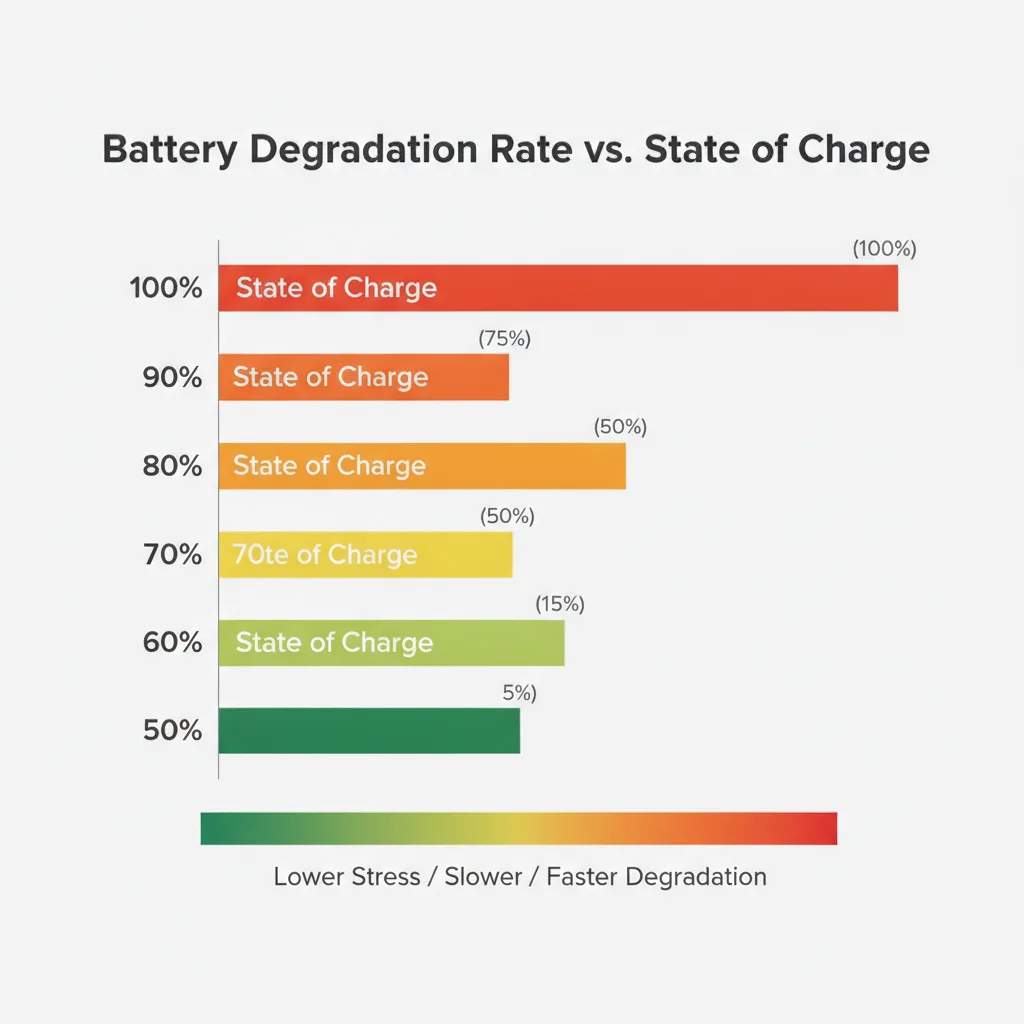
That said, 80% is a guideline, not a law. Several nuances apply:
- LFP batteries: Manufacturers including Tesla recommend 100% daily charging for LFP-equipped vehicles (currently the Standard Range Model 3 and Model Y in some markets), partly because the BMS uses a full charge to recalibrate its SoC estimate.
- Vehicle-specific buffers: A pack with a generous top buffer may reach genuine electrochemical 100% only at a displayed 90% or higher. Checking your model's teardown data or owner community forums can clarify your vehicle's actual buffer size.
- Short-term flexibility: Charging to 90% or 95% occasionally for a longer daily commute is unlikely to cause measurable harm. The degradation risk is a function of frequency and duration at high SoC, not individual events.
For drivers who routinely set overnight charges, the schedule matters as much as the limit. Why Your Overnight Charging Schedule Is Probably Wrong walks through how to use departure-time scheduling to minimize the hours your car sits at peak charge.
SoC and Real-World Range: Setting Honest Expectations
State of charge interacts with range in ways that catch many new EV owners off guard. The most common frustration: the car shows 250 miles of range at 100% but consistently delivers 200 miles in practice. That gap is almost never a battery defect — it reflects the difference between EPA test conditions and real driving.
EPA Range vs. Real-World Range
The EPA range figure on a vehicle's window sticker is derived from a standardized test cycle that doesn't replicate most real-world driving conditions. Highway speeds above 65 mph, cold temperatures, heavy HVAC use, and aggressive acceleration all reduce range below the EPA estimate. A conservative rule of thumb is to plan around 80–85% of the EPA figure for highway driving. Your car's own efficiency history, visible in the trip computer, is a more reliable planning tool than the sticker number.
Departure Scheduling: Often Overlooked
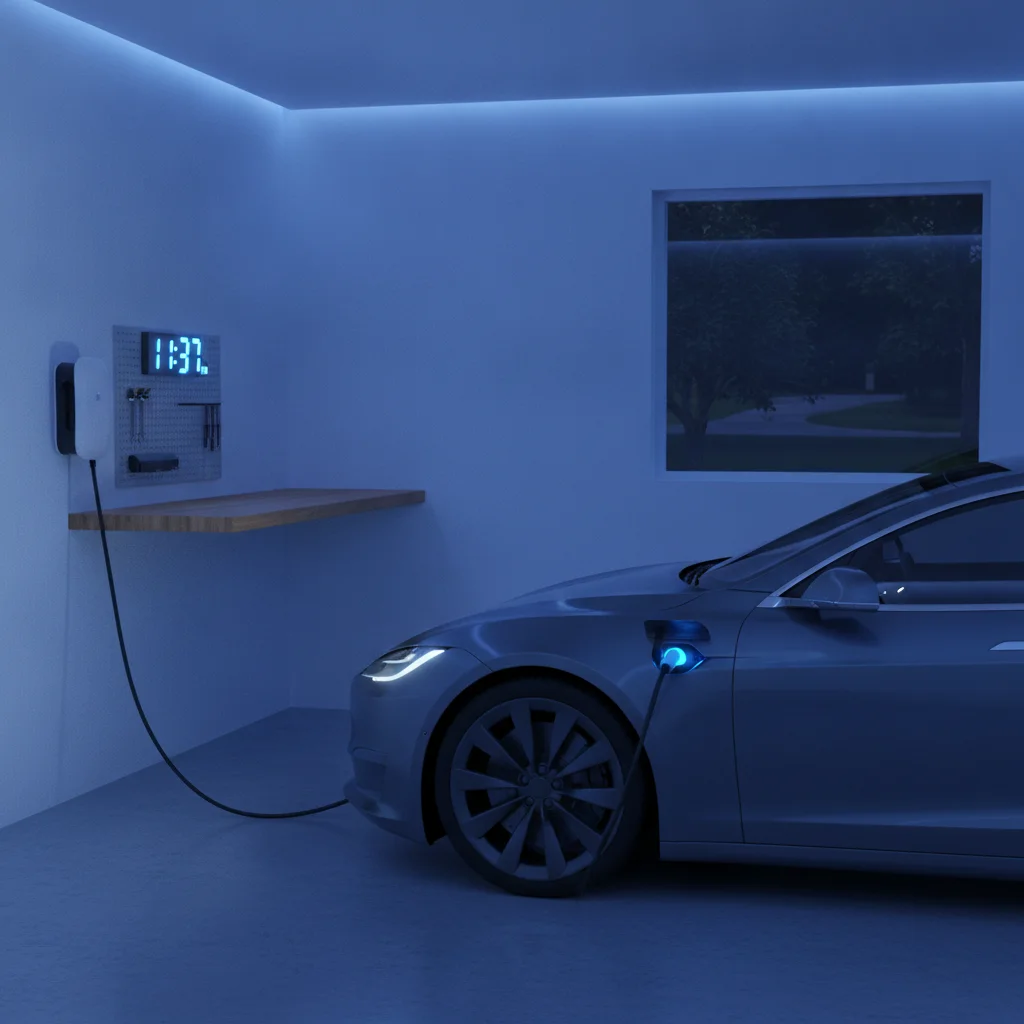
Many EV owners set a charge limit but don't use departure scheduling, which means the car may finish charging at midnight and sit at 80% for seven or eight hours. While 80% is far less damaging than 100%, minimizing total time at any elevated SoC is still beneficial. Check your vehicle's app or infotainment system for a scheduled departure feature — it typically triggers both preconditioning and charge timing.
Public Charging and SoC Targets
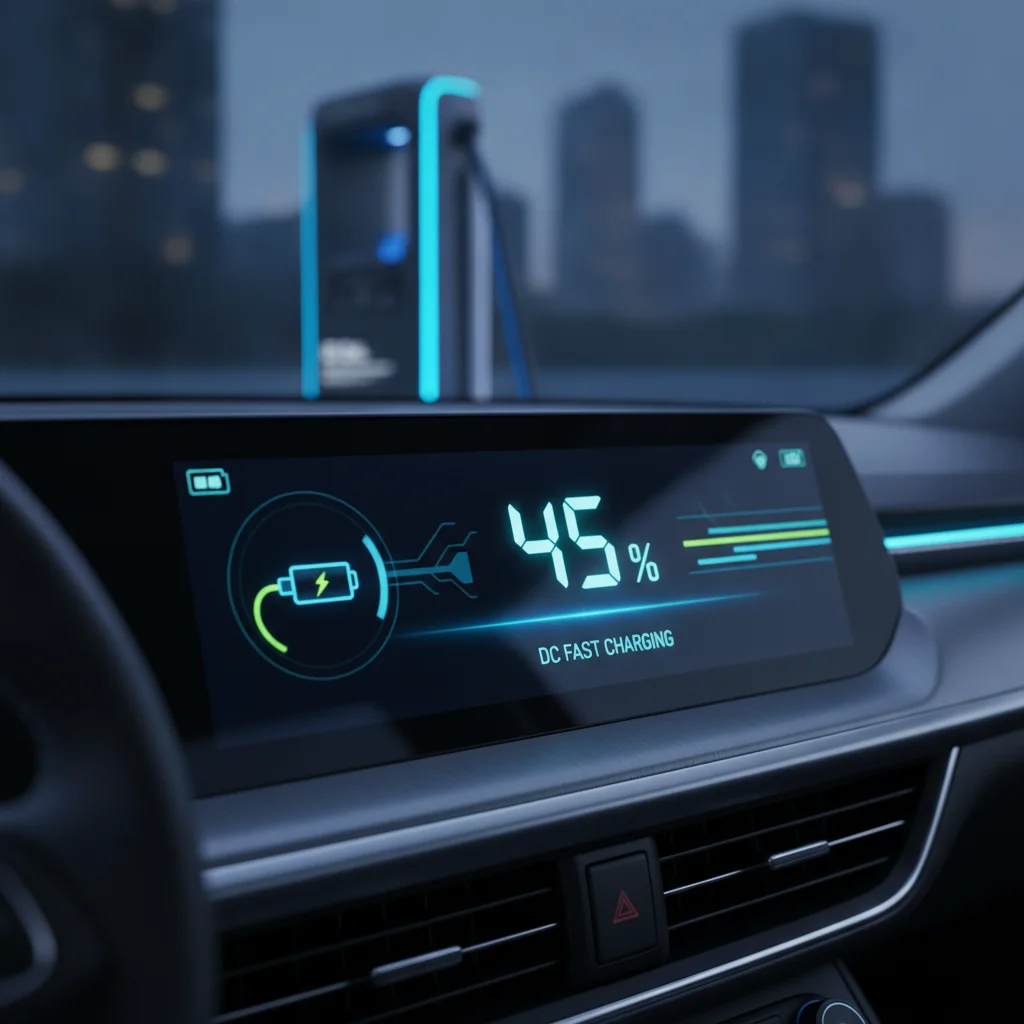
At DC fast chargers, the 80% rule has a dual benefit: it protects your battery and it gets you back on the road faster. Charge acceptance rates taper significantly above 80% SoC on nearly all EVs, meaning the charging session slows to a fraction of its peak rate for that final segment. Stopping at 80% and moving on is almost always faster than waiting for a higher percentage during a road-trip stop. See <a href="/electric-vehicles/charging-infrastructure/public-charging-networks">Public Charging Networks</a> for network comparisons and planning tools.
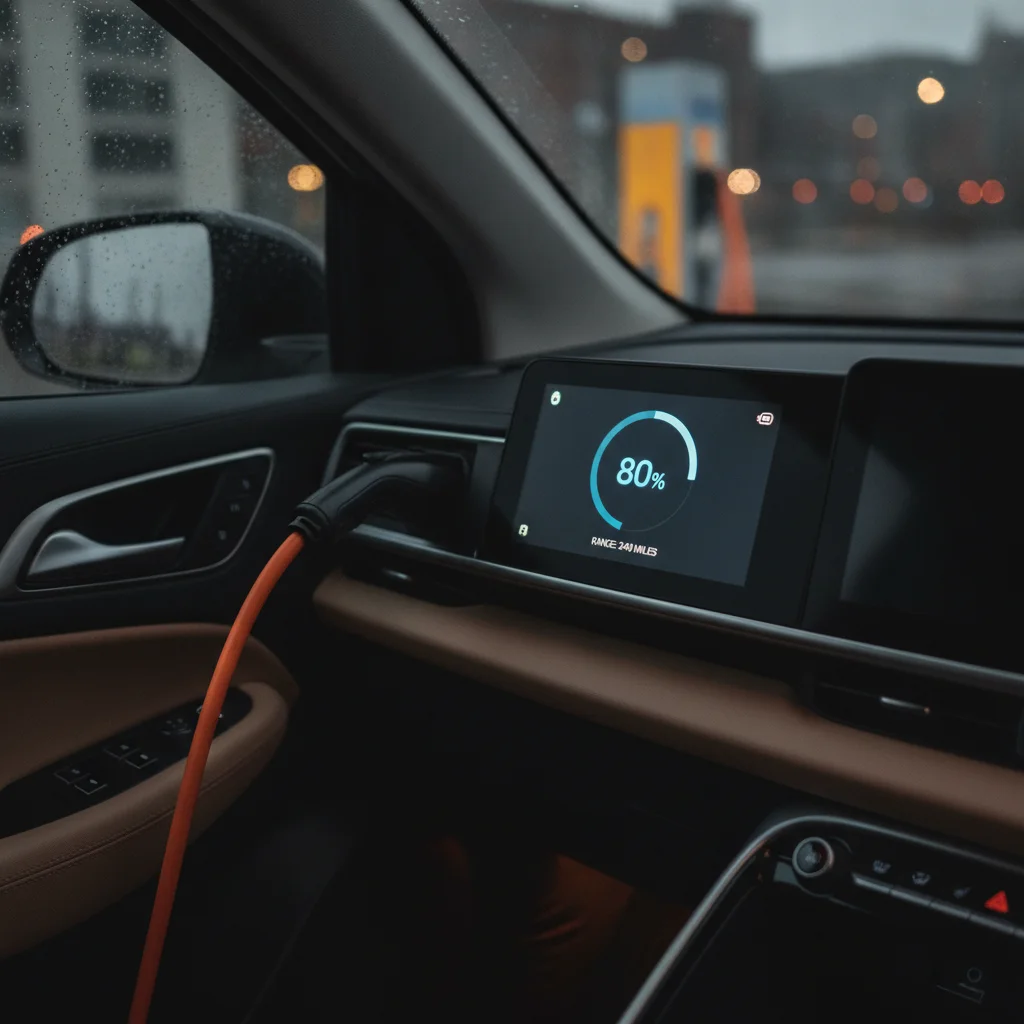
When you set a charge limit below 100%, range anxiety often follows. An owner with a 300-mile EPA-rated vehicle who charges to 80% sees 240 miles on the dashboard — and if real-world efficiency runs 15% below EPA, the functional range is closer to 200 miles. That number sounds alarming until you recognize that most American drivers cover fewer than 40 miles daily, leaving a substantial buffer in either direction.
The practical framework for managing SoC and range together:
- Anchor your daily limit to your actual commute, not your anxiety. If your round-trip is 60 miles, an 80% charge on a 250-mile-rated vehicle gives you 200 usable miles — more than three times your daily need.
- Track your real-world efficiency over 30 days. Most EVs display lifetime or recent-trip efficiency in kWh per mile or miles per kWh. Use that number, not the EPA rating, for planning.
- Reserve 90–100% charges for days when you need them. Long road trips, unusual detours, cold-weather days with known range penalty — these are the appropriate use cases for a full charge.
SoC also directly affects how fast your car charges at a public DC fast charger. The charge curve tapers sharply above 80%, meaning that last 20% of a charge session takes far longer per mile added than the first 60%. How Battery State of Charge Affects Your DC Fast Charging Speed explains the physics behind this curve and why stopping at 80% on road trips usually saves total time.
Set Your Charge Limit Tonight
If you haven't already, open your EV's app or infotainment system and set your daily charge limit to 80% (or 90% if your daily driving regularly exceeds what 80% provides). This one change, made once, compounds into meaningfully better battery retention over the years. Pair it with a scheduled departure time to minimize high-SoC parking duration.
Use Trip-Specific Overrides Wisely
Most EVs let you override your default charge limit for a single session — useful before a road trip where you need full range. Set the override the night before departure, schedule the charge to finish 30–60 minutes before you leave, and drive immediately. This approach gets you the full range benefit while minimizing the time the battery spends at 100%.
Practical Settings and Habits That Make a Difference
The good news about SoC management is that the most impactful action — setting a charge limit — takes about 30 seconds and requires no ongoing discipline. Every major EV platform provides this capability.
How to Set a Charge Limit by Platform
| Brand / Platform | Where to Set Limit | Default Limit |
|---|---|---|
| Tesla (NMC) | Charging menu → Set Limit slider | 80% |
| Tesla (LFP) | Charging menu → Set Limit slider | 100% (recommended) |
| Ford (BlueOval) | Charge Station Pro app or SYNC settings | 90% |
| Hyundai / Kia | Vehicle → Energy → Charging → Charge Limit | 80% |
| GM (Ultium) | myChevrolet / myGMC app → Charging | 80% or 90% |
| Rivian | Vehicle settings → Charging → Daily Limit | 80% |
Departure-Time Charging
Setting a charge limit solves the ceiling problem; departure scheduling solves the duration problem. If you plug in at 10 PM and your car finishes charging by midnight, it sits at 80% for seven hours before you leave. Most EVSE apps and in-car systems let you set a departure time so charging completes shortly before you leave, minimizing hold time at peak SoC.
EPA Range vs. Real-World Range
The EPA range figure on a vehicle's window sticker is derived from a standardized test cycle that doesn't replicate most real-world driving conditions. Highway speeds above 65 mph, cold temperatures, heavy HVAC use, and aggressive acceleration all reduce range below the EPA estimate. A conservative rule of thumb is to plan around 80–85% of the EPA figure for highway driving. Your car's own efficiency history, visible in the trip computer, is a more reliable planning tool than the sticker number.
Departure Scheduling: Often Overlooked
Many EV owners set a charge limit but don't use departure scheduling, which means the car may finish charging at midnight and sit at 80% for seven or eight hours. While 80% is far less damaging than 100%, minimizing total time at any elevated SoC is still beneficial. Check your vehicle's app or infotainment system for a scheduled departure feature — it typically triggers both preconditioning and charge timing.
Public Charging and SoC Targets
At DC fast chargers, the 80% rule has a dual benefit: it protects your battery and it gets you back on the road faster. Charge acceptance rates taper significantly above 80% SoC on nearly all EVs, meaning the charging session slows to a fraction of its peak rate for that final segment. Stopping at 80% and moving on is almost always faster than waiting for a higher percentage during a road-trip stop. See <a href="/electric-vehicles/charging-infrastructure/public-charging-networks">Public Charging Networks</a> for network comparisons and planning tools.
What About the Bottom End?
Deep discharges below 10–15% are worth avoiding in regular use, though they are far less common than the over-charging problem. If you routinely drain to single digits before plugging in, adjust your charging habits to plug in earlier — ideally above 20%.
For a comprehensive look at how these habits compound over years of ownership, EV Battery Health: The Habits That Preserve Long-Term Capacity covers the full picture of what determines how much range your battery retains at 100,000 miles.
Set Your Charge Limit Tonight
If you haven't already, open your EV's app or infotainment system and set your daily charge limit to 80% (or 90% if your daily driving regularly exceeds what 80% provides). This one change, made once, compounds into meaningfully better battery retention over the years. Pair it with a scheduled departure time to minimize high-SoC parking duration.
Use Trip-Specific Overrides Wisely
Most EVs let you override your default charge limit for a single session — useful before a road trip where you need full range. Set the override the night before departure, schedule the charge to finish 30–60 minutes before you leave, and drive immediately. This approach gets you the full range benefit while minimizing the time the battery spends at 100%.
When Charging to 100% Is the Right Call
Battery longevity advice can tip into overcorrection. Not every situation calls for an 80% ceiling, and treating 100% as categorically harmful leads to unnecessary range anxiety on trips where you genuinely need the capacity.
Full charges make sense in these scenarios:
- Long road trips: If you're covering 200+ miles between charging stops, starting at 100% maximizes your buffer and reduces the number of stops. Plan your charge to finish close to departure time.
- Infrequent use: If the car sits for days at a time, charging to 80–90% before a planned trip rather than keeping it at 80% continuously is fine — the issue is prolonged exposure, not a single high-SoC event.
- LFP battery vehicles: As noted above, lithium iron phosphate chemistry is significantly more tolerant of high SoC. For these vehicles, 100% daily charging is often explicitly recommended to maintain BMS calibration accuracy.
- Cold weather departures: Range penalties from low ambient temperatures can exceed 20–30% of rated range. A full charge before a cold-weather drive provides a meaningful safety margin.
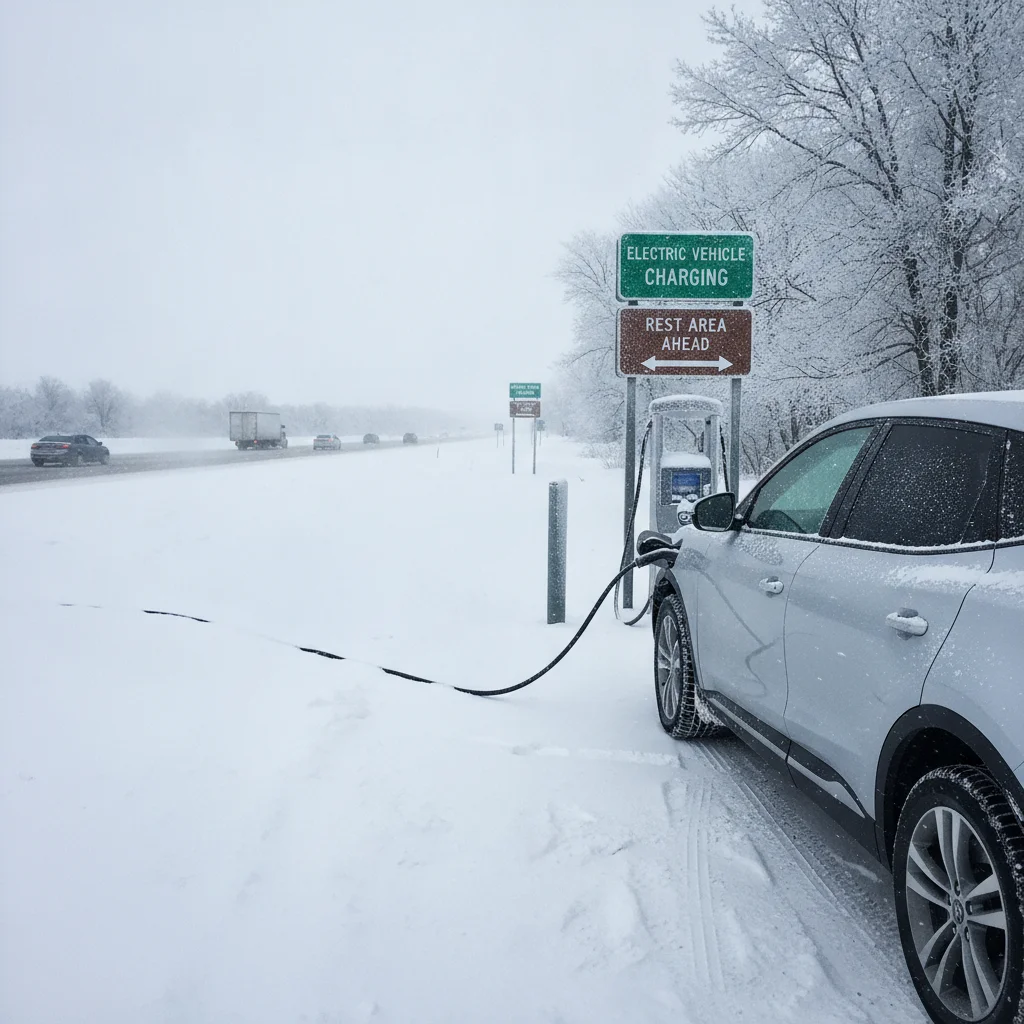
The underlying principle is straightforward: the 80% guideline exists to prevent unnecessary degradation from habitual high-SoC storage. When the full charge will be consumed the same day, the risk calculus changes. Use the limit intelligently rather than dogmatically.
For more on how individual charging behaviors quietly accumulate into battery wear, Charging Habits That Quietly Degrade Your EV Battery Over Time identifies the specific patterns most likely to cost you range over a multi-year ownership period.
All claims are backed by peer-reviewed research. Sources on request.